
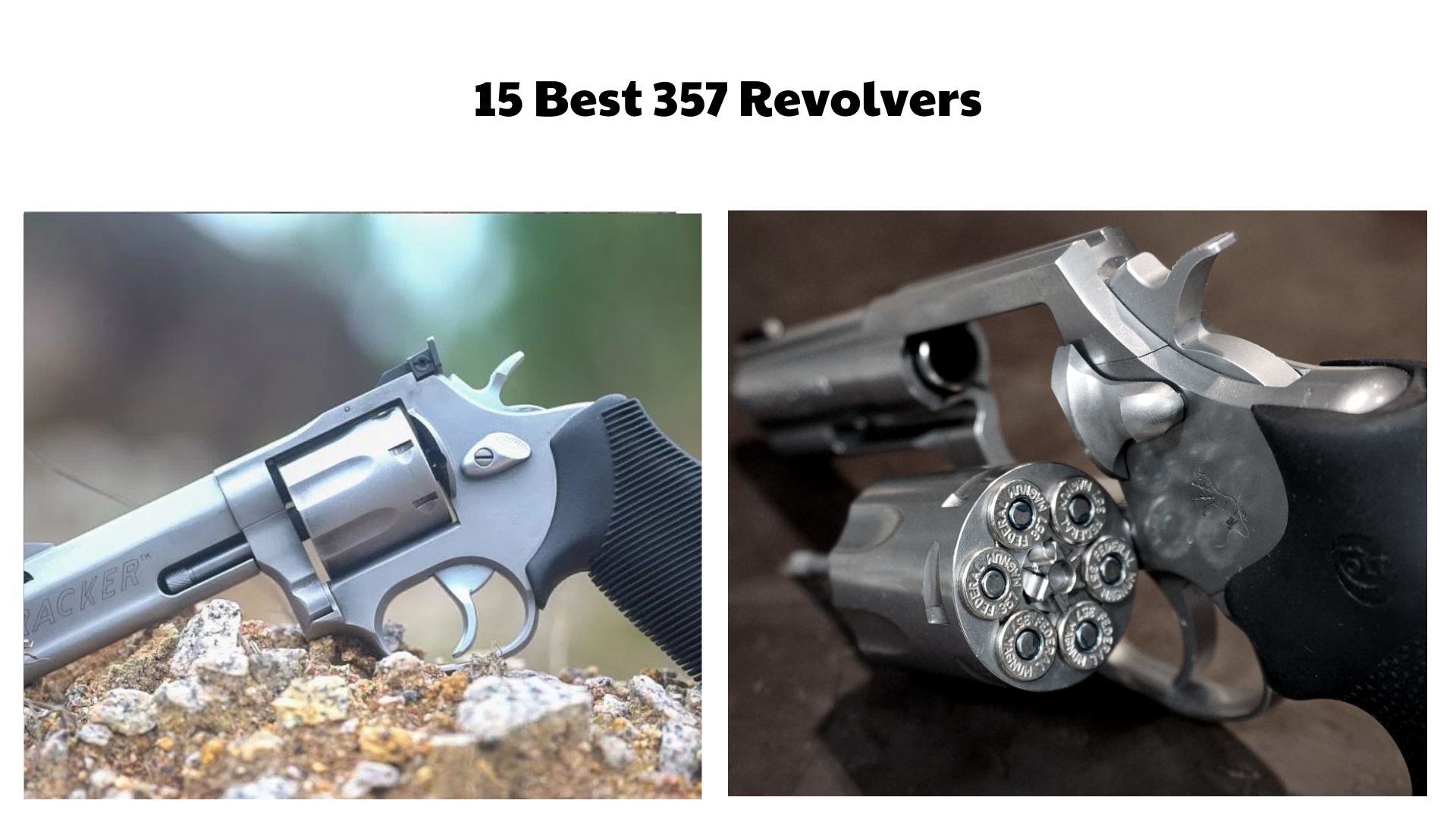

The .357 Magnum revolver remains one of the most respected handgun platforms ever created, known for its durability, power, and mechanical simplicity. Even in a modern era dominated by semi-automatic pistols, revolvers chambered in .357 continue to hold a strong place among shooters, hunters, and defensive firearm users. This guide to the Best 357 Revolvers explores the most trusted and proven models available today, focusing on real-world performance, build quality, and handling characteristics. Each revolver featured here has earned its reputation through decades of use, refinement, and field testing. Instead of focusing on hype, this review highlights practical strengths that matter most: reliability, recoil control, accuracy, and long-term value.
15 Best 357 Revolvers
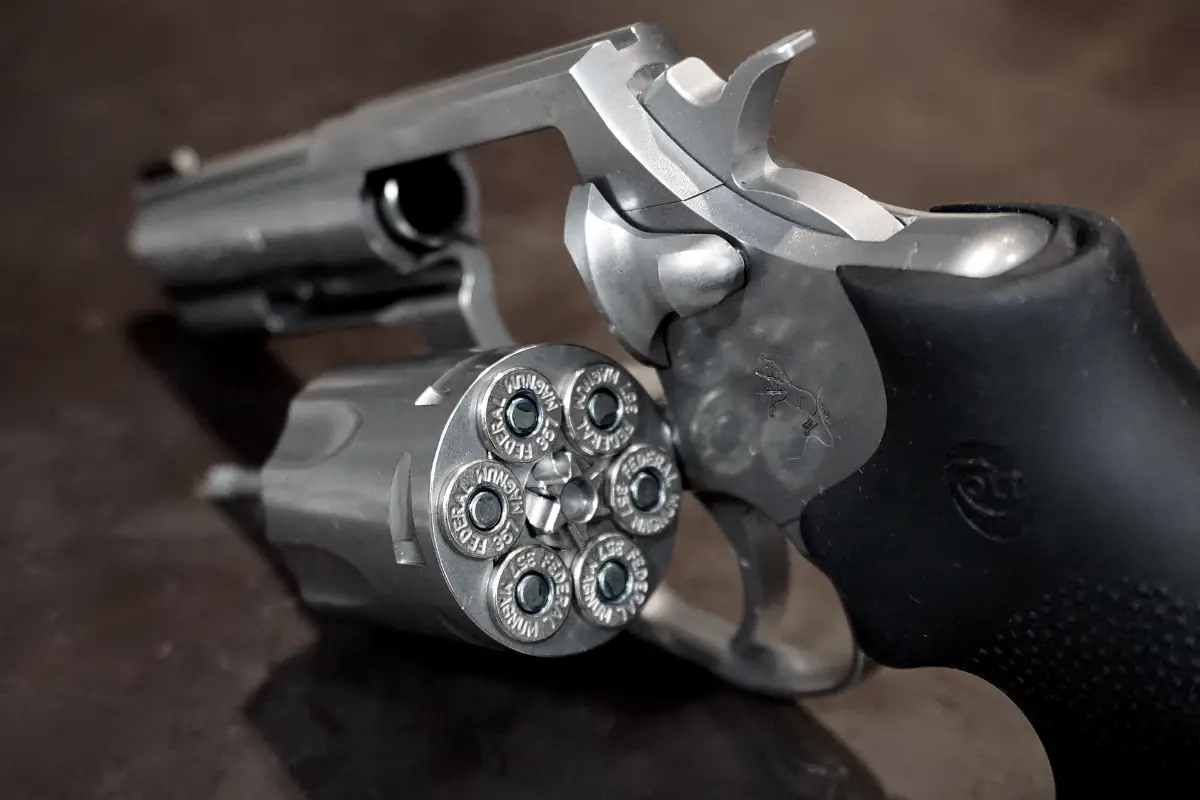
1. Ruger GP100
The Ruger GP100 is widely regarded as one of the most durable .357 Magnum revolvers ever produced, and its reputation is built on a foundation of strength and mechanical resilience. Designed with a robust double-action system and a solid frame, it is engineered to handle continuous use with full-power .357 Magnum loads without compromising performance. This makes it a favorite among shooters who value longevity and mechanical confidence above all else.
From a handling perspective, the GP100 feels solid in the hand, with a weight distribution that naturally helps reduce recoil. When firing .357 Magnum rounds, recoil is noticeable but well-controlled due to the revolver’s mass and ergonomic grip design. The rubberized grip absorbs much of the shock, allowing shooters to maintain better control during rapid follow-up shots. This is particularly important for those using the revolver for defense or extended range sessions.
One of the defining characteristics of the GP100 is its internal strength. Ruger designed the frame and lock-up system to withstand high-pressure loads, which gives users confidence when shooting full-power ammunition regularly. Maintenance is also straightforward, with a simple breakdown process that does not require specialized tools. This ease of care adds to its appeal as a practical working revolver.
Overall, the Ruger GP100 stands as a benchmark in the .357 category. It is not designed to be lightweight or flashy, but rather to perform consistently under pressure. For shooters who want a revolver that can handle heavy use over many years, the GP100 remains one of the most dependable choices among the Best 357 Revolvers.
2. Smith & Wesson Model 686 Plus
The Smith & Wesson Model 686 Plus is a refined stainless-steel revolver that blends strength, balance, and smooth operation into one highly versatile platform. Built on the L-frame design, it was specifically engineered to handle the stresses of .357 Magnum ammunition while maintaining excellent shootability. The “Plus” designation refers to its 7-round cylinder, which gives it a slight capacity advantage over traditional 6-shot revolvers.
In terms of ergonomics, the 686 Plus offers one of the most balanced shooting experiences in its class. The stainless-steel construction adds weight, which plays a key role in reducing perceived recoil. When firing .357 Magnum rounds, the revolver remains surprisingly controllable, especially for its power level. The grip design allows for a firm hold, and the overall balance makes it suitable for both range use and defensive applications.
The trigger system is another highlight of this revolver. Smith & Wesson is known for producing smooth double-action triggers, and the 686 Plus continues this tradition. The pull is consistent and predictable, allowing for better accuracy in double-action shooting. In single-action mode, the trigger becomes light and crisp, which is ideal for precision shots at longer distances.
Durability is also a strong point. The stainless-steel frame resists corrosion and wear, making it suitable for long-term use in different environments. Combined with its reputation for reliability, the Model 686 Plus is often considered one of the most complete .357 revolvers available today. It is a strong example of how traditional revolver design can still meet modern expectations.
3. Colt Python (Reissue)
The Colt Python is one of the most iconic revolvers ever made, and the modern reissue continues that legacy with improved materials and updated manufacturing standards. Known for its smooth action and exceptional craftsmanship, the Python is often considered the “luxury” option in the .357 revolver category. While it is fully functional as a defensive firearm, it is also highly valued for its aesthetic and mechanical refinement.
When handling the Colt Python, the first thing most shooters notice is the smoothness of its action. The double-action trigger pull is exceptionally fluid compared to many other revolvers, making it easier to maintain accuracy during rapid firing. The balance of the revolver is also carefully tuned, giving it a natural point-of-aim feel that enhances shooting confidence.
Recoil management is surprisingly comfortable for a .357 Magnum revolver, largely due to its weight and barrel design. The longer barrel options further improve stability and accuracy, making it effective for precision shooting. The overall build quality reflects Colt’s attention to detail, with tight tolerances and a polished finish that sets it apart visually and mechanically.
The Colt Python is not just a tool but also a statement piece in the revolver world. It represents a blend of heritage and modern engineering, making it one of the most desirable models among enthusiasts. While it may not be the most practical option for every user, its performance and craftsmanship ensure its place among the Best 357 Revolvers.
4. Smith & Wesson Model 19 Carry Comp
The Smith & Wesson Model 19 Carry Comp is a modernized version of a classic revolver, designed specifically for users who want a more compact and controllable .357 Magnum option. It takes inspiration from the original Model 19, which was widely used by law enforcement, and updates it with modern materials and performance enhancements. The result is a revolver that balances tradition with practical improvements.
One of the standout features of the Carry Comp version is its compensator system, which helps reduce muzzle rise when firing .357 Magnum rounds. This makes it significantly easier to control compared to traditional compact revolvers. The reduced recoil allows for faster follow-up shots, which is especially useful in defensive situations where speed and accuracy matter.
The revolver’s compact frame makes it suitable for concealed carry, though it still retains enough weight to manage recoil effectively. The grip is designed for comfort and control, ensuring that even smaller-handed shooters can handle it confidently. Despite its reduced size, it does not sacrifice the core reliability that Smith & Wesson revolvers are known for.
Overall, the Model 19 Carry Comp is a thoughtful evolution of a classic design. It offers modern recoil management features while maintaining the simplicity and reliability of a traditional revolver. This balance makes it a strong contender among the Best 357 Revolvers for users who prioritize carry-friendly performance.
5. Ruger SP101
The Ruger SP101 is a compact and highly durable .357 Magnum revolver designed for concealed carry and personal defense. Despite its smaller size, it is built with Ruger’s signature strength and is capable of handling full-power .357 Magnum ammunition without issue. This makes it one of the most reliable small-frame revolvers in its category.
Handling the SP101 reveals a solid and dense feel, which contributes to its ability to manage recoil despite its compact dimensions. While .357 Magnum loads produce noticeable recoil in this size class, the revolver’s weight and grip design help keep it manageable. Many users choose to practice with .38 Special rounds for comfort, switching to .357 Magnum for defensive use.
The trigger system is smooth and consistent, especially after a break-in period. It may feel heavier compared to larger revolvers, but it remains reliable and predictable. This consistency is important for a defensive firearm, where simplicity and dependability are more important than refinement.
The Ruger SP101 is not designed for extended range sessions or competition shooting. Instead, it excels as a compact, no-nonsense defensive revolver. Its durability, simplicity, and reliability make it one of the most practical options among the Best 357 Revolvers, especially for concealed carry users.
6. Kimber K6s
The Kimber K6s is one of the most refined modern compact .357 revolvers, designed with a clear focus on concealed carry performance without sacrificing mechanical strength. Unlike many traditional revolvers that rely on bulk for recoil control, the K6s uses smart engineering and tight tolerances to deliver a smooth shooting experience in a lightweight frame. It is also one of the few small-frame revolvers capable of handling full-power .357 Magnum loads comfortably for its size class.
In the hand, the Kimber K6s feels compact but solid, with a stainless-steel construction that gives it durability without excessive weight. The grip design is carefully shaped to improve control, especially during rapid fire. While recoil from .357 Magnum rounds is naturally sharp in a small revolver, the K6s manages it better than expected due to its balance and ergonomics. Many users prefer .38 Special for practice, then switch to .357 for defensive readiness.
One of the standout features is its smooth double-action trigger, which is noticeably lighter and more refined than many competing compact revolvers. This contributes to better accuracy in real-world defensive shooting scenarios. The cylinder release and overall machining quality also reflect Kimber’s attention to detail, giving the revolver a more premium feel compared to entry-level alternatives.
Overall, the Kimber K6s is a strong modern option for concealed carry users who want a .357 revolver that feels refined, compact, and reliable. It does not try to compete with heavy-duty range revolvers but instead focuses on practical defensive performance, earning its place among the Best 357 Revolvers.
7. Smith & Wesson Model 627 Pro Series
The Smith & Wesson Model 627 Pro Series stands out immediately due to one key advantage: capacity. Unlike traditional 6-shot revolvers, the 627 features an 8-round cylinder, giving it a clear edge in both defensive and competitive contexts. This increased capacity, combined with Smith & Wesson’s N-frame strength, makes it one of the most capable .357 revolvers available today.
Despite its larger frame, the Model 627 remains surprisingly balanced when shooting. The added weight helps reduce recoil significantly, making .357 Magnum loads more manageable than in lighter revolvers. This makes it especially appealing for shooters who want power without excessive kick. The grip options further improve control, allowing users to tailor the revolver to their hand size and shooting style.
The trigger system is another highlight, offering a smooth and consistent pull that enhances accuracy in both single-action and double-action modes. This is particularly important in an 8-shot revolver, where maintaining rhythm and control during rapid fire can make a noticeable difference. The stainless-steel construction also ensures long-term durability under repeated use.
The Model 627 Pro Series is not a compact carry revolver. Instead, it is designed for performance-oriented users who value capacity, control, and precision. Whether used for range work or competition-style shooting, it delivers a highly stable and predictable shooting experience, placing it firmly among the Best 357 Revolvers.
8. Taurus 692 Tracker
The Taurus 692 Tracker is a highly versatile revolver that offers something unique in the .357 category: caliber flexibility. It is designed to switch between .357 Magnum, .38 Special, and 9mm by changing cylinders, making it one of the most adaptable revolvers on the market. This flexibility makes it especially appealing for shooters who want a multi-purpose firearm for training, defense, and recreational use.
From a handling perspective, the 692 Tracker is designed with control in mind. Its barrel porting system helps reduce muzzle rise, making .357 Magnum recoil more manageable than expected. The rubberized grip further improves comfort, especially during extended shooting sessions. While it is not the lightest revolver, its weight contributes to better stability and accuracy.
Performance-wise, the revolver delivers consistent accuracy across all supported calibers. The ability to switch to 9mm also provides a lower-cost training option, which can be a practical advantage for frequent shooters. The double-action trigger is functional and predictable, though not as refined as some premium competitors. Still, it performs reliably in real-world use.
Overall, the Taurus 692 Tracker is a practical and flexible option for users who value versatility over specialization. It may not have the prestige of higher-end revolvers, but its multi-caliber capability and solid performance make it a unique entry among the Best 357 Revolvers.
9. Smith & Wesson Model 66
The Smith & Wesson Model 66 is a stainless-steel classic that has earned its reputation through decades of reliable service. Originally developed as a K-frame .357 Magnum revolver, it was widely adopted by law enforcement agencies due to its balance of size, weight, and power. Even today, it remains a respected option for shooters who appreciate traditional revolver design with proven performance.
In terms of handling, the Model 66 offers a comfortable and well-balanced shooting experience. It is lighter than larger N-frame revolvers, making it easier to carry and handle, while still providing enough weight to control .357 Magnum recoil effectively. The grip design allows for a secure hold, and the overall ergonomics support accurate shooting at defensive distances.
The trigger is one of its defining strengths, offering a smooth double-action pull that helps maintain consistency during shooting. In single-action mode, it becomes crisp and precise, allowing for accurate shot placement. The stainless-steel construction also provides excellent resistance to corrosion, making it suitable for long-term use in different environments.
The Model 66 is a balance-oriented revolver that does not specialize in extreme power or compact concealment. Instead, it focuses on being a dependable all-around .357 Magnum option. Its long-standing reputation for reliability ensures its continued presence among the Best 357 Revolvers.
10. Ruger Security-Six
The Ruger Security-Six is a classic revolver that played a significant role in shaping modern double-action .357 Magnum designs. Known for its rugged construction and simplicity, it was widely used by law enforcement during its production years and continues to be respected by enthusiasts today. Its design prioritizes durability and straightforward operation over refinement or modern features.
Handling the Security-Six reveals a solid, no-nonsense firearm built for serious use. The revolver’s weight distribution helps manage recoil, while the grip provides a firm and secure hold. Although it lacks some of the ergonomic refinements found in newer models, it remains comfortable enough for practical shooting applications. Its simplicity is part of its appeal, especially for users who prefer mechanical reliability.
Performance is consistent and dependable, with a trigger system that is functional and predictable. While it may not be as smooth as modern revolvers, it is reliable and easy to maintain. The revolver’s strength lies in its mechanical durability, capable of handling .357 Magnum loads without issue over long-term use.
The Ruger Security-Six represents a foundational design in the evolution of .357 revolvers. While it may be considered outdated compared to newer models, its reliability and historical significance keep it relevant among the Best 357 Revolvers for collectors and practical shooters alike.
Best 357 Revolvers – Top 11–15 Picks
11. Dan Wesson Model 715
The Dan Wesson Model 715 is a highly regarded .357 Magnum revolver known for one distinctive engineering advantage: its interchangeable barrel system. This design allows shooters to swap barrels of different lengths, effectively changing the balance, velocity, and shooting characteristics of the revolver without replacing the entire firearm. It is a unique feature that appeals strongly to enthusiasts who want flexibility and precision tuning in a single platform.
From a handling perspective, the Model 715 feels solid and mechanically precise. The stainless-steel construction gives it weight and stability, which helps reduce recoil when firing .357 Magnum rounds. Depending on the barrel length installed, the revolver can shift from a compact field handgun to a more accurate, long-range-capable platform. This adaptability makes it especially useful for shooters who engage in both range practice and outdoor use.
Performance is one of the strongest aspects of the Model 715. The revolver is known for tight tolerances and excellent accuracy, particularly when using longer barrels. The trigger system is crisp and predictable, allowing for consistent shot placement. The ability to fine-tune barrel length gives shooters an unusual level of control over velocity and recoil characteristics compared to most revolvers.
Overall, the Dan Wesson 715 stands out as a precision-focused revolver with modular capabilities. It is not the simplest or lightest option, but it offers a level of customization that few other .357 revolvers can match, securing its place among the Best 357 Revolvers.
12. Colt King Cobra
The Colt King Cobra is a modern revival of a classic Colt revolver lineage, designed to combine traditional durability with updated materials and manufacturing techniques. It is built around a stainless-steel frame and is intended for users who want a dependable .357 Magnum revolver that balances portability and power. Compared to larger revolvers, the King Cobra is more manageable for everyday carry while still delivering full Magnum performance.
In the hand, the King Cobra feels compact yet sturdy. The grip is designed for control, allowing users to manage recoil effectively even with full-power .357 Magnum ammunition. While recoil is still noticeable due to its mid-size frame, it remains predictable and controllable with proper technique. The revolver’s balance supports natural aiming, making it suitable for defensive use and range practice.
The trigger system is smooth and consistent, particularly in double-action mode. Colt has refined its modern revolver triggers to offer a more usable pull compared to older generations. This improvement helps shooters maintain accuracy during rapid firing sequences. The overall build quality also reflects Colt’s emphasis on durability and mechanical integrity.
The King Cobra is not a heavy-duty target revolver, nor is it a micro carry gun. Instead, it sits in a balanced middle ground, offering a practical combination of size, power, and reliability. This makes it a strong contender among the Best 357 Revolvers for users who want versatility in a single firearm.
13. Smith & Wesson Model 586
The Smith & Wesson Model 586 is a classic L-frame revolver that shares many design elements with the Model 686 but features a traditional blued steel finish. It is often appreciated by enthusiasts who prefer the aesthetic and feel of carbon steel over stainless steel. Despite its classic appearance, it delivers modern-level performance and reliability in the .357 Magnum category.
Handling the Model 586 reveals a well-balanced revolver with a comfortable grip and solid weight distribution. The steel frame helps manage recoil effectively, making .357 Magnum loads more controllable than in lighter revolvers. The overall feel is stable and predictable, which contributes to better accuracy during extended shooting sessions.
The trigger system is smooth and refined, particularly in single-action mode where it offers a crisp break. Double-action performance is also consistent, allowing for controlled rapid fire. The revolver’s internal mechanics are known for durability, making it suitable for long-term use with proper maintenance.
The Model 586 is often seen as a blend of performance and classic revolver design. It does not rely on modern tactical features but instead focuses on mechanical excellence and shooting comfort. This balance keeps it relevant among the Best 357 Revolvers, especially for traditional revolver enthusiasts.
14. Ruger LCR .357 Magnum
The Ruger LCR .357 Magnum is a lightweight revolver designed specifically for concealed carry and defensive use. Unlike traditional steel-frame revolvers, it uses a polymer fire control housing combined with a steel cylinder and barrel, significantly reducing overall weight. This makes it one of the most portable .357 revolvers available, but also one of the most challenging in terms of recoil management.
In terms of handling, the LCR is extremely easy to carry due to its minimal weight. However, this lightweight design means that recoil from .357 Magnum rounds is more pronounced. For this reason, many users prefer to train with .38 Special ammunition while reserving .357 Magnum for defensive situations. The grip is designed with recoil-absorbing materials to help mitigate some of the impact.
The trigger system is one of the highlights of the LCR, offering a smooth and consistent double-action pull that is better than many compact revolvers in its class. This helps improve accuracy despite the small frame and short sight radius. Simplicity is a key strength, as the revolver has very few controls and is easy to operate under stress.
The Ruger LCR .357 is not built for range performance or extended shooting comfort. Instead, it focuses entirely on concealability and reliability in critical situations. Its role as a lightweight defensive revolver secures its place among the Best 357 Revolvers.
15. Taurus Model 66
The Taurus Model 66 is a practical and widely used .357 Magnum revolver that offers solid performance at an accessible price point. It is designed for users who want a dependable revolver without entering premium pricing tiers. While it may not have the refinement of higher-end models, it delivers functional reliability and versatility for defensive and recreational use.
From a handling standpoint, the Model 66 provides a comfortable grip and a balanced frame that helps manage recoil reasonably well. It is a mid-sized revolver, making it suitable for both range use and home defense. The rubber grip improves control, especially when firing .357 Magnum rounds, which can produce noticeable recoil.
Performance is consistent, with a double-action trigger that is functional though slightly heavier than premium competitors. Accuracy is acceptable for defensive distances, and the revolver cycles reliably with both .357 Magnum and .38 Special ammunition. This flexibility adds to its practical value for general users.
The Taurus Model 66 represents a straightforward and functional approach to the .357 revolver platform. It may not be a luxury firearm, but it fulfills its role effectively, making it a reasonable and accessible option among the Best 357 Revolvers.
Conclusion: Best 357 Revolvers Overview
The .357 Magnum revolver continues to hold a strong and respected position in the world of handguns, even as modern semi-automatic pistols evolve. Across the Best 357 Revolvers reviewed in this guide, one clear theme stands out: simplicity, durability, and consistent mechanical reliability. Unlike more complex firearm systems, revolvers in this caliber are valued for their ability to function under stress with minimal failure points, making them a trusted choice for both defensive use and recreational shooting.
Each revolver in this list serves a slightly different purpose. Heavy-duty models like the Ruger GP100 and Smith & Wesson Model 686 Plus focus on strength and long-term durability. Compact options such as the Ruger SP101 and Kimber K6s prioritize concealability and everyday carry practicality. Meanwhile, classic and performance-oriented designs like the Colt Python or CZ 75-based revolver options appeal to enthusiasts who value precision, craftsmanship, and shooting experience. This diversity is what makes the .357 platform so enduring and widely respected.
Another important takeaway is that there is no single “perfect” .357 revolver for everyone. The best choice depends on intended use, hand size, recoil tolerance, and carry preference. A heavier revolver may offer better recoil control and accuracy, while a lighter model provides easier portability at the cost of increased felt recoil. Understanding this trade-off is essential when selecting the right firearm.
Ultimately, the .357 revolver remains a timeless platform because it delivers what many shooters value most: dependable performance, mechanical simplicity, and proven stopping capability. Whether for home defense, concealed carry, or range use, the models featured here represent some of the most reliable and respected options available today. For anyone exploring revolvers, these selections provide a solid foundation for choosing a firearm that will perform consistently for years to come.
50+ FAQs About the Best 357 Revolvers
1. What makes a .357 revolver a good choice today?
A good .357 revolver stands out because of its mechanical reliability, simplicity, and ability to handle both .38 Special and .357 Magnum ammunition. This flexibility allows users to train with lighter recoil rounds while still having access to full-power defensive loads. Modern .357 revolvers also benefit from improved metallurgy and ergonomics, making them more comfortable and durable than older generations. Even in a semi-auto dominated market, they remain trusted tools for defense, hunting backup, and general shooting due to their low failure rate and straightforward operation.
2. What is the difference between .357 Magnum and .38 Special?
The .357 Magnum is a more powerful cartridge compared to the .38 Special, offering higher velocity, greater energy, and improved stopping performance. Both rounds can be fired from a .357 revolver, but .38 Special produces significantly less recoil, making it better for practice. The ability to use both calibers in one firearm is one of the biggest advantages of owning a .357 revolver. However, .357 Magnum generates more noise, flash, and recoil, which can be challenging for new shooters.
3. Are .357 revolvers good for self-defense?
Yes, .357 revolvers are highly effective for self-defense due to their reliability and stopping power. The cartridge delivers strong terminal performance, while the revolver design minimizes the chance of malfunctions. Even under stress, a revolver is simple to operate, which can be a major advantage in defensive situations. Many users prefer them for home defense because they are intuitive and require less manual operation than semi-automatic pistols.
4. Why do people still use revolvers instead of semi-automatics?
Revolvers are still popular because of their mechanical simplicity and reliability. They do not rely on magazines, feeding systems, or complex cycling mechanisms. This reduces potential failure points. Many shooters also appreciate the confidence that comes with a revolver’s straightforward operation. While semi-automatics offer higher capacity and faster reloads, revolvers remain valued for their dependability and ease of use under stress.
5. What is the best .357 revolver for beginners?
For beginners, models like the Ruger GP100 or Smith & Wesson Model 686 Plus are often recommended. These revolvers offer manageable recoil, excellent durability, and user-friendly ergonomics. They are also forgiving platforms that allow new shooters to build confidence. Starting with .38 Special ammunition is usually advised before transitioning to .357 Magnum loads.
6. Are lightweight .357 revolvers harder to shoot?
Yes, lightweight .357 revolvers tend to produce more felt recoil because there is less mass to absorb the energy of firing. This can make shooting less comfortable, especially with full-power .357 Magnum ammunition. However, they are much easier to carry, which is why they are popular for concealed carry. Users often balance this trade-off based on whether they prioritize comfort or portability.
7. What is the most durable .357 revolver?
Ruger GP100 is widely considered one of the most durable .357 revolvers due to its strong frame design and ability to handle high round counts without mechanical issues. Smith & Wesson L-frame models like the 686 Plus are also known for long-term reliability. Durability depends on build quality, materials, and maintenance, but these models consistently rank at the top.
8. Can .357 revolvers be used for hunting?
Yes, .357 revolvers can be used for hunting small to medium game at short ranges. Their powerful cartridge provides sufficient energy for ethical shots when used within appropriate distances. Longer-barreled revolvers improve accuracy and velocity, making them more suitable for field use. However, they are generally considered secondary or backup hunting tools rather than primary hunting firearms.
9. What is recoil like on a .357 revolver?
Recoil on a .357 revolver varies depending on weight, barrel length, and ammunition type. Full-power .357 Magnum rounds produce sharp, noticeable recoil and muzzle flash. Heavier revolvers reduce this effect, making shooting more manageable. In contrast, .38 Special rounds are much softer and are often used for practice to reduce fatigue.
10. Are revolvers more reliable than semi-autos?
Revolvers are often considered more mechanically reliable because they do not depend on magazine feeding or cycling systems. However, they are not immune to issues such as mechanical wear or improper maintenance. Semi-automatics offer higher capacity and faster reloads, but revolvers are generally favored for their simplicity and consistent operation under stress.
11. What is the best compact .357 revolver for carry?
Popular compact options include the Ruger SP101, Kimber K6s, and Ruger LCR. These models are designed for concealed carry and prioritize portability. While they are smaller and lighter, they still offer solid performance with .357 Magnum ammunition, though recoil is more noticeable compared to full-size revolvers.
12. How many rounds does a typical .357 revolver hold?
Most traditional .357 revolvers hold 5 or 6 rounds. However, some modern designs like the Smith & Wesson Model 627 can hold up to 8 rounds. Capacity depends on frame size and design priorities. While revolvers have lower capacity than semi-automatics, their reliability often compensates for this limitation.
13. What is the safest way to carry a revolver?
The safest way to carry a revolver is typically with all chambers loaded if the firearm has modern internal safety features, or with one chamber empty in older designs. Many users prefer inside-the-waistband holsters or secure belt holsters. Proper trigger protection and safe handling practices are essential for all carry methods.
14. Are stainless steel revolvers better than blued steel?
Stainless steel revolvers offer better corrosion resistance and are easier to maintain in harsh environments. Blued steel revolvers, however, are often preferred for their traditional appearance and smoother finish. Functionally, both perform similarly, so the choice usually comes down to aesthetics and environmental conditions.
15. What is the difference between K-frame, L-frame, and N-frame?
These refer to Smith & Wesson frame sizes. K-frame is smaller and lighter, suitable for carry. L-frame is a middle ground designed for .357 Magnum durability and control. N-frame is the largest, offering maximum strength and recoil absorption. Each frame size affects weight, capacity, and shooting comfort.
16. Do .357 revolvers require a lot of maintenance?
No, .357 revolvers are relatively low-maintenance compared to semi-automatic pistols. They require regular cleaning of the barrel, cylinder, and moving parts, but their mechanical simplicity reduces the chance of complex issues. Proper lubrication and periodic inspection are usually sufficient for long-term reliability.
17. Can I dry fire a .357 revolver?
Many modern .357 revolvers can be dry-fired safely, but it is still recommended to use snap caps when possible to reduce wear on internal components. Dry firing helps improve trigger control and familiarity with the firearm without using live ammunition.
18. What is barrel length effect on performance?
Longer barrels generally increase velocity and improve accuracy due to a longer sight radius. Shorter barrels make the revolver easier to carry but reduce ballistic performance slightly. The ideal barrel length depends on whether the revolver is used for defense, range shooting, or field use.
19. Are .357 revolvers good for home defense?
Yes, they are very effective for home defense. Their simplicity reduces the chance of user error under stress. The powerful cartridge provides strong stopping capability, and reliability ensures function when needed. However, recoil and noise should be considered in indoor environments.
20. What is the most iconic .357 revolver?
The Colt Python is widely regarded as the most iconic .357 revolver due to its craftsmanship, historical significance, and smooth performance. It has a strong reputation among collectors and shooters alike and remains one of the most recognizable revolvers ever made.
21. Is .357 Magnum overpowered for beginners?
For many beginners, .357 Magnum can feel powerful due to its sharp recoil and loud report. It is often recommended that new shooters start with .38 Special ammunition to build fundamentals before transitioning to .357 Magnum. This approach helps improve control and confidence without overwhelming recoil.
22. What is cylinder lock-up?
Cylinder lock-up refers to how securely the cylinder aligns with the barrel when the revolver is fired. A tight lock-up improves accuracy and ensures safe operation. High-quality revolvers maintain strong lock-up even after extended use.
23. Why are revolvers considered “point and shoot” firearms?
Revolvers are often described this way because they have simple manual operation. There are no external safeties or complex feeding systems in most models. This makes them intuitive and easier to operate under stress compared to some semi-automatic designs.
24. Can revolvers jam?
While rare, revolvers can experience malfunctions such as cylinder binding or misalignment. However, these issues are significantly less common than malfunctions in semi-automatic pistols. Proper maintenance greatly reduces the chance of problems.
25. What is double-action vs single-action?
Double-action means pulling the trigger both cocks and releases the hammer. Single-action means the hammer is manually cocked before firing. Double-action is faster in emergencies, while single-action offers lighter trigger pull and improved accuracy.
26. What is the best barrel length for a .357 revolver?
The best barrel length depends on the intended use. A 4-inch barrel is widely considered the most balanced option because it offers a good mix of accuracy, recoil control, and portability. Longer barrels, such as 6 inches or more, improve velocity and precision, making them ideal for range shooting or hunting. Shorter barrels under 3 inches prioritize concealability but increase recoil and reduce sight radius. Choosing the right length is about balancing performance and practicality rather than finding a single “best” option.
27. Are .357 revolvers good for concealed carry?
Yes, but it depends on the model. Compact revolvers like the Ruger LCR, Ruger SP101, and Kimber K6s are specifically designed for concealed carry. They are lightweight and easy to hide, but they produce more recoil due to their size. Full-size revolvers are generally less practical for daily concealed carry because of their weight and bulk, although some users still prefer them for comfort and shootability.
28. What is the advantage of a revolver over a pistol for defense?
Revolvers offer mechanical simplicity, which reduces the chance of feeding or cycling failures. They are easy to operate under stress, requiring only trigger pulls to fire. This makes them appealing for users who prioritize reliability over capacity. However, they typically hold fewer rounds than semi-automatic pistols, so the choice depends on user preference and training.
29. How long do .357 revolvers last?
A well-made .357 revolver can last tens of thousands of rounds with proper maintenance. High-quality models from manufacturers like Ruger and Smith & Wesson are built with strong frames and durable internal components. Regular cleaning, lubrication, and occasional part replacement can significantly extend the firearm’s lifespan, often making it a multi-generational tool.
30. What type of ammunition is best for practice?
.38 Special ammunition is generally the best choice for practice because it produces less recoil and is more affordable than .357 Magnum rounds. This allows shooters to train more comfortably and frequently. Many users reserve .357 Magnum ammunition for defensive purposes while using .38 Special for range sessions.
31. Do .357 revolvers have safety mechanisms?
Most modern .357 revolvers do not have external manual safeties. Instead, they rely on internal safety systems such as transfer bars or hammer blocks to prevent accidental discharge. This design keeps operation simple while still maintaining a high level of safety when handled properly.
32. What is a transfer bar system?
A transfer bar system is an internal safety mechanism that prevents the hammer from directly striking the firing pin unless the trigger is fully pulled. This reduces the risk of accidental discharge if the revolver is dropped or struck. Many modern revolvers from Ruger and others use this system.
33. Are revolvers good for new shooters?
Yes, revolvers are often recommended for new shooters because they are simple to operate and easy to understand mechanically. There is no need to manage magazines or slide operation. However, recoil from .357 Magnum can be strong, so beginners often start with .38 Special to build confidence.
34. What is the difference between a fixed and adjustable sight?
Fixed sights are built into the revolver and cannot be adjusted, making them durable and simple. Adjustable sights allow users to fine-tune elevation and windage for improved accuracy. Adjustable sights are often found on target or performance-oriented revolvers, while fixed sights are common on carry models.
35. Can .357 revolvers be used for hunting defense against predators?
Yes, .357 Magnum revolvers are sometimes used as backup firearms in hunting environments where protection against wildlife is needed. Their power and reliability make them suitable for close-range defensive use. Longer barrels improve effectiveness in such situations.
36. What is the role of frame size in recoil control?
Frame size directly affects recoil management. Larger frames absorb more energy, resulting in smoother shooting with less felt recoil. Smaller frames are easier to carry but transfer more recoil to the shooter. This is why heavy revolvers feel more comfortable with .357 Magnum ammunition.
37. Are .357 revolvers accurate?
Yes, .357 revolvers are generally very accurate, especially with quality barrels and proper sights. Longer barrels and good trigger control significantly improve precision. Many shooters find revolvers inherently accurate due to their fixed barrel alignment and consistent lock-up.
38. What causes heavy recoil in small revolvers?
Heavy recoil in small revolvers is caused by reduced weight and shorter barrel length. Less mass means less energy absorption, and shorter barrels provide less leverage for control. High-pressure .357 Magnum rounds amplify this effect, making compact revolvers more challenging to shoot.
39. Can revolvers be used in competitions?
Yes, revolvers are used in various shooting competitions, especially in classic or specific revolver divisions. Models like the Smith & Wesson 627 or Colt Python are popular due to their accuracy and smooth triggers. While semi-autos dominate modern competition, revolvers still have a strong presence in niche categories.
40. What is a forcing cone?
The forcing cone is the tapered section at the rear of the barrel that guides the bullet from the cylinder into the barrel. A well-machined forcing cone improves accuracy and reduces wear. It is a critical component in revolver performance and longevity.
41. Do revolvers require special cleaning?
Revolvers do not require special cleaning methods, but attention should be given to the cylinder, forcing cone, and barrel. Carbon buildup in the cylinder chambers should be removed regularly. Proper cleaning ensures smooth cylinder rotation and reliable operation.
42. What is the best grip material for revolvers?
Rubber grips are often preferred for .357 revolvers because they help absorb recoil and improve control. Wood grips offer a traditional appearance but may transmit more recoil. Some modern grips combine materials for both comfort and durability.
43. Can .357 revolvers shoot +P ammunition?
Yes, .357 Magnum revolvers can safely shoot .38 Special +P ammunition. These rounds are slightly more powerful than standard .38 Special but still significantly less powerful than .357 Magnum. They offer a middle ground for recoil and performance.
44. What is timing in a revolver?
Timing refers to the precise alignment of the cylinder with the barrel when the hammer is released. Proper timing ensures that the bullet travels safely and accurately through the barrel. Poor timing can affect accuracy and safety, making it an important aspect of revolver function.
45. Are revolvers legal everywhere?
Revolver legality depends on local firearm laws. In many regions, they are legal for civilian ownership with proper licensing. However, regulations vary widely, so it is important to check local laws before purchasing or carrying any firearm.
46. What is the benefit of stainless steel revolvers?
Stainless steel revolvers resist corrosion and are easier to maintain in humid or harsh environments. They are also generally more durable over time. This makes them a popular choice for defensive and outdoor use.
47. Can revolvers be suppressed?
Most revolvers are not practical to suppress due to the gap between the cylinder and barrel, which allows gas to escape. Special designs exist, but they are rare and not commonly used. Suppression is generally more effective with semi-automatic pistols.
48. What is the most important factor when choosing a .357 revolver?
The most important factor is intended use. A concealed carry user will prioritize size and weight, while a range shooter may prioritize accuracy and recoil control. Matching the revolver to its purpose ensures better performance and satisfaction.
49. Are older .357 revolvers still reliable?
Many older .357 revolvers remain reliable if they have been properly maintained. However, wear over time can affect timing and lock-up. Well-made vintage revolvers are often still functional and valued by collectors and shooters alike.
50. What defines the Best 357 Revolvers overall?
The Best 357 Revolvers are defined by a combination of reliability, build quality, recoil management, and suitability for their intended purpose. There is no single perfect model, but rather a range of excellent options tailored to different needs such as carry, defense, hunting, or range use. The best choice is always the one that fits the shooter’s hand, skill level, and real-world requirements.
Read more: