

The history of types of japanese guns reflects centuries of military innovation, cultural adaptation, and technological evolution. From the arrival of Portuguese matchlock firearms during the Sengoku period to the advanced rifles used by the modern Japan Self-Defense Forces, Japanese guns have developed through a unique blend of foreign influence and domestic engineering. Some firearms became symbols of samurai-era warfare, while others played major roles during World War II and the modernization of Japan’s military forces. This guide explores 20 notable Japanese firearms that shaped different periods of Japanese history, beginning with five influential designs that helped define the nation’s approach to weapons development.
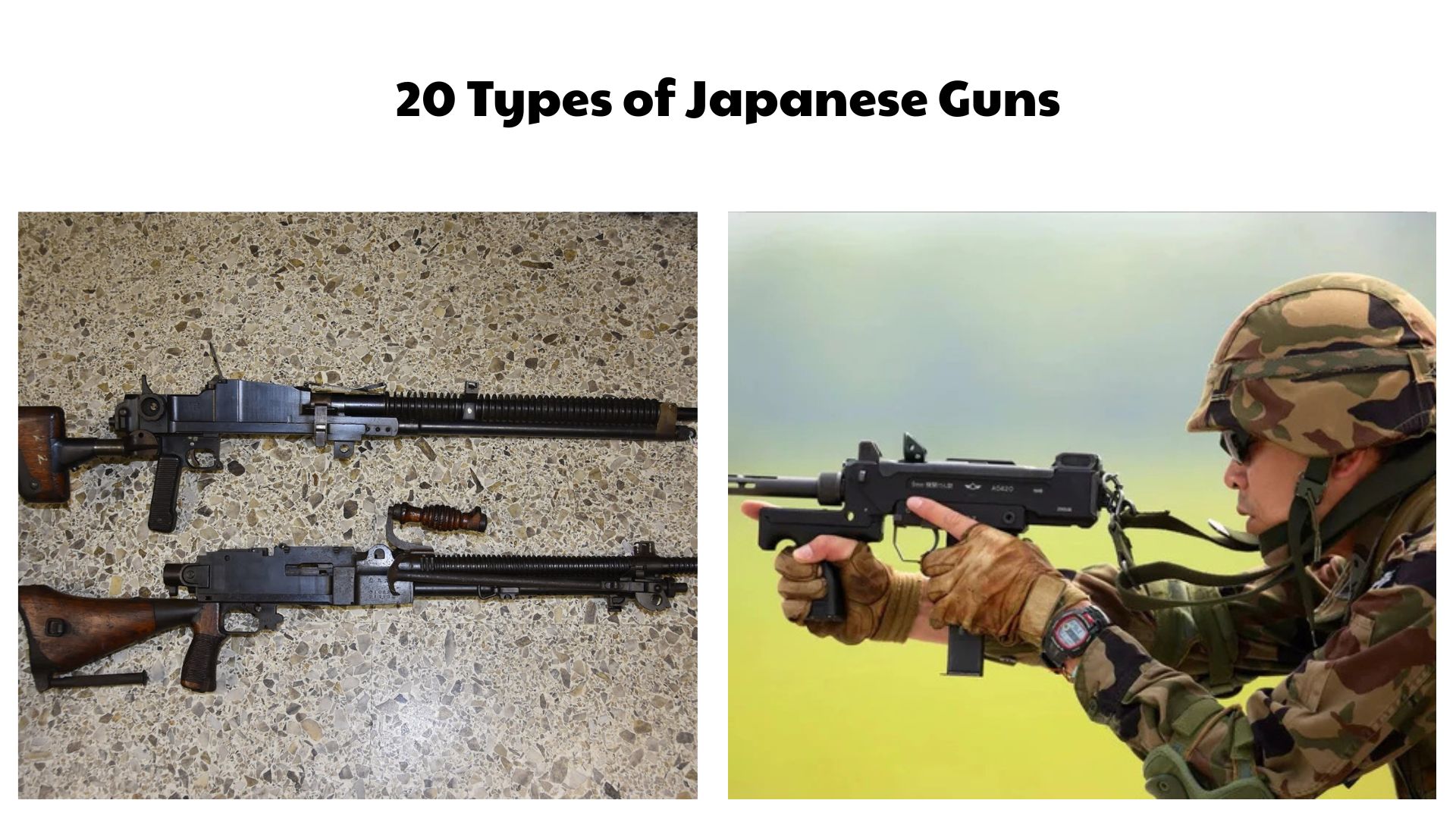
20 Types of Japanese Guns
1. Tanegashima Matchlock
The Tanegashima matchlock is one of the most historically important firearms ever introduced into Japan. It first appeared in the mid-16th century after Portuguese traders arrived on Tanegashima Island and demonstrated European matchlock technology to local Japanese leaders. Before the arrival of firearms, Japanese warfare relied heavily on swords, bows, and spears, but the introduction of the Tanegashima dramatically changed battlefield tactics during the Sengoku period.
Among all japanese guns, the Tanegashima became revolutionary because it allowed armies to train large numbers of soldiers quickly compared to traditional archery. Daimyo warlords rapidly adopted the firearm and encouraged domestic production. Japanese gunsmiths improved the original European design by refining weather protection and production quality, resulting in firearms that were often considered more durable and reliable than early imported versions.
In combat, the Tanegashima allowed massed infantry formations to deliver coordinated volleys against enemy forces. One of the most famous uses occurred during the Battle of Nagashino in 1575, where Oda Nobunaga effectively used lines of arquebusiers to defeat cavalry charges. This marked a major turning point in Japanese military history because firearms proved capable of reshaping traditional samurai warfare.
Although the matchlock eventually became obsolete after modern rifles emerged, the Tanegashima remains a defining symbol of early Japanese firearms history. Its influence extended beyond warfare into craftsmanship and military organization, helping Japan become one of the largest firearm-producing nations of its era.
2. Murata Rifle
The Murata Rifle represented Japan’s first domestically produced modern military rifle during the Meiji period. Developed by Major Murata Tsuneyoshi in the late 19th century, the rifle was part of Japan’s effort to modernize its armed forces after centuries of isolation. The government recognized that advanced firearms were necessary to compete with Western powers, and the Murata Rifle became an important step toward building a modern industrial military.
Within the broader history of types of japanese guns, the Murata Rifle symbolized the transition from feudal warfare to industrial military organization. It featured bolt-action operation and metallic cartridges, which were significant improvements over older black powder firearms. Japanese engineers designed the rifle to meet the demands of modern infantry tactics while maintaining production efficiency.
The Murata Rifle saw service during several late 19th-century conflicts and helped establish domestic firearm manufacturing capabilities in Japan. Its introduction also encouraged further research into ammunition technology, metallurgy, and standardized military equipment. Compared to earlier matchlocks, the Murata Rifle offered dramatically improved range, reload speed, and battlefield reliability.
Even though later rifles eventually replaced it, the Murata remains historically important because it marked the true beginning of Japan’s independent military firearms industry. It laid the foundation for future Japanese bolt-action rifles that would become widely recognized during the early 20th century.
3. Arisaka Type 38
The Arisaka Type 38 is one of the most recognizable bolt-action rifles ever produced by Japan. Introduced in the early 1900s, it became the standard service rifle of the Imperial Japanese Army for decades. Designed around the 6.5×50mm cartridge, the rifle earned a reputation for durability and strong mechanical construction.
Among all japanese guns, the Type 38 stood out because of its reliability under difficult battlefield conditions. Soldiers operating in mud, humidity, and tropical climates found that the rifle continued functioning even after heavy use. Its bolt system was considered exceptionally strong and safe, which later attracted interest from foreign collectors and military historians.
The rifle saw extensive service during conflicts such as the Russo-Japanese War and World War II. Its relatively mild recoil made it easier for soldiers to maintain accuracy during sustained firing. The long barrel also contributed to good ballistic performance for the era, especially at medium and long distances.
The Arisaka Type 38 eventually became one of the defining infantry rifles of Japan’s military history. Even after newer models appeared, large numbers remained in service because of their durability and proven battlefield effectiveness.
4. Arisaka Type 99
The Arisaka Type 99 was introduced as a more powerful successor to the Type 38 during World War II. Chambered in 7.7×58mm, it offered increased stopping power and improved battlefield performance against modern enemy equipment. The rifle maintained the strong bolt-action system that made earlier Arisaka rifles famous while adding several design updates.
In discussions about types of japanese guns, the Type 99 is often considered one of the strongest bolt-action rifles produced during the Second World War. Its chrome-lined barrel improved durability in tropical environments, while its robust receiver handled high-pressure ammunition effectively.
The rifle was issued widely throughout the Pacific Theater and became closely associated with Japanese infantry forces during the later years of the war. Although wartime production quality declined toward the end of the conflict due to resource shortages, earlier Type 99 rifles demonstrated excellent machining and mechanical reliability.
Today, the Arisaka Type 99 is studied as both a military firearm and a representation of Japan’s wartime industrial capability. Its strong action and practical combat design continue to attract interest among historians and collectors worldwide.
5. Type 100 Submachine Gun
The Type 100 Submachine Gun was Japan’s primary submachine gun during World War II. Compared to many Western submachine guns of the era, it was produced in smaller numbers and reflected Japan’s different military priorities. Nevertheless, it provided Japanese troops with a compact automatic weapon suitable for close-range combat.
Among historical japanese guns, the Type 100 was notable for its relatively lightweight design and controllable recoil. Chambered in 8mm Nambu, it used a side-mounted magazine and featured selective fire capability. Some versions also included bayonet mounts, reflecting Japanese military doctrine at the time.
The Type 100 was particularly useful in jungle warfare environments where close-quarters engagements were common. Its compact size allowed soldiers to maneuver more effectively in dense terrain compared to full-length rifles. However, production limitations prevented it from becoming as widespread as submachine guns used by other major powers.
Despite its limited numbers, the Type 100 remains one of the most recognizable Japanese automatic weapons of World War II. It demonstrated Japan’s attempt to modernize infantry firepower while adapting to the tactical realities of Pacific combat.
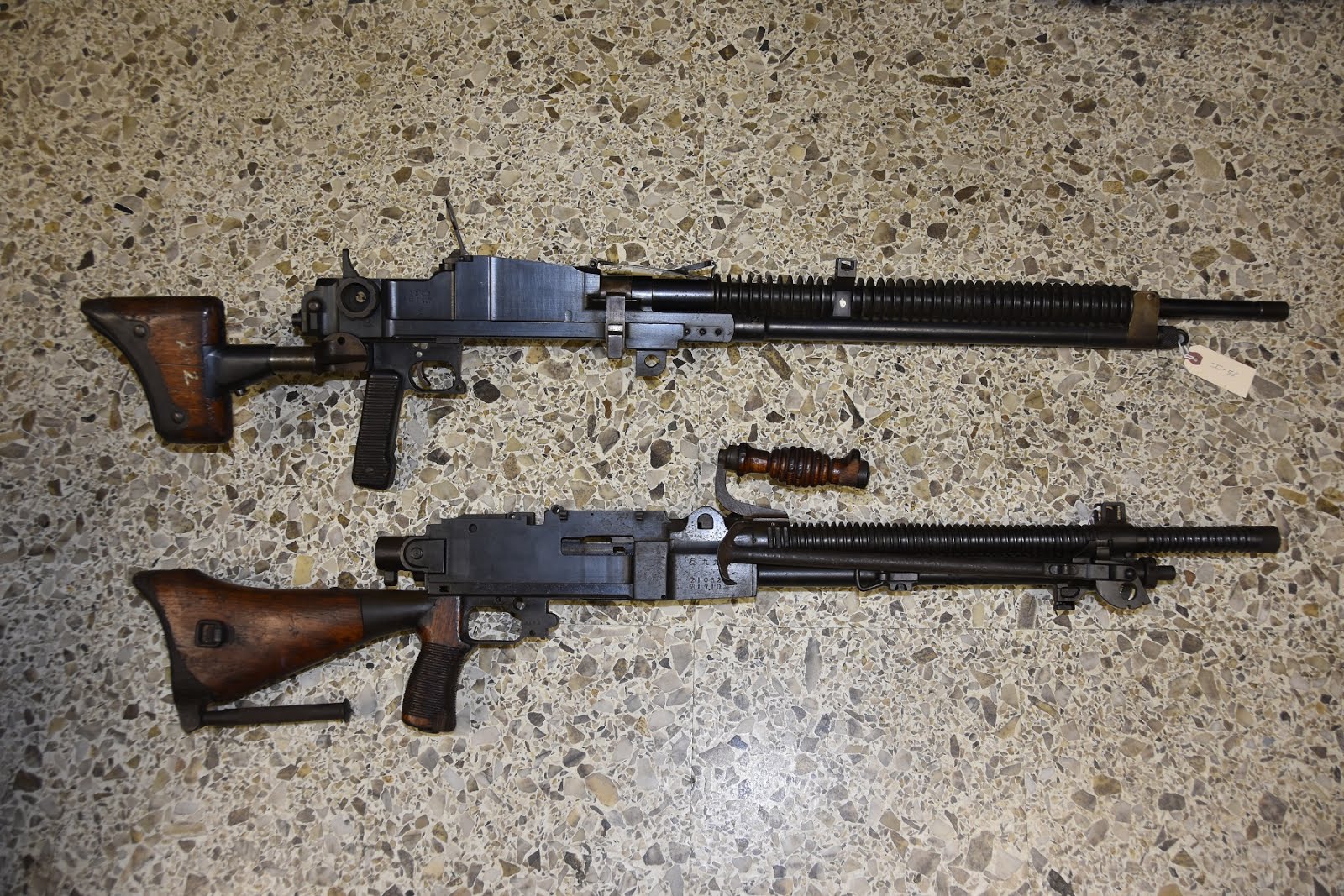
6. Type 99 Light Machine Gun
The Type 99 Light Machine Gun was developed during World War II as an improved successor to the earlier Type 96. Chambered in the more powerful 7.7×58mm cartridge, it was designed to increase firepower and battlefield effectiveness for Japanese infantry squads operating across the Pacific Theater. The weapon became one of the most important support firearms used by the Imperial Japanese Army during the later years of the war.
Among all types of japanese guns, the Type 99 stood out because of its balance between portability and sustained automatic fire capability. Unlike heavier machine guns that required crew support, the Type 99 could be carried and operated by a single soldier. The design included a quick-change barrel system and a folding bipod, both of which improved battlefield flexibility during extended engagements.
One of the most recognizable features of the Type 99 was its top-mounted magazine, which allowed gravity-assisted feeding and reliable operation under harsh environmental conditions. The weapon also incorporated chrome-lined barrels in many versions, helping resist corrosion in humid jungle climates. This reflected Japan’s growing understanding of the environmental challenges faced during campaigns in Southeast Asia and the Pacific islands.
Although it was not produced in the same massive numbers as some Allied machine guns, the Type 99 gained a reputation for durability and controllable recoil. Its role as a squad support weapon highlighted Japan’s effort to modernize infantry tactics by integrating mobile automatic fire into frontline units.
7. Type 96 Light Machine Gun
The Type 96 Light Machine Gun served as the predecessor to the Type 99 and became one of the earliest successful Japanese squad automatic weapons. Introduced during the 1930s, it was chambered in the 6.5×50mm Arisaka cartridge and designed to support infantry units with sustained suppressive fire. The weapon drew influence from European machine gun concepts while incorporating Japanese manufacturing preferences and combat doctrine.
Within the history of japanese guns, the Type 96 became known for its relatively low recoil and smooth firing characteristics. Soldiers appreciated the weapon’s controllability during automatic fire, which allowed more accurate bursts compared to heavier-caliber machine guns. The folding bipod and compact overall structure also improved maneuverability during field operations.
The Type 96 was especially effective in jungle environments where lightweight equipment was highly valued. Its top-mounted magazine design minimized feeding problems caused by dirt and debris. However, the use of a smaller cartridge reduced long-range stopping power compared to later weapons chambered in 7.7mm ammunition.
Despite being replaced gradually by the Type 99, the Type 96 remained in service throughout much of World War II. It represented an important stage in Japan’s development of portable automatic infantry weapons and influenced later Japanese light machine gun designs.
8. Type 92 Heavy Machine Gun
The Type 92 Heavy Machine Gun was one of the most feared support weapons used by Japanese forces during World War II. Chambered in 7.7mm, it was designed for sustained defensive fire and long-range suppression. Allied soldiers often referred to it as the “Woodpecker” because of its distinct firing sound during combat.
Among all types of japanese guns, the Type 92 became known for its exceptional stability and reliability in prolonged firing situations. Unlike lighter machine guns intended for mobility, the Type 92 operated as a crew-served weapon mounted on a heavy tripod. This setup improved firing accuracy while reducing barrel movement during sustained automatic fire.
The weapon was heavily used in defensive fortifications across the Pacific islands, where it provided overlapping fields of fire against advancing infantry. Its slow cyclic firing rate actually improved controllability and reduced overheating during long engagements. Japanese forces often positioned the Type 92 in concealed defensive locations to maximize its effectiveness against enemy assaults.
Although the Type 92 lacked the mobility of lighter automatic weapons, its durability and battlefield endurance made it one of Japan’s most effective heavy support firearms. It remains an important example of early 20th-century machine gun engineering adapted to Japan’s military strategy.
9. Type 93 Heavy Machine Gun
The Type 93 Heavy Machine Gun was primarily developed for anti-aircraft and naval defense roles. Chambered in 13.2mm, it was based partly on foreign heavy machine gun concepts but adapted for Japanese military requirements. The weapon was mainly used by the Imperial Japanese Navy to defend ships and fixed positions from aircraft attacks.
Within discussions of japanese guns, the Type 93 represented Japan’s growing focus on air defense during the interwar and wartime periods. Its heavy caliber provided significantly greater range and penetration compared to standard infantry machine guns. Mounted in twin or multiple-gun configurations, the weapon could generate dense defensive fire against low-flying aircraft.
The Type 93 also saw limited use against ground targets because its high-caliber ammunition was effective against lightly armored vehicles and fortified positions. However, the weapon’s size and weight made it less practical for infantry mobility. Instead, it excelled in defensive installations where sustained firepower was prioritized over portability.
Although eventually overshadowed by more advanced anti-aircraft systems, the Type 93 demonstrated Japan’s effort to modernize its naval and defensive firepower during a period of rapidly evolving aerial warfare.
10. Nambu Type 14 Pistol
The Nambu Type 14 Pistol became the standard sidearm for many Japanese officers during World War II. Designed by Kijiro Nambu, one of Japan’s most influential firearms engineers, the pistol reflected Japan’s attempt to create a domestically produced semi-automatic handgun for military use.
Among historical types of japanese guns, the Type 14 gained recognition for its distinctive appearance and relatively lightweight design. Chambered in 8mm Nambu, the pistol featured a simple blowback-operated system and detachable magazine. It was compact enough for officer carry while remaining durable enough for field conditions.
The pistol’s ergonomic grip angle and manageable recoil made it comfortable to handle, although its cartridge was generally considered less powerful than many Western military handgun rounds of the same period. Manufacturing quality varied depending on wartime production conditions, with earlier pistols typically displaying higher craftsmanship.
Today, the Nambu Type 14 remains one of the most recognizable Japanese military pistols ever produced. It serves as an important symbol of Japan’s firearms industry during the first half of the 20th century and continues to attract historical and collector interest worldwide.
11. Type 94 Nambu Pistol
The Type 94 Nambu Pistol was developed as a more compact military sidearm for Japanese officers and specialized troops during the years leading up to World War II. Compared to the larger Type 14, this pistol was easier to carry and more suitable for tank crews, pilots, and support personnel who needed a smaller handgun in confined environments. Although the pistol became controversial because of some design flaws, it still played a notable role in Japanese military history.
Among the many types of japanese guns, the Type 94 stands out because of its unusual mechanical structure and compact dimensions. Chambered in 8mm Nambu, it used a simplified operating system intended to reduce manufacturing complexity and improve portability. The smaller grip and reduced barrel length made the pistol easier to holster and transport compared to larger sidearms used during the same period.
The weapon gained a mixed reputation during wartime service. Some soldiers appreciated its lightweight design and manageable recoil, while others criticized its unconventional safety system and inconsistent production quality during the later stages of the war. Wartime material shortages also affected overall manufacturing standards, causing variation between early and late-production pistols.
Despite these criticisms, the Type 94 remains historically significant because it illustrates Japan’s attempt to adapt military handgun design to changing battlefield requirements. Today, it continues to attract attention from military historians and collectors interested in rare World War II firearms.
12. Hamada Type Pistol
The Hamada Type Pistol was one of the rarest Japanese semi-automatic handguns produced during World War II. Designed by Bunji Hamada, the pistol was intended as an alternative sidearm for military use during a period when Japan was seeking additional domestic firearm production options. Compared to standard military pistols of the time, the Hamada Type featured a relatively simple blowback mechanism and compact frame.
Within discussions about japanese guns, the Hamada Type is often remembered because of its rarity and limited production numbers. Chambered in .32 ACP, the pistol was smaller and lighter than many military handguns, making it practical for officers and support personnel. The design showed clear influence from European semi-automatic pistol concepts but retained several distinct Japanese manufacturing features.
Production remained limited due to wartime resource shortages and industrial constraints. As a result, relatively few examples survived after the war, increasing the pistol’s collector value in modern times. Although it never achieved widespread military adoption, the Hamada Type represented Japan’s willingness to experiment with alternative handgun platforms during wartime.
Today, the pistol is valued more for its historical uniqueness than its battlefield impact. It remains an interesting example of Japan’s lesser-known firearm development efforts during the Second World War.
13. Type 26 Revolver
The Type 26 Revolver was Japan’s first domestically produced military revolver and marked an important transition toward modern sidearm manufacturing during the late 19th century. Introduced during the Meiji era, the revolver served Japanese military officers and cavalry units for decades before semi-automatic pistols gradually replaced revolvers in frontline service.
Among all types of japanese guns, the Type 26 represented one of the earliest attempts by Japan to create a standardized military handgun using modern industrial methods. The revolver featured a double-action firing mechanism and a six-round cylinder chambered in 9mm Japanese revolver ammunition. Its enclosed ejector rod and relatively smooth trigger pull were considered advanced for the period.
The weapon earned a reputation for mechanical reliability and durable construction. While it lacked the rapid reload capability of later semi-automatic pistols, it remained dependable under field conditions and required minimal maintenance. The revolver saw use during conflicts such as the Russo-Japanese War and continued appearing in limited service roles during the early 20th century.
Although eventually outdated by newer handgun technology, the Type 26 remains historically important because it reflected Japan’s early modernization efforts and the shift away from traditional melee weapons toward modern firearms.
14. Type Hei Semi-Automatic Rifle
The Type Hei Semi-Automatic Rifle was one of Japan’s earliest experiments with self-loading rifle technology. Developed during the interwar period, the rifle was part of broader efforts to modernize infantry weapons by increasing firing speed and reducing manual bolt operation during combat. While the rifle never entered full-scale mass production, it represented an important step in Japanese firearm experimentation.
Within the broader history of japanese guns, the Type Hei demonstrated Japan’s recognition that future warfare would increasingly favor semi-automatic infantry weapons. The rifle used a gas-operated mechanism and detachable magazine system, concepts that were becoming more common internationally during the early 20th century.
Testing revealed both strengths and limitations. The rifle offered significantly faster follow-up shots compared to bolt-action Arisaka rifles, but it also introduced greater mechanical complexity and maintenance demands. Japan’s industrial priorities and wartime conditions limited further large-scale development, preventing widespread adoption.
Despite its limited production, the Type Hei remains historically valuable because it shows that Japanese engineers were actively exploring advanced infantry weapon concepts before and during World War II. It provides insight into the technological direction Japan might have pursued under different industrial circumstances.
15. Howa Type 64
The Howa Type 64 became the first modern battle rifle adopted by the Japan Self-Defense Forces after World War II. Introduced during the 1960s, it reflected Japan’s postwar military restructuring and the adoption of more advanced infantry weapon systems compatible with modern NATO-era tactics. Chambered in 7.62×51mm NATO, the rifle represented a major technological leap compared to older wartime firearms.
Among modern types of japanese guns, the Type 64 gained recognition for its controllable recoil and reliable operation under varying environmental conditions. Engineers designed the rifle with an adjustable gas system to accommodate differences in ammunition pressure and climate. This improved reliability during extended field use.
The rifle combined features from both traditional battle rifles and newer assault rifle concepts. While relatively heavy compared to later firearms, it provided strong long-range performance and solid accuracy. Japanese troops used the rifle extensively for decades before more compact platforms eventually replaced it.
The Howa Type 64 remains an important milestone in modern Japanese firearm history because it marked the beginning of Japan’s postwar domestic small arms industry. It demonstrated how Japanese engineering adapted to new military realities while maintaining a focus on precision and reliability.
16. Howa Type 89
The Howa Type 89 became the standard assault rifle of the Japan Self-Defense Forces during the late 20th century. Developed as a replacement for the heavier Type 64 battle rifle, the Type 89 reflected the global transition toward lighter intermediate-caliber assault rifles designed for mobility, controllability, and modern infantry tactics. Chambered in 5.56×45mm NATO, it represented a significant modernization of Japan’s military small arms capabilities.
Among modern types of japanese guns, the Type 89 is widely respected for its precision engineering and balanced handling characteristics. The rifle uses a gas-operated rotating bolt system that delivers smooth cycling and manageable recoil. Japanese engineers emphasized reliability and controllability rather than extremely high firing rates, which resulted in a stable shooting platform suitable for disciplined infantry fire.
One of the rifle’s defining characteristics is its refined construction quality. Compared to many mass-produced assault rifles, the Type 89 features careful machining and ergonomic design elements intended to improve shooter comfort and long-term durability. The folding stock version became especially useful for airborne and mechanized units operating in compact environments.
The Type 89 served as Japan’s primary service rifle for decades and became a symbol of the country’s modern postwar defense force. Even as newer rifles began appearing, the Type 89 maintained a reputation for reliability, accuracy, and disciplined engineering standards.
17. Minebea PM-9
The Minebea PM-9 is a compact submachine gun designed primarily for Japanese police and special operations units. Based heavily on the Israeli Uzi design, the PM-9 was adapted for domestic production and optimized for close-quarters engagements where compact automatic weapons were necessary. Its small size and controllable recoil made it practical for urban security operations and confined environments.
Within the category of japanese guns, the PM-9 became known for its simplicity and portability. Chambered in 9×19mm Parabellum, the weapon used a blowback operating system with a telescoping bolt design that allowed a compact overall profile without sacrificing barrel length. This design improved handling during rapid movement and close-range engagements.
The PM-9 became especially useful for security personnel requiring a weapon more compact than a standard rifle but more effective than a handgun. Its folding stock and lightweight construction made it practical for vehicle crews, tactical police units, and protective service teams operating in crowded urban areas.
Although the PM-9 was never intended for large-scale military infantry use, it remains an important example of Japan adapting proven foreign firearm concepts to meet domestic security and law enforcement needs.
18. Howa Type 20
The Howa Type 20 is the newest standard assault rifle adopted by the Japan Self-Defense Forces. Developed to replace the aging Type 89, the rifle incorporates modern modular features and improved battlefield adaptability while maintaining Japan’s traditional focus on precision and reliability. The Type 20 reflects the influence of modern NATO rifle design trends combined with Japanese engineering refinement.
Among current types of japanese guns, the Type 20 stands out because of its modular rail system, improved corrosion resistance, and enhanced compatibility with optics and accessories. Chambered in 5.56×45mm NATO, the rifle uses a short-stroke gas piston system that improves reliability in harsh environments while reducing internal fouling during sustained firing.
The rifle was specifically designed to perform effectively in coastal and maritime climates, which are common operational environments for Japan. Enhanced weather resistance and modern polymer components improve long-term durability while reducing maintenance demands. Adjustable stocks and ergonomic controls also improve adaptability for different soldiers and combat scenarios.
The Howa Type 20 represents Japan’s transition into a new generation of military firearms focused on modularity, interoperability, and modern combat flexibility. It is now viewed as the future foundation of Japanese infantry weapon systems.
19. Type I Rifle
The Type I Rifle was an unusual bolt-action rifle produced through cooperation between Japan and Italy during World War II. As Japan faced growing industrial pressure and rising demand for military equipment, Italian factories manufactured rifles for Japanese use using a design influenced by the Arisaka system. The “I” in the rifle’s name referred to Italy rather than a numerical designation.
Within the broader history of japanese guns, the Type I Rifle is notable because it reflects wartime industrial collaboration between Axis powers. Although it resembled Japanese Arisaka rifles externally, many internal components and manufacturing methods showed Italian influence. Chambered in 6.5×50mm Arisaka ammunition, the rifle maintained compatibility with Japanese logistics systems.
Production numbers remained relatively limited compared to standard Japanese rifles, and many Type I rifles were issued to naval or reserve units rather than frontline infantry formations. Nevertheless, the weapon demonstrated Japan’s willingness to seek international industrial support during periods of heavy wartime demand.
Today, the Type I Rifle is considered one of the more unusual Japanese military firearms because it combines design influences from two separate military-industrial traditions. It remains highly interesting to collectors and historians studying Axis cooperation during World War II.
20. Japanese Hand Cannon (Ozutsu)
The Japanese Hand Cannon, commonly called the Ozutsu, was one of the earliest large-caliber firearms used in feudal Japan. Developed during the Sengoku and Edo periods, the Ozutsu functioned as a primitive hand-held cannon capable of firing heavy projectiles at short range. Although crude compared to later firearms, it represented an important stage in Japan’s early adoption of gunpowder weapons.
Among historical types of japanese guns, the Ozutsu stood out because of its intimidating firepower and psychological impact on the battlefield. These weapons were often made from iron or bronze and fired using simple matchlock ignition systems. Due to their heavy recoil and limited accuracy, they were mainly used for defensive positions, siege warfare, or naval combat rather than standard infantry maneuvering.
The Ozutsu also reflected Japan’s experimentation with adapting imported firearm concepts into local military traditions. While smaller matchlock rifles became more practical for mass infantry use, larger hand cannons retained specialized roles in fortifications and close-range shock tactics.
Although eventually replaced by more advanced firearms, the Ozutsu remains historically important because it illustrates the earliest stages of Japanese gunpowder weapon development. It serves as a reminder of how rapidly firearm technology evolved in Japan over several centuries.
Final Expert Insight
The evolution of types of japanese guns demonstrates how Japan adapted foreign firearm technology while gradually developing its own engineering identity. From the Tanegashima matchlock that transformed samurai warfare to the modern Howa Type 20 assault rifle, Japanese firearms history reflects constant adaptation to changing military needs and technological advances.
One consistent characteristic across many japanese guns is the emphasis on reliability, precision manufacturing, and disciplined battlefield use rather than sheer volume of fire. Older rifles such as the Arisaka series became famous for strong mechanical construction, while modern rifles like the Type 89 and Type 20 continue emphasizing controlled accuracy and dependable operation.
These firearms also illustrate major shifts in Japanese history itself. Feudal matchlocks represented the Sengoku era, Arisaka rifles symbolized imperial expansion, and postwar rifles reflected Japan’s modern defensive military structure. Together, they provide a detailed look into the technological and historical development of Japanese military weapons across several centuries.
Conclusion – The Legacy of Types of Japanese Guns
The history of types of japanese guns reveals a long journey of military innovation, adaptation, and craftsmanship that spans several centuries. From the arrival of the Tanegashima matchlock during the Sengoku period to the advanced Howa Type 20 used by modern defense forces, Japanese firearms evolved alongside the country’s changing political, technological, and military landscape.
One of the most fascinating aspects of japanese guns is how they combined foreign influence with domestic engineering refinement. Early Japanese gunsmiths quickly improved imported matchlock technology, while later engineers developed highly durable rifles such as the Arisaka Type 38 and Type 99. These firearms became known worldwide for their strong construction, battlefield reliability, and practical simplicity.
As warfare evolved, Japan continued adapting its firearms to modern military requirements. Machine guns like the Type 96 and Type 99 increased infantry firepower during World War II, while postwar rifles such as the Type 64, Type 89, and Type 20 reflected a shift toward modern NATO-compatible assault rifle systems. Each generation of firearms demonstrated Japan’s focus on precision manufacturing, disciplined military doctrine, and dependable mechanical performance.
Another important takeaway is the diversity found across the different types of japanese guns. Some weapons were designed for mass infantry combat, others specialized in close-quarters engagements, and some existed mainly for defensive or ceremonial roles. This variety highlights the flexibility of Japanese firearm development across different eras and combat environments.
Ultimately, Japanese firearms remain historically important not only because of their military role, but also because they represent broader cultural and industrial transformation. Whether studying ancient hand cannons, World War II rifles, or modern assault weapons, these firearms provide valuable insight into how Japan balanced tradition, modernization, and technological progress over time.
50+ FAQ About Types of Japanese Guns
1. What are Japanese guns?
Japanese guns are firearms designed, manufactured, or historically used in Japan. These include early matchlock firearms from the Sengoku era, bolt-action military rifles from World War II, machine guns, pistols, and modern assault rifles used by the Japan Self-Defense Forces.
2. What was the first firearm used in Japan?
The first widely adopted firearm in Japan was the Tanegashima matchlock, introduced by Portuguese traders during the 16th century.
3. Why was the Tanegashima important?
The Tanegashima changed Japanese warfare by allowing armies to train firearm infantry more quickly than traditional archers.
4. What are the most famous types of Japanese guns?
The most famous include the Tanegashima, Arisaka Type 38, Arisaka Type 99, Nambu pistols, and Howa Type 89.
5. What is the Arisaka rifle?
The Arisaka was a series of Japanese bolt-action military rifles widely used during the early 20th century and World War II.
6. Why are Arisaka rifles respected?
They are respected for strong bolt construction, reliability, and durable engineering under harsh combat conditions.
7. What cartridge did the Type 38 use?
The Type 38 used the 6.5×50mm Arisaka cartridge, known for mild recoil and stable ballistic performance.
8. What cartridge did the Type 99 use?
The Type 99 used the larger 7.7×58mm cartridge for improved stopping power during World War II.
9. Were Japanese guns reliable?
Many Japanese firearms were highly reliable, especially earlier production rifles and machine guns with high manufacturing standards.
10. What was the Type 100?
The Type 100 was Japan’s primary submachine gun during World War II.
11. What made the Type 100 unique?
Its compact size, bayonet compatibility, and controllable recoil made it distinctive among wartime submachine guns.
12. What was the Type 96 Light Machine Gun?
It was a portable squad automatic weapon chambered in 6.5mm ammunition for infantry support.
13. What was the Type 99 Light Machine Gun?
It was an improved machine gun chambered in 7.7mm ammunition for increased battlefield firepower.
14. Why did Japan develop new machine guns?
To improve infantry support capabilities and increase sustained suppressive fire during combat operations.
15. What was the Type 92 Heavy Machine Gun?
The Type 92 was a heavy crew-served machine gun used primarily for defensive fire support.
16. Why was the Type 92 called “Woodpecker”?
Allied soldiers gave it that nickname because of its distinctive firing sound.
17. What was the Nambu Type 14 pistol?
It was a semi-automatic handgun commonly carried by Japanese officers during World War II.
18. Was the Nambu pistol powerful?
Its 8mm cartridge was relatively mild compared to many Western military handgun calibers.
19. What was the Type 94 pistol?
The Type 94 was a compact Japanese military pistol developed for officers and vehicle crews.
20. Why is the Type 94 controversial?
It became controversial because of its unusual safety and trigger mechanism design.
21. What was the Hamada pistol?
The Hamada Type was a rare Japanese semi-automatic pistol produced in limited wartime numbers.
22. What was the Type 26 revolver?
It was Japan’s first domestically produced military revolver from the Meiji period.
23. Why was the Type 26 important?
It marked Japan’s transition into modern industrial firearm manufacturing.
24. What was the Type Hei rifle?
The Type Hei was an experimental Japanese semi-automatic rifle developed before and during World War II.
25. Did Japan use semi-automatic rifles extensively in WWII?
No. Bolt-action rifles remained dominant due to industrial and logistical limitations.
26. What is the Howa Type 64?
The Type 64 was Japan’s first modern postwar battle rifle chambered in 7.62 NATO.
27. What made the Type 64 special?
It featured adjustable gas regulation and excellent long-range controllability.
28. What is the Type 89 rifle?
The Type 89 is a modern Japanese assault rifle chambered in 5.56 NATO ammunition.
29. Why is the Type 89 respected?
It is known for precision engineering, reliability, and stable firing characteristics.
30. What is the Howa Type 20?
The Type 20 is Japan’s newest standard infantry rifle with modern modular features.
31. Why did Japan replace the Type 89?
Modern combat requirements demanded improved modularity, corrosion resistance, and accessory compatibility.
32. What is the Minebea PM-9?
It is a compact Japanese submachine gun based on the Israeli Uzi design.
33. Who uses the PM-9?
Japanese police, security units, and specialized tactical personnel primarily use it.
34. What was the Type I rifle?
The Type I was a rifle manufactured in Italy for Japanese military use during World War II.
35. Why was the Type I unusual?
It combined Italian manufacturing with Japanese Arisaka-style design concepts.
36. What was the Ozutsu?
The Ozutsu was an early Japanese hand cannon used during feudal Japan.
37. Were hand cannons effective?
They were powerful at short range but limited by heavy recoil and slow reload speed.
38. Why did firearms spread quickly in Japan?
Because warlords recognized their battlefield effectiveness during the Sengoku period.
39. Did samurai use guns?
Yes. Samurai and infantry units both used firearms extensively after matchlocks became common.
40. Why are Japanese guns historically important?
They reflect Japan’s military modernization and adaptation to changing warfare technology.
41. Were Japanese rifles accurate?
Many Japanese rifles were highly accurate for their era due to careful barrel manufacturing.
42. Did Japanese firearms influence other countries?
Some Japanese rifles and engineering methods gained international recognition for durability and strength.
43. What materials were used in early Japanese guns?
Iron, wood, and bronze were commonly used in older matchlocks and hand cannons.
44. Why were Japanese machine guns distinctive?
Many featured top-mounted magazines and slower firing rates for improved control.
45. What role did firearms play in Japanese modernization?
They became central to military reforms during the Meiji Restoration and later industrial expansion.
46. Are Japanese guns still manufactured today?
Yes. Modern rifles such as the Type 20 are still produced for the Japan Self-Defense Forces.
47. Are Japanese civilian gun laws strict?
Yes. Japan has some of the strictest firearm regulations in the world.
48. Why do collectors value Japanese guns?
Collectors appreciate their historical significance, engineering quality, and unique design features.
49. What is the strongest Japanese rifle action?
The Arisaka bolt-action system is widely considered one of the strongest military rifle actions ever made.
50. What is the main characteristic of Japanese firearm design?
Japanese firearms often emphasize reliability, precision, and mechanical durability over excessive complexity.
51. Did Japan produce anti-aircraft machine guns?
Yes. Weapons like the Type 93 Heavy Machine Gun were developed for air defense roles.
52. What changed Japanese firearms after WWII?
Postwar firearms shifted toward defensive military use and NATO-standard ammunition compatibility.
53. Are old Japanese guns still functional today?
Many surviving examples remain functional when properly maintained, though they are mainly collector pieces.
54. Which Japanese firearm is most iconic?
The Arisaka rifle series is probably the most globally recognized Japanese military firearm family.
55. What is the biggest takeaway from Japanese firearms history?
The biggest takeaway is that Japanese firearms evolved from imported matchlocks into highly refined military systems while maintaining a strong emphasis on craftsmanship, discipline, and mechanical reliability.
Read more: