
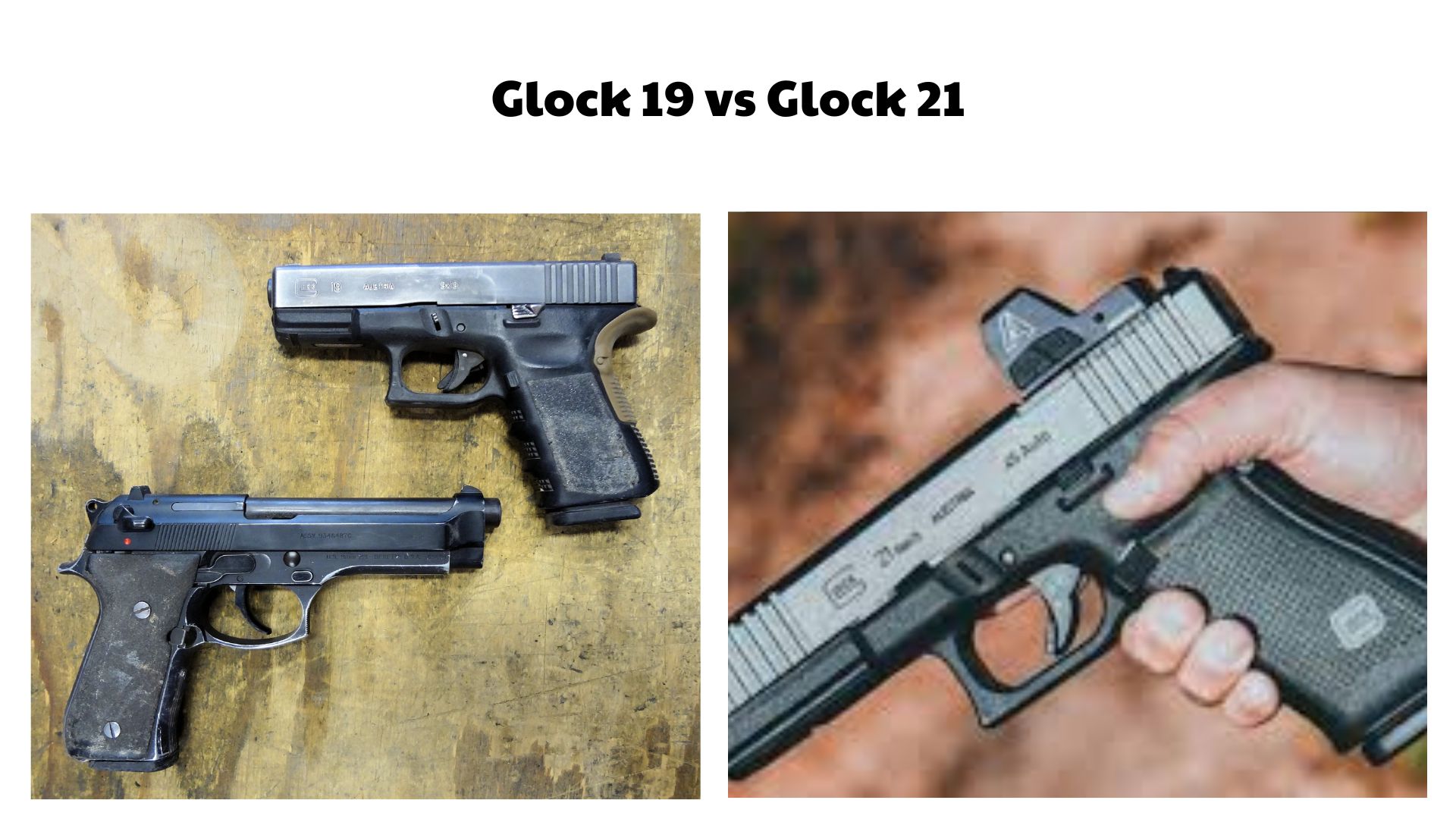

The Glock 19 and Glock 21 are two of the most widely recognized handgun platforms in the Glock lineup, each representing a different philosophy in modern defensive pistol design.
The Glock 19 is a compact 9mm “do-it-all” defensive pistol, widely regarded as one of the most versatile handguns ever produced due to its balance of size, capacity, and shootability.
In contrast, the Glock 21 is a full-size .45 ACP handgun designed with a focus on duty use and maximum ballistic performance, offering increased stopping power at the cost of size and concealability.
These two models are frequently compared by shooters because they represent two core approaches to handgun selection: efficiency and capacity versus caliber power and impact.
At the center of this debate is the long-standing discussion between 9mm efficiency and .45 ACP stopping power, a topic that continues to influence civilian, law enforcement, and military firearm choices.
Both pistols have seen widespread adoption across law enforcement agencies, military users, and civilian concealed carriers, reinforcing Glock’s reputation for reliability and simplicity.
Understanding the trade-off between size and performance is essential when choosing between these two platforms, as each excels in different real-world roles.
Their continued popularity highlights the strength of the Glock ecosystem, known for durability, ease of maintenance, and consistent performance under stress.
Design Philosophy and Intended Role
Glock 19 – Compact All-Purpose 9mm
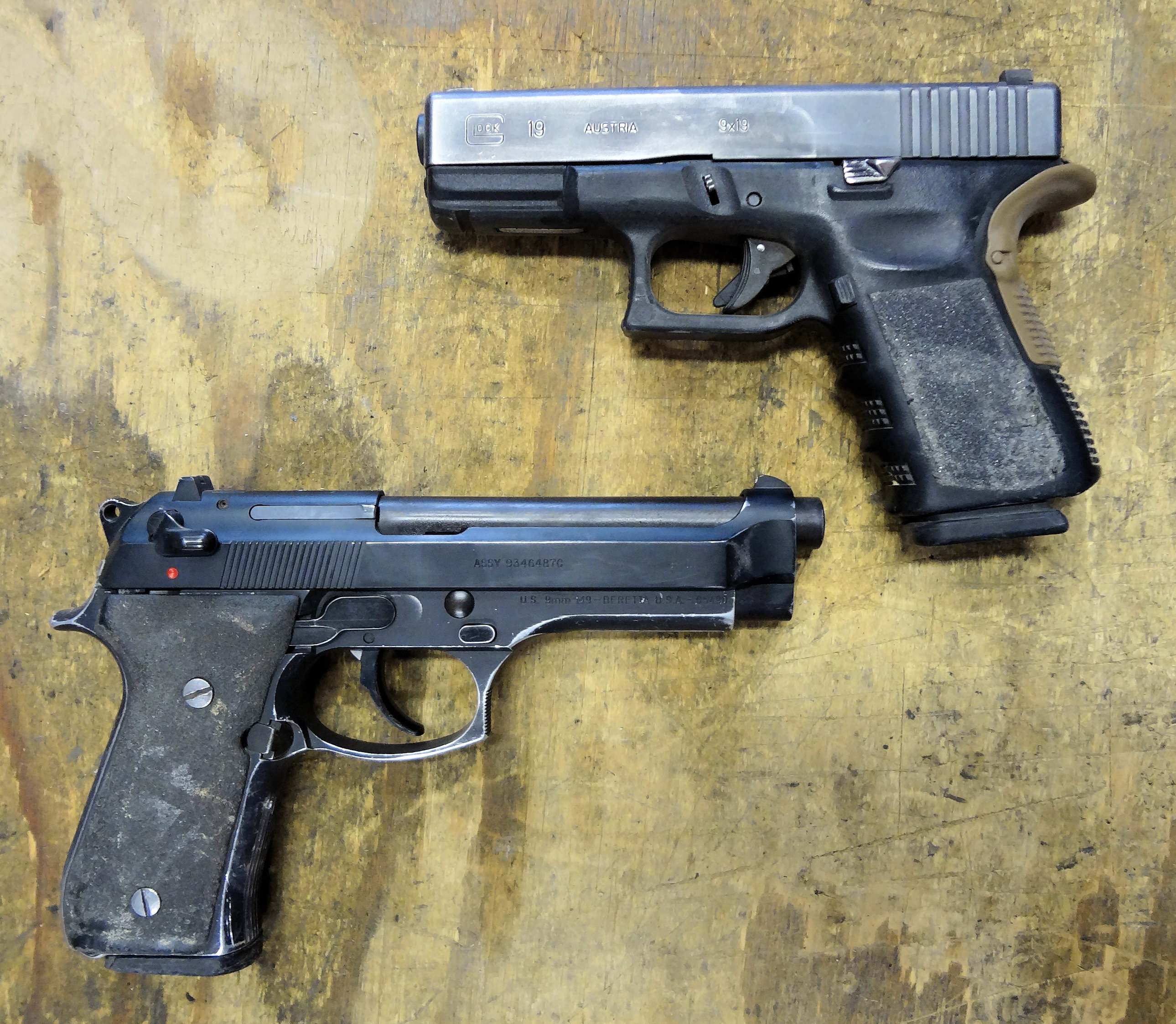
The Glock 19 is designed as a compact, all-purpose 9mm pistol that can serve effectively in concealed carry, duty use, and recreational shooting roles.
Often referred to as the “Goldilocks” Glock, it strikes a balance between concealability and shootability, making it one of the most adaptable handguns in the industry.
Its design allows it to function across multiple roles, including self-defense, law enforcement duty carry, and range training applications.
A key design focus is lightweight handling combined with high magazine capacity, making it efficient for defensive scenarios.
Glock 21 – Full-Size .45 ACP Power Platform
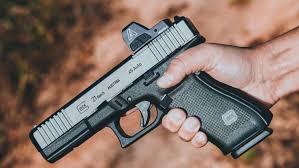
The Glock 21 is built as a large-frame .45 ACP handgun designed for users who prioritize terminal ballistic performance and duty-grade reliability.
It is intended for service use and defensive roles where stopping power is a higher priority than concealability or compact size.
The platform emphasizes recoil management through its larger frame and increased weight, helping shooters control the heavier .45 ACP cartridge more effectively.
Its larger grip and slide dimensions contribute to improved stability and control during firing, particularly in sustained shooting sessions.
Size, Weight, and Ergonomics Comparison
One of the most important differences between the Glock 19 and Glock 21 is their physical size and overall handling characteristics.
The Glock 19 features a compact frame and lighter overall weight, making it significantly easier to conceal and carry on a daily basis.
The Glock 21, on the other hand, is a larger and heavier firearm designed to improve stability and recoil absorption during firing.
Grip size is another key consideration, as the Glock 21’s larger frame may better suit users with larger hands, while the Glock 19 offers a more universally adaptable grip profile.
Differences in slide width and overall footprint also affect holster selection, carry comfort, and ease of manipulation.
In real-world application, the Glock 19 favors concealability and versatility, while the Glock 21 prioritizes shooting stability and recoil control.
Specifications Comparison
Glock 19 Specs
The Glock 19 is chambered in 9x19mm, one of the most widely used handgun cartridges in the world, known for its balance of performance and capacity.
It features a barrel length of approximately 4.02 inches, contributing to its compact form factor and ease of carry.
Standard magazine capacity is 15+1 rounds, with extended magazines available depending on configuration and jurisdiction.
The unloaded weight is approximately 23 ounces, making it lightweight and easy to handle for extended periods.
It is classified as a compact pistol, designed for versatility across defensive and duty applications.
Glock 21 Specs
The Glock 21 is chambered in .45 ACP, a larger and heavier caliber known for its increased bullet diameter and traditional stopping power characteristics.
It features a barrel length of approximately 4.6 inches, slightly longer than the Glock 19 to support its full-size design.
Standard magazine capacity is 13+1 rounds due to the larger size of .45 ACP cartridges.
The unloaded weight is approximately 29 ounces, reflecting its larger frame and increased material mass.
It is classified as a full-size large-frame pistol, designed primarily for duty, home defense, and power-focused applications.
Performance Comparison
Accuracy and Shootability
The Glock 21 offers a slight advantage in precision during slow-fire shooting due to its longer sight radius and full-size frame. This added length can help experienced shooters achieve tighter groupings at controlled distances.
The Glock 19, while shorter and more compact, is often easier to shoot quickly while still maintaining consistent accuracy. Its balance makes it highly effective in rapid defensive shooting scenarios.
In real-world performance, accuracy differences between the two models depend heavily on shooter skill, training, and familiarity rather than mechanical limitations alone.
Ultimately, the comparison comes down to a trade-off between compact agility and full-size shooting stability.
Recoil Management
The Glock 19 is widely regarded for its low recoil impulse, which allows for faster follow-up shots and easier control during rapid fire strings.
The Glock 21, being heavier and chambered in .45 ACP, absorbs recoil more effectively due to its larger frame and increased mass.
However, most shooters perceive 9mm recoil as easier to manage, especially during extended shooting sessions or high-stress defensive use.
In contrast, the .45 ACP produces a stronger but more “pushing” style recoil impulse, which many describe as slower but more deliberate compared to the snappier 9mm.
Ballistics – 9mm vs .45 ACP
The 9mm cartridge offers higher magazine capacity, faster muzzle velocity, and modern bullet designs that provide strong expansion and penetration performance in defensive ammunition.
The .45 ACP is known for its larger bullet diameter and heavier projectile weight, delivering greater impact energy at close range.
Advancements in modern defensive ammunition have narrowed the performance gap between the two calibers, making both viable options for self-defense.
This ongoing debate is often framed as a choice between higher capacity and faster follow-up shots versus larger caliber impact and traditional stopping power.
Concealability and Carry Use
The Glock 19 is widely regarded as a standard concealed carry (CCW) pistol due to its compact size, balanced weight, and broad holster availability.
The Glock 21 is less commonly used for concealed carry because its larger frame and increased weight make it more difficult to conceal comfortably.
Both platforms benefit from strong aftermarket support in terms of holsters, but carry comfort varies significantly depending on body type and carry position.
Daily carry experience tends to favor the Glock 19 due to its reduced bulk and improved concealability.
This creates a clear trade-off between concealment and firepower, where users must decide between portability and larger-caliber performance.
Magazine Capacity Comparison
The Glock 19 offers higher magazine capacity, typically ranging from 15 to 17+ rounds depending on magazine configuration and jurisdiction.
The Glock 21 generally holds 13+1 rounds in standard magazines due to the larger physical size of the .45 ACP cartridge.
The smaller diameter of the 9mm cartridge allows for more rounds to be stored within a similarly sized magazine body.
This difference highlights one of the key trade-offs between the two platforms: efficiency and capacity versus caliber size and power.
Reliability and Durability
Both the Glock 19 and Glock 21 share Glock’s well-known reliability system, which has made the platform one of the most widely trusted handgun designs in the world.
Their simple striker-fired mechanism contributes to a low failure rate and consistent performance across a wide range of conditions.
Both pistols are known for strong reliability under adverse environments, including exposure to dirt, moisture, and high round-count usage.
They have been widely adopted by military and law enforcement agencies globally, further reinforcing their reputation for durability and dependability.
Long-term performance across generations of Glock pistols demonstrates their ability to maintain function and structural integrity over extended use.
Real-World Use Cases
Glock 19 Ideal Uses
The Glock 19 is widely regarded as one of the most versatile handgun platforms available, making it suitable for a broad range of real-world applications.
Its most common role is concealed carry and personal defense, where its compact size, high capacity, and manageable recoil make it highly practical for everyday use.
It is also extensively used as a law enforcement duty sidearm, offering agencies a balance between firepower, capacity, and ease of carry.
For civilian users, the Glock 19 serves effectively as a home defense handgun, providing reliable performance in high-stress defensive scenarios.
Additionally, it is widely used in training and competition environments due to its controllability, availability of parts, and consistent performance characteristics.
Glock 21 Ideal Uses
The Glock 21 is designed for users who prefer a full-size .45 ACP platform with an emphasis on terminal performance and recoil management.
It is commonly used as a duty service pistol for users who prioritize .45 ACP stopping power and are comfortable with a larger frame firearm.
In home defense applications, the Glock 21 offers strong close-range performance, particularly for users who value heavier caliber energy delivery.
It is also well-suited for range shooting and training, especially for shooters who prefer the feel and recoil characteristics of .45 ACP.
Overall, it appeals to users who specifically prefer .45 ACP performance and are less concerned with concealability or compact carry.
Pros and Cons Breakdown
Glock 19 – Pros & Cons
Pros
The Glock 19 offers high magazine capacity relative to its compact size, making it highly efficient for defensive use.
It is known for its low recoil and easy control, which allows for faster follow-up shots and improved shooting consistency under stress.
Its excellent concealability makes it one of the most widely used concealed carry pistols in the world.
It is also considered a highly versatile “do-it-all” platform suitable for defense, duty, and recreational shooting.
Cons
One limitation of the Glock 19 is that it offers less stopping power per round compared to larger calibers like .45 ACP.
Additionally, its smaller grip size may feel tight or less comfortable for shooters with larger hands.
Glock 21 – Pros & Cons
Pros
The Glock 21 delivers strong .45 ACP terminal performance, making it appealing for users who prioritize caliber power.
Its full-size frame provides stable and accurate shooting, particularly in slow-fire or controlled shooting situations.
The added weight of the platform contributes to better recoil absorption, improving comfort when firing powerful loads.
Cons
The primary drawback of the Glock 21 is its larger size, which makes it more difficult to conceal and carry comfortably.
It also has a lower magazine capacity compared to the Glock 19 due to the larger dimensions of .45 ACP cartridges.
Finally, its heavier overall platform can make it less convenient for extended everyday carry or lightweight use cases.
Glock 19 vs Glock 21 – Key Differences at a Glance
The Glock 19 and Glock 21 differ significantly in design philosophy, performance characteristics, and intended use cases, despite both being part of Glock’s trusted striker-fired lineup.
Caliber is the most fundamental difference, with the Glock 19 chambered in 9mm and the Glock 21 chambered in .45 ACP, representing two distinct approaches to defensive handgun performance.
In terms of size, the Glock 19 is a compact platform designed for easier concealment, while the Glock 21 is a full-size handgun built for duty and maximum stability.
Magazine capacity also differs, with the Glock 19 offering higher round counts per magazine, while the Glock 21 sacrifices capacity due to the larger .45 ACP cartridge dimensions.
Recoil characteristics follow a similar pattern, where the Glock 19 provides lighter recoil and faster follow-up shots, while the Glock 21 produces a heavier recoil impulse that is more effectively managed by its larger frame.
Concealability is a major dividing factor, with the Glock 19 being highly suitable for everyday carry, while the Glock 21 is generally limited to duty, home defense, or open carry roles.
Overall role differentiation is clear: the Glock 19 is optimized for everyday carry versatility, while the Glock 21 is focused on power and full-size handgun performance.
Which One Should You Choose?
Choosing between the Glock 19 and Glock 21 depends heavily on your intended use, carry preferences, and caliber priorities.
You should choose the Glock 19 if you prioritize concealed carry, higher magazine capacity, low recoil, and overall versatility in a single platform.
The Glock 19 is particularly well-suited for users who want a reliable everyday carry pistol that can also perform well in training, home defense, and general use.
You should choose the Glock 21 if you prioritize .45 ACP power, full-size shooting stability, and a platform geared more toward duty or home defense roles.
The Glock 21 is ideal for users who value larger caliber performance and are less concerned about concealability or compact carry.
Expert Verdict – Glock 19 vs Glock 21
From an expert standpoint, the Glock 19 stands out as the more versatile “all-around” handgun, capable of adapting to nearly every defensive and recreational role.
The Glock 21, on the other hand, delivers stronger caliber performance within a larger, more specialized platform designed around .45 ACP power.
Neither pistol is objectively superior; instead, they reflect different priorities in handgun selection, with one favoring efficiency and capacity and the other emphasizing caliber strength.
In modern defensive doctrine, 9mm efficiency and capacity often dominate due to advancements in ammunition technology and controllability.
However, .45 ACP remains respected among shooters who prioritize heavier bullet performance and traditional stopping power characteristics.
Conclusion
The comparison between the Glock 19 and Glock 21 highlights two distinct philosophies in handgun design: compact versatility versus full-size power.
At the core of this comparison is a fundamental trade-off between capacity and control on one side, and caliber size and raw power on the other.
Both pistols maintain Glock’s reputation for reliability, durability, and simplicity, making them trusted options across civilian, law enforcement, and military users.
Ultimately, the Glock 19 is best understood as the universal choice for most shooters, while the Glock 21 serves as a specialized platform for those who prioritize .45 ACP performance in a full-size handgun.
50+ FAQs – Glock 19 vs Glock 21 (Detailed Expert Answers)
1. What is the main difference between Glock 19 and Glock 21?
The main difference is caliber and size. The Glock 19 uses 9mm in a compact frame designed for versatility and concealed carry, while the Glock 21 uses .45 ACP in a full-size frame built for power, stability, and duty use.
2. Which is better overall, Glock 19 or Glock 21?
Neither is universally better. The Glock 19 is better for most users due to its balance of capacity, recoil control, and concealability. The Glock 21 is better for those who specifically want .45 ACP performance and a full-size handgun experience.
3. Is 9mm or .45 ACP more effective for self-defense?
Modern ballistic testing shows both calibers are effective with quality defensive ammunition. 9mm offers higher capacity and lower recoil, while .45 ACP offers larger bullet diameter and traditional stopping power. Effectiveness depends more on shot placement than caliber alone.
4. Why is Glock 19 so popular?
The Glock 19 is popular because it offers a rare combination of concealability, capacity, reliability, and shootability. It is often considered the “do-it-all” handgun suitable for nearly every defensive role.
5. Why do some shooters prefer Glock 21?
Shooters who prefer the Glock 21 often value .45 ACP’s heavier bullet performance and the stability of a full-size handgun. It is also favored in environments where concealment is not a priority.
6. Is Glock 21 harder to shoot than Glock 19?
The Glock 21 is not necessarily harder to shoot, but its larger frame and .45 ACP recoil impulse can feel more substantial. Many shooters actually find it softer in perceived recoil due to its weight.
7. Which Glock has more recoil?
The Glock 21 produces more recoil energy due to the .45 ACP cartridge, but its heavier frame helps reduce felt recoil. The Glock 19 has lighter recoil overall and is easier for fast follow-up shots.
8. Which is easier for beginners?
The Glock 19 is generally easier for beginners due to its lower recoil, higher capacity, and more manageable size. The Glock 21 may feel large and less forgiving for new shooters.
9. Is Glock 19 good for concealed carry?
Yes. The Glock 19 is one of the most widely used concealed carry pistols in the world due to its compact size, reliability, and excellent balance of performance and concealability.
10. Is Glock 21 good for concealed carry?
The Glock 21 is generally not ideal for concealed carry due to its large frame and weight. It is better suited for duty, home defense, or open carry applications.
11. Which has better accuracy, Glock 19 or Glock 21?
Both are mechanically accurate. The Glock 21 may have a slight advantage in slow-fire precision due to its longer sight radius, while the Glock 19 is excellent for practical defensive accuracy and speed.
12. Which Glock is more reliable?
Both are equally reliable. They share Glock’s proven striker-fired system, which is known for functioning in adverse conditions with minimal maintenance requirements.
13. Does Glock 21 have more stopping power?
The .45 ACP cartridge used in the Glock 21 is traditionally considered to have more stopping power due to its larger bullet diameter and heavier projectile, though modern 9mm ammunition has narrowed this gap significantly.
14. Which has better magazine capacity?
The Glock 19 has higher capacity, typically 15–17+ rounds, while the Glock 21 usually holds 13+ rounds due to the larger size of .45 ACP cartridges.
15. Why does 9mm hold more rounds than .45 ACP?
9mm cartridges are smaller in diameter, allowing more rounds to fit into magazines of similar size. This gives the Glock 19 a capacity advantage over the Glock 21.
16. Which is better for home defense?
Both are effective for home defense. The Glock 19 offers higher capacity and easier handling, while the Glock 21 offers heavier caliber impact and stability.
17. Which is better for law enforcement?
The Glock 19 is more commonly used in modern law enforcement due to its balance of capacity, controllability, and compatibility with widespread 9mm duty ammunition.
18. Is .45 ACP outdated compared to 9mm?
.45 ACP is not outdated, but 9mm has become more dominant due to improvements in bullet technology, higher capacity, and lower recoil, making it more efficient in many modern applications.
19. Which Glock is more comfortable to carry?
The Glock 19 is more comfortable to carry due to its smaller size and lighter weight. The Glock 21 can feel bulky for daily concealed carry.
20. Which Glock is better for duty use?
Both are used for duty, but the Glock 19 is more common due to its balance of capacity and ease of handling, while the Glock 21 is preferred by users who prioritize .45 ACP power.
21. Do both Glocks have the same trigger?
Both use Glock’s striker-fired trigger system, though trigger feel may vary slightly depending on generation, wear, and customization.
22. Which Glock has better aftermarket support?
Both have strong aftermarket support, but the Glock 19 has significantly more accessories, holsters, and customization options due to its popularity.
23. Are Glock 19 and 21 interchangeable in parts?
No. They belong to different frame sizes and use different magazines, barrels, and slides due to caliber and dimensional differences.
24. Which Glock is heavier?
The Glock 21 is heavier due to its larger frame and slide designed to handle .45 ACP pressure and recoil.
25. Which Glock is more beginner-friendly for recoil control?
The Glock 19 is more beginner-friendly because 9mm produces less recoil and is easier to manage during rapid shooting.
26. Which Glock is better for shooting speed?
The Glock 19 generally allows faster follow-up shots due to lower recoil and lighter slide movement.
27. Which Glock is better for accuracy training?
Both are suitable, but the Glock 21 may offer a slight advantage in slow precision shooting due to its weight and sight radius.
28. Which Glock is more forgiving under stress?
The Glock 19 is often considered more forgiving under stress due to its lower recoil and higher capacity, allowing more margin for error.
29. Which Glock is more durable long-term?
Both are extremely durable and can withstand tens of thousands of rounds with proper maintenance. There is no significant durability difference.
30. Do police prefer Glock 19 or Glock 21?
Most modern agencies prefer the Glock 19 or similar 9mm pistols due to capacity, recoil control, and ammunition standardization.
31. Is Glock 21 better for stopping threats?
The Glock 21 uses .45 ACP, which has a reputation for strong stopping power, but real-world effectiveness depends more on shot placement and ammunition quality than caliber alone.
32. Which Glock is better for concealed appendix carry?
The Glock 19 is significantly better suited for appendix carry due to its smaller frame and reduced bulk.
33. Which Glock is better for outdoor use?
The Glock 21 is often preferred for outdoor or rural use due to its .45 ACP power and full-size stability.
34. Can Glock 19 and 21 use same holsters?
No. Their frame sizes and slide dimensions differ significantly, requiring different holster fits.
35. Which Glock is more popular worldwide?
The Glock 19 is more widely used globally due to its balance of concealability, capacity, and military/law enforcement adoption.
36. Which Glock is better for suppressed shooting?
Both can be suppressed depending on configuration, but 9mm (Glock 19) is more commonly used due to subsonic ammunition availability.
37. Which Glock is better for home storage safety?
Both are equally safe when properly stored. Choice depends on user preference rather than safety differences.
38. Which Glock is better for women shooters?
The Glock 19 is often preferred due to lower recoil and smaller grip size, though fit depends on individual hand size.
39. Does .45 ACP hit harder than 9mm?
Yes, .45 ACP typically delivers a heavier impact, but modern 9mm defensive loads are highly effective and often comparable in real-world defensive scenarios.
40. Which Glock is better for high-volume shooting?
The Glock 19 is generally better due to lower recoil and cheaper ammunition costs compared to .45 ACP.
41. Which Glock is easier to reload quickly?
Both are similar in reload speed, but the Glock 19’s lighter magazines and higher capacity can make reload management easier.
42. Which Glock is better for dry fire training?
Both are excellent for dry fire training due to Glock’s consistent trigger system and widespread training support.
43. Which Glock is more cost-effective?
The Glock 19 is generally more cost-effective due to lower ammunition prices and higher capacity per magazine.
44. Which Glock is better for long sessions at the range?
The Glock 19 is typically easier to shoot for extended sessions due to reduced recoil and lighter handling.
45. Which Glock has better resale value?
Both hold strong resale value, but the Glock 19 often has higher demand due to its broader user base.
46. Can Glock 21 replace a rifle?
No. While powerful for a handgun, the Glock 21 cannot replace a rifle due to limitations in range, accuracy, and ballistic energy.
47. Is Glock 19 underpowered?
No. With modern 9mm defensive ammunition, the Glock 19 is considered highly effective and widely used for defensive purposes.
48. Which Glock is better for survival use?
The Glock 19 is often preferred due to ammunition availability, higher capacity, and versatility.
49. Which Glock is easier to maintain?
Both are equally easy to maintain due to Glock’s simple design and minimal moving parts.
50. Final question: which should you choose?
Choose the Glock 19 if you want a versatile, high-capacity, easy-to-carry defensive pistol. Choose the Glock 21 if you prioritize .45 ACP power and full-size shooting stability over concealability.
Read more: