
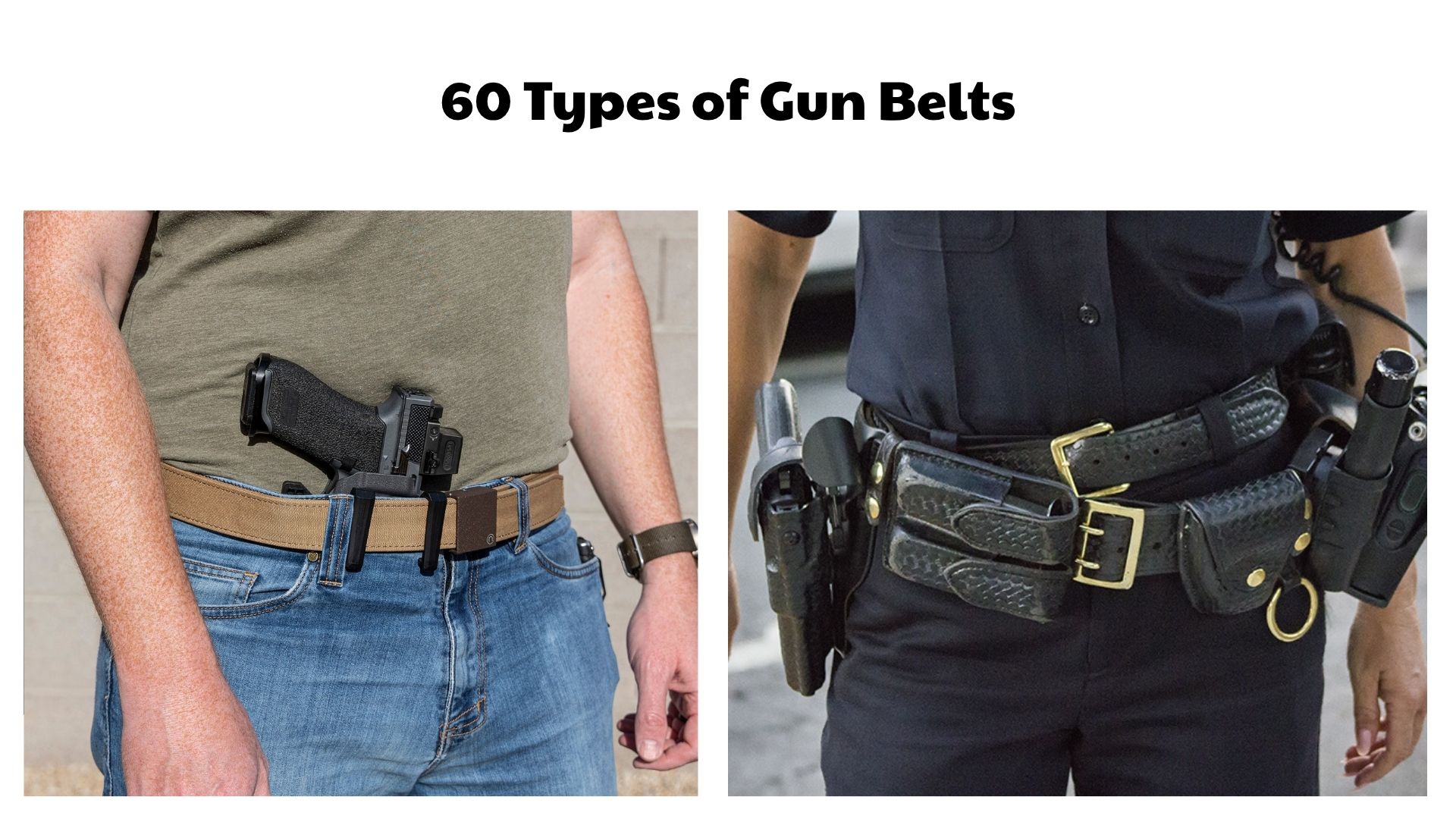

When exploring different types of gun belts, many shooters quickly realize that not all belts are created equal. A proper gun belt is more than just an accessory—it is a critical piece of gear that supports your firearm, improves comfort, and enhances overall carry performance. Whether you are carrying concealed, working in a tactical environment, or heading into the field for hunting, the right belt makes a noticeable difference.
This guide breaks down the most practical and widely used gun belts, helping you understand how each type performs in real-world situations. From traditional leather belts to modern tactical systems, each option serves a specific purpose. The goal is simple: give you a clear, easy-to-follow overview so you can choose the right belt without confusion.
Let’s start with the first five essential types, focusing on classic leather designs that remain the foundation of everyday carry.
Top 60 Types of Gun Belts
1. Full-Grain Leather Gun Belt
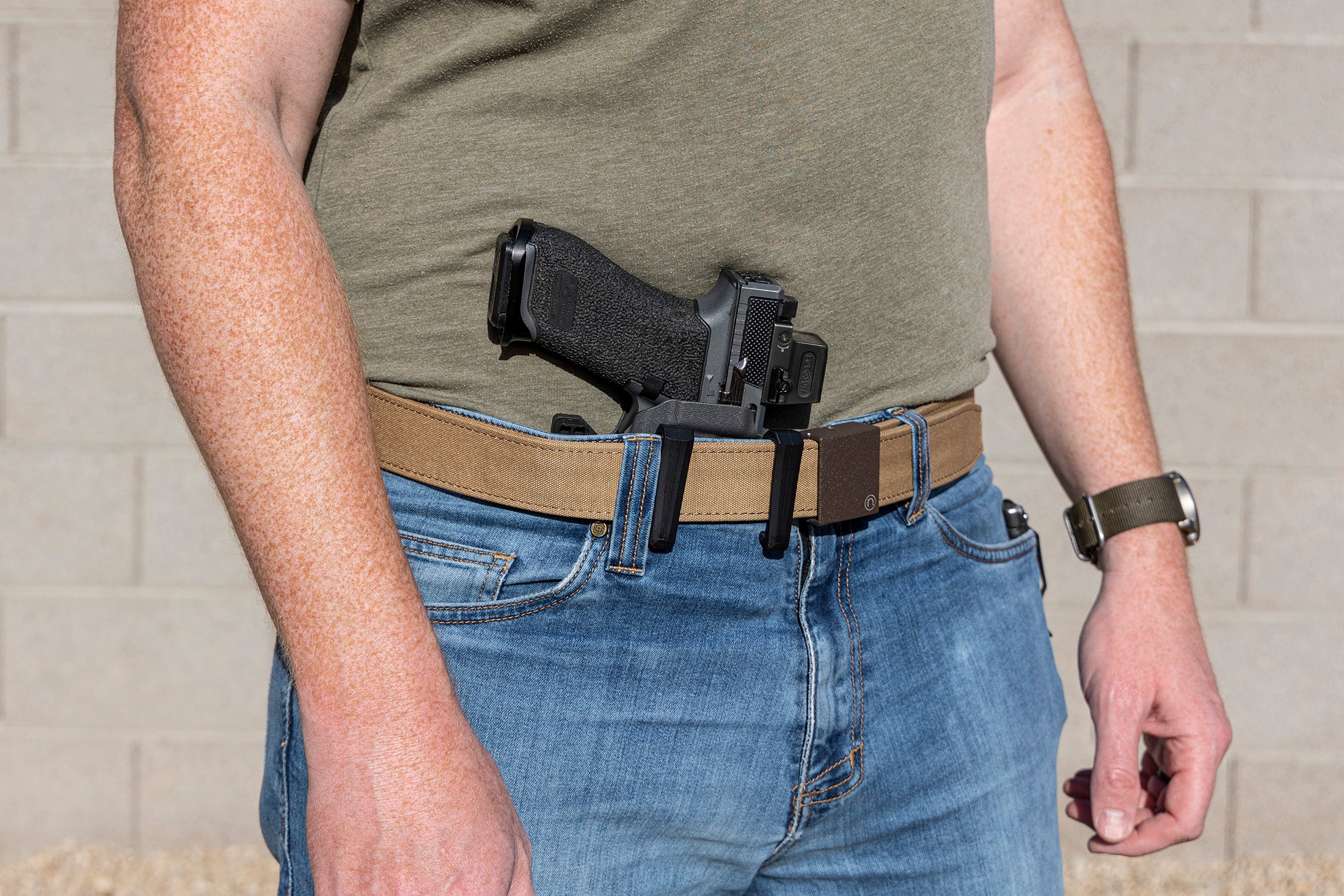
The full-grain leather gun belt is widely considered the gold standard among traditional gun belts. Built from the highest quality portion of the hide, this type of belt offers exceptional durability, rigidity, and long-term performance. Unlike cheaper leather alternatives, full-grain leather retains its natural structure, which allows it to support the weight of a firearm without sagging or deforming over time. This makes it particularly reliable for everyday concealed carry where consistent support is essential.
One of the most noticeable advantages of a full-grain leather gun belt is its balance between strength and comfort. While it is firm enough to stabilize a holster, it gradually molds to the wearer’s body with use. This creates a personalized fit that improves comfort during extended wear. For individuals who carry daily, this adaptability can make a significant difference, especially when sitting, walking, or moving throughout the day.
Another key benefit is its versatility in appearance. Full-grain leather belts can easily blend into both casual and formal settings, making them ideal for concealed carry without drawing attention. Unlike tactical belts, which often have a more rugged or military look, leather belts maintain a low-profile appearance that fits seamlessly into everyday clothing.
In practical terms, this type of belt is best suited for concealed carry users who prioritize durability, comfort, and a traditional look. While it may not offer the modular features of tactical belts, its reliability and timeless design make it one of the most trusted options available.
2. Double-Layer Reinforced Leather Belt
The double-layer reinforced leather belt takes the classic leather design and enhances it with additional structural strength. By combining two layers of leather—often stitched or bonded together—this belt provides increased rigidity and load-bearing capacity. This makes it especially useful for carrying heavier firearms or additional gear without compromising stability.
One of the defining characteristics of this belt is its resistance to sagging. The added thickness helps distribute weight more evenly across the waist, reducing pressure points and improving overall comfort. This is particularly important for users who carry outside-the-waistband holsters or additional accessories such as spare magazines.
Despite its increased strength, the double-layer design still maintains a relatively traditional appearance. It can be worn in both casual and semi-formal settings without standing out, which is a major advantage for concealed carry users who want both performance and discretion.
In terms of real-world use, this belt is ideal for those who need extra support without transitioning to a fully tactical system. It offers a practical middle ground between classic leather belts and more modern reinforced options.
3. Stitched Edge Concealed Carry Belt
The stitched edge concealed carry belt is designed with both durability and aesthetics in mind. Reinforced stitching along the edges not only improves the belt’s structural integrity but also prevents fraying and wear over time. This detail may seem small, but it plays a significant role in maintaining long-term performance.
From a functional standpoint, this belt provides consistent support for concealed carry setups. The reinforced edges help the belt maintain its shape, ensuring that the holster stays in place throughout daily movement. This stability is essential for both comfort and safety, as it reduces shifting and improves draw consistency.
Another advantage is its refined appearance. The clean stitching gives the belt a polished look, making it suitable for professional or business environments. This makes it a popular choice for individuals who need a reliable carry solution without sacrificing style.
Overall, the stitched edge belt is a well-rounded option that combines durability, performance, and visual appeal. It is especially useful for concealed carriers who want a belt that performs well while still looking appropriate in a variety of settings.
4. Traditional Dress Gun Belt
The traditional dress gun belt is specifically designed for formal or professional environments where appearance matters as much as functionality. Unlike standard dress belts, this type includes internal reinforcement to support the weight of a firearm while maintaining a sleek and refined look.
One of its key strengths is discretion. It looks nearly identical to a standard dress belt, allowing users to carry concealed without attracting attention. This makes it ideal for office settings, formal events, or any situation where a tactical appearance would be out of place.
Despite its elegant design, the belt still provides sufficient rigidity for lightweight to moderate carry setups. While it may not handle extremely heavy loads as well as thicker belts, it performs reliably for most concealed carry needs.
For users who prioritize professionalism and subtlety, the traditional dress gun belt offers a practical solution that blends seamlessly into formal attire while still delivering dependable support.
5. Casual Everyday Carry Belt
The casual everyday carry belt is built for simplicity and daily comfort. It is designed to handle regular concealed carry while maintaining a relaxed, informal appearance. This makes it one of the most versatile types of gun belts for everyday use.
These belts typically feature moderate reinforcement, providing enough support for most handguns without feeling overly stiff. This balance makes them comfortable for extended wear, especially during routine activities like commuting, shopping, or casual outings.
Another advantage is adaptability. Casual gun belts pair well with jeans, shorts, and other everyday clothing, making them easy to integrate into a normal wardrobe. They do not stand out as tactical gear, which helps maintain discretion.
In real-world use, this type of belt is ideal for individuals who want a reliable carry option without the bulk or rigidity of more specialized designs. It offers a practical combination of comfort, support, and everyday usability.
6. Classic Western Gun Belt
The classic Western gun belt is one of the most recognizable and historically rooted types of gun belts. Originally designed for open carry in frontier environments, this belt combines functionality with a distinctive style that remains popular today. It is typically made from thick leather and often includes features such as cartridge loops, wide profiles, and durable stitching, all of which contribute to its ability to support the weight of a firearm over long periods of wear.
One of the defining characteristics of the Western gun belt is its width and structure. Unlike standard belts, it is designed to distribute weight evenly across the hips, which reduces pressure points and improves comfort during extended use. This makes it particularly useful for outdoor activities such as hunting or ranch work, where users may carry for several hours at a time. The added stability also helps keep holsters firmly in place, preventing unwanted movement during walking or riding.
In addition to its functional advantages, the Western gun belt carries a strong visual identity. Its rugged appearance and traditional craftsmanship make it stand out compared to modern tactical belts. While it may not be ideal for concealed carry due to its size and visibility, it excels in open carry situations where durability and accessibility are priorities.
Overall, the classic Western gun belt remains a practical choice for those who value heritage, durability, and long-term comfort in outdoor environments.
7. Minimalist Slim Gun Belt
The minimalist slim gun belt is designed for users who prioritize low profile and lightweight comfort. Unlike bulkier designs, this belt focuses on reducing unnecessary material while still providing enough support for concealed carry. It is particularly popular among individuals who want a discreet option that blends seamlessly into everyday clothing.
One of the main advantages of this belt is its slim profile. It fits easily through standard belt loops and does not add noticeable bulk around the waist. This makes it ideal for concealed carry, especially in warmer climates where lighter clothing is common. Despite its thinner construction, many minimalist belts incorporate reinforced cores or durable materials to maintain sufficient rigidity.
Comfort is another key factor. Because the belt is lighter and less rigid than heavy-duty options, it allows for more natural movement throughout the day. This is especially beneficial for users who spend long hours sitting or moving between different positions.
In practical terms, the minimalist slim gun belt is best suited for lightweight firearms and users who value discretion above all else. It may not be the best choice for heavy loadouts, but it excels in everyday concealed carry scenarios where comfort and subtlety are essential.
8. Hidden Reinforcement Leather Belt
The hidden reinforcement leather belt is designed to offer the strength of a tactical belt while maintaining the appearance of a traditional leather belt. This is achieved by embedding a reinforced core—often made from polymer or steel—within the leather layers. The result is a belt that looks ordinary on the outside but performs like a heavy-duty carry system.
One of the biggest advantages of this design is discretion. From the outside, it appears identical to a standard leather belt, making it suitable for both casual and professional settings. However, the internal reinforcement provides the rigidity needed to support firearms without sagging or twisting.
This type of belt is particularly useful for concealed carry users who want reliable support without drawing attention. It allows them to maintain a normal appearance while still benefiting from enhanced performance. The added structure also improves holster stability, which contributes to a smoother and more consistent draw.
Overall, the hidden reinforcement leather belt offers a well-balanced solution for users who need strength, durability, and a low-profile appearance in one package.
9. Premium Cowhide Gun Belt
The premium cowhide gun belt focuses on quality materials and long-term durability. Made from high-grade cowhide leather, this type of belt is known for its strength, flexibility, and refined finish. It is often chosen by users who want a reliable belt that also offers a polished and professional look.
One of the key benefits of cowhide leather is its natural durability. It can withstand daily wear and maintain its structure over time, especially when properly cared for. This makes it a dependable option for everyday carry, where consistent performance is essential.
In addition to durability, cowhide belts offer a comfortable fit. The leather gradually adapts to the wearer’s body, creating a personalized feel that improves with use. This combination of strength and comfort makes it suitable for extended wear without causing discomfort.
From a practical standpoint, the premium cowhide gun belt is ideal for users who want a balance between aesthetics and functionality. It works well in both casual and semi-formal environments while still providing the support needed for concealed carry.
10. Oil-Tanned Leather Gun Belt
The oil-tanned leather gun belt is designed for durability and resistance to harsh conditions. The oil-tanning process infuses the leather with oils, making it more flexible, water-resistant, and less prone to cracking over time. This makes it a strong choice for outdoor use and demanding environments.
One of the standout features of oil-tanned leather is its ability to handle moisture and wear. Unlike untreated leather, it maintains its integrity even when exposed to humidity, sweat, or light rain. This makes it particularly useful for hunting, hiking, and other outdoor activities where conditions can vary.
Despite its rugged properties, the belt remains comfortable to wear. The treated leather is softer and more pliable than traditional leather, allowing it to move naturally with the body. This reduces stiffness while still providing adequate support for carrying a firearm.
In real-world use, the oil-tanned leather gun belt is ideal for users who need a reliable and weather-resistant option. It combines durability, flexibility, and performance, making it a practical choice for both everyday carry and outdoor adventures.
11. Tactical MOLLE Gun Belt
The tactical MOLLE gun belt is built for maximum customization and load-bearing capability. MOLLE, which stands for Modular Lightweight Load-carrying Equipment, allows users to attach pouches, holsters, and accessories directly to the belt. This makes it one of the most versatile gun belts available.
One of the primary advantages of this system is adaptability. Users can configure the belt to suit specific needs, whether for training, duty use, or outdoor activities. The modular design allows for quick adjustments and efficient organization of gear.
Durability is another key factor. MOLLE belts are typically made from heavy-duty nylon and reinforced stitching, ensuring they can handle significant weight without compromising performance. This makes them suitable for demanding environments where reliability is critical.
Overall, the tactical MOLLE gun belt is best suited for users who require flexibility and the ability to carry multiple accessories. It is a practical choice for tactical applications where customization and load management are essential.
12. Military Load-Bearing Gun Belt
The military load-bearing gun belt is designed to support heavy equipment in demanding conditions. It is commonly used by military personnel and tactical professionals who need to carry a significant amount of gear while maintaining mobility and comfort.
This type of belt focuses on weight distribution. It spreads the load across the waist and hips, reducing strain on any single point. This is especially important during long missions or extended periods of movement.
In addition to strength, these belts are built for durability. They are made from high-strength materials that can withstand harsh environments, including extreme temperatures and rough terrain.
In practical terms, the military load-bearing belt is ideal for heavy-duty applications where reliability and comfort under load are critical.
13. Quick-Release Buckle Gun Belt
The quick-release buckle gun belt is designed for speed and convenience. It features a specialized buckle system that allows the user to quickly secure or remove the belt with minimal effort. This is particularly useful in situations where time and efficiency are important.
One of the main advantages of this design is ease of use. The buckle mechanism is intuitive and reliable, allowing for fast adjustments without compromising security. This makes it popular among both tactical users and everyday carriers.
In addition to convenience, these belts are typically built with durable materials that provide strong support for firearms and accessories. The combination of strength and quick access makes them highly practical.
Overall, the quick-release buckle gun belt is ideal for users who value efficiency and reliability in their gear.
14. Duty Police Gun Belt
The duty police gun belt is specifically designed for law enforcement use. It is built to carry a wide range of equipment, including firearms, magazines, handcuffs, and communication devices. This requires a high level of durability and structural support.
One of the key features of this belt is its rigidity. It must hold multiple pieces of gear without sagging or shifting, ensuring that everything remains accessible and secure. This is critical in high-pressure situations where quick access can make a difference.
Comfort is also an important consideration. Despite carrying heavy loads, the belt is designed to distribute weight evenly and reduce fatigue during long shifts.
In real-world use, the duty police gun belt is one of the most robust and reliable options available, built to perform under demanding conditions.
15. Battle Belt System
The battle belt system represents one of the most advanced and adaptable types of gun belts. It typically consists of an inner belt for stability and an outer belt for attaching gear. This dual-layer design provides both comfort and maximum load-bearing capability.
One of the main advantages of a battle belt is its modularity. Users can attach a wide range of equipment, from holsters to medical kits, creating a fully customized setup. This makes it highly effective for tactical operations and training scenarios.
The system also improves weight distribution. By securing the belt firmly around the waist, it reduces movement and keeps gear stable during dynamic activity. This enhances both performance and comfort.
Overall, the battle belt system is ideal for advanced users who require a high level of customization and reliability. It represents the modern evolution of tactical gun belts, combining flexibility, strength, and efficiency.
16. Heavy-Duty Nylon Gun Belt
The heavy-duty nylon gun belt is one of the most practical and widely used types of gun belts in modern tactical and everyday carry setups. Built from reinforced nylon webbing, this belt is designed to handle significant weight while maintaining flexibility and durability. Unlike leather belts, nylon versions resist moisture, abrasion, and temperature changes, making them ideal for outdoor and high-activity environments.
One of the main strengths of this belt is its balance between strength and comfort. The nylon weave provides enough rigidity to support a holster and accessories, yet it remains flexible enough for all-day wear. This makes it especially useful for users who move frequently or spend long hours in dynamic environments such as training ranges, outdoor work, or tactical scenarios.
Another important advantage is low maintenance. Nylon belts do not require conditioning like leather and can be easily cleaned with simple washing. This adds to their long-term reliability, especially for users who need gear that performs consistently without extra care.
In practical use, the heavy-duty nylon gun belt is best suited for tactical users, outdoor enthusiasts, and anyone who needs a rugged, dependable carry platform that can handle real-world demands.
17. Operator Tactical Gun Belt
The operator tactical gun belt is designed for advanced field use, where performance, modularity, and durability are all equally important. It is commonly used in professional tactical environments and is built to support multiple pieces of gear without compromising stability or comfort.
This belt typically features reinforced construction with internal stiffeners that prevent sagging under load. It is designed to carry holsters, magazine pouches, medical kits, and other essential equipment in a stable and organized manner. The structure ensures that gear remains accessible even during movement-intensive situations.
Comfort is also a key design factor. Despite its rugged build, the operator belt distributes weight evenly around the waist, reducing pressure points and improving long-term wearability. This makes it suitable for extended training sessions or field operations.
Overall, the operator tactical gun belt is a high-performance option for users who require a reliable and adaptable platform for carrying essential gear in demanding conditions.
18. Combat-Ready Gun Belt
The combat-ready gun belt is engineered for high-intensity environments where reliability is critical. It is built with reinforced materials that can withstand heavy use, rapid movement, and exposure to harsh conditions. This makes it one of the more robust gun belts available.
One of its key features is structural rigidity. The belt is designed to remain stable even under heavy load, preventing twisting or shifting during dynamic activity. This ensures that holsters and accessories remain secure at all times.
In addition to strength, the combat-ready design emphasizes accessibility. Gear is positioned for quick retrieval, which is essential in time-sensitive situations. This combination of durability and efficiency makes it highly suitable for tactical and defensive applications.
In real-world use, this belt is favored by professionals who require dependable performance under pressure, where failure is not an option.
19. SWAT Utility Gun Belt
The SWAT utility gun belt is designed specifically for specialized law enforcement and tactical units. It is built to carry a wide range of operational equipment, including firearms, communication devices, restraints, and medical supplies.
One of the defining characteristics of this belt is its modular organization. It allows users to configure gear placement based on mission requirements, ensuring fast and efficient access when needed. This flexibility is crucial in high-risk environments where adaptability is key.
Durability is another major focus. The belt is constructed from reinforced materials that can withstand intense physical activity and extended use. It is also designed to maintain stability under heavy load, ensuring that equipment stays secure during movement.
Overall, the SWAT utility gun belt is a professional-grade system built for complex operational needs and high-performance tactical environments.
20. Reinforced Rigger’s Gun Belt
The reinforced rigger’s gun belt is based on climbing and rescue equipment design principles, making it one of the strongest types of gun belts available. It is typically constructed from heavy-duty nylon webbing with reinforced stitching, giving it exceptional load-bearing strength.
One of its key advantages is versatility. Originally designed for utility and safety applications, it has been adapted for tactical and concealed carry use due to its durability and reliability. It can support holsters, tools, and other gear without losing structural integrity.
Another important feature is its secure buckle system, which is often designed for quick release while still maintaining high tensile strength. This makes it both practical and safe for demanding environments.
In practical use, the rigger’s belt is ideal for users who need maximum strength and reliability in a lightweight and flexible platform.
21. Low-Profile CCW Gun Belt
The low-profile CCW gun belt is designed specifically for concealed carry users who prioritize discretion. Its main goal is to provide enough support for a firearm while remaining as inconspicuous as possible under everyday clothing.
One of its strongest features is its slim and minimal design. It avoids bulky materials and tactical appearance, allowing it to blend seamlessly into casual or professional attire. This makes it ideal for users who want to carry discreetly without drawing attention.
Despite its minimal look, the belt still includes internal reinforcement to maintain stability. This ensures that holsters remain secure and do not shift during movement, which is essential for safe concealed carry.
In real-world use, this belt is best suited for everyday concealed carriers who need a balance between comfort, discretion, and functional support.
22. Stretch-Fit Concealed Carry Belt
The stretch-fit concealed carry belt is designed for flexibility and adaptive comfort. Unlike rigid belts, it incorporates elastic materials that allow the belt to move with the wearer’s body. This makes it one of the most comfortable gun belts for extended daily use.
One of the key benefits is dynamic adjustment. The stretchable design accommodates movement, sitting, and bending without creating pressure points. This is especially useful for users who spend long hours seated or engaged in active movement.
Despite its flexibility, many stretch-fit belts include reinforced sections that provide stability where it is needed most. This ensures that the firearm remains secure while still allowing natural movement.
Overall, this belt is ideal for users who prioritize comfort and adaptability in their concealed carry setup.
23. Inside-the-Waistband Support Belt
The inside-the-waistband support belt is specifically designed to enhance the performance of IWB (inside-the-waistband) holsters. It provides a stable foundation that keeps the firearm close to the body for better concealment and control.
One of its main advantages is improved concealment. By keeping the firearm tight against the waist, it reduces printing and helps maintain a low-profile appearance under clothing. This is especially important for discreet everyday carry.
In addition to concealment, the belt offers reliable support that prevents shifting during movement. This ensures a consistent draw position, which is essential for safe and effective carry.
In practical use, this belt is a strong choice for dedicated concealed carry users who rely on IWB holsters as their primary carry method.
24. Appendix Carry Gun Belt
The appendix carry gun belt is designed specifically for appendix inside-the-waistband (AIWB) carry positions. This carry style places the firearm at the front of the body, requiring a belt that provides both stability and comfort in a sensitive area.
One of the key features of this belt is its firm support structure. It helps keep the holster securely in place while allowing controlled movement when sitting or standing. This is critical for maintaining safety and accessibility in appendix carry setups.
Comfort is also an important consideration. Many appendix carry belts are designed with slight flexibility or contouring to reduce pressure during extended wear.
Overall, this belt is ideal for users who prefer appendix carry and need a specialized support system for consistent performance.
25. Hybrid Leather-Nylon CCW Belt
The hybrid leather-nylon CCW belt combines the traditional appearance of leather with the durability and flexibility of nylon. This makes it one of the most balanced types of gun belts for everyday concealed carry.
One of its main strengths is versatility. The leather exterior provides a professional appearance, while the nylon core adds structural support. This allows the belt to perform well in both formal and casual environments.
Another advantage is comfort. The combination of materials creates a belt that is both firm and flexible, making it suitable for all-day wear without excessive stiffness.
In real-world use, this hybrid design is ideal for users who want a single belt that can transition between different environments while maintaining reliable concealed carry performance.
26. Discreet Buckle Gun Belt
The discreet buckle gun belt focuses on minimizing visible hardware while maintaining strong functional performance. The buckle is designed to be low-profile, reducing attention and enhancing concealment.
One of the main advantages is stealth. By avoiding large or tactical-looking buckles, the belt blends more naturally with everyday clothing. This makes it especially useful for concealed carry in professional or public environments.
Despite its subtle appearance, the belt still provides solid support for firearms and accessories. The buckle system is engineered for strength and reliability under load.
Overall, this belt is ideal for users who prioritize discretion without sacrificing functionality.
27. Lightweight Concealment Belt
The lightweight concealment belt is designed for users who want minimal bulk and maximum comfort. It uses lightweight materials while still providing enough support for concealed carry applications.
One of its main benefits is comfort during long wear. The reduced weight makes it easier to carry throughout the day without fatigue, especially in warm climates.
Although lightweight, the belt still includes reinforcement to ensure that firearms remain stable and secure. This balance makes it a practical option for everyday concealed carry.
In summary, it is ideal for users who want simplicity, comfort, and effective concealment in a lightweight design.
28. Anti-Print Gun Belt
The anti-print gun belt is designed to reduce firearm visibility under clothing. It helps minimize printing, which occurs when the outline of a firearm becomes visible through fabric.
One of its key features is firm structure. By maintaining consistent support, it keeps the firearm close to the body, reducing movement that could cause printing.
This belt is particularly useful for concealed carry in tight clothing or professional environments where discretion is essential.
Overall, it enhances concealment performance and helps users maintain a low-profile appearance.
29. Flexible Core Carry Belt
The flexible core carry belt uses internal flexible materials to provide a balance between rigidity and movement. It adapts to the wearer’s body while still supporting firearm weight.
One of its main advantages is comfort. The flexible core allows natural movement while maintaining stability for concealed carry setups.
It is especially useful for users who need a belt that performs well during both static and active movement.
In practice, it offers a balanced solution for everyday concealed carry needs.
30. Hidden Core Reinforced Belt
The hidden core reinforced belt combines a discreet exterior with internal structural reinforcement. The core is typically made from stiffened materials that provide support without changing the belt’s outward appearance.
One of its key benefits is invisibility. From the outside, it looks like a standard belt, making it ideal for discreet concealed carry.
At the same time, the internal structure ensures that the belt can support firearms and gear without sagging.
This makes it one of the most practical options for users who want maximum concealment with hidden strength.
31. Competition Double Belt System
The Competition Double Belt System is one of the most widely used types of gun belts in practical shooting sports. It is designed specifically for stability, speed, and precision under competitive conditions. Unlike standard single-layer belts, this system uses two interconnected layers: an inner belt that stays fixed to the body and an outer belt that carries all equipment such as holsters, magazine pouches, and timers. This dual-layer structure ensures that gear remains locked in place even during rapid movement or aggressive shooting transitions.
One of the key advantages of the double belt system is its exceptional stability. In competition shooting, even slight movement of gear can affect performance. This system eliminates that problem by anchoring the outer belt securely to the inner belt using hook-and-loop or similar fastening systems. The result is a rigid, motion-free platform that supports fast draws and smooth reholstering. Shooters often describe it as feeling “locked in,” which is exactly what competitive environments demand.
Another important benefit is customization. The outer belt allows users to position gear exactly where they want it, optimizing efficiency for different shooting stages. This flexibility is especially valuable in dynamic competitions where stage layouts change frequently. Combined with durability and ergonomic design, the double belt system has become a standard in modern competitive shooting disciplines.
32. IPSC Shooting Gun Belt
The IPSC Shooting Gun Belt is specifically designed for International Practical Shooting Confederation (IPSC) competitions. It is one of the most performance-driven gun belts, focusing heavily on speed, accuracy, and efficient movement. Built for competitive shooters, this belt prioritizes rigid structure and fast access to equipment.
One of its defining characteristics is its stiffness. The belt is engineered to remain completely rigid under load, ensuring that holsters and magazine carriers stay fixed in position. This rigidity is essential in IPSC competitions, where fractions of a second can determine performance outcomes. A stable platform allows shooters to draw and reholster consistently without adjusting gear between stages.
The IPSC belt also emphasizes modular placement. Competitors can fine-tune the position of each accessory to match their shooting style, whether prioritizing strong-hand draws or optimized reload angles. This level of customization helps improve efficiency and reduce unnecessary movement during timed stages.
Overall, the IPSC Shooting Gun Belt is a specialized tool built for high-level competition, where precision and repeatability are critical.
33. 3-Gun Competition Belt
The 3-Gun Competition Belt is designed for shooters participating in multi-weapon competitions involving rifle, pistol, and shotgun stages. As one of the most versatile types of gun belts, it must accommodate a wide variety of gear while maintaining balance and mobility.
This belt system is typically built with reinforced nylon or hybrid materials to handle heavy loadouts. It includes attachment points for multiple magazine types, shell carriers, and holsters. The layout is designed for quick transitions between firearms, which is essential in 3-gun competitions where speed and adaptability are key.
One of its strengths is ergonomic weight distribution. Since competitors often carry significantly more equipment than in standard pistol matches, the belt must prevent fatigue while maintaining stability. Proper design ensures that the load is evenly spread across the waist, allowing shooters to move freely without strain.
In practice, the 3-gun belt is a highly adaptable platform that supports complex competition environments and diverse shooting requirements.
34. Range Training Gun Belt
The Range Training Gun Belt is designed for practice sessions rather than competition or duty use. It is one of the more practical gun belts for shooters who want to develop consistency, safety habits, and muscle memory during training.
This belt typically features moderate rigidity, enough to hold a holster and a few magazines without being overly stiff. This balance allows shooters to train comfortably for extended periods while still simulating real carry conditions. Unlike competition belts, it focuses more on learning than speed optimization.
Another advantage is affordability and durability. Range belts are often built from nylon or reinforced fabric, making them resistant to wear and tear from repeated use. They are also easy to adjust and maintain, which is ideal for frequent training sessions.
Overall, the range training gun belt is a foundational tool for shooters who want to improve skill development in a controlled and consistent environment.
35. Modular Competition Gun Belt
The Modular Competition Gun Belt is a highly customizable system designed for advanced shooters who require full flexibility in gear arrangement. It is one of the most adaptable types of gun belts, allowing users to reconfigure setups depending on competition rules or personal preference.
This belt often features multiple attachment systems such as MOLLE, hook-and-loop panels, or rail-style mounting points. These allow shooters to attach, remove, or reposition gear quickly without compromising stability. This adaptability is especially valuable in competitive environments where stage requirements can vary significantly.
In addition to modularity, the belt is built for rigidity and load stability. Even with multiple accessories attached, it maintains structural integrity to ensure consistent performance. This combination of flexibility and strength makes it a preferred choice for experienced competitors.
The modular competition belt represents the evolution of modern shooting gear, combining personalization with high-performance design.
36. Hook-and-Loop Shooting Belt
The Hook-and-Loop Shooting Belt is one of the most practical types of gun belts used in both competition and training environments. It relies on a simple but highly effective fastening system that uses hook-and-loop (Velcro-style) technology to secure the outer belt to an inner belt. This creates a firm, locked-in platform that minimizes movement during dynamic shooting.
One of the biggest advantages of this system is stability. Once properly attached, the belt becomes extremely rigid, preventing holsters and magazine pouches from shifting. This is especially important in fast-paced shooting disciplines where even minor movement can disrupt performance. The secure connection also ensures consistent gear positioning, which helps shooters build muscle memory over time.
Another benefit is ease of use. Hook-and-loop systems allow for quick setup and removal, making it convenient for training sessions and competitions. Shooters can adjust their gear layout between stages or sessions without complicated tools or hardware. This flexibility makes it a popular choice among both beginners and experienced competitors.
Overall, the Hook-and-Loop Shooting Belt provides a balance of simplicity, stability, and adaptability, making it a reliable option for structured shooting environments.
37. Quick-Attach Range Belt
The Quick-Attach Range Belt is designed for shooters who value speed and convenience when setting up or removing their gear. As one of the more efficient gun belts, it focuses on minimizing downtime between training sessions or stages. It typically uses snap, clip, or fast-lock systems that allow rapid attachment and detachment.
This belt is particularly useful in range environments where shooters frequently switch between drills or firearms. Instead of spending time adjusting complex setups, users can quickly secure their belt and begin training. This makes it ideal for instructors, competitive shooters, and recreational enthusiasts who want maximum efficiency.
Despite its convenience, the Quick-Attach Range Belt maintains solid structural integrity. It is built with reinforced materials to ensure it can support holsters, magazines, and accessories without shifting during movement. This combination of speed and stability is what makes it stand out.
In practical terms, it is a highly efficient option for shooters who prioritize fast transitions and streamlined training workflows.
38. Adjustable Speed Shooting Belt
The Adjustable Speed Shooting Belt is designed for performance-focused shooters who need rapid customization and precise fit adjustment. It is one of the most dynamic types of gun belts used in competitive shooting environments where speed and accuracy are equally important.
This belt typically features micro-adjustment systems that allow users to fine-tune tension quickly. This ensures a snug fit that keeps gear stable while still allowing freedom of movement. The ability to make fast adjustments is especially useful during competitions where conditions or gear setups may change between stages.
Another important feature is its lightweight yet rigid construction. The belt is designed to remain stable under load without adding unnecessary bulk. This helps shooters maintain agility while still benefiting from secure equipment placement.
Overall, the Adjustable Speed Shooting Belt is a performance-oriented tool built for shooters who demand precision, speed, and adaptability.
39. Pro Shooter Gun Belt
The Pro Shooter Gun Belt is designed for experienced and professional-level shooters who require maximum reliability and performance. It represents one of the most refined gun belts available, combining durability, rigidity, and ergonomic design for high-level use.
One of its main strengths is structural consistency. The belt is engineered to hold its shape under pressure, ensuring that holsters and accessories remain fixed even during rapid movement or recoil-heavy shooting. This consistency is essential for maintaining accuracy and efficiency.
The Pro Shooter belt also emphasizes comfort during extended use. Despite its rigid structure, it is designed to distribute weight evenly, reducing strain during long training sessions or competitions. This balance between strength and comfort makes it a preferred choice for serious shooters.
In real-world applications, this belt serves as a professional-grade platform for consistent, high-performance shooting.
40. High-Stability Range Belt
The High-Stability Range Belt is built specifically to maximize control and reduce movement during shooting activities. It is one of the most reliable types of gun belts for range use, focusing heavily on maintaining a stable platform for holsters and accessories.
This belt typically features reinforced construction that prevents twisting or sagging under load. The added rigidity ensures that gear remains in the exact position needed for consistent performance. This is especially important during repetitive drills where muscle memory plays a key role.
Another benefit is its ergonomic design. The belt distributes weight evenly across the waist, reducing pressure points and improving comfort during long sessions. This allows shooters to focus on technique rather than equipment adjustments.
Overall, the High-Stability Range Belt is a dependable choice for structured training environments where consistency and control are essential.
41. Steel-Core Reinforced Gun Belt
The Steel-Core Reinforced Gun Belt is one of the strongest types of gun belts designed for maximum rigidity and load support. Built with a hidden steel strip embedded within the belt structure, it provides exceptional stability for carrying heavy firearms and accessories. This internal reinforcement prevents sagging, twisting, or rolling, even under demanding conditions.
One of the main advantages of this belt is its unmatched structural integrity. Unlike standard nylon or leather belts, the steel core ensures the belt maintains a fixed shape at all times. This is especially important for users who carry full-sized handguns, extra magazines, or tactical gear. The belt acts almost like a rigid platform rather than a flexible strap, giving shooters a stable foundation for consistent draw and reholstering.
Comfort is still considered in the design, although the focus is clearly on performance. Many models include padded outer layers to reduce pressure from the steel core. While it may feel stiffer than other belts, the trade-off is significantly improved stability and reliability.
In real-world use, the steel-core reinforced gun belt is ideal for tactical professionals, competitive shooters, and users who require absolute stability under load.
42. Polymer-Core Gun Belt
The Polymer-Core Gun Belt offers a modern alternative to steel reinforcement by using high-strength synthetic materials inside its structure. It is one of the most balanced gun belts, combining rigidity with reduced weight. The polymer core provides enough stiffness to support firearms while remaining lighter and more flexible than steel-based designs.
One of the key benefits is comfort during extended wear. Because polymer materials are lighter, the belt places less strain on the waist, making it more suitable for all-day concealed carry or training sessions. Despite its lighter build, it still maintains excellent structural support for holsters and accessories.
Another advantage is resistance to environmental conditions. Polymer does not rust or degrade like metal, making it ideal for humid or outdoor environments. This increases durability and long-term usability.
Overall, the polymer-core gun belt is a practical solution for users who want a strong yet lightweight carry system.
43. Carbon Fiber Gun Belt
The Carbon Fiber Gun Belt represents a premium category of types of gun belts focused on high strength and ultra-lightweight performance. Carbon fiber is known for its exceptional strength-to-weight ratio, making it ideal for users who want maximum rigidity without added bulk.
This belt provides excellent stiffness, ensuring that firearms and gear remain stable during movement. At the same time, it is significantly lighter than traditional reinforced belts, which improves comfort during long periods of wear. This makes it especially appealing for concealed carry users who prioritize mobility and discretion.
Another advantage is its modern, high-end construction. Carbon fiber materials also offer resistance to wear, moisture, and temperature changes, making the belt suitable for diverse environments.
In practical use, the carbon fiber gun belt is best suited for advanced users who want premium performance with minimal weight.
44. Waterproof Tactical Gun Belt
The Waterproof Tactical Gun Belt is designed for harsh environments where moisture, rain, or humidity could affect gear performance. It is one of the most durable gun belts, built using water-resistant nylon and sealed components to prevent absorption and degradation.
One of its key strengths is reliability in wet conditions. Unlike leather belts that can weaken or deform when exposed to water, this belt maintains its structure and performance regardless of weather conditions. This makes it ideal for outdoor operations, hunting, and field training.
The belt also includes reinforced stitching and corrosion-resistant hardware, ensuring long-term durability even with frequent exposure to the elements. Despite its rugged build, it remains comfortable and flexible enough for daily use.
Overall, the waterproof tactical gun belt is a dependable choice for users who operate in unpredictable or wet environments.
45. All-Weather Gun Belt
The All-Weather Gun Belt is designed to perform consistently across a wide range of environmental conditions. It is one of the most versatile types of gun belts, built to handle heat, cold, moisture, and physical stress without losing structural integrity.
This belt typically uses hybrid materials that combine durability with flexibility. It is engineered to resist cracking in cold temperatures and maintain stability in hot or humid environments. This makes it suitable for year-round use in diverse climates.
Another important feature is its adaptability. Whether used for concealed carry, training, or outdoor activities, the belt maintains consistent performance without requiring seasonal adjustments or special maintenance.
In real-world applications, the all-weather gun belt is a reliable all-purpose option for users who need a single belt that performs well in any condition.
46. Extreme Load Gun Belt
The Extreme Load Gun Belt is designed for one primary purpose: carrying heavy tactical equipment without failure. It is one of the most reinforced types of gun belts, built for users who operate with full loadouts that include firearms, spare magazines, medical kits, communication tools, and utility gear. Unlike standard belts, this model focuses entirely on structural endurance under extreme weight conditions.
One of the most important features of this belt is its reinforced internal frame. It often uses layered nylon, polymer inserts, or hybrid composites that prevent bending or collapse. This ensures that even when fully loaded, the belt maintains a stable horizontal structure around the waist. For tactical professionals or advanced users, this stability is essential because it allows consistent gear access under pressure.
Another advantage is weight distribution. Instead of concentrating pressure at a single point, the Extreme Load Gun Belt spreads weight evenly across the hips. This reduces fatigue during long missions or extended training sessions. The belt is also designed with ergonomic shaping to improve comfort, even when carrying significant equipment.
In real-world use, this belt is ideal for tactical operators, field professionals, and anyone requiring maximum carrying capacity without compromising reliability or safety.
47. Anti-Twist Reinforced Belt
The Anti-Twist Reinforced Belt is engineered to solve a common issue found in many gun belts: unwanted rotation or twisting under load. When carrying firearms or gear, belt twisting can affect draw consistency and comfort. This belt eliminates that problem through internal stiffening structures.
The belt typically features embedded composite rods or reinforced stitching patterns that maintain structural alignment. This ensures the belt remains flat against the body, even during movement such as running, crouching, or transitioning between positions. The result is a stable platform that enhances both safety and performance.
Another benefit is improved holster consistency. Since the belt does not rotate, holsters remain in their intended position, allowing repeatable and predictable draws. This is especially important for training and defensive use where muscle memory plays a key role.
Overall, the Anti-Twist Reinforced Belt is a practical choice for users who need maximum stability and predictable gear positioning in dynamic environments.
48. Magnetic Buckle Gun Belt
The Magnetic Buckle Gun Belt introduces modern convenience into the world of gun belts through the use of strong magnetic locking systems. Instead of traditional mechanical buckles, it uses precision-aligned magnets that snap together securely while still allowing quick release when needed.
One of the main advantages is speed. The magnetic system allows users to put on or remove the belt almost instantly. This is especially useful for training sessions, range work, or everyday concealed carry where efficiency matters. Despite the ease of use, the magnets are designed to hold firmly under tension, ensuring the belt remains secure during movement.
Comfort is another key factor. The absence of bulky buckle hardware reduces pressure points at the front of the waist, making it more comfortable for long-term wear. This also contributes to a cleaner, low-profile appearance.
In practical use, the magnetic buckle gun belt is ideal for users who value modern design, convenience, and quick deployment without sacrificing reliability.
49. Smart Adjustable Gun Belt
The Smart Adjustable Gun Belt represents a modern evolution in types of gun belts, focusing on precision fit and adaptive comfort. It typically features micro-adjustment systems or sliding mechanisms that allow users to fine-tune tension throughout the day without removing the belt.
One of its strongest advantages is adaptability. As users move between sitting, standing, or active motion, the belt can be adjusted quickly to maintain comfort and stability. This helps prevent pressure buildup and ensures that firearms remain securely positioned at all times.
Many smart adjustable systems also include quick-release features or indexed tightening systems, allowing repeatable sizing adjustments. This is especially useful for users who alternate between concealed carry setups or layered clothing.
Overall, this belt is ideal for modern users who want precision control, comfort, and adaptability in one system.
50. Heavy Load Distribution Belt
The Heavy Load Distribution Belt is designed specifically to manage weight efficiently across the waist and hips. It is one of the most ergonomically focused gun belts, built to reduce fatigue during long periods of carrying heavy gear.
Unlike standard belts that concentrate pressure in certain areas, this design uses structured padding and reinforced zones to distribute weight evenly. This reduces strain on the lower back and improves long-term comfort during extended use.
Another advantage is improved stability. By balancing weight properly, the belt minimizes shifting of holsters and accessories, ensuring consistent positioning during movement. This makes it especially useful for tactical users and outdoor professionals.
In practical applications, the Heavy Load Distribution Belt is ideal for extended operations where comfort and endurance are just as important as carrying capacity.
51. Hunting Field Gun Belt
The Hunting Field Gun Belt is designed specifically for outdoor hunting environments. It is one of the most practical types of gun belts for hunters who need to carry firearms, ammunition, and small tools across long distances in varied terrain.
One of its key features is durability in natural environments. It is typically made from weather-resistant materials that can withstand dirt, moisture, and temperature changes. This ensures reliable performance in forests, fields, and rugged landscapes.
The belt also emphasizes accessibility. Many designs include attachment points for shells, knives, or survival tools, allowing hunters to stay efficient without carrying a full tactical rig. This lightweight approach improves mobility during long tracking sessions.
Overall, the Hunting Field Gun Belt is a reliable companion for outdoor hunting scenarios where practicality and endurance are essential.
52. Camouflage Tactical Gun Belt
The Camouflage Tactical Gun Belt combines tactical functionality with concealment-focused design. It is one of the more specialized gun belts, often used in outdoor or field environments where blending into surroundings is important.
The belt uses camouflage patterns to reduce visual detection in natural environments such as forests or brush areas. This is especially useful for hunters or tactical users operating in stealth-oriented scenarios.
In addition to concealment, it maintains strong structural integrity. Reinforced materials ensure it can support firearms and gear without compromising stability. This balance between stealth and strength makes it highly effective in outdoor applications.
Overall, the camouflage tactical gun belt is ideal for users who need both functionality and environmental blending.
53. Outdoor Survival Gun Belt
The Outdoor Survival Gun Belt is designed for emergency preparedness and survival situations. It is one of the most versatile types of gun belts, combining firearm support with survival utility features.
This belt often includes attachment points for essential survival tools such as fire starters, compact knives, and compact storage pouches. The goal is to keep critical gear accessible at all times without carrying a large backpack.
Durability is a key factor. It is built to withstand harsh outdoor conditions, including exposure to water, dirt, and physical stress. This ensures reliability in unpredictable environments.
In practical use, this belt is ideal for survivalists, outdoor adventurers, and emergency preparedness setups.
54. Brush Hunting Gun Belt
The Brush Hunting Gun Belt is optimized for hunting in dense vegetation and forest environments. It is one of the most practical gun belts for close-range hunting scenarios where mobility and quick access are critical.
The belt is designed to be lightweight and compact, reducing snagging on branches or vegetation. This allows hunters to move quietly and efficiently through dense terrain.
Despite its lightweight design, it still provides enough support for essential hunting gear such as small firearms, ammunition, and tools. This balance makes it highly effective for short-range hunting situations.
Overall, it is a specialized belt for brush-heavy environments where agility matters more than heavy load capacity.
55. Lightweight Hiking Gun Belt
The Lightweight Hiking Gun Belt is designed for outdoor enthusiasts who need firearm support without added weight. It is one of the most comfortable types of gun belts for long-distance hiking and travel.
Its lightweight construction reduces fatigue during extended movement, making it ideal for long trails or backcountry exploration. Despite being light, it still provides sufficient stability for concealed carry or small gear setups.
The belt is also breathable and flexible, improving comfort in warm weather conditions. This makes it a practical option for multi-day outdoor trips.
Overall, it is a balanced solution for hikers who want minimal weight with functional firearm support.
56. Weather-Resistant Hunting Belt
The Weather-Resistant Hunting Belt is built to handle unpredictable outdoor conditions. It is one of the most durable gun belts for hunting environments where rain, humidity, or temperature changes are common.
This belt uses treated materials that resist moisture absorption and maintain structural integrity in wet conditions. This ensures that it does not weaken or deform during exposure to weather.
It also maintains flexibility in cold temperatures, preventing stiffness that can affect performance. This makes it reliable year-round.
Overall, it is an essential tool for hunters who operate in variable climates.
57. Multi-Tool Carry Gun Belt
The Multi-Tool Carry Gun Belt is designed for users who need more than just firearm support. It is one of the most functional types of gun belts, allowing attachment of multiple tools such as knives, flashlights, and utility gear.
The belt includes modular attachment points that keep tools organized and accessible. This reduces the need for carrying additional bags or packs.
Despite carrying multiple items, the belt maintains balance and comfort through even weight distribution. This ensures usability during long outdoor sessions.
Overall, it is ideal for users who value versatility and preparedness in the field.
58. Rugged Terrain Gun Belt
The Rugged Terrain Gun Belt is designed for harsh environments such as rocky landscapes, mountains, or uneven ground. It is one of the most durable gun belts built for extreme outdoor conditions.
It features reinforced construction that resists abrasion, impact, and environmental wear. This ensures long-term reliability even in challenging terrain.
The belt also prioritizes stability, keeping gear secure during movement across unstable surfaces. This is essential for safety and efficiency in rugged environments.
Overall, it is a strong choice for users operating in physically demanding outdoor settings.
59. Expedition Gun Belt
The Expedition Gun Belt is designed for long-duration outdoor missions and travel. It is one of the most versatile types of gun belts, combining durability, comfort, and gear organization for extended use.
It supports multi-day carrying needs by allowing attachment of essential gear without becoming overly heavy or uncomfortable. This makes it suitable for expedition-level activities such as long hikes or remote travel.
Its balanced design ensures both mobility and support, making it a reliable companion for extended field use.
Overall, it is built for endurance-focused outdoor operations.
60. Backcountry Carry Gun Belt
The Backcountry Carry Gun Belt is designed for remote outdoor environments where self-reliance is essential. It is one of the most practical gun belts for wilderness travel and survival scenarios.
The belt focuses on durability, comfort, and essential gear accessibility. It allows users to carry firearms and survival tools in a compact, efficient setup suitable for long distances in remote terrain.
Its construction emphasizes reliability under unpredictable conditions, making it suitable for hunters, hikers, and survivalists operating far from urban environments.
Overall, the Backcountry Carry Gun Belt is a dependable all-purpose solution for wilderness-focused users.
Conclusion
The wide range of types of gun belts shows how much modern carry systems have evolved beyond simple waist straps. From traditional leather designs to advanced tactical systems, each belt serves a specific purpose depending on the user’s needs, environment, and level of experience. Some prioritize concealment and daily comfort, while others focus on heavy load support, competition performance, or extreme outdoor durability.
If there is one clear takeaway, it is that there is no single “best” gun belt for everyone. A concealed carry user in an office setting will naturally benefit more from a low-profile leather or hybrid belt, while a tactical operator or competitive shooter will rely on reinforced nylon, double-belt systems, or modular setups. Meanwhile, outdoor users and hunters often require weather-resistant, rugged belts built for long hours in unpredictable terrain.
Another important point is stability. A quality gun belt is not just about holding a firearm—it directly affects draw speed, safety, comfort, and consistency. A weak or poorly designed belt can compromise even the best holster or firearm setup. That is why reinforced cores, proper weight distribution, and secure buckle systems play such a critical role in performance.
In the end, choosing the right gun belt comes down to three main factors: how you carry, where you carry, and how much gear you need to support. When those three align with the right design, the result is a safer, more comfortable, and more efficient carrying experience.
Understanding these differences allows shooters to make informed decisions and build setups that truly match their lifestyle. Whether you prefer minimalist concealment, tactical readiness, or outdoor durability, the right gun belt is always the foundation of a reliable carry system.
FAQ: Types of Gun Belts
1. What is a gun belt?
A gun belt is a specially reinforced belt designed to safely support the weight of a firearm and related gear such as holsters, magazines, and accessories. Unlike regular belts, gun belts are built with stronger materials, internal stiffeners, or layered construction to prevent sagging, twisting, or rolling during use. This ensures that the firearm remains stable and properly positioned for safe and consistent carry.
2. Why are gun belts important for concealed carry?
Gun belts are essential for concealed carry because they provide a stable foundation for the holster. A weak or flexible belt can cause the firearm to shift, print through clothing, or become difficult to draw consistently. A proper gun belt keeps the weapon securely in place, improves comfort, and enhances safety by ensuring predictable positioning at all times.
3. What are the main types of gun belts?
The main types of gun belts include leather gun belts, nylon tactical belts, concealed carry belts, competition belts, duty belts, and specialized outdoor or survival belts. Each category is designed for specific use cases, such as everyday concealed carry, law enforcement duty, competitive shooting, or outdoor hunting and survival activities.
4. What is the difference between a regular belt and a gun belt?
A regular belt is designed primarily for holding up pants, while a gun belt is engineered to support additional weight and stress from firearms and gear. Gun belts use reinforced cores, stronger stitching, and durable materials to prevent deformation, whereas regular belts lack the structural integrity needed for safe firearm carry.
5. Are leather gun belts better than nylon gun belts?
Neither is universally better; it depends on the use case. Leather gun belts offer a classic look, comfort, and suitability for concealed carry in professional environments. Nylon gun belts, on the other hand, provide superior durability, moisture resistance, and modular flexibility, making them ideal for tactical or outdoor applications.
6. What is a tactical gun belt?
A tactical gun belt is designed for military, law enforcement, or outdoor tactical use. It typically features reinforced nylon, MOLLE compatibility, and heavy load-bearing capability. These belts are built to carry multiple accessories securely while maintaining stability during dynamic movement or field operations.
7. What is a concealed carry (CCW) gun belt?
A CCW gun belt is designed specifically for concealed firearm carry. It focuses on rigidity, comfort, and low-profile design to keep the firearm hidden under clothing. These belts help reduce printing and ensure consistent holster positioning for safe and discreet carry.
8. What makes a gun belt good for everyday carry?
A good everyday carry gun belt balances comfort, rigidity, and discretion. It should be strong enough to support a firearm without sagging but flexible enough for daily wear. Materials like reinforced leather or hybrid nylon designs are commonly used for this purpose.
9. Can I use a normal belt for concealed carry?
While it is technically possible, it is not recommended. Normal belts lack the reinforcement needed to support firearm weight, which can lead to shifting, discomfort, and unsafe draw conditions. A dedicated gun belt is always a safer and more reliable option.
10. What is a competition gun belt?
A competition gun belt is used in shooting sports such as IPSC or 3-gun competitions. It is designed for maximum rigidity and fast access to gear. These belts often use double-layer systems with hook-and-loop attachments to keep equipment stable during rapid movement.
11. What is a duty gun belt?
A duty gun belt is used by law enforcement officers and security personnel. It is built to carry firearms, handcuffs, radios, and other essential tools. These belts prioritize durability, load distribution, and quick access to critical equipment.
12. Are nylon gun belts strong enough?
Yes, high-quality nylon gun belts are extremely strong. They are often reinforced with internal stiffeners or polymer cores that allow them to support heavy firearms and tactical gear without losing shape or stability.
13. What is a battle belt system?
A battle belt system is a modular tactical setup that includes an inner belt and an outer gear-carrying belt. This system allows users to attach holsters, pouches, and tools securely while maintaining stability and comfort during movement.
14. What is the best gun belt for beginners?
For beginners, a simple reinforced leather or hybrid CCW gun belt is usually the best choice. It offers comfort, ease of use, and sufficient support for basic concealed carry without being overly complex or rigid.
15. What is a steel-core gun belt?
A steel-core gun belt includes an internal steel reinforcement layer that provides maximum rigidity. This type of belt is designed for heavy-duty use and prevents any sagging or twisting under load.
16. Are gun belts comfortable for all-day wear?
Yes, most modern gun belts are designed for all-day comfort. Materials like leather, nylon, and hybrid composites help distribute weight evenly and reduce pressure points, making them suitable for extended wear.
17. What is a low-profile gun belt?
A low-profile gun belt is designed for discretion. It looks like a normal belt but includes internal reinforcement for concealed carry. This allows users to carry a firearm without drawing attention.
18. What is a modular gun belt?
A modular gun belt allows users to attach and reposition accessories such as holsters and pouches. It is commonly used in tactical and competition environments where customization is important.
19. Are gun belts legal?
Yes, gun belts are completely legal in most regions. They are considered standard carry accessories. However, firearm laws vary by location, so users must always follow local regulations regarding carry methods.
20. What is the best material for a gun belt?
The best material depends on usage. Leather is ideal for concealed carry and professional environments, while nylon is better for tactical, outdoor, or heavy-duty applications due to its strength and weather resistance.
21. Do gun belts help with recoil control?
Gun belts do not directly reduce recoil, but they improve stability and positioning, which can enhance overall control and shooting consistency.
22. What is a reinforced gun belt?
A reinforced gun belt includes internal materials such as polymer, steel, or extra stitching layers that increase rigidity and load-bearing capacity.
23. Can gun belts be used without a holster?
While possible, it is not recommended. Gun belts are designed to work with holsters to ensure safe retention and proper firearm positioning.
24. What is a hybrid gun belt?
A hybrid gun belt combines materials such as leather and nylon to provide both durability and comfort. It is often used for concealed carry.
25. Do gun belts stretch over time?
Low-quality belts may stretch, but high-quality reinforced gun belts are designed to maintain their shape and structure over long periods of use.
26. What is a quick-release gun belt?
A quick-release gun belt uses specialized buckles that allow fast removal or adjustment. It is commonly used in tactical and training environments.
27. Are gun belts necessary for IWB carry?
Yes, gun belts are highly recommended for inside-the-waistband (IWB) carry because they provide stability and prevent the firearm from shifting.
28. What is a concealed carry belt?
A concealed carry belt is designed to support hidden firearm carry while maintaining a discreet appearance under clothing.
29. What is a heavy-duty gun belt?
A heavy-duty gun belt is built for carrying large or multiple pieces of gear. It uses reinforced materials to handle high loads without deformation.
30. Are expensive gun belts worth it?
Yes, higher-quality gun belts often provide better durability, comfort, and safety. They are a long-term investment for reliable firearm carry.
31. What is a rigid gun belt?
A rigid gun belt is designed to stay firm and maintain shape under load, ensuring stable holster positioning.
32. What is a flexible gun belt?
A flexible gun belt allows more movement and comfort while still providing moderate support for concealed carry setups.
33. What is a survival gun belt?
A survival gun belt is designed for outdoor emergency situations and may include attachments for survival tools and gear.
34. What is a hunting gun belt?
A hunting gun belt is designed for outdoor hunting environments, offering durability, weather resistance, and gear accessibility.
35. Can gun belts be worn casually?
Yes, many gun belts are designed to look like regular belts and can be worn in everyday casual or professional settings.
36. What is a competition double belt system?
It is a two-layer belt system used in shooting sports to provide maximum stability and fast gear access during competition.
37. What is a polymer-core gun belt?
A polymer-core gun belt uses synthetic reinforcement for lightweight strength and flexibility.
38. What is a carbon fiber gun belt?
A carbon fiber gun belt uses advanced composite materials for high strength and ultra-lightweight performance.
39. Are waterproof gun belts useful?
Yes, waterproof gun belts are ideal for outdoor use, especially in wet or humid environments where moisture resistance is important.
40. What is a multi-tool gun belt?
A multi-tool gun belt allows users to carry additional tools such as knives, flashlights, or survival gear alongside a firearm.
41. Do gun belts improve draw speed?
Yes, a stable gun belt improves holster positioning, which leads to more consistent and faster draw performance.
42. What is a rugged terrain gun belt?
A rugged terrain gun belt is designed for extreme outdoor environments such as mountains, forests, and uneven landscapes.
43. What is an expedition gun belt?
An expedition gun belt is built for long-duration outdoor travel, balancing durability, comfort, and gear support.
44. What is a backcountry carry gun belt?
A backcountry carry gun belt is designed for remote wilderness use where self-reliance and durability are essential.
45. Can gun belts reduce fatigue?
Yes, properly designed gun belts distribute weight evenly, reducing strain on the hips and lower back.
46. What is a duty police gun belt?
A duty police gun belt is used by law enforcement and designed to carry essential duty equipment securely.
47. What is a magnetic buckle gun belt?
A magnetic buckle gun belt uses magnetic locking systems for fast and easy fastening and removal.
48. What is an anti-twist gun belt?
An anti-twist gun belt is reinforced to prevent rotation or rolling during movement, keeping gear stable.
49. What is a smart adjustable gun belt?
A smart adjustable gun belt allows precise fit adjustments for comfort and stability throughout the day.
50. What is the most important feature of a gun belt?
The most important feature is rigidity with comfort balance. A good gun belt must securely support the firearm while remaining comfortable for extended wear.
Read more: