
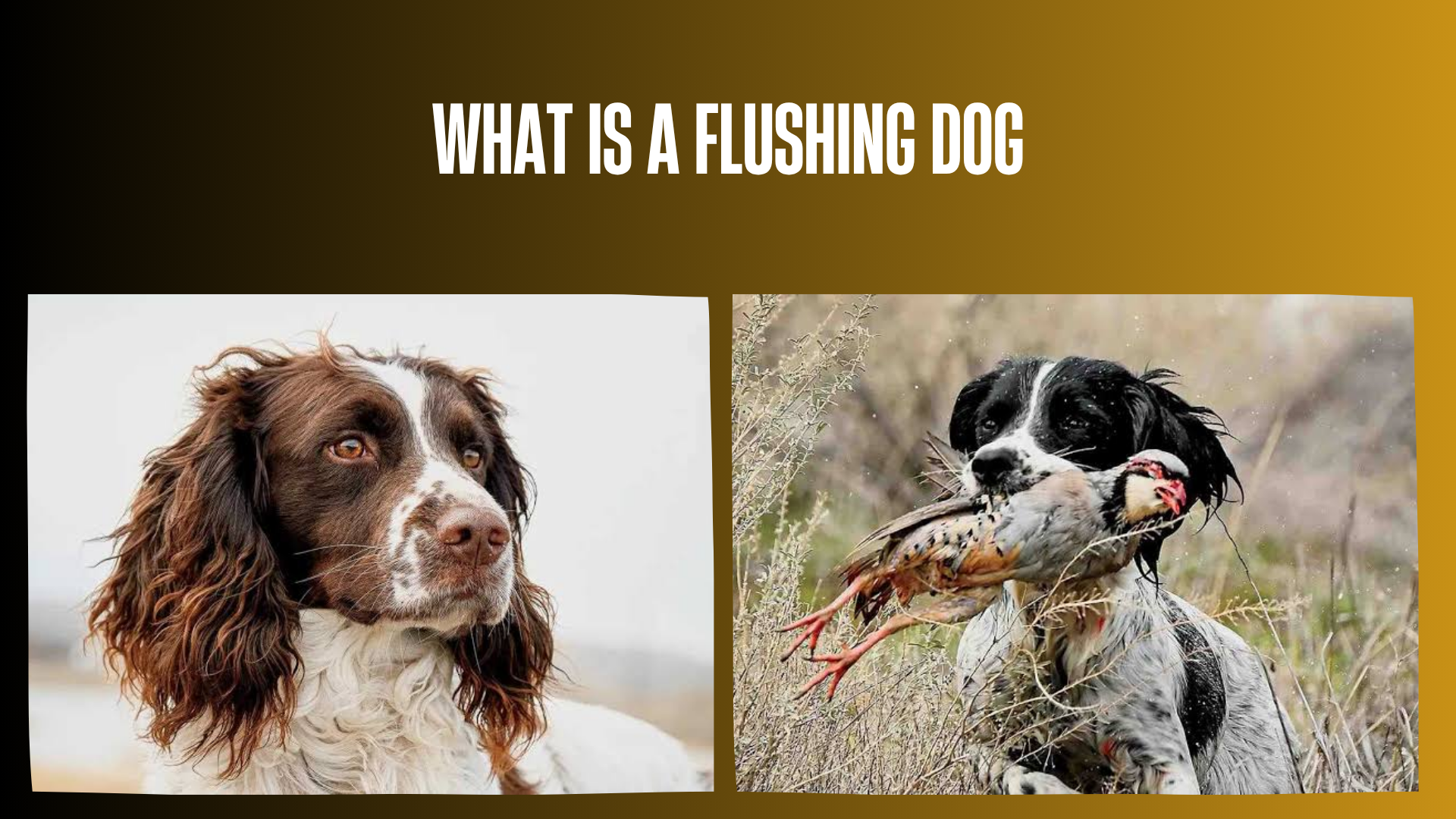

A flushing dog is a gun dog trained to search cover close to a hunter, locate hidden game, and deliberately make it leave that cover. In upland bird hunting, the flush usually puts a pheasant, grouse, woodcock, quail, or other legal game bird into flight. The hunter must then positively identify the bird, confirm a safe background, and decide whether a lawful, ethical shot is available.
The defining feature is not a particular breed, coat, or size. It is the dog’s working method: hunt within a controllable distance, enter cover, find scent, and push game into the open without ranging so far that birds flush outside the hunter’s effective range. Many flushing dogs also retrieve downed birds on land or water, but flushing and retrieving are separate skills.
Quick Answer
A flushing dog is a hunting dog that searches for game within practical shotgun range and causes it to leave cover rather than stopping to point. Spaniels are strongly associated with this work, although some retriever breeds and individual dogs also flush upland birds effectively. A useful flusher must remain responsive, work the available cover, stop or remain controlled when birds rise, and retrieve only on command when trained to do so. Breed instinct helps, but safe field behavior depends on humane training, conditioning, veterinary care, and disciplined firearm handling.
The Flushing Dog’s Job in One Hunt Sequence
| Stage | Dog’s Role | Handler’s Responsibility |
|---|---|---|
| Search | Quarter through likely cover and use scent to locate game | Direct the dog, watch wind and cover, and maintain control |
| Contact | Show a change in pace, body language, or intensity near scent | Prepare without pointing the muzzle at the dog or unidentified cover |
| Flush | Push the bird from cover into flight | Identify species and sex where required; verify a safe shot |
| Wing and shot | Stop, sit, or remain under control rather than chase | Respect zones of fire and never shoot through or over the dog |
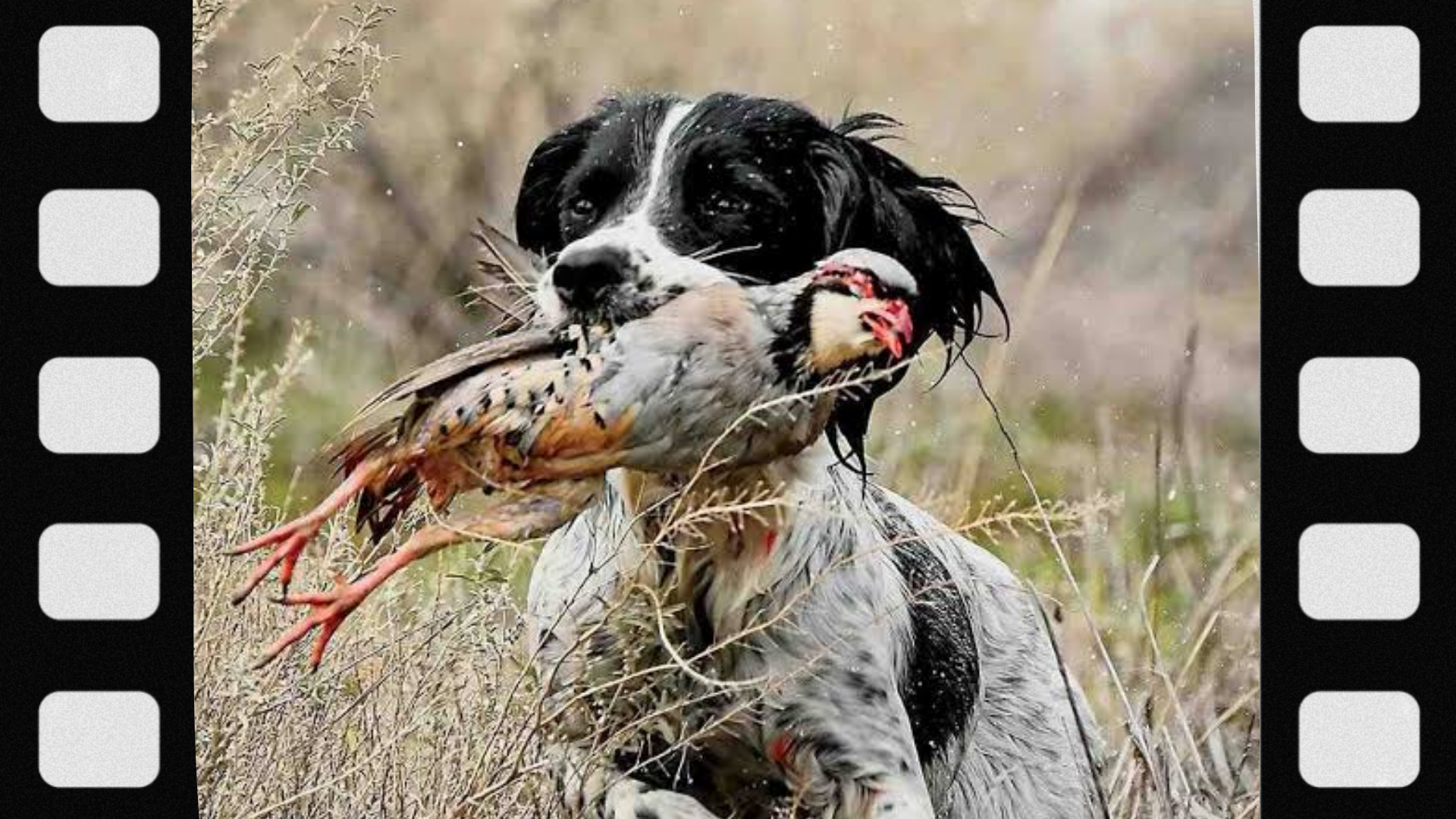
| Retrieve | Mark the fall, find the bird, and return it when sent | Send only after the firearm and scene are safe |
| Reset | Return to controlled hunting range | Check the dog, reload safely, and continue only when ready |
How Flushing Dogs Find and Move Game
A flusher normally hunts in a side-to-side pattern called quartering. The dog crosses in front of the handler, investigating scent-bearing cover instead of running in a straight line. Wind, humidity, vegetation, temperature, bird movement, and terrain influence where scent travels, so good work is responsive rather than perfectly geometric.
As the dog nears a bird, its pace or body language may change. It may accelerate, shorten its pattern, drive deeper into a clump, or show greater tail activity. These signs are not identical in every dog. The dog then presses the bird until it runs or flies from cover.
The dog must do this close enough for the handler to make a safe decision. A dog that repeatedly puts birds up beyond range may have strong prey drive but is not performing useful controlled flushing work. Range is shaped by training, cover, wind, handler pace, bird behavior, and the individual dog.
Flushing Dog vs. Pointing Dog vs. Retriever
| Gun Dog Type | Primary Search Behavior | Typical Range | What Happens Near Game | Common Secondary Work |
|---|---|---|---|---|
| Flushing dog | Actively quarters through cover | Generally kept within practical gun range | Enters cover and makes game leave | Land and water retrieves |
| Pointing dog | Searches for scent, often at greater distance | Varies from close to wide | Stops and indicates the bird’s location | May flush and retrieve, depending on training and breed |
| Retriever | Often waits at a blind or heel until game falls | Controlled at the handler until sent | Marks, searches for, and returns downed game | Some retrievers also flush upland birds |
These categories overlap. A spaniel may flush and retrieve. A Labrador may retrieve waterfowl one day and flush pheasants the next. A versatile pointing breed may point, track, and retrieve. Judge the actual breeding, training, health, and working style rather than assuming every dog conforms perfectly to a label.
Common Flushing Dog Breeds
Breed descriptions identify tendencies, not guarantees. Field lines and show lines can differ, and individuals within the same litter vary. Responsible breeders evaluate health, temperament, working ability, and suitability for the buyer’s home and hunting.
English Springer Spaniel
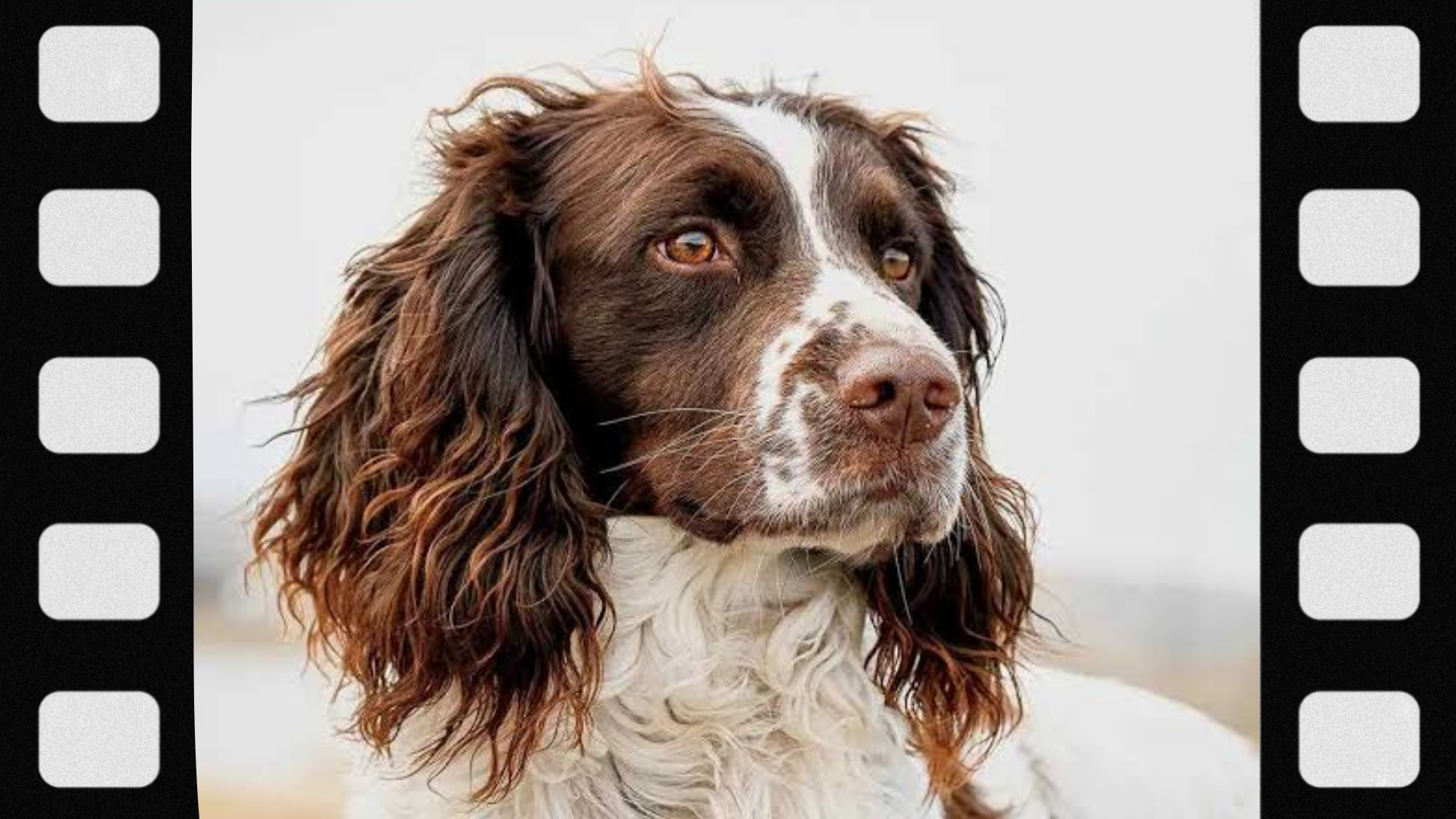
English Springers are closely associated with quartering, entering dense cover, flushing upland birds, and retrieving. Field-bred dogs often have high drive and require substantial physical exercise, training, and mental work. Their feathering and ears need regular checks for seeds, burrs, moisture, and irritation.
English Cocker Spaniel
Often called a field or working cocker in hunting contexts, this compact spaniel can work dense cover with speed and enthusiasm. Its smaller frame can be useful in tight vegetation, but it does not reduce the need for conditioning, control, grooming, and careful breeder selection.
American Cocker Spaniel
The breed has sporting origins, although many modern lines are selected primarily for companionship or conformation. Hunters seeking field work should assess the individual dog and look for breeders who can document relevant working traits and health screening.
Boykin Spaniel
Developed as a versatile Southern sporting dog, the Boykin is used for flushing and retrieving. Its moderate size can suit small boats and thick cover, but warm-weather work demands careful heat management and gradual conditioning.
Welsh Springer Spaniel
Welsh Springers are sporting dogs with flushing and retrieving heritage. Availability of proven field lines may be more limited in some regions, so prospective owners should investigate working experience rather than relying on appearance alone.
Clumber Spaniel
Clumbers traditionally work with a slower, deliberate style in heavy cover. Their build, heat tolerance, health considerations, and grooming needs differ from lighter spaniels, making conditioning and veterinary guidance especially important.
Sussex Spaniel and Field Spaniel
These less common spaniel breeds retain sporting heritage, but working availability and individual style vary. Buyers should expect a careful search for knowledgeable breeders and realistic discussion of activity, coat care, and health.
Labrador and Golden Retrievers
Retrievers are defined primarily by retrieving work, yet many individuals hunt upland cover and flush birds effectively. Their search pattern may differ from that of a traditional spaniel. Look for suitable field breeding and specific upland training if flushing is a priority.
What Makes a Good Flushing Dog?
- Cooperation: The dog hunts as part of a team rather than disappearing into cover.
- Responsive range: It adjusts to the handler, terrain, cover, and available shooting distance.
- Game-finding desire: It searches persistently and uses scent intelligently.
- Courage in cover: It enters vegetation without recklessness.
- Trainability: It responds to recall, direction, stop, and retrieve cues under excitement.
- Emotional stability: It can recover from surprises and work around people, dogs, travel, and normal hunting noise.
- Sound structure and fitness: It can move efficiently without avoidable pain or fatigue.
- Retrieving willingness: When desired, it marks and returns game gently and reliably.
Drive without control is not enough. A dog that chases flushed birds, ignores recall, or hunts far beyond range can endanger itself and reduce safe shot opportunities. Likewise, obedience without confidence and independent scent work may produce a dog that stays close but fails to hunt useful cover.
Core Training Skills
Training should be progressive, humane, and adapted to the dog in front of the handler. Positive reinforcement, clear criteria, short sessions, and gradual exposure help build durable behavior. A qualified gun-dog trainer can help a beginner avoid rushing birds, gunfire, or advanced steadiness.
Name Response and Recall
A dependable recall is foundational. Build it in low-distraction settings, then add distance, cover, scent, and wildlife distractions gradually. Do not repeatedly call when there is no practical way to reinforce the response.
Quartering and Handling
The dog learns to move across the handler’s path, investigate likely cover, and turn with whistles, voice, body position, or hand signals. Natural pattern matters less than productive coverage at a controlled range.
Stop or Sit to Whistle
A prompt stop gives the handler a way to prevent chasing, redirect the dog, and make the field safer. It should be taught away from birds before being expected in a highly exciting flush.
Steadiness to Wing and Shot
“Steady to wing” means the dog stops or remains controlled when the bird flies. More advanced steadiness may include remaining in place through the shot and fall until sent. UKC/HRC upland test rules, for example, expect the dog to flush and then stop on its own or on command in the tested context.
Retrieving and Delivery
The dog learns to pick up appropriate objects, return directly, hold without damaging game, and deliver to hand or the handler’s preferred standard. Avoid creating possessive games of chase.
Gunfire Introduction
Gunfire should be introduced gradually at a distance and paired with a confident, positive activity. Never surprise a puppy by firing close overhead “to see what happens.” A fearful response deserves a pause and a structured plan from an experienced trainer, not more uncontrolled noise.
How Close Should a Flushing Dog Work?
The dog should work within the handler’s real, demonstrated ability to identify and safely shoot a flushing bird. That distance is not a universal number. Dense cover may require a shorter range than open grass; a new hunter may need the dog closer than an experienced wingshooter; and a bird running ahead can flush farther than expected.
Range control is dynamic. The handler changes walking direction, uses recall or turn cues, slows near likely cover, and stops the dog when necessary. Ethical hunting does not require taking every flush. If the bird rises too far away, behind another hunter, toward a road, or across the dog’s path, the correct decision is not to shoot.
Choosing a Flushing Dog for Hunting and Home
Start with daily life, not breed reputation. A high-energy field dog lives with the owner all year but hunts for a limited portion of it. Consider whether the household can provide exercise, training, grooming, veterinary care, safe containment, travel, and mental work every week.
- Define the hunting job. Identify primary birds, terrain, climate, cover, walking distance, water work, and frequency of hunting.
- Assess the home. Consider children, other pets, yard security, work schedule, noise tolerance, and time for exercise.
- Choose working style. Decide whether you prefer a fast, animated search or a slower, methodical dog.
- Study the breeder or rescue. Ask for health records, temperament information, field evidence, and honest limitations.
- Meet adult relatives when possible. A polished puppy advertisement reveals less than mature dogs from the same breeding program.
- Budget beyond purchase. Include food, routine veterinary care, emergency care, training, travel, grooming, parasite prevention, and safe equipment.
- Plan the first two years. Puppy development, socialization, foundation training, conditioning, and maturity take time.
No breed is automatically good with every child, pet, or living arrangement. Supervise interactions, teach children respectful behavior, and provide the dog with rest and boundaries.
Health and Field Conditioning
A hunting dog is a canine athlete. Schedule a veterinary examination before demanding conditioning or a hunting season, particularly for a young, older, previously injured, or inactive dog. Discuss breed-relevant health screening, body condition, vaccines, heartworm, flea and tick prevention, waterborne disease risks, and emergency planning.
Condition progressively over weeks rather than expecting opening-day fitness. Mix aerobic work, controlled strength, footing changes, obedience, and rest. Keep nails and paw hair appropriate for traction, and inspect pads after training.
Heat illness can develop during exercise even when a motivated dog continues working. UC Davis veterinary guidance identifies exertion as a cause of dangerous heat gain and emphasizes prevention. Watch the individual dog rather than relying on a simple temperature rule. Stop for abnormal fatigue, disorientation, stumbling, vomiting, collapse, excessive or changing panting, or other concerning signs, and seek emergency veterinary guidance promptly.
Field Safety for Dogs and Hunters
Firearm Safety Around the Dog
Treat every firearm as loaded, keep the muzzle pointed in a safe direction, keep your finger outside the trigger guard until ready to shoot, and be certain of the target and what is beyond it. The dog is part of what lies beyond the target. Never fire through cover where its location is uncertain or swing through a dog, handler, road, building, livestock, or occupied area.
Agree on zones of fire before hunting. Unload when crossing obstacles, entering vehicles, dealing with a dog emergency, or whenever safe handling requires it. A mechanical safety does not replace muzzle discipline.
Identification and Visibility
Use current contact identification and a microchip with updated registration. High-visibility collars, vests, or bells can help locate a dog in cover where legal and appropriate. Tracking devices are useful backups but do not excuse inadequate recall or violate local electronic-equipment rules.
Terrain and Environmental Hazards
Check for barbed wire, roads, traps, cliffs, ice, currents, harmful algae advisories, snakes, porcupines, foxtails, cactus, sharp stubble, and broken glass. Do not send a dog into water, ice, heat, or cover that creates an unreasonable risk.
Water, Rest, and Temperature
Carry clean water and offer regular breaks. Do not depend on ponds or puddles, which may contain pathogens or toxins. Adjust work for humidity, sun, wind, coat, body condition, acclimation, age, and fitness. Cold-water retrieves can also cause hypothermia; dry the dog, provide insulation, and stop before shivering or loss of coordination progresses.
Post-Hunt Inspection
Check eyes, ears, nostrils, mouth, paws, nails, armpits, groin, and coat. Look for seeds, burrs, ticks, cuts, punctures, swelling, heat, limping, and tenderness. Clean and dry long ears as directed by a veterinarian, and obtain care for eye injury, breathing difficulty, serious bleeding, collapse, suspected snakebite, heat illness, or persistent lameness.
Useful Gear Without Overbuying
You do not need the most expensive equipment to hunt responsibly. Choose gear based on the dog, habitat, climate, local regulations, fit, safety, reliability, and actual experience.
Basic Field Equipment
- Flat identification collar with current contact details
- Microchip registered to current owner information
- Lead and secure travel crate or restraint
- Clean water, bowl, food plan, and rest mat
- Dog-specific first-aid kit recommended by a veterinarian
- High-visibility protective vest when conditions warrant it
- Towel, paw supplies, tick-removal tool, and waste bags
- Copies of vaccination, prescription, and emergency information when traveling
Training Tools
- Whistle with a consistent recall and stop pattern
- Long line for controlled progression
- Retrieving bumpers appropriate to the dog
- Place board or mat for steadiness and impulse control
- Bird exposure arranged legally and humanely with experienced supervision
An electronic collar is not a substitute for teaching a cue. Anyone considering one should learn humane timing and fit from a qualified trainer and check local rules. Misuse can create fear, avoidance, or confusion.
Common Training and Handling Mistakes
- Allowing uncontrolled chasing: Repeated self-rewarding chases make steadiness harder and may put the dog in shooting lanes or roads.
- Introducing gunfire too close: A sudden blast can create lasting fear. Build distance and positive association gradually.
- Hunting before conditioning: Enthusiasm can hide fatigue until the dog is already in danger.
- Calling without follow-through: Repeated ignored cues teach the dog that recall is optional.
- Correcting unclear behavior: The dog cannot respond reliably when the cue, criterion, or timing changes.
- Expecting breed instinct to replace training: Natural search and prey drive still require cooperation and impulse control.
- Overworking a puppy: Physical and emotional maturity develop gradually. Keep sessions short and protect growing joints.
- Ignoring home manners: A dog that cannot settle, recall, ride safely, or tolerate handling will be harder to manage in the field.
- Shooting every flush: A bird outside the safe zone or legal criteria must be allowed to go.
Troubleshooting Flushing-Dog Problems
| Problem | Possible Causes | What to Check | Responsible Next Step |
|---|---|---|---|
| Dog ranges too far | Weak recall, rewarding distant birds, handler movement, or mismatched expectations | Response in easier cover and the point where control is lost | Return to long-line and turn-cue work with fewer distractions |
| Dog stays at heel and will not hunt | Low confidence, excessive control, fatigue, heat, poor bird introduction, or health issue | Body language, physical comfort, and interest in low-pressure sessions | Rule out health problems and rebuild independent searching positively |
| Dog chases after the flush | Insufficient stop training or repeated reinforcement from chasing | Stop cue away from birds | Rebuild steadiness with controlled setups and qualified help |
| Dog is afraid of gunfire | Noise introduced too close, pain, surprise, or generalized sound sensitivity | Fear triggers and recovery | Stop shooting around the dog and consult an experienced trainer or veterinary behavior professional |
| Dog will not retrieve | Unclear foundation, possessiveness, discomfort, low motivation, or too much pressure | Pickup, return, hold, and delivery as separate skills | Rebuild with short positive retrieves and rule out mouth or orthopedic pain |
| Dog tires unusually quickly | Poor conditioning, heat, dehydration, illness, pain, or excess body weight | Temperature, gait, gums, breathing, recovery, and recent health | Stop work and seek veterinary advice when signs are abnormal or persistent |
Legal and Ethical Considerations
Rules on using dogs vary by country, state, province, species, season, public property, wildlife area, and training period. Some places restrict dog training outside hunting seasons, require leashes in certain areas, prohibit dogs in refuges, regulate captive birds, or set special rules for pursuing mammals. Verify current regulations and landowner permission before training or hunting.
A dog does not remove the hunter’s responsibility to identify the target, obey bag limits, avoid protected species, recover downed game, and respect boundaries. If a dog crosses private land, the handler should not trespass automatically; follow the jurisdiction’s retrieval law and contact the landowner or conservation officer as appropriate.
Ethical dog handling includes fair training, adequate food and water, veterinary care, safe transport, rest, and retirement or role adjustment when age or health changes. A dog should never be worked through pain, collapse, respiratory distress, or dangerous weather to complete a hunt.
Authoritative Resources
- United Kennel Club publishes current rules for upland and hunting-retriever events that describe tested flushing and steadiness work.
- American Kennel Club breed resources provide breed histories and general temperament, exercise, grooming, and health information.
- UC Davis School of Veterinary Medicine heat-related illness guidance explains why exertional heat illness is an emergency.
- Your state or provincial wildlife agency provides controlling rules on dog use, training seasons, public land, game species, and retrieval.
- Your veterinarian should guide conditioning, preventive care, first-aid planning, and health screening for the individual dog.
FAQs
1. What is a flushing dog?
A flushing dog is a gun dog that searches cover close to a hunter, locates hidden game, and causes it to leave cover rather than holding a stationary point.
2. What does “flush” mean in bird hunting?
It means causing a hidden bird to run or fly from cover, making it visible for identification and a possible lawful shot.
3. How is a flushing dog different from a pointing dog?
A flusher normally moves in and puts the bird into flight. A pointing dog typically stops and indicates where the bird is, allowing the hunter to approach before the flush.
4. Is a flushing dog the same as a retriever?
No. Flushing describes finding and moving live game; retrieving describes locating and returning downed game. One dog can perform both jobs.
5. What birds do flushing dogs hunt?
Depending on location and law, they may hunt pheasant, grouse, woodcock, quail, chukar, partridge, and other upland game birds. Some also work waterfowl retrieves.
6. Can flushing dogs hunt rabbits?
Some dogs are used to flush rabbits where lawful, but regulations and traditions differ. Bird-flushing training does not automatically prepare a dog for every game species.
7. What breeds are traditional flushing dogs?
English Springer Spaniels, English Cockers, Boykin Spaniels, Welsh Springers, Clumbers, Sussex Spaniels, and Field Spaniels are common examples, with individual working ability varying.
8. Can a Labrador be a flushing dog?
Yes. Many Labradors hunt upland birds and flush effectively, although the breed is primarily known for retrieving. Appropriate field breeding and training matter.
9. Can a Golden Retriever flush birds?
Yes, some field-bred and trained Goldens do upland work. Not every individual will have the same search style, drive, or cover ability.
10. Are all spaniels natural flushers?
Spaniels have flushing heritage, but instinct, health, confidence, exposure, and trainability vary. Some modern lines are selected more for companionship or conformation than field work.
11. What is quartering?
Quartering is a side-to-side search pattern in front of the handler that allows the dog to cover likely scent and vegetation while staying connected.
12. How far should a flushing dog range?
It should remain within the handler’s safe and demonstrated shooting range for the cover. There is no universal distance for every hunter, dog, bird, and habitat.
13. What is “steady to wing”?
It means the dog stops or remains controlled when a bird rises instead of chasing it.
14. What is “steady to shot and fall”?
It means the dog stays controlled through the gunshot and the bird’s fall, then retrieves only when released or sent.
15. Does a flushing dog need to retrieve?
Not to fit the basic definition, but retrieving is highly useful for game recovery and is expected in many hunting and testing settings.
16. Are flushing dogs easier to train than pointing dogs?
Not universally. The skills and challenges differ. Flushers need strong range control and steadiness, while pointing work emphasizes search, point, backing, and steadiness standards.
17. When should training begin?
Age-appropriate socialization, name response, recall, play retrieves, and handling can begin in puppyhood. Formal workload and physical demands should match development and veterinary guidance.
18. How long does it take to train a flushing dog?
There is no fixed timeline. Genetics, maturity, frequency, handler skill, goals, and access to birds all affect progress. Reliable field performance usually develops over repeated seasons.
19. How should gunfire be introduced?
Gradually, at distance, during a positive activity and with experienced supervision. Never fire close to a dog as an unplanned test.
20. What if my dog is gun-shy?
Stop exposing it to gunfire and seek an experienced, humane gun-dog trainer or veterinary behavior professional. Repeated uncontrolled shots can worsen fear.
21. Why does my dog flush birds too far away?
Possible causes include weak recall, excessive range, running birds, handler position, or training that rewards distant pursuit. Return to controlled range work.
22. Why does my flushing dog chase birds?
Chasing is naturally rewarding and may reflect incomplete stop training. Use controlled setups to teach steadiness rather than allowing repeated long chases.
23. Why will my dog not enter thick cover?
Low confidence, painful vegetation, eye or skin irritation, heat, fatigue, lack of bird reward, or excessive pressure may contribute. Rule out health issues and build difficulty gradually.
24. Why does my dog stay too close?
The dog may lack confidence, feel overcontrolled, be physically uncomfortable, or not understand independent searching. Short positive sessions in light cover can help reveal the cause.
25. Do flushing dogs make good family pets?
Many do when their exercise, training, social, grooming, and rest needs are met. Field lines can be intense, and no breed is automatically suitable for every household.
26. Are flushing dogs good with children?
Many individuals are affectionate, but temperament and experience vary. Adults should supervise, teach respectful interaction, and give the dog a quiet place to rest.
27. Can a flushing dog live in an apartment?
Possibly, if the owner can provide substantial daily exercise, training, enrichment, toilet breaks, and calm indoor routines. A yard does not replace that work.
28. How much exercise does a flushing dog need?
Needs vary by age, health, breed, and individual. Working lines often need significant physical exercise plus scent work, obedience, and recovery days.
29. Do flushing dogs bark while hunting?
Some may vocalize, but unwanted noise can disturb game and indicate overarousal. Acceptable behavior depends on the hunting context and local tradition.
30. Do flushing dogs need professional training?
Not always, but professional help can be valuable for first-time owners, gunfire introduction, bird work, steadiness, or behavior problems.
31. How do I choose a flushing-dog puppy?
Evaluate the breeder, health testing, working parents, temperament, household fit, and long-term support. A brief puppy test cannot guarantee adult hunting ability.
32. Should I choose a started dog instead of a puppy?
A started dog lets you observe size, temperament, basic training, and field interest, but you still need to verify health, methods used, and fit with your hunting style.
33. What health tests should breeders perform?
Recommended screening differs by breed and genetic line. Consult the relevant national breed club and veterinarian rather than using one generic checklist.
34. What grooming does a flushing spaniel need?
Regular brushing, mat removal, nail care, ear checks, paw inspection, and trimming appropriate to the coat. Field dogs also need burr and seed removal after every outing.
35. Why are spaniel ears a field-care concern?
Long ears can trap moisture and collect seeds or debris. Redness, odor, discharge, pain, or persistent head shaking warrants veterinary evaluation.
36. What should be in a hunting-dog first-aid kit?
Ask a veterinarian to tailor it. Common categories include wound-covering supplies, saline, tick tools, gloves, emergency contacts, medication records, and dog-safe items the vet approves.
37. How can I prevent heat illness?
Condition gradually, schedule around weather, offer clean water and breaks, watch the individual dog, and stop early. Heat illness is an emergency, not a training issue.
38. Can flushing dogs hunt in cold water?
Some can retrieve in cold water with proper conditioning and protection, but hypothermia and ice are serious risks. Limit exposure, dry and warm the dog, and never send it into unsafe conditions.
39. Should a hunting dog wear a vest?
A properly fitted vest can improve visibility or protect against some cover and cold. Poor fit can rub, snag, overheat the dog, or restrict movement, so inspect frequently.
40. Are GPS collars legal for hunting dogs?
Rules vary by jurisdiction, species, property, and season. Check current regulations. A tracker is a recovery aid, not a replacement for recall and supervision.
41. Are electronic training collars necessary?
No. They are optional tools, not substitutes for teaching. Poor timing or excessive intensity can create fear and confusion; obtain humane professional guidance if considering one.
42. Can I train with live birds?
Only where lawful and humane. Rules can govern possession, purchase, release, banding, training dates, and public-land use. Use experienced supervision.
43. Can I train a flushing dog on public land?
Possibly, but training seasons, leash rules, nesting closures, bird-release rules, and area restrictions may apply. Verify with the managing agency.
44. What should I do if my dog crosses onto private land?
Do not assume you may trespass. Follow local dog-retrieval law, contact the landowner, and seek conservation-officer assistance when appropriate.
45. How do hunters avoid shooting a flushing dog?
Maintain visual awareness, teach steadiness, define zones of fire, avoid low or uncertain shots, and never fire through cover or across the dog’s path.
46. At what age should a flushing dog retire?
There is no fixed age. Adjust work according to veterinary assessment, recovery, mobility, senses, enthusiasm, chronic disease, and the individual dog’s comfort.
47. Can rescue dogs become flushing dogs?
Some can, depending on health, temperament, prey interest, trainability, and background. Evaluate the individual patiently without assuming breed appearance predicts performance.
48. What is the most important trait in a flushing dog?
No single trait is enough. Productive scent work, cooperation, controllable range, physical soundness, emotional stability, and safe steadiness must work together.
Final Answer
So, what is a flushing dog? It is a gun dog that searches within practical range, finds hidden game, and moves it from cover so the hunter can identify it and decide whether a safe, lawful shot exists. Spaniels are the classic flushers, but some retrievers and individual dogs work the same role. The best match is not determined by breed name alone: consider field breeding, temperament, health, home life, working range, climate, and your ability to train consistently. Build recall, quartering, stop, steadiness, and retrieving through humane progression, and never let the desire for a bird override firearm safety or the dog’s welfare.
Read more: