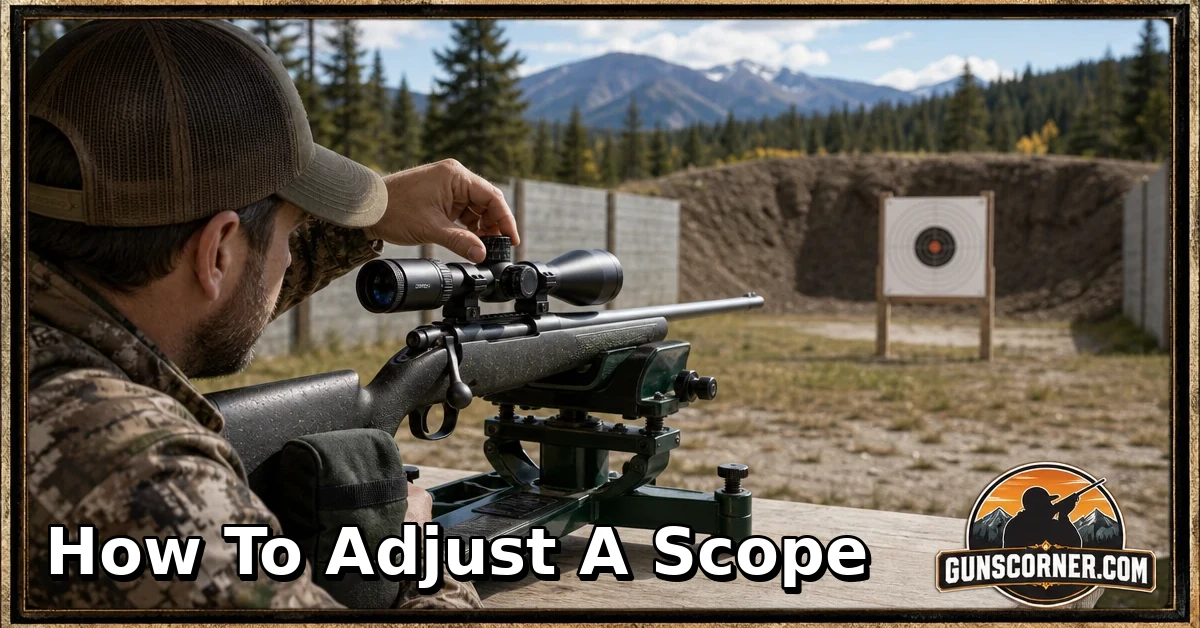

Learning how to adjust a scope is an essential rifle skill for responsible hunters. A properly adjusted optic helps you place accurate shots within your practiced ability, but it does not replace safe firearm handling, legal compliance, careful scouting, or ethical shot selection. This guide explains how to adjust a scope safely, confirm your rifle’s point of impact, troubleshoot common problems, and prepare for a responsible hunt.
To adjust a scope, secure the unloaded rifle on a stable rest, confirm the optic is mounted correctly, fire a careful group at a known distance, and compare the group’s center with your intended point of aim. Use the scope’s windage and elevation turrets according to the manufacturer’s instructions, then fire another group to confirm the change. Always follow local firearm laws, use a safe range, identify your target and backstop, and hunt only after your rifle and scope are reliably confirmed.
Important Legal and Safety Notice Before You Begin
Scope adjustment should be done at a lawful shooting range or another approved location with a safe backstop. Hunting regulations vary by country, state, province, county, season, land type, and weapon category. Before hunting, check your official wildlife agency for current license, permit, tag, season, legal hunting-hour, firearm, ammunition, transport, land-access, and harvest-reporting requirements.
- Treat every firearm as loaded until you personally verify otherwise.
- Keep the muzzle pointed in a safe direction and keep your finger outside the trigger guard until ready to fire.
- Keep the action open and the firearm unloaded while mounting or inspecting the scope.
- Identify the target and what lies beyond it before every shot.
- Never shoot toward roads, homes, livestock, people, vehicles, trails, or unclear movement.
- Use only ammunition recommended by the firearm and ammunition manufacturers.
- Wear hearing and eye protection at the range.
- Follow range commands and posted rules.
- Consider completing a hunter education course and working with an experienced mentor.
What Scope Adjustment Means
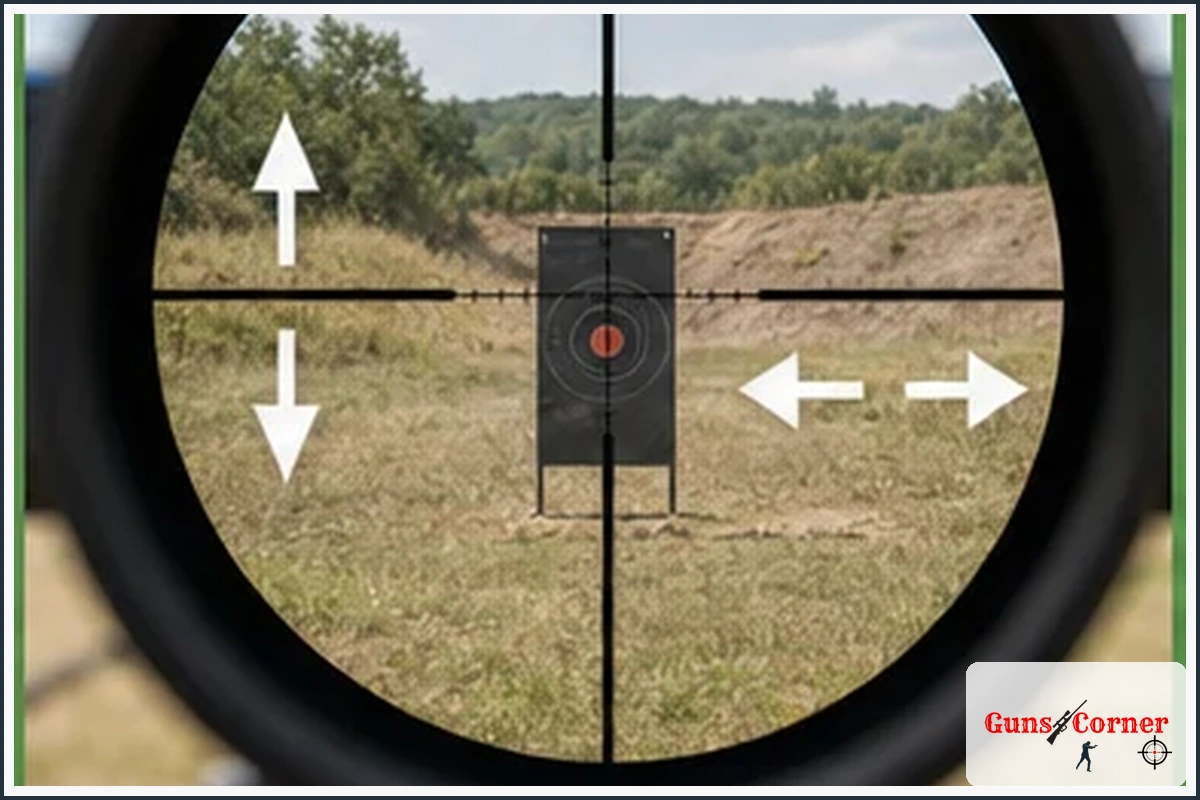
A riflescope has two primary adjustments: elevation and windage. Elevation moves the point of impact up or down, while windage moves it left or right. The scope’s reticle is your aiming reference, and the turrets change how the rifle and reticle align at a specific distance.
A scope adjustment does not make a rifle automatically accurate. Accuracy also depends on ammunition, rifle condition, mounting quality, shooting technique, weather, and the shooter’s ability to hold the rifle consistently.
What You Need Before Adjusting a Scope

- A legally owned and properly maintained rifle
- A compatible scope and secure mounting system
- Manufacturer-recommended ammunition
- A stable shooting bench, bags, or approved rifle rest
- A target with a clear aiming point and visible grid or reference marks
- A safe, properly rated backstop
- Eye and hearing protection
- A measuring tape or ruler
- A screwdriver or tool specified by the scope or mount manufacturer
- A notebook or phone for recording distance, ammunition, weather, and adjustments
- A chamber flag if required by the range
How to Adjust a Scope Step by Step
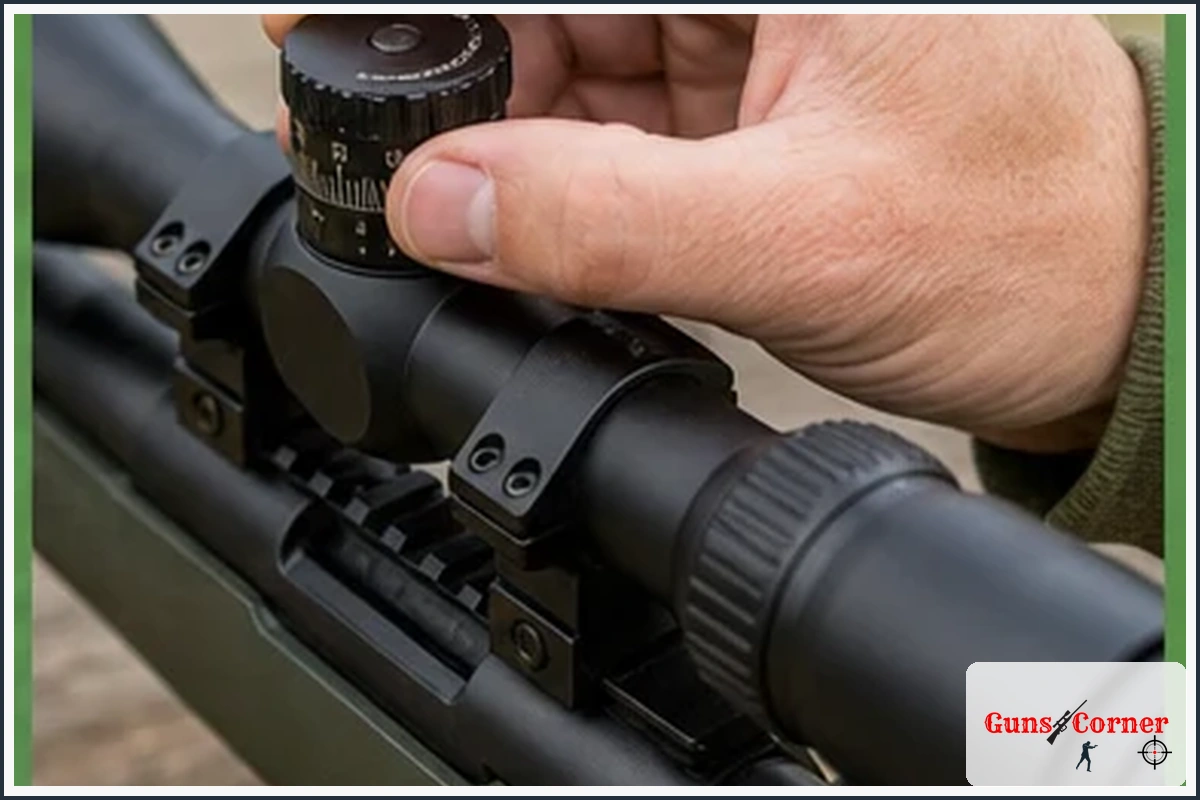
Step 1: Read the Scope and Rifle Manuals
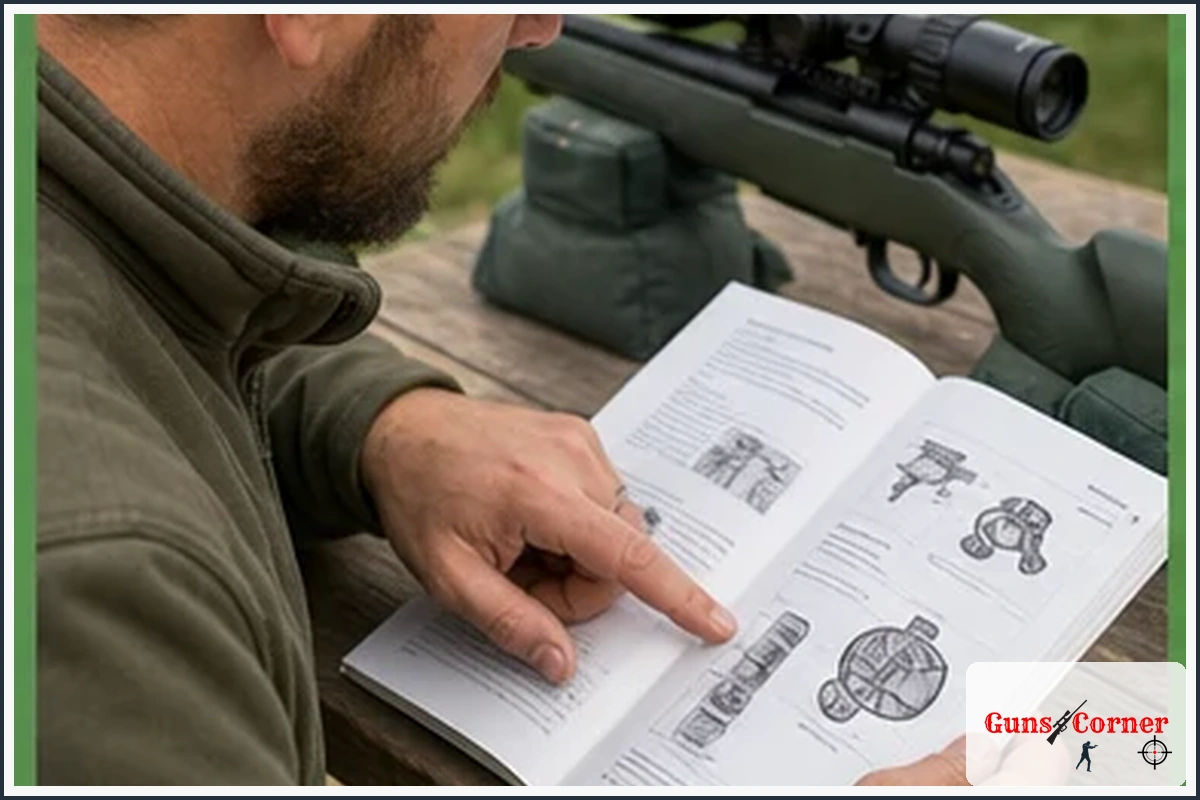
Before touching the turrets or mounting screws, read the manufacturer’s instructions. Confirm the direction of adjustment, turret click value, recommended mounting procedure, and any torque specifications. Scope markings commonly use terms such as “up,” “down,” “left,” or “right,” but designs differ.
Step 2: Confirm the Rifle Is Unloaded
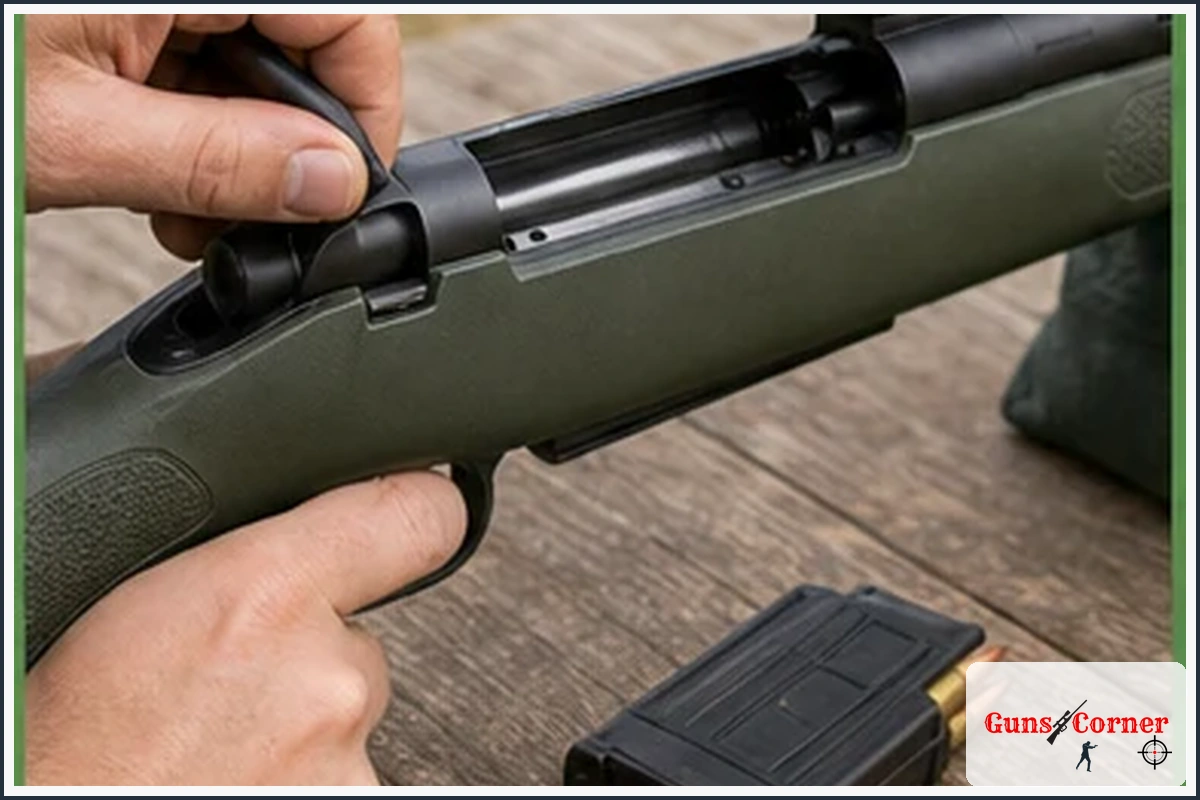
Point the muzzle in a safe direction, remove the magazine if applicable, open the action, and visually and physically check the chamber. Keep ammunition separate while inspecting or mounting the optic.
Step 3: Inspect the Scope and Mounts
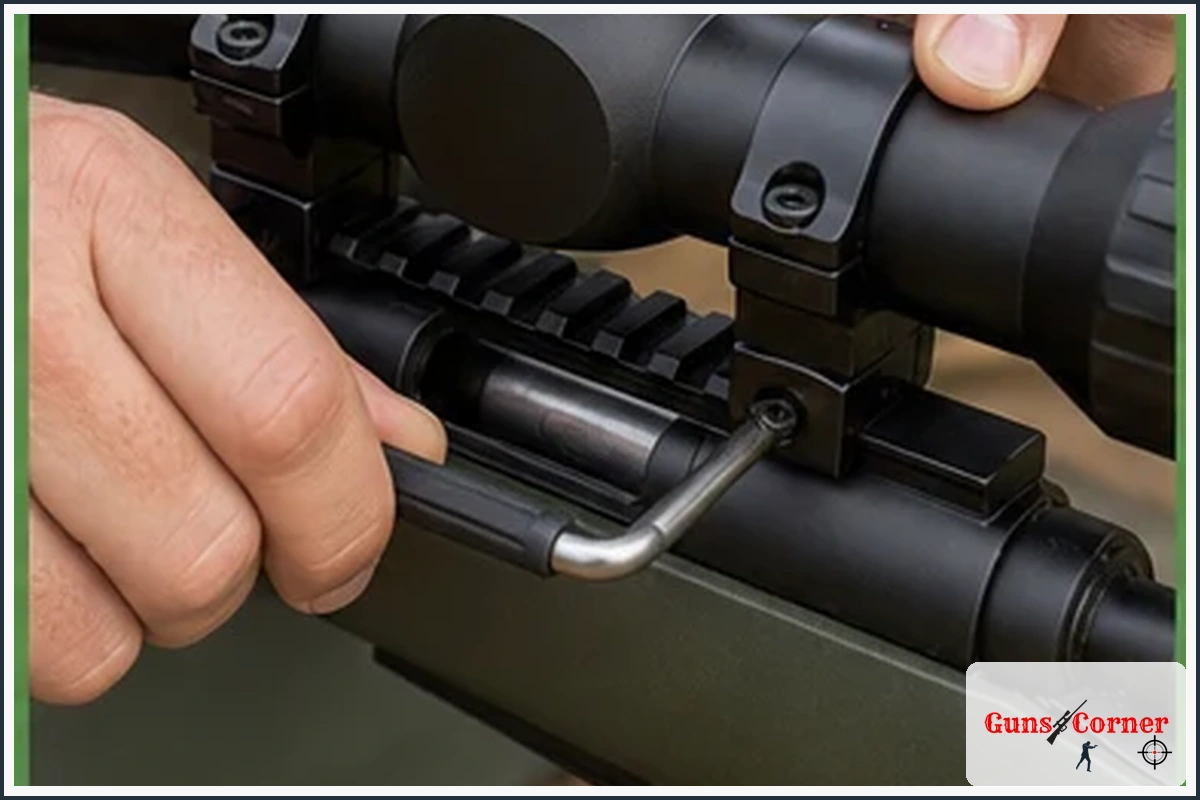
Check that the rings, bases, screws, and mounting surfaces are clean and secure. The scope should be properly aligned with the rifle, positioned for comfortable eye relief, and free from damage. Do not overtighten screws or use tools and torque values that are not recommended by the manufacturer.
Step 4: Set Up a Safe Shooting Position
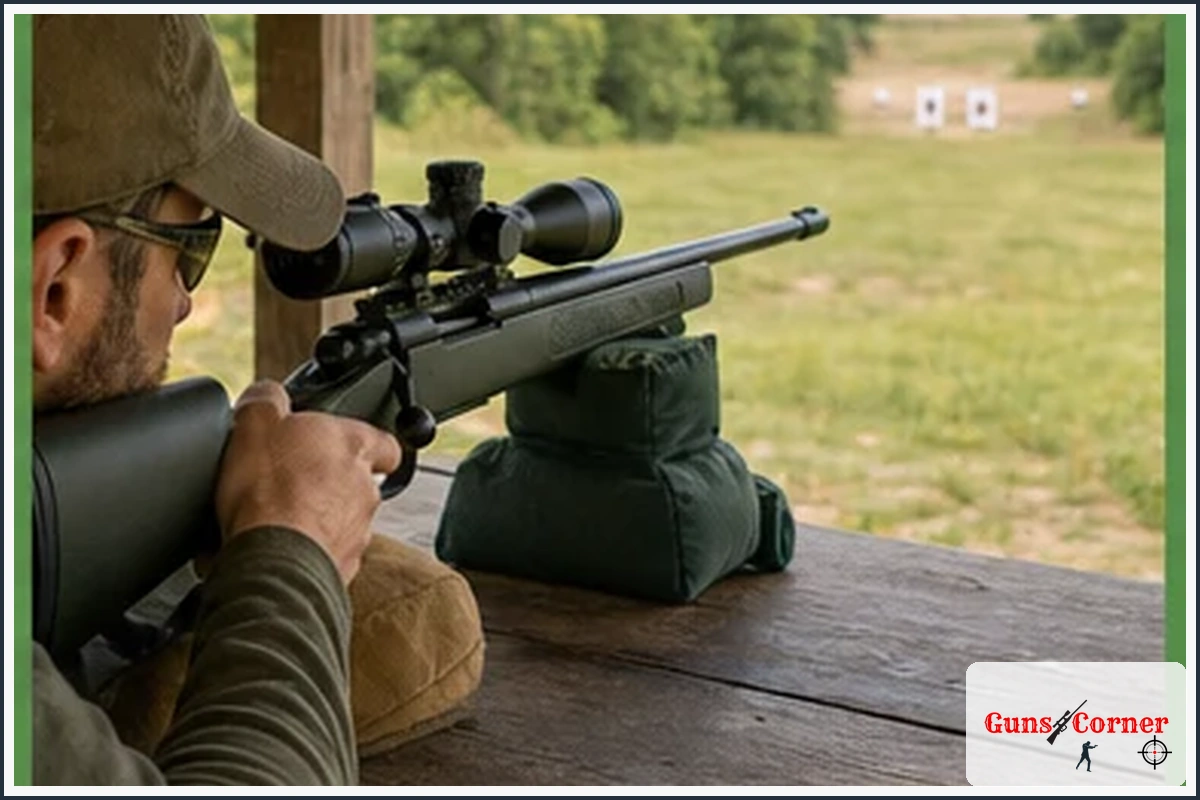
Use a stable bench and a rest that supports the rifle without forcing the barrel into an unusual position. The rifle should sit naturally, and you should be able to see the full sight picture without stretching or moving your head excessively.
Step 5: Place the Target at a Known Distance
Use a measured distance appropriate for initial sight-in and permitted by the range. A shorter distance can make early corrections easier, but the final confirmation should reflect the distance and conditions in which you may legally hunt.
Step 6: Fire a Careful Group
Load and fire according to range rules. Use the same aiming point for each shot, maintain consistent shoulder pressure, and avoid rushing. A group of several shots is more useful than adjusting based on one unexplained impact.
If the group is unusually large, stop adjusting and investigate your shooting position, ammunition, rifle condition, mount security, and technique. A scope cannot correct inconsistent shooting or a mechanical problem.
Step 7: Measure the Group
Find the approximate center of the group rather than focusing on one shot. Measure the horizontal and vertical distance between the group center and your intended point of aim. Record the measurement, distance, ammunition, and conditions.
Step 8: Adjust Windage and Elevation
Use the turret markings and click value printed on the scope. Make the required corrections in the direction indicated by the manufacturer. Turn the turrets deliberately and count the clicks. Do not guess, spin the adjustment rapidly, or force a turret past its travel limit.
For example, if the group is low, an elevation correction may be needed. If it is left, a windage correction may be needed. The exact turret direction depends on the scope, so always confirm the markings rather than relying on memory.
Step 9: Fire Another Group
Return the rifle to the same stable position and fire another careful group. Check whether the point of impact moved as expected. If it did not, inspect the mounts, turret settings, ammunition, and shooting technique before making more corrections.
Step 10: Confirm the Final Hunting Zero
Once the rifle is close, confirm the point of impact at the distance you plan to use within legal and ethical hunting conditions. Consider how terrain, temperature, wind, and shooting position may differ from the bench. Never assume that a range setting remains correct after transporting, storing, or servicing the rifle.
Step 11: Record Your Settings
Write down the ammunition type, distance, scope settings, date, weather, and rifle configuration. Keeping a record makes it easier to identify changes later and helps prevent confusion when preparing for another hunt.
Understanding Scope Clicks
Many scopes adjust in small click increments. The value may be expressed in inches at a particular distance or in milliradians. The adjustment amount changes with distance, so a click that moves the point of impact a small amount at one range will move it farther at a longer range.
Do not assume that every scope uses the same click value. Read the turret markings and manual, and use a reliable measurement method. If the markings are unclear, ask a qualified range officer, gunsmith, or experienced instructor for help.
How to Tell Whether the Scope or Shooter Is the Problem
A consistent group that is simply off-center usually indicates that an adjustment may be needed. A widely scattered group can indicate inconsistent shooting technique, unsuitable ammunition, a loose mount, a damaged scope, poor rest technique, or a rifle issue.
- Use the same ammunition throughout the sight-in process.
- Allow the barrel to cool as recommended by the rifle manufacturer.
- Check that the scope and rings remain secure.
- Use a natural, repeatable shooting position.
- Avoid resting the barrel directly on a hard surface.
- Ask a qualified instructor to observe your technique.
- Stop if you notice unusual recoil, sound, pressure, or firearm behavior.
Preparing the Scope for a Hunting Trip
Adjusting a scope is only one part of hunting preparation. Before entering the field, confirm that your rifle, optic, ammunition, clothing, navigation equipment, and emergency supplies are ready.
- Check current hunting regulations, license, tags, season dates, legal hours, and weapon rules.
- Confirm public land boundaries or obtain private landowner permission.
- Scout legal hunting areas for game trails, tracks, feeding areas, bedding cover, water, and safe shooting lanes.
- Consider wind direction and how it affects scent, visibility, and safe positioning.
- Inspect the scope for fogging, damaged lenses, loose covers, or shifted settings.
- Carry a map, compass or GPS, water, first aid supplies, and reliable communication.
- Wear required blaze orange or other visibility clothing when applicable.
- Plan how legally harvested game will be tagged, reported, cooled, transported, and cared for.
Choosing a Responsible Hunting Setup
Your scope should support a safe, ethical shot opportunity rather than encourage longer or riskier shots. Choose a position with a clear view, a safe backstop, and enough time to identify the animal correctly.
If hunting from a blind or tree stand, make sure the position is legal, stable, and suitable for your firearm. Use a full-body safety harness in a tree stand, follow the stand manufacturer’s instructions, and use a safe method to raise or lower unloaded equipment.
Before aiming at an animal, confirm its species, legal status, direction of travel, and what lies beyond it. If the animal is partially hidden, moving unpredictably, too far away, or outside your practiced ability, pass on the shot.
Common Mistakes When Adjusting a Scope
- Adjusting the scope before confirming the rifle is unloaded.
- Using an unstable rest or inconsistent shooting position.
- Changing ammunition during the sight-in process.
- Adjusting from a single unexplained shot.
- Ignoring loose rings, bases, or mounting screws.
- Misreading the turret direction or click value.
- Overtightening mounting hardware.
- Failing to record settings and ammunition information.
- Assuming a rifle remains zeroed after travel or hard handling.
- Testing only from a bench and never practicing realistic, safe field positions.
- Taking a hunting shot farther than the distance practiced.
- Ignoring legal shooting hours, land boundaries, or required visibility clothing.
Troubleshooting Common Scope Problems
| Problem | Possible Cause | What to Do |
|---|---|---|
| The group will not move after adjustment | Loose mounts, incorrect turret direction, or a damaged optic | Stop firing, inspect the mounting system, confirm turret markings, and seek qualified assistance if needed. |
| The group is very large | Inconsistent technique, unsuitable ammunition, barrel condition, or rifle problems | Improve stability, use consistent ammunition, allow cooling, and have the rifle inspected if the problem continues. |
| The point of impact changes between sessions | Loose hardware, different ammunition, temperature, transport, or optic damage | Check the mounts, use the same ammunition, record conditions, and confirm zero before hunting. |
| The sight picture is blurry | Incorrect focus, poor eye relief, dirty lenses, or damaged glass | Clean lenses properly, adjust focus according to the manual, and inspect the optic for damage. |
| The scope fogs in the field | Temperature changes, moisture, or inadequate lens care | Protect the optic, use appropriate lens-cleaning materials, and avoid breathing directly onto the lenses. |
| You are unsure whether the rifle is ready to hunt | Insufficient practice or uncertainty about the zero | Do not hunt until you can safely and consistently confirm the rifle’s performance. |
Helpful Tips for Better Results
- Adjust one variable at a time so you know what caused the change.
- Use a target with clear measurement marks.
- Keep a written sight-in record for each rifle and ammunition combination.
- Practice loading, unloading, carrying, and moving safely before hunting.
- Confirm the scope after transportation or a significant impact.
- Practice from safe field positions only after establishing a reliable bench zero.
- Use binoculars for identifying animals whenever practical instead of relying only on the scope.
- Plan your shooting direction around safe backstops and other people using the area.
- Pass on any shot that is uncertain, rushed, obstructed, or beyond your skill level.
Ethical Hunting and Conservation
A properly adjusted scope supports ethical hunting by helping you make a responsible decision, but it never guarantees a successful harvest. Ethical hunters obey seasons and bag limits, respect landowners and other outdoor users, avoid protected wildlife, and refuse unsafe or uncertain shots.
Licenses and permits commonly support wildlife management and conservation programs, but requirements differ by location. Follow all harvest reporting and transport rules, use the game responsibly, and leave the field cleaner than you found it.
When to Get More Training or Professional Guidance
Seek help from an official hunter education instructor, certified firearms instructor, qualified gunsmith, range officer, or experienced ethical mentor when you are unsure about firearm handling, scope mounting, turret adjustments, shooting technique, or local regulations.
Additional guidance is especially important if you have never handled a rifle, cannot produce a consistent group, are unfamiliar with the terrain, do not understand property boundaries, or are uncertain about safe recovery and meat care procedures.
After the Hunt: Gear Care and Continued Learning
After each range session or hunt, unload the rifle before cleaning or storing it, inspect the scope and mounts, and record any changes. Store firearms and ammunition securely according to local law and manufacturer guidance.
Review your notes about weather, shooting position, distance, and field conditions. This information can help you improve without encouraging unnecessary risk. Before the next hunt, confirm the rifle’s zero again and refresh your knowledge of current regulations.
Recommended Hunting Gear and Tools to Consider
You do not need expensive equipment to adjust a scope or hunt responsibly. Choose gear based on local law, terrain, weather, hunting method, skill level, and safety needs.
- Manufacturer-compatible scope mounts
- A stable range rest or shooting bags
- Clear targets with measurement grids
- Eye and hearing protection
- Binoculars for animal identification
- Map, compass, GPS, or approved hunting app
- First aid kit, water, and emergency communication
- Required visibility clothing
- Gloves and basic field-care supplies where appropriate
Final Thoughts
Knowing how to adjust a scope helps you prepare a hunting rifle responsibly, but the process should always include safe firearm handling, careful measurement, repeated confirmation, and realistic practice. Check local regulations, scout legal hunting areas, understand your equipment, and take only a clearly identified shot within your practiced ability. Patience, preparation, and respect for wildlife matter as much as the scope setting.
Frequently Asked Questions
What does adjusting a scope do?
Scope adjustment changes the relationship between the reticle and the rifle’s point of impact. Elevation changes vertical impact, while windage changes horizontal impact.
How do I know if my scope needs adjustment?
If a consistent group is not centered on your intended point of aim, the scope may need adjustment. A scattered group may indicate a technique, ammunition, mounting, or rifle problem instead.
Should I adjust a scope based on one shot?
No. Use a careful group and estimate its center before making corrections. One shot can be affected by shooter movement, ammunition variation, or an unexplained error.
What is windage?
Windage is the left-and-right adjustment of a scope. It corrects horizontal differences between the group center and the intended point of aim.
What is elevation?
Elevation is the up-and-down adjustment of a scope. It corrects vertical differences between the group center and the intended point of aim.
How far away should the target be?
Use a measured distance permitted by the range and appropriate for your rifle and scope. Confirm the final setting at a distance that reflects your lawful hunting conditions and practiced ability.
What does each scope click mean?
Each click represents a specific adjustment value listed on the scope or in its manual. The actual movement at the target changes with distance.
Why does my scope have “up” and “right” markings?
These markings indicate how the point of impact should move when the turret is turned. Confirm the instructions for your specific scope before making corrections.
Can I adjust a scope without a shooting rest?
A stable rest is strongly recommended. Without one, inconsistent rifle movement can make it difficult to tell whether the scope or shooting technique caused the change.
Why is my rifle grouping poorly?
Possible causes include inconsistent technique, unsuitable ammunition, loose mounts, barrel heating, poor support, or a mechanical problem. Investigate these issues before continuing to adjust the optic.
Can different ammunition change point of impact?
Yes. Different ammunition can produce different points of impact. Confirm your zero with the ammunition you plan to use legally for hunting.
Should I use the same ammunition every time?
Use consistent ammunition during sight-in and record the exact ammunition used. Reconfirm the zero if you change ammunition.
How tight should scope mounts be?
Use the torque specifications supplied by the scope and mount manufacturers. Do not guess or overtighten, because excessive force can damage components.
Can a scope lose zero during transport?
It can happen if the rifle is handled roughly, mounts loosen, or the optic is damaged. Confirm the rifle’s zero after transportation and before hunting.
Can weather affect scope adjustment?
Weather can affect visibility, shooting comfort, ammunition performance, and point of impact. Record conditions and confirm your equipment in conditions relevant to your hunt.
Should I adjust for wind at the range?
First establish a reliable zero under calm, controlled conditions when possible. Learn how wind affects your shot through formal instruction and practice rather than making unverified changes.
Should I sight in from a bench and hunt from a standing position?
A bench is useful for establishing a baseline, but you should also practice safe field positions. Your ability to hold the rifle can change significantly outside the bench.
Can I use the scope to identify an animal?
Use binoculars when practical for observation and identification. Never aim at an unclear shape, and confirm the species, legal status, target, and background before any shot.
How far can I ethically shoot while hunting?
Your ethical range is the distance at which you can consistently place accurate shots under realistic conditions. It depends on your practice, equipment, weather, position, and the animal’s presentation.
What should I do if the animal is too far away?
Do not take the shot. Wait for a safer opportunity, reposition legally if possible, or pass on the opportunity.
Can a scope make me a better hunter?
A quality, properly adjusted scope can support accurate aiming, but it cannot replace hunter education, scouting, practice, safe decisions, or knowledge of wildlife behavior.
Do I need a hunting license to adjust a scope?
Range and firearm rules vary by location, but hunting licenses are generally tied to hunting activity rather than basic range practice. Check local laws and range requirements before shooting.
Do I need a hunting license to hunt after adjusting the scope?
Before hunting, obtain all required licenses, permits, tags, and land permissions. Verify current rules with the official wildlife agency for your location.
Can I adjust a scope on public land?
Only if the land and local regulations allow target shooting. Confirm land rules, access boundaries, shooting restrictions, and posted requirements before using public land.
Can I adjust a scope on private property?
Only with the landowner’s permission and in a location with an appropriate safe backstop. Respect property boundaries, livestock, buildings, and other people.
What safety gear should I use?
Use eye and hearing protection, a stable rest, appropriate clothing, and any safety equipment required by the range. Carry navigation and first aid equipment when preparing for a hunt.
Should I wear hunter orange while adjusting a scope?
Follow the range and local visibility requirements. During hunting, wear blaze orange or other required visibility clothing whenever applicable.
What should I do if the scope fogs?
Use proper lens-cleaning materials, protect the optic from moisture, and avoid breathing directly onto the lenses. Persistent fogging may require professional inspection.
What should I do if the turret will not turn?
Do not force it. Check the manual for a locking or capped design and seek help from the manufacturer, a qualified gunsmith, or an experienced range professional.
What should I do if the point of impact moves unpredictably?
Stop and inspect the mounts, ammunition, rifle, optic, and shooting position. Do not hunt until the cause is identified and the rifle is consistently confirmed.
How often should I check my scope?
Check it before each hunting season, after transportation or a significant impact, after changing ammunition, and whenever performance seems different.
Can I clean the scope with a shirt?
Use lens-cleaning materials recommended for optics. Clothing can carry dust or grit that may scratch the lenses.
What should I record after sighting in?
Record the rifle, scope, ammunition, distance, group location, turret settings, date, and weather. These notes can help you confirm or diagnose changes later.
When should I ask a gunsmith for help?
Ask for professional help if mounts will not secure properly, the scope appears damaged, the rifle behaves unusually, the group remains inconsistent, or you are unsure about safe installation.
How does scouting relate to scope adjustment?
Scouting helps you understand legal access, terrain, animal movement, safe shooting lanes, and likely distances. That information helps you practice realistically without encouraging unsafe or excessive range.
What should I do after a successful hunt?
Follow all tagging, harvest-reporting, transport, and meat-care requirements. Handle the harvest respectfully, keep it cool as required, and use legal and responsible recovery methods.
Why is passing on a shot sometimes the right decision?
Passing is responsible when the target, background, distance, weather, animal presentation, or your own ability is uncertain. Ethical hunting prioritizes safety and humane decision-making over taking every opportunity.
Where can I learn more about firearm and hunting safety?
Use your official wildlife agency, hunter education program, certified firearms instructors, reputable shooting ranges, and experienced ethical mentors. These sources can provide guidance suited to your local laws and conditions.
Read more: