
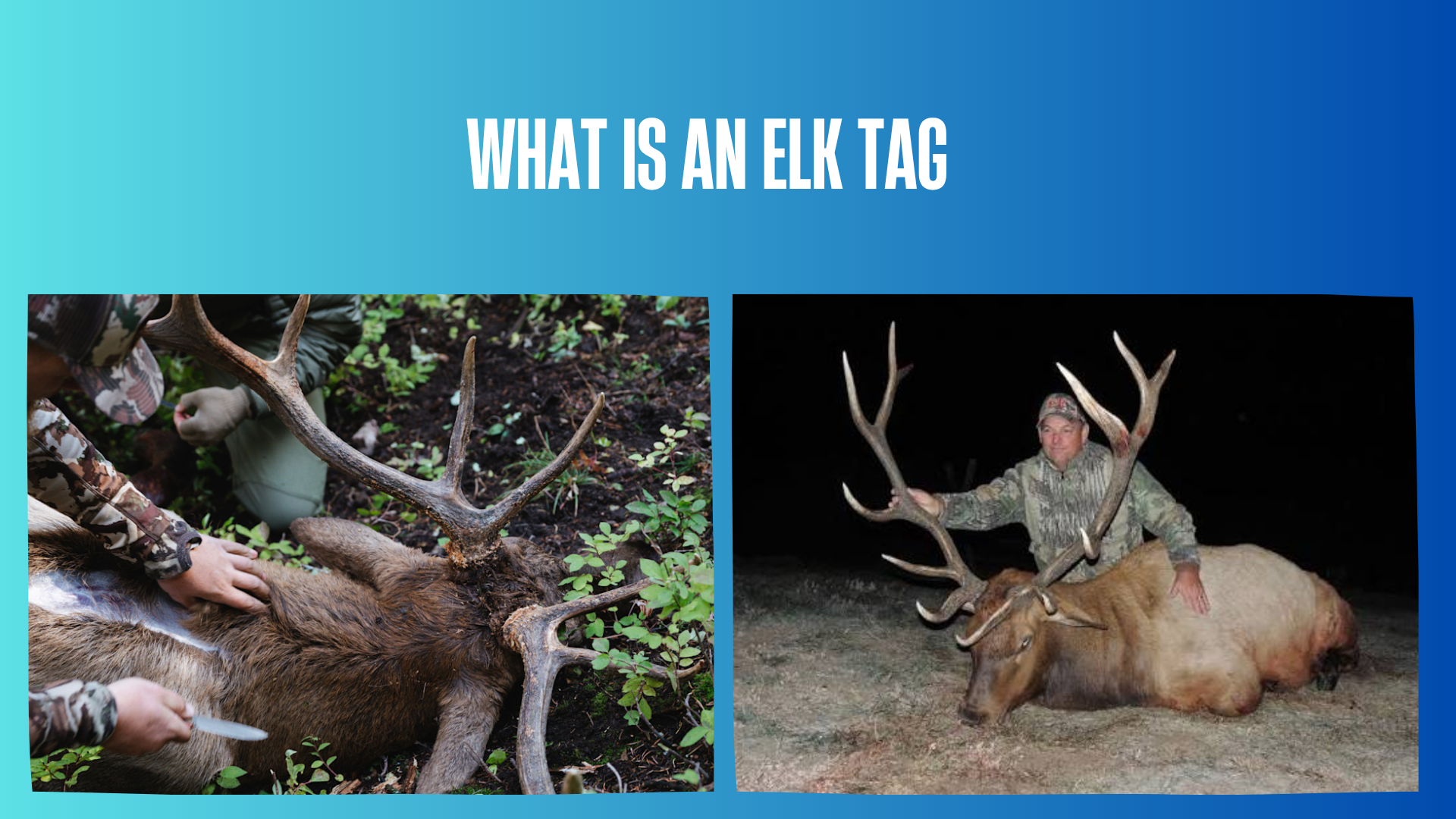

If you are new to elk hunting, the phrase “elk tag” can be confusing because hunters sometimes use the words tag, license, and permit almost interchangeably. In general, an elk tag is an authorization issued by a wildlife agency that allows an eligible hunter to harvest an elk under specific rules.
The exact legal meaning varies by state. A tag may be tied to a particular elk zone, hunt area, sex or antler class, season, residency category, or hunting method. Some elk tags can be purchased directly, while others are available only through a limited-entry drawing. Current rules always override general explanations online because tag systems, quotas, season structures, and eligibility requirements vary by jurisdiction.
Quick Answer
An elk tag is the species-specific authorization that lets a hunter legally harvest an elk under the conditions printed or electronically associated with that tag. It does not necessarily replace a hunting license; in many states, hunters need a general hunting license in addition to the elk tag or permit. The tag may restrict where, when, how, and what type of elk may be taken. Some tags are sold over the counter, while limited tags may require an application and drawing. Before hunting, check the current regulations from the wildlife agency for the state where you plan to hunt.
Elk Tag at a Glance
| Term | General Meaning | What a Hunter Should Verify |
|---|---|---|
| Elk tag | Authorization associated with legally harvesting an elk | Species, area, season, sex/antler restrictions, weapon or method rules |
| Hunting license | General legal authorization to hunt, depending on the state | Residency, age, hunter-education requirements, expiration |
| Limited or controlled tag | A tag issued in restricted numbers | Application deadline, draw rules, quota, hunt code or unit |
| Over-the-counter tag | A tag that can be purchased without winning a traditional limited-license draw, where offered | Available areas, season, quotas or sales limits |
| Harvest validation | The required process for recording or attaching authorization after harvest, where applicable | When and how the tag must be validated, attached, or electronically recorded |
What Does an Elk Tag Actually Allow You to Do?
An elk tag generally authorizes you to hunt and, if successful, legally take an elk within the conditions attached to that particular authorization. It is not a blanket permission to hunt elk anywhere in a state.
For example, an elk tag may be valid only for:
- A particular game management unit or elk zone.
- A specific range of dates.
- Antlered elk, antlerless elk, or either sex.
- A particular hunting method or season type.
- A resident or nonresident hunter category.
- A general-season or controlled hunt.
Idaho provides a useful illustration of how specific a tag can be. Its 2026 Elk A Tag hunt information shows individual elk zones and hunt periods with separate restrictions for archery, muzzleloader, any-weapon seasons, antlered or antlerless elk, and geographic boundaries.
Is an Elk Tag the Same as a Hunting License?
Not necessarily. In many jurisdictions, a general hunting license establishes your basic eligibility to hunt, while the elk tag or species-specific license authorizes the elk hunt itself.
Idaho, for example, states in its controlled elk hunt information that a valid hunting license is required for hunting activities while also listing an adult elk tag as a separate required item.
Other states use different terminology. Montana may describe an elk authorization as a tag or as part of a license package, while Colorado commonly refers to big-game authorizations as licenses even though hunters may casually call them “tags.” Montana’s current licensing information, for example, refers to an elk tag included in certain license packages.
For a beginner, the safest approach is not to focus too heavily on the terminology. Instead, ask: What documents and authorizations does the wildlife agency require me to possess for this exact elk hunt?
What Information Does an Elk Tag Control?
An elk tag may determine several legally important parts of your hunt.
Hunt Area
Many tags are tied to a defined elk zone, game management unit, hunt area, or group of units. Hunting outside that authorized area can make the harvest illegal even if you otherwise have a valid elk tag.
For example, Idaho requires nonresident general-season elk hunters to select a specific elk zone when purchasing a nonresident elk tag.
Season Dates
A tag may be usable only during one specific season or a series of authorized hunt periods. Season dates can vary dramatically between hunt areas and hunting methods.
Antlered or Antlerless Elk
Some tags authorize a bull or otherwise antlered elk, others authorize antlerless elk, and some allow either sex. The legal definition of an antlered or antlerless animal may also be specified in state regulations.
Hunting Method
A hunt may be designated for archery, muzzleloader, or another lawful method. Idaho’s hunt planner, for example, lists some Elk A Tag seasons as archery-only and others as muzzleloader-only or any-weapon hunts.
Hunter Category
Resident and nonresident tag systems may differ. Youth, disabled hunters, landowners, and other special categories may also have distinct licenses or permit opportunities.
What Is an Over-the-Counter Elk Tag?
An over-the-counter, or OTC, elk tag is generally an elk authorization that does not require the hunter to win a traditional limited-entry drawing before purchasing it. That does not mean every OTC opportunity is unlimited or available everywhere.
Colorado Parks and Wildlife explains that its OTC elk licenses are not restricted in quantity for the eligible hunt structure, but they are restricted to particular units, seasons, and methods of take and remain subject to individual purchase limits.
Other states may place quotas on what hunters casually call general or OTC tags. Idaho, for example, currently limits nonresident general-season elk tags statewide and requires nonresident hunters to select a specific elk zone.
So “OTC” should never be interpreted as “valid everywhere” or “always available.”
What Is a Draw Elk Tag?
A draw tag is an elk authorization awarded through an application process when the number of available tags is limited. Hunters submit an application before a deadline, and the wildlife agency allocates tags according to that state’s draw system.
Depending on the state, that system may involve:
- Random drawings.
- Preference points.
- Bonus points.
- Resident and nonresident quotas.
- First-choice and later-choice applications.
- Separate controlled-hunt systems.
Colorado calls many quota-restricted opportunities “limited licenses.” It also makes remaining limited licenses available after its primary and secondary drawings as leftover licenses.
Idaho uses controlled hunts for many limited elk opportunities and publishes application, quota, and drawing information for those hunts.
Why Are Some Elk Tags Limited?
Wildlife agencies use tag numbers as one management tool for regulating harvest. The number and type of tags can be adjusted according to herd-management objectives, biological data, habitat conditions, harvest history, hunter distribution, and other management considerations.
Limiting tags can help agencies control how many animals are legally harvested in a particular herd, area, or season. It can also spread hunting pressure across different areas and seasons.
Tag availability should therefore not be interpreted only as a measure of how “good” an elk hunting area is. A limited quota may reflect management objectives or demand as much as trophy potential.
What Is the Difference Between a General Elk Tag and a Controlled-Hunt Tag?
A general elk tag is typically associated with a broader general-season hunting framework, while a controlled or limited-entry tag is tied to a restricted hunt for which the wildlife agency limits participation.
Idaho demonstrates this difference clearly. Its general elk tags can authorize hunts within designated elk zones, while separate controlled hunts have specific permit quotas and drawing procedures. Idaho also notes that certain remaining general-season nonresident tags can become available later as second tags, while controlled hunts are handled separately.
The terminology is not universal, so use the definitions published by the agency where you are hunting.
What Is a Bull Elk Tag?
Hunters commonly use “bull tag” to mean a tag or license that allows the harvest of an antlered elk meeting the applicable legal definition.
However, do not assume that every antlered elk is legal simply because you possess what hunters call a bull tag. Some hunts may specify antler-point requirements, age or sex classifications, unit-specific restrictions, or other definitions.
Always read the current hunt description rather than relying on informal terminology.
What Is a Cow Elk Tag?
A “cow elk tag” generally refers to an authorization for an antlerless elk hunt. Depending on the state, the legal definition may include cows and certain young elk that meet the agency’s definition of antlerless.
For example, Idaho defines antlerless elk for applicable seasons as elk without antlers or with antlers shorter than six inches. That definition is an Idaho rule and should not be assumed to apply elsewhere.
How Do You Get an Elk Tag?
The process depends completely on the state and hunt.
- Choose the state. Start with the official wildlife agency rather than a third-party application service.
- Choose a hunt area or unit. Determine where you realistically intend to hunt.
- Check eligibility. Confirm residency status, age, hunter-education rules, and prerequisite licenses.
- Determine whether the tag is OTC or limited-entry.
- Check application and purchase deadlines.
- Review the species and sex restrictions.
- Check the legal hunting method and season dates.
- Obtain all required licenses, tags, permits, or endorsements.
- Read the current regulations again before hunting.
Do not assume last year’s rules are still current. Wildlife agencies can change quotas, dates, hunt boundaries, methods, and tag-sale systems.
Do You Have to Win a Drawing to Get an Elk Tag?
No, not always. Some elk opportunities are limited-entry hunts awarded through drawings, while others may be available through general-season or OTC systems.
Colorado currently offers both limited elk licenses and specified OTC elk opportunities. Idaho also has general elk tags in addition to controlled hunts.
However, nonresident quotas, unit restrictions, or sales limits can apply even where a traditional draw is not required.
What Are Preference Points?
Preference points are one method some states use to influence the allocation of limited hunting licenses. In a preference-point system, accumulating more points may improve access to certain limited hunts, although the exact rules differ by state.
Colorado has historically used preference points in many limited big-game draws and explains that demand, hunt unit, season, and tag supply can affect how many points are required for particular hunts.
Not every state uses the same system, and points from one state generally have no value in another state’s draw.
Can Nonresidents Get Elk Tags?
Yes, many western states offer elk hunting opportunities to nonresidents, but the allocation system, quotas, prices, deadlines, and available hunts can differ substantially from resident opportunities.
Idaho, for example, currently limits nonresident general-season elk tags and requires a specific elk zone to be chosen when the tag is purchased.
Some states also separate resident and nonresident allocations in limited-entry drawings. Always check the current nonresident rules before planning travel.
Can an Elk Tag Be Used Anywhere in the State?
Usually not unless the specific tag expressly provides unusually broad statewide authority.
Most ordinary elk tags are connected to one or more defined hunting units, zones, or hunt areas. Even tags with broad coverage may contain excluded units, date restrictions, weapon restrictions, or private-land conditions.
Special statewide tags do exist in some jurisdictions. Oregon, for example, currently offers certain statewide elk tags through designated raffle and auction programs, but those are special opportunities and should not be confused with ordinary general or controlled elk tags.
Do You Still Need Permission to Hunt Private Land?
Yes. Holding an elk tag does not automatically authorize you to enter private property.
A hunting tag addresses wildlife-harvest authorization, not land ownership or access rights. You must separately determine whether the land is public, private, leased, restricted, or subject to another access system, and obtain landowner permission where required.
This distinction is especially important in units where public and private parcels are intermingled.
Does an Elk Tag Guarantee You Will Harvest an Elk?
No. A tag provides legal opportunity, not hunting success.
Weather, elk distribution, hunting pressure, terrain, access, physical conditioning, scouting, hunting skill, and chance all affect whether a hunter encounters a legal elk.
Even highly desirable limited-entry tags do not guarantee an animal.
What Happens to the Tag After You Harvest an Elk?
States generally require hunters to follow specific tagging, validation, possession, or reporting procedures after a legal harvest. The exact procedure varies and may involve a physical tag, electronic validation, carcass identification, harvest reporting, or some combination of these.
Do not wait until after the shot to learn the procedure. Read the current state instructions before hunting so you know what must be done immediately after harvest and before moving the animal.
Do You Have to Report an Elk Harvest?
That depends on the jurisdiction and tag type. Some wildlife agencies require mandatory harvest reporting, while others conduct surveys or require reporting only for particular licenses.
Even when reporting is not mandatory for every hunt, harvest data are important to wildlife management. Follow the requirements attached to your exact authorization.
Can You Give Your Elk Tag to Someone Else?
Do not assume so. Hunting tags are generally issued to a specific individual, and transferring, loaning, or allowing another person to use your tag may be prohibited except through specifically authorized programs.
Some states have formal tag-transfer, youth, landowner, or special medical programs. Those programs should not be interpreted as permission for informal tag sharing.
Can You Buy More Than One Elk Tag?
Sometimes, but only where current regulations allow it.
For example, Idaho currently provides a second-tag opportunity under specified conditions when certain nonresident general-season tags remain available. The agency states that these second tags are general-hunt tags rather than controlled-hunt tags.
Other states may allow additional antlerless licenses, private-land opportunities, or special permits. Never assume that possession of one elk tag automatically allows you to buy another.
What Beginners Should Check Before Applying for an Elk Tag
- Hunt location: Know the exact unit, zone, or hunt area.
- Access: Determine how much public land is realistically reachable.
- Season dates: Make sure you can actually hunt during the authorized period.
- Legal elk: Confirm whether the tag is antlered, antlerless, either-sex, or otherwise restricted.
- Hunting method: Confirm whether the hunt is archery, muzzleloader, rifle, or another legal category.
- Hunter education: Verify whether you need proof before purchasing or hunting.
- Application deadline: Limited-entry opportunities may require applications months before the season.
- Residency rules: Do not assume you qualify as a resident simply because you own property in the state.
- Land access: A tag does not guarantee access to private property.
- Physical demands: Elk hunting can involve steep terrain, long distances, and substantial game-recovery work.
- Meat recovery: Have a realistic plan for cooling, transporting, and caring for harvested meat.
Common Elk Tag Mistakes
Confusing a Hunting License With an Elk Tag
A general hunting license may not, by itself, authorize you to harvest an elk. Verify every required credential for your chosen hunt.
Buying a Tag Before Understanding the Unit
A legal tag is of little practical value if the hunt area has poor access for your situation, requires private-land permission you do not have, or is terrain you cannot safely hunt.
Assuming “OTC” Means Unrestricted
OTC elk opportunities can still have unit, season, method, sex, quota, or residency restrictions.
Looking Only at Draw Odds
Draw odds do not tell you everything about a hunt. Consider access, terrain, season dates, elk distribution, hunter density, and your own ability to complete the hunt responsibly.
Not Reading the Current Regulations
Old forum posts, videos, and archived regulations can become outdated. The official wildlife agency should be the final source for legal requirements.
Failing to Learn the Post-Harvest Tagging Rules
Know how and when your authorization must be validated before you begin hunting. Do not improvise after an animal has been harvested.
Important Legal and Ethical Considerations
Elk-tag rules vary by state, unit, season, residency, weapon type, sex or antler classification, and other factors. The examples in this article illustrate how elk-tag systems work; they are not universal legal rules.
Before hunting, confirm:
- Your hunting license and elk authorization are valid.
- You are in the correct unit or zone.
- The season is open on that exact date.
- The elk meets the legal sex or antler classification.
- Your hunting equipment is lawful for the season.
- You have legal access to the property.
- You understand tagging and reporting requirements.
- You know any disease-related transport rules that apply.
Some hunt areas also carry special restrictions. Idaho, for example, lists current Chronic Wasting Disease transport rules for certain elk hunt areas, illustrating why hunters need to read the individual hunt description rather than rely only on the tag name.
Final Answer: What Is an Elk Tag?
An elk tag is a legal authorization associated with harvesting an elk during a specific hunt. Depending on the state, it may define the unit, season, type of elk, hunting method, and other conditions under which you may hunt. It may be issued through an over-the-counter system, a general-season allocation, or a limited-entry drawing, and you may also need a separate hunting license or other permits. The most important beginner habit is to read the exact tag or hunt description and verify the current wildlife-agency regulations immediately before hunting.
FAQs
1. What does an elk tag mean?
It generally means you hold species-specific authorization to legally harvest an elk under the conditions attached to that tag or license.
2. Do I need an elk tag to hunt elk?
Generally, yes. Elk are regulated big-game animals, and hunters must possess the licenses, tags, permits, or other authorizations required by the jurisdiction where they hunt.
3. Is an elk tag different from an elk license?
Sometimes. States use different terminology. In one state, “license” may be the official term for what hunters casually call a tag. In another, a hunting license and species tag may be separate items.
4. What is an OTC elk tag?
OTC means over the counter. It generally describes an elk hunting authorization that can be purchased without first winning a conventional limited-entry draw, although unit, season, quota, and residency restrictions may still apply.
5. What is a limited-entry elk tag?
It is a tag for a hunt in which the wildlife agency limits the number of available authorizations, commonly through an application and drawing process.
6. What is a controlled elk hunt?
A controlled hunt is a limited hunting opportunity for which participation is restricted by a quota or permit system. The terminology and allocation process depend on the state.
7. What is a general elk tag?
A general tag typically authorizes participation in a state’s general elk-hunting structure rather than a specific limited-entry hunt. It can still be restricted to certain zones, dates, or methods.
8. What is a bull elk tag?
It is informal shorthand for an authorization that allows the harvest of a legally qualifying antlered elk. Read the official definition because antler requirements can vary.
9. What is a cow elk tag?
It generally refers to an antlerless elk authorization. States may define “antlerless” differently, so check the current regulation.
10. What is an either-sex elk tag?
It is a tag that allows the harvest of either a legally qualifying antlered or antlerless elk during the authorized hunt.
11. Can I hunt anywhere with an elk tag?
Usually not. Most tags are restricted to specified units, hunt areas, zones, or other geographic boundaries.
12. Does an elk tag include public-land access?
No. A tag authorizes wildlife harvest under its conditions; it does not create a right to enter private property or otherwise restricted land.
13. Do I need a hunting license in addition to an elk tag?
Often, yes, but the exact structure varies by state. Check the official licensing requirements for the hunt.
14. Can a nonresident buy an elk tag?
Many states offer nonresident elk opportunities, but quotas, fees, drawings, deadlines, and available hunt areas may differ from resident opportunities.
15. Are nonresident elk tags harder to get?
They can be in jurisdictions that limit nonresident allocation, but the answer depends on the state and hunt. Some opportunities are competitive draws, while others are sold through general-season systems.
16. How much does an elk tag cost?
There is no single price. Costs vary substantially by state, residency status, age, hunt type, and required prerequisite licenses. Check the current fee schedule from the official wildlife agency.
17. When do elk tags go on sale?
Dates vary by state and tag type. Draw applications may open months before the season, while general or leftover tags may have different sale dates.
18. Can elk tags sell out?
Yes. Some general-season or nonresident elk tags have quotas, and limited licenses can be fully allocated in drawings. Idaho, for example, currently limits its nonresident general-season elk tag supply.
19. What are leftover elk tags?
These are limited licenses or tags that remain after the main allocation process or are returned and reissued, depending on the state. Colorado currently makes remaining limited licenses available through its leftover and reissue process.
20. Can I buy an elk tag after the season begins?
Sometimes for certain hunts, but not universally. Colorado states that eligible OTC licenses can be purchased before and during the applicable season, while other states or tag categories may have earlier deadlines.
21. What are preference points for elk tags?
Preference points are part of some states’ limited-license allocation systems. Accumulating points may improve access to certain hunts, but every state uses its own rules.
22. Do preference points guarantee an elk tag?
Not necessarily. Requirements can change as applicant demand and tag supply change, and some draw systems include random components.
23. Can I use an archery elk tag during rifle season?
Only if the exact state regulations and tag conditions authorize it. Method-specific hunt restrictions must be followed.
24. Can I use a rifle on an OTC elk tag?
That depends on the hunt. OTC describes the allocation method, not automatically the legal hunting method. Some OTC opportunities may be archery-only or otherwise restricted.
25. Can I transfer my elk tag to a friend?
Do not assume so. Tags are typically issued to a specific hunter. Only use an official transfer or reassignment process where state law specifically provides one.
26. Can I buy two elk tags in one year?
Some states permit additional elk tags under certain programs or conditions, while others restrict hunters to one opportunity of a particular type. Check current regulations before buying another tag.
27. Do I have to tag an elk immediately after harvesting it?
Many states have specific immediate or prompt validation and tagging requirements. Learn the exact procedure before hunting rather than waiting until an animal is down.
28. Do I need to report my elk harvest?
Reporting requirements vary. Some hunts require mandatory reporting, while others use surveys or different harvest-reporting systems.
29. Can an elk tag be used on private land?
Only if the hunt authorization covers that area and you have lawful access to the private property. Possessing a tag does not replace landowner permission.
30. Where should I check my elk tag rules?
Use the official fish and wildlife, game and fish, or department of natural resources website for the state where you plan to hunt. Read the current big-game regulations, your specific hunt description, and any emergency rule updates immediately before the hunt.
Read more: