
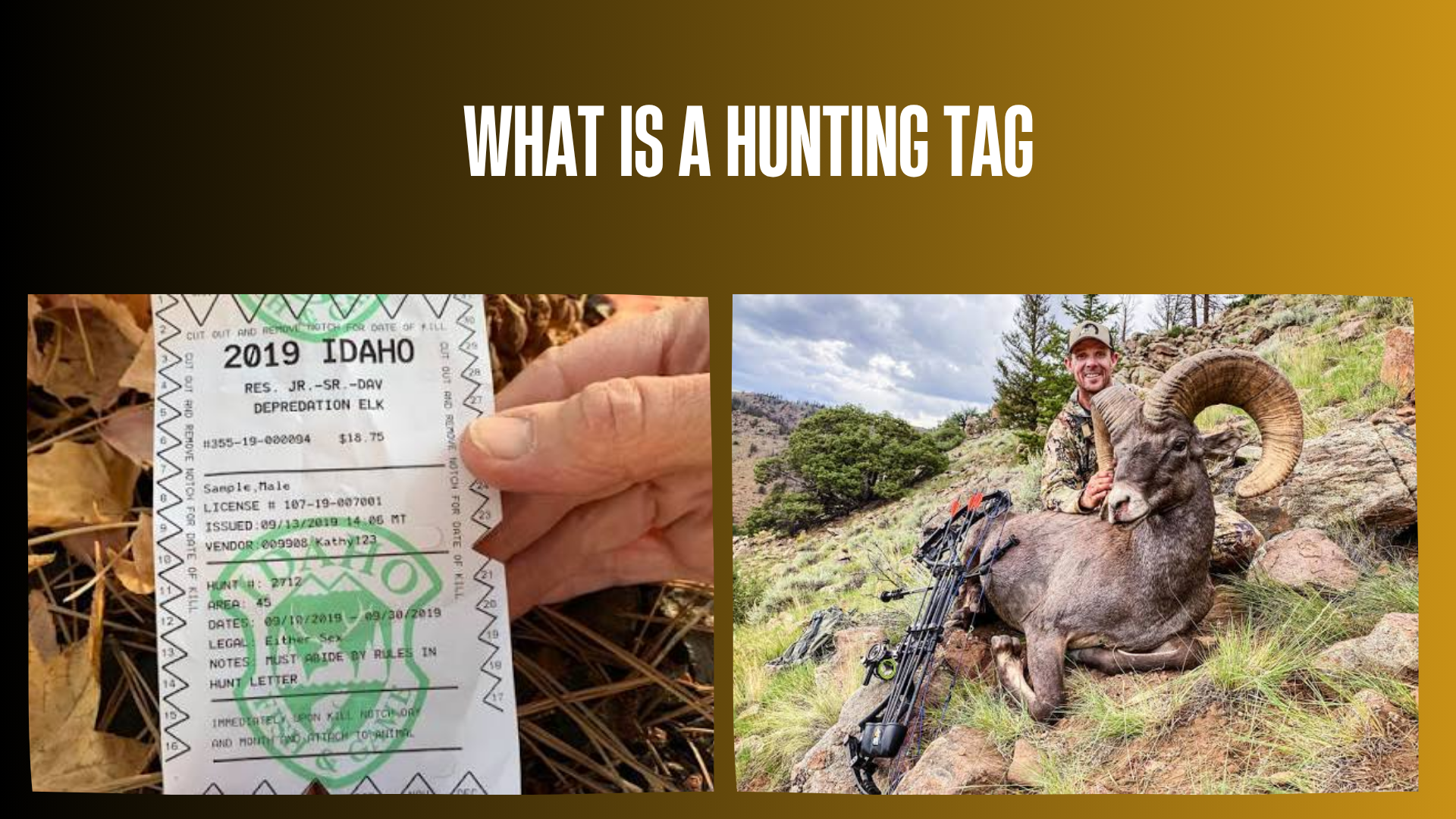

A hunting tag is an official authorization or harvest document tied to a particular hunting opportunity, often for one animal. It may specify the species, eligible animal, hunting area, season, and permitted method. After a successful hunt, it also helps connect the harvested animal to the hunter’s authorization.
If you are asking “what is a hunting tag?” before your first hunt, the important distinction is that a tag, a hunting license, and permission to enter land can serve different purposes. Having one does not necessarily provide the others.
Quick Answer
A hunting tag is a paper or electronic document used to authorize and document the harvest of specified game under an agency’s rules. Many big-game tags cover one animal, but terminology and systems vary by jurisdiction. You may need a hunting license as well as the appropriate tag, and the tag may be restricted to a particular area, season, animal classification, or hunting method. After harvest, follow the exact validation, attachment, transport, and reporting requirements. Check the issuing wildlife agency’s current instructions before hunting.
Official-source review: September 20, 2026. This guide explains general concepts, primarily using U.S. examples. State, provincial, tribal, federal, and local requirements differ, and current official regulations take precedence over this article.
What Is a Hunting Tag Used For?
The word “tag” can describe both the authorization you obtain before a hunt and the physical or electronic record completed after taking an animal.
Before the hunt, it helps establish what you are authorized to pursue. After harvest, completing the tag records its use. Depending on the system, you may need to attach a physical tag, validate an electronic record, obtain a confirmation number, or complete additional documentation.
Tags also support wildlife management. Agencies can limit particular hunting opportunities through tag allocations and use hunt reports to understand harvest and participation. A tag allocation does not mean every holder will harvest an animal.
A simple example
Imagine a tag valid for an antlerless deer in a named management unit during a specified season. That authorization would not automatically cover an antlered deer, an adjacent unit, or a later season.
This is an illustration, not a rule for a particular state. The actual tag conditions and regulations determine what is legal.
Hunting Tag vs License vs Permit
These terms overlap between agencies. Read what each document authorizes rather than assuming the name has the same meaning everywhere.
| Document or requirement | Typical purpose | What to verify |
|---|---|---|
| Hunting license | Provides hunting privileges within its stated scope | Species coverage, residency, validity, and additional requirements |
| Hunting tag | Authorizes or records a specified harvest opportunity | Animal eligibility, area, dates, method, and use instructions |
| Special permit | Authorizes a particular hunt, activity, or access arrangement | Whether it supplements or includes other required documents |
| Stamp or endorsement | Adds a required privilege or qualification | Which hunters and activities require it |
| Hunter education certificate | Documents completion of recognized training | Eligibility rules, recognition, and any lawful exemptions |
| Landowner permission or access authorization | Allows entry or hunting on specified property | Boundaries, permitted activities, dates, and conditions |
| Harvest report or registration | Supplies required information after hunting or harvest | Deadline, submission method, and confirmation requirements |
Some licenses include tags; other systems require separate purchases or applications. A species-specific license may itself provide the harvest authorization that hunters casually call a tag.
For an example of an agency separating these categories, see the California Department of Fish and Wildlife’s hunting license and tag information. Its requirements apply to California, not nationwide.
What Restrictions Can a Tag Have?
Check the tag alongside the current regulations. Not every restriction is necessarily printed on the document itself.
- Species: The authorization may distinguish animals that look similar, such as different deer species.
- Animal classification: Eligibility may depend on sex, antlers, horns, age class, or another legal definition.
- Location: A tag may apply to a unit, zone, county, property, or specified group of areas.
- Dates: The tag’s hunt period may be shorter than the hunting license’s validity.
- Hunting method: A hunt may restrict equipment or apply only during a particular method-specific season.
- Hunter eligibility: Residency, age, education, or special-program qualifications may matter.
- Harvest limits: Individual tags must be considered alongside applicable bag limits and combined limits.
- Land conditions: Private-land-only or special-area opportunities may have additional restrictions.
Possessing several tags does not automatically mean you can use all of them in one place or season. Likewise, “either-sex” does not remove species, location, season, or other restrictions.
How Do You Get a Hunting Tag?
Start with the wildlife agency responsible for your destination. Its licensing pages should explain whether the opportunity is available through direct purchase, an application process, or a special program.
Direct-purchase or over-the-counter tags
An over-the-counter tag is generally available without winning a drawing. The phrase can include purchases through an agency’s online system, not just a physical counter.
Availability may still be limited by quotas, eligibility, sale dates, or deadlines. “Over the counter” does not mean unlimited or valid everywhere.
Draw or limited-entry tags
For a limited-entry hunt, eligible hunters apply for a restricted number of opportunities. Selection may involve random allocation, preference points, bonus points, or a combination established by that agency.
An application is not permission to hunt. After selection, check whether you must accept the award, pay a balance, redeem a voucher, or obtain the actual document.
For example, California’s big-game drawing information describes drawing-based opportunities and separate rules for different tag categories. Its system should not be used to predict how another state’s draw works.
Leftover, returned, and special-program opportunities
Some agencies distribute opportunities remaining after a drawing or returned by other hunters. Landowner, youth, mentored, or management programs may operate separately.
Use the official program instructions to establish eligibility and availability. An advertisement, outfitter reservation, or private agreement alone does not establish that you possess a valid hunting authorization.
Watch for vouchers and uncompleted transactions
A receipt or voucher may require another step before it becomes a usable tag. Oregon, for example, instructs Sports Pac customers to redeem applicable vouchers for actual tags before the relevant deadline. See ODFW’s license and tag purchasing instructions.
Paper Tags and Electronic Tags: What Changes?
Both formats can serve the same basic purpose, but their operating requirements differ. Choose an available format you can reliably use in the field.
| Format | Prepare before hunting | Common misunderstanding |
|---|---|---|
| Paper tag | Carry the valid document and any supplies required to complete and attach it | A photograph or extra photocopy is automatically an acceptable replacement |
| Electronic tag | Install the approved app, confirm documents are available, and understand offline procedures | A purchase email or screenshot performs electronic validation |
| Electronic record with physical marking requirements | Carry whatever identification materials the agency requires | Electronic tagging always eliminates every carcass-labeling step |
Check how the issuing agency handles a dead battery, lost phone, damaged paper tag, or lack of reception before departure. Do not assume those problems excuse a missed tagging requirement.
As one state-specific example, Oregon’s electronic licensing guidance explains offline tagging through its app and the hunter’s responsibility to keep documents displayable. Other agencies may use different procedures.
What Happens After You Harvest an Animal?
Learn the sequence before hunting. The timing for completing a tag may be earlier than the deadline for submitting a harvest report.
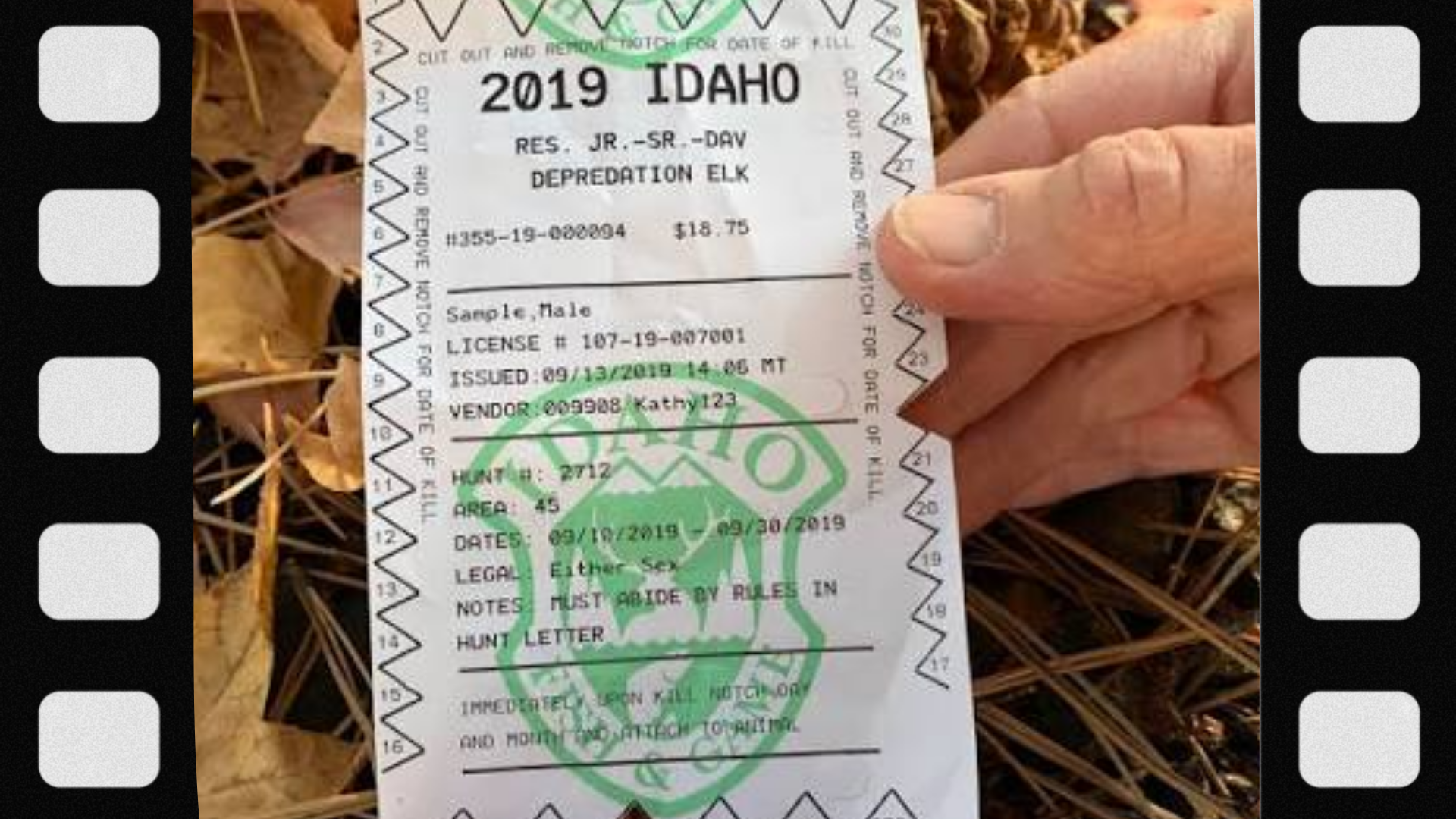
1. Follow the immediate tagging instructions
Depending on the jurisdiction, you may need to complete, notch, sign, or electronically validate the tag immediately after harvest or before moving or field dressing the animal.
For example, Texas’s paper deer-tag instructions require specified completion and date-notching steps before field dressing or moving the deer. The page directs digital-license holders to separate instructions. This illustrates why you must check the procedure for your particular tag format.
2. Keep required identification with the animal
Confirm where a physical tag belongs, how long it must remain, and what happens if the carcass is divided. Requirements may address meat, the head, antlers, proof of sex, or documentation accompanying separate portions.
Do not assume that attaching a tag to an antler satisfies every jurisdiction’s transport rules.
3. Complete additional reporting or checks
Tag validation, harvest registration, biological inspection, disease sampling, and end-of-season reporting are potentially separate obligations.
Oregon explicitly states that electronic tag validation does not replace its mandatory hunt report. Its hunt-reporting instructions also require reports for specified purchased tags when the hunter was unsuccessful or did not hunt.
4. Check transport and transfer requirements
Before taking game to a processor, giving meat to someone else, or crossing a jurisdictional boundary, review applicable possession, transfer, and carcass-movement rules.
A tag does not override disease-related transport restrictions. For an example of how these obligations interact, Texas’s post-harvest guidance addresses tagging, proof of sex, processing, transport, and disease-management requirements together.
Five Mistakes New Tag Holders Can Avoid
- Buying the wrong hunt code: Compare the code with the official map, dates, and animal eligibility before completing the purchase.
- Confusing an application with an issued tag: Confirm the authorization is actually available for use.
- Assuming a tag grants land access: Verify property permission and public-land restrictions separately.
- Borrowing a tag or reusing a completed one: Never assume this is permitted. Any lawful transfer or party-hunting arrangement must satisfy the specific agency rules.
- Finishing the tagging step but forgetting the report: Record every applicable deadline and retain submission confirmations.
If you make a tagging error, contact the wildlife agency or conservation officer promptly. Explain what happened and follow instructions. Do not conceal the mistake, falsify information, or substitute another person’s tag.
A Beginner’s Checklist Before Leaving Home
- Identify the responsible wildlife agency and read the current regulations for your species.
- Confirm your hunter education and licensing eligibility.
- Check the issued tag’s species, area, dates, animal restrictions, and method.
- Verify legal access and any additional property or public-land permits.
- Review emergency closures and regulation updates.
- Carry required identification and documents in an accepted format.
- Prepare the supplies or device needed for tagging.
- Understand reporting, inspection, transport, and game-recovery requirements.
For a hunt involving firearms, maintain the basic safety principles: treat every firearm as loaded, keep its muzzle pointed safely, keep your finger outside the trigger guard until ready to shoot, and positively identify the target and what lies beyond it.
A valid tag establishes only part of your responsibility. Complete hunter education, practice with your equipment, respect boundaries, make reasonable legal recovery efforts, and pass on unsafe or uncertain opportunities.
FAQs
1. Is a hunting tag the same as a hunting license?
Not necessarily. A license establishes specified hunting privileges, while a tag commonly relates to a particular harvest opportunity. Some systems combine these functions or include tags within a license package.
2. Does one tag mean one animal?
Many big-game tags are single-animal authorizations, but read the actual document and rules. Multi-entry records and other systems may work differently.
3. Does every hunted species require an individual tag?
No. Depending on the jurisdiction, some hunting is managed through licenses, endorsements, harvest records, and bag limits without an individual tag for each animal.
4. Are deer tags and elk tags interchangeable?
Do not assume so. A tag authorizes the species or opportunity specified in its conditions. Similar document formats do not make different species’ tags interchangeable.
5. What does “fill your tag” mean?
It generally means successfully harvesting an eligible animal under that tag. Required tagging and reporting steps still need to be completed.
6. What does “tag out” mean?
Hunters commonly use it to mean they have used their available harvest authorizations for a species or hunt. It does not necessarily mean they have no other lawful hunting opportunities.
7. What does “punching a tag” mean?
It usually refers to marking a tag as used, traditionally by removing or punching designated information. Follow the actual instructions rather than making an arbitrary hole or mark.
8. What is an antlerless tag?
It authorizes harvest within the agency’s definition of “antlerless.” Do not assume that definition simply means any female animal; legal classifications can depend on antler characteristics.
9. What is an either-sex tag?
It permits eligible animals of either sex under that hunt’s conditions. Other restrictions still apply.
10. What is a management unit?
It is a defined area used to manage wildlife and hunting. Use the agency’s current boundary description or map; nearby places may fall under different rules.
11. What is an over-the-counter tag?
It is generally a tag available without selection through a drawing. Purchase deadlines, quotas, and eligibility restrictions may still apply.
12. What is a draw tag?
It is an authorization allocated through an application and selection process. Applying does not guarantee selection or complete every issuance requirement.
13. What is the difference between preference points and bonus points?
Preference systems generally prioritize applicants according to accumulated points; bonus systems generally use points to improve chances within a drawing. The exact mechanics differ, and some agencies combine approaches.
14. Does an application fee buy the tag?
Not always. A fee may cover only entry into the selection process. Check whether successful applicants owe an additional payment or must claim the award.
15. Can I buy a tag after the season starts?
Only if that agency’s rules allow it. Check sale deadlines before hunting, and never assume a later purchase can legalize an earlier unauthorized harvest.
16. How much does a hunting tag cost?
There is no universal price. Species, residency, hunt category, and associated license or application fees can change the total. Use the current official fee schedule.
17. Do nonresidents need different tags?
They may face different eligibility, allocations, application procedures, or fees. Confirm the destination’s residency definition instead of relying on where you temporarily stay.
18. Do youth hunters need tags?
Requirements depend on the youth’s age, species, jurisdiction, and program. A mentored opportunity may have different conditions from hunting under the youth’s own tag.
19. Does owning the land eliminate tag requirements?
Not automatically. Check whether a landowner exemption or special program exists and precisely what it covers.
20. Does a tag allow access to private property?
Do not treat it as landowner permission. Confirm access separately unless the official program expressly includes an access arrangement.
21. Can a friend use my unused tag?
Do not lend it or assume it is transferable. Any exception must come from an applicable official transfer or party-hunting rule, not a private agreement.
22. Can I exchange a tag for a different area?
Some agencies allow limited exchanges subject to deadlines, availability, and eligibility. Obtain an approved exchange before relying on a different hunting area.
23. What if I lose my paper tag?
Use the issuing agency’s replacement procedure. A homemade copy, photograph, or purchase receipt may not be valid.
24. Can I use a screenshot as an electronic tag?
Only if the agency expressly accepts it for the required purpose. Displaying a document and validating a harvest may be separate functions.
25. Will an electronic tag work without cell service?
Some approved apps support offline use after setup. Verify your agency’s instructions and load the necessary documents before leaving reception.
26. What if my phone battery dies?
Follow the agency’s contingency rules. Plan reliable power beforehand and do not assume a dead phone removes the requirement to display or complete your tag.
27. Where should I attach a physical tag?
Use the attachment location specified by the issuing authority. Requirements can change when the animal is divided or its head is separated.
28. Does electronic tagging also submit my harvest report?
Sometimes the processes are connected; sometimes they are separate. Check for an explicit instruction or reporting confirmation instead of assuming the task is complete.
29. Do I report if I did not harvest anything?
Possibly. Some agencies require unsuccessful-hunt reports and reports from tag holders who never hunted. Check the reporting rules for your tag category.
30. Can I keep an unused tag for next year?
Do not assume it carries over. Its stated validity controls, and any return, refund, or credit requires the agency’s authorized process.
31. What if I accidentally validate the wrong tag?
Contact the issuing agency promptly for correction instructions. Do not alter records or use another tag to conceal the error.
32. What if I wound an animal and cannot recover it?
Make reasonable recovery efforts within legal and safe limits, and contact the wildlife agency about applicable reporting or tag-use rules. Do not assume either that the tag remains usable or that it must always be canceled.
33. Can someone else transport my harvested animal?
Check possession and transfer requirements first. The transporter may need documentation identifying the hunter, harvest, and authorization.
34. Does a tag prove the meat is safe to eat?
No. A tag is hunting documentation, not a food-safety or disease-testing certificate. Follow applicable testing guidance and safe game-handling practices separately.
35. Who should I ask when tag instructions are unclear?
Contact the issuing wildlife agency’s licensing staff or a conservation officer. Provide the tag type, hunt code, species, location, and planned dates so they can address the actual situation.
Final Answer
What is a hunting tag? It is an official authorization or harvest document that connects a specific hunting opportunity—and often a harvested animal—to an eligible hunter. Obtain the correct tag before hunting, understand its restrictions, and follow the required completion and reporting steps. Keep land access, safe hunting practices, and responsible game recovery in your planning, and verify current official regulations before entering the field.
Read more: