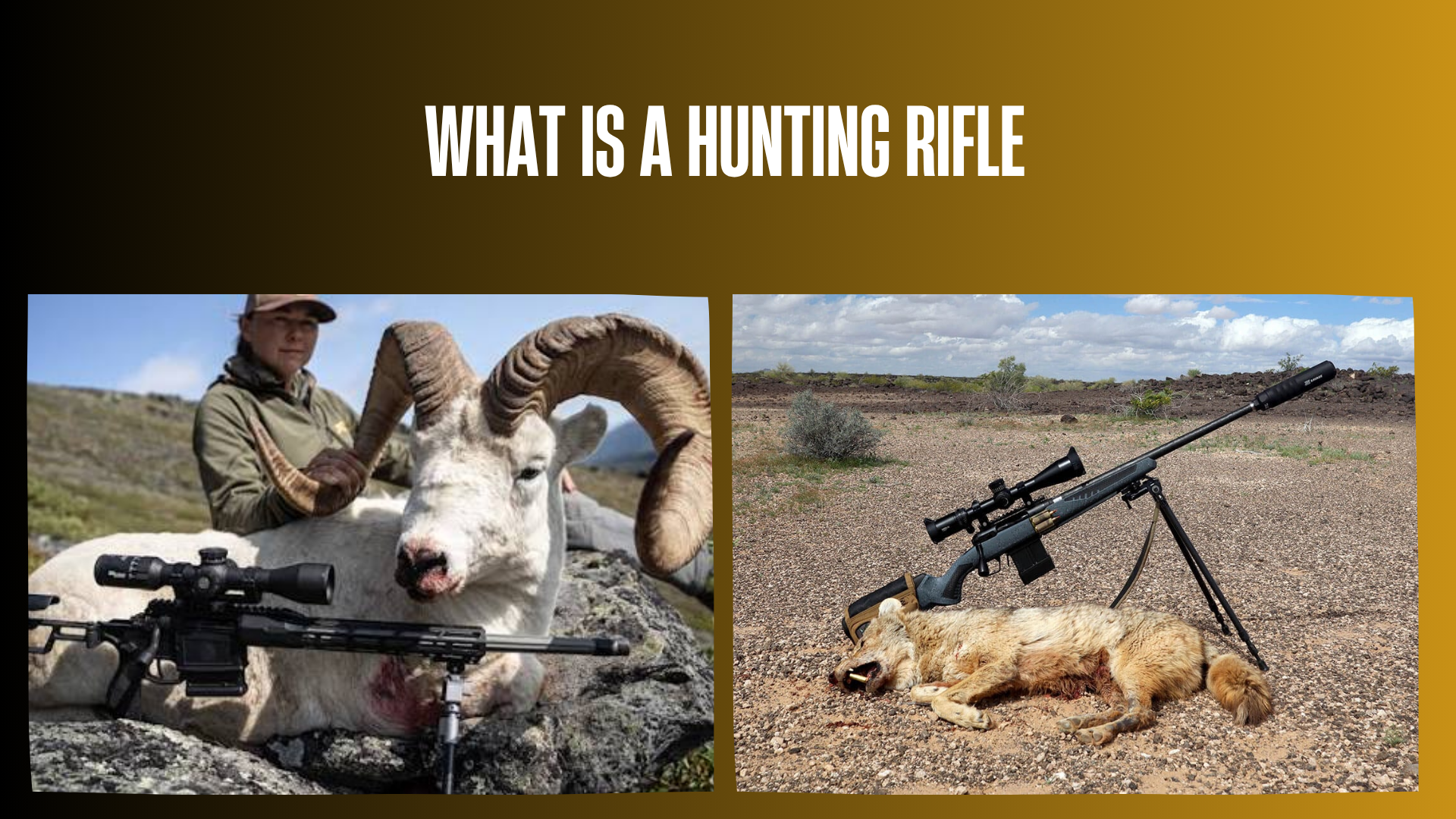

A hunting rifle is a shoulder-fired firearm with a rifled barrel, intended or used for hunting game. Rifling consists of spiral grooves inside the barrel that impart spin to the bullet, helping stabilize it in flight. Hunting rifles come in different sizes, chamberings, and action types; there is no single design suitable for every animal or hunting situation.
If you are wondering “what is a hunting rifle?” before taking a hunter education course, this guide explains the terminology, the main differences between designs, and what responsible use involves.
Quick Answer
A hunting rifle is a rifle selected for hunting wildlife, using ammunition appropriate for the firearm, intended game, and applicable regulations. Most modern cartridge rifles fire one bullet per shot through a rifled barrel. Common designs include bolt-action, lever-action, semi-automatic, pump-action, and single-shot rifles. “Hunting rifle” describes an intended use, not automatic permission to hunt with that firearm everywhere. Begin with hunter education, the exact firearm’s manual, and current local hunting rules.
Safety and legal notice: This is an introductory explanation, not a substitute for hands-on instruction. Firearm possession, transport, hunting methods, and ammunition restrictions vary by jurisdiction. Verify current official requirements before acquiring, transporting, or using a rifle, and follow its manufacturer’s instructions.
What Is a Hunting Rifle Designed to Do?
A hunting rifle gives a trained hunter a means of taking appropriate game within legal and ethical limits. Its suitability depends on the complete combination of firearm, ammunition, hunter proficiency, and field conditions.
The term does not require a wooden stock, a telescopic sight, or a particular action. A traditional-looking rifle and a modern synthetic-stock rifle can both serve hunting purposes. Appearance alone does not establish legality, safety, or suitability.
A rifle used successfully at a shooting range is not automatically appropriate for every hunt. The species, terrain, permitted equipment, and realistic shooting opportunities all matter.
The Main Parts, Explained Simply
| Part | Basic purpose |
|---|---|
| Stock | Supports the firearm and provides surfaces for the shooter to hold and shoulder it |
| Action | The mechanism involved in loading, firing, and removing ammunition or fired cases |
| Barrel | The tube through which the bullet travels |
| Chamber | The portion that holds the cartridge for firing |
| Muzzle | The opening at the front of the barrel |
| Trigger and trigger guard | The firing control and the protective structure surrounding it |
| Magazine | Stores cartridges for feeding into the chamber; not present on every rifle |
| Sights or optic | Provide an aiming reference |
| Mechanical safety | A device intended to help prevent unintended firing; its operation varies |
These terms follow the basic distinctions in Texas Parks and Wildlife Department’s firearm education material. Learn the location and function of each control on the specific firearm you handle.
An empty or removed magazine does not prove that the chamber is empty. Have a qualified instructor teach you the manufacturer’s procedure for verifying the firearm’s condition.
Common Hunting Rifle Action Types
The action type describes how the firearm’s operating mechanism works. It does not identify the cartridge, establish accuracy, or determine whether the rifle is legal for a particular hunt.
| Action type | Basic distinction | Beginner consideration |
|---|---|---|
| Bolt action | The shooter manually operates a bolt | Learn the specific controls and chamber-checking procedure |
| Lever action | A lever operates the mechanism | Magazine design and approved ammunition require attention |
| Pump action | A sliding fore-end operates the mechanism | Do not assume its controls match a familiar shotgun |
| Semi-automatic | Energy from firing cycles the mechanism; each shot requires a separate trigger pull | Another cartridge may be chambered after firing |
| Single-shot | Holds one cartridge for firing before manual reloading | Limited capacity does not eliminate handling hazards |
Single-shot is a capacity description and can include different mechanisms, such as break-action and falling-block designs. TPWD’s overview of common firearms illustrates these action categories.
No action type makes rushed shooting appropriate. If a follow-up shot becomes necessary during lawful hunting, target identification, safe direction, and a suitable backstop remain essential.
Rifle, Shotgun, and Hunting Rifle: Important Differences
Rifle vs. shotgun
A conventional rifle uses a rifled barrel and generally fires a single bullet from a cartridge. A shotgun generally uses shotshells and may fire multiple pellets or a single slug. Many shotguns have smooth barrels, although rifled shotgun barrels also exist.
The distinction is therefore more precise than “one fires one projectile and the other fires many.” The firearm’s design, chambering, ammunition, and legal classification all matter.
Hunting rifle vs. target rifle
These categories overlap. A hunting rifle may prioritize manageable carrying weight and practical field handling. A target rifle may prioritize features useful for repeated shooting from supported positions.
Those are design tendencies, not fixed rules. A heavier rifle is not automatically unsuitable for hunting, and a lightweight hunting rifle is not automatically inaccurate.
Hunting rifle vs. muzzleloader
Many hunting rifles use self-contained cartridges loaded at the breech. A muzzleloader is loaded through the muzzle and requires its own equipment and procedures. Some muzzleloaders have rifled barrels and are also rifles.
Special muzzleloader-season definitions are jurisdiction-specific. Do not assume that any firearm described as a muzzleloader qualifies.
Caliber, Cartridge, and Bullet Are Not the Same Thing
Caliber generally describes a bore or bullet diameter, while a cartridge is the complete ammunition unit. In ordinary modern rifle ammunition, that unit includes a case, primer, propellant, and bullet. The bullet is the projectile.
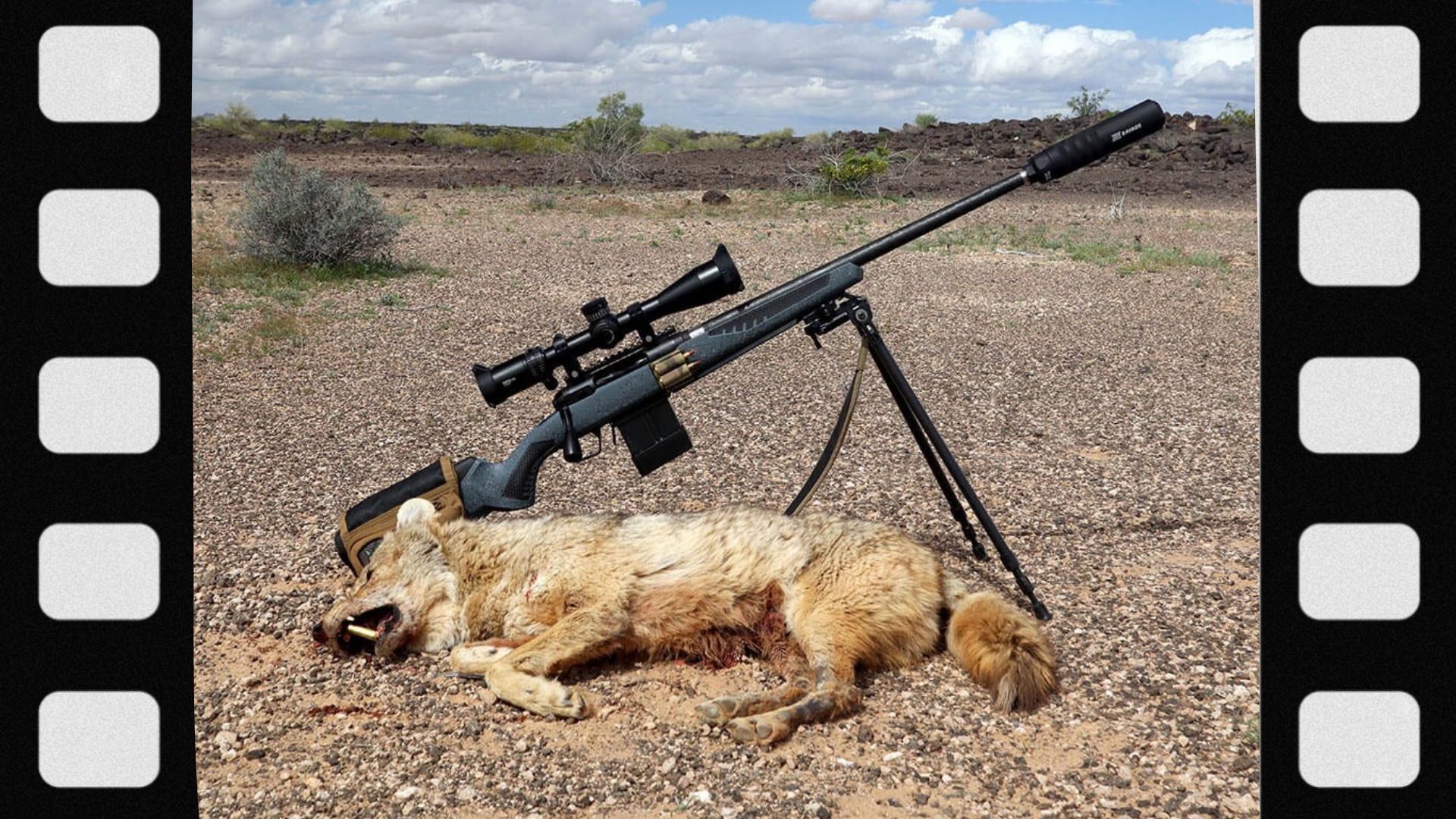
Two cartridges can use bullets of similar diameter and still be incompatible. A familiar number, similar appearance, or the fact that ammunition seems to fit is not a safe compatibility test.
Match the full ammunition designation to the firearm’s markings and manufacturer instructions. If markings are unclear or the rifle’s history is uncertain, ask the manufacturer or a qualified gunsmith before using it. TPWD’s ammunition guidance explains cartridge components and ammunition identification.
Rimfire and centerfire
These terms describe the location of the priming system. Rimfire ammunition has priming compound in the case rim; centerfire ammunition uses a primer at the center of the case head.
Both categories include rifles used for hunting, but they are not interchangeable. Neither label alone answers whether a particular cartridge is suitable or legal for the intended species.
What Makes a Rifle Suitable for a Hunt?
A useful starting point is the intended hunt, not a list of popular rifles.
- Species and legal requirements: Confirm the allowed firearm and ammunition categories for the exact location and season.
- Appropriate ammunition: Use manufacturer-approved ammunition with construction intended for the relevant hunting application.
- Fit: The hunter should be able to shoulder and control the rifle comfortably and reach its controls safely.
- Manageable recoil: Avoid a combination that causes pain, flinching, or reluctance to practice.
- Practical accuracy: Assess demonstrated performance under supervised practice, not just a product claim.
- Terrain and carrying demands: Consider the complete setup, including an optic and other attached equipment.
- Practice availability and cost: Regular access to suitable ammunition and instruction matters more than owning an impressive specification.
There is no universal hunting distance for every rifle or hunter. Wind, visibility, shooting position, animal movement, and the ability to identify a safe background can make a shot inappropriate even when it appears technically possible.
Passing on an uncertain opportunity is part of ethical hunting. Equipment cannot compensate for poor judgment or insufficient practice.
Does a Hunting Rifle Need a Scope?
No. Some hunting rifles use iron sights; others use a scope or another permitted optic. The appropriate choice depends on the firearm, conditions, eyesight, and applicable rules.
A scope provides an aiming reference and may magnify the view, but it does not identify a safe shot for you. More magnification is not automatically more useful, and the optic must be compatible with the firearm and correctly installed.
Use binoculars to inspect unidentified objects or movement. Looking through a rifle scope points the firearm at whatever you are examining. TPWD’s sights and safeties material provides an introduction to these systems.
Safety Responsibilities Come Before Field Use
Apply all four basic principles together:
- Treat every firearm as if it is loaded.
- Keep the muzzle pointed in a safe direction.
- Keep your finger outside the trigger guard until ready to shoot.
- Be certain of the target and what is beyond it.
A mechanical safety does not replace these habits. Use appropriate hearing and eye protection, and never fire with a suspected barrel obstruction. The NSSF’s firearm-safety guidance also emphasizes correct ammunition, unloaded firearms when not in use, and understanding the specific firearm.
Store the rifle unloaded and locked against unauthorized access, with ammunition secured separately. Control access to keys and combinations, and follow local storage requirements. Transport it unloaded and securely contained as applicable law requires.
Do not climb with a loaded firearm, shoot at unidentified movement, or continue when visibility or conditions prevent safe decisions.
Cleaning and inspection
Before cleaning, follow the manual to unload the firearm and verify its condition; remove ammunition from the cleaning area. Use the recommended equipment and products.
Stop using a rifle with unexplained damage or malfunction and obtain qualified inspection. Do not improvise repairs to safety-critical parts. TPWD’s cleaning and maintenance guidance reinforces unloading and following the manufacturer’s instructions.
Legal Checks Before Hunting With a Rifle
“Hunting rifle” is not a universal legal exemption or approval. Check:
- Firearm possession, acquisition, and transport requirements.
- Required hunter education, licenses, permits, and tags.
- Whether rifles are permitted for that species, location, and season.
- Applicable cartridge, ammunition-material, action, or capacity restrictions.
- Landowner permission and public-land access conditions.
- Current closures, shooting hours, identification requirements, and harvest-reporting rules.
For U.S. readers, the U.S. Fish and Wildlife Service’s hunting-license directory links to state authorities. Consult the exact land manager as well. Outside the United States, use the corresponding national, regional, and local authorities.
Official guidance takes precedence over a general article. No location-specific legal eligibility is assumed here.
A Sensible Starting Point for Beginners
Take an approved hunter education course, then arrange supervised instruction with a qualified instructor. Learn the specific firearm before considering field use.
Plan for secure storage, protective equipment, practice, and any required documentation as part of the overall commitment. You do not need the most expensive rifle to hunt responsibly, and buying accessories does not replace learning safe handling.
Before hunting, also understand lawful game recovery, property boundaries, tagging, and preventing waste. Responsible preparation continues beyond the shot.
FAQs
1. Is every rifle a hunting rifle?
No. A rifle may be intended for several activities, and some designs are unsuitable or prohibited for a particular hunt. Suitability depends on more than the category name.
2. Is a hunting rifle always a bolt-action rifle?
No. Hunters use several action types where permitted. Bolt action is one common design.
3. Can a semi-automatic rifle be a hunting rifle?
Yes, where the firearm and ammunition comply with the relevant hunting and possession rules. Check the exact jurisdiction and species.
4. Does semi-automatic mean fully automatic?
No. A semi-automatic firearm fires one shot per trigger pull. Fully automatic operation is a different category with separate legal considerations.
5. What does rifling do?
Rifling imparts spin to the bullet to help stabilize it. It does not make every firearm-and-ammunition combination equally accurate.
6. Can a hunting rifle have a synthetic stock?
Yes. Stock material does not determine whether a rifle can be used for hunting. Condition, fit, and intended use are more useful considerations.
7. Are wooden stocks better?
There is no universal winner. Compare the actual stock’s condition, fit, weight, and care requirements rather than judging by material alone.
8. What is a sporting rifle?
It is a broad term used for rifles intended for sporting activities such as hunting or target shooting. Its meaning in advertising may differ from a legal definition.
9. What is a carbine?
It generally describes a relatively short rifle, often compared with another rifle design. The name does not override legal definitions or dimensional requirements.
10. Does a hunting rifle need a detachable magazine?
No. Designs may use fixed magazines, detachable magazines, or no magazine at all.
11. Does removing the magazine unload the rifle?
Not necessarily. A cartridge may remain in the chamber. Learn the exact unloading and verification procedure from the manual and an instructor.
12. Are bullets and cartridges interchangeable terms?
They are often confused in conversation, but a bullet is only the projectile. A cartridge is the complete ammunition unit.
13. Can two cartridges with the same bullet diameter be substituted?
Do not assume so. Compatibility requires the correct full cartridge designation and manufacturer approval.
14. Is rimfire ammunition only for practice?
No. Some rimfire rifles are used for suitable small-game hunting where legal. That does not make them suitable for every species.
15. Is centerfire always better?
No. These terms describe ignition systems. Choose according to the firearm, intended activity, and applicable requirements.
16. What is recoil?
Recoil is the rearward movement associated with firing. How it feels depends on the firearm, ammunition, fit, and other factors.
17. Is a lighter rifle easier for every beginner?
No. Carrying weight is only one consideration. The complete setup must also be comfortable to control and use during supervised practice.
18. Does a longer barrel automatically mean better accuracy?
No. Barrel length alone does not determine accuracy or suitability. Compare complete designs and manufacturer information.
19. What does rifle fit mean?
It concerns how the stock, controls, and sight position suit the individual. A qualified instructor can help assess fit without relying only on height or age.
20. Can one rifle be used for several game species?
Sometimes, but each application needs separate consideration of ammunition suitability and local law. One setup is not automatically appropriate for everything.
21. Is there a universal beginner hunting cartridge?
No. Intended game, regulations, recoil tolerance, training, and ammunition availability all affect the choice.
22. Can target ammunition automatically be used for hunting?
No. Check the ammunition manufacturer’s intended application and applicable regulations. A target label does not establish hunting suitability.
23. Are lead-free bullets required everywhere?
No universal rule applies. Check the exact jurisdiction, property, species, and season for ammunition-material restrictions.
24. What is a rifle’s effective hunting range?
There is no single figure valid for every situation. The ethical limit depends on demonstrated skill, appropriate ammunition, field conditions, and a safe shot opportunity.
25. Does a scope make a distant shot ethical?
No. Seeing an animal clearly does not establish the ability to take a safe, humane shot.
26. Can I use a rifle scope instead of binoculars?
Do not use it to investigate unidentified movement. Binoculars allow observation without pointing a firearm at the subject.
27. Is a single-shot rifle automatically safer?
No. Every firearm requires the same attention to muzzle direction, trigger discipline, condition, and safe storage.
28. Is the safety switch enough to prevent accidents?
No. Mechanical safeties have limitations and cannot replace safe handling.
29. Can I learn everything from the manual?
The manual is essential for model-specific information, but it does not replace practical instruction and supervised experience.
30. Where can I find the correct manual?
Use the manufacturer’s official support resources. For example, Ruger provides an instruction-manual directory. Match the manual to the exact model and version.
31. Can an inherited rifle be used immediately?
Do not assume it is ready. Confirm lawful possession, identify the firearm and chambering, and obtain qualified inspection if its condition or history is uncertain.
32. Is dry-firing safe for every rifle?
No universal answer applies. Follow the exact manufacturer’s instructions and learn safe practice procedures from a qualified instructor.
33. What should I do after a malfunction?
Maintain a safe muzzle direction and keep your finger away from the trigger. Follow the manufacturer’s malfunction instructions and seek qualified help rather than improvising.
34. Does a hunting license authorize firearm ownership or transport?
Do not assume it does. Hunting privileges and firearm possession or transport requirements are separate legal questions.
35. Do expensive rifles guarantee better hunting results?
No. Training, reliable equipment, appropriate ammunition, preparation, and sound decisions matter more than price alone.
Final Answer
What is a hunting rifle? It is a shoulder-fired rifle intended or selected for hunting game, with a rifled barrel that helps stabilize the bullet. Its suitability depends on the specific firearm, ammunition, intended species, local rules, and the hunter’s demonstrated ability. Start with education and supervised practice, follow the manufacturer’s instructions, and make safe, ethical decisions throughout the hunt.
Read more: