
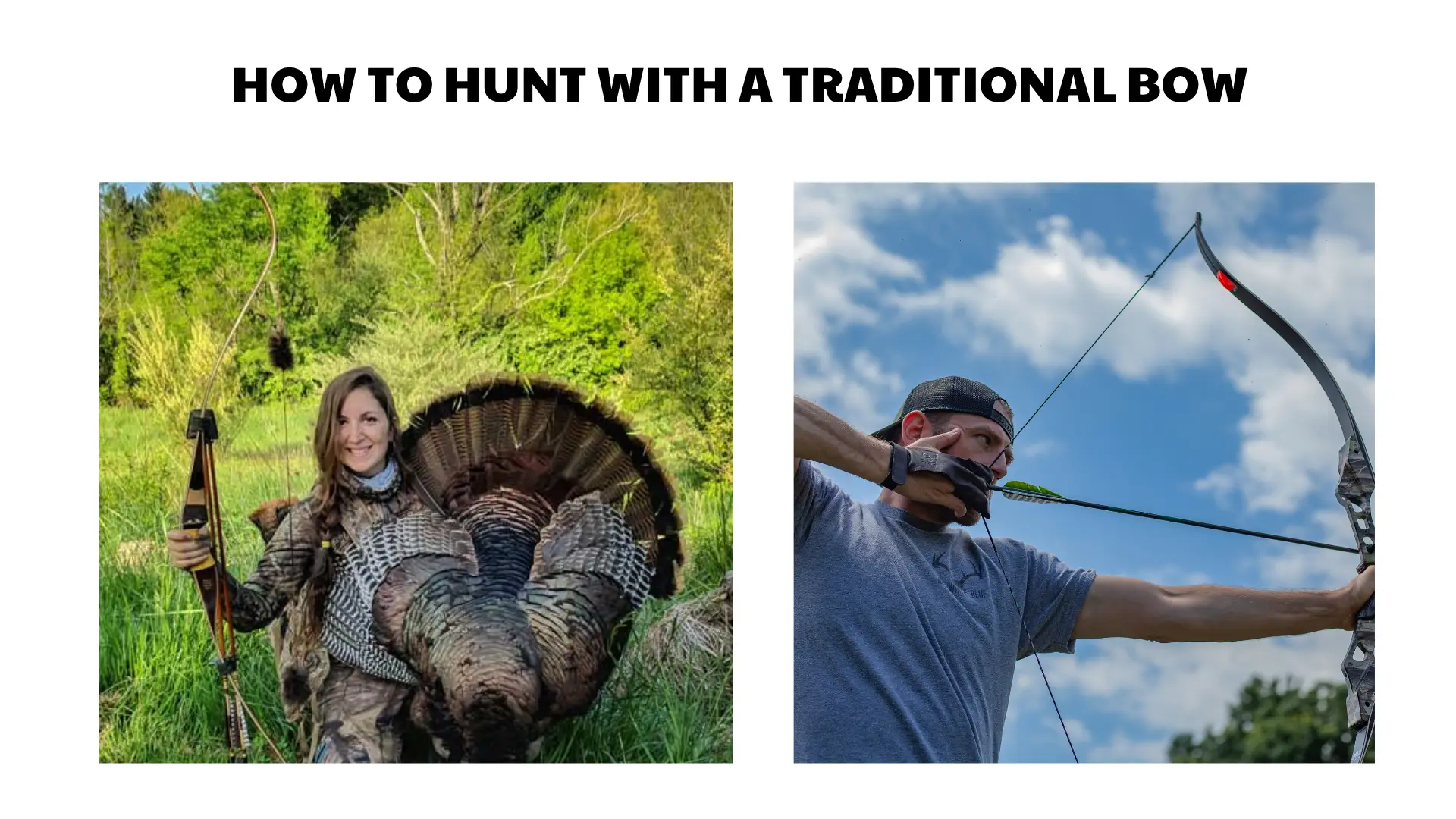

Learning how to hunt with a traditional bow is a slower, more skill-based path than many modern hunting methods. A recurve bow, longbow, or selfbow asks the hunter to practice often, get close, move carefully, read wind, understand animal behavior, and pass on shots that are not safe or ethical.
This guide is for beginners who want a practical introduction to traditional bowhunting without hype or shortcuts. You will learn how to check laws, choose legal game, build field skills, scout habitat, prepare gear, stay safe with sharp archery equipment, make ethical decisions, and handle the follow-up responsibilities after a hunt.
Traditional bowhunting can be deeply rewarding, but it is not a guarantee of success. Results depend on your local hunting season, species, regulations, terrain, weather, land access, practice, patience, and judgment. The goal is not simply to get close to game; the goal is to hunt legally, safely, ethically, and with respect for wildlife and the land.
Quick Answer
To learn how to hunt with a traditional bow, first verify your local bowhunting regulations, license, tags, season dates, legal equipment rules, land access, and reporting requirements with your official wildlife agency. Then practice until you know your honest effective range, scout fresh animal sign, set up with wind and cover in mind, and hunt only where you can take a safe, legal, close-range ethical shot. Traditional bowhunting rewards patience and restraint, so beginners should hunt with a mentor when possible and pass on any opportunity that feels uncertain.
Important Legal and Safety Notice Before You Hunt
Hunting regulations vary by country, state, province, county, species, season, land type, and weapon type. Always check current rules with your official wildlife agency before hunting. Confirm license, permit, tag, draw weight, broadhead, legal hours, season dates, bag limits, land access, harvest reporting, transport, and equipment restrictions before you enter the field.
- Hunting license and permits: Carry a valid license and any required bowhunting, species, habitat, or public land permits.
- Tags or harvest reporting: Know whether the species requires tags, check-in, electronic reporting, or proof of sex/species during transport.
- Legal season and legal hours: Verify the exact open dates, legal hunting hours, and any special archery season rules.
- Legal weapons and ammunition: Confirm traditional bow legality, minimum draw weight, arrow rules, broadhead rules, and any electronics restrictions.
- Public land or private land access: Verify boundaries, access points, parking, closed areas, refuge rules, and written private permission when needed.
- Required clothing or visibility rules: Follow blaze orange or other visibility requirements, especially during overlapping firearm seasons.
- Safe firearm or bow handling: With a bow, never draw or release unless the target is identified and the path and background are clear.
- Weather, navigation, and emergency planning: Carry maps, communication, first aid, water, weather layers, and a plan someone else knows.
For current official legal guidance, start with your state or provincial wildlife agency and national resources such as the U.S. Fish & Wildlife Service general hunting laws. For bow-specific safety training, review official hunter education resources such as International Hunter Education Association information and state-approved bowhunter education materials.
Understanding the Game Species and Its Habitat
The target keyword does not name one species, so the likely reader intent is traditional bowhunting in general. Traditional bows may be legal for deer, elk, turkey, hogs, small game, upland birds, or other species depending on your jurisdiction. The right animal to hunt depends on local laws, available habitat, your skill level, your effective range, and your ability to recover game responsibly.
For big game such as deer or elk, beginners should study food sources, water, bedding cover, travel corridors, tracks, droppings, rubs, scrapes, wallows, and wind-based movement. For turkeys, learn roosting areas, feeding zones, dusting sites, tracks, droppings, and safe calling behavior. For small game and upland birds, focus on edge cover, brushy habitat, seed sources, escape cover, tracks, feathers, and fresh feeding sign.
Traditional bowhunting usually requires close-range encounters. That means you must understand how animals use cover, wind, sound, and vision. A good setup is often downwind or crosswind of likely movement, close enough for your proven range, and positioned so you can draw without being seen.
What You Need Before You Start
- Valid hunting license, permits, tags, and current regulation knowledge
- Legal traditional bow, such as a recurve, longbow, or other permitted archery method
- Arrows matched to your bow, draw length, point weight, and shooting style
- Legal broadheads or game points allowed for the species you hunt
- Hunter orange or required visibility clothing if applicable
- Quiet, weather-appropriate hunting clothing and sturdy boots
- Navigation tools such as map, compass, GPS, or hunting app
- First aid kit, water, snacks, headlamp, and emergency communication
- Binoculars or optics if useful for the species and terrain
- Rangefinder if legal and useful, plus practice targets for safe preparation
- Tree stand safety harness if hunting from an elevated stand
- Game bags, gloves, cooler, and basic meat care supplies if relevant
How To Hunt With A Traditional Bow: Step-by-Step Guide
Step 1: Check Local Hunting Laws First
Start with the regulation book or official wildlife agency website for the area you plan to hunt. Verify whether traditional bows are legal for your target species, whether a minimum draw weight applies, which points or broadheads are legal, whether electronic sights or rangefinders are restricted, and whether hunter education or bowhunter education is required.
Also confirm season dates, legal hunting hours, tags, bag limits, access rules, harvest reporting, proof of sex or species, transport rules, and public land restrictions. If you cannot clearly confirm a rule, do not hunt until you contact the agency or a conservation officer.
Step 2: Learn the Animal’s Patterns
Choose one legal species to study before trying to hunt everything. Learn when that animal feeds, where it rests, how it travels, what sign it leaves, and how it reacts to wind and pressure. For traditional bowhunting, this knowledge matters because you need close encounters, not distant sightings.
Keep notes from scouting trips. Record tracks, trails, droppings, bedding cover, feeding sites, water, weather, wind direction, and time of day. Fresh sign is more useful than old sign.
Step 3: Choose a Legal Hunting Area
Use official maps to verify public land boundaries, private land lines, access points, roads, parking areas, closed zones, refuge rules, and weapon restrictions. Do not rely on a single phone app when a boundary is important; compare maps and signs when possible.
For private land, ask permission before scouting, parking, entering, placing blinds or stands, or recovering game. Respect crops, fences, gates, livestock, equipment, and landowner instructions. Written permission is best when available.
Step 4: Scout Before the Hunt
Scout quietly and legally. Look for animal tracks, game trails, droppings, feeding areas, bedding areas, rubs, scrapes, feathers, roosts, dusting sites, or other species-specific sign. Try to learn where you can get close without alerting animals.
Mark possible setups that offer cover for drawing the bow, a safe arrow path, a safe background, and a wind advantage. Avoid setups that require shooting toward roads, homes, livestock, trails, vehicles, or other hunters.
Step 5: Prepare Your Gear Safely
Inspect your bowstring, limbs, nocks, arrows, quiver, glove or tab, arm guard, broadhead covers, and pack before every hunt. Do not use cracked arrows, damaged strings, loose broadheads, or unsafe equipment. Follow manufacturer instructions and ask a qualified archery shop or instructor for help when needed.
Practice with the same arrow weight and hunting setup you plan to use, and confirm your equipment is legal. Broadheads are extremely sharp, so keep them covered until needed and transport them safely.
Step 6: Plan for Wind, Weather, and Entry Route
Traditional bowhunters often need to be close, so wind direction, noise, and entry route matter. Plan a route that keeps your scent away from likely animal movement and lets you enter without crossing fresh trails or bedding cover when possible.
Check weather for wind shifts, storms, extreme heat or cold, rain, ice, and visibility. Carry layers, water, and a headlamp. Tell someone where you will be and when you expect to return.
Step 7: Set Up Carefully
Choose a safe and legal position such as a ground blind, natural cover, still-hunting route, or tree stand. Make sure you can draw without hitting branches, fabric, rails, or gear. Clear only what is legal and minimal, and never damage trees or habitat where rules prohibit it.
If using a tree stand, wear a full-body safety harness and stay connected from the time you leave the ground until you return. Use a haul line to raise and lower your bow and quiver after you are safely positioned.
Step 8: Stay Patient and Observe
Traditional bowhunting is often a waiting game. Move slowly, listen carefully, and watch for small signs such as flicking ears, feeding sounds, moving grass, soft steps, or birds reacting to nearby animals. Avoid unnecessary movement, especially when an animal is close.
Do not rush the draw. Drawing too early causes fatigue; drawing too late may create visible movement. Wait for cover, timing, and a safe opportunity.
Step 9: Take Only a Safe, Legal, and Ethical Shot Opportunity
Only release an arrow when the target is clearly identified, the animal is legal, the shot is within your practiced range, the path is clear, and there is a safe background. Never shoot through brush, over a ridge, toward people, toward buildings, toward livestock, toward vehicles, or at sound or movement.
Traditional bowhunting requires restraint. If the distance, angle, animal movement, light, wind, or your own confidence is not right, pass the shot.
Step 10: Follow Legal Recovery and Reporting Rules
After a shot, stay calm and follow your hunter education training and local recovery rules. Mark the location, observe the animal carefully, and avoid rushing into the area if doing so could make recovery harder. If recovery may cross private land, closed land, or unsafe terrain, follow the legal process before entering.
Complete tagging, reporting, check-in, or validation requirements exactly as your wildlife agency requires. Keep records and proof of legal harvest where required.
Step 11: Handle the Game Responsibly
Use clean tools, gloves when appropriate, and good meat care practices. Cool the meat promptly, keep it clean, follow transport rules, and avoid waste. Ask an experienced mentor, processor, or hunter education instructor for help if you are unsure.
Responsible game handling is part of ethical hunting. Plan before the hunt so you know how you will recover, transport, store, process, cook, or share the harvest legally.
Best Time, Place, and Conditions for This Hunt
The best time depends on your target species and season. For many big game animals, early morning and late afternoon may offer movement near food, water, or travel corridors. For small game, upland birds, or turkeys, productive timing depends on feeding patterns, cover, pressure, and local regulations.
Traditional bowhunters need close-range opportunities, so hunt places where wind, cover, and terrain help you get near game without being detected. Edges, funnels, saddles, creek crossings, brushy travel corridors, food-source approaches, and natural cover can all matter depending on species.
Weather affects movement and safety. Light rain may quiet footsteps, wind can hide sound but spread scent, and cold fronts may shift feeding activity. Heavy rain, lightning, dangerous heat, ice, high wind, or poor visibility may make hunting unsafe or recovery irresponsible.
Public land may involve more pressure, so verify boundaries, avoid crowding other hunters, and consider overlooked legal access. Private land requires permission, landowner respect, and clear boundaries. Local regulations and local animal behavior should guide every plan.
Helpful Tips for Better Results
- Practice often from realistic field positions, not only perfect range conditions.
- Keep your effective range honest and shorter than your best practice shot.
- Scout fresh sign and hunt close to current animal movement.
- Use wind direction to plan entry, setup, and exit routes.
- Choose setups that hide the motion of drawing the bow.
- Inspect arrows, bowstring, nocks, and broadheads before every hunt.
- Pass on any shot that is unsafe, illegal, too far, obstructed, or uncertain.
Common Mistakes to Avoid
The most common traditional bowhunting mistakes come from overconfidence, weak preparation, and poor shot discipline. Traditional archery is simple equipment, but it is not easy equipment. Treat the learning curve with respect.
- Not checking current wildlife regulations before hunting.
- Using a bow that does not meet legal requirements for the target species.
- Choosing too much draw weight and damaging form.
- Practicing only at known distances on flat ground.
- Hunting before broadheads and arrows are properly tested and legal.
- Ignoring wind direction and entry route.
- Drawing when the animal can easily see movement.
- Shooting beyond proven ability.
- Shooting through brush or without a safe background.
- Failing to plan legal recovery, reporting, and meat care.
- Trespassing or crossing unclear property lines.
- Skipping tree stand safety harness use.
Troubleshooting Common Problems
| Problem | Possible Cause | What to Do |
|---|---|---|
| You are not seeing any game | Poor location, stale sign, wrong timing, heavy pressure, or limited scouting | Scout fresher sign, adjust your setup, check wind, and try different legal access points. |
| Animals detect you before range | Wind is wrong, entry route crosses sign, movement is too fast, or cover is poor | Plan a cleaner route, slow down, hunt crosswind or downwind, and use better cover. |
| You cannot draw without being seen | Setup lacks cover, animal is too alert, or blind position is poor | Move the setup legally, use natural cover, wait for the animal to look away, or pass. |
| Shots group poorly in practice | Too much draw weight, inconsistent anchor, fatigue, poor arrows, or weak form | Use a manageable bow, shorten sessions, get coaching, and tune arrows safely. |
| Broadheads do not fly like field points | Arrow spine, point weight, form, or tuning issue | Stop hunting preparation until you tune equipment with qualified help and safe targets. |
| Public land feels crowded | Easy access, peak season, overlapping weapon seasons, or limited habitat | Give others space, wear required visibility gear, use overlooked legal areas, or choose a quieter time. |
| Boundaries are unclear | Map error, poor signage, mixed ownership, or unfamiliar public land | Do not proceed until you verify boundaries with official maps, agency staff, or landowner permission. |
| Weather becomes unsafe | Storms, heat, cold, lightning, high wind, ice, or poor visibility | Leave early or cancel the hunt. Safety and recovery ethics come before hunting opportunity. |
| Gear fails in the field | Damaged string, loose nock, cracked arrow, dull broadhead, wet gear, or poor packing | Stop using unsafe gear, switch to a safe backup if available, or end the hunt. |
| You feel nervous at full draw | Beginner pressure, fatigue, animal too far, or lack of realistic practice | Let down safely if possible, pass the shot, and practice under realistic conditions later. |
| Recovery concerns arise | Unclear sign, private land, closed area, darkness, weather, or uncertainty | Mark locations, avoid trampling sign, follow legal rules, and seek experienced or agency guidance. |
Ethical Hunting and Conservation
Ethical traditional bowhunting means more than using simple equipment. It means obeying the law, practicing enough, choosing high-probability close-range opportunities, recovering game responsibly, and respecting wildlife even when you go home without a harvest.
- Respect wildlife by learning behavior, sign, seasons, and legal identification.
- Respect landowners, public land users, other hunters, and agency staff.
- Obey seasons, limits, tags, access rules, and reporting requirements.
- Practice before hunting and keep shots within proven ability.
- Pass on unsafe, uncertain, obstructed, or low-confidence shots.
- Avoid waste by planning recovery, cooling, transport, and meat use.
- Support conservation through licenses, tags, habitat programs, and responsible participation.
- Leave camps, trails, blinds, and parking areas cleaner than you found them.
When to Get More Training or Professional Guidance
Get more training before hunting if you have never handled archery equipment, have not completed hunter education, are unsure about local laws, do not understand land boundaries, are not confident in your shooting, or are hunting unfamiliar terrain.
Help is also important if you need guidance on arrow selection, broadhead safety, tree stand safety, legal recovery, species identification, meat care, or transport rules. Learn from official hunter education courses, bowhunter education programs, state or provincial wildlife agencies, certified instructors, experienced ethical mentors, local conservation organizations, and reputable hunting clubs.
After the Hunt: Follow-Up, Gear Care, and Learning
After the hunt, unstring or store your bow according to manufacturer guidance, secure broadheads, dry wet gear, check arrows for cracks, clean boots, and store equipment safely away from children and pets. If you used a tree stand or blind, inspect straps, hardware, and fabric before the next hunt.
Review what worked and what did not. Keep notes about weather, wind, animal sign, movement, setup location, entry route, shot opportunities passed, and legal access details. Complete any harvest reports or check-in requirements. If you harvested game, cool the meat promptly and follow safe food handling practices.
Traditional bowhunting improvement is gradual. Use every hunt as a lesson in patience, woodsmanship, safety, and restraint.
Recommended Hunting Gear and Tools to Consider
You do not always need expensive gear to hunt responsibly. Choose gear based on your local laws, hunting method, species, terrain, weather, safety needs, skill level, and budget.
- Legal traditional bow such as a recurve, longbow, or other approved archery method
- Arrows matched to your bow and shooting style
- Legal broadheads or points for your target species
- Arm guard, shooting glove or tab, stringer, and safe quiver
- Quality boots for your terrain and weather
- Quiet clothing and required visibility gear
- Binoculars or optics for safe observation
- Navigation tools such as a map, compass, GPS, or hunting app
- Rangefinder if legal and useful
- First aid kit and emergency communication
- Tree stand harness if hunting elevated
- Game bags, gloves, cooler, and meat care supplies if relevant
Final Thoughts
Learning how to hunt with a traditional bow starts with law, safety, practice, and humility. Choose a legal species, learn its habitat, scout fresh sign, practice from realistic positions, know your true effective range, and set up where wind and cover allow a close, ethical opportunity.
The best traditional bowhunters are not reckless. They are patient, quiet, observant, and willing to pass. Hunt legally, safely, patiently, and ethically, and choose methods and gear that match your local laws, terrain, skill level, and conservation responsibilities.
FAQs
1. How long does it take to learn how to hunt with a traditional bow?
Many beginners need months of steady practice before they are ready to hunt, and several seasons to become consistent. Traditional bows require close-range discipline, repeatable form, quiet movement, and honest judgment about your effective range.
2. Is a traditional bow harder to hunt with than a compound bow?
For many beginners, yes. A recurve or longbow usually has no let-off, fewer aiming aids, and requires strong shooting form. That does not make it better or worse; it simply demands more practice and shorter ethical opportunities.
3. What is a traditional bow?
A traditional bow usually means a recurve bow, longbow, or selfbow used without modern compound cams. Some hunters also use simple sights or elevated rests depending on local rules, but many traditional bowhunters prefer simple equipment.
4. Do I need a hunting license to hunt with a traditional bow?
Yes, in most places you need a valid hunting license and any required tags, permits, stamps, or hunter education credentials. Rules vary by location and species, so check your official wildlife agency before hunting.
5. Do traditional bows have legal draw weight requirements?
Some jurisdictions set minimum draw weights or equipment rules for bowhunting certain species. Verify the current rules for your species, season, and area before choosing a bow.
6. Can a beginner hunt deer with a traditional bow?
A beginner can work toward hunting deer with a traditional bow, but should not rush. Deer hunting with traditional archery requires close-range skill, quiet setup, wind awareness, and a proven ability to shoot accurately under realistic conditions.
7. Can I hunt small game with a traditional bow?
Small game may be a good way to build field skills where it is legal. Check species seasons, legal points, bag limits, public land rules, and safety requirements before hunting.
8. What species can be hunted with a traditional bow?
Depending on local laws, hunters may use traditional bows for deer, elk, turkey, hogs, rabbits, squirrels, upland birds, or other legal game. The right choice depends on regulations, habitat, skill level, and ethical range.
9. What is a realistic traditional bow hunting range?
Many traditional bowhunters keep shots close, often much closer than compound hunters. Your personal range should be based on consistent practice, field position, broadhead tuning, stress control, and the ability to make an ethical shot every time.
10. How do I know my effective range?
Practice from standing, kneeling, sitting, elevated, and awkward field positions. Your effective range is the distance where you can consistently place arrows in the ethical target area under realistic conditions, not your best shot on a perfect day.
11. Should I use a recurve or longbow?
Both can work. Recurves are often shorter and may be easier in blinds or tree stands, while longbows can be smooth and quiet. Choose a legal bow you can shoot comfortably and accurately.
12. What draw weight should I start with?
Start with a draw weight you can control without shaking, collapsing, or developing bad form. A lighter practice bow may help you learn, while a hunting bow must still meet local legal requirements for the species.
13. Do I need broadheads for hunting?
Most bowhunting for big game requires legal hunting points such as broadheads, but rules vary. Broadheads are sharp and dangerous, so transport and handle them carefully and follow manufacturer instructions.
14. Can I practice with field points only?
Field points are useful for general practice, but you also need to confirm that your hunting arrows and legal broadheads fly correctly before the season. Use a safe target designed for the points you shoot.
15. How often should I practice before hunting?
Short, focused practice several times per week is usually better than rare long sessions. Stop when fatigue hurts form, because traditional bows depend on repeatable movement and clean release.
16. Should I take a bowhunter education course?
Yes, especially if you are new to bowhunting. Bowhunter education teaches laws, safety, equipment handling, shot discipline, recovery ethics, tree stand safety, and responsible game care.
17. Is hunter education required?
Hunter education requirements vary by age, location, and license type. Many places require it before buying a license, and even where it is not required, it is strongly recommended.
18. What is the safest way to carry a traditional bow?
Keep arrows secured in a quiver, avoid nocking an arrow until it is safe and appropriate, and never point a nocked arrow toward another person. Use a case during transport when required or practical.
19. Can I shoot a traditional bow from a tree stand?
Yes, where legal, but tree stand safety is critical. Use a full-body harness, maintain three points of contact, inspect stands and straps, and raise or lower equipment with a haul line.
20. Can I hunt from a ground blind?
Yes, a ground blind can help hide drawing movement. Make sure the blind is legal, safely placed, well brushed in, and positioned with a clear shooting lane and safe background.
21. How important is wind direction?
Wind direction is extremely important, especially for big game. Many animals rely heavily on scent, so plan entry routes and setups that keep your scent from blowing toward likely animal movement.
22. Does scent control matter for traditional bowhunting?
Scent control can help, but wind direction matters more than sprays or special clothing. Keep clothing clean, avoid strong odors, and set up with the wind in your favor.
23. What should I scout before hunting?
Scout food, water, bedding cover, travel corridors, tracks, droppings, rubs, scrapes, trails, dusting areas, roosts, or other species-specific sign. The exact signs depend on the animal you plan to hunt.
24. How close do I need to get?
Traditional bowhunting often requires getting very close compared with firearm hunting. Your needed distance depends on species, cover, wind, your skill, and your proven effective range.
25. How do I move quietly in the field?
Move slowly, avoid stepping on noisy debris, pause often, use terrain and cover, and plan your path before entering. Quiet movement matters because traditional bow shots usually happen at close range.
26. How do I draw without being seen?
Draw only when the animal is not looking directly at you or when cover hides your movement. Ground blinds, tree trunks, brush, and timing can help reduce visible motion.
27. Can I still-hunt with a traditional bow?
Yes, where legal and safe. Still-hunting means moving very slowly, stopping often, and watching ahead. It is difficult with a bow but can teach patience and observation.
28. Is spot-and-stalk possible with a traditional bow?
It can be possible in open country, but it is challenging. Use wind, terrain, patience, and safe routes, and do not push beyond your ability or property boundaries.
29. What should I do if I miss?
Stay calm, keep the bow pointed safely, and observe the animal. Do not rush a follow-up shot. Review what happened later and practice the weakness before hunting again.
30. What should I do after a hit?
Follow your hunter education training, local recovery laws, and ethical recovery practices. Mark the location, stay calm, avoid rushing, and seek help from an experienced mentor or agency guidance if needed.
31. Do I need a mentor?
A mentor is highly recommended. Traditional bowhunting has a steep learning curve, and an ethical mentor can help with laws, scouting, range judgment, recovery, and meat care.
32. Can I hunt public land with a traditional bow?
Yes, where public land is open to bowhunting for your target species. Verify access, boundaries, season dates, parking rules, weapon rules, and any area-specific restrictions.
33. How do I ask for private land permission?
Be polite, specific, and respectful. Explain who you are, what species and dates you are asking about, offer written permission forms when appropriate, and respect gates, crops, livestock, and landowner decisions.
34. What safety gear should I carry?
Carry a first aid kit, communication device, map, compass or GPS, headlamp, water, food, weather layers, knife or multitool, emergency blanket, and any required licenses or tags.
35. How should I store broadheads safely?
Keep broadheads covered in a secure quiver or protective container. Do not leave loose broadheads in pockets, packs, vehicles, or around children.
36. What clothing works best?
Choose quiet, weather-appropriate clothing that matches the habitat and follows legal visibility requirements. Avoid noisy fabrics and bright colors unless required for safety.
37. Do I need camouflage?
Camouflage can help, but movement control and setup are more important. Some hunters use earth-tone clothing successfully, especially when they use natural cover well.
38. Should I wear blaze orange?
Wear blaze orange or other visibility clothing when required by law or when it improves safety around other hunters. Requirements vary by season, species, and land type.
39. Can I use a rangefinder?
A rangefinder can help you confirm distance, but it is not a substitute for practice. Check whether electronics are allowed for your season and location.
40. Should I hunt in the rain?
Light rain may help quiet movement, but heavy rain can create safety, tracking, and meat care problems. Avoid unsafe weather and do not hunt when recovery would be irresponsible.
41. What time of day is best?
It depends on species and season. Many big game hunts focus on morning and evening movement, while small game or upland opportunities may vary. Follow legal hunting hours.
42. How do I choose a setup location?
Choose a legal location near fresh sign, downwind or crosswind of expected movement, with cover for your draw, clear shooting lanes, and a safe arrow-stopping background.
43. What is an ethical shot opportunity?
An ethical shot is legal, clearly identified, within your proven range, taken at a calm animal or appropriate angle taught in hunter education, and backed by a safe background. If any part is uncertain, pass.
44. Can I shoot through brush?
No. Branches and grass can deflect arrows, creating unsafe and unethical results. Wait for a clear path to the target and a safe backstop.
45. Can I shoot at sound or movement?
No. Never shoot unless you clearly identify the legal target and know what is beyond it. This rule applies to every hunting method.
46. How do I avoid wounding game?
Practice consistently, use properly tuned equipment, keep shots within your real range, pass on poor angles, and follow recovery guidance. Ethical restraint is one of the most important bowhunting skills.
47. How do I tune traditional bow arrows?
Use properly matched arrows for your bow, draw length, point weight, and shooting style. Work with a qualified archery shop or instructor if you are unsure, and avoid unsafe equipment experiments.
48. Do I need expensive gear?
No. Safe, legal, well-matched gear that you can shoot accurately is more important than expensive equipment. Spend first on education, practice, boots, safety, and reliable arrows.
49. How much does traditional bowhunting cost?
Costs vary by license, tags, bow, arrows, broadheads, clothing, access, travel, and safety gear. Beginners can start modestly, then upgrade only after learning what they truly need.
50. What should I do with harvested game?
Follow tagging, reporting, transport, and meat care rules. Cool the meat promptly, keep tools clean, avoid waste, and use or share the harvest legally and respectfully.
51. Do I need to report my harvest?
Reporting requirements vary by species and jurisdiction. Many big game hunts require tagging or electronic harvest reporting, so check the rules before the hunt and complete them on time.
52. What if I lose track during recovery?
Stop, mark the last known sign, avoid trampling the area, and seek legal help from a mentor, tracking service if allowed, or wildlife agency guidance. Do not trespass during recovery.
53. When should I not take the shot?
Do not shoot when the animal is too far, moving too fast, poorly identified, behind brush, near people or property, outside legal rules, or beyond your practiced ability.
54. Can traditional bowhunting support conservation?
Yes. Regulated hunters support conservation through licenses, tags, excise taxes, habitat work, reporting, and responsible participation. Ethical hunters also help maintain public trust.
55. What is the best first step for a complete beginner?
Take hunter education, learn local laws, practice archery safely, get help from an instructor or mentor, and start with realistic goals. Do not rush into hunting until your skills and judgment are ready.
Read more: How to Hunt Upland Birds Without a Dog: Beginner Guide