
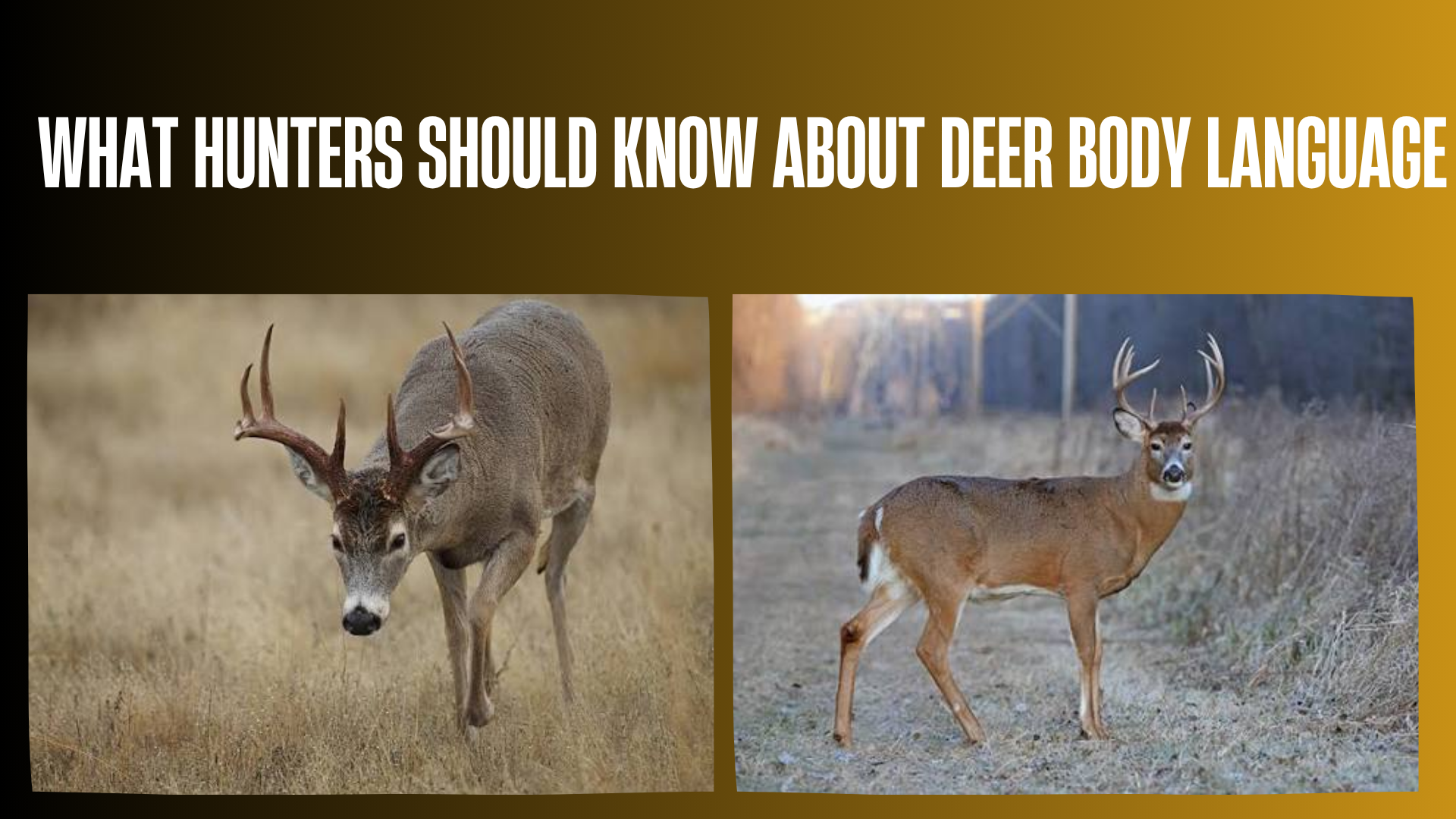

Quick Answer: What Hunters Should Know About Deer Body Language
What hunters should know about deer body language is that the whole animal matters more than a single movement. A loose body, normal feeding rhythm, independently moving ears, and occasional tail flicks usually suggest relative comfort; a frozen posture, fixed stare, repeated foot stomps, tense muscles, elevated tail, or explosive snort suggests increasing concern. Watch the sequence, nearby deer, and wind before drawing a conclusion. Body language can improve awareness, but it never replaces positive target identification, a safe backstop, legal compliance, or sound shot judgment.
Deer Body Language at a Glance
| Signal | Possible Meaning | What to Watch Next | Responsible Hunter Response |
|---|---|---|---|
| Loose feeding posture | Relative comfort | Steady feeding, relaxed steps, ears scanning separately | Keep observing; do not assume the deer cannot detect you |
| Sudden freeze | New sound, scent, or movement detected | Head angle, ear direction, nose testing the air | Stop unnecessary movement and reassess the entire scene |
| Fixed stare | Focused suspicion | Body tension, repeated head movements, foot placement | Remain patient; never rush identification or a shot |
| Head bob or feigned feeding | Attempt to locate uncertain movement | Rapid return to an upright, focused posture | Do not react to the apparent return to feeding |
| Ears pointed toward one source | Focused listening | Whether other deer copy the response | Assume the animal is evaluating something |
| Ears pinned back | Threat or social aggression in context | Stiff neck, lowered head, sidling, displacement | Avoid approaching or interfering |
| Front-foot stomp | Uncertainty or alarm | Freeze, stare, snort, tail elevation | Expect further testing or departure |
| Tail flick or swish | Often routine comfort or insect response | Overall tension and repetition | Use the whole posture, not the tail alone |
| Raised or flagging tail | Alarm and possible flight, especially in whitetails | Bounding, group reaction, snorting | Let the situation settle; maintain safe muzzle control |
| Stiff-legged walk | High alert or social display | Head position, ears, nearby rival or threat | Do not assume the deer is calm because it is walking |
| Lowered head and sidling | Dominance or aggression | Pinned ears, antler presentation, striking | Give deer space and do not provoke interaction |
| Lip curl or flehmen | Scent analysis, often breeding-related | Doe scent, ground scent, rut activity | Recognize context without treating it as proof of rut timing |
The Most Important Rule: Read Clusters, Not Isolated Gestures
A deer constantly receives information through hearing, smell, sight, and contact with other deer. An ear flick may track a sound, shed an insect, or accompany mild irritation. A tail swish can be routine, while a high flag combined with a snort and rapid departure is a much stronger alarm pattern. The useful question is not merely, “What did the tail do?” It is, “What changed in the entire animal and its surroundings?”
Use three layers of evidence:
- Baseline: Note how the deer behaved before the change. Was it feeding steadily, grooming, walking, or already tense?
- Cluster: Look for two or more related signals involving the ears, eyes, head, tail, legs, breathing, or vocalization.
- Trigger and sequence: Consider what happened immediately before the response and what the deer does next.
Nearby animals provide additional context. One doe may notice something before the rest of a group. Fawns can mirror an adult doe’s freeze or departure. A buck focused on another deer during the breeding season may temporarily behave differently from a deer responding to danger.
What Hunters Should Know About Deer Body Language Signals
1. Relaxed Feeding Is a Baseline, Not a Guarantee
A relatively comfortable deer often shows a fluid feeding rhythm: head down to browse, head up briefly to scan, then back to feeding. Its muscles do not appear rigid, steps are unhurried, and its ears may rotate independently to sample sounds. A white-tailed deer may make small, casual tail flicks.
“Relaxed” does not mean unaware. Deer can continue feeding while monitoring scent and sound. A hunter should use this posture as the baseline from which to notice change, not as permission to make careless movement.
2. A Sudden Freeze Means Something Changed
When a deer abruptly stops chewing or walking, lifts its head, and holds still, it may have detected new information. The cause could be a hunter, another person, a predator, a vehicle, falling debris, or another deer. Watch where the ears, eyes, and nose point. A deer that resumes normal behavior quickly may have resolved the uncertainty; one that becomes progressively stiffer may remain concerned.
A freeze is a cue for the hunter to stop unnecessary motion and reassess. It is not a cue to hurry. Confirm the animal, legal status, shooting lane, and what lies beyond it before making any decision.
3. A Fixed Stare Shows Focused Attention
A deer staring in one direction is collecting visual information. Because deer are highly responsive to movement, the animal may hold its gaze and wait for the suspicious object to reveal itself. The neck often lengthens, ears orient forward, and the body may lean away from the perceived threat.
A hunter should assume that conspicuous movement can confirm the deer’s suspicion. More importantly, the hunter should not let urgency override safe firearm or bow handling. An obscured, quarter-seen, or unidentified animal is never an acceptable target.
4. Head Bobbing May Be an Attempt to Detect Movement
A suspicious deer may lower and raise its head repeatedly, sometimes appearing to return to feeding before snapping its head upright. Changing head position alters the animal’s view and may expose movement that was hidden against the background. Hunters sometimes call this a “head fake,” but the behavior should not be treated as a calculated trick in the human sense.
If a deer briefly lowers its head after staring, do not conclude that it has forgotten the disturbance. Look for a genuinely restored feeding rhythm and reduced body tension.
5. Ear Direction Reveals Attention
Independently rotating ears are part of normal environmental scanning. Both ears locked toward the same source suggest concentrated listening. One ear directed backward may track a deer or sound behind the animal while the eyes remain forward. Ear direction is especially useful when vegetation hides the legs or tail.
Pinned or flattened ears have a different meaning when paired with a hard stare, stiff neck, lowered head, or sidelong approach. Texas Parks and Wildlife describes ear-drop, hard-look, and sidle displays as elements of whitetail social and aggressive behavior. Never rely on ear position alone, because wind, insects, and momentary sounds also move the ears.
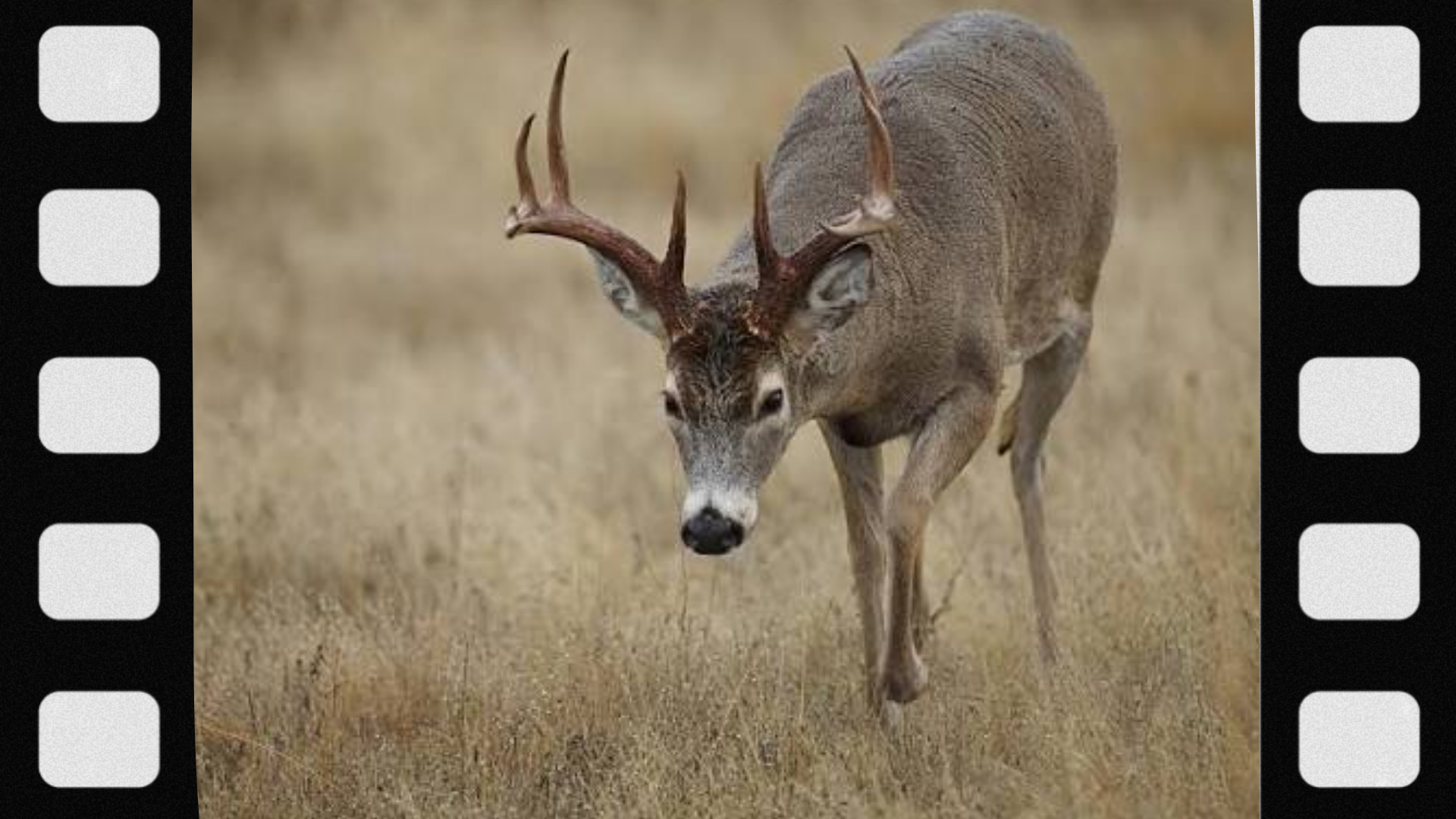
6. Foot Stomping Signals Suspicion or Alarm
A deer may lift a front hoof, stamp the ground, then freeze and observe. The motion and sound can alert nearby deer and may help the animal test an uncertain threat for a reaction. The Missouri Department of Conservation identifies foot stomping among several signs that an alert deer may be aware of a hunter’s setup.
One stomp does not prove that the deer has identified a person. Repeated stomping combined with a fixed stare, head swaying, stiff walking, snorting, or tail elevation represents a stronger warning pattern. Expect the animal either to continue testing the area or leave.
7. Tail Position Must Be Read by Species and Context
The white underside of a white-tailed deer’s raised tail is a conspicuous alarm signal and can influence other deer in the group. A tail held high while the deer bounds away is very different from a light flick during feeding. A tightly tucked tail and crouched departure can also reflect tension.
Mule deer do not communicate in exactly the same visual pattern. Their tail markings and characteristic bounding gait differ, so a whitetail-only interpretation should not be copied mechanically to mule deer. First identify the species and learn its normal local behavior.
8. Snorts and Blows Add Meaning to Posture
A snort or forceful blow is a vocal or respiratory signal rather than body language by itself, but it often completes an alarm sequence. A deer may blow after catching suspicious scent or while warning nearby deer. The accompanying posture—stomp, rigid stance, raised tail, or rapid exit—provides the meaning that sound alone cannot.
Do not assume every snort means the deer has pinpointed the hunter. Wind can carry human scent unpredictably, and deer may be responding to another disturbance. Treat the event as evidence that the area is unsettled.
9. A Stiff-Legged Walk Is Not Relaxed Movement
A deer can move slowly while remaining highly alert. Straight, deliberate steps, a rigid back, and a high or extended head suggest tension. In a social encounter, stiff movement can also display status. Look for the object of attention: a suspected threat, a dominant doe, a rival buck, or another animal.
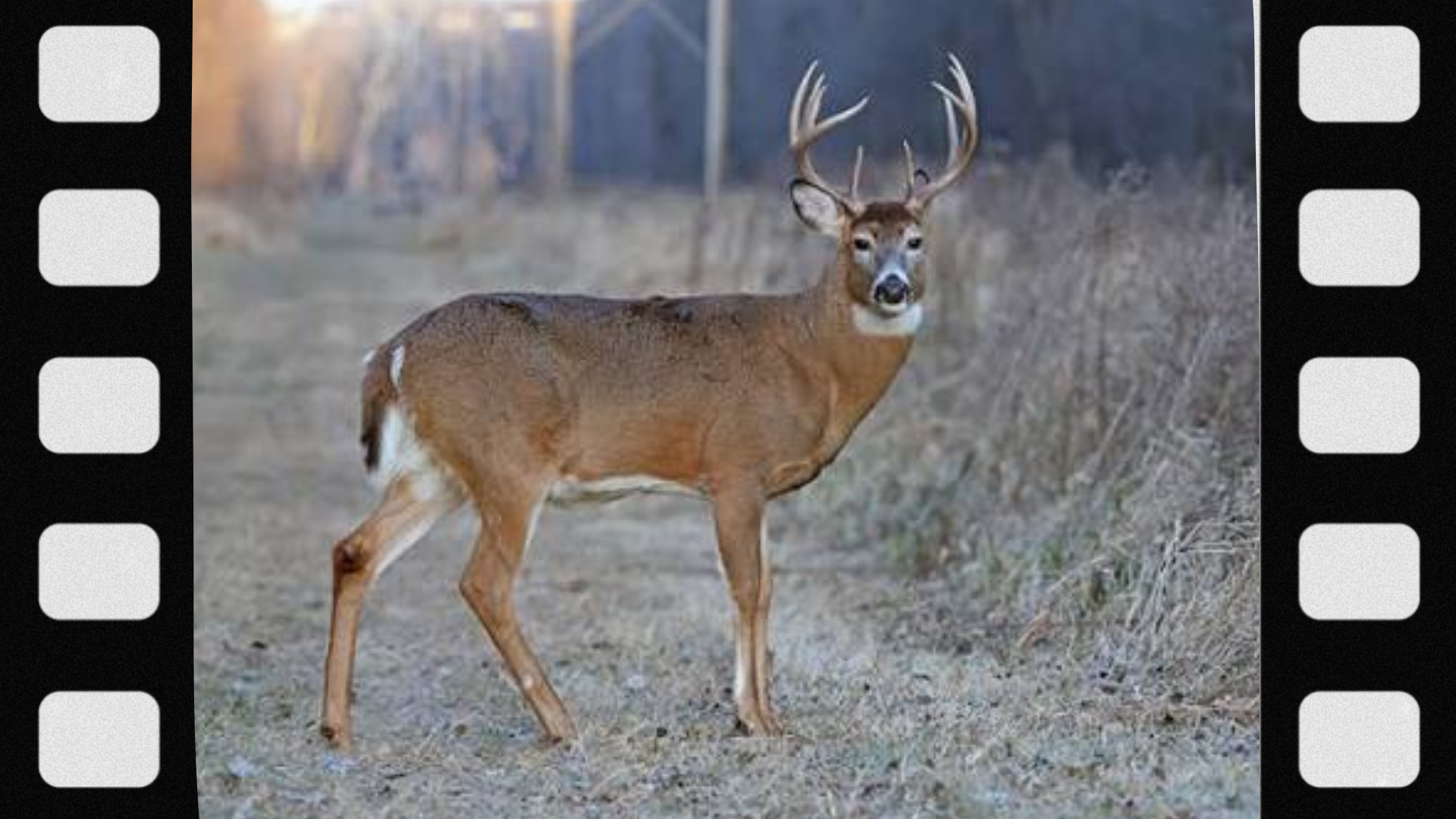
The practical lesson is that speed alone does not define mood. A deer walking slowly is not necessarily calm or likely to stay.
10. Lowered Head, Sidling, and Pinned Ears Can Signal Aggression
Deer establish social relationships through posture before physical contact. A hard stare, ears laid back, head lowered toward another deer, and a broadside or sidling presentation can form an escalating threat display. Bucks may present their antlers; does can lunge or strike with their front feet. The Texas Parks and Wildlife Department’s whitetail body-language guide describes these dominance signals in both sexes.
Rut activity can make male deer less predictable around people, vehicles, pets, and other deer. Give wildlife room. Never approach, corner, feed, or attempt to provoke an aggressive display.
11. Antler Displays Range From Sparring to Serious Conflict
Two bucks may posture, parallel-walk, spar lightly, or escalate to harder antler contact. Sparring outside peak breeding competition can look less intense, while a stiff body, pinned ears, bristled hair, forceful pushing, and persistent pursuit suggest a more serious encounter. Age or antler size alone does not reliably predict every social outcome. Research summarized by the Mississippi State University Deer Lab cautions that dominance is not as predictable as hunters may assume.
Do not become so focused on antlers that you neglect identification, local antler restrictions, nearby animals, or the backstop. Social excitement does not reduce the hunter’s responsibilities.
12. Flehmen Is Scent Analysis, Not an Alarm Signal
A buck may raise its head, curl the upper lip, and expose the gums after investigating urine or another scent source. This is the flehmen response, which helps move scent compounds toward a specialized sensory organ. It is commonly observed in breeding contexts but can occur during scent investigation more generally.
Flehmen can indicate that a deer is analyzing reproductive scent; it does not prove that peak rut is occurring on a particular property or that another deer will appear. Local breeding chronology, weather, pressure, age structure, and individual behavior all matter.
A Practical Four-State Reading System
Instead of memorizing dozens of gestures, group what you see into four broad states. These categories are observational aids, not scientific diagnoses.
Comfortable
- Fluid posture and unhurried movement
- Regular feeding, grooming, or bedding behavior
- Ears scanning without locking on one source for long
- No obvious tension spreading through the group
Curious or Uncertain
- Head raised and attention focused
- Nose testing the air
- Intermittent staring or head bobbing
- A cautious step followed by another pause
Alarmed
- Rigid body and intense focus
- Repeated stomping or sharp snorts
- Raised tail or abrupt group response
- Rapid, bounding, or evasive departure
Socially Assertive or Aggressive
- Pinned ears and hard stare directed at another deer
- Lowered head, sidling, or stiff parallel movement
- Displacement, lunging, striking, or antler contact
- Persistent pursuit during a social encounter
What Changes the Meaning of a Signal?
Species
White-tailed deer and mule deer share many alert and social postures, but their tails, gaits, habitat use, and escape behavior differ. Black-tailed deer add regional variation. Use species-specific knowledge rather than assuming all deer communicate identically.
Season and Breeding Phase
Social spacing and aggression change across the year. Velvet bachelor groups, pre-rut sorting, active breeding, and post-rut recovery can produce different interactions. The same stiff posture directed at another buck during the rut may be social competition rather than fear of a hunter.
Age, Sex, and Individual Experience
Adults, yearlings, and fawns do not have identical risk thresholds. A doe with young may respond differently from a solitary buck. Deer repeatedly exposed to harmless farm activity may tolerate it, while deer in heavily hunted cover may react to subtle disturbances. These are tendencies, not fixed personality rules.
Wind and Scent
A deer looking away can still detect scent. Shifting wind, thermals, and swirling air in broken terrain may cause an abrupt change without any visible hunter movement. Watch nose position and the reaction of deer downwind.
Habitat and Visibility
In dense cover, ears and partial posture may be all that is visible. In open country, a mule deer may study a distant disturbance for longer. Vegetation, terrain, light, and background movement affect both what the deer detects and what the hunter can interpret.
Hunting Pressure and Other Disturbance
Other hunters, hikers, livestock, predators, dogs, farm equipment, and roads can all change behavior. Do not automatically assume a deer’s alarm is directed at you. Scan the broader area without pointing a firearm at unidentified movement.
How to Use Body Language Responsibly in the Field
- Establish a baseline. Watch the animal before planning any movement. Note feeding cadence, ear motion, muscle tension, and nearby deer.
- Identify the change. Determine which signals changed together and what may have caused the change.
- Check the entire scene. Look for other people, animals, roads, buildings, livestock, terrain, and obstacles. Use optics to observe, never a firearm scope to identify an unknown object.
- Confirm legality. Positively identify species and any legally relevant sex or antler characteristics. Verify current season, license, tag, weapon, access, and area rules before the hunt.
- Maintain safe handling. Keep the muzzle in a safe direction and the finger outside the trigger guard until ready to shoot. A mechanical safety does not replace disciplined handling.
- Wait for a high-percentage opportunity. Body language can suggest whether a deer is likely to pause or leave, but it never makes a poor angle, obstructed target, unsafe background, or excessive distance acceptable.
- Let the animal go when conditions are wrong. Passing is the correct decision when identification, legality, shot placement, visibility, stability, or the backstop is uncertain.
Safety, Legal, and Ethical Limits
Deer body language is observational information, not permission to shoot. Regulations vary by jurisdiction, wildlife unit, property, season, weapon, and animal classification. Check the current official wildlife-agency regulations before every hunt and again for emergency closures or disease-management changes.
Follow the four universal firearm-safety principles: treat every firearm as if it is loaded; keep the muzzle pointed in a safe direction; keep your finger outside the trigger guard until ready to shoot; and be certain of the target and what is beyond it. Bowhunters must apply the same standard of positive identification and safe direction while following bow or crossbow manufacturer instructions.
Body language also helps an ethical hunter recognize bad situations. A deer moving unpredictably through a group, standing behind another animal, facing an unsafe background, or offering only an obstructed angle should be allowed to move on. Never shoot at sound, color, antlers, or movement alone. Do not trespass while scouting or recovering game; obtain landowner permission and follow local recovery rules.
Common Deer Body Language Mistakes
- Reading one signal in isolation: Combine posture, sequence, sound, and context.
- Assuming a head-down deer is unaware: Its ears and nose may still be monitoring the area.
- Moving during a “head fake”: A suspicious deer may lift its head again immediately.
- Equating slow movement with calmness: A stiff, deliberate walk can reflect high alert.
- Applying whitetail rules to every species: Learn the normal tail and escape behavior of local deer.
- Confusing rut behavior with alarm: Identify what the posture is directed toward.
- Ignoring other deer: One animal may detect danger and influence the entire group.
- Rushing because the deer looks ready to leave: Safety, identification, legality, and shot quality remain non-negotiable.
- Believing body language predicts an exact path: Deer can reverse, stop, accelerate, or enter cover without warning.
- Using the riflescope as binoculars: Identify wildlife and unknown objects with binoculars or a spotting scope.
How Beginners Can Learn Faster Without Pressuring Deer
Observation outside the hunting moment builds better judgment. Watch deer from a lawful distance in places where stopping is permitted, or review trail-camera video captured and used in compliance with local rules. Record the baseline, the trigger you noticed, the sequence of signals, and the outcome. Video is more instructive than a single photo because body language unfolds over time.
Compare observations across different conditions rather than turning one encounter into a universal rule. A simple field log can include date, habitat, weather, wind, number of deer, initial behavior, change, probable trigger, and outcome. Avoid approaching, feeding, crowding, or repeatedly disturbing wildlife for a better view.
Hunter-education courses connect animal observation with target identification, safe handling, regulations, and ethical decision-making. Use your state or provincial wildlife agency as the first source for current requirements. The International Hunter Education Association-USA can also help readers locate hunter-education resources.
Final Answer: What Hunters Should Know About Deer Body Language
What hunters should know about deer body language is that reliable interpretation comes from a sequence of signals, not a single twitch, stomp, or stare. Start with the deer’s baseline, watch the whole body, compare nearby animals, and consider wind, species, season, habitat, and human pressure. Relaxed feeding, sudden freezing, focused ears, head bobbing, foot stomping, tail changes, stiff walking, snorting, dominance postures, and flehmen can all be informative when read in context.
Use that information to become more patient and aware—not to justify a hurried shot. Positive identification, a safe background, proven shooting ability, current regulations, land access, humane shot selection, and responsible recovery always take priority over predicting what a deer may do next.
FAQs
1. What does it mean when a deer stomps its foot?
A front-foot stomp commonly indicates uncertainty or alarm. The deer may be warning nearby deer or testing whether a suspicious object reacts. Look for a fixed stare, rigid posture, snort, or raised tail before judging the intensity.
2. Does a deer stomp mean it has seen the hunter?
Not necessarily. The deer may have seen movement, heard a sound, or detected an unfamiliar shape without identifying its source. It may also be reacting to another person, predator, or animal.
3. What does it mean when a deer blows or snorts?
A forceful blow often accompanies alarm and can warn other deer. Scent, sight, or sound may have triggered it. Read the sound with the deer’s posture and group response.
4. Will a deer come back after blowing?
It may, but there is no dependable timetable or guarantee. The deer’s experience, the severity of the disturbance, wind, cover, pressure, and available habitat all affect what happens next.
5. What does a raised whitetail tail mean?
A raised, flagging white tail commonly signals alarm and often accompanies departure. A small casual flick during feeding carries much less weight than a high flag combined with rigid posture or bounding flight.
6. Do mule deer use their tails like whitetails?
Not in exactly the same way. Mule deer have different tail markings and escape behavior, including a characteristic bounding gait. Learn species-specific patterns before interpreting a tail signal.
7. Why does a deer bob its head?
A suspicious deer may change its head position to improve its view and detect movement. Head bobbing can also occur for other reasons, so look for staring, ear focus, stiffness, and repeated false returns to feeding.
8. What do pinned-back deer ears mean?
When directed toward another deer and paired with a hard stare, lowered head, or stiff posture, pinned ears can signal a threat or social aggression. A brief ear movement by itself is inconclusive.
9. How can you tell if a deer is relaxed?
Look for a loose body, fluid steps, a steady feed-and-scan rhythm, grooming, and ears moving independently. Even a relatively relaxed deer remains alert to its surroundings.
10. How can you tell if a deer is about to run?
Strong warning clusters include a rigid body, weight shifting away, repeated stomps, raised tail, snort, and abrupt group movement. No signal predicts departure with certainty, so do not rush a decision.
11. What does a stiff-legged deer walk mean?
It can indicate heightened alertness or a social display. Check whether the deer is focused on a suspected threat or another deer, and do not mistake slow movement for calmness.
12. Why does a buck curl its upper lip?
The flehmen response helps a buck analyze scent, often after investigating urine during the breeding season. It shows scent investigation but does not by itself establish the exact phase of the rut.
13. What does a lowered head mean in deer?
A lowered head while feeding is normal. A lowered head aimed at another deer, especially with pinned ears, rigid posture, or sidling, can be a dominance threat. Context changes the meaning completely.
14. Why do deer freeze when they see movement?
Freezing can help a deer reduce its own movement while it uses sight, hearing, and smell to locate a possible threat. The deer may resume activity, investigate, or flee depending on what it detects.
15. Can deer see a hunter who stays still?
A still hunter may be harder to detect visually, but deer also use smell and hearing. Silhouette, contrast, wind, sound, and prior movement can reveal a person even after that person stops moving.
16. Do deer warn each other about danger?
Alarm postures, foot stomps, snorts, tail displays, and group movement can convey danger to nearby deer. One alert animal may cause others to freeze or leave before they identify the source themselves.
17. Does tail flicking mean a deer is calm?
A light occasional flick often occurs during ordinary feeding or in response to insects, but it is not proof of calmness. Evaluate the ears, muscles, head, legs, and feeding cadence too.
18. Can body language tell a buck’s age?
Posture and behavior alone do not provide a reliable exact age. Body characteristics, local population knowledge, and agency-approved aging guidance are more useful, and field estimates still contain uncertainty.
19. Can body language tell whether a deer is legal to harvest?
No. Legality depends on current local regulations and may involve species, sex, antler criteria, season, permit, weapon, and area. Body language cannot replace positive identification and a regulation check.
20. Are bucks always aggressive during the rut?
No. Rut behavior varies with the individual, breeding phase, competition, age, habitat, and disturbance. Some bucks avoid conflict while others display or fight. Never approach a rutting deer.
21. What does it mean when deer groom each other?
Social grooming can reinforce relationships and remove debris or parasites. In a calm group it generally differs from the rigid, directed postures seen during a threat or dominance encounter.
22. Do fawns copy a doe’s body language?
Fawns often respond to an adult doe’s alert posture or departure, although their reactions vary with age and circumstances. Watch the group rather than focusing only on the most visible deer.
23. Should hunters move when a deer lowers its head?
Not automatically. A suspicious deer may lower its head briefly and lift it again to detect movement. Any necessary movement should be slow and deliberate, and safety must never depend on beating the animal’s reaction time.
24. Can trail cameras help hunters learn deer body language?
Video clips can reveal sequences that still photos miss, including what happened before and after a stomp or stare. Follow all current rules governing camera placement, timing, data transmission, property access, and fair chase.
25. Does deer body language guarantee a hunting opportunity?
No. It may help a hunter recognize comfort, uncertainty, alarm, or social tension, but deer remain unpredictable. Legal requirements, safety, identification, shot quality, and ethical restraint always control the decision.
Read more: