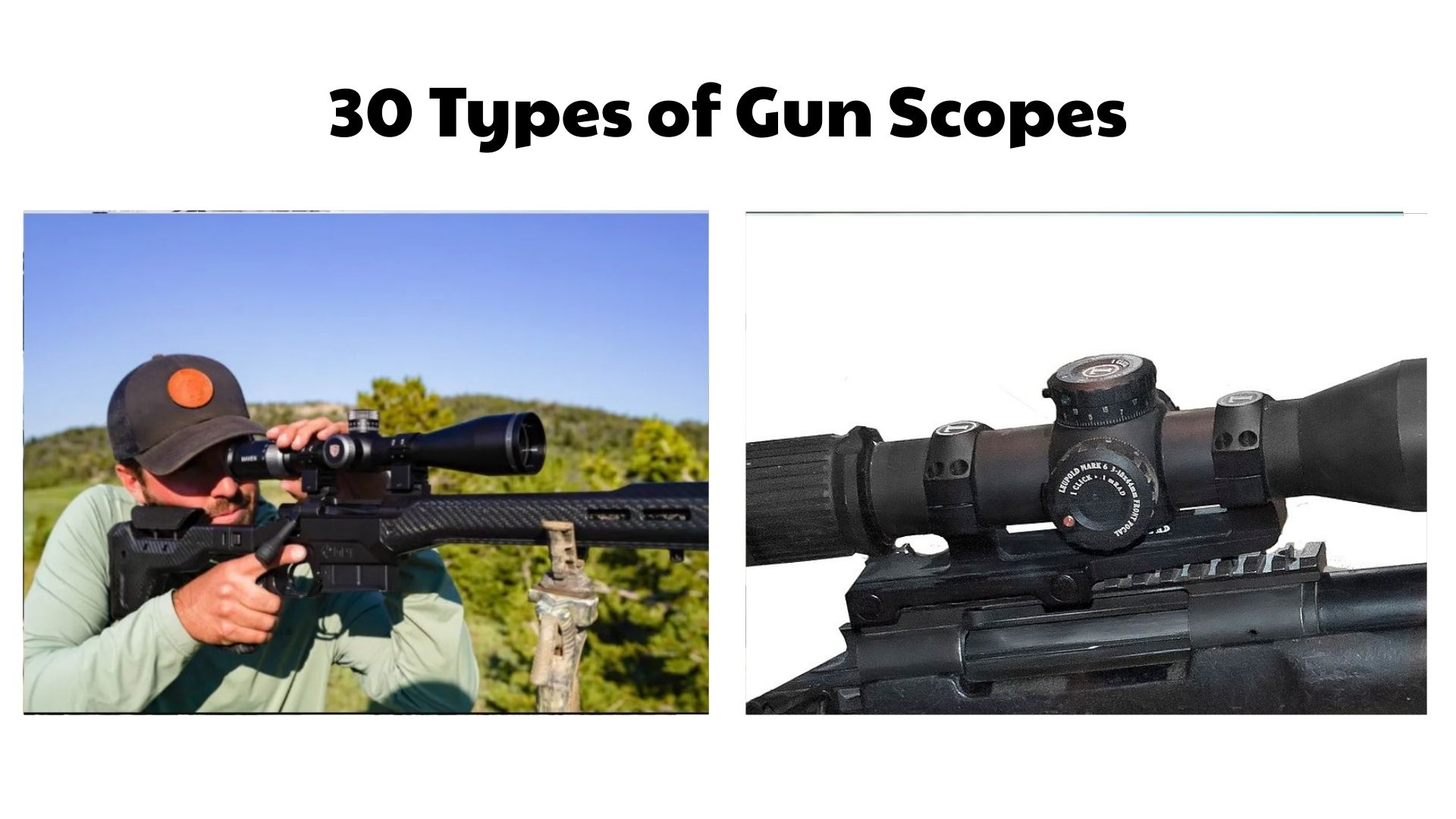

Gun scopes play a critical role in modern shooting, hunting, and target practice because they allow shooters to see their targets more clearly, aim more precisely, and maintain consistency at different distances. While the basic concept of a scope—magnifying a target and aligning a reticle—seems simple, the world of firearm optics is surprisingly diverse. Today’s shooters can choose from dozens of designs built for specific tasks such as long-range precision shooting, close-quarters tactical use, nighttime visibility, or lightweight hunting setups.
Understanding the different types of gun scopes helps shooters choose equipment that matches their firearm, shooting style, and environment. Some scopes focus on magnification and precision adjustments, while others prioritize speed, durability, or specialized optics technology. In this guide, we explore 30 common types of gun scopes used by hunters, sport shooters, and tactical professionals. Each category highlights the purpose, typical features, and the situations where the scope performs best. Whether you are a beginner learning about firearm optics or an experienced shooter looking to refine your setup, this overview will help you understand how different gun scopes function and why each design exists.
30 Types of Gun Scopes
1. Fixed Magnification Scope
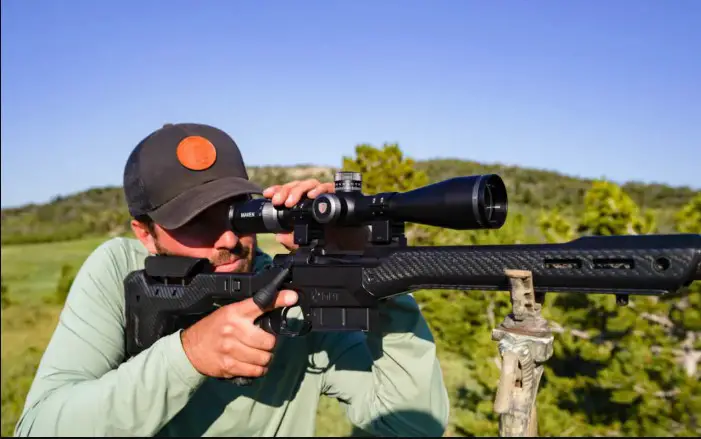
A fixed magnification scope is one of the simplest and most reliable optics designs available for firearms. Unlike variable scopes that allow the shooter to change magnification levels, this type maintains a constant magnification power such as 4x, 6x, or 10x. At first glance the design may appear basic, but simplicity often translates into durability, reliability, and optical clarity. Because there are fewer internal moving parts, fixed magnification scopes typically maintain their zero extremely well and can withstand rough field conditions without losing accuracy.
Many hunters and traditional marksmen appreciate fixed scopes for their predictable performance. When using a fixed magnification optic, the shooter always knows exactly how the sight picture will appear, which eliminates the need to adjust magnification under pressure. This consistency becomes especially valuable during hunting situations where a target appears suddenly and there is little time to manipulate controls. With a fixed scope, the shooter simply raises the rifle, aligns the reticle, and fires without worrying about whether the magnification is set correctly for the distance.
Another advantage of fixed magnification scopes is optical brightness and clarity. Because the internal lens system does not need to accommodate variable zoom mechanisms, manufacturers can optimize the glass for one specific magnification range. This often results in clearer images, improved light transmission, and sharper reticles compared to similarly priced variable scopes. Many experienced shooters argue that a well-built fixed scope can deliver exceptional performance even in low-light conditions, which is important for dawn or dusk hunting when animals are most active.
Despite these benefits, fixed scopes are not ideal for every scenario. Shooters who frequently engage targets at dramatically different distances may prefer the flexibility of adjustable magnification optics. However, for applications where distance is relatively consistent—such as certain types of hunting, target shooting, or designated marksman roles—a fixed magnification scope remains a dependable and highly respected choice among the many modern gun scopes available today.
2. Variable Magnification Scope
Variable magnification scopes are among the most widely used firearm optics because they allow shooters to adjust zoom levels depending on the distance to their target. Instead of being locked to one magnification setting, these scopes typically feature a range such as 3-9x, 4-12x, or 6-24x. This adjustable system makes them incredibly versatile, enabling shooters to engage both close and distant targets with the same optic. As a result, variable scopes are commonly found on hunting rifles, precision rifles, and many recreational shooting setups.
The core advantage of variable magnification optics is flexibility. At lower magnification settings, the shooter benefits from a wider field of view, which helps with target acquisition and tracking moving animals or targets. When the magnification is increased, the scope provides a more detailed view of distant objects, making precise shot placement easier. This dual capability allows shooters to adapt quickly as conditions change, whether they are scanning a landscape or preparing for a long-distance shot across open terrain.
Modern variable scopes often include advanced features such as adjustable parallax, illuminated reticles, and precise elevation and windage turrets. These enhancements allow shooters to fine-tune their optics for greater accuracy. In long-range shooting disciplines, for example, shooters rely heavily on turret adjustments to compensate for bullet drop and wind drift. High-quality variable scopes are designed with repeatable adjustments so that the shooter can dial in corrections without losing zero.
However, the added complexity of variable scopes also introduces more moving components inside the optic. While reputable manufacturers design these systems to be extremely durable, they can still be slightly heavier and more expensive than simpler optics. Nevertheless, their versatility makes them one of the most popular types of gun scopes used by shooters around the world, offering a balanced combination of precision, adaptability, and practical performance.
3. Night Vision Scope
Night vision scopes are specialized optics designed to allow shooters to see targets in extremely low-light environments or even complete darkness. These scopes use electronic image intensification technology that amplifies available ambient light such as moonlight or starlight. The result is a visible image that would otherwise be impossible to see with traditional optics. For certain hunting activities, security operations, and wildlife control efforts conducted at night, night vision scopes provide a significant advantage.
The technology inside a night vision scope works by collecting tiny amounts of available light through the objective lens and converting it into electrons using a photocathode. These electrons are then amplified and projected onto a phosphor screen, creating a visible image that appears green or monochrome to the user. While this process may sound complex, the practical experience for the shooter is straightforward: objects that appear invisible to the naked eye suddenly become visible through the optic.
Night vision scopes are particularly useful for nocturnal hunting situations where animals such as hogs or predators are most active after dark. Traditional scopes rely on natural light entering the lens, which limits their effectiveness at night. Night vision optics overcome this limitation by actively amplifying available light, allowing shooters to identify targets more clearly and make safe, responsible decisions before taking a shot.
Despite their advantages, night vision scopes are typically heavier and more expensive than standard daytime optics. They also require power sources such as batteries to operate the electronic components. Even with these considerations, they remain an important category among modern gun scopes, demonstrating how optical technology continues to evolve in response to specialized shooting needs.
4. Tactical Scope
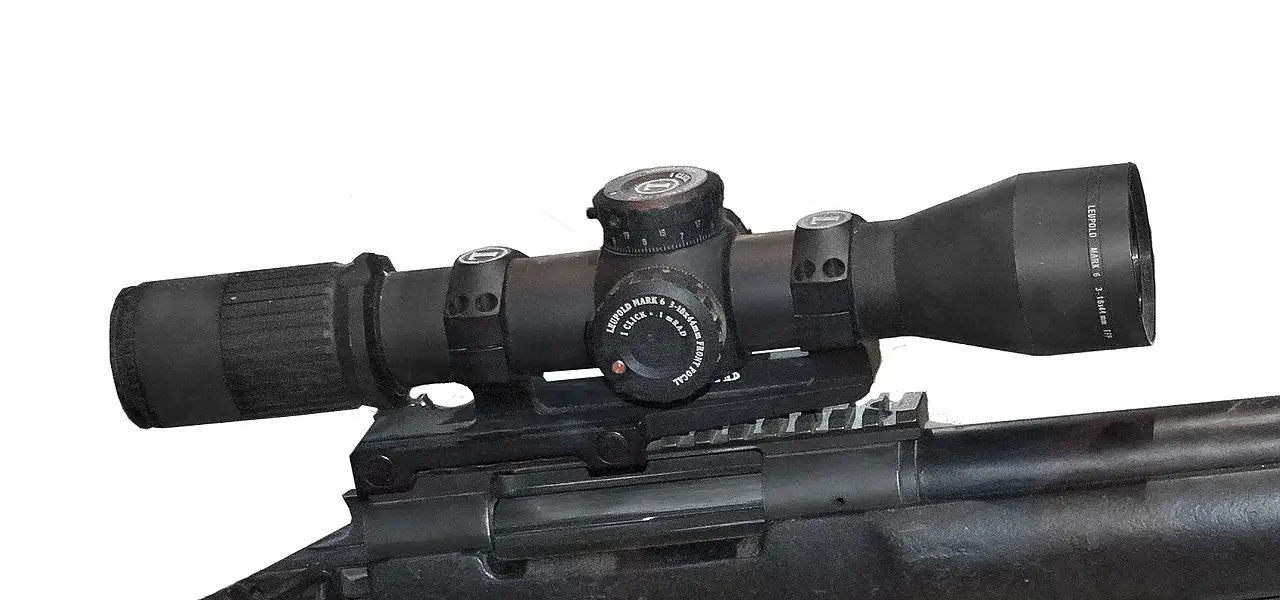
Tactical scopes are designed specifically for precision shooting situations that demand fast adjustments, rugged construction, and reliable accuracy under challenging conditions. Originally developed for military and law enforcement use, these optics have become increasingly popular among civilian shooters who participate in long-range competitions, tactical rifle matches, and advanced marksmanship training. The defining characteristic of a tactical scope is its ability to provide precise adjustments and durable performance in demanding environments.
One of the most recognizable features of tactical scopes is their exposed adjustment turrets. These turrets allow shooters to quickly adjust elevation and windage settings in order to compensate for bullet drop or wind drift. Unlike hunting scopes where adjustments are often hidden beneath protective caps, tactical optics keep these controls accessible so that shooters can make rapid corrections in the field. For long-range shooting, these adjustments are essential because even small environmental changes can significantly affect bullet trajectory.
Tactical scopes also tend to include advanced reticle designs such as mil-dot or grid-style reticles. These reticles provide reference points that help shooters estimate distance, measure target movement, and calculate bullet drop without relying solely on turret adjustments. When combined with precise turret controls, the reticle becomes an integral tool for long-distance accuracy. Many tactical scopes also feature first focal plane reticles, ensuring that the reticle scale remains accurate across different magnification levels.
Durability is another major priority in tactical optics design. These scopes are built with strong materials, sealed housings, and shock-resistant components so they can handle recoil, harsh weather, and heavy use. As a result, tactical scopes represent one of the most robust categories within the broader range of types of gun scopes, providing reliability for shooters who demand consistent performance under pressure.
5. Long-Range Scope
Long-range scopes are engineered specifically for shooting at extended distances where precision becomes increasingly difficult. As the distance between the shooter and the target grows, even small aiming errors or environmental factors can drastically affect accuracy. Long-range scopes address these challenges by offering high magnification levels, detailed reticles, and precise adjustment systems that allow shooters to fine-tune their aim with exceptional accuracy.
One of the defining features of long-range scopes is their powerful magnification range. Many of these optics offer magnification levels such as 5-25x or even higher, enabling shooters to clearly observe distant targets that would otherwise appear extremely small. High magnification helps shooters identify fine details, align reticles precisely, and monitor environmental effects such as wind movement or mirage patterns across long distances.
Another key element of long-range scopes is their advanced turret adjustment system. At extended distances, bullets experience significant drop due to gravity. Shooters must compensate for this drop by adjusting the elevation turret to align the reticle with the predicted bullet impact point. High-quality long-range scopes feature turrets with clear markings and consistent tracking so that adjustments remain accurate even after repeated use. Many also include zero-stop mechanisms, which allow the shooter to quickly return to the original zero setting.
Long-range scopes often include sophisticated reticle patterns that provide measurement references for distance estimation and ballistic calculations. Combined with high-quality lenses and durable construction, these features allow experienced shooters to achieve remarkable accuracy across impressive distances. Within the broader category of modern gun scopes, long-range optics represent the pinnacle of precision engineering, designed for shooters who pursue accuracy at the limits of rifle performance.
6. Hunting Scope
A hunting scope is one of the most commonly used optics in the world of firearms because it is specifically designed to support hunters in real-world field conditions. Unlike highly specialized optics used for competitive shooting or tactical applications, hunting scopes prioritize simplicity, reliability, and clarity in natural environments. Hunters often encounter rapidly changing conditions—moving animals, uneven terrain, and shifting light levels—so their optics must be intuitive and dependable. A good hunting scope allows the shooter to quickly acquire a target, place the reticle accurately, and take a clean, ethical shot.
Most hunting scopes feature moderate magnification ranges such as 3–9x or 2–10x. These ranges provide a balance between a wide field of view and sufficient magnification for medium-distance shooting. When magnification is set lower, the shooter can track moving animals more easily and maintain awareness of the surrounding environment. Increasing magnification helps when a target appears farther away across open fields or valleys. Because hunting often requires quick decisions, many hunters prefer optics that offer smooth magnification adjustments and clear reticles that remain easy to see in different lighting conditions.
Another important feature of hunting scopes is their ability to perform well in low-light conditions. Many animals are most active at dawn and dusk, when natural light is limited. Quality hunting optics are built with lenses that maximize light transmission, allowing shooters to see clearly during these critical periods. Some hunting scopes also include illuminated reticles, which make the aiming point easier to identify when backgrounds become darker or more complex. These features help ensure that hunters can identify targets accurately and maintain responsible shooting practices.
Durability is equally important in hunting environments. Hunters often carry their rifles through forests, mountains, wetlands, and unpredictable weather. For this reason, hunting scopes are typically sealed against moisture, resistant to fogging, and constructed with strong materials that can withstand recoil and physical impact. While there are many specialized optics available today, the hunting scope remains one of the most practical and widely used types of gun scopes, offering a dependable combination of clarity, simplicity, and field-ready performance.
7. Competition Scope
Competition scopes are designed for shooters who participate in organized shooting sports where precision, speed, and consistency are critical. These events range from long-range precision rifle competitions to dynamic shooting matches where targets appear at varying distances. Because competitive environments demand a high level of performance, competition scopes are typically engineered with advanced optical systems, precise adjustments, and reticles that support rapid target engagement.
One of the defining characteristics of a competition scope is its high optical quality. Competitive shooters rely on extremely clear images so they can detect small targets, read wind indicators, and maintain precise aim over long distances. Many competition optics feature premium glass elements and advanced lens coatings that improve contrast and brightness. This clarity helps shooters distinguish targets from complex backgrounds and maintain focus during extended shooting sessions where visual fatigue could otherwise become a problem.
Competition scopes also emphasize precise adjustment mechanisms. Shooters frequently adjust elevation and windage settings between shots to account for bullet trajectory, environmental conditions, or different target distances. As a result, these scopes include exposed turrets with clearly marked increments that allow shooters to make accurate corrections quickly. In many competitions, shooters must engage multiple targets in sequence at varying ranges, and a reliable adjustment system ensures that each shot can be precisely calibrated.
Reticle design is another critical element of competition optics. Many competition scopes use complex grid-style reticles that provide reference points for estimating distance and adjusting aim without changing turret settings. These reticles allow experienced shooters to hold over or hold off for bullet drop and wind drift while maintaining their shooting position. Within the broader landscape of modern gun scopes, competition scopes represent a category focused entirely on performance and accuracy, helping skilled marksmen push the limits of precision shooting.
8. Sniper Scope
Sniper scopes are specialized optics developed to support extremely precise shooting at long distances. While the term “sniper scope” is often associated with military or law enforcement marksmen, the design principles behind these optics are also valued by civilian long-range shooters and precision rifle enthusiasts. The main goal of a sniper scope is to provide the shooter with the highest possible level of control over aiming adjustments while maintaining exceptional clarity and reliability.
One of the most distinctive features of sniper scopes is their advanced reticle system. These reticles often include measurement markings such as mil-based or MOA-based scales that help shooters estimate distance and calculate bullet drop. By using these reference points, a shooter can adjust their aim without needing additional equipment. The reticle effectively becomes a measuring tool inside the optic, helping the shooter account for environmental variables that influence bullet trajectory over long distances.
Sniper scopes also emphasize precise and repeatable turret adjustments. Long-distance shooting requires constant correction for factors such as gravity, wind drift, and even subtle atmospheric changes. High-quality sniper optics are built with mechanical systems that allow extremely fine adjustments while maintaining consistent tracking. When a shooter adjusts the turret by a specific amount, the reticle moves precisely as expected. This level of reliability is essential for maintaining accuracy when shots must be taken at extended ranges.
Durability and stability are also essential characteristics of sniper scopes. These optics must withstand heavy recoil, harsh weather conditions, and extended use without losing zero. As a result, manufacturers build them with reinforced housings, sealed internal components, and materials designed to resist temperature fluctuations. Among the many types of gun scopes available today, sniper scopes represent a category focused on maximum precision and reliability, supporting shooters who require consistent accuracy at the farthest practical distances.
9. Scout Scope
Scout scopes are a unique type of firearm optic originally popularized through the concept of the “scout rifle,” a lightweight and versatile rifle intended for general-purpose use. Unlike traditional scopes that are mounted close to the shooter’s eye, scout scopes are mounted farther forward on the rifle’s receiver or barrel. This forward mounting position requires the scope to have extended eye relief, allowing the shooter to maintain a comfortable viewing distance while still achieving a clear sight picture.
The forward-mounted design of scout scopes offers several practical advantages. Because the optic sits farther away from the shooter’s face, the rifle’s action area remains unobstructed. This allows for faster loading and easier access to the rifle’s controls, which can be particularly useful when using bolt-action rifles. Additionally, the forward placement helps maintain a wide field of view, allowing shooters to keep better awareness of their surroundings while tracking moving targets.
Scout scopes typically use moderate magnification levels, often around 2x to 7x. This range provides enough magnification for accurate shooting at medium distances while still maintaining a wide visual field. The goal of the scout rifle system is versatility, and the optic reflects this philosophy by prioritizing speed and situational awareness rather than extreme magnification. Hunters and outdoorsmen who appreciate lightweight, fast-handling rifles often favor this optic style.
Another benefit of scout scopes is improved shooting ergonomics. Because the shooter’s eye is positioned slightly farther from the optic, the risk of recoil-related scope impact is reduced. This can make shooting more comfortable, particularly with rifles that produce stronger recoil. Within the diverse range of modern gun scopes, scout scopes represent a practical and somewhat unconventional design that emphasizes mobility, awareness, and efficient rifle handling.
10. Red Dot Scope
Red dot scopes are among the fastest and most intuitive firearm optics available today. Unlike traditional magnified scopes, a red dot optic projects a small illuminated aiming point onto a lens, allowing the shooter to align the dot with the target. Because there is little or no magnification involved, the shooter can maintain both eyes open while aiming, which greatly improves situational awareness and target acquisition speed.
The primary advantage of red dot scopes is speed. In close-range shooting scenarios, such as tactical training, defensive applications, or certain hunting situations, shooters must acquire targets quickly and react without hesitation. A red dot optic simplifies the aiming process by eliminating the need to align front and rear iron sights. The shooter simply places the dot where they want the bullet to land and presses the trigger, making the system extremely efficient for rapid engagement.
Red dot optics are also known for their compact size and lightweight design. Many models are small enough to mount on rifles, shotguns, or even handguns without significantly altering the firearm’s balance. Their simple construction often makes them durable and resistant to recoil, which is why they are widely used across many firearm platforms. Some red dot sights also include adjustable brightness settings so that the aiming point remains visible in different lighting conditions.
Although red dot scopes do not provide magnification for distant targets, they excel in environments where speed and awareness are more important than long-range precision. For close to medium distances, they offer one of the most user-friendly aiming systems available. Within the broad family of modern types of gun scopes, red dot optics stand out for their simplicity, efficiency, and widespread adoption among shooters who value quick target acquisition.
11. Prism Scope
A prism scope is a compact optical sight that uses a prism-based lens system rather than the traditional series of lenses found in many conventional rifle scopes. This design allows manufacturers to build optics that are shorter, more compact, and often more durable while still providing clear magnification and a precise aiming reticle. Prism scopes have gained popularity in recent years among shooters who want the clarity of magnified optics combined with the simplicity and speed typically associated with red dot sights.
One of the most distinctive characteristics of a prism scope is its etched reticle. Unlike red dot optics that rely entirely on electronic illumination, prism scopes feature reticles that are physically etched into the glass. This means the reticle remains visible even if the battery fails or illumination is turned off. Many models also include optional illumination that enhances the reticle in low-light conditions, but the etched design ensures that the sight remains functional under virtually any circumstance. For shooters who value reliability, this feature is a significant advantage.
Prism scopes typically offer fixed magnification levels, commonly ranging from 1x to 5x. This moderate magnification provides enough detail for accurate shooting at medium distances while maintaining a relatively wide field of view for faster target acquisition. Because the optical system uses a prism rather than multiple moving lenses, the overall design tends to be very rugged and resistant to impact or recoil. Many tactical shooters appreciate prism optics for this balance between durability and optical performance.
Another benefit of prism scopes is their compact footprint. Their shorter body length makes them well suited for carbines and lightweight rifles where maintaining balance is important. While they may not provide the high magnification needed for extreme long-range shooting, prism scopes occupy a practical middle ground within the world of modern gun scopes, offering clear magnification, dependable reticles, and a durable design that performs well in a wide variety of shooting environments.
12. Low-Power Variable Optic (LPVO)
Low-Power Variable Optics, often referred to as LPVOs, have become extremely popular among modern rifle shooters because they combine the advantages of both red dot sights and traditional magnified scopes. An LPVO typically features a magnification range that begins at or near 1x and extends to around 4x, 6x, or sometimes 8x. At the lowest setting, the optic behaves very much like a non-magnified sight, allowing shooters to acquire targets quickly with both eyes open. When higher magnification is needed, the shooter can simply rotate the magnification ring to gain a clearer view of distant targets.
This versatility makes LPVOs particularly valuable for rifles used in dynamic environments where targets may appear at varying distances. At close range, the wide field of view and minimal magnification allow for rapid engagement and excellent situational awareness. As distance increases, the additional magnification helps the shooter identify targets more clearly and place shots with greater precision. This adaptability explains why LPVOs are frequently used in tactical shooting competitions, modern sporting rifle setups, and practical field rifles.
Many LPVOs also incorporate advanced reticle designs that support both close-range speed and mid-range precision. Some reticles include a bright central aiming point that functions similarly to a red dot at low magnification, while additional markings appear when magnification is increased. These markings help shooters estimate distance, compensate for bullet drop, and adjust their aim without needing to manipulate the turret controls. This dual-purpose reticle design contributes to the overall flexibility of the optic.
Within the broader category of types of gun scopes, LPVOs represent one of the most adaptable designs available today. By combining rapid target acquisition with moderate magnification capability, they allow shooters to transition smoothly between close-quarters engagement and accurate mid-range shooting without changing optics or equipment.
13. Medium-Power Variable Optic (MPVO)
Medium-Power Variable Optics, commonly abbreviated as MPVOs, are designed to bridge the gap between low-power tactical optics and high-magnification long-range scopes. These optics typically feature magnification ranges such as 2-12x, 3-15x, or similar configurations that provide a balanced combination of versatility and precision. This range allows shooters to engage targets across a wide spectrum of distances without needing to switch equipment or compromise too heavily on field of view.
One of the main strengths of MPVO scopes is their adaptability. At lower magnification settings, shooters retain enough field of view to track moving targets or maintain situational awareness. Increasing magnification allows for detailed observation and accurate shot placement at longer distances. This makes MPVO optics particularly attractive for hunters who encounter varying terrain, as well as precision shooters who need flexibility in their optics configuration.
Another notable feature of many MPVO scopes is their refined adjustment systems. Because these optics are often used in precision shooting environments, manufacturers equip them with precise elevation and windage turrets that allow shooters to compensate for bullet drop and wind drift. The reticles frequently include measurement markings that correspond to ballistic calculations, enabling shooters to make accurate holdover adjustments directly through the optic.
Although MPVO scopes may not offer the extreme magnification of specialized long-range optics, they provide a balanced solution that works well for many real-world shooting situations. In the evolving landscape of modern gun scopes, MPVOs stand out as a practical choice for shooters who want one optic capable of handling both moderate and extended distances with reliable precision.
14. High-Power Variable Optic (HPVO)
High-Power Variable Optics, often abbreviated as HPVOs, are designed for shooters who require significant magnification to engage targets at long or extreme distances. These scopes typically feature magnification ranges such as 5-25x, 6-24x, or even higher. The primary goal of an HPVO is to provide the level of visual detail needed for precision shooting when targets are located hundreds of meters away. For long-range competitors and precision rifle enthusiasts, these optics represent an essential tool for achieving consistent accuracy.
The most obvious advantage of an HPVO scope is its ability to magnify distant targets to a level where fine details become visible. At high magnification, shooters can carefully align their reticle with small target points, observe environmental indicators such as wind movement, and monitor bullet impacts through the optic. This level of observation is especially important in long-range disciplines where even small adjustments can dramatically influence shot placement.
HPVO scopes also incorporate advanced turret systems and sophisticated reticles designed to assist with ballistic calculations. Elevation turrets allow shooters to compensate for bullet drop over long distances, while windage adjustments help correct for lateral drift caused by crosswinds. Many reticles include detailed measurement grids that provide additional reference points for holdover adjustments. These features work together to create a highly precise aiming system capable of supporting extreme-distance shooting.
Because of their powerful optics and complex adjustment systems, HPVO scopes tend to be larger and heavier than other firearm optics. However, their performance advantages make them indispensable for shooters focused on maximum precision. Among the many types of gun scopes, HPVO designs represent the upper tier of magnification capability, built specifically for shooters who pursue accuracy at the farthest practical distances.
15. Pistol Scope
Pistol scopes are specialized firearm optics designed specifically for use on handguns rather than rifles. Because pistols are held at arm’s length, the optic must provide extended eye relief so the shooter can see the full image without bringing the scope close to their eye. This design difference is essential because traditional rifle scopes are built for much shorter eye relief distances and would be difficult, if not impossible, to use effectively on a handgun platform.
Most pistol scopes feature relatively low magnification levels, commonly ranging from 2x to 7x. This moderate magnification helps shooters see their target more clearly without making the sight picture overly narrow or difficult to stabilize. Handguns naturally produce more movement when held compared to rifles supported against the shoulder, so excessive magnification could make aiming unnecessarily challenging. By maintaining moderate magnification levels, pistol scopes strike a balance between visibility and control.
Another defining feature of pistol scopes is their durable construction. Handguns often produce sharp recoil impulses, particularly in larger calibers used for hunting or specialty shooting activities. As a result, pistol optics must be built with strong internal components that can withstand repeated recoil cycles without losing zero. Manufacturers often reinforce these scopes to ensure that the internal lens system remains stable even after extended use.
Pistol scopes are frequently used in handgun hunting, metallic silhouette shooting, and other precision handgun disciplines. These activities benefit from the improved accuracy that magnified optics can provide. While they represent a more specialized category within the broader family of gun scopes, pistol scopes demonstrate how optical technology can be adapted to suit different firearm platforms and shooting styles.
16. Thermal Scope
A thermal scope is a specialized optic that detects heat signatures rather than relying on visible light. Unlike traditional gun scopes that depend on ambient light entering the lens, thermal optics sense infrared radiation emitted by living beings and warm objects. This allows the shooter to identify targets even in total darkness, heavy fog, smoke, or dense vegetation where standard optics might struggle to provide a clear image. Because every object with a temperature above absolute zero emits infrared energy, thermal scopes can reveal shapes and movement that would otherwise remain hidden.
Inside a thermal scope, a sensor detects heat differences between objects in the environment and converts those differences into a visible image. The display often appears in various color palettes—such as white hot, black hot, or color gradients—each representing temperature variations. Warmer objects typically stand out clearly against cooler backgrounds, making animals or human figures easier to detect at night. This capability is particularly valuable for nighttime hunting and wildlife management where visibility is extremely limited.
Thermal scopes also provide practical advantages in challenging environmental conditions. Fog, light rain, dust, or partial vegetation cover may reduce visibility through standard optics, but thermal imaging can still detect heat signatures through many of these obstacles. Hunters pursuing nocturnal animals often rely on thermal scopes to locate targets quickly and confirm their presence before preparing a shot. Law enforcement and search teams also use thermal technology for observation and detection tasks.
Although thermal optics offer remarkable capabilities, they are generally more expensive and technologically complex than traditional firearm optics. They also require batteries to power their internal electronics and digital displays. Even with these considerations, thermal scopes represent one of the most advanced types of gun scopes available today, demonstrating how modern imaging technology can dramatically expand what shooters are able to see in difficult environments.
17. Digital Scope
Digital scopes represent a modern evolution in firearm optics, combining traditional aiming systems with electronic imaging technology. Instead of relying entirely on conventional optical lenses, a digital scope uses a camera sensor and internal display to show the shooter a real-time image of the target area. This approach allows the optic to integrate additional features that are not possible with purely optical systems, such as video recording, digital zoom, and advanced image processing.
One of the most appealing aspects of digital scopes is their versatility in different lighting conditions. Many digital optics include built-in night vision capability, which allows the shooter to operate effectively in low-light environments. Some models use infrared illuminators to enhance visibility in darkness, while others rely on highly sensitive sensors that amplify available light. This flexibility makes digital scopes useful for hunters and observers who operate during both daytime and nighttime hours.
Digital scopes also offer technological features that enhance the shooting experience. Some models can record video of the shooter’s view, allowing users to review shots or share their hunting experiences later. Others include ballistic calculators, rangefinding tools, or customizable reticle patterns. These features can assist shooters in making more accurate decisions by providing additional data directly within the scope’s display.
Despite their advantages, digital scopes tend to be heavier and require reliable power sources to operate. The electronic components must remain powered throughout use, which means battery management becomes an important consideration. Nevertheless, digital optics continue to grow in popularity as technology improves, representing a forward-looking category within modern gun scopes that blends traditional aiming techniques with advanced electronic capabilities.
18. Illuminated Reticle Scope
An illuminated reticle scope is designed to improve reticle visibility in low-light environments by adding a controlled light source to the reticle itself. In traditional scopes, the reticle is typically etched or suspended inside the optic and appears dark against the target background. While this works well in bright conditions, it can become difficult to see when light levels drop or when the target background is dark. An illuminated reticle solves this problem by lighting the aiming point, making it easier for the shooter to maintain a clear sight picture.
Illuminated reticles are especially valuable for hunting during early morning or late evening hours when natural light is limited. Many animals are most active during these times, which means hunters often operate in conditions where visibility can change rapidly. By illuminating the reticle, the scope ensures that the aiming point remains clearly visible even when the surrounding environment becomes darker. This helps the shooter maintain precise shot placement without losing the reticle against the background.
Modern illuminated reticle scopes typically include adjustable brightness settings that allow the shooter to match the illumination level to the surrounding conditions. Lower brightness levels are useful during nighttime or low-light environments, while higher settings help maintain visibility in bright daylight. Some scopes even offer multiple illumination colors or motion-activated illumination systems that conserve battery power when the optic is not in use.
Because illumination systems are integrated into many different optic designs, this feature appears across numerous categories of types of gun scopes. From hunting optics to tactical and long-range scopes, illuminated reticles provide a practical solution for maintaining visibility and accuracy when lighting conditions become less than ideal.
19. First Focal Plane (FFP) Scope
A First Focal Plane (FFP) scope is a type of optic where the reticle is positioned in front of the magnification assembly within the scope’s internal optical system. This placement causes the reticle to scale in size as the shooter adjusts the magnification level. In other words, when magnification increases, the reticle appears larger, and when magnification decreases, the reticle becomes smaller. Although this behavior may seem subtle, it provides an important advantage for shooters who rely on reticle measurements for accurate aiming adjustments.
The key benefit of an FFP scope is that the reticle’s measurement markings remain accurate at every magnification level. Reticle markings are often calibrated to represent specific angular measurements, such as milliradians or minutes of angle. Because the reticle scales proportionally with the target image, these measurement values remain consistent regardless of magnification. This allows shooters to estimate distance, compensate for bullet drop, or adjust for wind drift without worrying about whether the scope is set to a particular zoom level.
This capability is particularly valuable in long-range shooting disciplines where precise calculations are required. Competitive shooters and precision rifle enthusiasts often use reticle markings to make quick adjustments during a shooting sequence. With an FFP scope, they can rely on the reticle for accurate holdover measurements at any magnification setting, which adds flexibility and efficiency when engaging multiple targets at different distances.
Although FFP scopes offer clear advantages for advanced shooting applications, some users find that the reticle can appear quite small at low magnification levels. This may make the reticle harder to see in certain situations. Even so, FFP designs remain a highly respected category among modern gun scopes, particularly for shooters who prioritize precision and measurement accuracy across varying magnification settings.
20. Second Focal Plane (SFP) Scope
A Second Focal Plane (SFP) scope places the reticle behind the magnification system inside the optic. Because of this position, the reticle maintains a constant visual size regardless of the magnification level selected by the shooter. Whether the scope is set to low or high magnification, the reticle appears the same size to the user. This design has been widely used in firearm optics for decades and remains one of the most common configurations found in modern scopes.
The consistent reticle size of an SFP scope provides several practical advantages. Many shooters find the reticle easier to see and align because its thickness remains unchanged across the magnification range. At lower magnification settings, the reticle remains clearly visible rather than shrinking in proportion to the target image. This can be particularly helpful in hunting scenarios where quick target acquisition is important and lighting conditions may vary.
However, because the reticle does not scale with magnification, its measurement markings are only perfectly accurate at a specific magnification setting determined by the manufacturer. Shooters who wish to use the reticle for range estimation or holdover calculations must ensure the scope is set to that calibrated magnification level. For many casual shooters and hunters, this limitation is not a significant concern because they rely more on simple aiming rather than detailed ballistic calculations.
Second Focal Plane optics continue to dominate the market due to their simplicity, clear reticle visibility, and familiarity among shooters. While other focal plane systems offer specialized advantages, SFP scopes remain a foundational design among the many types of gun scopes, providing reliable performance for hunting, recreational shooting, and a wide range of everyday firearm applications.
21. Bullet Drop Compensator (BDC) Scope
A Bullet Drop Compensator (BDC) scope is designed to help shooters compensate for the natural drop of a bullet as it travels through the air over longer distances. When a firearm is discharged, gravity begins pulling the bullet downward immediately after it leaves the barrel. This means that the farther the bullet travels, the more it drops relative to the original line of sight. BDC scopes address this challenge by incorporating specially designed reticle markings that correspond to different distances, allowing the shooter to adjust their aim quickly without manually dialing turret adjustments.
The BDC reticle typically includes a series of additional aiming points placed below the primary crosshair. Each of these marks represents a specific distance, such as 200, 300, or 400 yards, depending on the ballistic design of the scope. When a shooter knows the approximate range to the target, they simply align the appropriate reticle mark with the target instead of adjusting the elevation turret. This method allows for faster shooting adjustments, especially in hunting or field environments where there may not be enough time to calculate precise ballistic corrections.
Many hunters appreciate BDC scopes because they simplify long-distance aiming without requiring advanced knowledge of ballistic mathematics. While the reticle markings are typically calibrated for a specific caliber and bullet weight, they still provide a useful reference point that improves accuracy over longer distances. Some modern optics also combine BDC reticles with adjustable turrets or rangefinding features, creating a flexible system that can accommodate different shooting conditions.
Within the broad range of types of gun scopes, BDC scopes represent a practical solution for shooters who want a straightforward method for compensating bullet drop. By incorporating ballistic reference points directly into the reticle, these optics allow shooters to maintain focus on the target while making quick and effective aiming adjustments in the field.
22. Mil-Dot Scope
A Mil-Dot scope is a firearm optic that uses a reticle designed with evenly spaced reference points known as “mil dots.” These dots represent milliradians, a unit of angular measurement commonly used in military and precision shooting. The purpose of this reticle design is to allow shooters to estimate distance, measure target size, and compensate for bullet drop or wind drift directly through the scope. Because of its versatility, the mil-dot reticle has become one of the most recognizable designs in long-range shooting optics.
Each mil dot represents a specific angular measurement that remains consistent regardless of distance. By comparing the size of a known object with the spacing of the dots in the reticle, a shooter can estimate how far away the target is located. This process, known as range estimation, allows shooters to determine the approximate distance without relying on external rangefinding devices. Once the distance is estimated, the same reticle markings can be used to apply holdover adjustments for bullet drop.
Mil-dot scopes are particularly popular among tactical shooters, military marksmen, and long-range competitors who require precise measurement tools within their optics. The reticle essentially functions as both an aiming system and a measurement grid. With proper training and familiarity, shooters can perform complex ballistic calculations simply by observing the target through the scope. This ability reduces reliance on external equipment and speeds up the decision-making process during shooting.
Although mil-dot reticles may appear complex to beginners, they become intuitive with practice. Many shooters appreciate the flexibility and precision they offer once the measurement system is understood. For this reason, mil-dot optics remain a highly respected category among modern gun scopes, particularly for shooters who prioritize advanced aiming techniques and long-distance accuracy.
23. MOA Reticle Scope
An MOA reticle scope uses a measurement system based on Minutes of Angle (MOA), which is another angular unit commonly used in shooting and ballistics. One MOA roughly equals one inch at 100 yards, making it a practical system for calculating bullet adjustments and aiming corrections. In an MOA reticle scope, the reticle contains markings spaced according to this measurement system, allowing shooters to apply precise corrections when aiming at distant targets.
The MOA system is widely used in civilian shooting sports, particularly in target shooting and long-range competitions. Because the measurements correspond closely to inches at common shooting distances, many shooters find the system intuitive and easy to understand. For example, if a shot impacts two inches low at 100 yards, the shooter knows they need to adjust approximately two MOA to bring the point of impact back to the center of the target.
MOA reticle scopes often work in combination with turret adjustments that are also calibrated in MOA increments. This consistency between the reticle and turret system allows shooters to make precise corrections using either method. Some shooters prefer to dial adjustments directly into the turret, while others rely on the reticle markings to hold over or compensate for wind drift. Both techniques benefit from the predictable measurement structure of the MOA system.
Although similar in purpose to mil-based optics, MOA reticle scopes offer an alternative measurement system that many shooters find familiar and straightforward. As part of the broader family of types of gun scopes, MOA-based optics provide a precise and widely understood method for making accurate adjustments in both recreational and competitive shooting environments.
24. Compact Scope
A compact scope is designed with a smaller and lighter form factor compared to traditional rifle optics. These scopes prioritize portability and balance, making them well suited for lightweight rifles, carbines, and firearms intended for mobility in the field. While compact scopes may not always offer the same level of magnification as larger optics, they provide practical advantages in situations where weight and maneuverability are important considerations.
One of the main benefits of compact scopes is their ability to maintain the natural handling characteristics of a firearm. Large scopes can sometimes add significant weight and alter the balance of a rifle, which may affect how quickly a shooter can bring the firearm onto target. By reducing the overall size and mass of the optic, compact scopes help preserve the rifle’s agility and responsiveness, which is particularly useful in hunting scenarios that involve walking long distances or navigating dense terrain.
Despite their smaller size, many modern compact scopes still offer impressive optical performance. Advances in lens technology and manufacturing have allowed companies to produce compact optics with clear images and reliable magnification ranges. Some models also incorporate features such as illuminated reticles or durable weatherproof construction, ensuring that the scope remains functional in challenging outdoor environments.
Within the diverse range of modern gun scopes, compact optics represent a practical option for shooters who value simplicity and portability. They demonstrate that effective firearm optics do not always need to be large or complex in order to provide dependable performance in real-world shooting situations.
25. Air Rifle Scope
Air rifle scopes are specifically engineered for use with air-powered rifles, which operate differently from traditional firearms. Although air rifles often produce less recoil than firearms, they generate a unique recoil pattern that moves both forward and backward when the internal spring or gas piston system is released. This bidirectional recoil can place unusual stress on optics, which is why scopes designed for conventional firearms may not always perform reliably when mounted on powerful air rifles.
To address this issue, air rifle scopes are built with reinforced internal components that can withstand the distinctive recoil forces generated by airgun mechanisms. Manufacturers design these optics to remain stable and maintain their zero even after repeated firing cycles. This specialized construction ensures that the optic remains accurate over time, which is essential for shooters who rely on air rifles for target practice, pest control, or small game hunting.
Air rifle scopes typically feature moderate magnification levels and reticles designed for relatively short shooting distances. Many airgun activities occur within ranges of 10 to 50 yards, so extreme magnification is rarely necessary. Instead, these scopes focus on clarity, precision adjustments, and parallax settings optimized for closer distances. Adjustable objective lenses or side focus controls are common features that allow shooters to achieve a sharp image at shorter ranges.
Although they serve a specialized niche within the optics market, air rifle scopes remain an important category among modern types of gun scopes. Their design highlights how firearm optics can be adapted to accommodate different mechanical systems, ensuring that shooters achieve reliable accuracy regardless of the platform they choose.
26. Rimfire Scope
A rimfire scope is specifically designed for rifles chambered in rimfire cartridges, such as the widely used .22 caliber platforms. While rimfire rifles often produce relatively low recoil compared to centerfire firearms, they are frequently used at shorter distances where precision still matters. Rimfire scopes are therefore optimized for closer-range shooting environments, providing clear optics and parallax settings that match the distances commonly used in small-game hunting and target practice.
One of the defining characteristics of a rimfire scope is its parallax configuration. Many centerfire rifle scopes are factory-set for parallax at around 100 yards, which works well for long-distance shooting. However, rimfire shooters typically engage targets between 25 and 75 yards. Rimfire scopes are often preset for closer distances—commonly around 50 yards—allowing the image and reticle to remain properly aligned without parallax distortion. This adjustment helps improve accuracy during short-range shooting sessions.
Magnification ranges on rimfire scopes are usually moderate and practical. Common configurations include ranges such as 2–7x or 3–9x, which provide enough magnification for precise shot placement without narrowing the field of view too much. Because rimfire rifles are frequently used for recreational shooting, training, and hunting small game, shooters often benefit from optics that are simple, reliable, and easy to use rather than overly complex.
Within the wide variety of modern types of gun scopes, rimfire scopes represent a category tailored for smaller calibers and closer shooting distances. Their design emphasizes clarity, appropriate parallax settings, and practical magnification levels that align well with the typical performance range of rimfire firearms.
27. Tactical Carbine Scope
A tactical carbine scope is designed for lightweight rifles and carbines that are often used in fast-moving shooting environments. Carbines are generally shorter and more maneuverable than full-length rifles, which means the optics used on them must complement this agility. Tactical carbine scopes focus on quick target acquisition, moderate magnification, and durable construction that can handle frequent movement and rapid engagement scenarios.
Many tactical carbine scopes feature magnification ranges similar to low-power variable optics, allowing shooters to transition between close-range speed and mid-range precision. At lower magnification levels, shooters can maintain a wide field of view and engage nearby targets quickly. Increasing magnification provides additional detail for targets positioned farther away. This flexibility makes tactical carbine optics suitable for both defensive training and dynamic shooting competitions.
Another key element of these scopes is their durable construction. Carbines are often used in demanding environments where equipment may be exposed to impact, vibration, or rough handling. Tactical carbine scopes are typically built with reinforced housings, sealed internal components, and reliable adjustment systems that maintain accuracy even after extended use. Clear reticles and simple controls also help shooters maintain focus during fast-paced shooting sequences.
Among the many modern gun scopes available today, tactical carbine optics stand out for their balance of speed, versatility, and rugged reliability. They are designed to support shooters who value mobility and rapid response while still maintaining the accuracy needed for effective target engagement.
28. Close-Range Scope
Close-range scopes are designed specifically for shooting situations where targets appear at relatively short distances. In these environments, speed and visibility often matter more than extreme magnification. Close-range optics prioritize wide fields of view, minimal magnification, and clear reticles that allow shooters to acquire targets quickly. This design philosophy makes them well suited for dense environments such as forests or brush-covered terrain where animals or targets may appear suddenly and at unpredictable angles.
Most close-range scopes feature low magnification levels, often beginning at 1x or slightly above. This allows shooters to maintain situational awareness while keeping both eyes open during aiming. The wider field of view helps the shooter track movement and respond quickly when a target appears. Because close-range engagements happen rapidly, these optics emphasize simplicity and intuitive operation rather than complex adjustment systems.
Another advantage of close-range scopes is their ability to perform effectively in environments where traditional high-magnification optics would be impractical. In thick vegetation or confined spaces, excessive magnification can make it difficult to locate and track targets. By keeping magnification levels low and the field of view wide, close-range scopes help shooters maintain better control and awareness of their surroundings.
Within the diverse spectrum of types of gun scopes, close-range optics serve a very practical purpose. They are designed to support quick reactions and clear visibility in environments where speed and situational awareness are more valuable than long-distance magnification.
29. Extended Eye Relief Scope
An extended eye relief scope is designed to allow the shooter’s eye to remain farther away from the optic while still maintaining a clear and complete sight picture. Eye relief refers to the distance between the shooter’s eye and the rear lens of the scope where the full image becomes visible. In standard rifle scopes this distance is usually several inches, but extended eye relief scopes increase this distance significantly, making them suitable for specialized firearm configurations.
One common application of extended eye relief optics is on firearms that produce heavy recoil. By allowing the shooter’s eye to remain farther from the scope, the optic reduces the risk of the scope striking the shooter during recoil. This added distance improves safety and comfort when firing powerful rifles or handguns. For similar reasons, extended eye relief scopes are frequently used on certain handgun platforms where the shooter naturally holds the firearm farther from their face.
Another advantage of extended eye relief scopes is improved shooting ergonomics in certain rifle setups. Some rifles, such as scout-style rifles, mount the scope farther forward along the receiver or barrel. In these configurations, extended eye relief optics allow the shooter to maintain a comfortable shooting position while still obtaining a clear view through the optic. This design also helps preserve a wider field of view and better situational awareness.
Within the broader category of modern gun scopes, extended eye relief optics demonstrate how small design adjustments can significantly improve shooting comfort and adaptability. By accommodating different firearm platforms and recoil levels, these scopes provide practical solutions for specialized shooting setups.
30. Smart Scope (Ballistic Computer Scope)
Smart scopes, sometimes referred to as ballistic computer scopes, represent one of the most technologically advanced developments in modern firearm optics. These scopes integrate digital sensors, onboard computers, and electronic displays to assist shooters with ballistic calculations. Instead of relying solely on manual adjustments or reticle markings, a smart scope can automatically analyze environmental data and provide guidance for accurate shot placement.
Inside a smart scope, various sensors may measure factors such as distance to the target, angle of the shot, wind conditions, and even temperature. The onboard ballistic computer processes this information along with data about the firearm and ammunition being used. The scope then adjusts the aiming point or displays a corrected reticle position that accounts for bullet drop and other environmental influences. This automated system helps simplify complex calculations that would normally require significant experience and manual effort.
Many smart scopes also include digital displays and advanced features such as rangefinding capabilities, wireless connectivity, and data recording. Some models can store ballistic profiles for multiple firearms or ammunition types, allowing shooters to switch configurations quickly. These technological features are particularly appealing to shooters who want precise assistance when engaging targets at longer distances.
Although smart scopes are generally more expensive and technologically complex than traditional optics, they highlight the direction in which firearm optics technology is evolving. By combining digital processing with optical aiming systems, these devices create a new generation of types of gun scopes that blend traditional marksmanship with modern computing capabilities.
Conclusion
Gun scopes have evolved far beyond simple magnifying lenses. Today’s shooters can choose from a wide range of optics designed for very specific purposes, environments, and shooting styles. From traditional fixed magnification scopes and versatile variable optics to advanced technologies like thermal imaging and smart ballistic scopes, each design offers unique advantages that help shooters improve accuracy and confidence in the field. Understanding the differences between these optics is an important step toward selecting the right equipment for your firearm and shooting goals.
Throughout this guide, we explored 30 different types of gun scopes, each built with a specific role in mind. Some scopes are optimized for long-range precision, while others prioritize speed and target acquisition at close distances. Certain optics focus on specialized features such as bullet drop compensation, advanced reticle measurement systems, or digital imaging capabilities. These variations demonstrate how modern gun scopes have adapted to meet the needs of hunters, sport shooters, tactical professionals, and recreational firearm enthusiasts alike.
When choosing a scope, the most important factors to consider are your shooting distance, firearm platform, and typical environment. A hunter moving through dense woodland may benefit from a lightweight close-range optic, while a precision shooter might prefer a high-power variable scope with detailed reticle measurements. Similarly, technological options like thermal or digital scopes can dramatically expand visibility in low-light conditions. By understanding how each scope type functions, shooters can match their optics more effectively to their intended use.
Ultimately, the best scope is the one that supports your shooting style and provides clear, reliable performance when it matters most. As optical technology continues to advance, the variety of available scopes will likely continue to grow, offering even more tools for improving accuracy and consistency. Whether you are a beginner exploring firearm optics for the first time or an experienced shooter refining your setup, learning about the many different gun scopes available today is the first step toward making informed and confident choices.
Frequently Asked Questions About Gun Scopes
1. What are gun scopes?
Gun scopes are optical devices mounted on firearms that help shooters aim more accurately by magnifying the target and providing a reticle or aiming point. They improve precision by allowing the shooter to see distant objects more clearly and align their shot with greater consistency.
2. What are the most common types of gun scopes?
Some of the most common types of gun scopes include fixed magnification scopes, variable magnification scopes, red dot sights, prism scopes, long-range scopes, hunting scopes, and tactical scopes. Each type is designed for specific shooting conditions and distances.
3. How does a gun scope work?
A gun scope works by using a series of lenses that magnify the image of a target and display it along with a reticle. The reticle provides a reference point for aiming. By aligning the reticle with the target, shooters can improve accuracy and shot placement.
4. What is magnification in a scope?
Magnification refers to how much closer the target appears when viewed through the scope. For example, a 4x scope makes an object appear four times closer than it would to the naked eye.
5. What is the difference between fixed and variable scopes?
Fixed scopes have a single magnification level, while variable scopes allow shooters to adjust the magnification within a specified range. Variable scopes offer more flexibility for shooting at different distances.
6. What does 3-9x mean on a scope?
A 3-9x scope means the magnification can be adjusted from three times to nine times closer than the naked eye. This range is popular because it works well for many hunting and general shooting situations.
7. What is a reticle?
A reticle is the aiming pattern visible inside the scope. It may appear as crosshairs, dots, grids, or other shapes that help shooters align the firearm with the target.
8. What is a BDC reticle?
A Bullet Drop Compensator (BDC) reticle includes additional markings that represent different distances. These marks help shooters compensate for bullet drop when aiming at targets farther away.
9. What is a mil-dot reticle?
A mil-dot reticle uses small dots spaced evenly along the crosshairs to measure angular distances. Shooters use these dots to estimate range and adjust for bullet drop or wind drift.
10. What is an MOA reticle?
An MOA reticle uses markings based on Minutes of Angle, a unit of angular measurement used in shooting. These markings help shooters calculate adjustments for distance and bullet trajectory.
11. What is eye relief in a scope?
Eye relief is the distance between the shooter’s eye and the scope lens where the full image becomes visible. Adequate eye relief prevents the scope from striking the shooter during recoil.
12. What is parallax in gun scopes?
Parallax occurs when the reticle appears to move relative to the target if the shooter’s eye shifts position. Some scopes include parallax adjustment to keep the reticle and target aligned at different distances.
13. What is a red dot scope?
A red dot scope is an optic that projects an illuminated dot onto a lens, allowing shooters to quickly align the dot with the target. It is widely used for close-range shooting because of its speed and simplicity.
14. What is a prism scope?
A prism scope uses a prism lens system instead of traditional lenses. It is typically compact and features an etched reticle that remains visible even if the illumination system fails.
15. What is an LPVO?
An LPVO, or Low-Power Variable Optic, is a scope with a magnification range starting around 1x and extending to about 4x or 6x. It allows shooters to transition quickly between close-range and mid-range targets.
16. What is an MPVO?
A Medium-Power Variable Optic offers moderate magnification ranges such as 3-15x. These scopes are designed to handle both mid-range and longer-range shooting situations.
17. What is an HPVO?
A High-Power Variable Optic provides high magnification levels, often exceeding 20x. These scopes are commonly used for long-range precision shooting.
18. What is a thermal scope?
A thermal scope detects heat signatures instead of visible light. This allows shooters to see animals or people even in complete darkness or difficult environmental conditions.
19. What is a night vision scope?
Night vision scopes amplify available light such as moonlight or starlight to produce a visible image in low-light conditions.
20. What is a digital scope?
A digital scope uses electronic sensors and displays rather than purely optical lenses. It can include features such as video recording, digital zoom, and night vision modes.
21. What is a tactical scope?
A tactical scope is designed for precision shooting and often includes exposed turrets, advanced reticles, and durable construction suitable for demanding environments.
22. What is a sniper scope?
A sniper scope is built for extreme precision at long distances. It usually features high magnification and detailed reticles that support accurate ballistic adjustments.
23. What is a hunting scope?
A hunting scope is optimized for field conditions, often featuring moderate magnification, durable construction, and clear optics for low-light situations.
24. What is a competition scope?
Competition scopes are designed for shooting sports where accuracy and precise adjustments are essential. They often include high-quality glass and precise turret controls.
25. What is a scout scope?
A scout scope is mounted farther forward on a rifle and provides extended eye relief. This design helps maintain a wide field of view and improves situational awareness.
26. What is an illuminated reticle scope?
An illuminated reticle scope includes a light source that brightens the reticle, making it easier to see in low-light conditions.
27. What is an FFP scope?
A First Focal Plane scope has a reticle that changes size as magnification changes. This ensures the reticle measurements remain accurate at all magnification levels.
28. What is an SFP scope?
A Second Focal Plane scope keeps the reticle the same size regardless of magnification. Reticle measurements are typically accurate at one specific magnification setting.
29. What is a compact scope?
Compact scopes are smaller and lighter than traditional optics. They are designed for lightweight rifles or situations where portability is important.
30. What is a rimfire scope?
Rimfire scopes are optimized for small-caliber rifles and shorter shooting distances. They often include parallax settings suited for ranges around 50 yards.
31. What is an air rifle scope?
Air rifle scopes are built to handle the unique recoil pattern of airguns, which can move both forward and backward during firing.
32. What is a pistol scope?
A pistol scope is designed for handguns and features extended eye relief so the shooter can hold the firearm at arm’s length while still seeing the full image.
33. What is a tactical carbine scope?
A tactical carbine scope is designed for shorter rifles used in dynamic shooting environments. It focuses on quick target acquisition and durable construction.
34. What is a close-range scope?
Close-range scopes are optimized for short distances, typically offering low magnification and a wide field of view for rapid target acquisition.
35. What is extended eye relief?
Extended eye relief allows the shooter to keep their eye farther from the scope while still maintaining a full sight picture, improving safety and comfort.
36. What is a smart scope?
A smart scope includes digital technology and ballistic computers that automatically calculate adjustments based on distance, wind, and other factors.
37. Are gun scopes waterproof?
Many modern gun scopes are sealed and filled with inert gas to prevent moisture from entering the optic. This design makes them resistant to rain and humidity.
38. Can a scope lose its zero?
Yes, a scope can lose its zero due to heavy recoil, impact, or improper mounting. Regularly checking the zero ensures consistent accuracy.
39. What does “zeroing a scope” mean?
Zeroing a scope means adjusting the optic so that the reticle aligns with the point of bullet impact at a specific distance.
40. What is windage adjustment?
Windage adjustment moves the reticle left or right to compensate for bullet drift caused by wind or other environmental factors.
41. What is elevation adjustment?
Elevation adjustment moves the reticle up or down to compensate for bullet drop over distance.
42. What is the objective lens?
The objective lens is the front lens of the scope that gathers light and helps form the image seen through the optic.
43. What is field of view in a scope?
Field of view refers to how much area a shooter can see through the scope at a specific distance. Lower magnification typically provides a wider field of view.
44. Are expensive scopes always better?
Higher-priced scopes often include better glass, coatings, and durability, but the best scope depends on the shooter’s needs and intended use.
45. What magnification is best for hunting?
Magnification ranges like 3-9x are commonly recommended for hunting because they provide a good balance between field of view and target detail.
46. Can scopes be used at night?
Traditional scopes rely on ambient light, but night vision or thermal scopes are designed specifically for nighttime use.
47. How long do gun scopes last?
High-quality gun scopes can last many years or even decades when properly maintained and protected from severe impacts.
48. Do gun scopes require batteries?
Standard optical scopes do not require batteries, but illuminated reticle scopes, digital scopes, and thermal optics do need battery power.
49. Can beginners use gun scopes easily?
Yes, many scopes are designed to be beginner-friendly. Basic models with simple reticles and moderate magnification are easy to learn and operate.
50. What is the best type of gun scope for beginners?
For beginners, a simple variable scope such as a 3-9x model is often recommended because it provides versatility while remaining easy to use.
51. Why are gun scopes important?
Gun scopes improve accuracy, provide a clearer view of distant targets, and help shooters place shots more consistently. They are an essential tool for hunting, sport shooting, and many precision shooting applications.
Read more: 15 Best Red Dot for AR-15 in 2026 – Top Optics for Speed & Accuracy