
If you are learning to hunt deer, you may hear experienced hunters talk about funnels, pinch points, bottlenecks, and travel corridors. These terms describe landscape features that can influence how deer move from one part of their habitat to another.
Understanding what is a funnel in hunting is mainly about learning to read terrain and habitat. A funnel does not guarantee that a deer will appear. Instead, it is an area where terrain, vegetation, water, openings, or other barriers reduce the number of practical travel routes and may concentrate deer movement into a smaller corridor.
Funnels are especially associated with whitetail deer hunting, although the broader principle of terrain influencing wildlife movement applies to many species. Successful scouting still requires confirming actual animal sign, considering wind and hunting pressure, and following current hunting and land-access regulations.
Quick Answer
A funnel in hunting is a section of terrain or cover that narrows animal travel into a smaller area. Examples include a strip of timber connecting larger woodlots, a low saddle in a ridge, a narrow passage between water and steep terrain, or an easy creek crossing. Hunters often call the narrowest portion a pinch point or bottleneck. A funnel is only a potential travel corridor until scouting confirms that deer are actually using it.
What Does a Funnel Mean in Deer Hunting?
Imagine a broad area where deer could travel in many different directions. Now imagine that the available cover gradually narrows until only a strip of woods remains between two open fields. Deer that prefer to stay within cover may be more likely to travel through that narrow strip.
That narrowing landscape is a classic example of a deer funnel.
The Illinois Learn to Hunt program describes natural and human-influenced features such as rivers and topography as factors that can create funnels or pinch points along deer travel corridors. It also emphasizes scouting actual game trails rather than assuming a promising-looking feature will automatically hold deer.
A funnel therefore describes the broader feature that channels movement. The narrowest part of that feature is often called the pinch point.
Funnel vs. Pinch Point: What Is the Difference?
| Term | Meaning | Simple Example |
|---|---|---|
| Funnel | A broader terrain or habitat feature that channels animal movement toward a smaller area | A narrowing strip of timber between two fields |
| Pinch point | The particularly narrow portion of a funnel where travel routes become concentrated | The narrowest section of that timber strip |
| Travel corridor | A route animals regularly use to move between areas | A trail system connecting bedding and feeding habitat |
| Bottleneck | A common hunting term for a constricted travel area | A narrow passage between a pond and steep slope |
Hunters often use “funnel,” “pinch point,” and “bottleneck” somewhat interchangeably. The practical distinction is that a funnel can describe the entire narrowing travel feature, while a pinch point usually describes its tightest section.
Why Do Deer Use Funnels?
Deer movement is influenced by many interacting factors, including food, bedding cover, terrain, vegetation, human disturbance, weather, wind, breeding behavior, and hunting pressure. A funnel becomes interesting to hunters when those factors make one route more practical or secure than surrounding alternatives.
For example, deer moving through a landscape may encounter a large pond, steep terrain, open agricultural ground, dense vegetation, or other features that affect their route. Where usable terrain or protective cover narrows, movement may become more concentrated.
During the rut, funnels can become particularly noticeable because deer may cover more ground. Massachusetts wildlife guidance specifically identifies pinch points and funnels as locations where deer movement can concentrate during the rut and gives the example of a small strip of land between two large beaver ponds.
Still, deer do not follow funnels like vehicles confined to a highway. Individual animals can take different routes, and movement patterns can change with hunting pressure, food availability, seasonal cover, weather, and disturbance.
Common Types of Deer Hunting Funnels
1. Narrow Strips of Timber
A narrow strip of woods connecting two larger blocks of cover is one of the easiest funnels to recognize on aerial imagery.
For example, two large woodlots may be separated by agricultural fields but connected by a wooded strip. Deer moving between the larger cover areas may use the connecting timber rather than crossing a wide open area.
Look for actual tracks, trails, rubs, scrapes, or other current sign before assuming the connection is regularly used.
2. Saddles
A saddle is a lower section along a ridge, often appearing as a dip between higher points. Animals crossing a ridge may use these lower areas because they provide a practical route across the terrain.
On a topographic map, a saddle can sometimes resemble an hourglass or narrowing pattern in the contour lines.
A saddle becomes more interesting when other favorable factors overlap with it, such as security cover and established trails.
3. Creek Crossings
A creek does not necessarily prevent deer movement, but certain sections may be easier to cross than others.
A shallow crossing, gentle bank, or established trail entering and leaving the water can concentrate movement compared with nearby sections that have steep banks or deeper water.
Scout both sides of a suspected crossing for tracks and established trails.
4. Funnels Between Water and Difficult Terrain
A pond, lake, marsh, river, bluff, or steep hillside can reduce the number of convenient travel options.
If a narrow strip of usable ground remains between two such features, animals may move through that strip. This creates the classic “bottleneck” shape hunters look for on maps.
5. Inside Corners
An inside corner occurs where a field or other open habitat cuts into surrounding cover and creates an inward-facing corner.
These locations can influence travel because animals moving along habitat edges may pass through or near the corner instead of traveling far into the open.
6. Brush and Cover Funnels
Funnels do not have to be created by elevation.
Changes in vegetation can produce the same effect. A strip of shrubs, young timber, tall grass, or other concealing vegetation connecting two larger areas of cover may function as a travel corridor.
Satellite imagery can make large cover funnels easy to identify, but field scouting is necessary because imagery may be outdated and cannot show every usable trail.
7. Fence Gaps and Other Human-Influenced Features
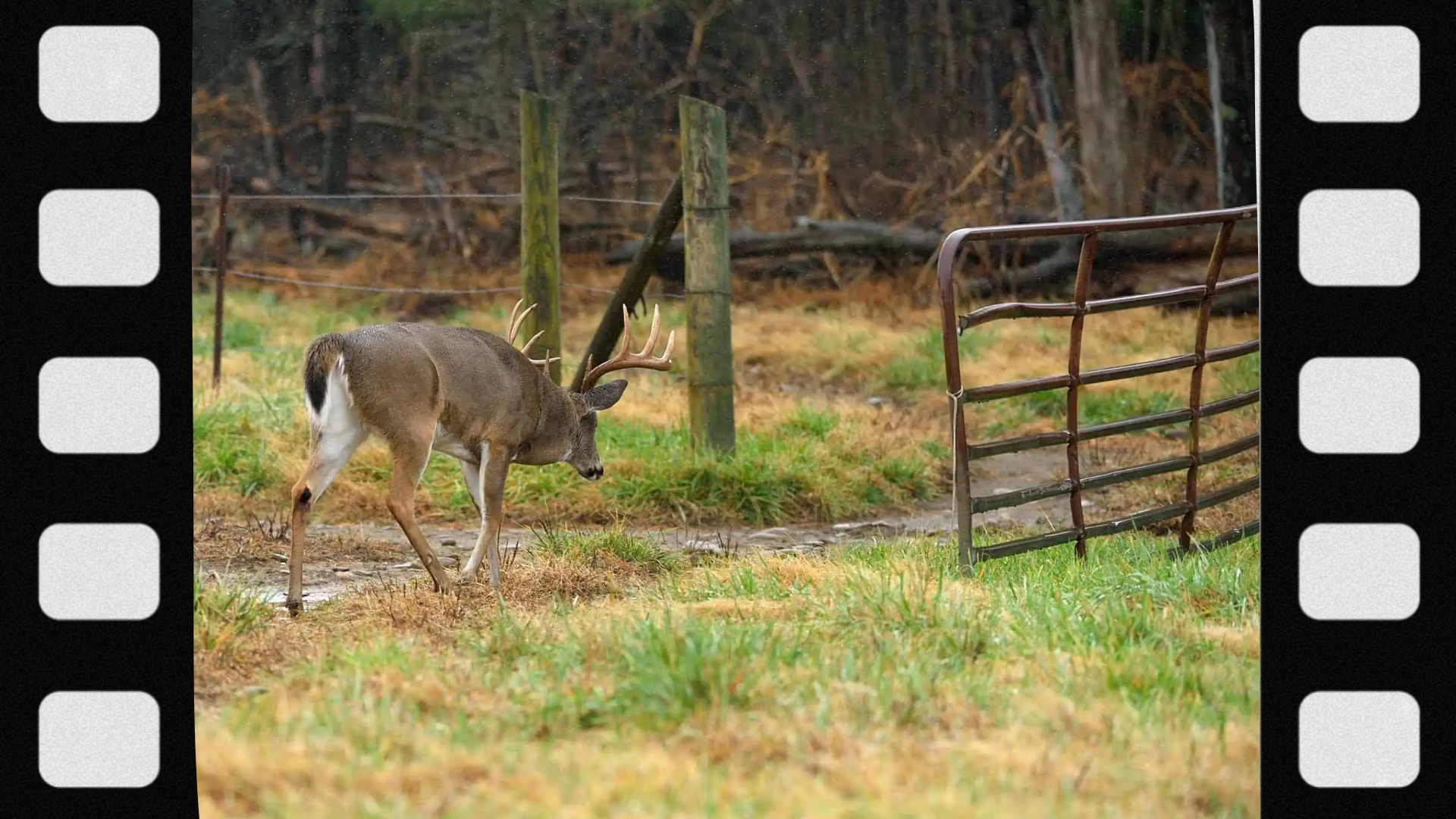
Fences, roads, agricultural edges, gates, and other human-created features can influence wildlife travel. A well-used opening in a fence, for example, may become a concentrated crossing point.
However, never assume that a trail crossing a fence, road, or property line gives you legal access. Property boundaries, road restrictions, hunting laws, and landowner permission always take priority.
Natural Funnels vs. Cover Funnels
| Funnel Type | Examples | What to Look For |
|---|---|---|
| Topographic funnel | Saddle, bench, steep hillside gap | Terrain that narrows practical travel |
| Water-related funnel | Creek crossing, pond edge, river bend | Easy crossings or narrow dry-ground passages |
| Vegetation funnel | Brush strip, timber neck, hedgerow | Continuous security cover |
| Habitat-edge funnel | Inside corner, timber-field intersection | Trails following habitat transitions |
| Human-influenced funnel | Fence gap, gate, agricultural edge | Legal, established crossings and current animal sign |
How to Find a Funnel on a Hunting Map
Modern aerial and topographic maps can help identify potential funnels before you enter the field.
Start with aerial imagery and look for places where large areas of cover become narrow. Wooded connections between larger timber blocks, inside corners, creek corridors, field edges, and narrow passages between water and cover are easy places to begin.
Then switch to a topographic view. Look for saddles, benches, ridges, draws, steep slopes, and places where contour patterns indicate that travel may be easier through one section than another.
The Massachusetts Division of Fisheries and Wildlife specifically notes that satellite imagery can be used to search for funnels and pinch points.
Map scouting should be treated as the first stage rather than proof that a location is productive.
How to Confirm a Deer Funnel in the Field
A promising map feature becomes much more useful when field evidence shows that deer actually travel through it.
Look for multiple pieces of evidence rather than relying on one isolated track.
- Well-defined deer trails
- Several trails converging toward a narrower area
- Fresh tracks
- Recent droppings
- Rubs where relevant to the season
- Scrapes where relevant
- Hair on frequently used crossings or fences
- Repeated trail-camera observations where cameras are legal
Illinois hunter-education guidance recommends identifying travel corridors through on-the-ground scouting and looking for consistently used game trails.
Fresh, repeated sign is generally more informative than an impressive-looking terrain feature with little evidence of current use.
How Wind Affects Hunting Funnels
Wind is especially important around funnels because the same feature that concentrates deer movement may also make your scent easier for approaching deer to encounter.
A promising funnel can therefore be a poor place to hunt under an unfavorable wind.
Illinois Learn to Hunt specifically advises hunters to consider wind direction when choosing locations and to avoid allowing their scent to blow toward expected deer movement.
Hilly terrain adds another complication because local air movement can change with temperature and terrain. Valleys, drainages, slopes, and saddles can produce air movement that differs from the general forecast.
Observe conditions in the field rather than assuming the forecasted wind direction tells the whole story.
Do Funnels Work Only During the Rut?
No. Funnels can influence travel whenever deer move through a landscape, including movements associated with feeding, bedding, security cover, or seasonal habitat changes.
The rut can make some funnels especially noticeable because deer, particularly bucks, may travel more widely while searching for receptive does. Massachusetts wildlife guidance specifically recommends considering funnels and pinch points during rut hunting.
Outside the rut, a funnel connecting bedding cover with feeding habitat may still receive regular use. However, the timing and intensity of use can change substantially throughout the season.
Are Funnels Good for Bow Hunting?
Funnels are commonly discussed by bowhunters because concentrated travel can make animal movement more predictable within a relatively limited area.
That does not mean every funnel produces an appropriate bow-hunting opportunity. Hunters still need to consider legal shooting hours, safe shot direction, background, range, animal position, personal accuracy, and whether the shot offers a responsible opportunity for a humane harvest.
Never take a marginal shot simply because an animal is passing through a promising funnel.
Can Funnels Be Useful for Rifle or Muzzleloader Hunting?
Yes. Terrain and cover can influence deer travel regardless of the legal hunting method being used.
However, firearm hunters must pay particular attention to safe fields of fire and what lies beyond the target. A funnel near a road, residence, livestock area, public trail, property boundary, or other occupied location may be inappropriate or illegal to hunt from a particular position.
Treat every firearm as if it is loaded, keep the muzzle pointed in a safe direction, keep your finger outside the trigger guard until ready to shoot, and positively identify both the target and what lies beyond it.
Funnels and Hunting Pressure
A funnel that receives regular deer traffic under low disturbance may change after hunting pressure increases.
Repeated human entry, scent, noise, vehicles, stand access, or other disturbances can alter how and when deer use a corridor. Animals may shift to another trail, travel at different times, or avoid exposed areas.
This is one reason preseason scouting should not be treated as a permanent prediction of deer movement.
Continue evaluating current sign during the season without unnecessarily disturbing bedding areas or heavily used travel routes.
Common Funnel Hunting Mistakes
Assuming Every Funnel Holds Deer
A narrow feature on a map is only a potential funnel. Confirm current use through scouting.
Ignoring Wind
A heavily used travel corridor is not automatically a good hunting location if your scent consistently reaches approaching animals.
Walking Through the Main Travel Route
Repeated disturbance along a concentrated trail can affect how deer use the area. Plan access carefully and avoid unnecessary intrusion.
Focusing Only on the Narrowest Spot
The narrowest point may look perfect on a map but have poor wind conditions, unsafe shooting directions, limited legal access, or little current sign.
Ignoring Property Boundaries
A travel corridor may cross multiple properties. Never assume an animal trail gives permission to enter neighboring land.
Expecting Guaranteed Movement
Funnels influence movement; they do not control it. Deer can change routes because of weather, pressure, food availability, cover, seasonal behavior, or disturbance.
Important Safety and Legal Considerations
A deer funnel is a scouting concept, not an exemption from hunting regulations or basic safety practices.
- Verify current hunting seasons, licenses, permits, tags, legal methods, and shooting-hour requirements.
- Know public and private property boundaries.
- Obtain landowner permission where required.
- Check rules that apply to roads, trails, buildings, waterways, and occupied areas.
- Use only legal hunting equipment for the species and season.
- Positively identify the animal before considering a shot.
- Know what is in front of and beyond the target.
- Stay within your demonstrated shooting ability.
- Follow applicable hunter-orange or visibility requirements.
- Make every reasonable legal effort to recover harvested game.
Regulations vary significantly by jurisdiction and can change between seasons. Always check the current regulations published by the wildlife agency responsible for the exact location where you plan to hunt.
Beginner Checklist for Evaluating a Deer Funnel
- Find the feature on a map. Look for narrowing cover, saddles, water crossings, inside corners, or other bottlenecks.
- Identify nearby habitat. Consider where feeding, bedding, water, and security cover are located.
- Scout the ground. Look for current trails, tracks, and other deer sign.
- Determine likely travel directions. Do not assume every trail is used equally in both directions or at all times.
- Evaluate the wind. Consider where your scent is likely to travel.
- Plan legal access. Avoid trespassing and confirm property boundaries.
- Evaluate safety. Identify safe shooting directions and what lies beyond potential targets.
- Watch for changes. Food sources, cover, hunting pressure, and seasonal behavior can alter funnel use.
FAQs
1. What is a funnel in hunting?
A funnel is an area where terrain, vegetation, water, or another landscape feature narrows animal movement into a smaller travel corridor.
2. What is a deer funnel?
A deer funnel is a terrain or cover feature that may concentrate deer travel. Examples include narrow timber connections, saddles, creek crossings, and passages between obstacles.
3. What is a pinch point in deer hunting?
A pinch point is a particularly narrow section of a travel corridor where available routes become more concentrated.
4. Are a funnel and a pinch point the same thing?
The terms are often used interchangeably. A useful distinction is that the funnel describes the broader narrowing feature, while the pinch point is its tightest section.
5. What does a deer funnel look like on a map?
It may look like an hourglass-shaped strip of timber, a narrow connection between cover areas, a saddle in a ridge, or a small passage between water and difficult terrain.
6. What is a natural deer funnel?
A natural funnel is created primarily by terrain, water, or vegetation rather than human structures. Saddles, creek crossings, and narrow strips between natural obstacles are examples.
7. What is a terrain funnel?
A terrain funnel occurs where the shape of the land influences animals toward a narrower travel route. Saddles and narrow passages between steep terrain are common examples.
8. What is a cover funnel?
A cover funnel occurs when vegetation narrows into a corridor, such as a strip of timber or brush connecting larger areas of cover.
9. Why do deer use funnels?
Funnels may provide practical travel routes, security cover, or passages around terrain and other obstacles. Deer use varies with habitat, season, food, weather, disturbance, and hunting pressure.
10. Do bucks use funnels?
Yes, bucks may use funnels, but individual movement varies. A funnel should be confirmed with current scouting evidence rather than assumed to be a buck travel route.
11. Do does use funnels?
Yes. Does can use the same travel corridors while moving between feeding, bedding, and other habitat areas.
12. Are funnels good during the rut?
They can be. Deer may cover more ground during the rut, and official Massachusetts wildlife guidance specifically identifies funnels and pinch points as useful terrain features to consider during this period.
13. Do deer use funnels before the rut?
They can. Funnels may be part of normal travel between feeding and bedding habitat regardless of breeding activity.
14. Do deer use funnels after the rut?
Yes, although movement patterns may change as food availability, weather, hunting pressure, and seasonal cover change.
15. Are saddles deer funnels?
A saddle can function as a terrain funnel when animals use the lower portion of a ridge as a crossing route.
16. Are creek crossings funnels?
They can be. Where steep banks, deeper water, or surrounding terrain make one crossing easier than others, travel may become concentrated there.
17. Can a fence gap be a deer funnel?
Yes. If deer regularly use an opening or easier crossing in a fence, movement can become concentrated there. Hunters still need to respect property boundaries and local laws.
18. Can roads create deer funnels?
Roads and associated habitat changes can influence wildlife movement, but hunting near roads may be restricted or unsafe. Always verify local regulations and maintain a safe shooting direction.
19. Can agricultural fields create funnels?
Yes. Field shapes, narrow timber strips, hedgerows, and inside corners can create travel features that influence deer movement.
20. How do you find funnels on public land?
Study aerial and topographic maps for narrowing cover and terrain features, then legally scout the area for current sign. Also check access rules and any area-specific restrictions.
21. How do you know if a funnel is active?
Look for multiple forms of recent evidence, such as well-used trails, fresh tracks, droppings, rubs, scrapes, or legal trail-camera observations.
22. Is a deer trail automatically a funnel?
No. A trail is a route animals use, while a funnel describes the landscape feature that concentrates one or more travel routes.
23. Are funnels always narrow?
They are narrow relative to the surrounding travel area, but the actual width can vary substantially depending on terrain and habitat.
24. Should you hunt directly in the narrowest part of a funnel?
Not automatically. Wind, access, legal boundaries, visibility, safety, and current animal sign should all influence where or whether you hunt the feature.
25. How important is wind when hunting a funnel?
Very important. Your scent can travel toward animals using the corridor, so evaluate actual wind and local air movement before choosing a hunting position.
26. Can hunting pressure ruin a funnel?
Repeated disturbance can change when or how deer use a corridor. They may switch routes or use the area at different times.
27. Can you find funnels with satellite imagery?
Yes. Satellite imagery can reveal timber necks, field corners, water barriers, and other habitat patterns. Massachusetts wildlife guidance specifically recommends map and satellite imagery as tools for locating potential funnels and pinch points.
28. Are topographic maps useful for finding deer funnels?
Yes. Topographic maps can reveal saddles, ridges, benches, drainages, steep slopes, and other terrain features that may influence movement.
29. Does finding a funnel guarantee deer?
No. A funnel identifies potential concentrated movement, not guaranteed movement. Current scouting evidence is necessary.
30. What should a beginner remember about hunting funnels?
Use maps to identify possibilities, confirm them through scouting, pay attention to wind and access, and never let a promising location override safety, property boundaries, or current hunting regulations.
Final Answer
So, what is a funnel in hunting? It is a landscape feature that narrows wildlife travel into a smaller corridor. In deer hunting, common funnels include saddles, narrow timber connections, creek crossings, inside corners, fence openings, and passages between terrain or water barriers.
The most important beginner lesson is that a funnel is not automatically a productive hunting location. Find potential funnels with aerial and topographic maps, verify them with fresh deer sign, evaluate wind and safe access, and expect movement to change with habitat conditions and hunting pressure.
Finally, treat hunting regulations and firearm or archery safety as non-negotiable. Verify current rules with the wildlife agency responsible for the land you hunt, respect property boundaries, positively identify your target, know what lies beyond it, and choose only safe, ethical shot opportunities.
Read more: