
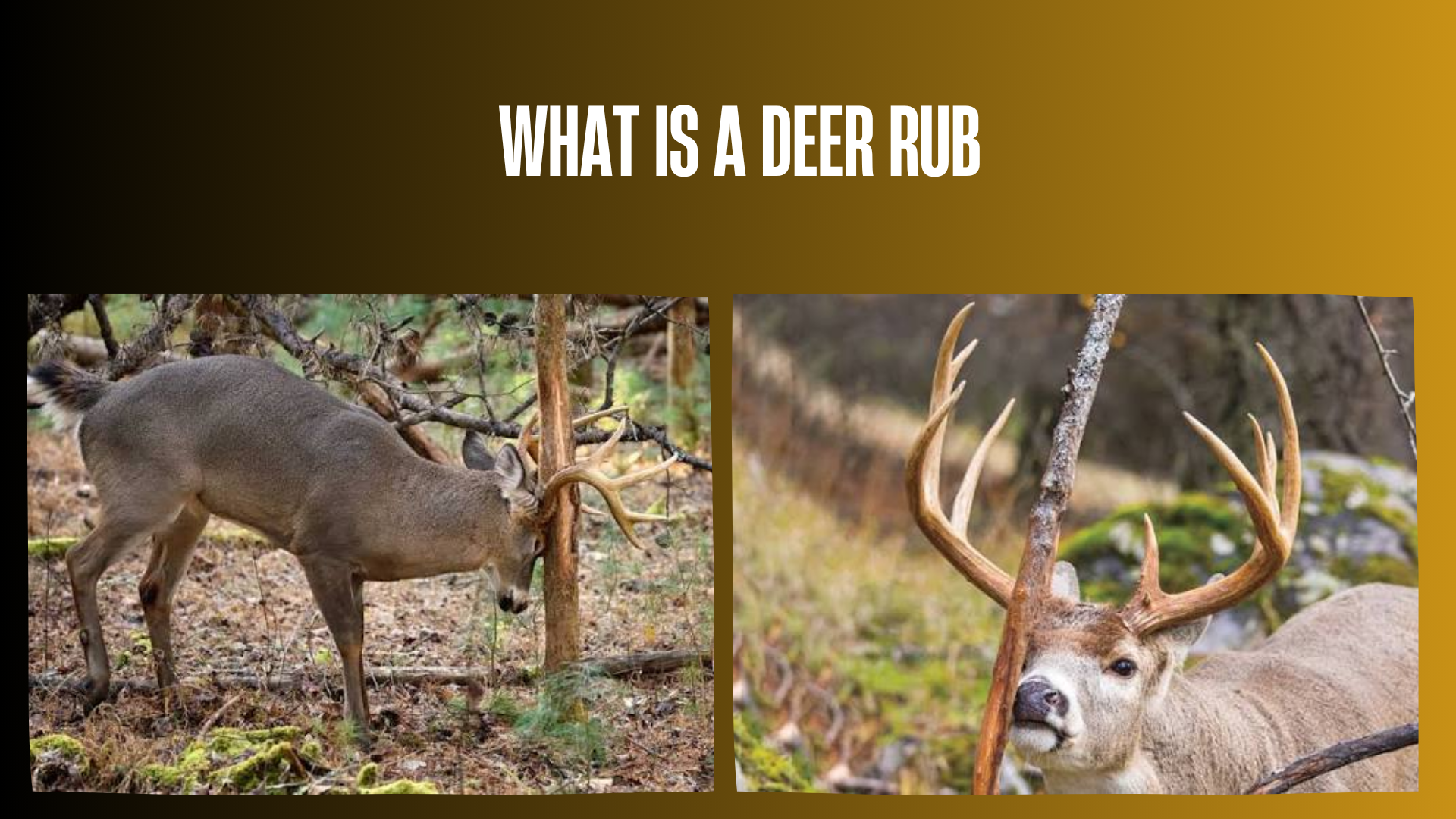

Quick Answer: What Is a Deer Rub?
A deer rub is an area of scraped, shredded, or polished bark created when a buck works his antlers and forehead against woody vegetation. Bucks initially rub as antlers harden and velvet dries, and rubbing can continue through the rut as exercise, antler maintenance, and a form of visual and scent communication. A fresh rub can confirm recent buck activity in an area, but one rub is only one piece of evidence. Hunters should examine nearby trails, tracks, droppings, cover, food, wind, terrain, and additional rubs before drawing conclusions—and must follow current access, trail-camera, baiting, and hunting rules.
Deer Rubs at a Glance
| Feature | What You May See | What It Can Tell You | What It Cannot Prove |
|---|---|---|---|
| Exposed wood | Light-colored inner bark or wood | The damage may be recent if color and moisture support it | The exact hour the rub was made |
| Shredded bark | Loose strips, fibers, or bark at the base | Antler action is a plausible cause | The buck’s age or antler score |
| Height and reach | Damage from low trunk upward, sometimes on branches | How the animal contacted that particular tree | A reliable body-size measurement |
| Several nearby rubs | A loose cluster or apparent rub line | The area has repeated or multiple buck use | That all rubs came from one deer |
| Rub face | One side may show heavier damage | The buck’s position during that rubbing event | A guaranteed travel direction |
| Old scar | Dark, dry, weathered wood or callused growth | Deer rubbed there in a prior period | Current-season occupancy |
How Bucks Make Deer Rubs
A buck usually approaches a woody stem, lowers or turns his head, and pushes the antlers and forehead into it. Repeated upward, downward, and side-to-side movements scrape or peel the bark. Tines may gouge the trunk, and antler beams can polish exposed wood. The forehead and hair may also contact the tree.
The result varies with the tree species, bark thickness, trunk diameter, moisture, antler shape, force, and number of visits. Smooth-barked saplings may show long pale strips. A rough-barked tree may display broken fibers, shallow gouges, or less obvious color contrast. Shrubs can be twisted or broken rather than cleanly peeled.
Deer are not the only source of tree damage. Equipment, livestock, rodents, bears, falling branches, vehicles, people, sunscald, disease, and normal bark shedding can create confusing marks. Identification is strongest when the height, texture, antler-width pattern, tracks, hair, and surrounding deer sign support the same conclusion.
Why Do Bucks Rub Trees?
Rubbing is not explained by one single motive throughout the season. Several functions can overlap:
Removing Dry Velvet
Antlers grow under a living, blood-rich covering called velvet. When growth is complete, the antlers harden and the velvet dries and comes off. The University of Missouri Extension’s white-tailed deer ecology guide notes that antler growth is generally completed by late August or early September in its region and that bucks rub away the drying velvet. Timing changes with latitude, local conditions, species, and individual deer.
Polishing and Working the Antlers
Rubbing removes remaining material and works the neck and shoulder muscles. Bucks may continue to rub long after visible velvet has disappeared. This continued behavior should not be reduced to “itch relief.”
Scent and Visual Communication
Contact with the forehead can leave odor at the site, while stripped bark provides a visible marker. Deer can investigate sign left by other deer. The University of Wisconsin Extension’s deer ecology lesson identifies forehead-and-antler rubbing as scent-related communication. It is more accurate to call rubs communication sign than to say every rub is a strict territorial boundary. Whitetail bucks generally use overlapping spaces and do not stand guard over each rubbed tree.
Seasonal Excitement and Social Behavior
As breeding season approaches, rising activity, interaction with other bucks, and changing social behavior can coincide with more rubbing. Some trees may be worked repeatedly, while others receive one brief encounter. A hunter cannot assign a precise motive to an individual rub simply by looking at the bark.
When Do Deer Rub Trees?
For white-tailed deer across much of North America, the first obvious rubs commonly appear near the transition from velvet antlers to hardened antlers in late summer or early fall. Rubbing often increases as fall advances and may continue through the rut. Exact dates are not universal. Latitude, photoperiod, deer species, health, age, local climate, and seasonal timing all influence what observers see.
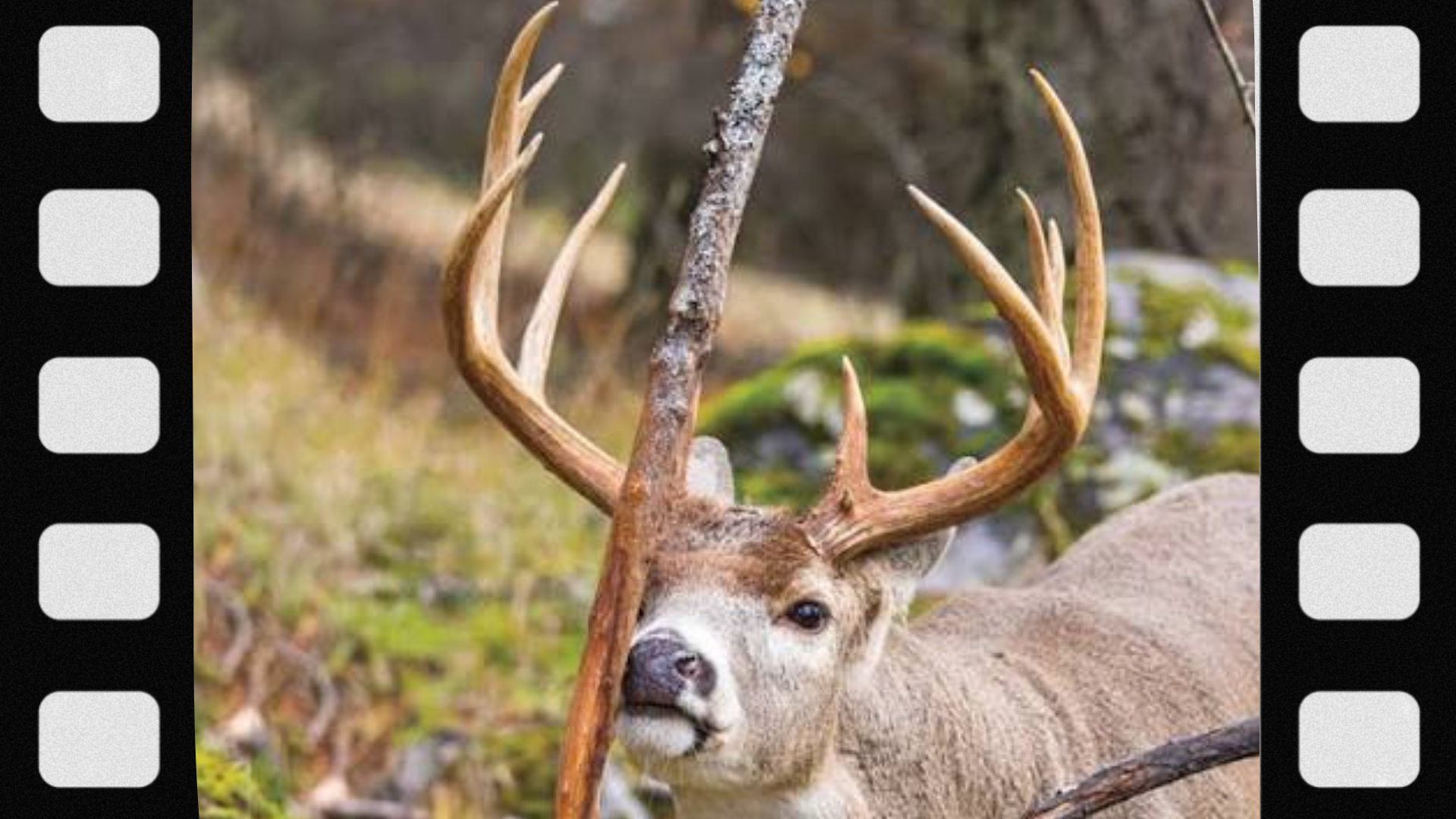
Rubs can remain visible for months or years, so seeing one in spring does not mean a buck rubbed the tree recently. After antlers are shed, an antlerless deer cannot create the same kind of fresh antler rub. Browsing, body rubbing, and other tree damage can still occur.
The safest field conclusion is relative: “This rub looks fresher than nearby weathered rubs,” not “This buck was here exactly last night.” Trail-camera timestamps where legal, new debris after known weather, and repeat visits can narrow the window more reliably.
How to Tell Whether a Deer Rub Is Fresh
No single freshness test works in every habitat. Use several clues together:
- Wood color: Newly exposed wood often looks pale or bright. It darkens with oxidation, rain, dust, and sun, but the rate differs among tree species.
- Moisture: A fresh wound may look moist or show sap. Rain can imitate moisture, and some trees produce little visible sap.
- Loose material: Fresh bark strips, damp fibers, or newly fallen shavings may lie near the base. Wind and precipitation can move them.
- Leaf condition: Recently broken green twigs differ from dry, brittle breakage. Seasonal leaf fall can confuse this clue.
- Weather history: A rub that remains bright after several days of rain may be newer than surrounding sign, but tree chemistry still matters.
- Associated sign: Sharp-edged tracks, fresh droppings, recently used trails, and multiple new rubs strengthen the case for current activity.
- Known baseline: Photos taken during repeated scouting visits are far more useful than memory alone.
Avoid touching or smelling every rub. Human scent and disturbance can alter a site, and repeated off-trail travel may educate deer, damage habitat, or violate area restrictions.
Deer Rub vs. Deer Scrape
| Feature | Rub | Scrape |
|---|---|---|
| Main location | Tree trunk, sapling, shrub, or woody stem | Bare or disturbed ground, commonly under an overhanging branch |
| How it is made | Antlers and forehead work against wood | Front hooves paw soil; deer may scent-mark the ground and licking branch |
| Typical evidence | Peeled bark, gouges, polished wood, broken twigs | Cleared leaves, exposed soil, tracks, worked overhead branch |
| Who visits | Antlered deer make the classic rub; other deer may investigate | Bucks are strongly associated with making scrapes, but does and other deer may visit |
| Best interpretation | Evidence of antlered-deer contact at that tree | A communication site that may receive repeated visits |
A rubbed tree may stand beside a scrape, but the terms are not interchangeable. A rub line is a series or concentration of rubbed trees. A scrape line is a pattern of ground scrapes. Both can relate to travel and communication, yet neither guarantees daylight activity.
What Can a Rub Tell Hunters?
A rub provides three dependable pieces of basic information: an antlered deer contacted the tree, antlers were hard enough to damage it, and the site existed before you found it. Nearly every other conclusion needs supporting evidence.
Presence
Fresh rubs confirm that at least one antlered deer used the area during the current hard-antler period. A cluster is generally more informative than an isolated rub beside a road, field edge, or random sapling.
Repeated Use of an Area
Rubs distributed along a trail, bench, ridge, field transition, creek crossing, or cover edge may indicate repeated buck movement through the broader area. They do not prove that one deer follows the line in sequence. Several bucks can use the same corridor, and the same buck can approach from different directions.
Habitat Context
The rub’s value increases when it fits a larger pattern. Ask what lies on either side: secure bedding cover, seasonal food, water, terrain funnels, road access, property boundaries, or human disturbance. A rub deep in cover may have a different hunting implication from one beside a nighttime feeding field.
Tree Preference
Bucks often select certain diameters or species available locally, especially flexible saplings and trees with bark that responds readily. Montana State University Extension’s tree-damage guide notes that male deer rub trees in fall and early winter and often affect immature smooth-barked trees. Local availability can shape the pattern as much as buck preference.
What a Rub Cannot Reliably Tell You
- Exact buck size: Large bucks can rub small trees, and smaller-antlered bucks can work larger or flexible trees.
- Age: Bark damage has no dependable conversion into years of age.
- Antler score: Rub height, tine marks, or trunk width do not provide the measurements required to score antlers.
- One-way travel: Damage on one face shows the animal’s position during contact, not necessarily its route before or after.
- Ownership by one buck: Several deer may rub the same tree or use the same line.
- Daylight movement: A rub may have been made at night.
- A guaranteed return: Many rubs are not revisited.
- Current presence from an old scar: Rubs can stay visible long after deer patterns change.
How to Scout Deer Rubs Step by Step
- Confirm that it is probably a rub. Examine height, bark pattern, antler-like gouges, nearby tracks, and other deer sign.
- Estimate relative freshness. Compare wood color, moisture, fibers, and debris with known old rubs on the same tree species.
- Widen the search. Look for more rubs, trails, tracks, droppings, scrapes, bedding cover, browse, mast, or field access.
- Read the terrain. Note ridges, saddles, benches, creek crossings, fence gaps, cover transitions, and other travel-shaping features.
- Map without overcommitting. Mark the location, date, freshness estimate, tree type, photos, wind, and related sign.
- Check access and wind. A promising sign location may be unhuntable if reaching it disturbs bedding cover or allows scent to blow into likely deer travel.
- Verify over time. Recheck sparingly or use a trail camera where legal. Let repeat evidence change the hypothesis.
- Choose a safe legal setup. Account for property boundaries, roads, trails, homes, livestock, other hunters, target identification, and a safe backstop.
A scouting map should contain questions, not promises. “Possible travel between bedding and acorns” is more useful than labeling one rub “big buck daylight route” without evidence.
Should You Hunt Directly Over a Deer Rub?
Sometimes, but not automatically. An isolated rub may have been made once, at night, or weeks earlier. Setting up directly beside it can increase noise, ground scent, and visual intrusion without improving the chance of seeing deer.
A better decision uses the surrounding system. Fresh clusters along a terrain-defined corridor, current tracks, favorable wind, undisturbed access, and legal camera history provide a stronger case. Even then, deer may change movement with food availability, weather, rut phase, hunting pressure, or a single disturbance.
Place any stand, saddle, or ground setup only where it is legal and safe. Elevated hunters should use a full-body fall-arrest system connected as the manufacturer directs, inspect equipment, maintain three points of contact, and haul unloaded equipment separately rather than climbing with it.
Safety, Access, and Legal Considerations
A rub does not grant permission to follow a trail across a boundary. Confirm ownership, public-land boundaries, closed areas, and access rules before scouting or hunting. Do not cut vegetation, clear lanes, install cameras, create mock sign, use attractants, or place equipment unless current rules and the landowner permit it.
Trail-camera rules increasingly vary among jurisdictions and land types. Bait, scent products, minerals, and mock scrapes may also be restricted, particularly in disease-management areas. Verify the current wildlife-agency regulations and specific land-manager rules immediately before use.
When hunting, positively identify the animal and confirm what lies beyond it. Treat every firearm as loaded, keep the muzzle pointed in a safe direction, keep your finger outside the trigger guard until ready to shoot, and never fire without a safe target and backstop. Bowhunters and firearm hunters should stay within their demonstrated accuracy and pass on uncertain shots.
Common Mistakes When Reading Rubs
- Assuming every scar is fresh: Compare color and condition with the same species of tree nearby.
- Judging a buck from trunk diameter: Treat tree size as a description of the rub, not a measurement of the deer.
- Following a supposed line too aggressively: Repeated intrusion can contaminate a travel area and bump deer from cover.
- Ignoring seasonal food: Deer movement can shift rapidly when crops, mast, browse, or weather changes.
- Hunting the sign instead of the wind: A close rub is not useful if access or wind exposes the hunter.
- Assuming one buck made everything: Shared habitat can hold rubs from several animals and several dates.
- Confusing rubs and scrapes: One is primarily tree damage; the other is primarily a worked patch of ground.
- Overlooking other causes: Confirm shape, height, tracks, and context before calling it deer damage.
- Crossing property lines: Maps and GPS can be imperfect; obtain permission and respect posted or marked boundaries.
- Using cameras or attractants without checking rules: Regulations can differ by state, unit, season, disease zone, and public-land manager.
Protecting Young Trees From Deer Rubs
In a yard, orchard, restoration plot, or timber stand, rubbing can strip bark and damage the living cambium. If injury circles most of a small trunk, water and nutrient transport may be severely disrupted. Prevention is usually more effective than trying to repair a heavily girdled tree.
Use a properly installed physical guard or sufficiently sturdy fence that prevents antler contact without trapping moisture against the bark, restricting trunk growth, or injuring wildlife. Inspect it regularly and follow local extension guidance for the tree species. Avoid loose wire, sharp materials, or entanglement hazards. Repellents vary in effectiveness and may have label, food-crop, weather, and legal limitations.
Do not destroy natural rub sites or alter habitat on land you do not own or manage. On public land, cutting, fastening material to trees, or modifying vegetation may be prohibited.
Final Answer: What Is a Deer Rub?
A deer rub is bark and woody-stem damage created when an antlered deer works its antlers and forehead against a tree or shrub. Bucks rub as velvet dries, to polish and exercise their antlers and neck, and as part of seasonal visual and scent communication. Fresh rubs are useful evidence of buck activity, especially when several align with current tracks, trails, terrain, food, and cover.
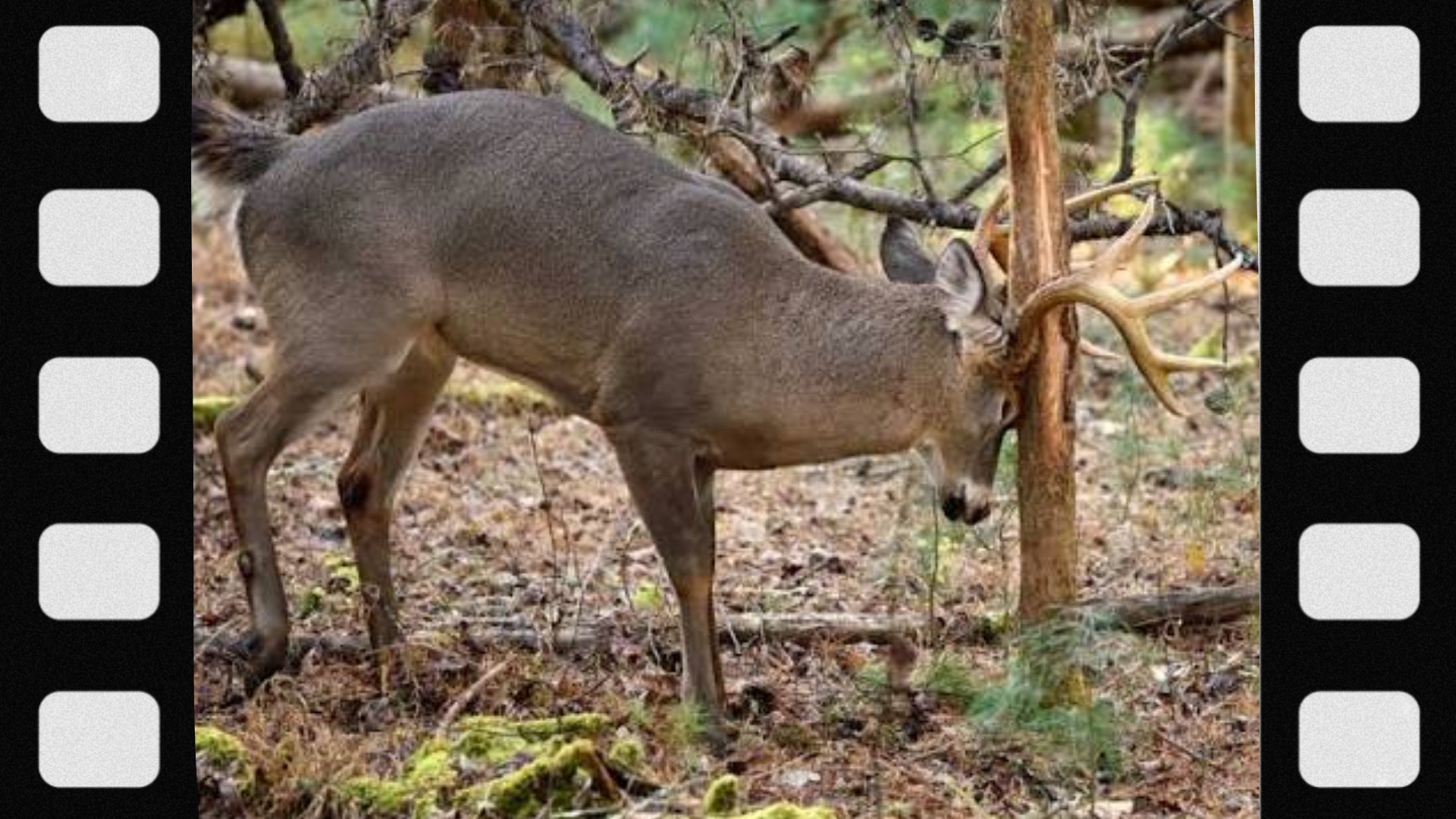
The disciplined interpretation is modest: a rub proves contact with that tree, not the buck’s age, score, direction, schedule, or future return. Scout the larger pattern, minimize disturbance, hunt with a safe wind and backstop, respect property boundaries, and verify current rules for cameras, attractants, access, and equipment. Official regulations always override general online guidance.
FAQs
1. What does a deer rub look like?
It usually appears as scraped, peeled, shredded, or polished bark on a sapling or tree trunk. Exposed wood may be bright when fresh and darker when weathered. Antler gouges, broken twigs, bark fibers, and nearby tracks can support identification.
2. Do only bucks make deer rubs?
The classic antler rub is made by an antlered deer, usually a buck in whitetail country. Other deer can investigate the site, and other kinds of body rubbing or browsing should not be confused with antler damage.
3. Why do deer rub velvet off their antlers?
Once antler growth finishes, blood flow to the velvet declines and it dries. Rubbing helps remove the dried covering. Bucks may continue rubbing after velvet is gone for maintenance, exercise, and communication-related behavior.
4. When do whitetail bucks start rubbing trees?
Commonly around the late-summer or early-fall hard-antler transition, but timing varies by latitude, individual, health, and year. Use local observation rather than one nationwide calendar date.
5. Do bucks rub trees during the rut?
Yes, rubbing can continue during the breeding season. Its frequency and visibility vary, and a rub does not prove that the buck is currently nearby or actively seeking does at that moment.
6. How long does a deer rub stay fresh-looking?
There is no fixed period. Tree species, sap, sunlight, rain, humidity, temperature, and wound depth change how quickly exposed wood darkens and dries.
7. Does a big rub mean a big buck?
Not reliably. Large bucks can rub large trees, but they also use small ones, and smaller bucks may work surprisingly large or flexible stems. Rub size alone cannot age or score a deer.
8. Can you estimate antler size from a rub?
No dependable method converts rub height, width, or tine marks into antler score. Branches, posture, slope, tree flexibility, and repeated use by multiple deer distort the evidence.
9. How high are deer rubs?
Many begin relatively low on a sapling and extend upward through the antler-contact area, but height varies with deer posture, terrain slope, tree shape, snow, and antler configuration. Height is not a precise body-size gauge.
10. What is a rub line?
A rub line is a sequence or concentration of rubbed trees that appears to follow a corridor or repeated-use area. It may reflect one or several bucks and does not necessarily represent a single one-way path.
11. Do bucks use the same rub line every year?
Some locations produce recurring rubs because terrain, cover, food, and preferred trees remain useful. The individual deer and exact route can change, so old rubs are historical clues rather than proof of current use.
12. Will a buck return to the same rub?
It may, especially at a repeatedly used signpost, but many trees are rubbed only once. A camera where legal or a low-impact recheck can establish whether the site receives repeat visits.
13. Which side of a rub shows deer travel direction?
The damaged face shows where the deer stood relative to the tree during contact. It does not prove the route it took before or after rubbing, so use trails, tracks, terrain, and multiple sign locations.
14. Are rubs made during the day or at night?
Both are possible. The rub itself carries no timestamp. Daylight activity must be supported by direct observation, legal camera records, or other time-specific evidence.
15. What is the difference between a rub and a scrape?
A rub is bark damage from antler and forehead contact. A scrape is a worked patch of ground, commonly under a licking branch, made and visited as a deer communication site.
16. Do does visit deer rubs?
Does can detect and investigate deer communication sign. However, a hunter should not assume every doe visits every rub or that a rub guarantees doe traffic.
17. What trees do bucks prefer to rub?
Preferences vary with local availability. Smooth-barked, flexible saplings often show obvious damage, while aromatic or visually prominent species may receive use in some areas. No tree species guarantees activity.
18. Why are some trees rubbed year after year?
The tree may stand in a durable travel corridor, retain a suitable shape, or function as a visible and scent-bearing signpost. Different bucks can contribute across years.
19. Can deer rubs kill trees?
Yes. Severe bark removal can interrupt the cambium and vascular tissues, especially when damage nearly circles a young trunk. Partial injury may heal, scar, invite disease, or deform growth.
20. How can I protect a tree from buck rubs?
Use a safe physical barrier or fence designed for the tree and site, installed before the rubbing period and checked regularly. Avoid tight wraps, sharp wire, and anything that traps moisture or entangles wildlife.
21. Should I place a trail camera on a rub?
A camera can test whether deer revisit the area, but first verify current camera rules, land-manager restrictions, permission, and placement requirements. Position it without damaging vegetation or encouraging theft or conflict.
22. Should I hunt directly beside a fresh rub?
Only if the broader evidence, wind, access, safety, and legal setup make sense. A nearby downwind corridor or terrain feature may be more useful than the exact tree.
23. Does human scent ruin a deer rub?
Human odor and disturbance can change deer behavior, but reactions vary with pressure and familiarity. Avoid handling the rub unnecessarily and use low-impact access rather than relying on scent-elimination claims.
24. Can multiple bucks rub the same tree?
Yes. A prominent or repeatedly used tree can receive contact from more than one buck. This is one reason a rub cannot be assigned to an individual without independent evidence.
25. Do mule deer and elk make rubs too?
Yes. Other antlered cervids rub woody vegetation as antlers harden and during seasonal behavior. Appearance, timing, tree choice, and habitat context differ by species and region.
26. Can a deer make rubs after shedding antlers?
Not classic antler rubs without antlers. A deer may still brush against vegetation, browse bark, or leave other damage, so examine the mark rather than assuming every fresh wound is a rub.
27. Are mock rubs or mock scrapes legal?
Rules depend on jurisdiction, land ownership, vegetation protection, scent products, bait definitions, and disease-management restrictions. Check the current wildlife and land-manager regulations before creating or modifying any sign.
28. Is finding many rubs a guarantee of hunting success?
No. Rub density shows past activity, not a guaranteed encounter. Season phase, wind, access, food changes, pressure, weather, and individual behavior still determine when and where deer move.
Read more: