
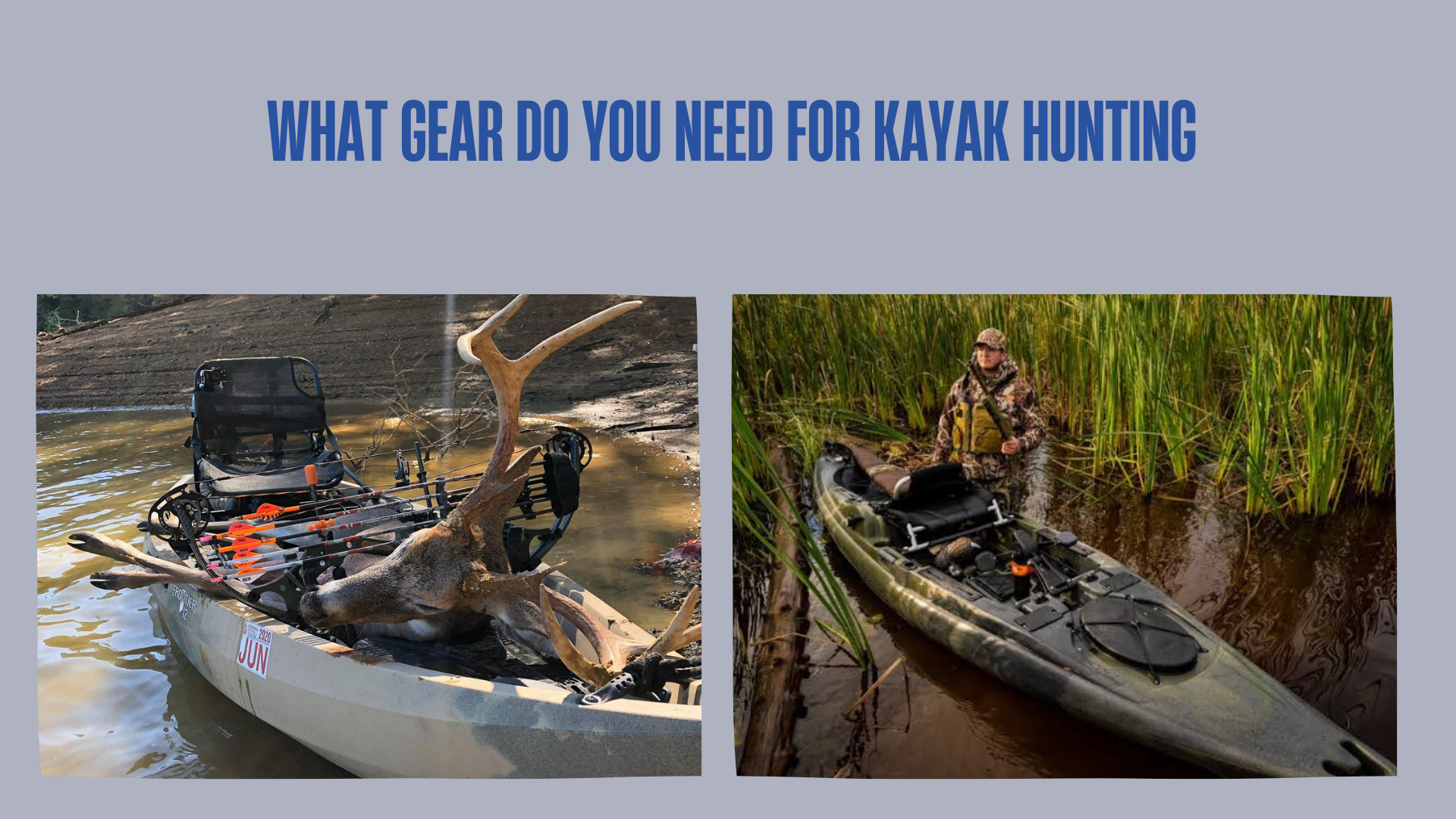

What gear do you need for kayak hunting? The essential setup includes a stable kayak suited to the water and total load, a properly fitted personal flotation device, a dependable paddle and backup propulsion option, cold- and wet-weather clothing, waterproof storage, navigation and communication tools, legally required hunting equipment, and a safe game-recovery plan.
Kayak hunting—most commonly kayak duck hunting—combines the risks of hunting, paddling, cold water, low light, weather, and limited carrying capacity. Your first priorities should therefore be flotation, stability, visibility, self-rescue ability, legal compliance, and keeping the load within the kayak manufacturer’s limits.
Quick Answer
For kayak hunting, you need a stable hunting-appropriate kayak, a worn personal flotation device, paddle, emergency signaling equipment, navigation, communication, lighting, cold-water protection, and dry storage for critical supplies. You also need current licenses and permits, a legal hunting method, required visibility equipment, decoys or calls if useful, and supplies for recovering and transporting game. Check the kayak manual, boating laws, hunting regulations, refuge rules, weather, tides, and water temperature before launching. Do not treat a kayak like a full-size hunting boat or load it beyond its rated capacity.
Kayak Hunting Gear at a Glance
| Gear Category | Examples | Priority | Main Check |
|---|---|---|---|
| Kayak | Stable sit-on-top or other suitable hunting kayak | Essential | Water type, combined load, stability, condition, and manufacturer limits |
| Flotation | Properly fitted, activity-appropriate PFD | Essential | Approval, fit, condition, mobility, and local requirements |
| Propulsion | Paddle, spare paddle, or legal pedal system | Essential | Condition, reach, secure storage, and ability to return if one system fails |
| Cold-water protection | Dry suit or wetsuit when conditions require it | Essential in hazardous cold water | Water temperature, air temperature, fit, and training |
| Communication | Waterproof phone, radio, whistle, satellite communicator | Essential | Coverage, charging, waterproofing, and local marine-radio practices |
| Navigation | Chart or map, compass, GPS, offline map | Essential | Tides, currents, boundaries, channels, launch points, and backup navigation |
| Lighting and visibility | Required navigation lights, headlamp, reflective marker | Required or essential | Local boating rules and low-light conditions |
| Waterproof storage | Dry bags and protective cases | Essential | Closure, flotation, attachment, and access |
| Hunting equipment | Legal hunting implement, compatible equipment, calls, decoys | Required or situational | Species, season, local law, secure transport, and safe handling |
| Recovery supplies | Gloves, game carrier, landing tool where legal, cooler at vehicle | Essential if harvesting | Kayak stability, legal retrieval, added weight, and meat care |
Important Safety and Legal Notice
Boating laws, hunting seasons, licenses, non-toxic-shot requirements, legal shooting hours, firearm-transport rules, PFD requirements, navigation-light rules, shell limits, launch restrictions, and rules about hunting from a vessel vary by jurisdiction. National wildlife refuges and other managed lands may impose additional rules.
For example, some refuges permit kayak access only at designated launches, restrict the areas where hunting from a boat is allowed, or require hunting equipment to remain unloaded and encased while the vessel is traveling. Always use the current regulation publication for the exact place you intend to hunt.
The U.S. Coast Guard’s life-jacket guidance recommends wearing an appropriately sized, serviceable, activity-appropriate life jacket while underway. Local requirements may be stricter.
Essential Kayak and Boating Equipment
1. A stable kayak matched to the hunt
The kayak must be appropriate for the water, weather, expected load, and your paddling experience. A design suited to protected marsh water may not be suitable for open bays, large lakes, surf, fast rivers, or exposed tidal areas.
Consider:
- Primary and secondary stability
- Manufacturer weight capacity
- Your body weight and clothing
- Weight of hunting equipment, decoys, batteries, and accessories
- Possible weight of recovered game
- Storage layout and tie-down points
- Ease of re-entry after a capsize
- Ability to paddle effectively in wind
- Drainage and water management
- Transport and launching requirements
Do not use the advertised maximum capacity as a packing target. Performance, freeboard, handling, and stability may deteriorate as the load increases. Follow the kayak manufacturer’s instructions and leave a practical safety margin.
2. A personal flotation device you actually wear
Wear a properly fitted PFD designed and approved for the activity and jurisdiction. It should remain secure without riding up and allow you to paddle, reach safety equipment, and remount the kayak.
A stored PFD may be difficult or impossible to put on after an unexpected capsize, particularly in cold water. The National Park Service’s kayak safety guidance emphasizes wearing the PFD rather than relying on access to it after entering the water.
Inspect straps, buckles, flotation material, inflation components, and outer fabric according to the manufacturer’s directions. Do not use a damaged, poorly fitting, or expired device.
3. A reliable paddle and backup plan
Choose a paddle matched to the kayak’s width and your paddling position. Inspect the shaft, blades, ferrule, and adjustment points before launching.
A compact spare paddle is valuable because losing or breaking the primary paddle can leave you stranded. Store both so they remain accessible without creating a snag or interfering with safe movement.
4. Water-removal and recovery equipment
Depending on the kayak design, carry equipment such as a manual bilge pump, sponge, or another manufacturer-recommended means of removing water. Sit-inside kayaks may require different recovery equipment from self-draining sit-on-top models.
Practice controlled capsizes, wet exits, and re-entry in safe conditions with qualified instruction. Hunting equipment, cold-weather clothing, waders, waves, and a heavy load can make recovery substantially harder than recreational practice in warm, calm water.
5. Required navigation lights and visibility equipment
Kayak hunters frequently launch before dawn or return near dusk. Carry and display the lights required for your type of vessel, location, and operating conditions.
A headlamp is useful for organizing equipment but may not satisfy vessel-lighting rules. Carry backup lighting and avoid creating glare that damages your night vision or obscures the navigation lights of other boats.
6. Signaling equipment
Carry a whistle or other locally required sound-producing device where you can reach it while wearing your PFD. Depending on the water and local regulations, additional visual distress signals may be required or advisable.
Keep signaling equipment attached to the PFD or otherwise accessible after a capsize—not buried in a sealed compartment.
Cold-Water and Weather Protection
Many waterfowl seasons occur when the water is dangerously cold. Air temperature alone does not indicate immersion risk. Sudden entry into cold water can affect breathing, muscle control, judgment, and the ability to self-rescue.
Dress for the water, not only the air
A dry suit or wetsuit may be appropriate depending on water temperature, conditions, exposure time, and local safety guidance. These garments require correct fit and use. A dry suit still needs suitable insulating layers beneath it.
The National Park Service’s paddling guidance stresses wearing a life jacket, using cold-water protection, practicing rescue skills, paddling with others, and leaving a float plan.
Layer clothing carefully
- Use moisture-managing base layers.
- Add insulation appropriate to the temperature.
- Protect against wind and precipitation.
- Carry dry replacement clothing in a sealed dry bag.
- Protect hands and head without limiting paddling control or hearing.
- Avoid depending on cotton in cold, wet conditions.
Understand the limitations of waders
Waders may be useful when launching, retrieving decoys, or moving in shallow water, but they are not flotation devices. They should never replace a PFD or proper immersion protection.
Practice water-entry and recovery skills under qualified supervision while wearing the exact clothing system you plan to use. Do not deliberately enter deep or moving water simply because you are wearing waders.
Navigation, Weather, and Communication Gear
Waterproof navigation
Carry a waterproof map or chart and compass, and know how to use them. GPS units and offline mapping applications are useful, but cold temperatures, water, impact, and battery failure can disable electronics.
Mark:
- Your launch and parking location
- Your planned hunting area
- Channels and shallow hazards
- Public and private boundaries
- Closed areas and safety zones
- Emergency landing points
- Alternate return routes
Weather and tide information
Check wind direction and speed, precipitation, visibility, temperature, tide, current, wave conditions, and any marine advisories. Recheck immediately before launch because a forecast viewed the previous evening may no longer be reliable.
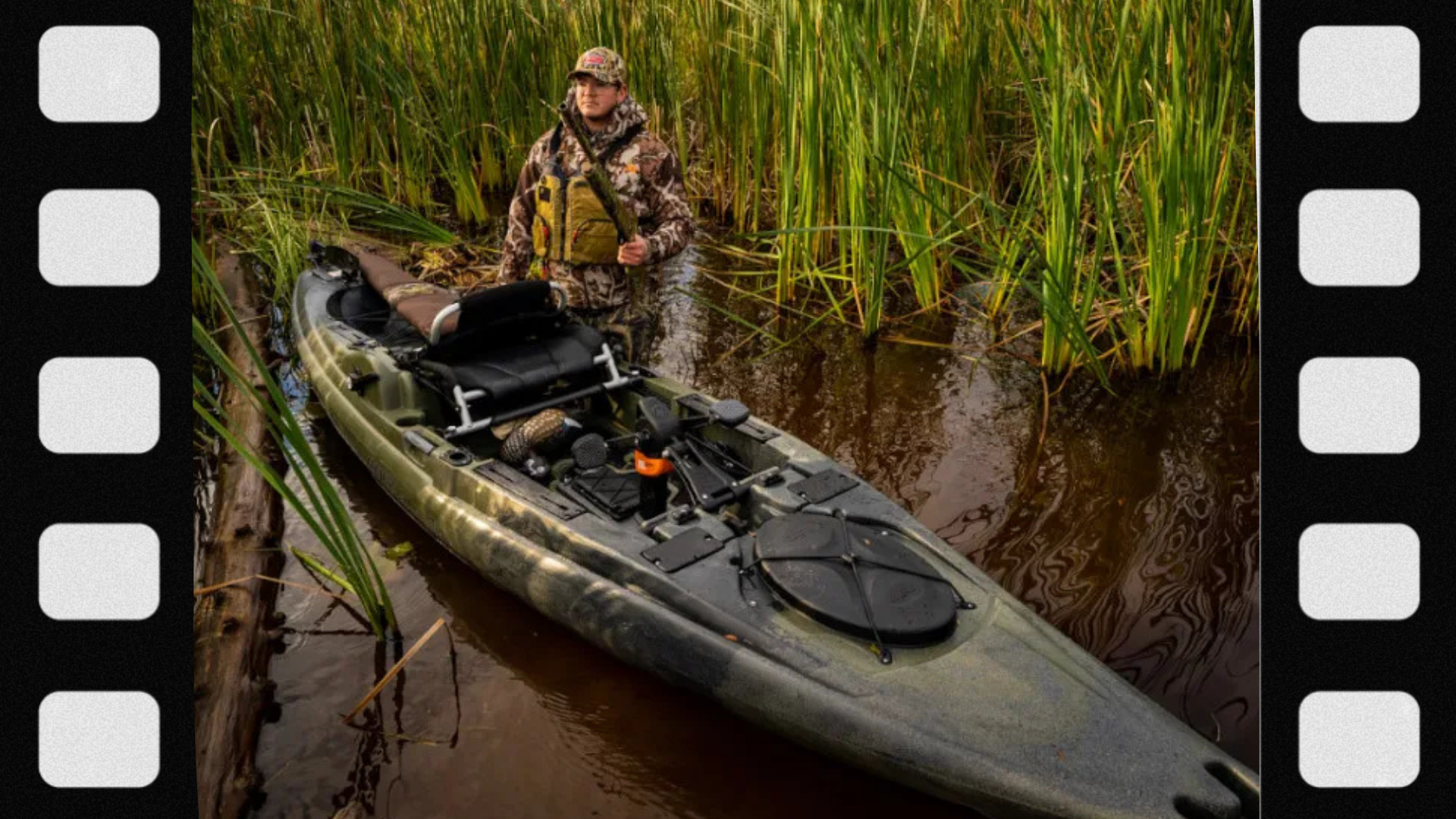
Tides can expose mudflats, reverse currents, cover landmarks, or leave a heavily loaded kayak unable to return through shallow water. Wind can turn a manageable paddle out into an exhausting or impossible return.
Communication tools
Carry a charged phone in a waterproof, accessible case. In areas without dependable cellular coverage, consider an appropriate marine radio, satellite communicator, or personal locator beacon.
Know how to operate the device, keep it attached or accessible after a capsize, and follow the relevant communication rules. A device buried under decoys is not useful during an emergency.
Leave a float plan
Give a dependable person your:
- Name and contact information
- Hunting partners’ names
- Launch location
- Planned route and hunting area
- Departure and expected return times
- Kayak color, make, and general description
- Vehicle description and parking location
- Communication equipment
- Instructions for what to do if you are overdue
Cancel the float plan when you return. The National Park Service’s float-plan guidance recommends including detailed vessel, vehicle, route, and schedule information.
How to Store Hunting Equipment on a Kayak
Keep the kayak balanced from side to side and front to rear. Store heavy items low and near the kayak’s designed center of load when the manufacturer’s layout allows it. Avoid stacking gear high because it catches wind and raises the center of gravity.
Use waterproof or floating cases as appropriate, and secure equipment so that it cannot slide, fall overboard, block your exit, or interfere with paddling. Do not create a web of cords that can entangle you during a capsize.
Transport and handling rules vary. In some areas, hunting equipment must be unloaded, cased, or otherwise secured while traveling. Load only when legally permitted and when you have reached a stable hunting position. Follow the equipment manufacturer’s manual and every applicable boating, refuge, and hunting regulation.
Essential Hunting Equipment
Licenses, permits, and documentation
Carry the current hunting license, species stamps or validations, refuge permit, vessel documentation where applicable, and any required hunter-education evidence. Use a waterproof document case unless electronic documentation is specifically accepted.
A legal hunting implement and compatible equipment
Use only a hunting method that is legal for the species, season, location, and vessel-based activity. Make sure all equipment is compatible and in good working condition. Practice safe loading, unloading, and handling before the hunt.
Never shoot from an unstable position, across another person, over an unsafe area, toward an unidentified target, or without knowing what lies beyond the target. The limited space and changing orientation of a kayak demand additional restraint.
Required non-toxic ammunition where applicable
Waterfowl and some managed areas may require approved non-toxic ammunition. Other restrictions, including shell limits, can also apply. Verify the current federal, state, provincial, refuge, and local rules rather than relying on a general recommendation.
Calls and decoys
Calls and decoys are useful but not safety essentials. Start with a modest setup that fits the kayak without exceeding capacity or compromising paddling.
Store decoy lines so they cannot wrap around your feet, paddle, PFD, dog, or hunting equipment. Keep anchors contained and avoid loose weights moving inside the kayak.
A compact blind or concealment system
Use only a concealment system designed for your kayak and allowed at the hunting location. It must not block your view, interfere with paddle access, trap you during a capsize, hide required lights, or make the kayak excessively vulnerable to wind.
Anchoring and Positioning Equipment
An anchor system may help hold position, but it introduces entanglement, current, and stability hazards. Use only a system compatible with the kayak and follow its manufacturer’s instructions.
- Keep a safe method of releasing the anchor quickly.
- Do not wrap anchor line around your body or limbs.
- Keep the line organized to reduce entanglement.
- Do not anchor broadside to strong current, waves, or wind.
- Do not exceed the kayak manufacturer’s recommendations.
- Avoid anchoring in channels or where other vessels need to pass.
A stake-out pole may be useful in shallow, calm water where legal and suitable, but it does not make every location safe. Assess the bottom, current, wind, depth, and changing tide before using any positioning system.
Game and Decoy Recovery Gear
Plan recovery before hunting. Useful items can include:
- Protective gloves
- A game carrier
- A legal retrieval tool
- Binoculars
- Waterproof markers or saved waypoints
- Dry bags
- Cooler and ice waiting at the vehicle
- Cleaning supplies appropriate to local rules
Do not stand suddenly or lean far over the side to reach a bird, decoy, or dropped item. Reposition the kayak and keep your body centered. Entering cold or deep water to retrieve equipment or game may be more dangerous than the item is worth.
Follow tagging, possession, transport, and retrieval requirements. Do not enter closed land or private property without authorization.
Kayak Hunting With a Dog
Adding a dog changes the kayak’s load, balance, space, and capsize risk. The dog must be calm, trained around boats and hunting activity, and physically able to handle the conditions.
Consider:
- A properly fitted canine flotation device
- A stable designated riding position
- Non-slip deck traction
- Fresh water and a collapsible bowl
- Cold protection appropriate to the dog
- First-aid supplies
- A controlled method for entering and leaving the kayak
- The effect of a wet dog climbing aboard on stability
Practice in warm, calm, shallow water before hunting. Never secure a dog to the kayak with a tether that could trap it during a capsize. If the combined load or layout becomes unsafe, use a more suitable vessel or leave the dog ashore.
Printable Kayak Hunting Checklist
Kayak and paddling
- □ Kayak inspected and suitable for the water
- □ Total load checked against manufacturer limits
- □ Properly fitted PFD worn
- □ Primary paddle
- □ Spare propulsion option
- □ Bilge pump or water-removal tool if applicable
- □ Signaling whistle
- □ Required navigation lights
- □ Headlamp and backup light
- □ Quick-access emergency equipment
Cold-water and weather protection
- □ Dry suit or wetsuit when conditions require it
- □ Moisture-managing base layers
- □ Insulation
- □ Wind and rain protection
- □ Hat and gloves
- □ Dry spare clothes in a sealed bag
- □ Sun and insect protection when needed
Navigation and communication
- □ Waterproof map or chart
- □ Compass
- □ GPS or downloaded offline map
- □ Waterproof phone protection
- □ Portable power
- □ Radio, satellite communicator, or locator beacon if appropriate
- □ Weather, tide, and current information checked
- □ Float plan left with a reliable person
Hunting equipment
- □ Current license, stamps, permits, and identification
- □ Legal hunting equipment inspected
- □ Correct compatible ammunition or archery equipment
- □ Waterproof or floating protective case
- □ Required high-visibility clothing
- □ Eye and hearing protection
- □ Calls and legal decoys if used
- □ Decoy lines and anchors organized
- □ Legal concealment system if used
Emergency and recovery supplies
- □ First-aid kit and personal medication
- □ Water and food
- □ Emergency shelter
- □ Fire-starting equipment where legal and safe
- □ Protective gloves
- □ Game carrier or retrieval tool
- □ Cooler and cooling supplies at the vehicle
- □ Basic repair kit
Common Kayak Hunting Mistakes
Overloading the kayak
Hunters may calculate their own weight but forget the weight of clothing, water, decoys, anchors, batteries, a dog, and recovered game. Weigh the complete load and remain within the manufacturer’s instructions with a practical safety margin.
Stowing instead of wearing the PFD
A life jacket cannot protect you effectively if you cannot reach or put it on after an unexpected capsize. Wear it throughout the trip.
Dressing for air temperature
A mild afternoon can still involve dangerously cold water. Select clothing according to immersion risk, not simply the forecasted air temperature.
Skipping self-rescue practice
A hunter who has never remounted a loaded kayak may discover that it is much harder than expected. Practice with qualified instruction in controlled conditions.
Carrying too many decoys
A large spread is not useful if it makes the kayak unstable or impossible to paddle against wind. Begin with a compact system appropriate to your vessel and location.
Ignoring tides and wind
A route that is easy before sunrise may become dangerous or impassable later. Plan the entire round trip and establish conservative cancellation and turnaround limits.
Leaving loose lines across the deck
Decoy, anchor, paddle, and equipment cords can create entanglement hazards. Organize them carefully and keep your exit path clear.
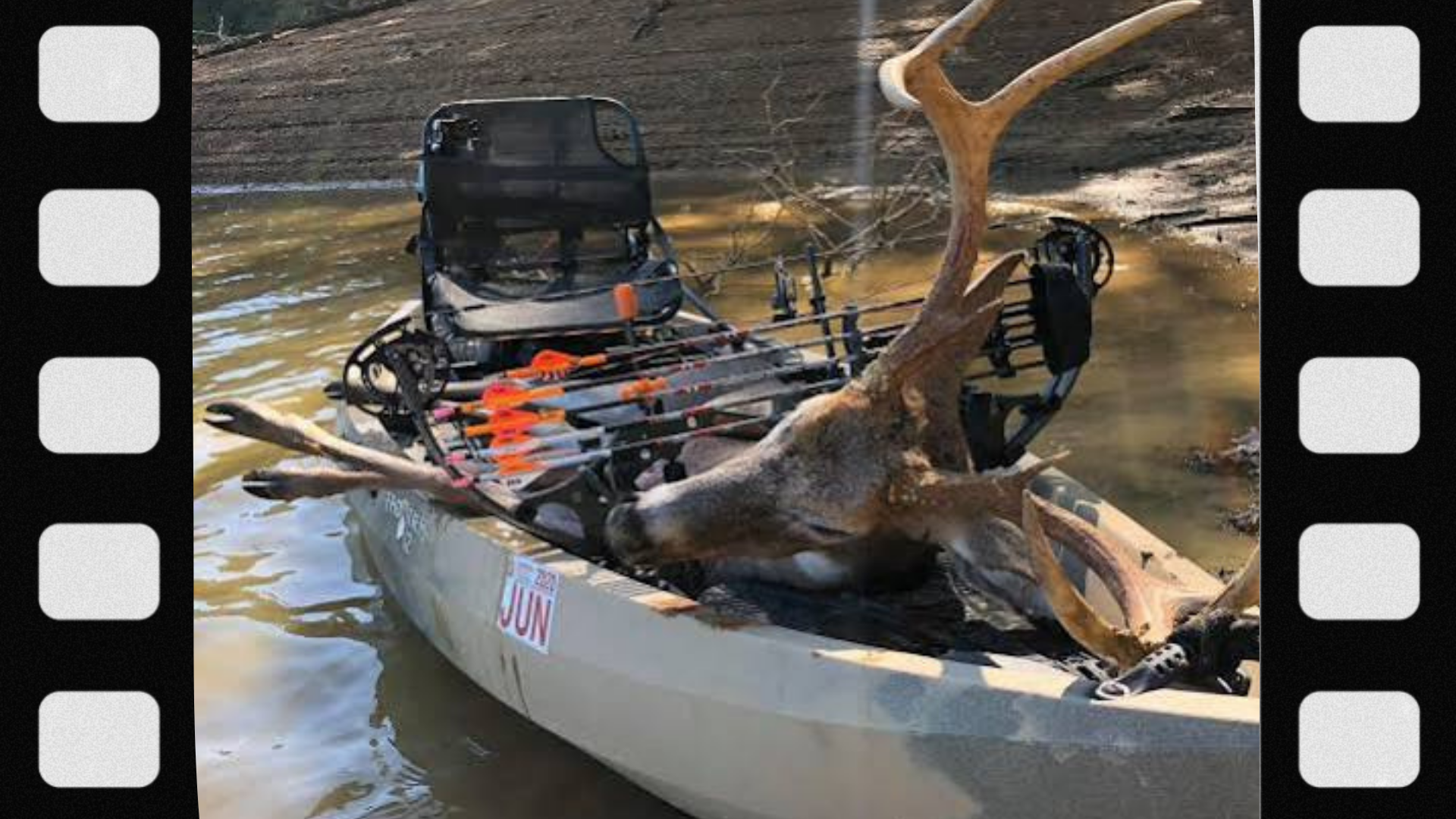
What Not to Do
- Do not launch without wearing a properly fitted PFD.
- Do not exceed the kayak’s rated capacity or ignore changes in handling caused by load.
- Do not hunt unfamiliar open water alone in poor conditions.
- Do not rely only on a phone for navigation or emergency communication.
- Do not shoot from an unstable, drifting, or unsafe position.
- Do not point hunting equipment toward a partner, dog, vessel, road, building, or unidentified movement.
- Do not use loose cords that can entangle your body during a capsize.
- Do not stand in a kayak unless the design, conditions, and manufacturer instructions support it and you have practiced safely.
- Do not cross restricted zones or private property to recover game.
- Do not continue when wind, waves, current, fog, ice, fatigue, or cold exceeds your abilities.
Final Answer
What gear do you need for kayak hunting? Start with a stable kayak suitable for the water and complete load, a worn PFD, dependable propulsion, cold-water clothing, waterproof storage, lighting, signaling, navigation, communication, and emergency supplies. Add current hunting documents, legal hunting equipment, a compact decoy or call setup, and a safe game-recovery plan. Check local hunting and boating regulations, practice capsize recovery, leave a float plan, and cancel the hunt whenever water or weather conditions exceed your experience.
FAQs
1. What type of kayak is best for hunting?
A stable kayak with sufficient usable capacity, secure storage, and handling appropriate to the water is generally preferable. The best design depends on whether you hunt protected marshes, rivers, tidal bays, or larger lakes.
2. Is a sit-on-top or sit-inside kayak better for hunting?
Each has advantages and limitations. Sit-on-top models can offer open storage and easier remounting, while some sit-inside models provide more weather protection. Stability, water type, recovery skill, and manufacturer limits matter more than the category alone.
3. Can any fishing kayak be used for hunting?
Not automatically. Confirm that its capacity, stability, storage, hull design, and water rating suit the complete hunting load and expected conditions.
4. Do you need a PFD for kayak hunting?
Yes. Wear a properly fitted, activity-appropriate PFD. Legal requirements vary, but wearing it throughout the trip provides protection when a capsize happens without warning.
5. Can I store my life jacket behind the seat?
That is unsafe even where carriage alone may satisfy a minimum legal rule. A stored PFD may be impossible to put on after entering cold, rough, or moving water.
6. Do I need a dry suit for kayak hunting?
It depends on water temperature, air temperature, exposure, and conditions. In cold water, a dry suit or suitable wetsuit may be an essential part of the safety system. Seek local paddling guidance.
7. Are waders safe in a kayak?
Waders are not flotation or complete immersion protection. Wear a PFD and obtain qualified training on capsize recovery in the clothing system you intend to use.
8. Should I carry a spare paddle?
Yes, especially when hunting away from an easy shoreline or vehicle. Store it where it is secure but accessible.
9. Do I need a paddle leash?
A purpose-built leash may prevent paddle loss, but any line can create an entanglement hazard. Evaluate the water, organize it carefully, and avoid wrapping it around your body.
10. What lights are required on a hunting kayak?
Requirements vary by location, vessel type, and operating time. Check the current boating rules and do not assume a headlamp substitutes for required navigation lights.
11. Do I need a whistle?
A whistle is compact, effective, and required in many boating situations. Attach it where you can reach it while wearing your PFD.
12. Should kayak hunters carry a marine radio?
A marine radio may be appropriate on coastal, tidal, or large open waters. Learn the local channels and operating practices before relying on it.
13. Is a phone enough for emergency communication?
Not in areas with unreliable coverage. A waterproof phone is useful, but remote hunts may require a radio, satellite communicator, or locator beacon.
14. What should be included in a kayak float plan?
Include your route, launch, hunting area, departure and return times, kayak description, vehicle information, partners, communication equipment, and overdue-response instructions.
15. How much gear can I put in a hunting kayak?
Stay within the manufacturer’s limits while accounting for every item, your clothing, and recovered game. Do not treat the maximum rating as the ideal operating load.
16. How should weight be distributed?
Keep weight low and balanced according to the kayak manufacturer’s design. Prevent heavy items from sliding and test the loaded kayak in controlled conditions.
17. How many decoys can a kayak carry?
There is no universal number. It depends on decoy size, kayak capacity, hunter weight, other equipment, water conditions, and safe freeboard.
18. Do I need an anchor?
Not always. An anchor may help in appropriate water, but it adds weight and introduces current and entanglement hazards. Use a compatible quick-release system and proper training.
19. Is a stake-out pole safer than an anchor?
It may be simpler in shallow, calm water but is not suitable everywhere. Bottom type, current, wind, depth, tide, and local rules determine whether it is appropriate.
20. Can I stand and shoot from a kayak?
Standing greatly changes stability and may be unsafe. Do so only if the kayak is designed for it, the conditions are controlled, it is legal, and you have practiced. A seated stable position is often the safer choice.
21. Can you legally hunt from a kayak?
It is permitted in some places and prohibited or restricted in others. Rules may govern vessel movement, loading, shooting position, access, safety zones, and methods.
22. Should hunting equipment be loaded while paddling?
Transport and vessel rules differ. Keep equipment safely secured and follow local requirements, which may require it to remain unloaded or encased while traveling.
23. How should hunting equipment be stored on a kayak?
Use a suitable waterproof or floating protective case secured within reach but away from paddle movement, loose decoy lines, and your capsize exit path.
24. How do I keep equipment dry?
Use properly closed dry bags and water-resistant or waterproof cases appropriate to each item. Protect critical electronics and spare clothing separately.
25. Should every item be tied to the kayak?
No. Secure important equipment without surrounding yourself with entangling cords. Use minimal, organized attachment points and keep your body and exit path free.
26. Do kayak hunters need hunter orange?
Requirements depend on the species, season, and jurisdiction. Waterfowl clothing is often camouflage, but other overlapping seasons or local rules may require visibility colors.
27. What navigation gear should I carry?
Carry a waterproof map or chart, compass, and preferably GPS or an offline map. Learn tides, currents, channels, boundaries, and alternate landing areas.
28. Can I kayak hunt alone?
Solo hunting increases the consequences of capsizing, injury, and equipment failure. Paddling with a capable partner is safer, particularly in cold, tidal, remote, or unfamiliar water.
29. What wind speed is too high for kayak hunting?
There is no universal number. Safe limits depend on the water, kayak, direction, fetch, current, load, temperature, and paddler experience. Use conservative personal limits.
30. How do tides affect kayak hunting?
Tides can change current strength, water depth, access routes, mud exposure, landing options, and the effort required to return. Plan using reliable local tide and weather information.
31. How should I prepare for a capsize?
Wear a PFD and suitable immersion clothing, keep emergency communication accessible, secure equipment without entanglement, and practice self-rescue with qualified instruction.
32. Can a dog ride in a hunting kayak?
Only if the kayak can safely handle the combined load and the dog is trained for calm boat behavior. Use a canine PFD and practice boarding and re-entry in controlled conditions.
33. Should a dog be tied to the kayak?
No. A tether can trap the dog during a capsize. Maintain control through training and an appropriate riding area rather than a dangerous fixed connection.
34. How do you retrieve game from a kayak safely?
Approach slowly, keep your weight centered, and use a legal retrieval tool if appropriate. Avoid standing, lunging, or leaning far over the side.
35. What first-aid supplies should kayak hunters carry?
Carry wound-care and bleeding-control supplies appropriate to your training, blister care, protective gloves, emergency warmth, and personal medication in waterproof storage.
36. Do I need a bilge pump?
It depends on the kayak design. Sit-inside and certain decked kayaks may need a pump, while self-draining models manage water differently. Follow the manufacturer’s recommendations.
37. What repair gear should I carry?
A compact kit may include manufacturer-compatible temporary repair materials, basic tools, spare fasteners, and a method for addressing minor seat or rigging problems. Major hull damage requires evacuation rather than improvisation.
38. How should I transport harvested game?
Account for the added weight and keep the load balanced and secured. Tag and cool the game as required, and have a cooler or processing plan ready at the vehicle.
39. What is the biggest kayak hunting mistake?
Overconfidence is one of the most serious mistakes—especially overloading the kayak, launching into marginal weather, or assuming a PFD and expensive gear replace paddling and self-rescue skills.
40. Where should I verify kayak hunting rules?
Check the current wildlife-agency regulations, boating authority requirements, land-manager or refuge rules, and the kayak and equipment manufacturers’ instructions.
Read more: