
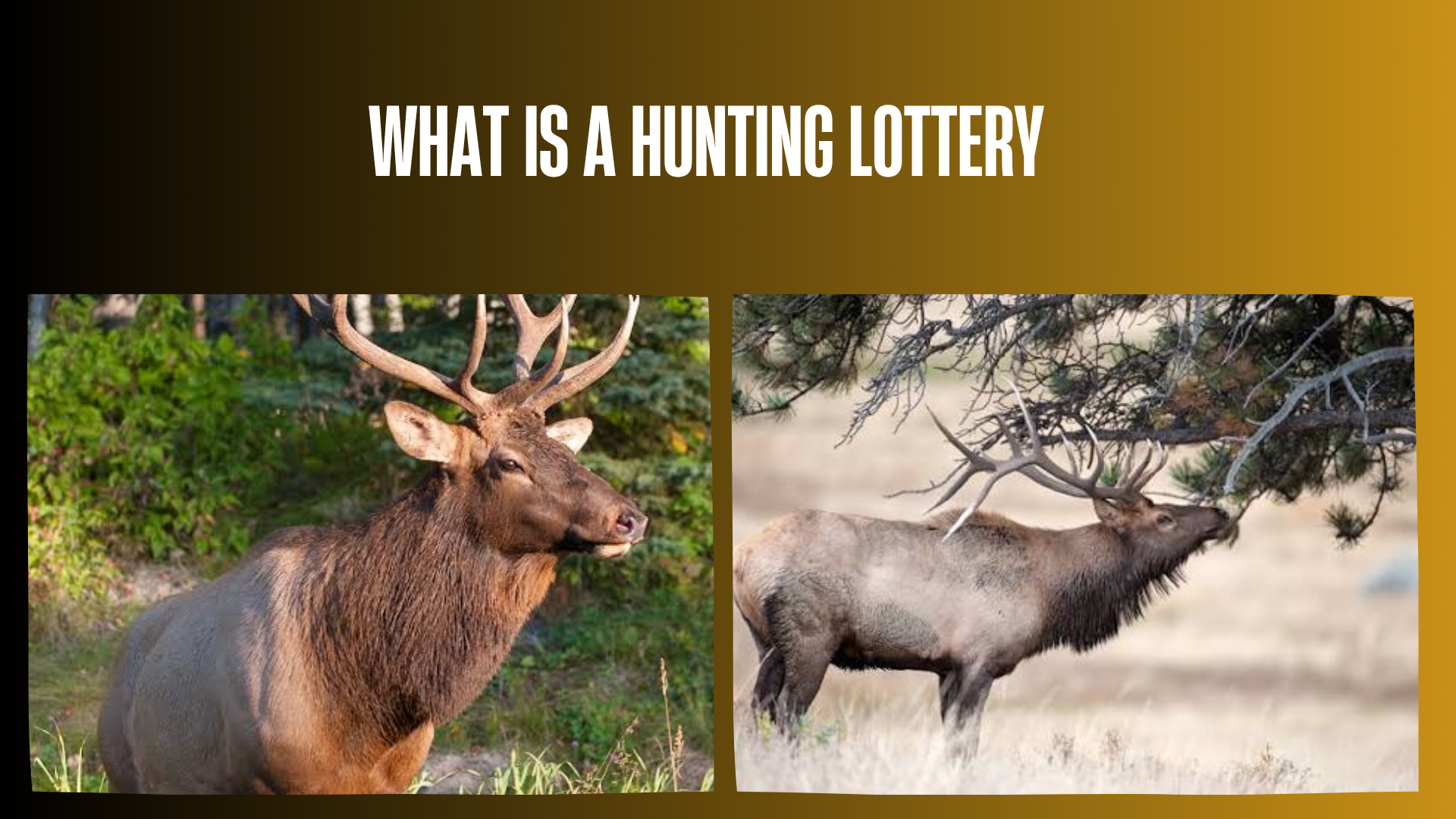

A hunting lottery is a selection process used to distribute a limited number of hunting opportunities among applicants. If you have seen “draw required,” “lottery permit,” or “limited-entry hunt” in a regulation booklet, you may need to apply before you can obtain that particular authorization. This guide explains what is a hunting lottery, how different drawing systems work, and what beginners should check before committing money or making travel plans.
Quick Answer
A hunting lottery is a drawing that allocates limited hunting licenses, tags, permits, or access opportunities to eligible applicants. Some drawings are random, while others use points, priority categories, or a combination of methods. Being selected may give you the opportunity to purchase a permit rather than a fully paid hunt. It does not guarantee a harvest or replace other licensing, land-access, and hunting requirements. Check the administering agency’s current instructions for eligibility, deadlines, fees, and acceptance steps.
Regulatory check: Official sources reviewed September 18, 2026. This article explains common U.S. practices; rules differ by jurisdiction, species, and program. Current official regulations and hunt-specific conditions override general guidance.
What Is a Hunting Lottery Designed to Do?
Hunting lotteries help distribute opportunities when participation is limited. An agency or land manager may limit permits to support wildlife-management objectives, manage hunting pressure, or control the number of participants using a particular area.
The drawing determines who receives an opportunity within those limits. It does not independently establish the season, bag limit, or number of animals that should be harvested.
Lotteries can cover more than scarce big-game tags. They may allocate deer hunts, turkey permits, waterfowl reservations, or entry to a managed property. For example, the Texas Drawn Hunts program organizes opportunities by hunt category and location.
What are you actually applying for?
Before entering, identify the benefit being allocated. A drawing might award:
- A species-specific license or tag.
- Eligibility to purchase a limited permit.
- Access to a property on designated dates.
- A reservation or hunting position within a managed area.
- A place in a special youth, mentored, or other restricted hunt.
Terms such as “controlled hunt,” “quota hunt,” and “special hunt” may describe limited opportunities, but they do not tell you the complete selection process. Read the program rules.
Lottery, License, Tag, and Reservation: Different Parts of the Process
| Term | What it generally means | What to verify |
|---|---|---|
| Lottery or draw | The selection process | How applicants are selected |
| Application | Your request to participate in selection | Whether submission and payment are complete |
| Hunting license | Authorization for specified hunting activities | Whether it is required before applying or before hunting |
| Tag or permit | Authorization for a particular harvest or hunt | Species, dates, area, and other restrictions |
| Access reservation | Permission or priority to use a managed location | What additional licenses and tags remain necessary |
| Selection notice | Notification that you were drawn | Payment, acceptance, and issuance instructions |
An application confirmation is not permission to hunt. Maine’s official moose-lottery instructions, for example, explicitly distinguish the application confirmation number from a permit number.
How a Hunting Lottery Usually Works
- The agency publishes opportunities. Listings identify available hunts, eligibility conditions, and application periods.
- You choose acceptable hunts. Depending on the program, you may select a specific hunt or rank several choices.
- You submit an eligible application. Required information, licenses, and payments must be completed under the program’s rules.
- The agency conducts selection. Random selection, points, quotas, and other priorities may determine the outcome.
- You check your result. Follow the official account, notification, or results-page instructions.
- You complete any remaining requirements. These may include purchasing the permit, accepting the offer, or attending an orientation.
That sequence is a general explanation, not a universal procedure. Some programs collect substantial fees before selection; others require payment afterward. Some issue documents automatically, while others require additional action.
Start with the program’s official application guide. The Texas getting-started instructions illustrate the practical details agencies may require, including customer accounts and coordination for group applications.
Random Draws, Preference Points, and Bonus Points
Not every hunting lottery gives every applicant the same chance. These broad categories help explain the differences, but the agency’s actual formula matters more than its terminology.
| Selection system | Basic idea | Beginner takeaway |
|---|---|---|
| Unweighted random draw | Eligible entries in the same pool have equal chances | Previous unsuccessful applications may provide no advantage |
| Preference-point system | Higher point totals receive priority in the applicable allocation | Your position relative to other applicants matters |
| Bonus-point or weighted draw | Points increase selection chances under a defined formula | More points generally improve chances without guaranteeing selection |
| Hybrid system | Different portions or stages use different rules | Read every stage, allocation, and eligibility condition |
Preference points create priority
In a typical preference allocation, applicants with higher totals are considered ahead of those with fewer points. However, a program may reserve other opportunities for random selection or separate applicant groups.
Bonus points change the weighting
Bonus points generally improve your position in a random process rather than placing you at the front of a strict queue. Formulas vary. Montana’s official point-system explanation describes squared bonus points and a separate preference-point system for specified nonresident combination licenses.
Do not transfer that formula to another state. North Dakota’s lottery FAQ describes a different weighting system and emphasizes that substantial points still do not guarantee selection.
Point balances have conditions
Before building points, check how they are earned, used, reset, or lost. Also determine whether they apply to a species, category, or particular drawing. Points are not a nationwide currency.
Understanding Draw Odds Without Overpromising
Draw odds describe selection chances, not the likelihood of harvesting an animal. A permit may be difficult to obtain even when the hunt itself is challenging.
Consider a simplified example: a genuinely unweighted drawing offers 20 individual permits to 200 equally eligible applicants, each with one entry. Each applicant has a 10% chance of selection in that drawing.
That calculation does not describe a real program with point weighting, separate residency pools, group applications, multiple choices, or other priorities. Dividing total permits by total applicants can therefore give a misleading estimate of your personal chances.
When reviewing published statistics, match them to:
- Your residency and eligibility category.
- The exact hunt code, unit, season, and animal category.
- Your point level, where relevant.
- The applicable choice or drawing stage.
- Whether the report counts people, applications, groups, or weighted entries.
Last year’s results are planning information, not a promise. Permit numbers, applicant interest, and rules can change.
What hunters mean by “point creep”
Point creep describes a situation in which the point level needed to draw a sought-after opportunity rises over time. If many competitors continue accumulating points while availability remains limited, earning another point may not bring an applicant as close to selection as expected.
For planning purposes, avoid treating a historical cutoff as a guaranteed future requirement.
Before Applying, Check These Practical Details
Eligibility and prerequisites
Confirm residency, age, hunter education, license prerequisites, and any restrictions following a previous successful draw. The requirements for applying may differ from those that must be satisfied before hunting.
Hunt codes and ranked choices
A hunt code may identify a particular species, area, season, method, or animal category. Check it against the current listing rather than reusing last year’s selection.
If you can rank choices, learn how they are processed. Do not assume your second choice will be considered before another applicant’s first choice, or that accepting a lower choice preserves your points.
Dates, access, and your ability to attend
Apply only for opportunities you can realistically use. Review travel time, terrain, accommodation, access arrangements, and any required check-in.
A permit for a management unit does not automatically provide access to every parcel within it. Resolve private-land permission and legal access before committing to a hunt that depends on them.
Group applications
Applying together may help companions receive the same opportunity, but it does not automatically improve the odds. Agencies can treat group points and remaining permit availability differently.
For example, Montana describes averaging points for certain party applications, while North Dakota describes using the member with the fewest points for its party weighting. Check the exact program before combining applications.
Confirmation and contact information
Review your account details, keep the confirmation, and set reminders for results and payment. A practical safeguard is to check your official account instead of relying entirely on email delivery.
Application Fees Are Not Always Permit Fees
A hunting lottery may involve several separate charges. Understanding them helps prevent surprise costs and mistaken refund expectations.
| Possible charge | What to establish before paying |
|---|---|
| Application fee | Whether it is retained if you are unsuccessful |
| Qualifying license | Whether purchase is required to enter |
| Permit or tag fee | Whether it is charged before or after selection |
| Point-related fee | Whether it buys a point, adds weighting, or serves another purpose |
| Processing fee | Whether it is separate and refundable |
The Texas application and permit fee page is an example of an agency separating these charges. Use your own program’s current schedule rather than assuming every lottery follows that structure.
Also budget for the hunt itself. Selection does not ordinarily mean transportation, lodging, guiding, equipment, or game processing is included. Avoid nonrefundable bookings until the authorization and your ability to attend are clear.
What Happens After the Results?
If you are selected
Read the entire notice. Confirm the assigned hunt, payment deadline, required documents, and whether acceptance is automatic or requires action. Maine’s moose program, for example, has separate post-selection permit-purchase requirements.
Before going afield, check:
- The issued license, tag, permit, and any required stamps or endorsements.
- Exact area boundaries and lawful access routes.
- Season dates, shooting hours, legal equipment, and bag limits.
- Orientation, check-in, tagging, and reporting requirements.
- Current closures or changes to the hunt.
If you are unsuccessful
Check whether the program offers another drawing, a leftover sale, a replacement list, or a standby process. These options are not universal and can have their own eligibility rules.
Texas publishes separate instructions for secondary draws and standby permits, illustrating why an unsuccessful initial result is not always the end of the process. Do not arrive expecting a hunt unless the program specifically permits that approach.
If you cannot attend
Contact the agency promptly. Surrender, refund, deferral, transfer, and point-restoration policies are separate questions. Permission to decline a permit does not automatically mean your money or points will be returned.
Mistakes That Can Cost You an Opportunity
- Confusing entry with authorization: Wait for the required issued documents and effective dates.
- Using outdated instructions: Review the current year’s rules and hunt listing.
- Submitting duplicate entries: Extra applications are not the same as authorized additional chances.
- Assuming edits are allowed: Review every field before submission; some systems restrict changes.
- Ignoring the payment stage: Selection may still require a purchase by a deadline.
- Applying for inaccessible land: Investigate boundaries and permission before choosing the hunt.
- Assuming unused permits preserve points: Check what event triggers a reset.
- Choosing solely by odds: An easier draw is not useful if the dates, terrain, or cost do not suit you.
For unresolved account or application problems, use the administering agency’s help service. Program-specific resources such as the Texas Drawn Hunts FAQ can explain issues that a general article cannot settle.
Being Drawn Does Not Change Your Field Responsibilities
A scarce permit is an opportunity, not an obligation to take a marginal shot. Complete hunter education, practice with your equipment, follow manufacturer instructions, and stay within your demonstrated ability.
For firearm hunts, follow the four basic safety principles:
- Treat every firearm as if it is loaded.
- Keep the muzzle pointed in a safe direction.
- Keep your finger outside the trigger guard until ready to shoot.
- Be certain of the target and what is beyond it.
Respect property boundaries and fair-chase principles, make reasonable legal recovery efforts, avoid waste, and complete required reports. Stop when weather, visibility, terrain, or your condition makes continuing unsafe.
FAQs
1. Is a hunting lottery the same as a hunting draw?
Often, the terms describe the same selection process. However, “draw” can include point-based allocation rather than a simple equal-chance lottery.
2. Do you win money in a hunting lottery?
In the wildlife-permit context, the benefit is a hunting authorization or access opportunity. It is not ordinarily a cash prize.
3. Is a hunting lottery the same as a raffle?
Not necessarily. A conservation raffle may award a special permit or prize under separate rules. Check the organizer, legal authorization, and exact benefit being offered.
4. How does a lottery differ from a permit auction?
A lottery selects applicants through its drawing rules. An auction allocates an opportunity through bidding. The eligibility and permit conditions may differ.
5. Are hunting lotteries only for elk and moose?
No. Lotteries can allocate deer, turkey, waterfowl, and other opportunities, including access to particular managed properties.
6. Does every hunt require a lottery?
No. Some opportunities use ordinary license sales or other allocation methods. Check the rules for the specific hunt you want.
7. Do I need a hunting license before applying?
Some programs require a qualifying license at application; others require it later. Verify the prerequisite and its cost before entering.
8. Must I finish hunter education before entering?
Timing varies. Check whether education must be completed before application, permit purchase, or hunting, and allow time for any required course.
9. Can nonresidents apply?
Some programs allow them, sometimes within separate allocations or eligibility categories. Resident opportunities and odds do not necessarily apply to nonresidents.
10. Can children enter?
Some programs include youth opportunities or allow qualifying young applicants. Minimum ages, supervision, and education requirements are program-specific.
11. Can a beginner draw without points?
Yes, where the applicable selection system allows it. But a preference-only allocation may offer little or no opportunity below the required point level.
12. Do more points guarantee a permit?
Not generally in a weighted random drawing. Preference systems and special guarantees also have conditions, so examine the actual rules rather than assuming certainty.
13. Are preference points and bonus points interchangeable?
No. They commonly describe different selection advantages. Agencies sometimes use terminology differently, making the published procedure more important than the label.
14. Can I buy points without entering the draw?
Some programs offer a points-only option. Check eligibility, fees, purchase windows, and whether choosing it excludes you from that year’s selection.
15. Do points transfer between states?
Do not assume so. Points belong to a defined program and are not generally portable between jurisdictions.
16. Will my points expire if I skip a year?
Possibly, depending on the inactivity rules. Check how frequently you must apply or take another qualifying action to retain them.
17. Do I lose points if I draw but never hunt?
You might. A reset can depend on selection or issuance rather than participation. Not attending does not automatically restore points.
18. Does applying early improve my odds?
Not in a standard random draw that treats all timely eligible entries equally. Applying early is still useful because it leaves time to resolve submission problems.
19. Can I submit several applications for the same hunt?
Only if the program expressly allows it. Duplicate submissions may violate the rules; use only authorized entry options.
20. Does buying extra chances guarantee success?
No. Where extra chances are permitted, they increase participation in the drawing under its formula. They do not ordinarily guarantee selection.
21. Does a group application give us more chances?
Not automatically. The program may treat the group as one application and calculate its point level under special rules.
22. Will everyone in our group receive a permit?
Check the party rules, including what happens when too few permits remain. Applying together does not universally establish an all-or-none outcome.
23. How should I rank hunt choices?
First learn the order in which the agency processes choices. Then list only hunts you can use, considering any effect on points and other applications.
24. Can I edit an application after submitting it?
Some systems allow edits before a deadline; others do not. Review the submission policy and contact the agency promptly if you discover an error.
25. How much does entering cost?
There is no standard amount. Identify application charges, required licenses, potential permit fees, and refund conditions in the current fee schedule.
26. Is my money refunded if I am unsuccessful?
It depends on the charge. Application and processing fees may be treated differently from prepaid license or permit fees.
27. How do I check the results?
Use the official account or results page identified in the instructions. Verify your own status rather than relying on a social-media list or an unverified message.
28. Is a credit-card charge proof that I drew?
Not by itself. Confirm the official result and issued authorization; charges or pending transactions can have different meanings.
29. What happens if payment fails?
Contact the agency immediately and follow its payment-correction procedure. Do not assume there is a grace period or that selection remains valid indefinitely.
30. Can I give my permit to a friend?
Do not transfer it informally. Any authorized transfer, substitution, or donation must follow the program’s specific process.
31. Can I postpone the hunt until next year?
Only where an approved deferral provision applies. Scheduling conflicts do not automatically qualify, and the agency may require documentation.
32. Does drawing a permit give me private-land access?
Not unless access is explicitly part of that authorization. A management-unit permit does not grant blanket permission across private parcels.
33. Are leftover permits automatically available to unsuccessful applicants?
No. They may be handled through another draw, sale, list, or standby process. Follow the published procedure and availability notices.
34. Are draw odds the same as harvest success?
No. Draw odds concern receiving an opportunity. Harvest success concerns outcomes among hunters and depends on many different factors.
35. Can I still hunt if I miss the lottery deadline?
You may have other lawful opportunities, but missing the deadline does not authorize participation in that limited hunt. Look for officially available alternatives.
Final Answer
What is a hunting lottery? It is a process for allocating limited hunting opportunities through a drawing or related selection system. Before applying, understand the eligibility rules, point system, costs, and what selection actually provides. Afterward, complete any required acceptance and licensing steps, verify land access, and follow current hunting regulations. A successful draw provides an opportunity to hunt responsibly—not a guaranteed harvest.
Read more: