
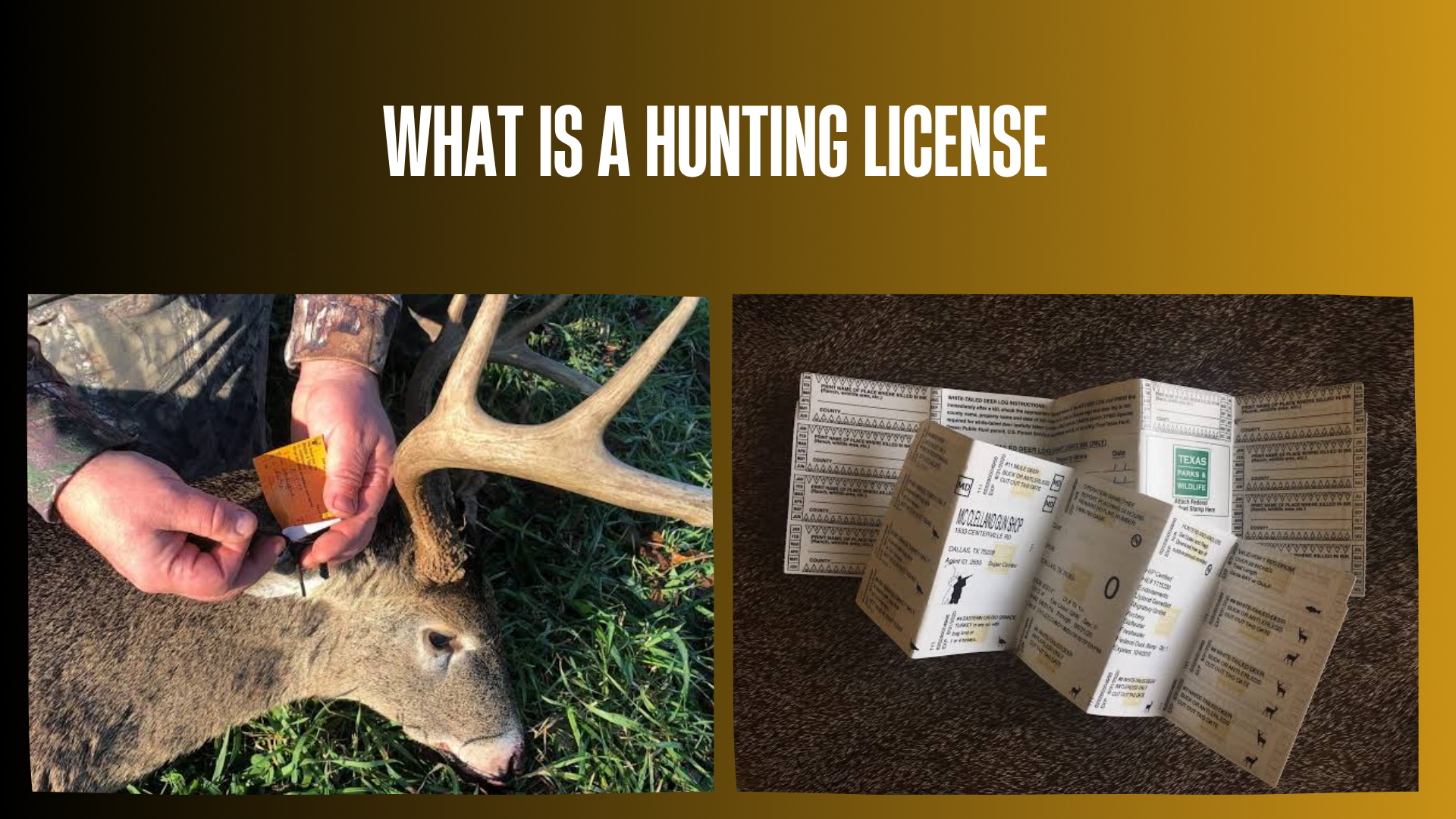

A hunting license is an official authorization to hunt under the rules of the jurisdiction that issues it. For beginners asking “what is a hunting license,” the important detail is that it usually represents only part of the legal preparation for a hunt. Depending on where, when, and what you hunt, you may also need hunter education, species-specific tags, additional permits, and permission to access the property.
Quick Answer
A hunting license is a government-issued authorization that allows its holder to participate in specified hunting activities, subject to applicable regulations. In the United States, hunters generally need the appropriate license for the state where they will hunt. A license does not override seasons, bag limits, equipment restrictions, or property boundaries, and it may not include every required tag or permit. Start with the official wildlife agency for your destination and check the requirements for your species, hunting method, age, and residency.
Scope and regulatory check: Official sources reviewed September 18, 2026. This guide focuses on the United States; other countries use different systems. Current laws, agency regulations, emergency orders, and site-specific rules take priority over general online guidance.
What Is a Hunting License Used For?
A hunting license documents an individual’s authorization to hunt within the scope of that license. It may cover a broad category of game, a particular species, or a combination of activities. Its printed or electronic details identify what you purchased and when it is valid.
The U.S. Fish and Wildlife Service’s hunting-license guide directs hunters to state licensing authorities and notes that some national wildlife refuges require additional permits or fees.
Think of the license as one part of a complete answer to four questions:
- Who? Are you eligible, correctly licensed, and qualified under the applicable education rules?
- What? Does your authorization cover the species and type of animal you intend to hunt?
- When and how? Is the season open for your method, with the equipment you plan to use?
- Where? Is the area open, and do you have lawful access?
Buying a license answers none of these questions automatically beyond the specific authorization it provides.
License, Tag, Permit, and Hunter Education: What Is the Difference?
Agencies do not use these terms identically. A document called a “permit” in one jurisdiction may serve a similar purpose to a “license” elsewhere. Read the issuing agency’s definitions rather than relying only on the name.
| Document or requirement | Typical purpose | Important limitation |
|---|---|---|
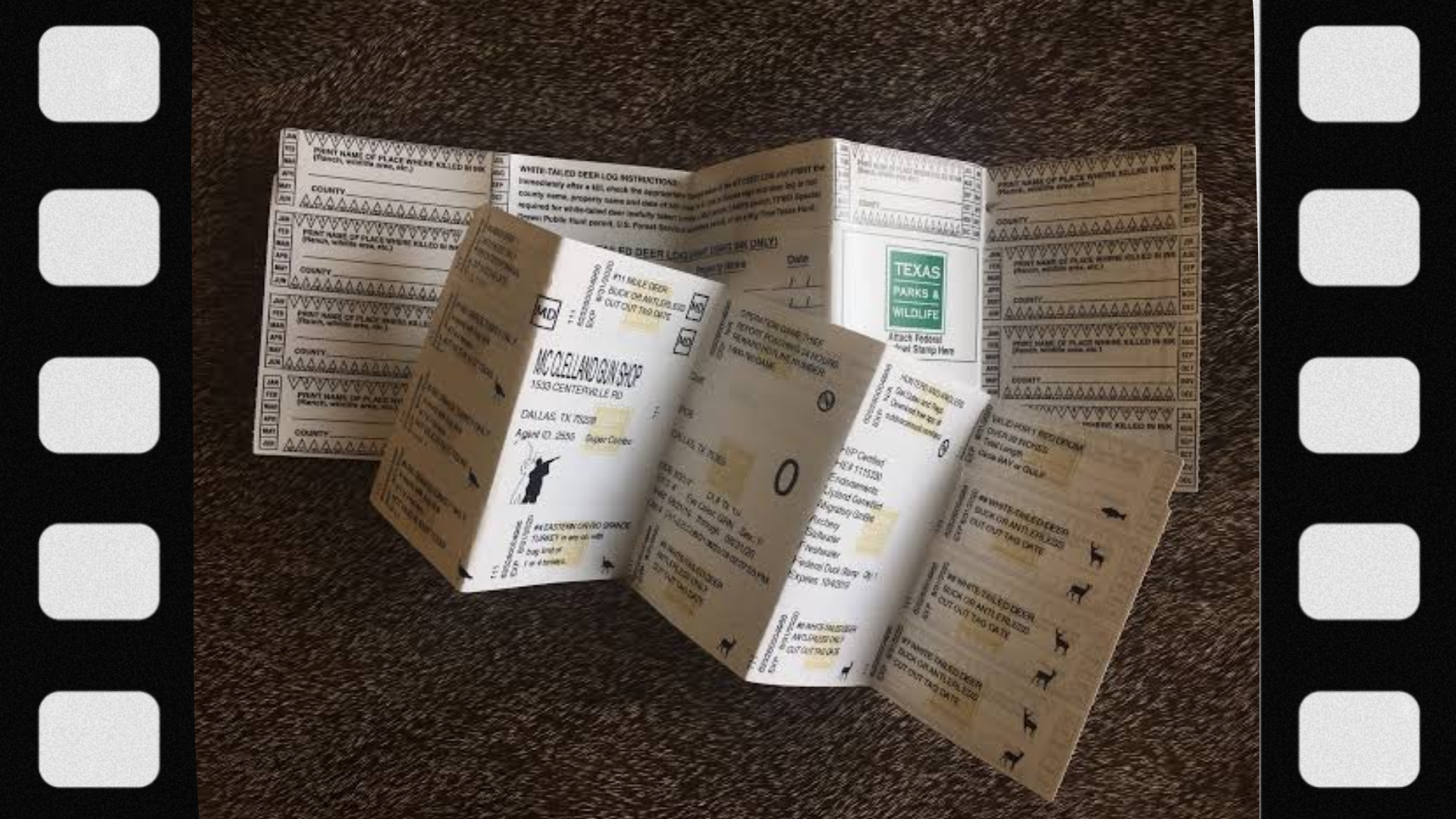
| Hunting license | Authorizes specified hunting activities | May require additional species or area authorizations |
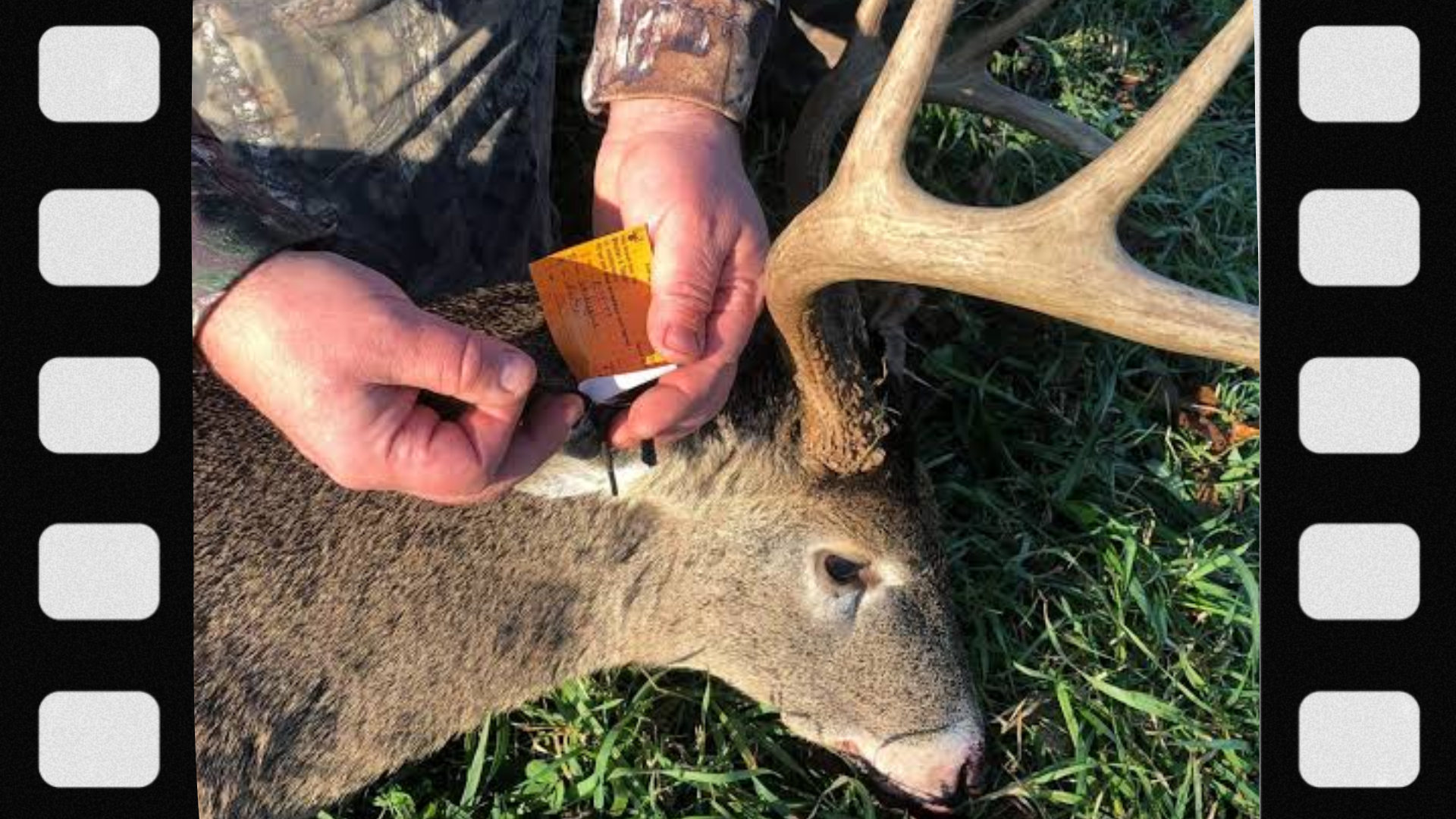
| Tag or harvest authorization | Authorizes or documents a specified harvest | May be restricted by species, unit, season, sex, or other conditions |
| Special hunting permit | Allows participation in a particular hunt or use of an area | Does not necessarily replace the underlying license |
| Stamp, endorsement, or validation | Adds a required privilege or fulfills a specific requirement | Usually applies only to its stated activity |
| Hunter education certificate | Documents completion of an accepted course | Is not itself a hunting license |
| Landowner permission | Allows access to specified private property | Does not replace wildlife-law requirements |
| Harvest report | Provides required information after hunting or harvesting | May be required separately from tagging |
For example, a hypothetical deer hunt might require a hunting license plus a deer tag valid for a particular management unit. A separate public-area permit could also apply. Another jurisdiction may bundle some of those privileges together.
Check what the license includes before paying for additional items—and before assuming you are ready to hunt.
Who Needs a Hunting License?
Licensing requirements can depend on age, residency, species, land ownership, and the activity being performed. Exemptions exist in some jurisdictions, but they are specific rather than universal.
Do not assume that children, seniors, landowners, military personnel, or people hunting private land are automatically exempt. A reduced fee, exemption from one requirement, and permission to hunt without a license are different things.
For an example of how detailed these rules can be, Texas Parks and Wildlife’s licensing page separately addresses general requirements, specific exceptions, youth licenses, resident licenses, and nonresident options. Those rules apply to Texas, not the entire country.
Resident versus nonresident licenses
Residency is a legal classification defined by the issuing jurisdiction. Owning property, having relatives in the state, or staying there temporarily does not necessarily qualify you for a resident license.
Read the residency definition and documentation requirements before purchasing. If your situation involves a recent move, student status, or military assignment, ask the agency which category applies.
Hunting can include more than shooting
A person may need authorization even without successfully harvesting an animal. Legal definitions can include pursuing or attempting to take wildlife.
For example, California’s hunting-license guidance explains that “taking” includes hunting, pursuing, and attempting to take birds or mammals. If you plan to call, drive animals, handle hunting dogs, or otherwise assist, verify how your destination defines participation.
How to Get the Right Hunting License
1. Identify the hunt before selecting the product
Write down the jurisdiction, species, dates, location or management unit, and intended hunting method. Also identify whether you will use private property, state-managed land, federal land, or land subject to tribal authority.
This information helps an agency employee or authorized license agent identify the correct requirements. “I want to go hunting” is usually not specific enough to determine the full package.
2. Check hunter education and eligibility
Many first-time hunters must complete an approved hunter education course. Requirements may depend on birth date, age, prior licensing, or a qualifying supervised-hunt program.
Choose a course recognized by the jurisdiction where you need to qualify. Online availability does not necessarily mean every applicant can complete the entire requirement online.
As one official example, New York’s Hunter Education Program explains the distinction between course completion and purchasing a first hunting license. Other jurisdictions may use different requirements.
3. Check availability and deadlines
Some licenses or tags are available through ordinary sales. Others require advance applications, drawings, quotas, or selection processes.
Confirm whether you are buying an authorization, submitting an application, or purchasing eligibility to apply. A payment confirmation does not always mean you have received permission for the hunt you want.
4. Purchase through an official or authorized channel
Begin on the wildlife agency’s website and follow its licensing link. The agency may use an external licensing contractor; reaching that service through the official site helps you identify the authorized provider.
Depending on the jurisdiction, purchases may also be available through license agents or agency offices. Avoid paying a third-party website merely to receive instructions that the agency provides free.
5. Review every issued item
Check your name, residency classification, effective dates, species, hunt code, unit, and selected method. Read any validation, signature, printing, or activation instructions.
If something is wrong, contact the issuer before hunting. Do not alter the document yourself or assume the error will be excused in the field.
What Does a Hunting License Cost, and How Long Does It Last?
There is no nationwide price or validity period. Cost can depend on residency, age, species, duration, and whether the purchase includes other privileges.
When budgeting, check the complete cost of required items rather than the base license alone:
- Hunting license.
- Species tags or permits.
- Required stamps, endorsements, or validations.
- Application or processing fees.
- Area access permits or fees, where applicable.
An annual license does not necessarily remain valid for 365 days after purchase. Some jurisdictions use a fixed license year. California, for example, describes its annual hunting license as valid from July 1 through the following June 30. That is a California example, not a national expiration rule.
Always check the dates on the actual license and related authorizations. A valid license does not mean every hunting season is currently open.
When You Need More Than the Base License
Big-game tags and limited hunts
Deer, elk, bear, and other hunts may involve additional authorizations tied to a species, unit, season, or animal category. Some may be included in a license package, while others require separate purchase or selection.
Read the instructions before the hunt so you know when and how to validate, attach, or electronically record a tag. Do not wait until an animal is harvested to learn the process.
Waterfowl stamps and migratory-bird registration
Under general U.S. federal requirements, waterfowl hunters age 16 and older need a current Federal Duck Stamp in addition to applicable state authorizations. The U.S. Fish and Wildlife Service’s Duck Stamp guidance explains accepted physical and electronic versions. An ordinary retail receipt is not automatically valid proof.
Migratory-game-bird hunters should also check Harvest Information Program, or HIP, registration requirements. HIP supports harvest surveys; it is a different requirement from the Duck Stamp. The federal migratory-bird survey program explains how HIP information supports monitoring.
Public-land and private-land access
A hunting license does not grant unrestricted entry onto public land or permission to cross private property. An area may have closures, reservations, access routes, or separate hunt rules.
Check the land manager’s current information as well as wildlife regulations. On private property, obtain permission from the person authorized to grant it and clarify boundaries and any conditions.
What to Carry and What to Check Before Leaving
Confirm whether your jurisdiction accepts paper documents, an official app, another electronic format, or a combination. Do not assume a screenshot substitutes for a required original tag or approved electronic record.
- License and required additions: Carry the accepted versions of all required documents.
- Identification and education proof: Bring them when required.
- Access information: Confirm permission, boundaries, and site-specific rules.
- Current regulations: Check season dates, legal animals, shooting hours, bag limits, and equipment restrictions.
- Tagging and reporting instructions: Know the required sequence and deadlines.
- Offline preparation: Make required digital documents accessible as permitted and plan for battery failure.
If you cannot confirm a requirement, contact the wildlife agency or land manager before going afield. An unresolved licensing question is easier to fix before the hunt.
A License Is Not a Substitute for Safe, Ethical Hunting
Licensing authorizes an activity; training and practice help you carry it out responsibly. Complete appropriate hunter education, learn your equipment, and stay within your demonstrated abilities.
For firearm hunting, follow these four principles:
- Treat every firearm as if it is loaded.
- Keep the muzzle pointed in a safe direction.
- Keep your finger outside the trigger guard until ready to shoot.
- Be certain of your target and what is beyond it.
These principles are reinforced in official hunter education guidance. A mechanical safety does not make unsafe handling acceptable.
Respect property boundaries, follow fair-chase principles, and make reasonable legal efforts to recover harvested game without trespassing. Avoid waste, complete required reporting, and stop when visibility, weather, terrain, or your condition makes continuing unsafe.
Why Hunting Licenses Matter for Conservation
License systems help agencies administer hunting participation and fund wildlife work. License revenue is one source of conservation funding, alongside other programs.
The federal Wildlife Restoration Program provides funding associated with excise taxes on certain firearms, ammunition, and archery equipment. That funding mechanism is separate from buying a hunting license. Avoid assuming all conservation funds come from the same source or that every license dollar has an identical use nationwide.
FAQs
1. Is a hunting license permission to hunt any animal?
No. It covers only the activities authorized by that license and applicable regulations. Protected species, closed seasons, and additional permit requirements still apply.
2. Is a hunting license the same as a gun license?
No. Hunting authorization does not replace firearm possession, purchase, carry, or transport requirements. Check those rules separately with the appropriate authorities.
3. Is hunter education the same as a hunting license?
No. Education documents course completion; the license authorizes specified hunting activities. You may need the certificate to qualify for the license.
4. Do I need a license if I do not harvest anything?
Generally, licensing requirements concern participating in hunting, not merely succeeding. Verify the jurisdiction’s definition of hunting or taking wildlife.
5. Do I need a hunting license on my own property?
Possibly. Landowner exemptions vary and may have narrow conditions. Ownership alone is not a reliable basis for assuming you are exempt.
6. Does permission from a landowner replace a license?
No. Property access and hunting authorization are separate matters. You must satisfy the applicable wildlife requirements as well as obtain lawful access.
7. Do children need hunting licenses?
The answer depends on the jurisdiction and activity. Check youth licensing, education, minimum hunting ages, and adult-supervision requirements separately.
8. Do seniors hunt for free?
Some jurisdictions offer discounts or exemptions, but there is no universal rule. Additional tags, stamps, or reporting requirements may still apply.
9. Are there military or disability discounts?
Some agencies offer qualifying programs. Review eligibility and documentation requirements rather than assuming a discount includes every required hunting privilege.
10. Can I use my home-state license in another state?
Do not assume so. Generally, you need the appropriate authorization for the state where the hunt occurs, commonly a nonresident license.
11. Does owning land make me a resident hunter?
Not necessarily. Read the agency’s legal residency definition. Property ownership and residency classification are different questions.
12. Can an international visitor obtain a U.S. hunting license?
Some jurisdictions offer options for eligible visitors. Check identification and education requirements, and address firearm possession, import, and travel rules separately before making arrangements.
13. Can I buy a hunting license online?
Many agencies provide online licensing. Start at the official agency website and follow its authorized purchasing instructions.
14. Can I hunt immediately after buying online?
Only if the required authorizations are effective and you have them in an accepted format. Check for pending issuance, future effective dates, or physical-tag requirements.
15. Is a purchase receipt enough?
Not automatically. A receipt may only confirm payment. Verify which issued document or authorized electronic record must be carried.
16. Can I show my license on my phone?
Where an accepted electronic option exists, possibly. Check whether the agency requires its app or another specific format, and whether tags have separate rules.
17. What happens if I lose my license?
Use the agency’s replacement or reprint procedure before hunting. Lost tags may require a different process from replacing the base license.
18. Can I lend my license or tag to someone else?
Do not lend or transfer hunting documents informally. Any permitted transfer must follow the issuing agency’s explicit rules and procedures.
19. What is an apprentice hunting license?
It is generally a supervised-entry option offered by some jurisdictions. Eligibility, mentoring conditions, education provisions, and permitted activities differ.
20. Does an apprentice license mean I can hunt alone?
Do not assume that. Confirm the required supervision, mentor qualifications, and other conditions before participating.
21. Will another state accept my hunter education certificate?
It may, but acceptance is different from license reciprocity. Ask the destination agency whether your particular certificate satisfies its requirements.
22. Do bowhunters need a hunting license?
Using a bow does not automatically exempt someone from licensing. Check the required license, method-specific privileges, and any additional education requirements.
23. Does a hunting license include fishing?
Only if the purchased product includes fishing privileges. A combination license may bundle both, but read its coverage and exclusions.
24. Does a hunting license cover trapping?
Not necessarily. Trapping may involve separate licensing, education, species rules, and reporting. Check the trapping regulations specifically.
25. Is a deer tag included with every hunting license?
No. Some products include certain tags; others do not. Review the package contents and the requirements for your intended deer hunt.
26. What does “over the counter” mean?
It generally describes an authorization available without winning a drawing. Availability can still depend on quotas, sales periods, eligibility, and other conditions.
27. What is a hunting draw?
A draw is a selection process used to allocate limited hunting opportunities. Applying is not the same as receiving the permit or tag.
28. Does a lifetime license cover everything?
Not necessarily. Read what it includes and whether annual tags, applications, stamps, or updates are still required.
29. Do licenses expire on December 31?
Some may, but others use different license years or validity periods. Check the actual expiration date instead of assuming a calendar-year schedule.
30. Do I need a Federal Duck Stamp for all bird hunting?
No. The federal hunting requirement concerns waterfowl hunters age 16 and older. Other bird hunts may involve different stamps, permits, or HIP requirements.
31. Does a Duck Stamp replace HIP registration?
No. They serve different purposes. Check both requirements for the migratory birds and states involved in your hunt.
32. Do I need a license just to accompany a hunter?
It depends on your role and local rules. Observing can be treated differently from calling, driving animals, or otherwise assisting. Ask the agency before participating.
33. Do I have to report an unsuccessful hunt?
Some permits or tags require reporting even if you harvested nothing or did not hunt. Check the reporting instructions attached to your authorization.
34. What if I purchased the wrong license?
Contact the issuing agency promptly. Exchange, correction, and refund options vary. Do not hunt until the authorization matches your planned activity.
35. What can happen if I hunt without the required license?
Consequences depend on the jurisdiction and violation and may include fines, loss of hunting privileges, or other penalties. Resolve missing or uncertain authorization before hunting.
Final Answer
What is a hunting license? It is official authorization to participate in specified hunting activities under the issuing jurisdiction’s rules. It does not replace required tags, permits, hunter education, lawful land access, or safe handling practices. Before your first hunt, confirm the complete requirements with the destination wildlife agency, carry accepted documentation, and check current regulations again before going afield.
Read more: