
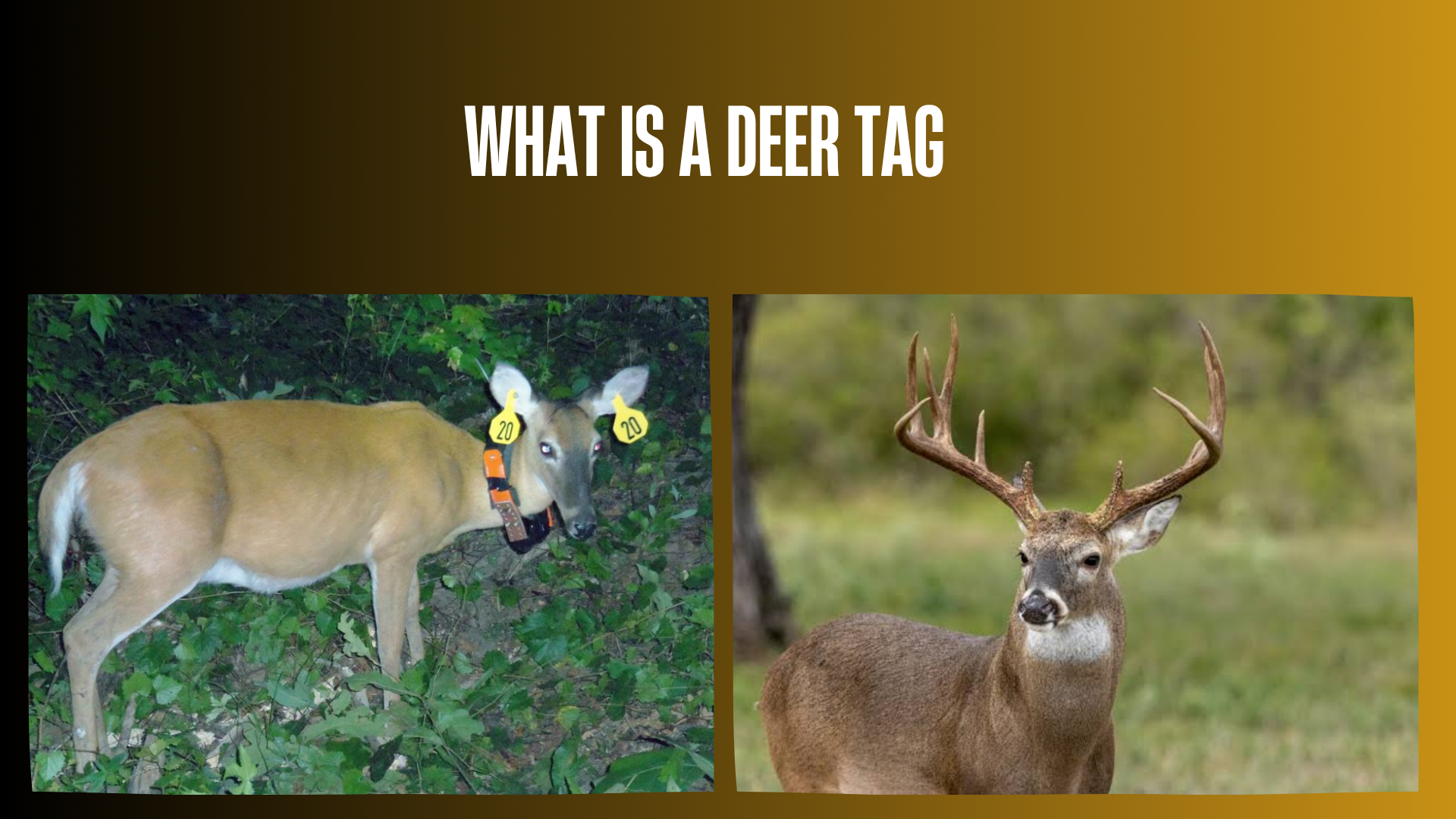

Quick Answer: What Is a Deer Tag?
A deer tag is a government-issued paper or digital authorization that accounts for a deer a hunter may legally harvest under specified conditions. It can be limited by species, sex or antler status, wildlife unit, season, weapon, hunt program, property, or hunter category. A general hunting license does not automatically include every deer tag or permit a hunter may need, and tagging is not always the same as harvest reporting. Before hunting, verify that the exact authorization is valid for the deer, date, location, and method; then learn the required post-harvest sequence before entering the field.
Deer License, Tag, Permit, and Harvest Report Compared
| Term | General Function | What a Beginner Must Check |
|---|---|---|
| Hunting license | Establishes basic legal eligibility to hunt specified game under jurisdiction rules | Season, residency, age, hunter education, endorsements, and whether deer privileges are included |
| Deer tag or harvest authorization | Accounts for a specific deer harvest opportunity or category | Species, sex or antler status, unit, season, method, property, validity dates, and unused status |
| Permit | Authorizes access to or participation in a particular hunt, area, season, or method | Whether it replaces a tag or is required in addition to license and tag |
| Endorsement or stamp | Adds a privilege or certifies a requirement on a license | Method, habitat, archery, muzzleloader, or other locally named requirement |
| Validation or tag execution | Records that the authorization has been used | When, where, and how to notch, sign, date, attach, or complete digitally |
| Harvest report or game check | Submits harvest information to the wildlife agency | Deadline, reporting channel, confirmation number, and whether physical documentation is still required |
| Proof of sex or species | Allows lawful verification during possession or transport | Which part must remain naturally attached and for how long |
These are general descriptions, not universal legal definitions. One state may call an item a “tag” while another calls a similar privilege a “license,” “authorization,” or “permit.” Read the definitions in the current rules for the jurisdiction.
Why Deer Tags Exist
Deer tags are part of regulated wildlife management. They connect individual harvests to rules designed around seasons, population objectives, sex and age structure, disease management, hunter opportunity, property programs, and biological data. Tag and report information can help agencies estimate harvest, evaluate management units, and plan future seasons.
A tag is not ownership of a living deer and does not guarantee success. It is a conditional authorization. The hunter must still comply with open season, legal method, shooting hours, bag limit, area boundaries, land access, hunter-orange rules, antler definitions, and every other applicable regulation.
The U.S. Fish and Wildlife Service’s hunting-license guidance explains that hunters generally need a license from the state where hunting occurs and must meet that state fish and wildlife agency’s requirements. Federal refuges and other managed lands may require additional permits or impose more restrictive conditions.
What Information Can Be Tied to a Deer Tag?
A deer tag or electronic authorization may contain or link to several restrictions:
- Species: White-tailed deer, mule deer, black-tailed deer, or another locally defined category.
- Sex or antler status: Buck, antlerless, either-sex, antlered, antlerless, or a more specific legal definition.
- Geographic area: State, county, wildlife management unit, hunt area, zone, property, or enrolled tract.
- Season: Archery, general firearms, muzzleloader, youth, disability, late antlerless, special draw, or other segment.
- Legal method: The authorization may be linked to a weapon or season even when the tag itself does not list every equipment rule.
- Dates: A narrow hunt window or an annual season period.
- Hunter: Personal tags are commonly nontransferable and linked to a license or customer account.
- Bag accounting: Using one tag may reduce the remaining number or type of deer the hunter may take.
- Special conditions: Check station, CWD sample, property reporting, physical attachment, or carcass movement requirements.
Never infer these conditions from tag color or name alone. Read the authorization and the controlling regulation together.
Common Types of Deer Tags
Names and availability vary, but beginners may encounter the following categories:
Over-the-Counter Tag
An over-the-counter opportunity can be purchased without winning a limited drawing, subject to eligibility, availability, deadlines, and local restrictions. “Over the counter” does not mean valid statewide, for every deer, or throughout every season.
Limited-Entry or Draw Tag
When demand exceeds available opportunity, agencies may allocate authorizations through a lottery, preference-point, bonus-point, or other draw system. Application deadlines, choices, group applications, point rules, and refund policies are program-specific.
Antlered, Buck, Antlerless, or Either-Sex Tag
These labels control which deer category may be harvested. The legal definition of “antlered,” “buck,” or “antlerless” may use antler length, visible bone, branching, sex, or another criterion. A hunter’s everyday description is not the legal test.
Bonus or Additional Tag
Some programs offer additional opportunities beyond a base deer privilege, commonly for antlerless management. The extra tag may be restricted to a county, unit, weapon, date, or private land.
Landowner or Property-Issued Tag
A landowner, tenant, enrolled-property, damage-control, or managed-land tag can be tied to a person and specific tract. It may not be valid on neighboring land or replace the hunter’s general license.
Youth, Apprentice, or Special-Access Tag
Special programs may create opportunities for young, first-time, mentored, disabled, military, or other qualifying hunters. Supervision, education, age, accompaniment, and reporting conditions differ.
Paper Tags and Digital Tags
A paper tag may require cutting, notching, signing, dating, writing harvest information, and physical attachment. A digital tag may require the agency app or website, tag execution, submission or offline storage, and a physical document or confirmation number attached to the carcass. Digital does not necessarily mean paperless in the field.
Texas provides a useful example of why hunters must follow the correct system. Its current paper deer-tag instructions and digital tagging instructions contain different steps. Digital license holders must execute the appropriate digital tag and maintain specified physical documentation on a deer or turkey carcass. This is a Texas example, not a rule for other states.
Before hunting with a digital credential:
- Download the official app and current data before leaving coverage.
- Link the correct customer account and confirm the authorization appears.
- Read the offline procedure and know whether an unsubmitted action is valid temporarily.
- Charge the phone and carry an allowed backup power source.
- Carry durable writing material if physical documentation may be required.
- Know what to do if the phone is lost, damaged, frozen, wet, or inaccessible.
Tagging Is Not Always the Same as Harvest Reporting
Tagging or executing an authorization accounts for the animal in the hunter’s possession. Harvest reporting sends information to the wildlife agency. Some digital systems combine the two actions; other jurisdictions require a separate report later. A confirmation number may have to be written on a physical document, retained with the meat, or presented at a check station.
Pennsylvania, for example, publishes separate official harvest-reporting instructions with defined reporting periods. Texas requires reporting for certain deer harvests and situations through its system. These examples demonstrate variation; they do not establish a nationwide deadline.
Ask five separate questions before the hunt:
- When must the tag or authorization be completed?
- Must something be physically attached, and where?
- When may the carcass be moved, field dressed, quartered, or separated?
- Is a separate harvest report, validation, check station, or sample required?
- How long must the tag, confirmation, or proof remain with the meat, head, or antlers?
How to Verify the Right Deer Tag Before Hunting
Use this ten-step process rather than relying on an old screenshot, forum answer, retailer, or hunting partner’s memory.
- Identify the governing jurisdiction. Start with country, state or province, then county, unit, hunt area, and land manager.
- Identify the exact deer category. Confirm species and the legal definition of antlered, antlerless, buck, doe, or either-sex.
- Confirm the season segment. Match dates and legal method, including special youth, archery, muzzleloader, or firearm seasons.
- Check hunter eligibility. Residency, age, hunter education, mentor status, and application history may matter.
- Read the tag’s geographic limits. A tag can be valid in one unit or property and invalid across a road or boundary.
- Check all required credentials. Determine whether a base license, deer privilege, tag, permit, stamp, access pass, or refuge permit is additive.
- Confirm bag accounting. Learn how using the tag affects buck, antlerless, season, county, and annual limits.
- Learn post-harvest steps. Memorize the order for tag execution, physical attachment, reporting, check-in, sampling, and movement.
- Plan for no service. Prepare the official offline or paper procedure rather than improvising.
- Recheck immediately before hunting. Look for emergency orders, CWD rules, closures, fire restrictions, and hunt-specific notices.
What to Do With a Deer Tag After Harvest
There is no single sequence that is correct everywhere. The controlling rules may require action immediately upon take, before field dressing, before moving the carcass, before leaving the site, or by a later reporting deadline. Your responsibility is to know the exact trigger and sequence before a shot opportunity occurs.
A jurisdiction-specific post-harvest plan may include:
- Confirming the deer matches the authorization and legal definition.
- Notching or recording the harvest date and other required details.
- Executing a digital authorization in the official app.
- Attaching the correct physical tag or handwritten document.
- Retaining required proof of sex, species, or head attachment.
- Recording a confirmation number and keeping it legible.
- Completing a separate harvest report or visiting a check station.
- Submitting a required CWD or biological sample.
- Keeping documentation with separated meat, head, cape, or antlers during transport.
Do not copy another hunter’s sequence unless the person has the same authorization, jurisdiction, license format, deer category, hunt program, and current-year rules.
Tagging When a Deer Is Quartered or Processed
Field quartering, deboning, head removal, caping, and transport can trigger separate documentation rules. A tag that begins on the carcass may later have to remain with the meat, while another document accompanies the head or antlers. Evidence-of-sex requirements may dictate which part stays naturally attached until a particular destination.
Before separating parts, determine:
- Whether quartering or deboning is legal at the kill site.
- Which part constitutes legal evidence of sex or species.
- Where the original tag must remain.
- Whether each package needs the hunter’s information or tag number.
- What documentation a processor, taxidermist, donor, or recipient must keep.
- Whether CWD carcass-transport rules restrict brain or spinal tissue.
Call the wildlife agency before the hunt if the written rule is unclear. A taxidermist or processor may know common procedure, but only the agency’s current rule is authoritative.
What If the Tag, Phone, or App Fails?
| Problem | What Not to Do | Responsible Next Step |
|---|---|---|
| Paper tag lost or damaged before hunting | Do not create an unofficial duplicate or hunt as if it is valid | Use the agency’s replacement process before hunting |
| Tag does not match unit or deer category | Do not assume it is “close enough” | Do not take that deer; verify or obtain the correct authorization |
| Phone has no signal | Do not invent an offline method | Follow the official preloaded app or written no-service instructions |
| Phone is dead or broken | Do not use another person’s account or tag | Follow agency contingency guidance; if no lawful method is available, do not hunt |
| App shows an error after harvest | Do not repeatedly create reports or alter timestamps | Preserve screenshots or error details, use the official fallback, and contact the agency |
| Tag was completed incorrectly | Do not erase, rewrite, or conceal the error | Stop and contact a conservation officer or licensing help line for instructions |
Common Deer-Tag Mistakes
- Buying only a base license: A general license may not include the necessary deer authorization.
- Assuming the tag is statewide: Many tags are limited by unit, county, property, or hunt area.
- Using the wrong deer category: Antlered and antlerless definitions must match the legal text.
- Missing the application deadline: Limited-entry opportunities may not be available later.
- Confusing paper and digital procedures: License choice can change the required post-harvest steps.
- Waiting for cell service without a plan: Download credentials and learn the official offline process in advance.
- Assuming tagging completes reporting: Some systems require a separate report, validation, or check station.
- Moving or processing too early: Rules may require action before movement, field dressing, or separation.
- Discarding proof of sex: A particular part may have to remain attached until a defined destination.
- Sharing a personal tag: Using another person’s authorization or allowing another person to use yours is generally unlawful.
- Forgetting the land manager: A refuge, military base, tribal land, state area, or special property may require an added permit.
- Relying on last year’s rules: Validity, reporting, CWD zones, app procedures, and hunt boundaries can change annually.
Safety and Ethical Responsibilities Still Apply
Possessing a valid tag does not make every deer a legal or ethical target. Positively identify species and legal category, confirm the season and boundary, and know what lies beyond the animal. Do not shoot at sound, movement, or antlers alone.
Treat every firearm as loaded, keep the muzzle pointed in a safe direction, keep your finger outside the trigger guard until ready to shoot, and be certain of the target and what is beyond it. Archery and firearm hunters should stay within their demonstrated ability and pass on uncertain angles, distances, visibility, or legal status.
After a lawful harvest, make every reasonable recovery effort, follow property laws, validate and report correctly, and care for the meat promptly. A tag supports conservation only when it is used honestly and within the whole regulatory system.
Beginner’s Pre-Hunt Deer Tag Checklist
- Current base hunting license
- Correct unused deer tag or harvest authorization
- Required hunter education proof
- Required season, method, habitat, or access endorsement
- Correct unit, county, zone, hunt area, or property
- Correct deer species and antler-status authorization
- Current season dates and legal shooting hours
- Current bag-limit and antler-rule definitions
- Paper or digital tagging instructions
- Offline plan and charged device if using digital credentials
- Physical documentation material if required
- Harvest-reporting method and deadline
- Proof-of-sex and carcass-transport requirements
- CWD sampling and movement rules
- Landowner permission or land-manager permit
- Agency contact information for field questions
Final Answer: What Is a Deer Tag?
A deer tag is a paper or digital harvest authorization used to account for a deer taken under specified legal conditions. It is usually tied to the hunter and may be restricted by species, sex or antler status, unit, property, season, dates, or hunting method. It is related to—but not necessarily the same as—a general hunting license, special permit, harvest report, or proof-of-sex requirement.
The correct procedure comes only from the current rules for the exact hunt. Before entering the field, verify every required credential, learn when and how to execute or attach the tag, prepare for no cell service, and understand reporting, transport, processing, and CWD requirements. Recheck official agency information immediately before hunting, because last year’s process or another state’s instructions may be wrong for your situation.
FAQs
1. Is a deer tag the same as a hunting license?
Not necessarily. A hunting license establishes general eligibility, while a deer tag or authorization accounts for a particular deer opportunity. Some licenses include tags; others require separate purchases or permits.
2. Is a deer tag the same as a deer permit?
Terminology varies. A permit may authorize a specific hunt or area and may be required in addition to a tag, or the permit itself may function as the harvest authorization. Read local definitions.
3. Do I need a deer tag in every state?
Most regulated deer hunts require some form of license, tag, permit, or harvest authorization, but the name and system differ. Check the wildlife agency for the state where the hunt occurs.
4. Can I buy a deer tag without a hunting license?
Some application or purchase systems may allow a transaction before all credentials are assembled, but that does not mean you can hunt legally. Verify every prerequisite and required license before hunting.
5. What is an over-the-counter deer tag?
It is an authorization available without winning a limited-entry drawing, subject to local eligibility, dates, quotas, and restrictions. It may still sell out or be limited geographically.
6. What is a draw deer tag?
A draw tag is allocated through a limited-entry selection system. Applicants may have to choose hunt codes, meet deadlines, pay fees, and participate in preference or bonus point rules.
7. What is an antlerless deer tag?
It authorizes a deer that meets the jurisdiction’s legal antlerless definition. That definition may not be identical to “adult doe,” so read the rule carefully.
8. What is an either-sex deer tag?
It generally permits a deer from either of the legally defined antlered or antlerless categories during the tag’s valid hunt. Other season and bag restrictions still apply.
9. What is a bonus deer tag?
It is an additional harvest opportunity beyond a base authorization, often restricted by area, sex, season, method, or property. The local agency determines how it affects bag limits.
10. Are deer tags transferable?
Personal hunting tags are generally issued to a named hunter and cannot be shared, but program rules vary. Never lend, borrow, sell, or transfer one unless the agency expressly authorizes that exact action.
11. Can someone else tag my deer?
Normally the person who legally harvested the deer must use the authorization issued for that hunt. Mentored, group, party, proxy, or property programs may have special rules, so verify them in advance.
12. When must I tag a deer?
The legal trigger varies. It may be immediately upon take, before field dressing, before movement, or under another defined sequence. Learn the exact current rule before hunting.
13. Where do I attach a paper deer tag?
Attachment location and duration are jurisdiction-specific. Follow the printed tag and official regulation; do not use a method from another state.
14. What does “validate” or “execute” a deer tag mean?
It means completing the official action that records the authorization as used, such as notching a date, filling fields, signing, or submitting a digital harvest event.
15. Do I have to report a deer after tagging it?
Often, but not universally through a separate action. Some systems combine digital tagging and reporting; others require an additional online, phone, mail, app, or check-station report.
16. How long do I have to report a deer harvest?
There is no nationwide deadline. It may be immediate, same day, within a set number of hours or days, or tied to a check-station schedule. Use the official current deadline.
17. What is a harvest confirmation number?
It is a number issued after a report or validation that documents completion. Rules may require writing it on a tag or document and keeping it with the carcass or meat.
18. Can I tag a deer digitally without cell service?
Some official apps support an offline procedure, but the steps and legal effect differ. Download and test the official system beforehand and follow its no-service instructions exactly.
19. Do I need paper with a digital deer tag?
Possibly. Some systems require a physical handwritten document or confirmation number attached to the animal even when the authorization is digital. Verify before hunting.
20. What happens if my phone dies before I tag a deer?
Use only the agency’s approved contingency procedure. If you cannot lawfully access or execute the authorization, do not continue hunting until the issue is resolved.
21. What if I lose my deer tag before the season?
Contact the licensing agency and use its replacement or reprint process. Do not make a homemade copy unless the official rules specifically direct you to do so.
22. What if I make a mistake filling out a deer tag?
Do not erase, alter, or conceal it. Stop and contact the agency, licensing help line, or conservation officer for documented instructions.
23. Can I use last year’s unused deer tag?
Normally authorizations are limited to a named license year or hunt period. Do not assume an unused tag carries forward unless current rules explicitly say so.
24. Does a deer tag guarantee I can hunt public land?
No. A tag does not guarantee access or override area closures, quotas, refuge permits, check-ins, camping rules, or land-manager restrictions.
25. Do I need a special permit for a wildlife refuge?
Many refuges and managed properties require a site permit or hunt authorization in addition to state credentials. Check the property’s official hunt plan and current notices.
26. Can I use a tag in any county?
Only if the authorization explicitly permits it. Many tags are limited to a county, unit, zone, hunt area, or enrolled property.
27. Can I use a rifle-season tag during archery season?
Not unless the rules and tag expressly allow that combination. Match the authorization to season segment, method, dates, and area.
28. Does a deer tag include the bag limit?
A tag accounts for an opportunity but does not necessarily describe the full bag limit. County, unit, season, sex, and annual limits may separately restrict harvest.
29. Does tagging prove the deer is legal?
No. The deer must also meet species, antler, season, location, method, time, access, and other legal requirements. A tag cannot legalize an unlawful take.
30. What proof of sex must stay with a tagged deer?
The required body part and duration vary by jurisdiction and processing method. Check before quartering, caping, removing the head, or separating meat.
31. Where does the tag go if I quarter the deer?
Local rules determine whether it stays with a carcass part, meat, head, or separate documentation. Review field-processing and transport instructions before making cuts.
32. Can I give tagged venison to another person?
Many jurisdictions allow lawful transfer with specified donor, recipient, species, quantity, date, tag, or confirmation information. Follow the exact possession and donation rule.
33. Does a taxidermist need my deer tag information?
Often the shop must record customer and wildlife information, and the head or cape may need documentation during transfer. Ask the taxidermist and verify agency rules before separation.
34. Do CWD rules change deer-tag requirements?
CWD rules may add sampling, registration, carcass movement, head disposal, or documentation requirements. They may change by county or zone and can be updated during the season.
35. Where should I verify my deer tag rules?
Use the current official wildlife-agency regulation booklet, license portal, official app instructions, emergency orders, and land-manager hunt conditions. Contact the agency when the written guidance is unclear.
Read more: