
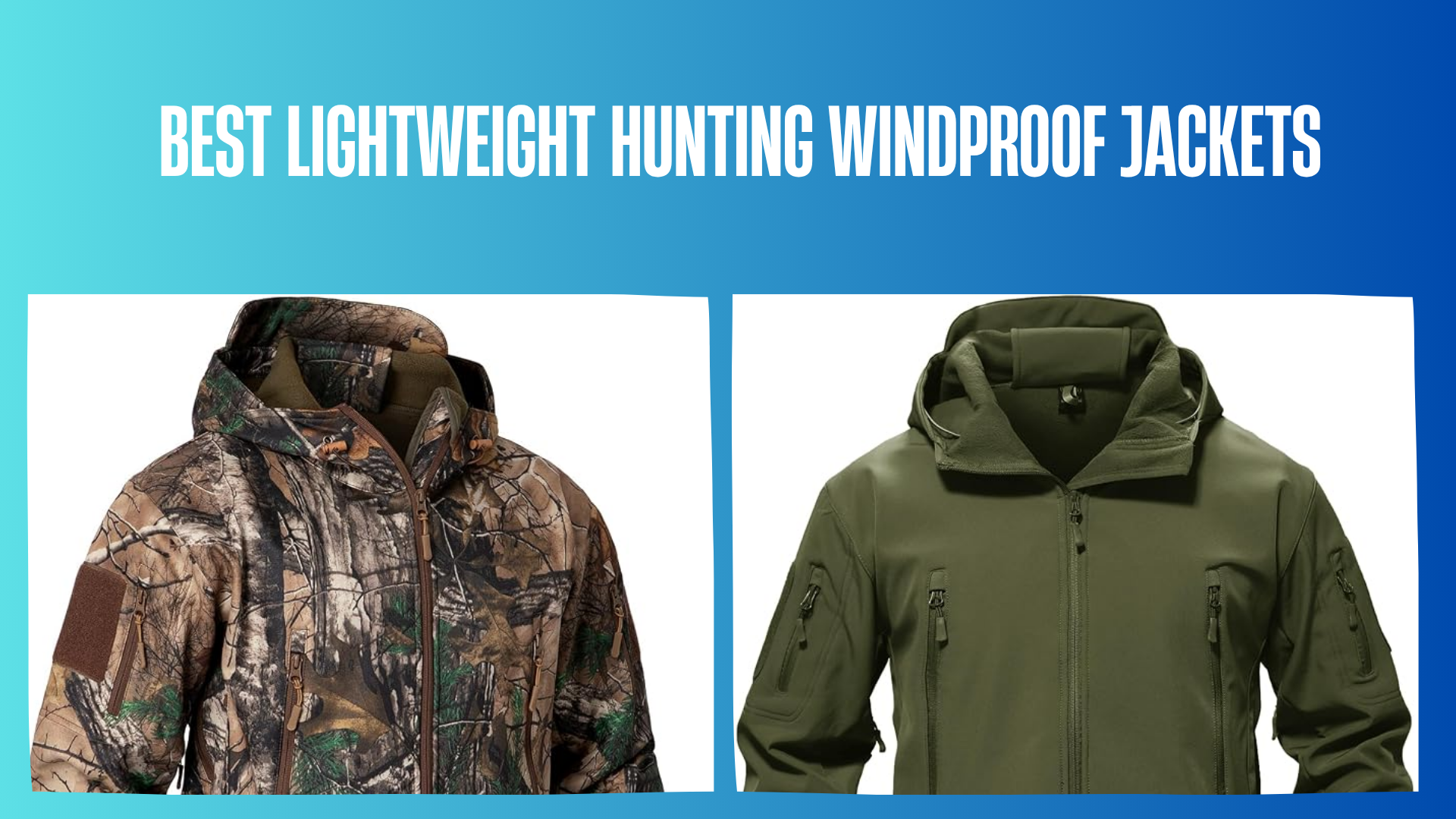

A lightweight hunting jacket has to solve a difficult problem: block enough wind to keep an exposed ridge, field edge, or tree stand comfortable without becoming so heavy, insulated, or clammy that you stop wanting to carry it. For that reason, the best lightweight hunting windproof jackets are usually soft shells or non-insulated weather shells rather than bulky winter coats.
Among the products validated for this guide, the KUIU Guide PRO stands out when wind resistance, mobility, ventilation, and hunting-specific design matter most. The SCENTBLOCKER Drencher makes more sense when wet weather is the larger concern, while NAVEKULL and YEVHEV provide simpler camouflage soft-shell approaches for hunters who want wind protection without moving into a heavy insulated jacket.
“Windproof” is also used loosely in outdoor-product marketing. Unless a manufacturer provides a formal wind-performance specification, it is safer to treat many soft shells as wind resistant rather than assume that absolutely no air will pass through them.
Quick Picks
- Best Overall for Cold Wind: KUIU Guide PRO Hooded Jacket — a hunting-specific soft shell with verified wind resistance, articulated construction, micro-fleece backing and pit ventilation.
- Best Lightweight Rain-Focused Option: SCENTBLOCKER Drencher Men’s Lightweight Breathable Waterproof Camo Rain Jacket — better suited to hunters who expect wind plus meaningful precipitation.
- Best Ventilated Camo Soft Shell: NAVEKULL Silent Hunting Clothes for Men Soft Shell Outdoor Hiking Jacket Camo Water Resistant Fleece Hooded Coat with Pockets — a lightweight-class camouflage soft shell with underarm ventilation and adjustable cuffs.
- Practical Quiet-Camo Choice: YEVHEV Hunting Jacket for Men Quiet Hunting Camouflage Clothing Hoodie Camo Coat Water-Repellent Windproof — a roughly 1.5-pound option for cool, breezy hunting conditions.
- Flexible Multi-Pocket Soft Shell: TACVASEN Men’s Windproof Softshell Tactical Hoodie Fleece Hunting Jacket Coat — a fleece-backed outdoor shell with multiple pockets and ventilation features.
What Matters Most in a Lightweight Windproof Hunting Jacket?
The strongest jacket is not automatically the best hunting layer. For active hunting, wind protection needs to be balanced against heat buildup, movement, noise and packability.
- Wind resistance: especially important in exposed terrain, open fields, ridgelines and stationary setups.
- Weight: matters more when the jacket spends part of the day in a backpack.
- Breathability: prevents a wind-blocking shell from becoming uncomfortable during climbs or long approaches.
- Ventilation: pit zips can be particularly useful when activity level changes quickly.
- Noise: soft exterior fabrics generally make more sense for close-range hunting than stiff, crinkly shells.
- Layering room: a jacket should accommodate the base and mid layers you actually intend to wear.
- Rain protection: wind resistance and waterproofing are different characteristics.
- Hood and cuff adjustment: these areas can allow significant wind entry if the fit is loose.
KUIU’s current Guide PRO specification illustrates this balance well: the men’s jacket weighs 22 ounces in size Large and combines a wind-resistant bonded soft shell with a micro-fleece interior, articulated sleeves, adjustable cuffs and zippered pit ventilation.
Lightweight Hunting Windproof Jacket Comparison
| Product | Weight / Weight Class | Wind Protection | Wet-Weather Role | Ventilation | Warmth Style | Best Use |
|---|---|---|---|---|---|---|
| KUIU Guide PRO Hooded Jacket | 22 oz in men’s L | Manufacturer-verified wind resistant | Water resistant | Zippered pit vents | Micro-fleece-backed soft shell | Active cold-weather and exposed-terrain hunting |
| SCENTBLOCKER Drencher | Lightweight, non-insulated shell | Manufacturer-verified windproof membrane | Waterproof RainBlocker construction | Breathable membrane | Minimal insulation | Windy hunts with significant rain risk |
| NAVEKULL Silent Hunting Soft Shell | Marketplace classifies as lightweight | Marketplace-listed wind protection | Water-resistant claim | Underarm vent zippers | Fleece-lined soft shell | Cool-weather camo hunting and hiking |
| YEVHEV Hunting Jacket | About 1.5 lb | Windproof product claim | Water-repellent claim | Underarm ventilation zippers | Cool-weather shell | Mobile hunting in cool, breezy weather |
| TACVASEN Windproof Softshell | Marketplace classifies as lightweight | Windproof product positioning | Weather-resistant soft-shell role | Underarm ventilation | Fleece lining | General outdoor and cool-weather hunting use |
| CARWORNIC Soft Shell Hunting Jacket | Marketplace lightweight class; approximately 998 g listed | Windproof marketplace claim | Weather-protective soft shell | Underarm vent zippers | Fleece-lined | Hunters prioritizing pockets and warmth over minimum pack weight |
1. Best Overall: KUIU Guide PRO Hooded Jacket
The KUIU Guide PRO is the clearest match in this group when “lightweight” still needs to mean genuine cold-wind performance rather than an ultrathin emergency shell. KUIU specifies a weight of 22 ounces in men’s size Large and describes the Guide PRO as a wind-resistant outer soft shell intended for cold conditions.

The fabric system combines a Toray Primeflex nylon face with wind-resistant bonding and a micro-fleece interior. That construction gives it a useful middle position: more substantial than a minimalist rain shell, but considerably easier to move in than a bulky insulated hunting coat.
The hunting-specific details are equally important. KUIU includes zippered pit vents, articulated sleeves with gusseted underarms, adjustable cuffs, an adjustable storm hood, a cinchable hem, raised hand pockets and several additional storage pockets.
Where It Makes the Most Sense
This is the strongest option here for active mountain hunts, exposed ridges, late-fall approaches and other conditions where wind resistance matters but a heavily insulated parka would be excessive.
It is not a substitute for a true waterproof rain shell in sustained heavy precipitation. KUIU itself categorizes the jacket as water resistant rather than waterproof.
Pros
- Verified 22-ounce weight keeps it relatively light for a fleece-backed hunting soft shell.
- Manufacturer specifically identifies the shell as wind resistant.
- Zippered pit vents help manage heat during climbs and higher-output movement.
- Articulated sleeves and gusseted underarms support unrestricted upper-body movement.
- Adjustable hood, cuffs and hem allow the wearer to reduce wind entry.
- Quiet Primeflex nylon construction is designed around hunting rather than general urban wear.
Cons
- It is water resistant rather than a dedicated waterproof rain jacket.
- The fleece-backed construction is warmer than an ultralight wind shirt and may be excessive in mild weather.
- The close-fitting cut requires careful sizing if you plan to use thicker insulating layers underneath.
2. Best for Wind and Rain: SCENTBLOCKER Drencher Men’s Lightweight Breathable Waterproof Camo Rain Jacket
The Drencher fills a different role from a fleece-backed soft shell. Current Blocker Outdoors information describes the non-insulated Drencher as a quiet brushed-poly hunting rain jacket built around the company’s RainBlocker waterproof, windproof and breathable membrane.
That makes it a better choice when a lightweight jacket has to deal with actual rain rather than merely drizzle or damp vegetation. The shell includes an adjustable three-piece hood, storm-flap front zipper, adjustable elements and a soft tricot exterior intended to limit excess clothing noise.

The trade-off is insulation. A non-insulated waterproof hunting shell is excellent for layering, but it will not provide the same inherent warmth as the KUIU, NAVEKULL or TACVASEN fleece-backed options.
Pros
- Current manufacturer documentation supports both waterproof and windproof claims.
- Non-insulated construction is easier to integrate into a flexible layering system.
- Soft brushed exterior is more hunting-oriented than many hard, noisy rain shells.
- Adjustable hood and storm flap improve protection in unsettled weather.
- Works particularly well as an outer layer that can stay packed until conditions deteriorate.
Cons
- Provides less standalone warmth than fleece-backed soft shells.
- Only two primary waist pockets are listed on the current non-insulated design.
- Hunters who rarely encounter rain may prefer a more breathable soft shell for everyday use.
3. Best Ventilated Camo Soft Shell: NAVEKULL Silent Hunting Clothes for Men Soft Shell Outdoor Hiking Jacket Camo Water Resistant Fleece Hooded Coat with Pockets
This NAVEKULL jacket sits closer to the conventional camouflage soft-shell category. Current marketplace data identifies the B0BLHD27J4 variation as a lightweight-class hunting jacket with a polyester shell, camouflage pattern, fleece-style lining and water-resistant construction.

Its strongest feature for active use is ventilation. The product design includes underarm vent zippers, adjustable cuffs and a hood that can be rolled away, allowing the wearer to respond to changing wind and activity levels without immediately removing the jacket.
Weather claims for this product are based primarily on marketplace listing information rather than detailed manufacturer test specifications, so it is better treated as a wind-blocking, water-resistant soft shell rather than relied on as a severe-weather rain jacket.
Pros
- Marketplace metadata categorizes the jacket as lightweight.
- Underarm vents improve temperature-management flexibility.
- Fleece-backed construction adds more cool-weather utility than a bare shell.
- Adjustable cuffs and stowable hood help manage changing wind exposure.
- Camouflage construction is directly oriented toward hunting use.
Cons
- Water protection should not be treated as equivalent to a verified waterproof rain shell.
- Fleece can become warm during high-output hiking.
- Fit information varies, making careful use of the current Amazon size chart important.
4. Quiet-Camo Pick: YEVHEV Hunting Jacket for Men Quiet Hunting Camouflage Clothing Hoodie Camo Coat Water-Repellent Windproof
The YEVHEV jacket is a useful middle-ground choice for hunters who want camouflage, wind protection and ventilation without carrying a very bulky outer layer. Current product data lists the jacket at approximately 1.5 pounds and describes it as water repellent and windproof, with an adjustable hood and ventilation zippers around the underarm area.

That combination is most attractive in cool transitional weather. During a slow approach, the shell can reduce wind exposure; during a harder climb, opening the vents can release some accumulated heat.
As with several lower-profile soft shells in this comparison, detailed standardized wind and waterproof test results were not available. Treat the weather language as a product claim rather than a guarantee for prolonged storms.
Pros
- Approximately 1.5-pound listed weight is reasonable for a cool-weather hunting outer layer.
- Underarm ventilation provides useful heat-management flexibility.
- Adjustable hood helps seal the upper body against changing wind.
- Quiet-camo positioning is useful for hunters working at closer ranges.
- Water-repellent construction provides more versatility than a basic fleece layer.
Cons
- No detailed manufacturer wind-performance rating was available for verification.
- Water repellency should not be confused with guaranteed prolonged-rain protection.
- The jacket may still be too warm for sustained high-output use in mild temperatures.
5. TACVASEN Men’s Windproof Softshell Tactical Hoodie Fleece Hunting Jacket Coat
The TACVASEN is less hunting-specialized than the KUIU or SCENTBLOCKER, but the supplied variation remains relevant as a lightweight-class fleece-backed soft shell for cool, windy outdoor conditions. Current marketplace data identifies polyester construction, a fleece lining, relaxed fit and multiple storage pockets.

Ventilation zippers beneath the arms are a particularly useful feature for hunters moving between hiking and stationary periods. Multiple pockets can also help organize gloves, small accessories and other everyday items, though any pocket contents should be kept light enough that they do not restrict movement.
The biggest limitation is that much of the current detailed data comes from marketplace listings rather than a comprehensive manufacturer technical sheet. It therefore makes more sense to evaluate this as a general outdoor wind-resistant soft shell than to assume high-end technical weather performance.
Pros
- Fleece lining gives the jacket useful cool-weather versatility.
- Underarm vent zippers help reduce heat accumulation during movement.
- Multiple pockets provide significantly more storage than minimalist shells.
- Relaxed soft-shell format leaves practical room for basic layering.
- Marketplace data places the product in the lightweight shell category.
Cons
- Less hunting-specific than purpose-built jackets such as the KUIU Guide PRO.
- Technical weather-performance specifications are limited.
- Extra pockets, fleece and hardware make it less minimalist than a packable rain shell.
6. CARWORNIC Men’s Outdoor Waterproof Soft Shell Hooded Tactical Jacket Warm Fleece Military Hiking Jacket
CARWORNIC is the least minimalist choice among the six. Marketplace data classifies the model as a lightweight soft shell, but also lists a product weight of approximately 998 grams, putting it noticeably above the 22-ounce KUIU and roughly 1.5-pound YEVHEV.

Why include it? The jacket combines a fleece lining, camouflage exterior, seven listed pockets, an adjustable hood and underarm ventilation. Hunters who value storage, a looser cut and additional cool-weather comfort may accept the weight penalty.
For backcountry hunters counting every ounce, however, this is the easiest product in the final group to rule out. Its feature set favors utility and warmth over minimum carry weight.
Pros
- Seven listed pockets provide extensive on-body storage.
- Underarm ventilation gives the fleece-lined shell better temperature-management flexibility.
- Loose fit can accommodate practical layering.
- Camouflage and outdoor construction suit general hunting use.
- Fleece backing provides more inherent warmth than a minimalist shell.
Cons
- At roughly 998 grams in the available listing data, it is substantially heavier than the lightest jackets in this comparison.
- Not the best choice for ounce-conscious backcountry packing.
- Marketplace weather claims lack the same level of manufacturer technical documentation available for KUIU and Blocker Outdoors.
Which Jacket Fits Your Hunting Style?
For Mountain or Backcountry Hunting
Prioritize verified weight, ventilation and freedom of movement. The KUIU Guide PRO is the most convincing fit from this list because the manufacturer provides a real garment weight, articulated construction and pit vents.
For Wet Early-Season Hunts
A true rain-oriented shell makes more sense than relying on a generic soft shell. The SCENTBLOCKER Drencher is the better fit because Blocker Outdoors currently documents a waterproof and windproof membrane system.
For Cool Woodland Hunting
A quiet fleece-backed soft shell can provide enough warmth and wind reduction without requiring a heavy winter coat. NAVEKULL, YEVHEV and TACVASEN fit this role better than a bare waterproof shell.
For Long Stationary Periods
Do not assume a lightweight wind shell alone will provide enough insulation. When temperatures fall, combine a suitable shell with moisture-managing base layers and appropriate insulation rather than expecting the wind layer to do everything.
A 7-Step Buying Guide for Lightweight Hunting Windproof Jackets
- Decide whether wind or rain is your primary problem. A breathable soft shell and a waterproof shell solve different problems.
- Compare real weight when available. “Lightweight” is a marketing category unless the manufacturer publishes an actual garment weight.
- Plan your layering system. Check the chest, sleeve and shoulder fit while wearing the base or mid layer you normally use.
- Look for ventilation if you hike hard. Pit zips are valuable when you repeatedly switch between movement and waiting.
- Check exterior noise. Quiet brushed fabrics are usually preferable when movement occurs close to wildlife.
- Match weather protection to actual conditions. Water-resistant soft shells are not automatically substitutes for waterproof rain gear.
- Check the exact color and visibility requirements for your hunt. Camouflage may be useful in one situation while blaze-orange requirements can apply in another.
Windproof vs. Wind Resistant: Why the Difference Matters
A fully wind-blocking membrane can make cold exposed conditions much more manageable, but it can also reduce airflow. A more breathable wind-resistant soft shell may feel better during sustained movement even if a small amount of air passes through.
For example, KUIU explicitly calls the Guide PRO wind resistant, while Blocker Outdoors describes its RainBlocker membrane as windproof. Those terms should not be silently treated as identical.
If a brand does not publish an air-permeability or other standardized wind specification, avoid choosing solely on the word “windproof” in a marketplace title.
Safety and Responsible Field Use
A hunting jacket is weather gear, not a substitute for planning. Check the forecast before leaving, bring sufficient insulation and rain protection for the expected conditions, and carry navigation, communication, water, lighting and basic first-aid supplies appropriate to the trip.
Camouflage also does not override local visibility requirements. Hunter-orange or other high-visibility clothing requirements vary by jurisdiction, season and species. Check the current rules from the relevant wildlife agency before hunting.
When using an elevated stand, follow the stand and harness manufacturer’s instructions and use an appropriate full-body fall-arrest system. Clothing should not interfere with harness fit or access.
Share your location and expected return time with someone who is not on the trip, particularly when hunting alone or entering unfamiliar terrain.
Common Jacket-Buying Mistakes
| Mistake | Why It Matters | Better Approach |
|---|---|---|
| Buying the warmest jacket labeled “windproof” | Extra insulation can cause overheating during active hunts. | Separate wind protection from insulation needs. |
| Assuming water resistant means waterproof | Soft shells may eventually wet through in sustained rain. | Use a verified rain shell when significant precipitation is expected. |
| Ignoring ventilation | Sweat can build rapidly while climbing or carrying a pack. | Prioritize pit vents or easy layering adjustments for active hunts. |
| Choosing size without wearing base layers | A jacket that fits casually may bind at the shoulders when layered. | Measure and test fit with realistic hunting layers. |
| Focusing only on camouflage | Weather protection, movement and noise matter more than pattern alone. | Choose performance first, then select a suitable pattern or legal visibility color. |
| Overloading jacket pockets | Heavy pocket loads can restrict movement and create noise. | Keep bulky gear in an appropriate pack. |
Care and Maintenance
Always follow the care label for the exact jacket. Washing instructions vary significantly among polyester soft shells, fleece-backed jackets and waterproof membrane garments.
- Empty every pocket before washing.
- Close hook-and-loop tabs so they do not abrade other fabric.
- Inspect zippers, cuffs, hems and hood adjusters regularly.
- Allow the jacket to dry fully before long-term storage.
- Avoid storing damp clothing compressed in a hunting pack.
- For waterproof or DWR-treated garments, use only cleaning and reproofing methods compatible with the manufacturer’s instructions.
- Replace or professionally repair significant tears that compromise weather protection.
Troubleshooting Common Field Problems
The Jacket Blocks Wind but Feels Clammy
Reduce insulation beneath it, open available ventilation and adjust your pace. A membrane or tightly woven shell can block wind while also retaining more heat.
The Jacket Is Comfortable While Walking but Too Cold When You Stop
Add an insulating layer during stationary periods rather than replacing a useful lightweight shell with a heavy jacket for the entire day.
Water Starts Soaking Through
Confirm whether the jacket was ever marketed as fully waterproof. A water-resistant soft shell may need to be covered by a dedicated rain shell during sustained precipitation.
The Shoulders Feel Tight With Layers
Recheck the manufacturer’s size chart and intended layering fit. Do not rely solely on the size printed on another jacket you own.
The Jacket Is Too Noisy
Test the fabric, pocket hardware and zipper pulls before hunting. Remove only removable accessories that the manufacturer permits; do not modify structural or safety-related parts.
Frequently Asked Questions
1. What is the best lightweight hunting windproof jacket in this comparison?
The KUIU Guide PRO is the strongest overall match because its manufacturer verifies a 22-ounce weight, wind-resistant construction, hunting-specific articulation and pit ventilation.
2. What is the lightest type of hunting wind jacket?
Minimalist wind shells are typically lighter than fleece-backed soft shells, but they also provide less insulation and may be noisier depending on fabric construction.
3. Is a 22-ounce hunting jacket lightweight?
For a fleece-backed cold-weather hunting soft shell, 22 ounces is relatively light. Ultralight wind shirts can weigh much less, but they serve a different role.
4. Is windproof better than wind resistant?
Not always. Complete wind blocking can be useful when stationary or exposed, while a more breathable wind-resistant shell may be more comfortable during sustained movement.
5. Are softshell hunting jackets actually windproof?
Some are, while others are only wind resistant. Check the manufacturer’s wording and technical documentation rather than assuming all soft shells perform the same way.
6. Can a lightweight hunting jacket replace rain gear?
Only when the specific jacket is designed and documented as waterproof. Water-resistant soft shells should not automatically replace a dedicated rain shell.
7. Which jacket here is best for rain?
The SCENTBLOCKER Drencher has the strongest rain-focused documentation because Blocker Outdoors specifies a waterproof, windproof RainBlocker membrane.
8. Which jacket is best for cold wind?
The KUIU Guide PRO combines wind resistance with a bonded micro-fleece interior, making it a strong choice for cooler exposed conditions.
9. Do I need a fleece-lined jacket?
Not necessarily. Fleece adds warmth but also adds insulation that can become uncomfortable during high-output activity.
10. Are pit zips useful on a hunting jacket?
Yes, especially for mobile hunters. Pit zips let you release heat without removing the entire outer layer.
11. Should I size up for hunting layers?
Only when the manufacturer’s sizing guidance and your measurements support it. Some hunting jackets are already designed with layering room.
12. How should a hunting soft shell fit?
It should allow full shoulder and arm movement without excessive loose fabric. Test it over the layers you expect to wear in the field.
13. Is camouflage necessary on a hunting wind jacket?
No. Terrain, hunting method and local visibility laws matter more. Solid colors or blaze-orange versions can be appropriate in many situations.
14. Does quiet fabric matter?
It can matter considerably during close-range hunting. Brush contact, arm movement and zipper pulls can all create noise.
15. Is the KUIU Guide PRO waterproof?
No. KUIU currently describes it as water resistant and wind resistant, not as a waterproof rain shell.
16. Is the SCENTBLOCKER Drencher insulated?
The current non-insulated Drencher is primarily a weather shell, so warmth should come from appropriate layers underneath.
17. Is NAVEKULL suitable for heavy rain?
It should not be relied on as a heavy-rain shell based on the available product information. Its verified marketplace positioning is closer to a water-resistant soft shell.
18. Is YEVHEV lightweight enough for backpack hunting?
Its listed weight is approximately 1.5 pounds, which may be reasonable for many hunters, although ounce-conscious backcountry hunters may prefer a lighter system.
19. Is CARWORNIC really lightweight?
Marketplace metadata places it in a lightweight apparel class, but the available listed weight is roughly 998 grams, so it is comparatively heavy within this particular group.
20. Which jacket works best for an active uphill hunt?
Prioritize ventilation and moderate insulation. The KUIU and vented NAVEKULL designs are particularly relevant because they provide dedicated underarm ventilation.
21. Which jacket works best for sitting in a tree stand?
Wind blocking becomes especially important while stationary, but insulation requirements depend on temperature. A lightweight shell may need substantial insulating layers underneath.
22. Can I use a lightweight wind jacket in winter?
Yes, as part of a layering system. Do not expect a lightweight shell by itself to replace appropriate winter insulation.
23. What should I wear under a hunting soft shell?
A moisture-managing base layer is a common starting point, followed by a mid layer when temperatures require additional insulation.
24. How do I stop overheating in a windproof jacket?
Open ventilation, remove unnecessary insulation and make clothing adjustments before you become heavily sweaty.
25. How important is an adjustable hood?
A well-adjusted hood can reduce wind exposure around the head and neck without excessively restricting visibility.
26. Should a hunting jacket have lots of pockets?
Only if you will actually use them. Additional pockets add convenience but can also add weight, hardware and noise.
27. How do I wash a windproof hunting jacket?
Follow its specific care label. Waterproof membranes, DWR finishes, fleece linings and soft-shell fabrics may require different care.
28. How should I store a hunting jacket after the season?
Clean and completely dry it first, inspect it for damage, and store it in a dry location rather than leaving it damp and compressed in a pack.
29. Do I still need blaze orange if my jacket is camouflage?
That depends on current local hunting regulations, species and season. Check the relevant wildlife agency before going afield.
30. Can one lightweight windproof jacket handle the whole hunting season?
Usually not by itself. A flexible layering system is more adaptable because early-season hiking, wet weather and cold stationary hunting create very different clothing requirements.
Conclusion
For hunters who want a lightweight soft shell that balances wind protection, mobility, ventilation and cool-weather warmth, KUIU Guide PRO Hooded Jacket is the strongest overall product among the validated options. Its 22-ounce listed weight, wind-resistant bonded construction, micro-fleece interior and pit zips make it particularly well suited to active hunts in cool and exposed terrain. The trade-off is that it is water resistant rather than a substitute for a true waterproof rain shell.
When wet-weather protection matters more than fleece-backed warmth, SCENTBLOCKER Drencher Men’s Lightweight Breathable Waterproof Camo Rain Jacket is the more specialized alternative because Blocker Outdoors documents waterproof and windproof RainBlocker construction. Its principal limitation is lower standalone insulation.
Comparable current Amazon pricing was not reliably available across all validated variations, so a lowest-priced recommendation cannot be confirmed responsibly. Check the current size, color, specifications, availability and price on the exact Amazon listing before ordering.
Whichever jacket you choose, match it to the actual weather and activity level rather than relying on a “windproof” label alone. Follow local hunting and visibility requirements, monitor the forecast, and use the jacket as one part of a complete layering and field-safety system.
Read more: