
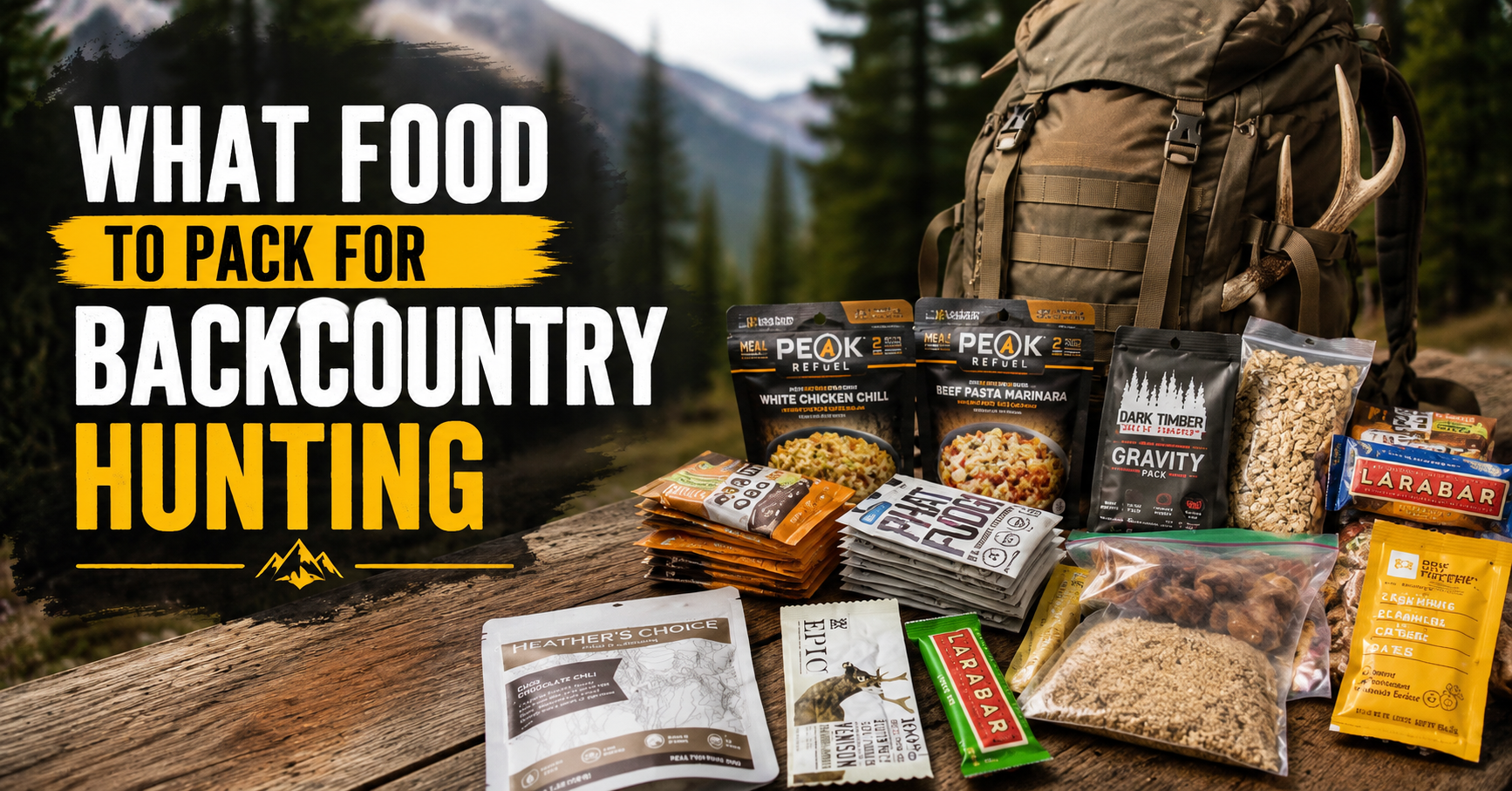

Knowing what food to pack for backcountry hunting is a balance of energy, weight, digestion, weather, water availability, cooking fuel, and legal food-storage requirements. A menu that works at a truck camp may become too heavy or spoil quickly several miles from the trailhead, while an ultralight menu is not useful if you dislike it, cannot digest it, or need more water and fuel than expected.
This guide is written for overnight and multi-day hunters traveling on foot. It provides flexible food categories rather than one universal calorie number because needs change with body size, terrain, elevation, temperature, pack weight, trip length, and the effort of a game-meat pack-out.
Quick Answer
Pack lightweight, shelf-stable foods that you have already tested: oatmeal or granola for breakfast; tortillas, nut butter, tuna or chicken pouches, hard cheese, and shelf-stable meat for lunch; nuts, dried fruit, bars, jerky, pretzels, and other easy snacks during the hunt; and a freeze-dried or dehydrated meal, instant potatoes, couscous, rice, or noodles for dinner. Include carbohydrates for active movement, fat for energy density, protein for recovery, salty foods or an appropriate electrolyte option for sustained sweating, and one compact reserve day or emergency ration. Plan enough treated water for drinking and cooking, and carry a no-cook backup in case the stove fails or fires are prohibited. Verify current land-manager rules for bear-resistant containers, food storage, fires, permits, and waste before leaving.
Backcountry Food Checklist
| Food Category | Practical Options | Why It Works | What to Check |
|---|---|---|---|
| Breakfast | Instant oats, granola, powdered milk, dried fruit, nut or seed butter, breakfast bar | Fast preparation and familiar carbohydrates | Water, fuel, portion size, allergens, and cold-weather texture |
| No-cook lunch | Tortillas, bagels, nut butter, tuna or chicken pouches, shelf-stable sausage, hard cheese | Can be eaten while glassing without setting up a stove | Package storage instructions, spoilage risk, odor, and trash volume |
| Trail snacks | Nuts, trail mix, dried fruit, bars, jerky, pretzels, crackers, energy chews | Small portions are easy to eat throughout a long day | Palatability, choking risk while moving, sodium, sugar, and packaging |
| Dinner | Freeze-dried entrée, dehydrated homemade meal, instant potatoes, couscous, noodles, rice | Warm meal with compact dry ingredients | True serving size, rehydration water, altitude, cook time, and fuel |
| Recovery add-on | Protein powder, powdered milk, jerky, fish pouch, nut butter, carbohydrate drink | Adds protein or carbohydrates after a hard day | Digestion, medication interactions, allergens, and water needs |
| Emergency reserve | Dense bars, nuts, nut butter packets, trail mix, ready-to-eat meal | Requires little or no preparation if delayed | Keep separate, inspect expiration, and protect from wildlife |
| Hydration support | Treated water, drink mix, broth, salty snack, electrolyte product when appropriate | Supports fluid replacement and menu variety | Water sources, treatment method, personal health needs, and product directions |
Important Backcountry Safety and Legal Notice
Food-storage, fire, water, camping, and access rules can change by state, federal unit, season, campsite, and emergency order. Some areas require a specific approved bear-resistant container; others provide lockers or permit a defined hanging method. A soft bag, cooler, dry bag, or homemade container is not automatically legal or bear-resistant.
Check the current regulation booklet, land-manager website, permit terms, fire restrictions, and ranger notices immediately before the hunt. The National Park Service food-storage guidance explains that backcountry users should confirm the exact local method before entering the field. Store food, trash, utensils, and other scented items as required; never keep them in the sleeping area, feed wildlife, or leave scraps behind.
Your hunt plan should also include navigation, weather protection, first aid, emergency communication, and a trusted contact who knows the route and return time. Food is one part of backcountry safety, not a substitute for conditioning, hunter education, conservative decisions, or turning around when conditions become unsafe.
How Much Food Should a Backcountry Hunter Pack?
There is no single correct calorie total or food weight for every hunter. A large hunter climbing steep terrain in cold weather with a heavy pack may need considerably more than a smaller person on a mild, low-mileage hunt. Appetite also changes at altitude, and some people struggle to eat enough during the first days.
Use this planning method instead of copying another hunter’s menu:
- Record a realistic training day. Wear the planned pack, hike similar elevation, and note what you eat, what remains, and how your energy and stomach respond.
- Count complete days and partial travel days. Include the hike in, hunting days, expected pack-out, and hike out.
- Build each day from the nutrition labels. Total the energy and nutrients in the actual portions you will carry, not the manufacturer’s suggested serving if you plan to eat the whole pouch.
- Adjust for work and conditions. Consider elevation gain, cold, pack weight, duration, and whether a successful harvest could extend the physical effort.
- Add a compact reserve. Weather, injury, navigation problems, or a long game recovery can delay the return.
- Weigh the complete food system. Include packaging, bear canister or required storage, stove, fuel, pot, spoon, water-treatment equipment, and cooking water carried between sources.
Calorie density helps reduce weight, but maximizing fat at the expense of digestion, protein, carbohydrates, micronutrients, and appetite is a poor plan. Pack foods you will actually eat when tired, cold, or slightly nauseated. A lighter ration that comes home untouched did not fuel the hunt.
The Best Types of Food for Backcountry Hunting
1. Fast breakfasts
Early starts often leave little time to cook. Instant oatmeal with powdered milk, dried fruit, nuts, and nut butter is easy to portion. Granola with powdered milk can be eaten with cold treated water when you want to avoid firing a stove before daylight. Breakfast bars, tortillas with nut butter, and premeasured drink mixes are useful alternatives.
Test the meal in cold weather. Some bars and nut butters become hard, while large servings of oatmeal may feel too bulky before a climb. Pack coffee or tea only if it is already part of your routine, and include the water and fuel it requires.
2. No-cook lunches
A good hunting lunch should be edible with cold hands, quick to put away, and quiet enough for a glassing location. Tortillas and dense bagels resist crushing better than ordinary sandwich bread. Pair them with nut or seed butter, shelf-stable tuna or chicken pouches, aged hard cheese, or shelf-stable sausage when the label and expected temperature permit.
Once a package is opened, follow its storage instructions and eat the portion promptly. Do not assume every cheese, cured meat, fish pouch, or homemade sandwich is safe for several warm days without refrigeration.
3. Snacks for steady field energy
Backcountry hunting often alternates between climbing, slow stalking, and long periods of glassing. Small foods distributed through the day may be easier to eat than one large lunch. Useful options include:
- Nuts and seeds without shells.
- Trail mix with dried fruit and a sweet or salty component.
- Nut or seed butter packets.
- Jerky or other shelf-stable meat with clear storage directions.
- Oat, fruit, protein, or energy bars tested in the expected temperature.
- Pretzels, crackers, chips, or savory snack mixes protected from crushing.
- Dried mango, raisins, dates, apricots, or fruit leather.
- Energy chews or candy for quick carbohydrates during a hard climb, used as part of a broader menu rather than the entire diet.
Balance sweet and savory foods. Flavor fatigue is real, and a hunter carrying only sweet bars may stop eating them after several days. Resealable portions also limit crumbs and make it easier to track what remains.
4. Hot dinners
A warm dinner can support hydration, recovery, and morale after a cold day. Freeze-dried meals are convenient, but read the total calories, sodium, allergens, servings, required water, and rehydration time. “Two servings” may not match one hunter’s appetite after a long pack-out.
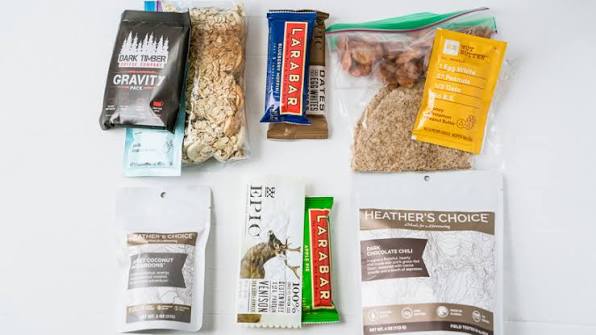
Lower-cost dry options include instant potatoes, couscous, noodles, rice meals, dehydrated beans, soup, and homemade dehydrated entrées. Add a separately packed protein or fat only if it is shelf-stable and compatible with the meal. Label homemade bags with ingredients, water quantity, soak or cook time, and the date prepared.
5. A no-cook backup
Carry at least one meal or a meaningful portion of the reserve that can be eaten without heat. Stoves can fail, fuel can run short, winds can make cooking unsafe, and land managers may prohibit open flames or restrict certain stoves during high fire danger. Nut butter, tortillas, bars, trail mix, jerky, and ready-to-eat pouches can bridge the gap.
6. An emergency reserve
Keep a compact reserve separate from routine snacks so it is not consumed casually. It should tolerate the expected temperature, require little or no water, fit inside the approved animal-resistant storage system, and remain edible if you are delayed. Review it before each trip rather than letting the same bar sit in the pack for years.
A Practical One-Day Backcountry Hunting Menu
| Time | Example | Purpose | Cold or No-Cook Alternative |
|---|---|---|---|
| Before first light | Oatmeal, powdered milk, dried fruit, and nut butter | Carbohydrates plus fat and protein | Granola with treated water or a dense breakfast bar |
| Mid-morning | Trail mix and dried fruit | Easy energy without a long stop | Same |
| Lunch while glassing | Tortilla with nut butter, plus a tuna or chicken pouch | Portable carbohydrate, fat, and protein | Same; confirm pouch storage directions |
| Afternoon | Jerky, pretzels, and a bar | Savory variety and portable fuel | Same |
| After returning to camp | Freeze-dried entrée with instant potatoes or dehydrated vegetables | Substantial meal and warm fluid | Ready-to-eat wrap, nuts, and shelf-stable protein |
| Reserve | Nut butter packet, dense bar, and small trail-mix portion | Delay or unexpected exertion | Already no-cook |
This is a framework, not a prescription. Change portion sizes and ingredients based on nutrition labels, training trips, allergies, health needs, climate, and appetite. Add enough variety that you do not have to force down the same flavor at every stop.
Hydration and Electrolytes
Food planning fails if the menu assumes water that is unavailable or unsafe. Mark reliable sources on an offline map, verify current flow and access with the land manager, and know the distance between them. Carry enough capacity for dry stretches and camp cooking. A backup treatment method is prudent when one filter failure could end the hunt.
Clear mountain water can still contain disease-causing organisms. The CDC backcountry water-treatment guidance recommends boiling when water safety is uncertain, or using another suitable treatment method; it notes that many portable filters do not remove every type of microbe. Follow the instructions and limits of the exact filter, purifier, disinfectant, or UV device.
Plain water and normal meals may be sufficient for many moderate days. Longer periods of heavy sweating, heat, or sustained effort may justify salty foods or an electrolyte product used according to its directions. More is not automatically better: excessive water without appropriate electrolytes can also be dangerous. Hunters with heart, kidney, blood-pressure, metabolic, or other medical conditions should ask a clinician for individualized hydration and sodium guidance.
Food Safety Without a Cooler
For multi-day travel without dependable refrigeration, build most of the menu from shelf-stable foods. The USDA guidance for food safety while hiking and camping recommends lightweight choices such as dehydrated foods, dried noodles and soups, nuts, dried fruit, peanut butter, shelf-stable meats, and prepackaged shelf-stable meals.
- Keep perishable food at a safe cold temperature with adequate ice or frozen packs.
- Do not leave perishable food between 40°F and 140°F for more than two hours, or more than one hour when the temperature is above 90°F.
- Wash hands with soap and treated water when possible before eating or preparing food and after toileting.
- Use hand sanitizer as a supplement when soap and water are unavailable, following the product instructions.
- Keep ready-to-eat food, utensils, and hands separate from raw game meat, blood, hide, digestive contents, and contaminated surfaces.
- Discard swollen, leaking, damaged, rancid, moldy, or foul-smelling food rather than taking a risk deep in the field.
A harvested animal creates a second, more urgent food-care problem. Follow current wildlife-agency and public-health guidance for field dressing, cooling, disease testing, transport, and disposal. Do not place ready-to-eat food in a game bag or use contaminated knives and hands for camp meals without proper cleaning.
Bear, Rodent, and Wildlife-Proof Food Storage
All food has odor, including unopened packages and wrappers. Store food, garbage, cooking equipment, toothpaste, lip balm, medications, and other scented items according to the current local rule. An approved hard-sided canister may be mandatory even where trees exist; in other locations, a locker or specific hanging method may be allowed.
- Confirm the rule before packing. A canister must be the approved type for that land unit when approval is required.
- Test the complete fit at home. Include every meal, snack, wrapper, toiletry, and scented item.
- Repackage only when safe. Remove excess boxes and air, retain preparation and allergy information, and use durable labeled bags.
- Keep storage closed when not actively eating. A bear-resistant product only works when properly secured.
- Separate sleeping and food areas as directed. Follow site-specific distances and methods rather than copying a rule from another park.
- Pack out all waste. Crumbs, grease, tea bags, fruit peels, and leftovers are not harmless wildlife food.
Never use your camp food to attract game unless the practice is specifically legal for the species, place, method, and date—and even then, follow every disease-management and land-use rule. Accidental food conditioning can harm wildlife and future visitors.
How to Reduce Food Weight Without Underpacking
- Choose dry, energy-dense foods: nuts, nut butter, dehydrated meals, tortillas, dried fruit, and compact snacks generally carry less water weight.
- Repackage bulky boxes: use labeled, durable bags while preserving ingredients, allergen warnings, cooking directions, and expiration information.
- Use foods in more than one meal: tortillas, nut butter, dried fruit, and instant potatoes can work at breakfast, lunch, or dinner.
- Measure exact portions: do not carry a full family-size bag if you need only part of it.
- Count cooking water and fuel: a very light dry meal may create extra weight or risk if it requires long boiling or scarce water.
- Avoid cans and glass: they add weight and bulky waste unless a specific trip plan justifies them.
- Do not cut the reserve first: remove low-value packaging and redundant foods before eliminating emergency margin.
Planning for Cold, Heat, and Altitude
Cold conditions
Cold can increase energy use and make certain foods difficult to chew. Chocolate, chewy bars, and nut butter may harden. Keep a day portion where body warmth can soften it without contaminating clothing, and select at least one snack that stays easy to eat when frozen. Budget extra stove fuel for snow melting or longer boiling only when the route plan requires it.
Hot conditions
Chocolate, cheese, coatings, and fatty snacks can melt or become unappealing. Perishable food warms quickly, and water demand rises. Favor stable savory foods, protect packaging from leakage, increase water-carry planning, and follow the USDA’s shorter safety limit for perishables above 90°F.
High altitude
Some hunters experience reduced appetite, nausea, or altered taste. Pack familiar, easy-to-eat foods and do not depend on a single rich dinner for most of the day’s intake. Cooking and rehydration can take longer at elevation. Know the signs of altitude illness, descend when symptoms warrant it, and do not treat food or supplements as a cure.
Food for Special Diets and Medical Needs
Vegetarian, vegan, gluten-free, dairy-free, and other diets can work in the backcountry with careful label reading and sufficient variety. Options may include nut and seed butter, nuts, roasted chickpeas, dehydrated beans, soy foods, dairy or plant-based powders, gluten-free grains, and suitable packaged meals.
For severe food allergies, do not rely on repackaged foods with missing labels or shared scoops. Prevent cross-contact, carry prescribed emergency medication in an accessible location, and make sure partners know the response plan. Hunters with diabetes, kidney disease, gastrointestinal conditions, or other medical needs should plan food, hydration, medication storage, and emergency communication with a healthcare professional familiar with their situation.
Common Backcountry Food Mistakes
| Mistake | Why It Causes Problems | Better Approach |
|---|---|---|
| Copying another hunter’s calorie total | Body size, effort, weather, and appetite differ | Test on training hikes and build portions from actual labels |
| Packing only sweet bars | Flavor fatigue can reduce intake | Mix sweet, salty, crunchy, soft, and warm foods |
| Depending on a stove for every calorie | Fuel, fire restrictions, wind, or equipment failure can stop cooking | Carry meaningful no-cook food and a reserve |
| Ignoring cooking water | Dry camps may make the menu impractical | Map sources and total drinking plus meal water |
| Assuming a soft bag is bear-proof | It may fail wildlife rules and provide little protection | Use the exact approved method for the land unit |
| Taking unfamiliar foods | Digestive upset or dislike can become serious far from access | Test every major meal, bar, and drink mix before the hunt |
| Underpacking for a pack-out | A successful harvest can add time and heavy exertion | Keep reserve food and an updated turnaround plan |
| Mixing camp food with raw game handling | Hands, tools, and surfaces can transfer contamination | Separate systems and clean before eating |
What Not to Pack
- Heavy glass containers or unnecessary cans for a foot-based multi-day hunt.
- Perishable meat, dairy, eggs, or prepared foods that cannot remain safely cold.
- Meals that require more water, cookware, or fuel than the route supports.
- Unlabeled homemade food when a severe allergy or ingredient concern exists.
- Foods you have never tested during physical activity.
- Packages that cannot fit inside the legally required wildlife-resistant storage system.
- Alcohol as “warming” or hydration support; it can impair judgment and does not replace food, water, shelter, or insulation.
- An overly rigid menu with no reserve or no-cook option.
Printable-Style Packing Checklist
- One labeled breakfast for each trip day.
- One no-cook lunch for each full hunting day.
- Several small snack portions for each day.
- One dinner for each night.
- Compact emergency reserve kept separate.
- Drink mix or electrolyte option if appropriate.
- Known water sources plus required carrying capacity.
- Primary and backup water-treatment methods.
- Stove, compatible fuel, ignition method, pot, lid, and spoon if cooking.
- At least one meaningful no-cook meal.
- Approved bear-resistant canister, locker plan, or legal storage system.
- Durable bags for all wrappers, crumbs, and leftovers.
- Soap and treated water plan plus hand sanitizer.
- Ingredient, allergy, preparation, and expiration information retained.
- Menu tested in expected temperature and activity.
FAQs
1. How much food should I pack per day for backcountry hunting?
There is no safe universal amount. Calculate portions from your actual food labels, training-hike intake, body size, terrain, elevation, temperature, pack weight, and trip duration. Add a compact reserve for delays and the possibility of a strenuous game pack-out.
2. How many calories does a backcountry hunter need?
Needs vary widely and can rise with cold, climbing, heavy loads, and long days. Instead of copying one number, record intake and performance during comparable training days, then adjust portions. A sports dietitian can help with demanding trips or medical needs.
3. What foods have the best calorie-to-weight ratio?
Nuts, seeds, nut butter, oils, trail mix, chocolate, and other fat-containing foods are energy-dense. Dehydrated meals also save water weight in the pack. Balance density with digestibility, carbohydrates, protein, nutrients, and what you will actually eat.
4. Are freeze-dried meals worth packing?
They are light, shelf-stable, and convenient, but can be costly and may need substantial water and fuel. Check total pouch nutrition, sodium, allergens, rehydration time, and whether the listed servings match your needs.
5. What is the difference between freeze-dried and dehydrated food?
Both remove moisture, but the processes and final texture differ. Freeze-dried meals often rehydrate quickly and retain larger pieces; dehydrated foods can be compact and economical but may need longer soaking or cooking. Follow the specific directions.
6. Can I make my own backcountry meals?
Yes, if you use safe recipes and complete drying, storage, and labeling practices. Record ingredients, allergens, preparation date, water quantity, and cook time. Discard any food with moisture, mold, off odors, damaged packaging, or uncertain storage history.
7. What is a good no-cook hunting breakfast?
Granola with powdered milk and treated water, a nut-butter tortilla, or a dense breakfast bar with dried fruit can work. Test the portion and texture in cold conditions before relying on it.
8. What is a good no-cook hunting lunch?
Tortillas with nut or seed butter, plus a shelf-stable tuna or chicken pouch, hard cheese, or sausage can be practical when label directions and temperatures allow. Add fruit, crackers, or trail mix for variety.
9. Are MREs good for backcountry hunting?
They are durable and ready to eat, but complete packages can be heavy and bulky compared with dehydrated food. Review total weight, calories, trash, water needs, sodium, allergens, and storage requirements before choosing them.
10. Can I pack canned food?
Canned food is shelf-stable until opened but usually carries substantial water and container weight. It may make sense for vehicle-supported camps, while pouches or dry foods are often more practical on foot. Pack out the empty can.
11. Is jerky enough protein for a hunting trip?
Jerky can contribute protein and savory flavor, but it should not be the only food. Pair it with carbohydrates, fats, and varied meals. Check sodium, package storage directions, and any food-safety concerns with homemade jerky.
12. Can I take cheese or salami without a cooler?
Only when the exact product is shelf-stable under the expected conditions. “Hard” or “cured” does not make every product safe indefinitely. Follow the manufacturer’s unopened and opened storage instructions.
13. Are tortillas better than bread?
Tortillas are compact and resist crushing, but dense bagels, flatbread, and sturdy rolls also work. Choose based on weight, nutrition, shelf life, taste, and how well the product survives your pack.
14. Should I bring electrolyte powder?
It may be useful during prolonged heavy sweating, heat, or high exertion, but needs differ. Follow product directions and avoid treating more as better. People with relevant medical conditions should obtain individualized advice.
15. How much water should I carry?
The answer depends on heat, effort, body size, source spacing, cooking needs, and route risk. Map verified current sources, carry capacity for the longest dry section, and include emergency margin. Do not assume a mapped seasonal source is flowing.
16. Is clear mountain-stream water safe to drink?
Not necessarily. Clear water can contain parasites, bacteria, or viruses. Use a treatment method appropriate to the source and follow CDC and device instructions; carry a backup if treatment failure would leave you without safe water.
17. Should I carry a bear canister?
Carry one when the land manager requires it or when it is the appropriate storage method for the area. Some units require an approved hard-sided model, while others provide lockers or permit another method. Verify the current rule before the trip.
18. Can odor-proof bags replace a bear canister?
No bag should be assumed to replace a legally required approved container. Odor containment can help organize food, but wildlife can still detect or access improperly stored items. Follow the exact land-manager requirement.
19. Can I keep snacks in my tent?
No. Store food, wrappers, trash, cooking equipment, and scented items away from the sleeping area according to local rules. Even unopened food can attract bears, rodents, and other wildlife.
20. Should I repackage all my food?
Remove unnecessary boxes and excess air to save space, but retain ingredients, allergen warnings, preparation directions, serving information, and expiration dates. Use strong labeled bags and test that everything fits in required storage.
21. How much emergency food should I bring?
Carry a meaningful reserve based on remoteness, weather, route, communication, and rescue delay—not a token snack. It should require little or no cooking and remain protected in the same wildlife-safe storage system.
22. What food works best in freezing weather?
Choose foods that remain chewable, such as nuts, crackers, jerky suited to your teeth, and meals that rehydrate reliably. Test bars, chews, and nut butter in cold conditions because some become extremely hard.
23. What food works best in hot weather?
Shelf-stable savory snacks, nuts, dried fruit, crackers, and heat-tolerant bars often travel better than chocolate or soft cheese. Protect oily packages from leaks, increase water planning, and apply USDA time limits to perishables.
24. How do I avoid getting tired of my food?
Pack varied flavors, textures, and temperatures. Alternate sweet and savory foods, include a few favorite seasonings or drink flavors, and test the full menu over several days before the hunt.
25. What should vegetarian hunters pack?
Options include nuts, seed butter, roasted chickpeas, dehydrated beans, soy foods, powdered dairy or alternatives, oats, grains, and suitable packaged meals. Read labels and plan enough protein, energy, iron-rich foods, and variety for your needs.
26. How should hunters with severe food allergies pack?
Keep original labels or complete ingredient records, prevent cross-contact, avoid shared scoops and mystery repackaged food, and carry prescribed medication accessibly. Tell partners where it is and how to follow the emergency plan.
27. Can I eat freshly harvested game at camp?
Do not assume it is safe simply because it is fresh. Species, disease advisories, field care, cooling, contamination, required testing, and cooking guidance all matter. Follow current wildlife-agency and public-health recommendations.
28. What food should stay in my daypack while hunting away from camp?
Carry the day’s planned snacks, a no-cook meal, treated water or treatment gear, and a compact emergency portion. Keep food secured from wildlife whenever it is unattended, and return wrappers and leftovers to the approved storage system.
Final Answer
The best answer to what food to pack for backcountry hunting is a tested mix of lightweight breakfasts, no-cook lunches, frequent snacks, simple dinners, hydration support, and a protected emergency reserve. Build portions from your own training experience and the actual nutrition labels, then adjust for terrain, weather, altitude, pack weight, and a possible game pack-out. Carry safe water treatment, a no-cook fallback, and enough fuel and cooking water for the menu. Finally, verify current food-storage, bear-canister, fire, camping, and hunting rules with the responsible wildlife and land-management agencies before leaving.
Read more: