
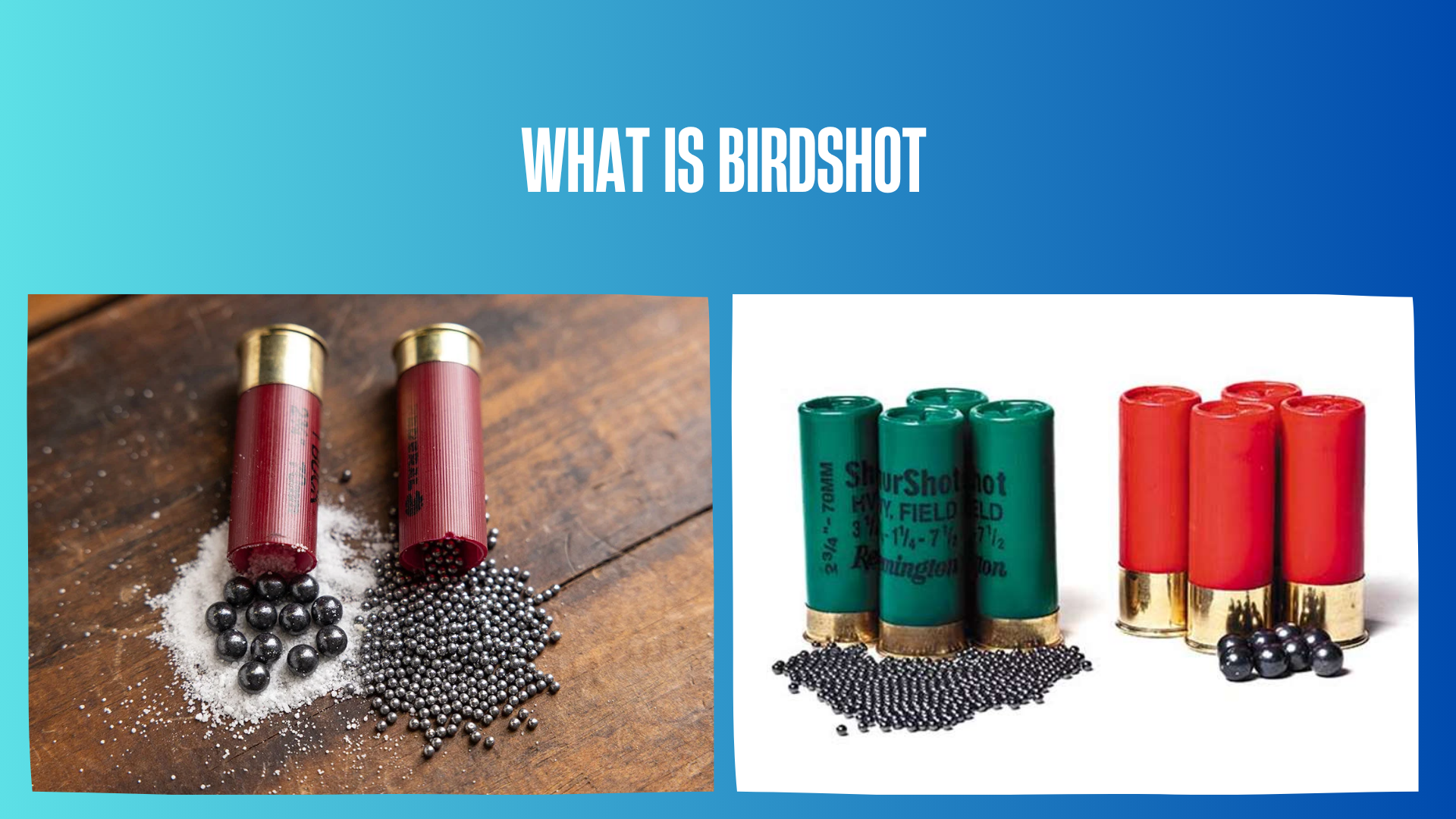

A box of shotgun shells might say “No. 8 shot,” “No. 4 steel,” or “BB,” even though the shells look similar from the outside. Those labels describe the pellets inside, and misunderstanding them can lead to poor equipment choices or unsafe assumptions. If you are asking what is birdshot, the important distinction is that it contains numerous small projectiles rather than one solid bullet.
This guide explains how birdshot is built, how its sizing system works, how it differs from buckshot and slugs, and what beginners should check before recreational shooting or lawful hunting. Ammunition selection also depends on firearm compatibility, local regulations, target species, and demonstrated shooting skill.
Quick Answer: What Is Birdshot?
Birdshot is a category of shotgun ammunition that fires many relatively small round pellets in a single shot. It is commonly associated with clay-target sports, upland bird hunting, and, in suitable approved nontoxic versions, waterfowl hunting. Pellet size is identified by numbers such as No. 9, No. 8, No. 7½, No. 6, or No. 4; within the standard U.S. numbered birdshot system, lower numbers generally indicate larger pellets. Birdshot is still potentially deadly and must be handled with the same firearm-safety rules as all other ammunition. Before use, check the shotgun’s gauge and chamber specifications, the ammunition label, the range rules, and the current hunting regulations for your location.
What Is Inside a Birdshot Shell?
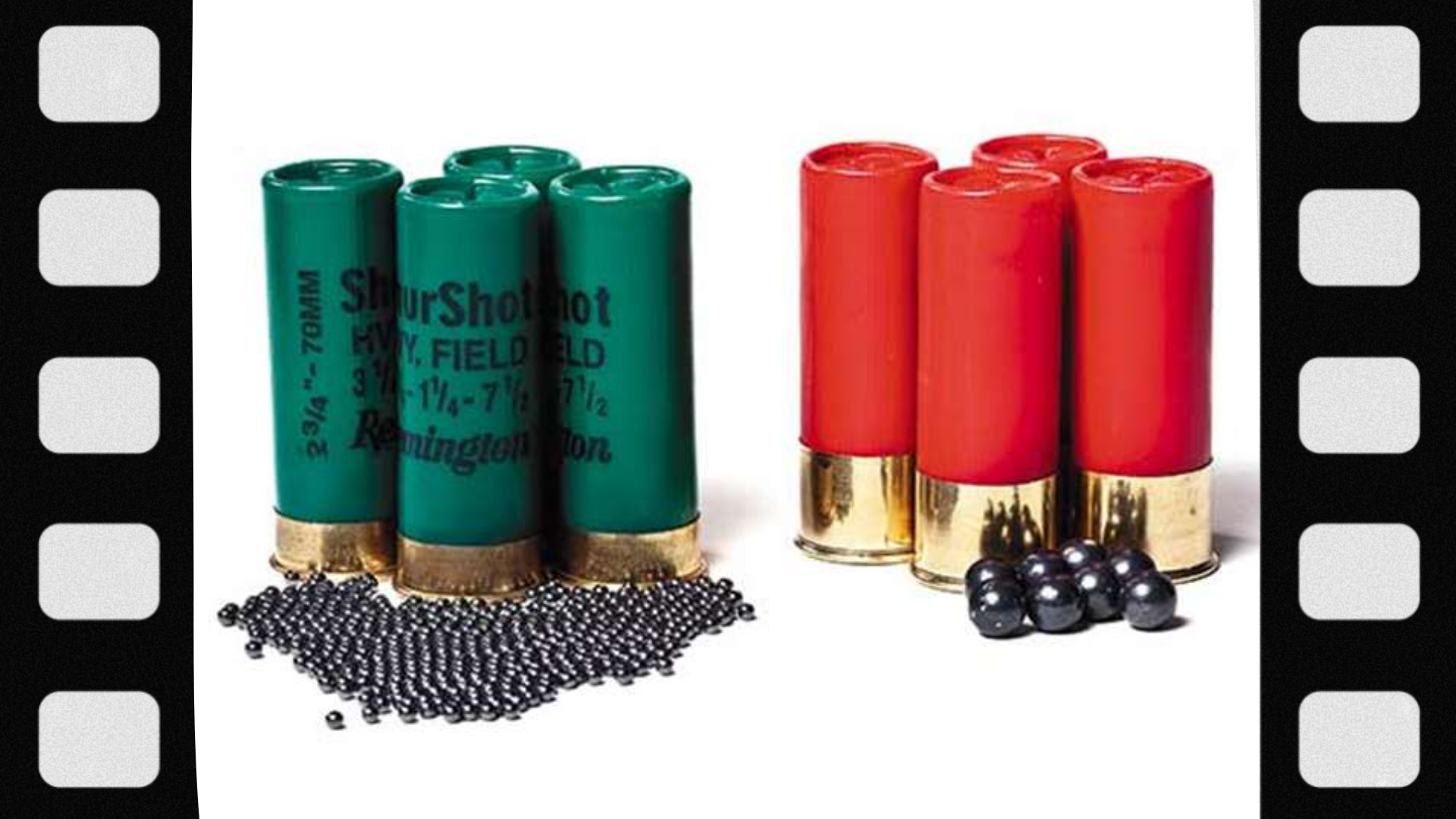
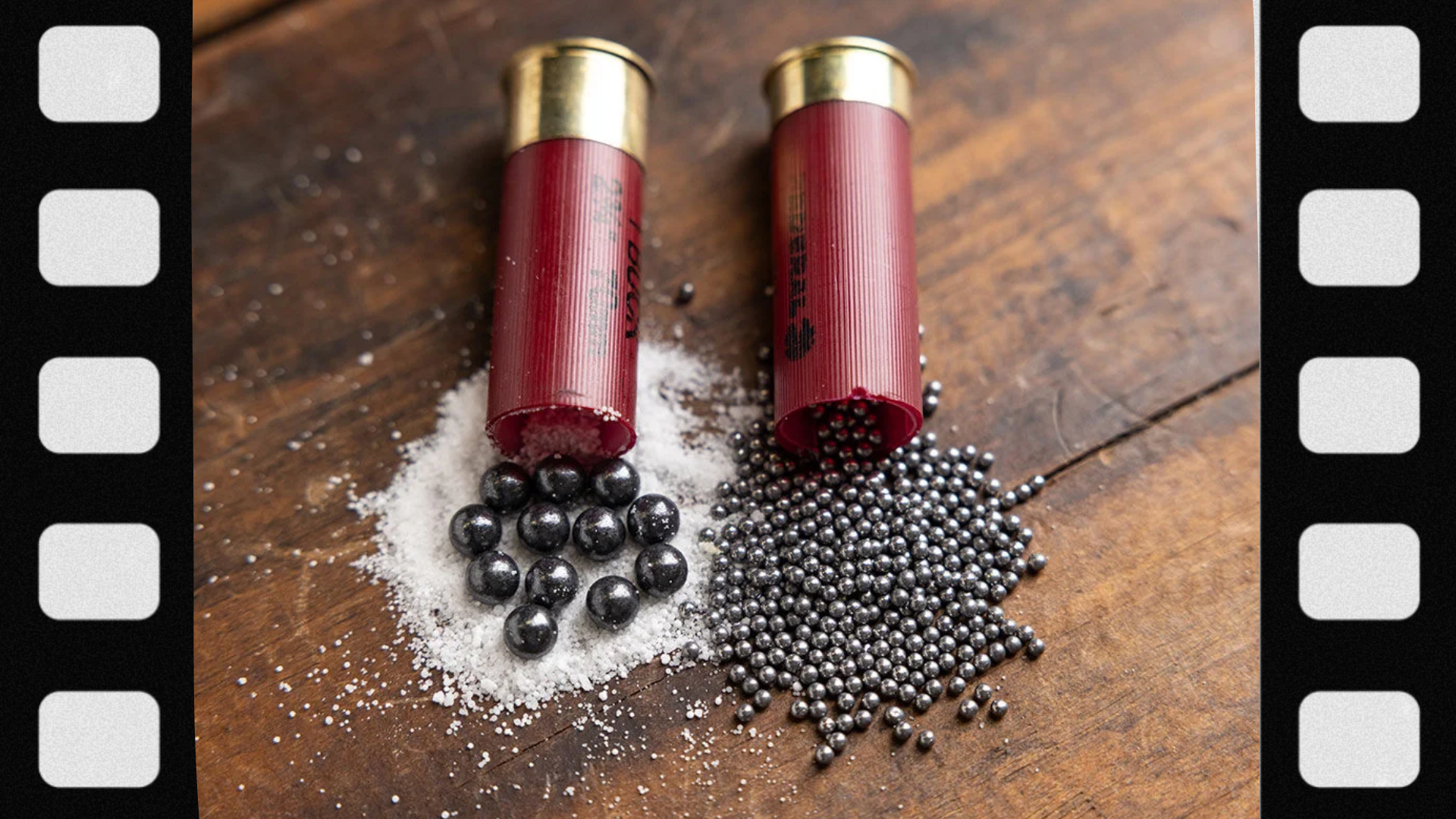
A modern birdshot cartridge is normally called a shotshell. It contains several distinct components working together; “birdshot” describes the pellet payload, not a particular shotgun gauge, shell length, or brand.
- Hull or case: The outer shell holding the components; commonly plastic with a metal head.
- Primer: The ignition component located in the base of the shell.
- Propellant: The powder that produces expanding gas when fired.
- Wad or shot cup: A component separating the powder from the pellets and, in many designs, protecting or carrying the shot through the barrel.
- Shot: A payload of multiple small pellets, which may be lead, steel, bismuth alloy, or another material permitted for the intended use.
When a shotshell is discharged, the payload leaves the muzzle and its pellets generally separate into a growing shot pattern. The actual distribution is not guaranteed to be circular, evenly spaced, or identical from one load and shotgun to another. Hunter-education materials explain the components of a shotshell at Washington Hunter Education.
Birdshot Sizes Explained: Why No. 8 Is Smaller Than No. 4
American birdshot numbering can be counterintuitive. In the usual numbered range, a higher number means a smaller pellet: No. 9 is smaller than No. 8, and No. 8 is smaller than No. 6. Lettered sizes such as BB are larger than many numbered birdshot sizes. This is not the same numbering system used for buckshot.
The table gives nominal U.S. pellet diameters for common sizes. It is a reference for understanding labels, not a universal prescription for species or ranges; manufacturer specifications and some non-U.S. sizing systems may differ.
| Shot size | Nominal pellet diameter | General category or context | What a beginner should understand |
|---|---|---|---|
| No. 9 | 0.080 in | Very small birdshot; commonly encountered in target loads | Many small pellets can fit within a given payload weight. |
| No. 8 | 0.090 in | Small birdshot; clay targets and some small upland birds | Smaller individual pellets than No. 7½ or No. 6. |
| No. 7½ | 0.095 in | Small birdshot; familiar target and upland designation | The half-size is a separate nominal pellet diameter. |
| No. 6 | 0.110 in | Intermediate birdshot; some upland applications | Fewer, larger pellets than No. 8 at equal material and shot weight. |
| No. 5 | 0.120 in | Intermediate-to-larger birdshot | Its suitability depends on species, shell construction, and regulations. |
| No. 4 | 0.130 in | Larger numbered birdshot; various hunting loads | Not the same as No. 4 buckshot. |
| No. 2 | 0.150 in | Large numbered birdshot; sometimes used in nontoxic waterfowl loads | Check both pellet material and local hunting rules. |
| BB | 0.180 in | Lettered, larger shot size often associated with waterfowl loads | BB is a pellet size, not a shotgun gauge. |
Important distinction: A No. 4 birdshot pellet is much smaller than a No. 4 buckshot pellet. The shared number does not make the two interchangeable.
Pellet size versus pellet count
For the same shot material and payload weight, smaller pellets generally mean more pellets, while larger pellets mean fewer. However, a precise pellet count cannot be determined from the shot-size label alone. Payload weight, pellet material, manufacturing tolerances, and shell design also affect the total.
What does “7½ shot” mean?
It means a pellet size between No. 7 and No. 8, not seven and a half pellets in the shell. The same distinction applies when a shell label lists a gauge, a shot weight, or a velocity: each is a different specification.
Birdshot vs. Buckshot vs. Slug: The Important Differences
These names identify broad projectile types. They do not establish that a cartridge is appropriate for a particular animal, legal in a particular area, or compatible with every shotgun.
| Characteristic | Birdshot | Buckshot | Slug |
|---|---|---|---|
| Projectile type | Many small pellets | Fewer, substantially larger pellets | One main projectile |
| Common recreational context | Clay-target shooting | Specialty shotgun patterning where allowed | Appropriate dedicated ranges where permitted |
| Common hunting context | Birds and certain small game | Some larger game, where expressly legal | Some larger game, where expressly legal |
| Pattern behavior | Multiple pellets form a pattern | Multiple larger pellets form a pattern | Single-projectile trajectory |
| Most important caution | Still capable of severe or fatal injury | Requires strict target/backstop awareness | Requires strict target/backstop awareness |
Neither buckshot nor a slug is simply “stronger birdshot.” Each is a different ammunition category with different hunting restrictions, firearm-compatibility considerations, and range-safety requirements. A shotgun may be approved for some loads and not others, depending on its specifications.
What Is Birdshot Used For?
1. Clay-target shooting
Birdshot is widely used in sporting clays, skeet, and trap. The sport’s rules, venue requirements, and firearm specifications determine which target loads are allowed. A supervised range is a good place for a beginner to learn how shot patterns work while practicing safe handling and muzzle control.
2. Upland bird hunting
Birdshot is used for legal hunting of upland game birds such as quail, grouse, and pheasant. The appropriate loading varies with local law, the species, expected conditions, shotgun characteristics, and the hunter’s proven skill. Smaller and larger birdshot sizes reflect different trade-offs; there is no universally correct pellet number for all upland hunting.
3. Waterfowl hunting with approved nontoxic shot
Duck and goose hunting frequently involves steel, bismuth, or other federally approved nontoxic shot. In the United States, federal nontoxic-shot requirements apply to waterfowl and coots, and additional state, tribal, or specific-land restrictions may apply to other hunting. Lead birdshot is not legal for hunting waterfowl or coots under the federal U.S. rule. See the U.S. Fish & Wildlife Service approved-shot guidance.
4. Certain small-game hunting
Some forms of small-game hunting may permit birdshot. Whether it is legal and suitable must be verified for the particular game species, season, property, and jurisdiction. Do not assume that “small game” means every available birdshot load is acceptable.
Lead, Steel, Bismuth, and Other Birdshot Materials
Shot material matters because pellets of the same diameter may differ in density, hardness, behavior in the barrel, and environmental impact. Material also affects legal compliance. A “nontoxic” regulatory designation means the material has received the relevant wildlife-hunting approval; it does not mean the pellets are harmless or safe to swallow.
| Shot material | Main practical consideration | Regulatory/compatibility check |
|---|---|---|
| Lead | Traditional, dense, relatively soft pellet material | Not allowed for U.S. waterfowl/coot hunting; other restrictions may apply. |
| Steel (iron) | Common approved nontoxic option; less dense and harder than lead | Verify shotgun and choke compatibility with steel shot. |
| Bismuth alloy | Approved nontoxic options may provide different density and hardness characteristics | Check the precise approved product and manufacturer instructions. |
| Approved tungsten-containing compositions | Material properties vary by specific alloy and loading | Not every tungsten-containing mixture is automatically approved for every hunting context. |
Hunters should consult the current federal migratory-bird regulations and the applicable state wildlife agency. The FWS also published a clarification about approved nontoxic shot in April 2026. Manufacturer guidance matters because some older shotguns or particular choke systems are not suitable for certain hard-shot loads.
How Birdshot Patterns Work—and Why Distance Matters
Birdshot does not expand into an evenly filled circle as soon as it leaves a barrel, nor does it travel as a single compact mass indefinitely. The pattern usually becomes more spread out as distance increases, with variation from shell to shell. A choke is a constriction at or near the muzzle that can influence the pattern, but it does not create a predictable universal diameter for every ammunition type.
Ammunition type, pellet material, shot size, barrel, choke, and distance interact. Some combinations may produce gaps or uneven distributions. That is why responsible hunters practice under controlled, safe conditions and assess patterns using an appropriate range setup and qualified instruction rather than relying on a slogan such as “birdshot spreads automatically.”
Never count on shot spread to make aiming optional. An identifiable legal target, a clear field of fire, and a safe background remain essential. Pellets can travel beyond the intended target area and can seriously injure people or animals.
How to Read a Birdshot Box Without Confusing the Labels
A product package may carry several different measurements. A beginner should read all of them, not just the largest printed number:
- Gauge: The shotgun-bore designation, such as 12 gauge or 20 gauge. A gauge number is not a birdshot pellet size.
- Shell length: A designation such as 2¾ inches or 3 inches. This must be compatible with the firearm’s chamber and manufacturer instructions.
- Shot size: A number or letter, such as No. 8, No. 6, No. 2, or BB, indicating nominal pellet diameter.
- Shot material: Lead, steel, bismuth, or an approved alternative; verify restrictions for your intended use.
- Payload weight: The weight of the pellets, generally expressed in ounces for U.S. shotshells; it is not the weight of the complete shell.
- Additional manufacturer information: Load identification, performance information, and warnings that may matter for compatibility.
Compatibility warning: A 20-gauge shell must never be mixed with 12-gauge ammunition. Incorrect-gauge combinations can cause catastrophic hazards. A shell longer than the shotgun’s marked chamber is likewise unsafe. SAAMI’s ammunition handling guidance advises matching the cartridge designation to the firearm and checking the owner’s manual.
Birdshot Safety Rules Every Beginner Should Know
Birdshot is not a toy, a “warning shot,” or a harmless form of ammunition. Its small individual pellets can still cause life-threatening injuries. All four fundamental firearm-safety rules apply:
- Treat every firearm as if it is loaded. Check its condition using the owner’s manual and qualified instruction.
- Always point the muzzle in a safe direction. Do not sweep anyone, even when you believe the firearm is unloaded.
- Keep your finger off the trigger and outside the trigger guard until ready to shoot.
- Know the target and what is beyond it. Never shoot toward roads, buildings, people, livestock, or an unsafe background.
Wear appropriate eye and hearing protection at the range, use only authorized shooting areas, supervise new shooters, and follow the instructor’s commands. When not in use, keep firearms secured against unauthorized access and store ammunition appropriately. Project ChildSafe provides practical safe-handling and storage information.
Are birdshot pellets harmless at close range?
No. Birdshot can cause severe injuries or death. Small-pellet size does not make it safe to aim at a person or any target that cannot lawfully and safely be shot. “Nonlethal birdshot” is a dangerous misconception.
Birdshot Laws and Ethical Hunting: What Must Be Verified?
As of October 12, 2026, the general U.S. federal rule requires approved nontoxic shot for hunting waterfowl and coots. State and tribal regulations, refuge rules, land-management requirements, open seasons, legal species, bag limits, and allowed methods can be more restrictive. Requirements outside the United States differ and must be checked separately.
For any bird-hunting trip, confirm the following with the official agency responsible for the exact location:
- Whether the target species may legally be hunted, and whether its season is open.
- Which licenses, stamps, hunter-education documents, and permits are required.
- Whether lead or particular nontoxic materials are prohibited or required.
- Whether any shot-size, gauge, capacity, or firearm-type restrictions apply.
- Whether the land is accessible for hunting and whether landowner permission is necessary.
- Whether the rules have changed for a specific refuge, management area, or emergency order.
For current nationwide federal context, consult the U.S. Fish & Wildlife Service regulations hub; then verify the destination state’s current wildlife-agency publication. Follow ethical range limitations, avoid uncertain shots, and make every reasonable lawful effort to recover harvested game.
Common Birdshot Misunderstandings to Avoid
- “Birdshot cannot seriously hurt someone.” False. Every shotshell deserves full firearm-safety precautions.
- “No. 8 is larger than No. 4.” False within the standard numbered U.S. birdshot system.
- “No. 4 birdshot and No. 4 buckshot are the same.” False. They belong to different shot-size categories.
- “All birdshot is lead.” False. Birdshot may use different pellet materials.
- “Nontoxic shot is fine in every shotgun.” False. Confirm barrel, choke, chamber, and ammunition compatibility.
- “A shell marked 12 gauge fits every 12-gauge shotgun.” False. Chamber length and manufacturer restrictions still matter.
- “A wider pattern means the shooter need not aim.” False. Safe target identification and deliberate marksmanship are mandatory.
- “Legal for target shooting means legal for every hunt.” False. Species, area, and shot-material restrictions vary.
A Beginner’s Pre-Range or Pre-Hunt Checklist
- Read the shotgun manual and inspect the manufacturer’s gauge and chamber markings.
- Confirm the exact shotshell gauge, length, material, and shot-size designations.
- Ask an instructor or qualified professional about any steel-shot or choke compatibility questions.
- Check the shooting range’s ammunition and target restrictions before arriving.
- For hunting, verify the current official season, species identification, permit, shot-material, land-access, and other rules.
- Prepare suitable eye and ear protection, weather gear, navigation, and a communication plan when relevant.
- Stop and obtain professional advice if ammunition is damaged, the markings are unclear, or firearm function is abnormal.
Final Answer: What Is Birdshot?
Birdshot is a shotgun-shell payload made up of numerous small pellets, used most commonly for clay targets and lawful bird or small-game hunting. Its numbered sizes run opposite to what many beginners expect: No. 8 is smaller than No. 4, and lettered shot sizes may be larger still. It differs from buckshot and slugs in projectile form and typical use. The responsible next step is to match the ammunition to the exact shotgun, obey range and hunting regulations, and learn safe handling from qualified instruction. Birdshot is always potentially lethal; safety and ethics matter more than any particular shot-size label.
FAQs
1. What does birdshot mean?
It means a shotgun payload made up of numerous relatively small pellets. The word refers to the projectile category, not to one specific gauge or shell length.
2. Is birdshot a bullet?
Not in the usual single-bullet sense. A birdshot shotshell contains multiple pellets; each pellet is a projectile.
3. Is birdshot ammunition?
Yes. It is a type of shotshell ammunition and must be handled, transported, and stored under the applicable firearm-safety and legal requirements.
4. Why is it called birdshot?
The name reflects its long association with bird hunting. That does not mean every bird species can be legally hunted or that any birdshot load is appropriate.
5. What is the difference between birdshot and buckshot?
Birdshot uses smaller pellets, generally in greater numbers per equal payload weight. Buckshot uses fewer, substantially larger pellets and has a separate shot-size system.
6. What is the difference between birdshot and a slug?
Birdshot releases multiple small pellets. A slug is a single main projectile; each ammunition type has separate safety and suitability considerations.
7. Is No. 4 birdshot the same as No. 4 buckshot?
No. Their shot-size labels refer to different systems. No. 4 buckshot pellets are substantially larger than No. 4 birdshot pellets.
8. Is No. 8 birdshot bigger than No. 6?
No. In the standard U.S. numbered birdshot system, No. 8 pellets are smaller than No. 6 pellets.
9. What is No. 7½ birdshot?
It is a common intermediate pellet size nominally between No. 7 and No. 8, frequently seen in clay-target and some upland-oriented loads.
10. What is BB birdshot?
BB denotes a larger lettered shot size. It is often encountered in waterfowl-related ammunition; confirm material, legality, and compatibility before use.
11. What does a shotgun shot-size number measure?
It designates nominal pellet diameter under a particular shot-size system. It does not designate the number of pellets in the shell.
12. How many pellets are in a birdshot shell?
The count varies with shot size, payload weight, and pellet material. A shot-size marking alone cannot establish an exact count.
13. Is birdshot made from lead?
Some loads are, but others contain steel, bismuth alloy, or approved alternative materials. Read the specific ammunition label.
14. Can birdshot be made of steel?
Yes. Steel birdshot is widely used for hunting applications requiring approved nontoxic shot, provided the shotgun and choke are compatible.
15. What does nontoxic shot mean?
In U.S. migratory-bird hunting it means a shot material approved under the relevant federal framework to reduce wildlife poisoning risks. It does not mean the shot is harmless to humans.
16. Is lead birdshot legal for duck hunting in the United States?
No. Federal law requires approved nontoxic shot for waterfowl and coots. Consult the U.S. Fish & Wildlife Service and the current state or tribal regulations.
17. Is steel shot required for all bird hunting?
Not universally. U.S. federal waterfowl/coot rules require approved nontoxic shot, of which steel is one option. Other species or specific lands may have additional or different restrictions.
18. Can you use birdshot for clay pigeons?
Yes, suitable birdshot loads are routinely used in clay-target sports, subject to the venue’s ammunition requirements and shotgun compatibility.
19. Is birdshot used for trap shooting?
Yes. Trap commonly uses suitable small-shot target ammunition. Follow your club’s rules and equipment guidance.
20. Is birdshot used for skeet?
Yes. Small-pellet target shotshells are commonly associated with skeet. The range’s rules determine permitted ammunition.
21. Can birdshot be used for pheasants?
Some birdshot loads are used in lawful pheasant hunting. The proper load depends on local rules, conditions, the shotgun, and responsible shot selection.
22. Can birdshot be used for quail?
Yes, birdshot is used for lawful quail hunting. Select ammunition based on official regulations, manufacturer recommendations, and hunter training.
23. Is birdshot good for turkey hunting?
Some specialized birdshot-based loads are intended for legal turkey hunting, but suitability and permitted shot materials differ. Consult current regulations and the ammunition and firearm manufacturers.
24. Is birdshot legal for deer hunting?
Rules vary, and small-pellet birdshot is generally not the appropriate category for deer. Check the local agency’s permitted-methods regulations and hunter-education guidance.
25. How far does birdshot travel?
There is no single safe distance or maximum range for all birdshot. Pellet size, material, gun, elevation, and conditions influence travel; always use approved shooting areas and a safe background.
26. Does birdshot spread immediately?
It begins to form a pattern after leaving the barrel, but its distribution changes with distance and equipment. Never treat spread as a substitute for careful aiming.
27. Does a tighter choke change a birdshot pattern?
A choke can influence pattern distribution, but results vary with firearm and ammunition. Check choke compatibility and receive instruction at a suitable range.
28. Can you fire steel birdshot through any choke?
No. Chokes and barrels have manufacturer-specific restrictions. Verify compatibility rather than assuming a particular steel load is safe.
29. Can a 20-gauge birdshot shell be used in a 12-gauge shotgun?
No. Different gauges are not interchangeable. Dangerous obstructions can occur if an incorrect-gauge shell enters a larger chamber.
30. What does 2¾-inch birdshot mean?
It identifies the nominal shotshell length, not the pellet diameter. The shell length must comply with the firearm’s chamber marking and manufacturer instructions.
31. Can a 3-inch shotshell be fired in a 2¾-inch chamber?
No. Firing shells longer than the marked chamber is dangerous. Check the owner’s manual and consult a qualified professional if markings are uncertain.
32. Is birdshot less dangerous than buckshot?
Differences in pellet size do not make birdshot safe. Birdshot can cause fatal injury, and all shotshells require the same basic firearm-safety discipline.
33. Is birdshot nonlethal?
No. It is potentially lethal ammunition and must never be used as a prank, warning shot, or supposedly harmless deterrent.
34. Does birdshot have recoil?
Yes. Felt recoil depends on the overall ammunition load, firearm characteristics, and fit, not simply on whether the pellet type is labeled birdshot.
35. What is a shot pattern?
It is the distribution of individual shot pellets on a target surface at a given distance. Patterns are affected by ammunition, choke, barrel, and other conditions.
36. Does birdshot always create a uniform circle?
No. Patterns can be uneven, and density changes with distance. A broad outline does not guarantee useful pellet distribution.
37. How do I know which birdshot is compatible with my shotgun?
Compare gauge, chamber designation, approved ammunition types, and choke information in the shotgun’s owner’s manual. Ask the manufacturer or a qualified gunsmith when unsure.
38. Should damaged birdshot shells be used?
No. Do not use corroded, deeply dented, or otherwise damaged ammunition. Seek advice from a qualified range or ammunition professional on safe disposal.
39. Where should birdshot ammunition be stored?
Keep it secure, dry, and inaccessible to unauthorized people, following manufacturer guidance and local law. Separate locked storage from firearms is a prudent household practice.
40. What should a new shooter learn before using birdshot?
Take a recognized firearm- or hunter-education course, learn the four fundamental safety rules, read the firearm manual, and practice at a supervised authorized range.
41. Can birdshot be used on public land?
Only where shooting or hunting is authorized and the specific ammunition is lawful. Rules may differ among wildlife management areas, national forests, refuges, and other public lands.
42. Are shot-size systems identical in every country?
No. Nomenclature and nominal dimensions may differ internationally. Confirm the product’s specifications instead of assuming a foreign shot-number label matches U.S. conventions.