
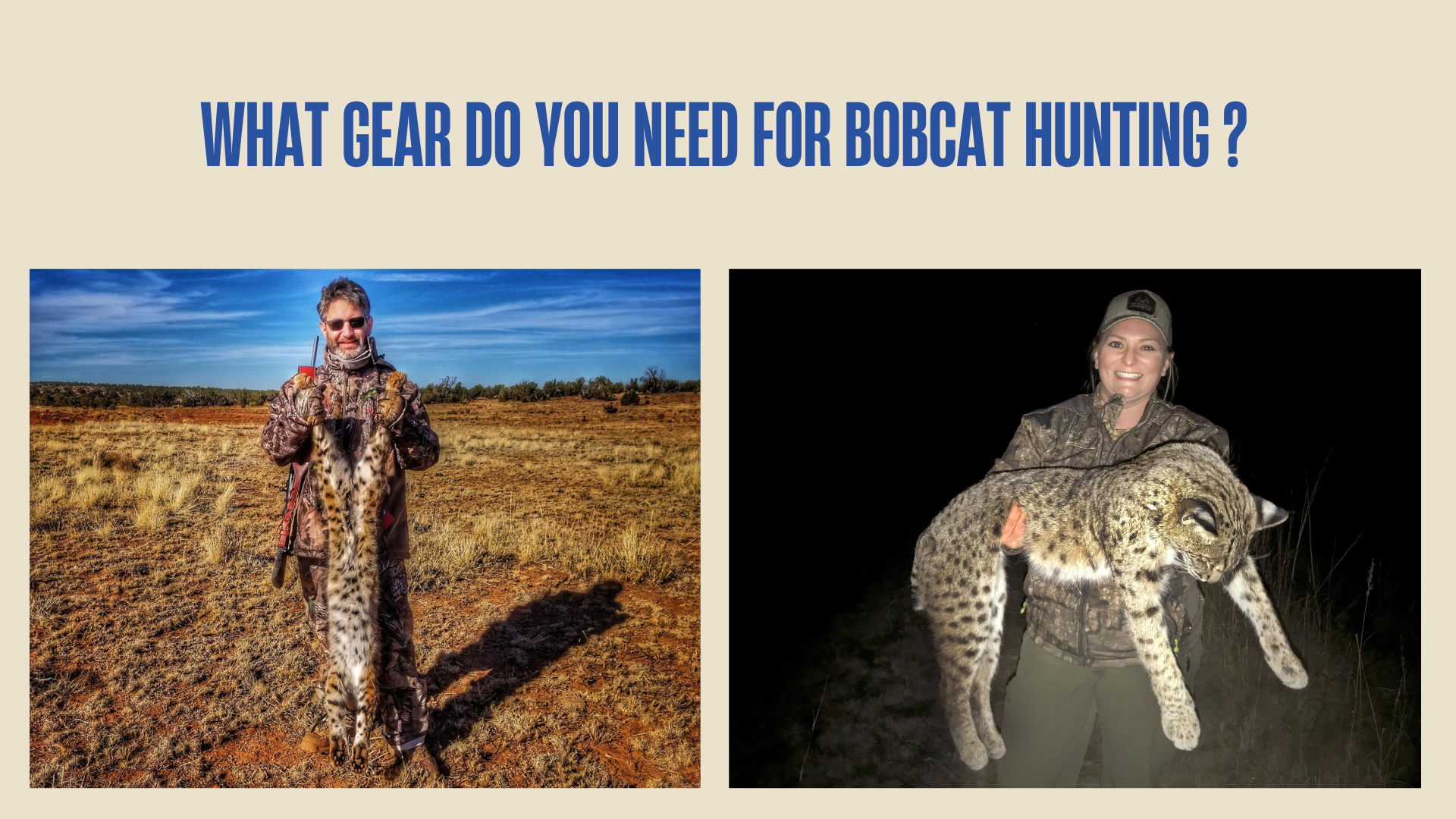
If you are asking what gear do you need for bobcat hunting, the practical answer is a legal hunting setup, reliable observation and calling tools, quiet weather-appropriate clothing, navigation and emergency supplies, and a lawful recovery kit. The exact list changes with the hunting method, terrain, weather, distance from the vehicle, and local rules. This guide separates necessities from conveniences so a beginner can pack safely without carrying a store’s worth of equipment.
Quick Answer: What Gear Do You Need for Bobcat Hunting?
At minimum, carry every required license, permit, tag, and land-access document; a legal and familiar firearm or archery setup; compatible ammunition or arrows; eye and hearing protection; binoculars; a call; quiet clothing and boots; navigation; communication; first aid; water; a headlamp; and lawful tagging or recovery supplies. A decoy, shooting support, seat pad, rangefinder, electronic caller, spare batteries, and specialized night equipment can help in some situations, but they are not universal necessities. Electronic calls, bait, dogs, lights, night hunting, and thermal or night-vision devices may be restricted or prohibited. Check the current wildlife-agency rules and the rules for the specific property immediately before hunting.
Important Safety and Legal Notice
Legal information checked August 27, 2026. Bobcat seasons, licenses, harvest limits, legal weapons, ammunition, hunter-orange rules, hunting hours, calls, bait, decoys, dogs, lights, night optics, tagging, reporting, and pelt-possession rules vary by jurisdiction and may change. The U.S. Fish and Wildlife Service state-license directory explains that each state has its own requirements, and federal lands may add site-specific permits or rules. Official regulations override all general online guidance, including this article.
The variation is substantial. For example, Massachusetts’ official bobcat page lists manual and electronic calls, decoys, and bait as legal for its 2026 season while prohibiting dogs. Tennessee’s official small-game rules describe a separate nighttime opportunity with restrictions on land, equipment, and dogs. These examples are not permission to use the same methods elsewhere; they show why hunters must check their own state, season segment, wildlife unit, and property.
Complete hunter education and practice with the equipment before hunting. The International Hunter Education Association provides links to state hunter-education requirements and courses.
Bobcat Hunting Gear at a Glance
| Category | Item | Priority | What to Check |
|---|---|---|---|
| Legal documents | License, permits, tags, identification, land permission, current regulations | Required as applicable | Species, unit, dates, hours, weapon, reporting, and property-specific rules |
| Hunting implement | Legal firearm or bow, compatible ammunition or arrows, secure case | Essential | Local legality, safe operation, manufacturer instructions, fit, and proven accuracy |
| Personal protection | Hearing protection, eye protection, required hunter orange | Essential or legally required | Comfort, fit, visibility rules, and compatibility with other gear |
| Observation | Binoculars; legal sighting optic; optional rangefinder | Essential to useful | Clear image, low-light usefulness, weather resistance, and secure carry |
| Calling | Hand call or legal electronic caller; optional decoy | Useful; method-dependent | Electronic-call and decoy rules, volume control, batteries, and reliability |
| Stability | Shooting sticks, bipod, or a practiced field rest | Useful | Stable position, terrain, safe muzzle control, and pack weight |
| Clothing | Quiet layers, rain shell, gloves, hat, boots, optional gaiters | Essential | Forecast, insulation, noise, traction, moisture control, and required orange |
| Navigation | Offline map, compass, GPS or phone, property map | Essential | Boundaries, offline access, battery level, and ability to use the tools |
| Emergency | First-aid kit, headlamp, water, food, fire starter, repair kit, emergency shelter | Essential; scale to trip | Distance, weather, medical needs, remoteness, and expiration dates |
| Recovery | Disposable gloves, knife, tag fastener, marking material, clean transport container | Essential if a harvest is possible | Tagging, reporting, sealing, possession, transport, and use requirements |
| Electronics | Spare batteries or power bank; optional legal night equipment | Optional | Local law, weather resistance, battery condition, and safe identification limits |
The Essential Legal and Safety Layer
Licenses, tags, regulations, and access documents
Your documents belong at the top of the checklist, not in an afterthought. Download or print the current bobcat regulations for the place and date you will hunt. Confirm the open area, legal hours, legal implement, ammunition restrictions, bag or possession limit, tagging procedure, harvest-reporting deadline, and any pelt-sealing requirement. Carry written landowner permission when required, and load property boundaries into an offline map.
If the hunt is on a national wildlife refuge or another managed public property, check the site’s own rules as well as state regulations. The U.S. Fish and Wildlife Service refuge-hunting guidance notes that hunters need appropriate state licenses and that refuge hunts generally follow state frameworks while retaining location-specific requirements.
A legal, familiar hunting implement
Use a firearm or archery setup that is legal for bobcat where you hunt, compatible with its ammunition or arrows, and accurate in your hands from realistic field positions. A rifle, shotgun, handgun, bow, crossbow, or muzzleloader may be legal in one place or season and prohibited in another. Do not select a caliber, gauge, projectile, or broadhead from a generic checklist; confirm the regulation, read the manufacturer’s manual, and practice until you can make a controlled, ethical shot within your demonstrated ability.
Carry the implement in a secure case during transport where required. Bring only the correct ammunition or arrows, protected from moisture and separated or stored as the law requires. Inspect the bore, action, sights, sling, fasteners, and safety equipment before leaving home.
Firearm safety equipment and habits
Hearing protection and impact-rated eye protection are small, high-value items. Electronic hearing protection can preserve situational awareness, but ordinary correctly fitted protection is still useful. Follow the manufacturer’s instructions and make sure hats, face coverings, and eyewear do not interfere with the stock, sight picture, or safe operation.
Apply the four universal firearm-safety principles on every stand:
- Treat every firearm as if it is loaded.
- Keep the muzzle pointed in a safe direction.
- Keep your finger outside the trigger guard until you are ready to shoot.
- Be certain of the target and what is beyond it.
A mechanical safety does not replace safe handling. Before settling into a stand, identify safe firing directions, roads, buildings, trails, livestock areas, neighboring property, hard surfaces that may cause ricochets, and places without a dependable backstop. Never shoot at sound, eyeshine, a heat signature, or unidentified movement.
Calls, Optics, and Stand Equipment
Hand call or electronic caller
A call is the main species-specific tool for a calling hunt. A compact hand call is light, simple, and independent of batteries. An electronic caller may offer remote placement, consistent sound, and volume control, but it adds weight, charging needs, and a legal question. Carry a backup hand call if the hunt depends on an electronic unit.
Choose a caller for reliable controls, usable volume adjustment, weather protection, easy operation with gloves, and battery availability. Practice at home so you can change volume without unnecessary motion. Calls do not guarantee a response, and louder is not always better. Match volume and stand duration to wind, cover, terrain, and hunting pressure while remaining within local law.
Decoy
A compact movement or visual decoy can focus an approaching animal’s attention away from the seated hunter. It is optional, and it may be regulated. Use only a lawful decoy, place it where you can watch the surrounding approach safely, and do not let it tempt you into an unsafe firing angle. On shared land, consider whether a realistic decoy could be mistaken for live game and avoid any setup that increases risk to other users.
Binoculars and sighting optic
Bobcats can blend into brush, rocks, grass, and shadow. Binoculars help inspect cover and identify an animal without pointing a firearm at it. Favor an image you can use steadily, a focus control that works with gloves, a comfortable neck strap or harness, and lenses protected from dust and precipitation.
A sighting optic should fit the likely distance and field of view, hold zero, provide safe eye relief, and mount securely on the hunting implement. More magnification is not automatically better in close cover. Confirm zero before the season and after a hard impact. A rangefinder is useful where distance is difficult to judge, but it never expands an ethical range beyond the shooter’s proven ability.
Shooting support and seat
Shooting sticks, a bipod, or another practiced field rest can improve stability and reduce fatigue while waiting. Select one that works from the actual seated, kneeling, or standing position you expect to use. Set it up without sweeping the muzzle across another person.
A quiet seat pad or low stool can make it easier to remain still on a calling stand. It is a convenience rather than a substitute for a safe position. Avoid unstable chairs on slopes and choose a position that preserves visibility, balance, and an unobstructed muzzle path.
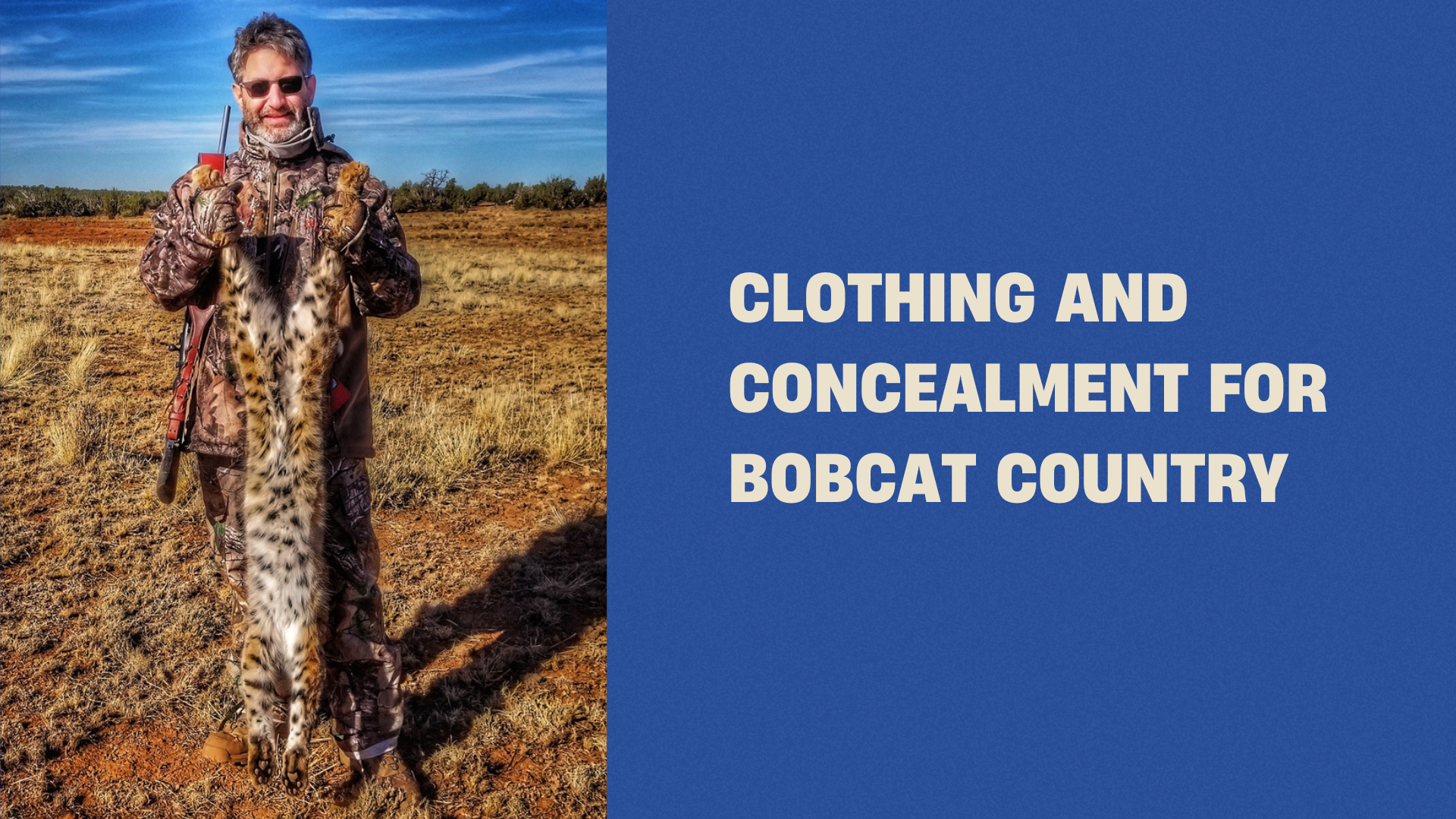
Clothing and Concealment for Bobcat Country
Comfort supports patience and good decisions. Build a quiet layering system rather than relying on one bulky garment:
- Base layer: moves moisture away from the skin.
- Insulating layer: matches the expected temperature and low activity of a calling stand.
- Weather layer: blocks wind or rain without excessive noise.
- Boots: provide traction, support, and warmth appropriate to the ground and distance.
- Gloves and headwear: protect exposed skin while allowing safe operation of equipment.
- Hunter orange: is carried and worn whenever required; concealment never overrides a visibility law.
Camouflage can break up the human outline, but stillness, a natural backdrop, and quiet entry often matter more than a perfect pattern. Choose fabric that does not scrape loudly against brush. Pack gaiters for wet grass, mud, snow, or burrs when conditions justify them, and carry dry socks on longer trips.
Brush and woodland travel can expose hunters to ticks. The CDC’s current tick-prevention guidance recommends EPA-registered repellent, long clothing, clothing or gear pretreated with 0.5% permethrin, and checks of the body, clothing, gear, and pets after time outdoors. Follow every product label; permethrin products intended for clothing and gear are not used as skin repellent.
Navigation, Communication, and Emergency Gear
A short hunt can become a long recovery or an unplanned walk in darkness. Scale the emergency kit to the terrain and remoteness, but do not omit it because the vehicle seems close. The National Park Service Ten Essentials include navigation, sun protection, insulation, illumination, first aid, fire, repair tools, food, hydration, and emergency shelter.
- Offline map showing property boundaries, roads, water, and exit routes
- Compass and the skill to use it
- Charged phone or GPS; optional satellite communicator for remote country
- Headlamp plus spare batteries; a phone light is not a dependable primary light
- First-aid kit, personal medication, and trauma supplies appropriate to your training
- Water, food, weather protection, and an emergency bivy or shelter
- Fire-starting and small repair supplies where conditions and rules allow
- Whistle and emergency contact plan
Tell a responsible person where you will park, where you plan to hunt, who is with you, and when to call for help. Do not rely on cellular service. Mark boundaries before the hunt, and stop if darkness, weather, injury, fatigue, or uncertainty makes travel unsafe.
Recovery, Tagging, and Handling Kit
Pack the recovery kit before the hunt, not after a successful shot. Useful items include disposable gloves, a sharp maintained knife in a sheath, clean wipes, flagging or a digital waypoint tool, the required tag and fastener, a pen, and a clean game bag, pelt bag, or cooler suited to the planned use and local transport rules.
After a shot, keep the firearm pointed safely, observe the animal’s direction, mark the shot location, and follow the applicable recovery rules. Make every reasonable lawful effort to recover the animal, but do not cross a property boundary without permission or enter dangerous terrain unprepared. Complete tagging, sealing, reporting, and transport steps exactly as the wildlife agency requires.
Avoid bare-hand contact with blood and body fluids. Do not handle an animal that appears sick or behaves abnormally until you have consulted the wildlife agency. Wash hands and clean tools after use, and keep dirty equipment separated from food and drinking-water supplies.
Build the Kit Around the Hunt
| Hunt Type | Core Kit | Additions | Main Limitation |
|---|---|---|---|
| Short daytime calling hunt near access | Documents, legal implement, PPE, binoculars, hand call, layers, boots, map, phone, first aid, water, headlamp, recovery kit | Seat pad, shooting sticks, compact decoy | “Near the vehicle” does not eliminate weather, injury, or boundary risk |
| Remote or cold-weather hunt | Complete core kit | Extra insulation, emergency shelter, more food and water, robust navigation, satellite communication, spare power, traction aids | Weight, cold-related battery loss, and difficult recovery |
| Legal nighttime hunt | Complete core kit and the exact nighttime regulation | Legal illumination or night optic, backup light, spare batteries, reflective emergency marker, planned safe firing sectors | Positive identification and backstop assessment are harder; laws are highly specific |
| Hunt with dogs where legal | Complete core kit plus trained, conditioned dogs | Tracking collar, identification, leash, water, dog first aid, protective gear, veterinarian-approved parasite prevention | Dogs may be prohibited by species, date, hour, or property |
| Snow tracking where legal and practical | Complete core kit | Waterproof boots, gaiters, traction aids or snowshoes, trekking poles, extra insulation, high-energy food | Weather, daylight, fatigue, and land boundaries can end the hunt |
How to Choose Gear Without Overspending
You do not need the most expensive equipment to hunt responsibly. Choose gear based on the species, terrain, weather, local regulations, fit, safety, reliability, maintenance requirements, and your actual experience.
- Fund legal and safety needs first. Documents, training, eye and hearing protection, navigation, first aid, boots, and weather layers come before specialized electronics.
- Use what you can operate quietly. A simple hand call that you have practiced with may be more useful than a complex caller you cannot control in gloves.
- Prefer dependable fit over specifications. Boots that fit, layers that permit movement, and an optic with comfortable eye relief are more valuable than impressive numbers on a box.
- Account for total weight. Water, insulation, and recovery supplies are harder to remove safely than a second decoy or redundant gadget.
- Test the entire system. Wear the clothing, shoulder the firearm safely, sit behind the support, operate the call, and access the first-aid kit before hunting.
Electronic Calls, Lights, and Thermal or Night Vision
Technology is a legal and ethical checkpoint, not an automatic upgrade. Before packing any electronic caller, artificial light, thermal imager, digital night-vision device, illuminated sight, or remote-control decoy, confirm that it is permitted for bobcat, during the exact season and hours, with the weapon you will carry, and on the specific property.
If it is legal, evaluate weather sealing, battery type, cold-weather performance, mounting security, controls, field of view, and the ability to verify the target and background. A thermal image can reveal heat but may not show every detail needed for positive species identification or a safe backstop. Do not shoot until you have positively identified a legal bobcat and know what lies in front of and beyond it.
A Printable-Style Pre-Hunt Checklist
Documents and rules
- Current license, permit, tag, and identification
- Current bobcat regulation saved offline or printed
- Property permission and site-specific rules
- Season, hours, limit, implement, orange, method, tagging, reporting, and transport verified
Safety and hunting equipment
- Legal implement inspected, securely transported, and zeroed or tuned
- Correct compatible ammunition or arrows
- Eye protection, hearing protection, and required hunter orange
- Binoculars and clean, secure optic
- Call; optional legal decoy and shooting support
Clothing and field support
- Quiet base, insulation, and weather layers
- Boots, gloves, hat, and optional gaiters
- Offline map, compass, charged navigation device, and boundary layer
- First aid, water, food, headlamp, emergency shelter, and repair items
- Recovery kit, tags, clean transport container, and disposable gloves
- Trip plan left with a responsible person
Common Gear Mistakes and Better Fixes
| Mistake | Why It Causes Trouble | Better Fix |
|---|---|---|
| Assuming predator gear is legal everywhere | Bobcat rules can differ from coyote rules and can change by season or property | Read the species-specific regulation and contact the wildlife agency when wording is unclear |
| Buying electronics before basic gear | Specialized equipment cannot replace safe clothing, navigation, first aid, or practice | Complete the safety layer first, then add lawful tools that solve a real need |
| Carrying only a phone | Cold, impact, water, or poor service can disable it | Use offline maps and carry a compass, headlamp, and backup power appropriate to the trip |
| Using the scope as binoculars | It points the firearm at objects that may not be legal targets | Scan and identify with binoculars |
| Overpacking | Excess weight adds noise, fatigue, and poor decisions | Sort items into required, safety-essential, useful, and optional groups |
| Ignoring batteries and cold | Callers, optics, lights, and maps may fail together | Charge, test, carry protected spares, and retain non-electronic backups |
| Choosing noisy or poorly fitting clothing | Discomfort and fabric noise make still, controlled hunting harder | Test the full clothing system while sitting, walking, and shouldering the implement |
| Forgetting recovery supplies | Tagging, clean handling, and transport become difficult after a harvest | Pack a small dedicated kit and verify reporting or sealing rules |
What Not to Bring or Do
- Do not use bait, dogs, electronic calls, lights, drones, thermal equipment, or night vision unless the exact method is legal.
- Do not carry incompatible ammunition or arrows, and do not rely on memory when checking compatibility.
- Do not point a firearm-mounted optic at anything you have not already identified as a legal target.
- Do not fire at sound, movement, eyeshine, or a heat source without positive identification and a safe backstop.
- Do not rely on a mechanical safety, a phone, or one battery-powered device as the only protection against failure.
- Do not take a shot beyond your practiced ability or through brush that obscures the target and background.
- Do not cross a road, trail, fence, or property line with a ready-to-fire implement or without confirming access and safe handling.
- Do not mix trapping equipment or trapping rules into a hunting plan; trapping is a separate regulated activity.
- Do not continue when visibility, weather, injury, fatigue, or navigation uncertainty makes the hunt unsafe.
After-Hunt Gear Care
Unload and secure the firearm according to its manual and local transport rules before leaving the field. Confirm that all ammunition, arrows, knives, batteries, tags, and personal items are accounted for. Clean and dry optics, calls, boots, clothing, and metal equipment; follow manufacturer instructions rather than applying unapproved cleaners or lubricants.
Replace used first-aid supplies, recharge electronics, inspect cables and battery compartments, sharpen or service recovery tools, and note any gear that was too heavy, noisy, cold, or difficult to access. Check yourself, clothing, pack, and dogs for ticks. If an animal was harvested, complete all reporting or sealing steps and clean transport containers before the next use.
FAQs
1. What is the minimum gear for a short bobcat calling hunt?
The minimum is the required legal documentation, a legal and familiar hunting implement, compatible ammunition or arrows, eye and hearing protection, binoculars, a call, weather-appropriate clothing and boots, navigation, communication, water, first aid, a headlamp, and a recovery kit. Add items for the terrain, forecast, and distance from help.

2. Do you need a special license to hunt bobcats?
Possibly. Some jurisdictions use a general hunting or furbearer license; others may require a species permit, tag, or special authorization. Check the current state wildlife-agency regulations for the hunter’s residency, unit, season, and method.
3. Is a bobcat tag required?
That depends on location. A jurisdiction may require a tag before hunting, immediate validation after harvest, physical checking, sealing, reporting, or some combination. Do not assume a digital license alone covers every step.
4. What kind of firearm do you need for bobcat hunting?
Use a firearm category that is legal for bobcat in the location and season, fits the hunter, functions reliably, and can be used accurately from realistic field positions. Rifle, shotgun, handgun, and muzzleloader rules differ, so the regulation must guide the choice.
5. Can you hunt bobcats with a bow or crossbow?
Where regulations allow it. Verify legal archery equipment, any minimum specifications, season dates, and crossbow restrictions. Use compatible arrows and broadheads, follow the manufacturer’s instructions, tune the setup, and stay within a practiced ethical range.
6. What ammunition should you carry?
Carry only ammunition that matches the exact firearm and is legal and appropriate for the jurisdiction and hunting method. Confirm the markings on the firearm, ammunition packaging, and manual. Do not mix loose cartridges or shells of different types in the same pocket.
7. Do you need a scope for bobcat hunting?
No. A suitable sighting system is necessary, but a magnified scope is not universally required. In close cover, a wide field of view may be more useful than high magnification. Whatever sight is used should be securely mounted, zeroed, legal, and familiar.
8. Are binoculars necessary if the firearm has a scope?
Binoculars are strongly recommended because they let the hunter scan and identify wildlife without pointing a firearm. A firearm-mounted scope should never be used as a general observation tool.
9. Is a rangefinder necessary?
A rangefinder is optional. It can help where terrain makes distance hard to judge, especially for archery, but it does not make a shot ethical if distance, wind, visibility, stability, or the hunter’s skill is inadequate.
10. What type of call works for bobcat hunting?
Hunters commonly use hand calls or lawful electronic callers that imitate prey or other attention-getting sounds. The useful choice depends on local law, wind, cover, operating skill, reliability, and battery needs. No call guarantees a response.
11. Are electronic calls legal for bobcats?
They are legal in some places and prohibited or limited in others. Check the species-specific regulation for the exact date, land type, and season segment before carrying one.
12. Do you need a decoy?
No. A decoy can provide a visual focus and may reduce attention on the hunter, but it adds motion, weight, setup time, and a legal question. Use one only where permitted and where it does not create a safety problem for other land users.
13. What camouflage is best for bobcat hunting?
Choose quiet clothing that blends reasonably with the local background and satisfies every hunter-orange requirement. Fit, weather protection, stillness, and a natural backdrop usually matter more than buying a particular pattern.
14. Do bobcat hunters need hunter orange?
It depends on the jurisdiction, public-area rule, and overlapping seasons. Orange may be required even when the bobcat rule itself does not emphasize it. Check all concurrent seasons and managed-land requirements.
15. What boots are best for bobcat hunting?
Select boots for fit, traction, terrain, insulation, moisture, and walking distance. Waterproofing may help in wet grass or snow, while breathable footwear may be better in warm conditions. Break boots in before the hunt.
16. How should a hunter layer for a calling stand?
Use a moisture-managing base, insulation for low activity, and a wind or rain shell as conditions require. Carry enough warmth for sitting still, but manage perspiration during the walk in by opening layers or adding insulation after arrival.
17. Do you need shooting sticks?
No, but a practiced support can improve stability and reduce fatigue. Test its height and movement from the actual position you will use, and maintain safe muzzle control while setting it up.
18. Is a seat pad worth carrying?
Usually, if it helps the hunter remain comfortable and still without adding much bulk. It also insulates from cold or wet ground. Choose a quiet, stable option that does not compromise the shooting position.
19. What should be in a bobcat hunting backpack?
Carry documents, spare layers, water, food, first aid, navigation, communication, a headlamp, emergency shelter, legal calls, binoculars, spare power, and recovery supplies. Keep emergency and frequently used items accessible rather than buried beneath optional gear.
20. How big should the backpack be?
It should hold the safety, weather, and recovery equipment for the specific trip without unused volume that encourages overpacking. A short access-based hunt may need a compact daypack; remote winter travel can require more space for insulation and emergency gear.
21. Do you need a GPS?
A standalone GPS is optional, but dependable navigation is essential. An offline phone map can help, yet a compass and map knowledge provide a backup if electronics fail. Confirm property boundaries rather than relying on memory.
22. Should you carry a headlamp on a daytime hunt?
Yes. Delays, recovery, or navigation can extend beyond planned daylight. Carry a real headlamp and spare batteries; a phone light is less durable and consumes communication power.
23. What first-aid gear is appropriate?
Carry supplies for common cuts, blisters, sprains, and environmental exposure, plus trauma supplies matched to your training. Include personal medication and replace expired or used items. Training matters more than carrying equipment you do not know how to use.
24. Do you need a satellite communicator?
It is optional but valuable where cellular service is unreliable and rescue may be delayed. It works best with a tested device, active service if required, a shared trip plan, and an understanding of its emergency functions.
25. Can you hunt bobcats at night?
Only where the current regulations expressly allow it. Night rules may specify dates, private or public land, weapon types, lights, optics, calls, dogs, and reporting. Daytime permission does not imply nighttime permission.
26. Are thermal scopes legal for bobcat hunting?
Thermal devices may be legal, restricted, or prohibited depending on jurisdiction, season, weapon, and land. Verify the exact rule. Even when legal, thermal imagery does not remove the obligation to identify the species positively and confirm a safe background.
27. Are spotlights or artificial lights legal?
Rules vary widely and may regulate the light source, color, attachment, vehicle use, public-road use, hours, and species. Obtain a clear answer from the official wildlife agency before carrying or using an artificial light for hunting.
28. Can dogs be used to hunt bobcats?
Some jurisdictions permit trained hounds under specific conditions, while others prohibit dogs for bobcats or during certain hours. Where legal, dogs need conditioning, identification, tracking, water, first aid, veterinary care, and responsible handling.
29. Is bait legal for bobcat hunting?
Bait is legal in some jurisdictions and prohibited or closely defined in others. Disease orders, land rules, distance restrictions, or material definitions may also apply. Check the current species and property rules before placing anything intended to attract wildlife.
30. What recovery tools are needed?
Carry disposable gloves, a maintained knife, marking or waypoint tools, the required tag and fastener, a pen, and a clean transport container. Add equipment for snow, steep terrain, or distance only when you can use it safely.
31. Do bobcats have to be reported or sealed?
Many jurisdictions require harvest reporting, physical checking, tagging, sealing, or documentation for possession and sale, but the process and deadline differ. Read the official post-harvest section before hunting so the necessary materials and locations are known in advance.
32. What should you do if the bobcat crosses onto private property after a shot?
Mark the last known location and contact the landowner or appropriate authority. Do not trespass, even during a recovery. Follow any state process for requesting recovery access and preserve the sign while permission is sought.
33. How do you keep batteries working in cold weather?
Start with charged, manufacturer-approved batteries; protect spares from moisture and keep them insulated when practical. Test the caller, light, optic, navigation device, and power bank before leaving. Retain non-electronic backups for critical functions.
34. What gear can a beginner skip?
A beginner can often skip multiple decoys, premium electronic callers, specialized night optics, redundant rangefinders, and other convenience items. Spend first on legal compliance, training, dependable clothing, boots, observation, safe handling, navigation, first aid, and practice.
35. Is bobcat hunting gear different from bobcat trapping gear?
Yes. Hunting and trapping are separate methods with different equipment, seasons, licenses, training, tagging, and checking requirements. A hunting checklist should not be used as a trapping guide; consult the dedicated official trapping regulations and education program.
Final Answer
The practical answer to what gear do you need for bobcat hunting is a four-layer system: legally required documents and equipment; a safe, familiar hunting implement with eye and hearing protection; observation, calling, clothing, and support suited to the terrain; and navigation, emergency, and recovery supplies. A hand call, binoculars, quiet layers, boots, offline map, first aid, water, headlamp, and gloves form a dependable core. Decoys, electronic callers, rangefinders, dog equipment, lights, thermal devices, and night vision are optional and lawful only in some places.
Pack for safe identification and a humane, recoverable shot rather than for maximum gadget count. Practice before the hunt, maintain muzzle control, know the target and background, respect boundaries, and stop when conditions become unsafe. Finally, recheck the wildlife agency and property rules immediately before hunting because official regulations—not a general gear list—decide what you may carry and use.
Read more:
What Gear Do You Need for Coyote Hunting?