

A pistol brace is an accessory intended to help support a handgun against the user’s forearm. If you are asking “what is a pistol brace?” after seeing one on a large-format pistol, the important distinction is between its intended supporting function and the legal classification of the complete firearm. Those are related questions, but they are not interchangeable.
Quick Answer
A pistol brace, also called a stabilizing brace, is a rear-mounted handgun accessory intended to provide forearm support, particularly during one-handed use. Depending on the design, it may incorporate a cuff, strap, or another forearm-supporting shape. A shoulder stock has a different intended function: supporting a firearm against the shoulder. Calling an accessory a “brace” does not, by itself, establish that the complete firearm is legally a pistol. Check current official guidance, applicable local laws, and the manufacturer’s documentation before making decisions about a particular firearm.
Important Legal and Safety Context
U.S. federal sources checked: September 22, 2026. The legal discussion below concerns the United States. Other countries have different firearm categories and restrictions, and U.S. state and local requirements also need separate verification.
This is general education, not a legal determination about an individual firearm. A product description, an old approval letter, or a photograph cannot resolve every classification question. Consult a qualified firearms attorney when the answer affects possession, modification, transfer, or travel.
What Is a Pistol Brace Designed to Do?
A brace provides an additional supporting contact with the forearm. Its intended purpose is to help the user support and control a compatible handgun rather than relying entirely on the gripping hand.
The modern commercial brace is closely associated with accessibility. SB Tactical’s account of its origins describes founder Alex Bosco developing a prototype after observing a disabled combat veteran having difficulty controlling a handgun at a range. That history explains the forearm-support concept; it does not establish a universal legal exemption for any particular user or firearm.
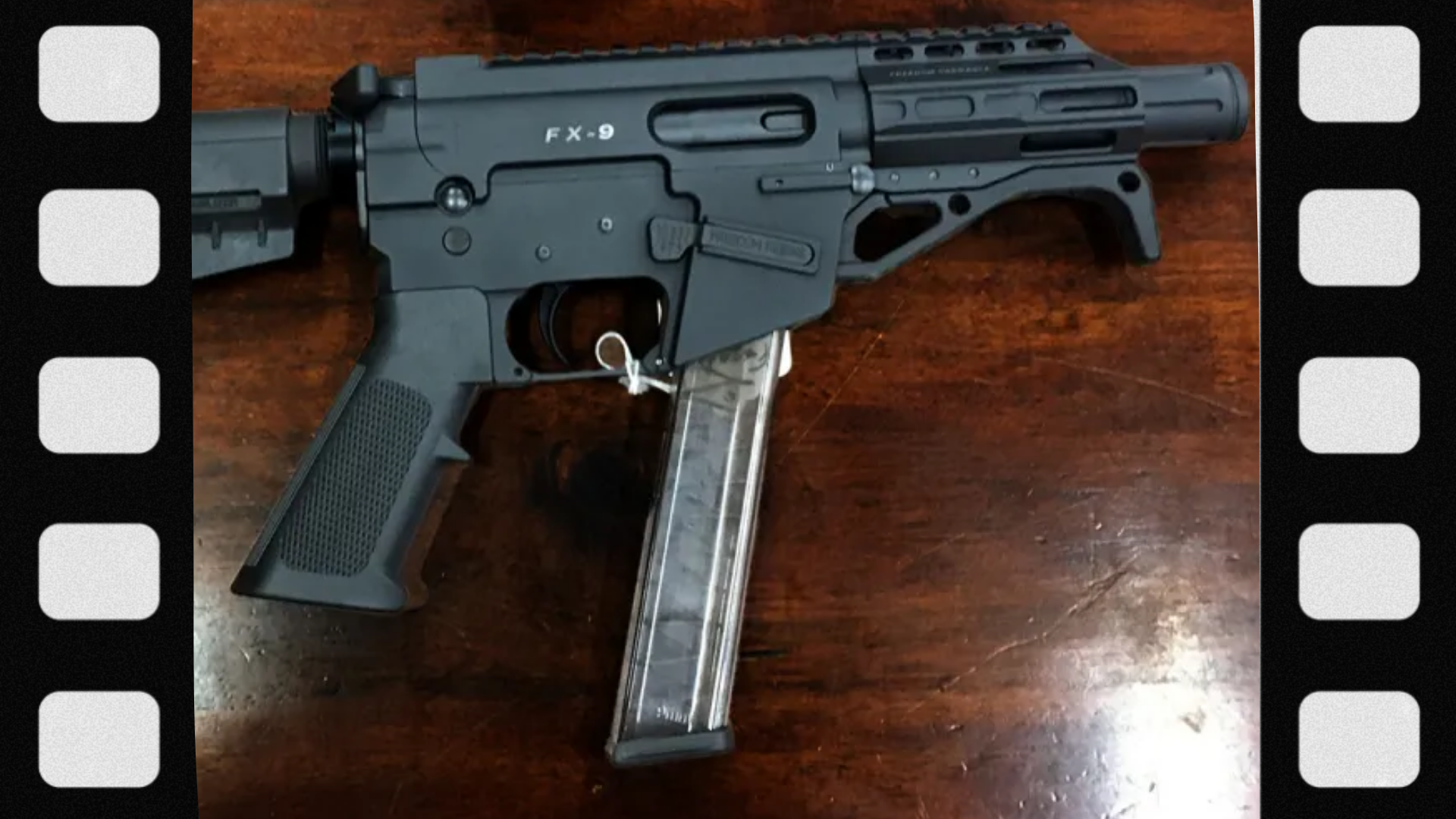
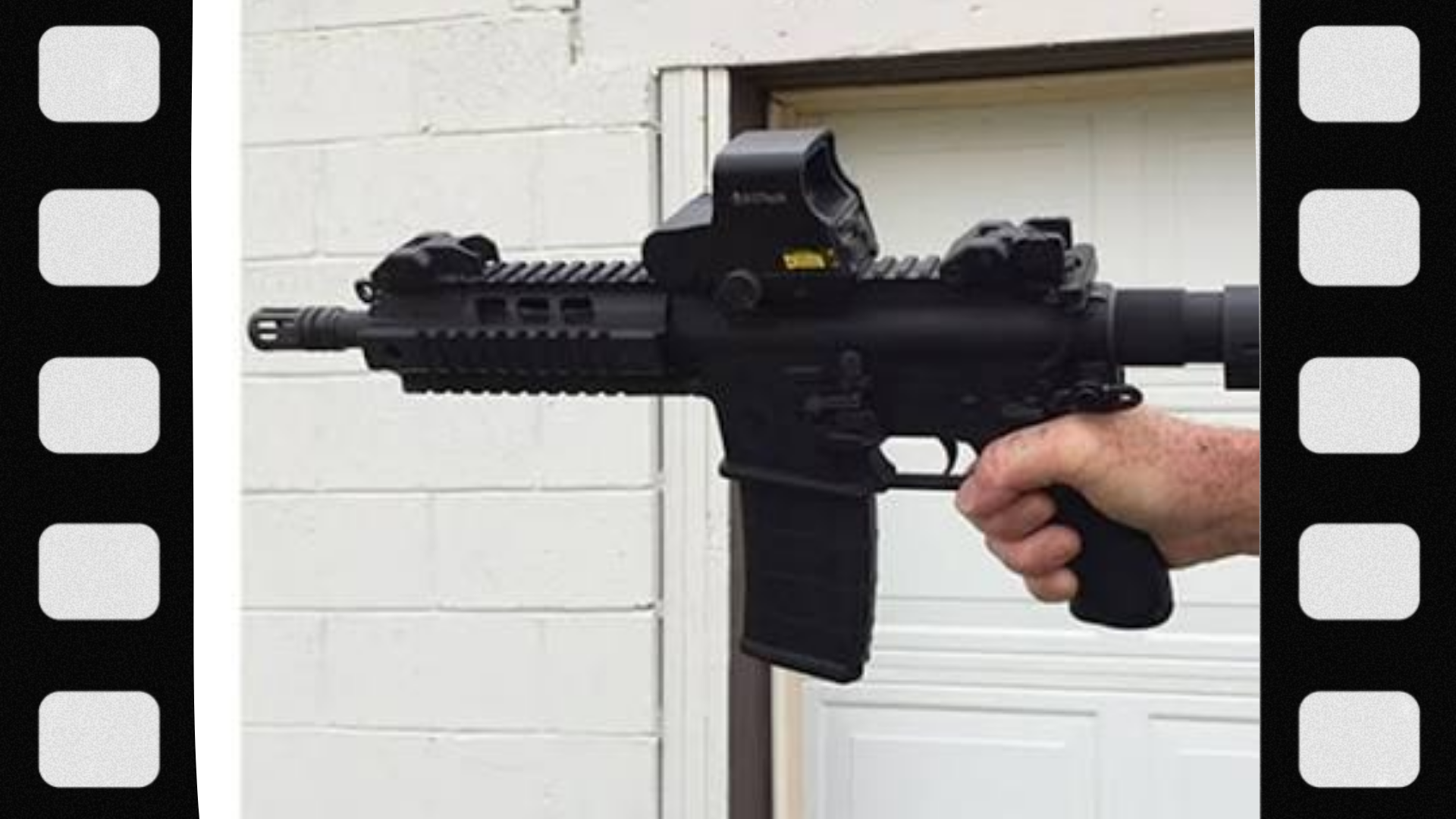
Braces are commonly discussed in connection with large-format pistols, including AR-style pistols. However, neither appearance nor a familiar platform name determines the legal category of every example.
What a brace does not establish
- It does not automatically make a firearm legal to possess or carry.
- It does not establish compatibility with every handgun.
- It does not replace safe handling or instruction.
- It does not guarantee accuracy or compensate for unsuitable equipment.
- It does not establish that a firearm is lawful for a particular hunting season.
Pistol Brace vs. Stock: The Practical Difference
| Question | Pistol brace | Shoulder stock |
|---|---|---|
| What is its intended supporting function? | Supporting the handgun against the forearm | Supporting the firearm against the shoulder |
| What features might it have? | A cuff, strap, or other forearm-supporting structure | A shoulder-contacting butt or buttpad |
| Can appearances overlap? | Yes; some designs resemble stocks | Yes; appearance alone may not resolve classification |
| Does the product name settle legality? | No | No; the complete firearm and applicable law matter |
| What should a beginner verify? | Intended use, compatibility, and legal status of the firearm | The firearm’s classification and any applicable requirements |
The central legal concept is whether a firearm is designed and intended to be fired from the shoulder. ATF’s current explanatory material emphasizes that the statutory definition governs and that its proposed regulatory changes do not categorically approve everything labeled a brace.
Why Pistol Braces Are Discussed Alongside Short-Barreled Rifles
SBR means short-barreled rifle. Under federal law, a rifle with a barrel shorter than 16 inches falls within the relevant short-barreled category. The National Firearms Act also addresses weapons made from rifles with specified barrel or overall-length characteristics, including an overall length below 26 inches.
The word rifle matters. A firearm does not become an SBR solely because its barrel is shorter than 16 inches; its classification and, in some circumstances, its history also matter. Ordinary handguns illustrate why barrel length alone cannot answer the question.
Likewise, replacing one accessory with another does not provide a reliable shortcut for determining classification. If a firearm’s status is uncertain, obtain qualified guidance before changing its configuration.
What Is the Current Federal Pistol-Brace Rule Status?
Older articles often describe the 2023 rule as though its original requirements remain the complete answer. Current official sources need to be read alongside that history.
| Development | What the official source establishes |
|---|---|
| 2023 brace rule | ATF issued Final Rule 2021R-08F concerning firearms equipped with stabilizing braces. |
| Subsequent court action | ATF’s October 2025 notice states that a federal court vacated the rule nationwide. |
| May 6, 2026 proposal | ATF proposed removing the regulatory language added to the rifle definitions by the 2023 rule. |
| Continuing statutory framework | ATF states that the underlying statutory definition still governs whether a firearm is an NFA-regulated short-barreled rifle. |
The court-status information appears in ATF’s notice concerning applications under the vacated brace rule. The regulatory action appears in its May 2026 proposed rulemaking notice. The latter is identified as a proposal, not a completed final repeal.
The practical takeaway: setting aside one rule does not remove the underlying firearm statutes or establish that every braced firearm is lawful. Recheck official developments before acting, especially when relying on an article written during an earlier stage of the litigation.
Understand three different legal terms
- Vacated: a court has set aside the challenged action.
- Enjoined: a court has ordered that specified conduct or enforcement be stopped, within the order’s scope.
- Proposed rescission: an agency has initiated a process to remove a rule or regulatory language; a proposal is not itself the final action.
These terms describe different events. Headlines sometimes blur them, which is one reason short summaries can be misleading.
How to Check a Specific Situation Responsibly
- Identify the firearm accurately. Use the manufacturer’s model information and relevant records rather than a visual guess.
- Identify the accessory. Find its exact model and current documentation, including intended use and compatibility information.
- Read current federal material. Check ATF’s notices and official legal sources, paying attention to publication dates and whether an action is proposed or final.
- Check state and local requirements. Verify possession, carry, transport, and other restrictions relevant to your location.
- Check the planned activity. Range policies and hunting regulations can add separate requirements.
- Resolve uncertainty before acting. A qualified firearms attorney can address legal classification; the manufacturer or a qualified gunsmith can address equipment compatibility and condition.
Keep those roles distinct. Mechanical compatibility does not establish legal compliance, and a general legal summary does not confirm that an accessory is mechanically suitable.
Safety Principles Still Apply
A brace does not change the fundamentals of firearm safety:
- Treat every firearm as if it is loaded.
- Keep the muzzle pointed in a safe direction.
- Keep your finger outside the trigger guard until you are ready to shoot.
- Be certain of your target and what is beyond it.
Before inspection or maintenance, follow the firearm manufacturer’s unloading and verification instructions. Use appropriate eye and hearing protection when shooting, and secure firearms against unauthorized access. Never rely on a mechanical safety to compensate for unsafe handling. These principles are consistent with NSSF’s firearm-safety guidance.
If an accessory is damaged, loose, or interfering with normal operation, stop using the firearm and seek qualified assistance. This article does not provide installation, alteration, or conversion instructions.
What Hunters Should Check Separately
Federal firearm classification and hunting eligibility answer different questions. A firearm that may be lawfully possessed is not automatically permitted during a particular handgun season or on a particular property.
Before hunting, consult the current state wildlife regulations for the species, season, location, and permitted equipment. Confirm required licenses and tags, complete applicable hunter education, and practice with lawful equipment before going afield. Make shot decisions within your demonstrated ability and the conditions, with positive target identification and a safe background.
Common Misunderstandings to Avoid
- “It looks like a stock, so the classification is obvious.” Similar appearance does not replace a complete legal assessment.
- “The seller calls it a brace, so every configuration is approved.” Marketing language is not a universal legal determination.
- “The 2023 rule was vacated, so no restrictions remain.” Underlying statutes and other applicable laws still matter.
- “An old letter covers my firearm.” Historical guidance may concern different facts and a different legal context.
- “If it is allowed at the range, it is allowed for hunting.” Range policies and wildlife regulations are separate.
FAQs
1. Is a pistol brace the same as a stabilizing brace?
Usually, yes. In this context, both terms refer to a handgun accessory intended to provide forearm support.
2. Is a pistol brace a firearm by itself?
It is generally described as an accessory, rather than the complete firearm. That distinction does not resolve the legal status of a firearm equipped with it.
3. Is every rear attachment on a pistol a brace?
No. Rear components can have different functions. Identify the exact part through its documentation rather than assuming its purpose from its location.
4. Do all braces use a strap?
No. Designs vary. A strap is not a universal identifying feature or a complete legal test.
5. Are braces only associated with AR-style pistols?
No. Other firearm platforms have used brace designs. Compatibility is specific to the firearm and accessory.
6. Why were modern pistol braces developed?
Accessibility was central to their development, including helping shooters with physical limitations support large-format handguns. That purpose remains important to understanding the design.
7. Does disability automatically exempt a firearm from regulation?
Do not assume so. An accessibility purpose does not itself establish an exemption from applicable firearm laws. Obtain advice about the particular situation.
8. Does a brace guarantee better accuracy?
No. It is intended to provide support, but results depend on the user, firearm, fit, and training. An accessory cannot guarantee accurate or safe shooting.
9. Is a brace a recoil-reducing device?
Forearm support is its defining purpose. Do not assume a particular reduction in recoil or discomfort without reliable, product-specific evidence.
10. Does a brace change the firearm’s caliber?
No. A brace does not change the chambering or establish ammunition compatibility. Follow the firearm’s markings and manual.
11. Does a brace make a firearm fully automatic?
No. A stabilizing brace is not a mechanism that changes the firearm’s firing cycle.
12. Is every short firearm an SBR?
No. “Short-barreled rifle” is a legal category, not a description of every compact firearm. Handguns and other categories require separate analysis.
13. Was the 2023 brace rule vacated?
Yes. ATF’s October 2025 notice expressly describes nationwide vacatur of Final Rule 2021R-08F. That does not mean every related statutory requirement disappeared.
14. Is the 2026 rescission proposal the same as a final rule?
No. ATF’s May 6, 2026 notice identifies the action as proposed rulemaking. Verify whether a later final action has been published before relying on it.
15. Does a brace automatically mean no NFA registration is required?
No. The complete firearm’s classification controls. ATF specifically cautions against treating every object labeled a brace as categorically lawful under the same conditions.
16. What if I already registered a firearm under an earlier process?
Do not assume a court decision automatically changes your individual registration record or obligations. Consult ATF about the record and qualified counsel about your circumstances.
17. Can I rely on the old 2023 registration deadline?
It belongs to a historical process associated with the vacated rule. Do not treat it as a current application window or follow old instructions without checking updated official guidance.
18. Can a pistol brace legally be shouldered?
There is no dependable universal answer based only on the accessory’s name. Historical guidance has changed, and firearm design, configuration, and applicable law matter. Obtain current advice for the specific firearm rather than relying on an old video.
19. Can a stock and a brace be exchanged without legal consequences?
Do not assume they can. A configuration change can affect classification and legal requirements. Resolve those questions before making changes.
20. Does federal status determine state legality?
No. State and local restrictions require their own review. Federal treatment does not automatically answer possession, carry, or transport questions everywhere.
21. Can I travel across state lines with a braced firearm?
The answer depends on classification and the applicable rules. ATF states that interstate transport of certain NFA firearms, including SBRs, generally requires prior approval for registered possessors other than the specified licensed exceptions. Check your situation before travel.
22. Does a carry permit cover every braced firearm?
Do not assume it does. Permit scope and firearm definitions vary. Verify the relevant jurisdiction’s rules for the particular firearm.
23. Can a range prohibit equipment that is otherwise lawful?
A range may have its own equipment and operating policies. Check them before visiting; range permission is not a substitute for legal compliance.
24. What if the brace is damaged or uncomfortable?
Stop using the setup and consult the manufacturer or a qualified professional. Avoid improvised repairs or alterations.
25. Where should beginners get reliable help?
Use official regulatory sources for current rules, a qualified firearms attorney for individual legal questions, manufacturer documentation for equipment information, and a qualified instructor for safe handling education.
Final Answer
What is a pistol brace? It is a handgun accessory intended to provide forearm support, especially for one-handed use. Its intended function differs from a shoulder stock, but the complete firearm’s design and legal classification still matter. Read current official guidance, resolve individual legal questions before acting, and treat safe handling and training as essential regardless of the accessory.
Read more: