
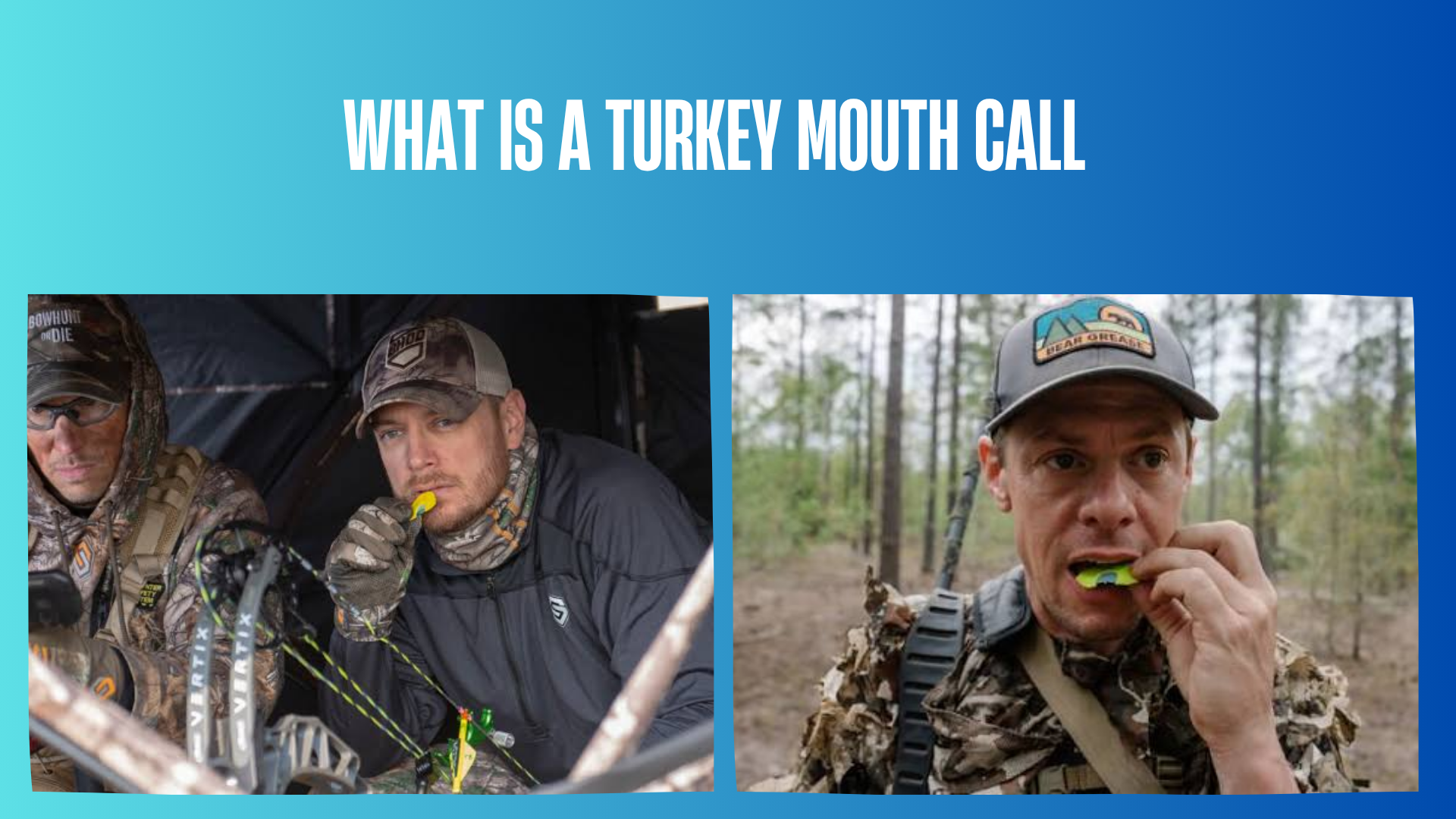

A turkey mouth call is a small air-operated hunting call placed inside the mouth to imitate wild turkey vocalizations. Also called a diaphragm call, it uses one or more thin reeds held in a small frame. Air passing across those reeds makes them vibrate, while tongue pressure, airflow, mouth shape, and rhythm change the resulting sound.
Turkey mouth calls are popular because they can reproduce several turkey sounds without requiring the hunter to move their hands. That makes them particularly useful when movement needs to be minimized. Their biggest drawback is the learning curve: compared with a box or push-button call, producing consistent, natural sounds with a diaphragm usually takes considerably more practice. The National Wild Turkey Federation describes hands-free operation and the ability to make multiple sounds as two major advantages of this call type.
Quick Answer
If you are wondering what is a turkey mouth call, it is a small diaphragm-style call that fits against the roof of your mouth and uses vibrating reeds to imitate turkey sounds. Most are built from a frame, flexible reeds, and surrounding tape that helps the call seal against the palate. A skilled caller can produce yelps, clucks, purrs, cutting, kee-kees, and other vocalizations while keeping both hands free. Mouth calls are inexpensive and compact, but beginners should expect to practice before their calling becomes consistent.
What Does a Turkey Mouth Call Look Like?
A typical turkey mouth call is small enough to fit entirely inside the mouth. It usually has a roughly horseshoe-shaped or curved frame surrounded by flexible tape.
The National Wild Turkey Federation describes three basic components:
- Frame: The structural part of the call, commonly made from metal or plastic.
- Reeds: Thin flexible membranes, commonly latex, that vibrate when air passes across them.
- Tape: The flexible outer material that surrounds the frame and helps create a seal against the roof of the mouth.
Calls can use different numbers of reeds, and the top reed may be cut into different shapes. Those variations affect airflow, pitch, rasp, volume, and how easy the call feels to control.
How Does a Turkey Mouth Call Work?
A diaphragm turkey call works by passing controlled air across its reeds. The reeds vibrate and create a tone. The caller then alters that tone by adjusting tongue pressure, airflow, jaw movement, and the shape of the mouth.
Missouri’s Department of Conservation classifies diaphragm calls as air-operated calls, distinguishing them from friction calls such as box and slate calls.
| Part or Action | What It Does |
|---|---|
| Reeds | Vibrate as air moves across them and create the basic sound. |
| Tongue pressure | Helps hold the call in place and influences tone and airflow. |
| Air pressure | Affects volume, pitch, and how strongly the reeds vibrate. |
| Jaw and mouth shape | Help create changes in pitch and rhythm. |
| Reed cut | Changes how air escapes and can influence rasp, volume, and control. |
Primos’ current mouth-call instructions similarly tell users to seal the call against the roof of the mouth with the tongue and direct air between the tongue and reeds.
Why Do Turkey Hunters Use Mouth Calls?
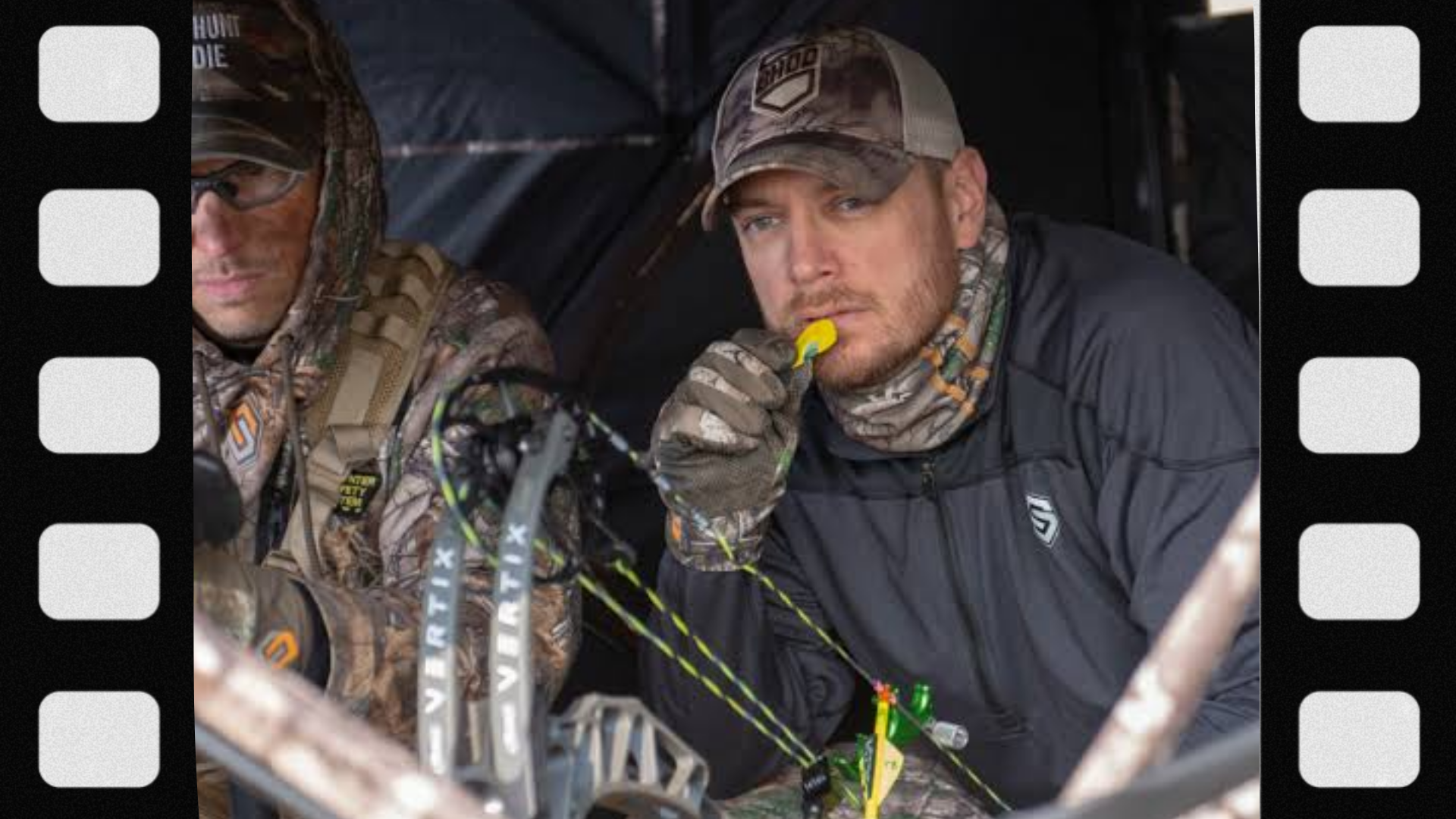
The biggest advantage is hands-free calling. A box call requires hand movement, and a pot call generally requires a striker. A mouth call can be operated without reaching for another object.
This can be useful when a turkey is nearby because wild turkeys have excellent vision and may notice unnecessary movement. Missouri conservation guidance notes that air-operated diaphragm calls require more practice than friction calls but can be used with minimal movement when working a turkey at close range.
A second advantage is versatility. One diaphragm can produce several different vocalizations after the caller develops sufficient control.
What Sounds Can You Make With a Turkey Mouth Call?
A mouth call can reproduce many common wild turkey vocalizations. The exact range depends on the call design and the caller’s ability.
| Turkey Sound | General Character | Difficulty for a Beginner |
|---|---|---|
| Yelp | A common contact vocalization often produced in a rhythmic series | Good starting sound |
| Cluck | A short, distinct note used in several social contexts | Relatively approachable |
| Purr | A softer rolling sound frequently associated with relaxed or feeding birds | Requires finer control |
| Cutting | Fast, excited, sharp clucks | Usually easier after basic clucks are consistent |
| Tree yelp | A softer variation of a yelp | Requires volume control |
| Kee-kee | A whistling vocalization associated particularly with young birds | Requires good pitch control |
Missouri conservation guidance identifies yelps, clucks, purrs, cutting, cackles, kee-kees, and other vocalizations as part of turkey communication. It also emphasizes that rhythm can matter more than whether a caller sounds especially raspy or smooth.
What Is the Difference Between Single-, Double-, and Triple-Reed Calls?
The number of reeds changes the resistance, tone, and amount of air control required. There is no universal rule that more reeds automatically produce a better turkey call.
The National Wild Turkey Federation notes that mouth calls can contain from one to four reeds and that calls with fewer reeds are generally easier to operate because additional reeds tend to require more air and control.
Single-Reed Calls
A single-reed diaphragm has the simplest reed arrangement. It can be a useful way to understand how airflow makes the reed vibrate, although ease of use also depends on reed tension, fit, and the individual caller.
Double-Reed Calls
Double-reed calls are a common beginner option because they can balance manageable airflow with enough tonal variation for basic calling. Primos, for example, currently markets a two-reed model as suitable for both beginners and experienced callers.
Triple- and Multi-Reed Calls
Additional reeds can produce more complex or raspy sounds but often require greater air control. They are not automatically unsuitable for beginners, but a new caller who struggles to make a clean tone may find a simpler diaphragm easier to learn first.
What Do the Different Mouth-Call Cuts Mean?
The top reed of a diaphragm may be uncut or shaped with openings that change the way air travels through it. Call makers use many names for these patterns, but several designs appear frequently.
- Double or split cuts: Often associated with relatively manageable airflow and softer calling.
- V-cuts: Use a V-shaped opening and can create a different mix of clean and raspy tones.
- Batwing cuts: Often selected for versatile yelping, clucking, and raspier calling.
- Ghost cuts: Use a central opening and can work well for clear notes and softer vocalizations.
- Cutter-style cuts: Typically designed for stronger, louder, raspier calling and may demand more control.
NWTF explains that reed cuts alter how a mouth call responds and notes meaningful differences in difficulty, rasp, and volume between common designs.
Is a Turkey Mouth Call Good for Beginners?
It can be, but it is rarely the easiest first turkey call.
Box and push-button calls generally require less technique to produce recognizable sounds. Missouri Department of Conservation guidance describes box calls as beginner-friendly while identifying the steep learning curve as the principal disadvantage of mouth calls.
That does not mean beginners should avoid diaphragm calls. A useful approach is to learn an easy friction call first while practicing the mouth call at home. This gives a new turkey hunter a dependable field call while diaphragm skills develop.
How Do You Put a Turkey Mouth Call in Your Mouth?
Manufacturer designs vary, so follow the orientation instructions included with the specific call. In general, a diaphragm is placed against the roof of the mouth and held there with tongue pressure while air is directed across the reeds.
Primos’ instructions for one current diaphragm model place the front of the call toward the front of the mouth, with the tongue extending slightly past the reeds and pressing the call upward to create a seal.
The call should fit securely enough to seal without causing significant discomfort. If the call repeatedly triggers a strong gag reflex, feels too large, or will not sit comfortably against the palate, a different frame size or design may be a better choice.
How Do Beginners Make Their First Sound?
The first objective is not to sound exactly like a wild hen. It is simply to make the reeds vibrate consistently.
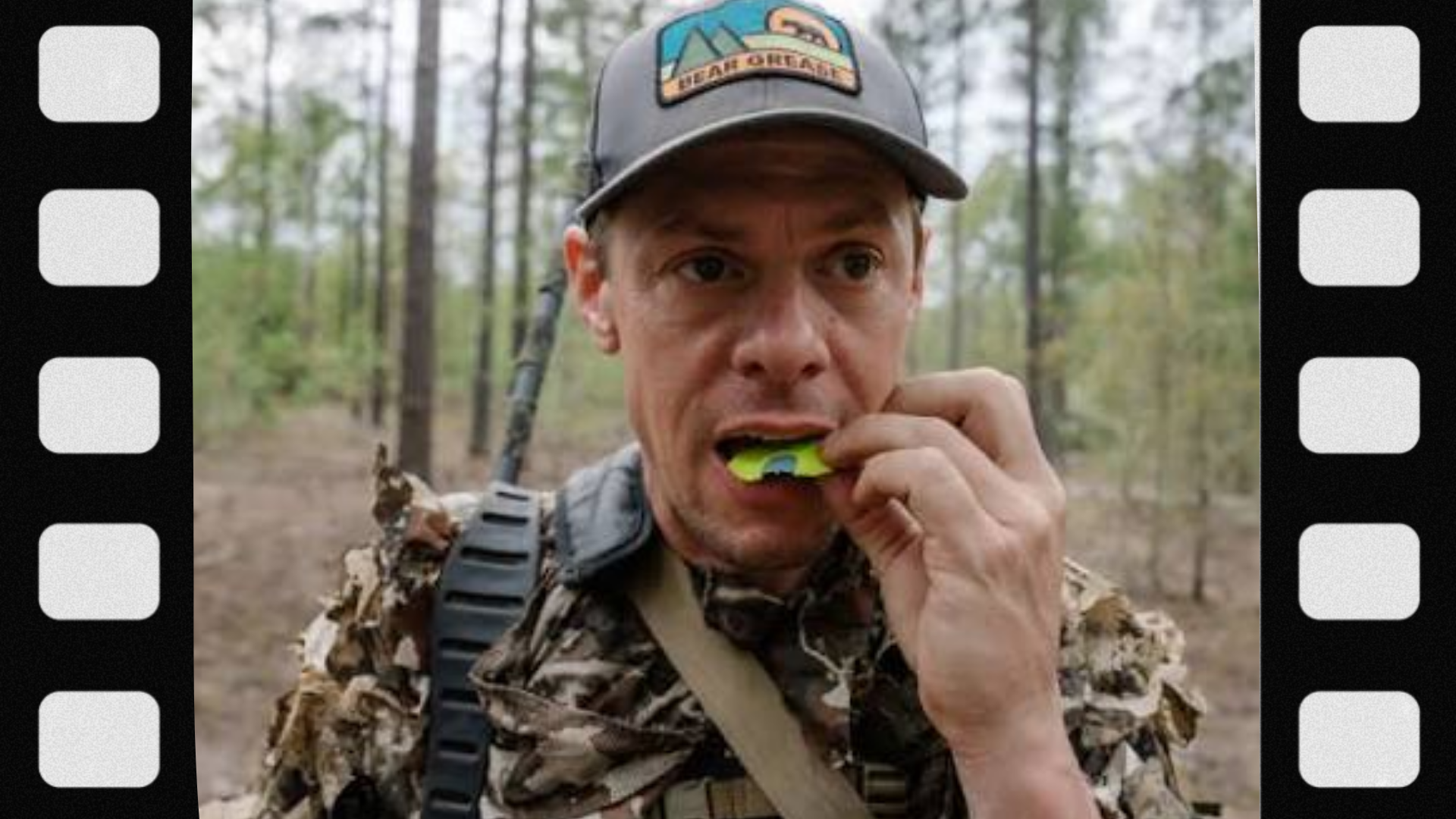
- Position the call according to its manufacturer’s instructions.
- Use your tongue to hold the call against the roof of your mouth.
- Create a seal around the call.
- Direct a controlled stream of air between your tongue and the reeds.
- Experiment with small changes in tongue pressure until you produce a clean tone.
- Once the tone is repeatable, begin working on rhythm and the high-to-low transition of a basic yelp.
NWTF and multiple current call manufacturers emphasize that consistency develops through practice rather than force.
Why Is the Yelp Usually the First Turkey Sound to Learn?
The yelp is one of the most recognizable and commonly used turkey vocalizations. Missouri Department of Conservation guidance describes variations of the yelp as among the most frequently used calls and emphasizes the importance of rhythm.
For a beginning mouth caller, the yelp also teaches several fundamentals at once: steady airflow, tongue pressure, pitch change, jaw movement, and rhythm.
You do not need competition-level calling before going turkey hunting. Consistent rhythm, appropriate volume, and knowing when not to call can matter more than trying to make every note sound identical.
How Does a Mouth Call Compare With Other Turkey Calls?
| Call Type | How It Makes Sound | Beginner Learning Curve | Hands-Free? | Typical Strength |
|---|---|---|---|---|
| Mouth/diaphragm | Air vibrates flexible reeds | Steep | Yes | Versatility and minimal movement |
| Box call | Paddle rubs across box edges | Relatively easy | No | Easy yelps and strong volume |
| Pot/slate call | Striker moves across a calling surface | Moderate | No | Good range of subtle turkey sounds |
| Push-button call | Mechanical rod creates friction | Very approachable | Usually requires at least one hand | Simple operation |
Missouri’s wildlife agency describes friction calls as generally easier for beginners and mouth calls as harder to learn but valuable because they can produce many realistic sounds without hand movement.
How Do You Choose Your First Turkey Mouth Call?
The best beginner call is the one that fits your mouth comfortably and lets you create a repeatable tone without excessive air pressure.
Start With a Manageable Reed Design
Calls with fewer reeds are often easier to control, although reed thickness and tension matter too. A simple double-reed diaphragm is a reasonable place to begin.
Pay Attention to Frame Size
Palate shape varies from person to person. A frame that seals comfortably for one hunter may feel oversized or unstable for another. Smaller-frame calls are available for narrower palates.
Do Not Assume a Complicated Cut Is Better
A highly cut multi-reed call may produce impressive rasp in experienced hands, but it can make learning harder if you have not yet developed consistent airflow.
Fit Matters More Than Brand Prestige
A mouth call cannot perform well if you cannot comfortably hold it against the roof of your mouth and control airflow around the reeds.
How Much Practice Does a Turkey Mouth Call Take?
There is no universal timeline. Some callers find a usable tone quickly, while others need much longer to produce consistent yelps and clucks.
NWTF describes learning a mouth call as challenging and emphasizes repetition and practice. Missouri conservation education likewise identifies the steep learning curve as the principal downside of mouth calls.
Short, frequent practice sessions are usually more useful than trying to learn everything the night before a hunt. Practice the basic tone first, then yelps, then clucks, before trying to master every available vocalization.
How Should You Care for a Turkey Mouth Call?
A diaphragm spends time in a warm, wet environment, so cleaning and drying it properly matters. Follow the call manufacturer’s care instructions because materials and construction differ.
Primos currently recommends rinsing its mouth calls with cool water after use, shaking them dry, and storing them in a cool, dark environment; its vented storage case is designed to help calls dry.
- Do not leave a wet mouth call sealed indefinitely in an unventilated container.
- Do not expose delicate reeds unnecessarily to heat.
- Inspect reeds before use for damage, separation, or deterioration.
- Replace a call when its reeds or frame are damaged or no longer function properly.
- Do not share mouth calls unless they can be hygienically handled according to manufacturer guidance.
Turkey Mouth Call Safety in the Field
The call itself is simple equipment, but turkey calling takes place in a hunting environment where another hunter may hear the same sounds. Treat safety as part of calling technique rather than a separate issue.
Wisconsin DNR warns turkey hunters not to stalk turkeys and specifically cautions against using gobble calls to attract birds because another hunter may mistake the sound for an actual turkey. Missouri guidance similarly advises treating unidentified movement as another hunter until it can be positively identified.
- Never shoot at sound or movement you have not positively identified.
- Do not stalk toward another caller.
- Use extra caution with gobbler vocalizations because they can attract other hunters.
- Choose a calling setup with good visibility when possible.
- Know what is beyond your target before any shot.
- Follow hunter-education guidance and current local hunting regulations.
Are Turkey Mouth Calls Legal?
Manually operated turkey mouth calls are commonly permitted, but hunting regulations are jurisdiction-specific and can change. Do not assume that one state’s rules apply everywhere.
For example, Missouri currently permits mouth and hand calls, while placing separate restrictions on electronic calls for hunting certain species. That is an example of why the distinction between a manual diaphragm and an electronic caller can matter legally.
Before hunting, verify current turkey regulations from the official wildlife agency for the state, province, or country where you will hunt. Check rules for calls, electronic devices, season dates, licenses, permits, legal hunting methods, decoys, and any land-specific restrictions.
Common Turkey Mouth Call Mistakes
Trying to Sound Perfect Immediately
Your first goal should be a repeatable tone and realistic rhythm, not competition-quality calling.
Using Too Much Air
More force does not automatically create a better sound. Excessive pressure can make the call difficult to control.
Starting With a Call That Does Not Fit Your Palate
A poor seal makes airflow inconsistent. If a call feels unusually difficult to position, trying another frame size may be more productive than forcing the technique.
Beginning With an Overly Complex Reed Setup
More reeds and aggressive cuts can increase the amount of control required. Simpler designs may make the fundamentals easier to understand.
Ignoring Rhythm
A technically clear note can still sound unnatural when timing is mechanical. Listen to wild turkey vocalizations and pay attention to spacing, cadence, and changes in intensity.
Overcalling
More calling does not guarantee a turkey will respond or approach. Wild turkey behavior varies with individual birds, season phase, hunting pressure, habitat, and other conditions.
Practicing Only Right Before the Season
Air control and tongue coordination improve through repetition. Starting earlier gives you time to experiment with fit and reed styles.
What Should a Beginner Learn First?
- Find a diaphragm that fits comfortably.
- Learn to create one consistent clean tone.
- Practice the two-part rhythm of a basic hen yelp.
- Add a simple cluck.
- Learn softer volume control.
- Listen to recordings of real wild turkeys.
- Practice calling without unnecessary head or hand movement.
- Learn field safety before using the call during an actual hunt.
A mouth call is only one hunting tool. Calling skill does not replace woodsmanship, positive target identification, legal compliance, patience, or responsible shot selection.
FAQs
1. Is a turkey mouth call the same as a diaphragm call?
Yes. In turkey hunting, “mouth call” and “diaphragm call” normally refer to the same basic device: a small call placed against the roof of the mouth that uses vibrating reeds to produce turkey sounds.
2. What is a turkey mouth call made of?
A typical diaphragm contains a frame, flexible reeds, and tape around the frame. NWTF notes that frames are commonly metal or plastic and that the reeds are mainly made from latex.
3. How does a turkey mouth call make noise?
Air passing across the flexible reeds makes them vibrate. Tongue pressure, airflow, and mouth shape then modify the sound.
4. Does a turkey mouth call go on top or under your tongue?
The call is generally pressed against the roof of the mouth, with the tongue helping hold and seal it in place. Follow the orientation instructions for the exact model because construction varies.
5. Which way should the reeds face?
On conventional diaphragm calls, the reed end generally faces toward the front of the mouth. Check the manufacturer’s instructions because some designs include orientation marks or specialized frames.
6. What is the easiest turkey mouth call for a beginner?
A simpler call with relatively manageable airflow is usually a sensible starting point. Double-reed calls are commonly recommended for beginners, but comfortable frame size and reed tension can matter as much as reed count.
7. Is a single-reed turkey call easier than a double reed?
Sometimes, but not always. Fewer reeds generally reduce complexity, while thickness and tension also influence how much air a call needs. A well-fitting double reed may be easier for one caller than a particular single reed.
8. What does a triple-reed turkey call do?
Multiple reeds can add tonal complexity and rasp, but they may also require more air and control. NWTF notes that additional reeds tend to increase operating difficulty.
9. What is a batwing turkey mouth call?
A batwing is a diaphragm whose top reed has a cut shaped roughly like part of a bat’s wing. That opening changes airflow and is often used for versatile, raspier turkey sounds.
10. What is a ghost-cut turkey call?
A ghost-cut diaphragm has an opening near the center of its top reed. Callers often use this type when they want clean notes, kee-kees, softer yelps, and other controlled sounds, although actual performance depends on the caller and call construction.
11. What is a V-cut turkey mouth call?
A V-cut uses a V-shaped notch in the top reed. The cut changes the airflow path and can help create a combination of clean and raspy tones.
12. What turkey sound should I learn first?
The basic hen yelp is a practical starting point because it teaches tone changes and rhythm and is one of the most common turkey vocalizations used by hunters.
13. Can a mouth call make a turkey cluck?
Yes. A diaphragm can produce clucks as well as yelps, purrs, cutting, kee-kees, and several other vocalizations after sufficient practice.
14. Can you purr on a turkey mouth call?
Yes. Purring requires finer airflow or tongue/lip control than a basic yelp, so many beginners learn it after they can consistently produce simpler notes.
15. Can you gobble with a mouth call?
Some experienced callers can imitate gobbler sounds with diaphragm calls. However, gobbler calls deserve extra field caution because they may attract another hunter who mistakes the sound for a real bird.
16. Are turkey mouth calls hard to learn?
They have one of the steeper learning curves among common turkey calls. Box and push-button calls are generally easier for first-time callers, while diaphragms require coordinated airflow and tongue pressure.
17. How long does it take to learn a turkey mouth call?
There is no fixed timeline. Some hunters make usable sounds quickly while others need substantially more practice. Fit, reed design, airflow, and practice frequency all affect progress.
18. Why can I not make any sound with my mouth call?
Common causes include an incomplete seal against the palate, incorrect orientation, too much or too little tongue pressure, poor airflow direction, or a call that does not fit your mouth well.
19. Why does my turkey mouth call only squeak?
A squeak often means the reeds are vibrating but your pressure and airflow are not yet controlled enough to form a turkey vocalization. Work on creating a steady tone before trying to add a yelp rhythm.
20. Why does a turkey mouth call make me gag?
The frame may feel too large or sit too far back for your palate. Do not force yourself to tolerate significant discomfort. A smaller-frame call or another call type may be a better fit.
21. Can you trim a turkey mouth call?
Some callers trim the surrounding tape to improve fit, but altering a call can affect its seal. Do not cut the reeds or damage the structural frame, and follow the manufacturer’s guidance whenever available.
22. How do you clean a turkey mouth call?
Follow the manufacturer instructions. Primos currently recommends rinsing its calls with cool water after use, shaking them dry, and storing them in a cool, dark environment.
23. How should turkey mouth calls be stored?
Keep them clean, protected, and able to dry appropriately. Some manufacturers recommend cool storage, and vented call cases can help prevent wet calls from remaining sealed together.
24. How long does a turkey mouth call last?
There is no universal lifespan. Reed material, use, cleaning, heat exposure, storage, and physical damage all affect longevity. Replace a call if its reeds, tape, or frame deteriorate enough to affect safe or reliable use.
25. Are turkey mouth calls better than box calls?
Neither is universally better. Mouth calls offer hands-free operation and broad sound versatility but require more practice. Box calls are generally easier for beginners and can produce strong, clear turkey sounds quickly.
26. Are mouth calls better than slate calls?
They serve different needs. A mouth call minimizes hand movement, while a slate or pot call may be easier for some hunters to control and can produce highly realistic soft calling.
27. Do turkey mouth calls work when wet?
Because the call operates inside the mouth, the calling mechanism is not dependent on keeping an external friction surface dry. That can be an advantage compared with some friction calls, although the rest of your hunting equipment and conditions still matter.
28. Are turkey mouth calls legal everywhere?
Do not assume so. Rules vary by jurisdiction and hunting method. Check the current official turkey regulations where you plan to hunt, especially rules concerning electronic calls and other calling devices.
29. Can beginners hunt successfully without a mouth call?
Yes. A mouth call is optional. Box, pot, and push-button calls can all be useful turkey-hunting tools. Calling skill is only one part of scouting, setup, patience, safety, and legal hunting.
30. Should I carry more than one type of turkey call?
Many hunters carry more than one style because weather, distance, needed volume, and the hunting situation can favor different calls. However, becoming competent with one or two calls is generally more useful than carrying many that you cannot operate consistently.
Final Answer
A turkey mouth call is a small diaphragm call placed against the roof of the mouth that uses vibrating reeds and controlled airflow to imitate wild turkey vocalizations. Its primary advantages are hands-free operation, compact size, and the ability to make many different turkey sounds with one call. Its main disadvantage is the learning curve, so beginners should concentrate on fit, a clean basic tone, and a realistic yelp before trying more advanced sounds.
In the field, calling should always be combined with safe hunting practices. Never stalk another turkey sound, positively identify the target, know what is beyond it, and verify current regulations with the official wildlife agency where you hunt.
Read more: