
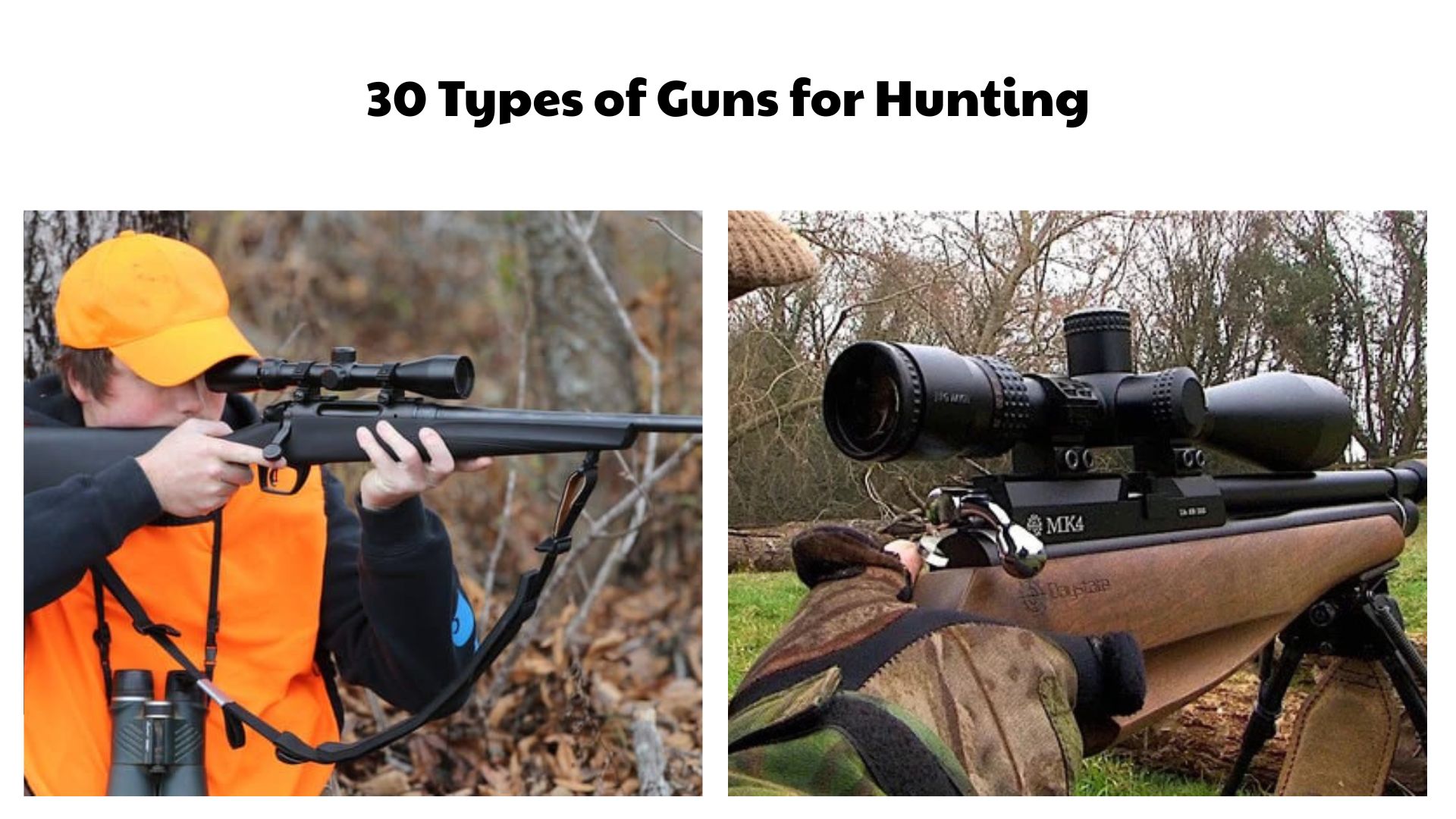

Understanding the types of guns for hunting is essential for choosing the right firearm for different game, environments, and shooting styles. Hunting firearms are not all built the same; each design serves a specific purpose, from precision long-range rifles for deer to lightweight air rifles for small game. Some guns prioritize power, while others focus on speed, simplicity, or stealth. In modern hunting practice, the selection of the right firearm can directly influence accuracy, ethical shot placement, and overall success in the field. This guide breaks down 30 different hunting gun types in a clear and practical way, helping both beginners and experienced hunters understand how each system performs in real-world conditions.
30 Types of Guns for Hunting
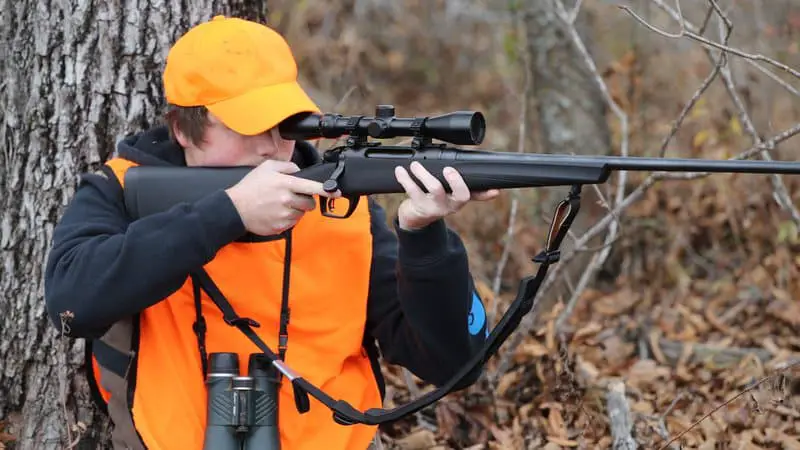
1. Bolt-Action Hunting Rifle
The bolt-action rifle is one of the most trusted hunting platforms in the world. It is known for its mechanical simplicity and high level of precision. After each shot, the shooter manually cycles the bolt, which removes the spent casing and chambers a new round. This controlled process improves consistency and reduces mechanical failure risk in the field.
In hunting scenarios, bolt-action rifles are widely used for deer, elk, and medium to large game. Their accuracy over long distances makes them ideal for open terrain where precise shot placement is required. Many hunters prefer this system because it delivers predictable performance under different weather conditions. The lack of complex moving parts also makes it easier to maintain over time.
Although it is not the fastest firing system, its reliability and accuracy make it a standard choice for serious hunters worldwide.
2. Lever-Action Hunting Rifle
The lever-action rifle is a classic design strongly associated with traditional hunting culture. It uses a lever mechanism under the trigger guard to cycle rounds quickly. This allows faster follow-up shots compared to bolt-action systems while maintaining good accuracy at short to medium distances.
Lever-action rifles perform best in wooded environments where fast target acquisition is important. Hunters often use them for deer, hogs, and medium game where shots are typically taken at closer range. Their compact design also makes them easy to carry through dense brush or uneven terrain.
This rifle type combines historical design with practical field performance, making it a favorite among hunters who value speed and tradition.
3. Semi-Automatic Hunting Rifle
Semi-automatic rifles automatically chamber the next round after each shot, allowing faster firing without manual cycling. This system is useful in situations where multiple targets may appear quickly, such as varmint or predator hunting.
In hunting applications, semi-auto rifles are valued for their speed and ease of use. They reduce shooter fatigue because the cycling process is automated. However, maintaining control and shot discipline is important to ensure ethical hunting practices.
These rifles are commonly used for coyotes, hogs, and similar game where quick follow-up shots may be necessary.
4. Pump-Action Rifle
Pump-action rifles are less common today but still offer a reliable manual cycling system. The shooter slides a fore-end grip back and forth to eject and chamber rounds. This provides a balance between speed and mechanical control.
In hunting environments, pump-action rifles are appreciated for their durability and ability to function in harsh conditions. They are less sensitive to dirt and moisture compared to more complex systems.
While not as popular as bolt-action or semi-auto rifles, they remain a dependable choice for hunters who prioritize rugged reliability.
5. Single-Shot Hunting Rifle
The single-shot rifle is designed for simplicity and precision. It allows only one round to be loaded at a time, requiring the shooter to reload after each shot. This encourages careful aiming and disciplined shooting habits.
In hunting use, single-shot rifles are often chosen for training or for situations where one well-placed shot is expected. They are lightweight, easy to maintain, and mechanically very strong due to their simple construction.
Despite limited capacity, they are respected for their accuracy and teaching value in marksmanship development.
6. Break-Action Rifle
Break-action rifles open at the receiver to allow direct loading of a single cartridge. This simple design is known for its safety and ease of use. It is commonly used by beginners and hunters who prefer straightforward operation.
These rifles are often used for small game and light hunting situations. Their simplicity makes them extremely reliable, especially in environments where maintenance is limited.
They are ideal for hunters who prioritize safety and simplicity over high-capacity shooting systems.
7. Muzzleloader Rifle
Muzzleloaders are traditional firearms that are loaded from the front of the barrel. They represent one of the earliest hunting firearm designs still in use today. The loading process is slower, but it adds a historical and skill-based element to hunting.
In modern hunting, muzzleloaders are often used during special hunting seasons. They require careful preparation and precise handling, as each shot must be manually loaded with powder and projectile.
This type of rifle is valued for its traditional experience and challenge rather than speed or convenience.
8. Rimfire Rifle
Rimfire rifles use small-caliber ammunition such as .22 LR or .17 HMR. They are commonly used for small game hunting and pest control. These rifles are lightweight, low recoil, and very easy to handle.
They are especially effective for squirrels, rabbits, and similar-sized animals. Rimfire rifles are also popular for training new shooters due to their low cost and manageable recoil.
They offer excellent accuracy at short to moderate ranges, making them highly practical for small game hunting.
9. Centerfire Rifle
Centerfire rifles use more powerful cartridges and are suitable for medium to large game. They are the standard choice for deer hunting and similar applications. These rifles offer greater energy, longer range, and better penetration than rimfire systems.
They come in a wide variety of calibers, allowing hunters to select the right power level for their target species. Centerfire rifles are known for versatility and are widely used in all types of hunting environments.
Their adaptability makes them one of the most important categories in modern hunting.
10. Magnum Hunting Rifle
Magnum rifles are designed for high-powered cartridges that deliver maximum energy at long distances. They are typically used for large game such as elk, moose, and bear. These rifles provide deep penetration and strong stopping power.
Due to their power, magnum rifles often produce more recoil, requiring experienced shooters for effective handling. They are best suited for open terrain where long-range shots are common.
They represent the upper end of hunting rifle performance in terms of energy output.
11. Varmint Rifle
Varmint rifles are designed specifically for hunting small pests and predators such as prairie dogs, groundhogs, and coyotes. These rifles prioritize extreme accuracy over long distances, often using heavy barrels to reduce vibration and improve shot consistency.
In real hunting conditions, varmint rifles are typically used from stationary positions like benches or bipods. The goal is precise shot placement at extended range, sometimes exceeding 300 yards depending on caliber and optics. Many varmint rifles use specialized calibers such as .223 Remington or .22-250, which provide flat trajectories and high velocity.
These rifles are not built for close-range stalking but instead for controlled, long-range pest management where accuracy is the top priority.
12. Precision Long-Range Rifle
Precision long-range rifles are engineered for extreme accuracy at extended distances. They often feature heavy barrels, adjustable chassis systems, and high-quality optics. These rifles are commonly used in both hunting and tactical shooting environments.
In hunting applications, they are ideal for open terrain where animals like deer or antelope may be spotted far away. The combination of stable platform design and high-end optics allows hunters to make ethical shots at long distances with confidence.
These rifles require skill and experience to use effectively, as factors like wind, bullet drop, and environmental conditions must be carefully considered.
13. Pump-Action Shotgun
The pump-action shotgun is one of the most reliable and widely used hunting firearms. It operates by manually sliding the fore-end back and forth to chamber each shell. This system is known for its rugged durability and ability to function under harsh conditions.
In hunting scenarios, pump-action shotguns are commonly used for birds, rabbits, and other small game. They are especially effective in environments where quick reaction shots are needed. Their versatility allows hunters to switch between different shell types depending on the game.
While not as fast as semi-automatic shotguns, their mechanical simplicity makes them extremely dependable in the field.
14. Semi-Automatic Shotgun
Semi-automatic shotguns automatically load the next shell after each shot, allowing for faster follow-up firing. This makes them ideal for fast-moving targets such as ducks or pheasants.
In hunting use, these shotguns reduce recoil impact by distributing energy through gas or inertia systems, making them more comfortable during extended shooting sessions. Their speed advantage is particularly useful in scenarios where multiple targets appear quickly.
They require slightly more maintenance than pump-action models but offer superior firing speed and efficiency.
15. Break-Action Shotgun (Over/Under)
The over/under shotgun is a break-action design featuring two stacked barrels. It is widely used in bird hunting and sport shooting. The simple break-open mechanism allows for quick loading and unloading.
In hunting situations, this shotgun is valued for its balance and accuracy. Many hunters appreciate the ability to use two different choke configurations, allowing flexibility between close and mid-range targets.
Its elegant design and straightforward operation make it a popular choice among traditional hunters.
16. Side-by-Side Shotgun
The side-by-side shotgun features two barrels positioned horizontally. It is one of the oldest shotgun designs still in use today. While less common in modern tactical hunting, it remains popular among traditional and upland bird hunters.
This shotgun offers a fast natural swing, making it effective for tracking moving targets in open fields or brush. Its classic design also appeals to hunters who appreciate historical firearms.
Although it lacks some modern features, it remains effective for short-range hunting scenarios.
17. Slug Shotgun
Slug shotguns are designed to fire a single solid projectile instead of multiple pellets. This significantly increases range and stopping power compared to standard shotguns.
In hunting use, slug shotguns are often used for deer hunting in areas where rifles are restricted. They provide a balance between shotgun flexibility and rifle-like impact energy.
With proper optics, slug shotguns can achieve accurate shots at moderate distances, making them highly effective in dense woodland environments.
18. PCP Air Rifle
PCP (Pre-Charged Pneumatic) air rifles use compressed air stored in a reservoir to fire pellets. They are known for exceptional accuracy, low recoil, and quiet operation.
In small game hunting, PCP rifles are extremely effective due to their consistency and multi-shot capability. They allow hunters to take precise shots with minimal disturbance to the environment.
These rifles are considered one of the most advanced airgun systems available for hunting today.
19. Break Barrel Air Rifle
Break barrel air rifles operate by manually breaking the barrel to compress a spring or gas piston. This simplicity makes them widely accessible and easy to use.
They are commonly used for small game hunting and pest control. While they require more effort per shot compared to PCP systems, they are self-contained and do not require external air sources.
Their durability and affordability make them popular among beginner hunters.
20. CO2 Air Rifle
CO2 air rifles use compressed carbon dioxide cartridges to propel pellets. They offer semi-consistent power and are often used for recreational hunting or target shooting.
In hunting applications, CO2 rifles are best suited for short-range small game scenarios. They are lightweight and easy to operate but can be affected by temperature changes.
While not as powerful as PCP or gas piston systems, they provide convenience and ease of use for casual hunters.
21. Gas Piston Air Rifle
Gas piston air rifles replace the traditional metal spring with a sealed gas-filled cylinder. This design reduces vibration, improves shot consistency, and extends overall durability. The smoother firing cycle makes it easier for hunters to maintain accuracy, especially when taking repeated shots in the field.
In small game hunting, gas piston rifles are valued for their balance between power and control. They are less sensitive to temperature changes compared to CO2 systems and provide a more predictable shooting experience than traditional spring rifles. This makes them suitable for hunters who want reliability in varying outdoor conditions.
Although they require a bit more force to cock, the trade-off is a smoother and more stable shot cycle that helps improve overall precision.
22. AR-Style Hunting Rifle
The AR-style hunting rifle is a modern, modular platform widely used for hunting and varmint control. It allows hunters to customize components such as barrels, stocks, grips, and optics. This flexibility makes it adaptable to different hunting environments and game types.
In the field, AR-style rifles are commonly used for coyotes, hogs, and medium game. Their semi-automatic function enables fast follow-up shots, which is useful when animals move in groups or appear unpredictably. The ergonomic design also improves handling and target acquisition speed.
These rifles combine tactical efficiency with hunting practicality, making them a popular modern choice.
23. AR-10 Hunting Platform
The AR-10 is a larger and more powerful version of the AR platform, typically chambered in calibers like .308 Winchester. It is designed for bigger game and longer shooting distances compared to the AR-15.
In hunting use, the AR-10 is effective for deer, elk, and similar-sized animals. It delivers significant energy and maintains accuracy at extended ranges. The semi-automatic action allows quick follow-up shots while still maintaining control.
Due to its power and weight, the AR-10 is generally used by experienced hunters who require a combination of range, stopping power, and modern ergonomics.
24. Bolt-Action Tactical Rifle
The bolt-action tactical rifle combines traditional bolt-action precision with modern chassis systems and ergonomic designs. It is engineered for accuracy and adaptability, often used with high-magnification optics for long-range hunting.
In hunting environments, this rifle excels in open terrain where long shots are necessary. Its rigid structure minimizes movement during firing, improving shot consistency. Many models also allow customization for different calibers and accessories.
This hybrid design appeals to hunters who want precision rifle performance with modern tactical features.
25. Chassis System Rifle
Chassis system rifles are built around a metal frame that replaces traditional wooden or synthetic stocks. This structure improves rigidity, consistency, and modularity. It also allows for better recoil management and accessory integration.
In hunting applications, chassis rifles are often used for precision shooting at long distances. They are especially effective in mountainous or open landscapes where environmental conditions require stable platforms and precise adjustments.
These rifles are favored by advanced hunters who prioritize customization and extreme accuracy.
26. Black Powder Rifle
Black powder rifles are traditional muzzleloading firearms that use loose powder instead of modern cartridges. They require manual loading of powder, projectile, and ignition system before each shot.
In hunting, black powder rifles are typically used during special hunting seasons. They provide a historical hunting experience that emphasizes skill and patience. Each shot must be carefully prepared, making them slower but highly rewarding.
These rifles are valued for their connection to early hunting traditions and craftsmanship.
27. Cowboy Lever Rifle
Cowboy lever rifles are inspired by classic western firearms and are often chambered in calibers suitable for medium game. They are known for their fast lever cycling and compact design.
In hunting scenarios, they are commonly used in wooded areas where quick shots are required. Their nostalgic design also makes them popular among hunters who appreciate traditional styling.
Despite their historical appearance, they remain practical and effective hunting tools today.
28. Antique Hunting Rifle
Antique hunting rifles refer to older firearm designs that are still functional or collected for historical value. Some models may still be used legally depending on condition and regulations.
In hunting contexts, they are rarely used for modern field hunting but are important for historical reenactment or specialized traditional hunts. Their craftsmanship reflects earlier eras of firearm development.
They are primarily valued as collectible pieces rather than everyday hunting tools.
29. Big Bore Rifle
Big bore rifles are designed for maximum stopping power and are typically used for large and dangerous game such as bear, boar, or moose. They use large-caliber cartridges capable of delivering significant energy on impact.
In hunting situations, these rifles are used where penetration and immediate stopping power are critical. They are often heavier and produce stronger recoil, requiring experienced handling.
They represent the highest power tier in hunting rifle categories.
30. Youth Hunting Rifle
Youth hunting rifles are designed with lighter weight, reduced recoil, and shorter length of pull to accommodate beginners and younger hunters. They help new shooters develop proper form and confidence.
In practical use, these rifles are often chambered in lower-recoil calibers such as .223 or .243. They still maintain sufficient accuracy and effectiveness for small to medium game hunting.
They serve as an important training platform for introducing safe and responsible hunting practices.
Conclusion: Understanding Types of Guns for Hunting
The wide range of types of guns for hunting reflects the diversity of hunting environments, game sizes, and shooter skill levels. From precision bolt-action rifles to traditional muzzleloaders and modern AR platforms, each firearm type offers a unique balance of power, accuracy, and handling characteristics. Understanding these differences allows hunters to select the right tool for ethical and effective hunting in the field.
50+ Frequently Asked Questions (FAQ) – Types of Guns for Hunting
1. What are the main types of guns used for hunting?
The main types of hunting guns include bolt-action rifles, lever-action rifles, semi-automatic rifles, shotguns, muzzleloaders, and air rifles. Each category serves a different purpose depending on game size, terrain, and hunting style. Rifles are typically used for precision and longer-range shots, while shotguns are more effective for moving targets like birds. Air rifles are commonly used for small game and pest control. Understanding these categories helps hunters choose the right firearm for ethical and effective hunting in the field.
2. Which hunting gun is best overall?
There is no single “best” hunting gun because performance depends on the type of game and environment. However, bolt-action rifles are widely considered the most versatile and accurate for medium to large game. Shotguns are best for birds and fast-moving targets, while PCP air rifles are excellent for small game. The best choice always depends on matching the firearm to the specific hunting scenario.
3. What is the most accurate type of hunting rifle?
Bolt-action rifles are generally the most accurate due to their rigid locking mechanism and minimal moving parts during firing. This stability reduces vibration and improves shot consistency. Precision long-range rifles and chassis system rifles also offer extremely high accuracy, especially when paired with quality optics and match-grade ammunition.
4. What is a bolt-action rifle used for?
Bolt-action rifles are primarily used for deer, elk, and other medium to large game hunting. They are known for their reliability and precision. Because the shooter manually cycles each round, bolt-action rifles encourage careful shot placement, making them ideal for ethical hunting practices.
5. Are lever-action rifles still useful today?
Yes, lever-action rifles remain highly useful, especially in wooded or close-range hunting environments. They allow faster follow-up shots than bolt-action rifles and are easier to handle in tight spaces. Many hunters still prefer them for deer and hog hunting in dense terrain.
6. What is the advantage of semi-automatic hunting rifles?
Semi-automatic rifles provide faster shooting because they automatically chamber the next round after each shot. This allows quick follow-up shots, which can be useful when hunting fast-moving or multiple targets. However, they require good trigger discipline to ensure ethical shot placement.
7. Are shotguns good for hunting?
Yes, shotguns are extremely effective for hunting birds, rabbits, and other small game. They can fire multiple pellets or a single slug depending on the load. This versatility makes them one of the most widely used hunting firearms in the world.
8. What is the difference between a rifle and a shotgun?
Rifles fire a single bullet with high accuracy over long distances, while shotguns fire multiple pellets or a slug at shorter ranges. Rifles are better for precision shooting, while shotguns are better for moving targets and close-range hunting.
9. What is a muzzleloader rifle?
A muzzleloader is a traditional firearm loaded from the front of the barrel using powder and projectile. It is slower to load but offers a historical hunting experience. Many regions have special hunting seasons for muzzleloaders.
10. Are air rifles legal for hunting?
Air rifle legality depends on local laws. In many regions, they are allowed for small game hunting and pest control. Always check local regulations before using any air rifle in the field.
11. What is a PCP air rifle?
A PCP (Pre-Charged Pneumatic) air rifle uses compressed air stored in a tank to fire pellets. It is known for high accuracy, low recoil, and quiet operation, making it ideal for small game hunting.
12. What is a break barrel air rifle?
A break barrel air rifle is cocked by bending the barrel to compress a spring or gas piston. It is simple, affordable, and widely used for small game hunting and training.
13. What caliber is best for hunting rifles?
Common hunting calibers include .22, .223, .243, .308, and .30-06. Smaller calibers are used for small game, while larger calibers are used for deer and big game hunting.
14. What is the best rifle for deer hunting?
Bolt-action rifles in calibers like .243, .270, or .308 are among the most popular choices for deer hunting due to their balance of power and accuracy.
15. What is a varmint rifle?
A varmint rifle is designed for small pest animals like prairie dogs and coyotes. It emphasizes extreme accuracy and flat trajectory over long distances.
16. What is a precision rifle?
A precision rifle is built for long-range accuracy, often featuring heavy barrels, adjustable stocks, and high-quality optics. It is used for both hunting and target shooting.
17. Are AR-style rifles good for hunting?
Yes, AR-style rifles are highly versatile and can be used for hunting deer, hogs, and varmints. Their modular design allows customization for different hunting needs.
18. What is an AR-10 used for?
The AR-10 is typically used for larger game like deer and elk due to its powerful calibers such as .308 Winchester.
19. What is a pump-action shotgun?
A pump-action shotgun requires manual cycling after each shot. It is known for durability and reliability in harsh hunting conditions.
20. What is a semi-automatic shotgun?
A semi-automatic shotgun automatically reloads after each shot, allowing faster firing, which is useful for bird hunting and fast targets.
21. What is the best hunting gun for beginners?
Break-action rifles, .22 rifles, and low-recoil shotguns are often recommended for beginners due to their simplicity and safety.
22. What is recoil in hunting guns?
Recoil is the backward force felt when firing a gun. Larger calibers produce stronger recoil, which can affect shooting comfort and accuracy.
23. What is the safest hunting gun type?
Single-shot and break-action firearms are often considered safest due to their simple operation and visible loading status.
24. Can hunting guns be customized?
Yes, many rifles allow customization of stocks, barrels, triggers, and optics to improve performance and comfort.
25. What is the best scope for hunting?
A 3-9x or 4-12x scope is commonly used because it provides flexibility for both close and medium-range hunting.
26. Do hunting guns require maintenance?
Yes, regular cleaning and inspection are essential to maintain accuracy, reliability, and safety.
27. What is bullet drop?
Bullet drop is the downward curve of a bullet’s trajectory due to gravity, especially noticeable at long distances.
28. What affects hunting accuracy?
Accuracy is affected by shooter skill, weather, optics quality, ammunition type, and firearm condition.
29. What is the best hunting distance?
Most ethical hunting shots are taken within 100–300 yards depending on firearm type and shooter experience.
30. Are hunting guns expensive?
Prices vary widely, from affordable entry-level rifles to high-end precision systems costing thousands of dollars.
31. What is a big bore rifle?
A big bore rifle uses large-caliber ammunition designed for dangerous game like bear and moose.
32. What is a youth hunting rifle?
A youth rifle is lighter, shorter, and designed for beginners or younger hunters to learn safely.
33. What is a slug shotgun?
A slug shotgun fires a single large projectile, allowing deer hunting at moderate distances.
34. What is a side-by-side shotgun?
It features two barrels positioned side by side and is commonly used for traditional bird hunting.
35. What is an over-under shotgun?
It has two stacked barrels and is widely used in sport shooting and bird hunting.
36. Can air rifles hunt deer?
Some high-powered PCP air rifles can hunt deer where legally allowed, but regulations vary widely.
37. What is the quietest hunting gun?
PCP air rifles and suppressed rifles are among the quietest options available.
38. What is a hunting cartridge?
A cartridge contains the bullet, powder, and primer used in centerfire and rimfire rifles.
39. What is the difference between rimfire and centerfire?
Rimfire cartridges ignite at the rim, while centerfire cartridges ignite at the center, offering more power and reliability.
40. Are hunting guns hard to use?
Some are simple, like break-action rifles, while others like precision rifles require training and experience.
41. What is trigger control?
Trigger control is the technique of smoothly pulling the trigger to avoid disrupting aim.
42. What is sight alignment?
It is the process of properly aligning the sights or scope with the target for accurate shooting.
43. What is follow-through in shooting?
Follow-through means maintaining position and focus after firing to ensure accuracy.
44. What is a hunting platform?
A hunting platform refers to the firearm system and configuration used for hunting.
45. What is ethical hunting?
Ethical hunting means making clean, humane shots and respecting wildlife laws and conservation practices.
46. Can hunting guns be used for pest control?
Yes, many rifles and airguns are used legally for pest control where allowed.
47. What is the best all-around hunting gun?
A bolt-action rifle in .308 or .243 is often considered one of the most versatile choices.
48. What is a hunting season?
It is a regulated period when hunting specific animals is legally allowed.
49. Do hunting guns expire?
No, but they require maintenance to remain safe and functional over time.
50. What is the most important skill in hunting?
Accurate shot placement is the most important skill, followed by patience and field awareness.
51. Why is choosing the right hunting gun important?
Choosing the right gun ensures ethical kills, better accuracy, and a safer hunting experience overall.