
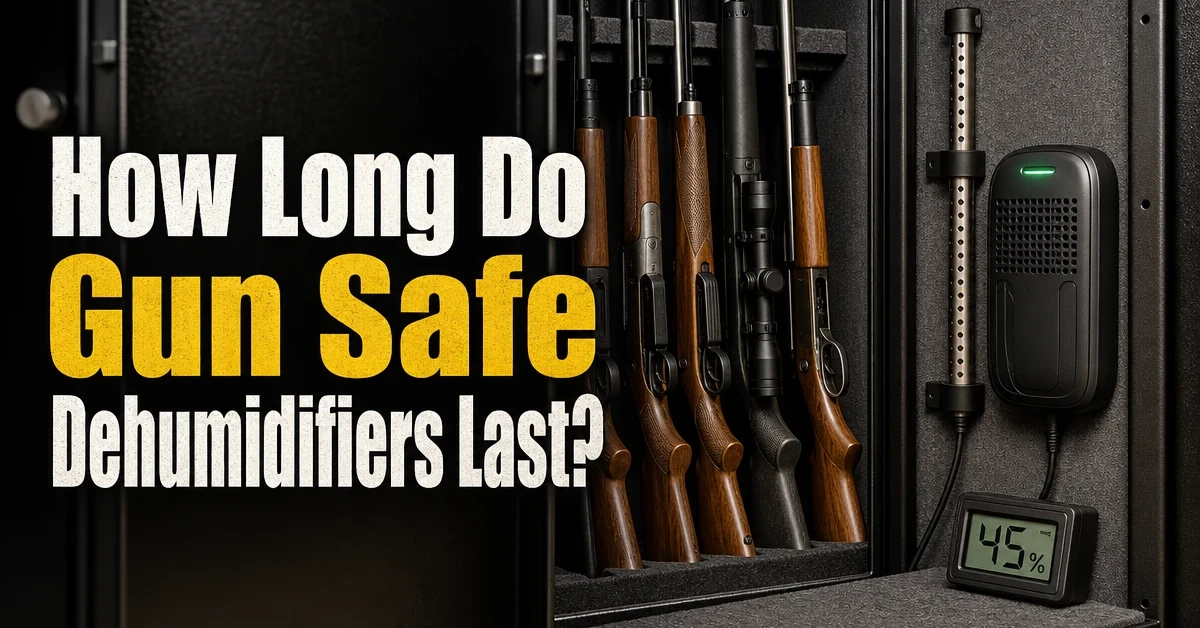

How long do gun safe dehumidifiers last? The answer depends on the type: rechargeable desiccant units may last for years with proper care, while disposable moisture absorbers usually last weeks to several months, and electric rod-style units can operate for many years. The best way to know when replacement or recharging is needed is to follow the manufacturer’s instructions and monitor humidity inside the safe with a hygrometer.
Gun Safe Dehumidifier Lifespan by Type
| Dehumidifier type | Typical service pattern | What indicates service is needed? |
|---|---|---|
| Disposable moisture absorber | Often several weeks to several months, depending on capacity and humidity | The container is full, saturated, leaking, or the product instructions specify replacement |
| Rechargeable desiccant unit | Usually reusable for years when recharged correctly | The indicator changes color, the unit stops absorbing effectively, or it no longer recharges normally |
| Electric heating rod | Often several years, but lifespan depends on construction, installation, and continuous use | The rod no longer heats, the cord is damaged, or the manufacturer identifies a fault |
| Small electric compressor unit | Highly variable and generally less convenient inside a compact safe | Reduced operation, unusual noise, water leakage, or manufacturer-recommended replacement |
These are practical ranges rather than guarantees. Product design, safe size, room conditions, ventilation, seasonal humidity, and frequency of recharging can change the result. Always treat the product manual as the controlling source for operation and replacement.
How Long Each Type Usually Lasts
Disposable moisture absorbers
Disposable absorbers use a moisture-collecting material that gradually fills with water. A small unit may last much longer in a dry, climate-controlled room than in a damp basement or garage.
Check the absorber regularly. Replace it when the container is full, the material is saturated, or the instructions call for replacement. Do not allow collected liquid to spill inside the safe because moisture can damage firearms, ammunition, optics, documents, and leather equipment.
Rechargeable desiccant dehumidifiers
Rechargeable units are designed to be dried periodically and reused. Their service life can extend for years, but the drying cycle must be performed exactly as directed by the manufacturer.
Some units use an indicator that changes color when saturated. Others have a visible moisture window or a specified recharge interval. A rechargeable unit should not be considered maintenance-free simply because it does not require replacement after every cycle.
Electric heating rods
Heating rods reduce condensation risk by gently warming the air inside the safe. They do not collect water like a desiccant and normally do not have a saturation point. Their useful life depends on the heating element, cord, plug, mounting, and operating environment.
Inspect the cord and plug periodically. Stop using the rod if it shows damage, overheating, scorching, unusual odor, or other signs of electrical failure. Follow the safe manufacturer’s guidance for installation and keep electrical equipment away from spilled liquids.
Small electric compressor dehumidifiers
Small compressor-style units can remove moisture actively, but they may require more space, ventilation, and maintenance than a safe-mounted rod or rechargeable desiccant. Their lifespan varies widely by model and operating conditions.
Because a gun safe is an enclosed storage cabinet rather than a normal room, confirm that the unit is designed for the intended space. Never place an appliance inside the safe unless its instructions specifically allow that use.
What Causes a Gun Safe Dehumidifier to Wear Out Faster?
- High humidity inside the safe
- Frequent door opening and closing
- Placement in a basement, garage, shed, or other damp area
- Improper recharging of desiccant material
- Blocked airflow around an electric rod
- Damaged cords, plugs, or mounting hardware
- Water spills or leaking disposable absorbers
- Using a unit that is too small for the safe or environment
- Failing to inspect the unit during seasonal humidity changes
A dehumidifier can also appear to be failing when the safe has excessive moisture entering through its location, door seal, concrete floor, or surrounding room. Replacing the unit alone may not solve the underlying problem.
How to Tell When It Needs Recharging or Replacement
Check the manufacturer’s indicator
Use the product’s indicator, fill line, recharge signal, or service instructions when available. Do not rely on appearance alone if the unit provides a specific operating test.
Measure humidity inside the safe
Place a digital hygrometer inside the safe, away from the dehumidifier and not directly against the metal wall. This measures the actual storage environment rather than the room’s humidity.
There is no single humidity setting that applies to every safe, firearm, finish, optic, and stored accessory. The practical goal is to prevent condensation and excessive moisture while following firearm and safe manufacturer guidance.
Inspect stored equipment
Look for early signs of moisture problems, including surface discoloration, orange spotting, a musty odor, damp fabric, cloudy optics, or corrosion on accessories. Finding rust does not automatically prove that the dehumidifier has failed; the safe may also be exposed to a damp location or contaminated storage materials.
Watch for electrical warning signs
Replace or stop using an electrical unit if its cord is cracked, the plug is loose, the housing is damaged, it overheats, or it produces an unusual odor or sound. Do not repair electrical equipment with improvised parts.
Does a Gun Safe Dehumidifier Prevent Rust by Itself?
No. A dehumidifier helps control moisture, but firearm preservation also depends on proper cleaning, lubrication, storage location, airflow, and inspection. Firearms should be unloaded and stored according to the manufacturer’s instructions, with unauthorized access prevented.
Avoid storing firearms long-term in damp cloth cases, leather sleeves, or soft bags that can retain moisture. Keep ammunition and optics in conditions recommended by their manufacturers, and inspect them periodically rather than assuming the safe environment is perfect.
How to Make a Dehumidifier Last Longer
- Install or place it according to the product instructions.
- Use a hygrometer to monitor conditions inside the safe.
- Recharge desiccant units only by the approved method.
- Keep electric rods clear of obstructions and combustible materials.
- Inspect cords, plugs, housings, and mounting points.
- Empty disposable absorbers before they can overflow.
- Keep the safe in a reasonably dry, climate-controlled room when possible.
- Check the safe more often during humid weather or seasonal changes.
- Clean and lightly protect firearms according to their manufacturers’ instructions.
Common Mistakes to Avoid
- Assuming a rechargeable unit works forever without recharging
- Placing a disposable absorber where it can spill onto firearms
- Using a heating rod without checking its cord or mounting
- Measuring humidity only in the room instead of inside the safe
- Using an appliance not approved for the intended enclosure
- Ignoring early surface rust or damp storage materials
- Storing loaded firearms or allowing unauthorized access
Firearm storage should always follow local law, safe manufacturer instructions, and the fundamental rules of firearm safety. Treat every firearm as loaded, keep the muzzle pointed in a safe direction, keep your finger outside the trigger guard until ready to shoot, and be certain of the target and what is beyond it.
When Should You Use a Room Dehumidifier?
A safe dehumidifier may not be enough when the entire room is damp. A basement, unconditioned garage, or poorly ventilated storage area can continuously introduce moisture whenever the safe is opened or through gaps around the door.
In those conditions, controlling room humidity may reduce the workload on the safe’s dehumidifier. Keep the safe elevated when appropriate, avoid direct contact with damp concrete, and follow the safe manufacturer’s recommendations for placement.
FAQs
1. How often should I recharge a gun safe dehumidifier?
Recharge it when its indicator or instructions show that it is saturated. The interval may range from days to months depending on the unit, safe, room, and humidity.
2. How often should a disposable gun safe absorber be replaced?
Replace it when full, saturated, leaking, or when the product instructions require replacement. Do not wait for liquid to spill inside the safe.
3. How long do electric gun safe dehumidifiers last?
Electric heating rods can operate for several years, but the actual lifespan varies by model, installation, electrical conditions, and maintenance. Replace damaged or malfunctioning units immediately.
4. What humidity should be inside a gun safe?
Use the firearm, safe, and accessory manufacturers’ recommendations. A hygrometer inside the safe is more useful than guessing based on room conditions or relying solely on the dehumidifier.
5. Can a dehumidifier stop firearms from rusting?
It can reduce moisture-related risk, but it is not a substitute for proper firearm cleaning, suitable storage, inspection, and a dry storage location.
6. Should a gun safe dehumidifier run continuously?
Some electric units are designed for continuous operation, while rechargeable and disposable units work differently. Follow the specific product manual and inspect the unit regularly.
Final Answer: How Long Do Gun Safe Dehumidifiers Last?
Gun safe dehumidifiers can last from weeks to several years depending on the type. Disposable absorbers are replaced when saturated, rechargeable desiccant units may remain useful for years with proper recharging, and electric heating rods often provide years of service when installed and inspected correctly.
Use a hygrometer inside the safe, monitor for corrosion and condensation, and follow the manufacturer’s instructions. Responsible firearm storage also requires preventing unauthorized access, maintaining equipment properly, and checking current local storage requirements.