
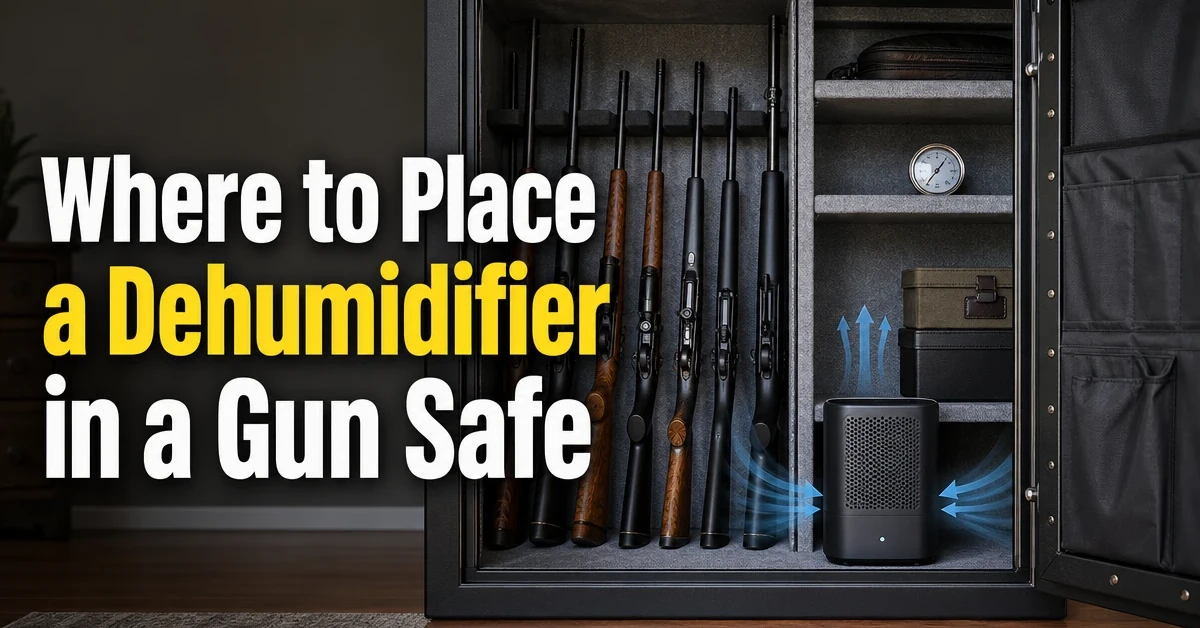

Where to place a dehumidifier in a gun safe depends on its design, but the best general location is low inside the safe—usually on the floor or mounted horizontally near the bottom—while keeping it clear of firearms, shelving, and stored materials. This position allows warm, dry air to circulate upward and helps reduce condensation near the safe’s lower interior. Always follow the dehumidifier manufacturer’s installation and electrical instructions.
Why Dehumidifier Placement Matters
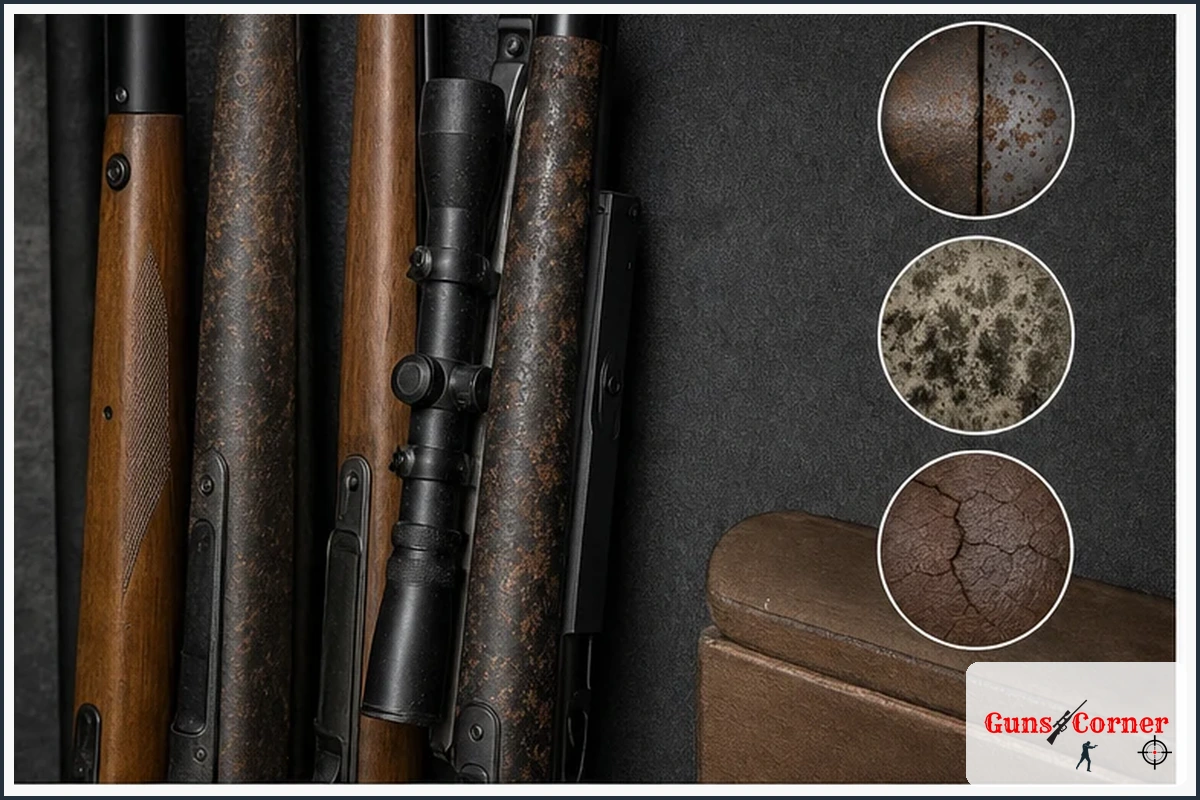
Moisture inside a gun safe can contribute to surface rust, corrosion, mold, and damage to leather, wood, optics, and other equipment. A dehumidifier works most effectively when air can move around it rather than being blocked by firearms, cases, shelves, or foam.
Placement is only one part of moisture control. The safe’s location, door seal, room humidity, temperature changes, and how often the door is opened can also affect results.
Best Location for a Gun Safe Dehumidifier
Place it near the bottom of the safe
For a rod-style electric dehumidifier, install it horizontally along the lower portion of the safe when the manufacturer permits that orientation. If the safe has a designated mounting position, use it instead of improvising.
A floor-level position is usually practical because warm air rises and can circulate through the safe. Keep the unit away from direct contact with firearms, ammunition containers, cloth, paper, and other materials.
Keep space around the unit
Do not bury the dehumidifier under cases or place it tightly against stored equipment. Leave the clearance specified in the product manual. Restricted airflow can reduce performance and may create unnecessary heat around nearby items.
Use the safe’s built-in outlet or cord pass-through correctly
If the safe includes a factory-installed electrical outlet or cord port, use it according to the safe manufacturer’s instructions. Do not drill through the safe or modify its fire protection, wiring, locking mechanism, or body unless the manufacturer specifically authorizes the work.
Placement by Dehumidifier Type
| Dehumidifier type | Typical placement | Important consideration |
|---|---|---|
| Electric heating rod | Low and horizontal, commonly near the floor | Follow the required clearance, orientation, and mounting instructions. |
| Rechargeable desiccant unit | On a stable, unobstructed shelf or low surface | Remove and recharge it as directed; do not cover ventilation openings. |
| Disposable moisture absorber | On a stable tray or low shelf | Keep liquid or collected moisture away from firearms and electrical equipment. |
These are general placement principles, not universal installation instructions. The product manual controls if it specifies a different position, orientation, clearance, or power requirement.
How to Set Up a Dehumidifier Safely
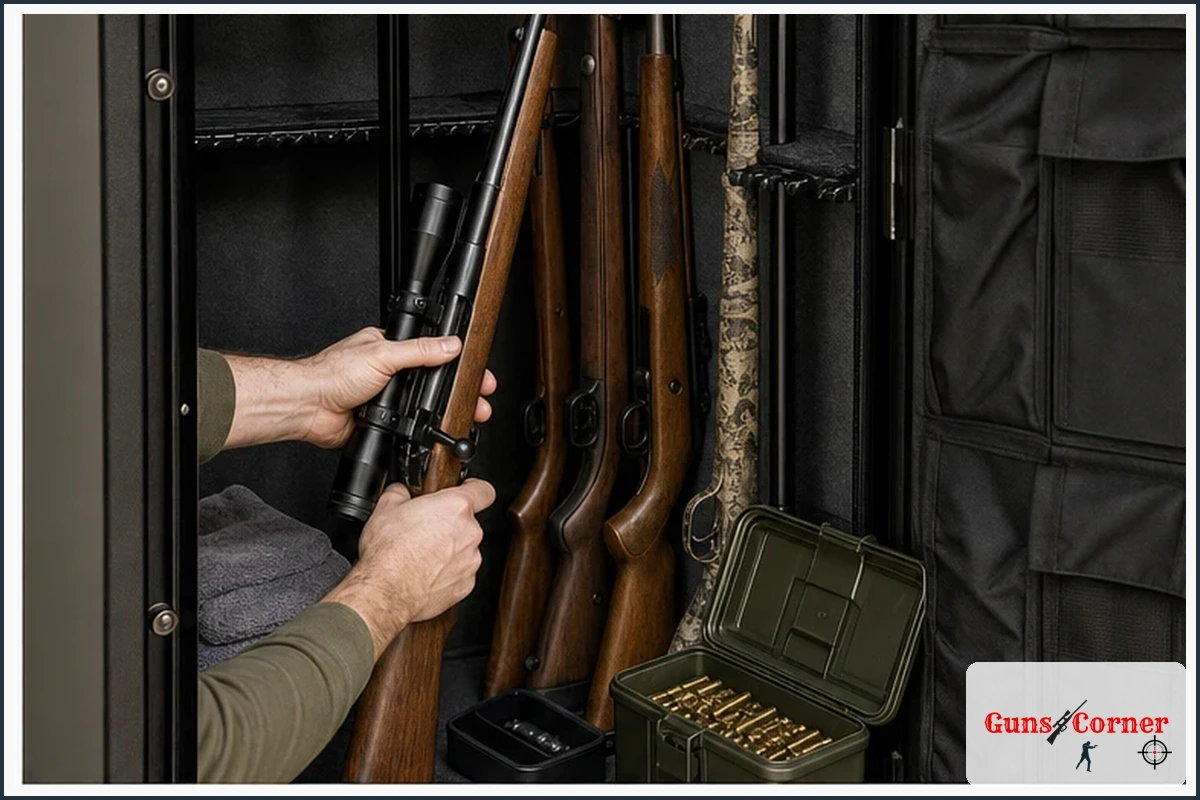
- Unload and remove firearms before installation. Confirm every firearm is unloaded and store ammunition separately according to local law and manufacturer guidance.
- Clean and inspect the safe. Look for existing rust, condensation, damp fabric, water damage, or blocked vents.
- Measure humidity if possible. A small hygrometer can help identify whether conditions are changing and whether your moisture-control method is working.
- Place the unit low and unobstructed. Keep it away from firearms, combustible materials, and anything that could contact a hot surface.
- Route the power cord safely. Use only the approved outlet, cord path, and voltage specified by the manufacturer.
- Organize storage around airflow. Avoid packing firearms tightly together or blocking the dehumidifier with soft cases and boxes.
- Check the setup regularly. Inspect the unit, cord, plug, safe interior, and firearms for heat, moisture, corrosion, or damage.
Should a Dehumidifier Go on the Floor or Shelf?
For many electric rod-style units, the floor or a low mounting position is preferred because it keeps the heat source low and leaves room for air to circulate upward. However, a shelf may be appropriate for a rechargeable or passive desiccant product if the shelf is stable and the manufacturer allows that placement.
Do not place a dehumidifier where it can fall, contact a firearm, block the safe door, interfere with the locking mechanism, or become covered by clothing or cases.
Humidity Control Beyond Dehumidifier Placement
- Choose an appropriate safe location. An indoor space with relatively stable temperature is generally easier to manage than a damp garage, shed, basement, or unconditioned outbuilding.
- Keep firearms clean and dry. Wipe down metal surfaces after handling and use a storage product compatible with the firearm’s finish.
- Avoid trapping moisture. Do not store wet rain gear, damp cases, muddy slings, or recently exposed equipment inside the safe.
- Inspect seals and openings. A damaged door seal or unprotected cord opening can allow humid air to enter.
- Use a hygrometer. Monitor actual conditions instead of assuming the dehumidifier is working properly.
- Maintain the device. Recharge desiccant units and replace disposable absorbers according to their instructions.
There is no single humidity setting that is ideal for every safe, firearm finish, climate, and storage environment. Use the safe, firearm, and moisture-control product manufacturers’ guidance, and avoid creating excessive heat or dryness that could affect wood or other materials.
Common Placement Mistakes
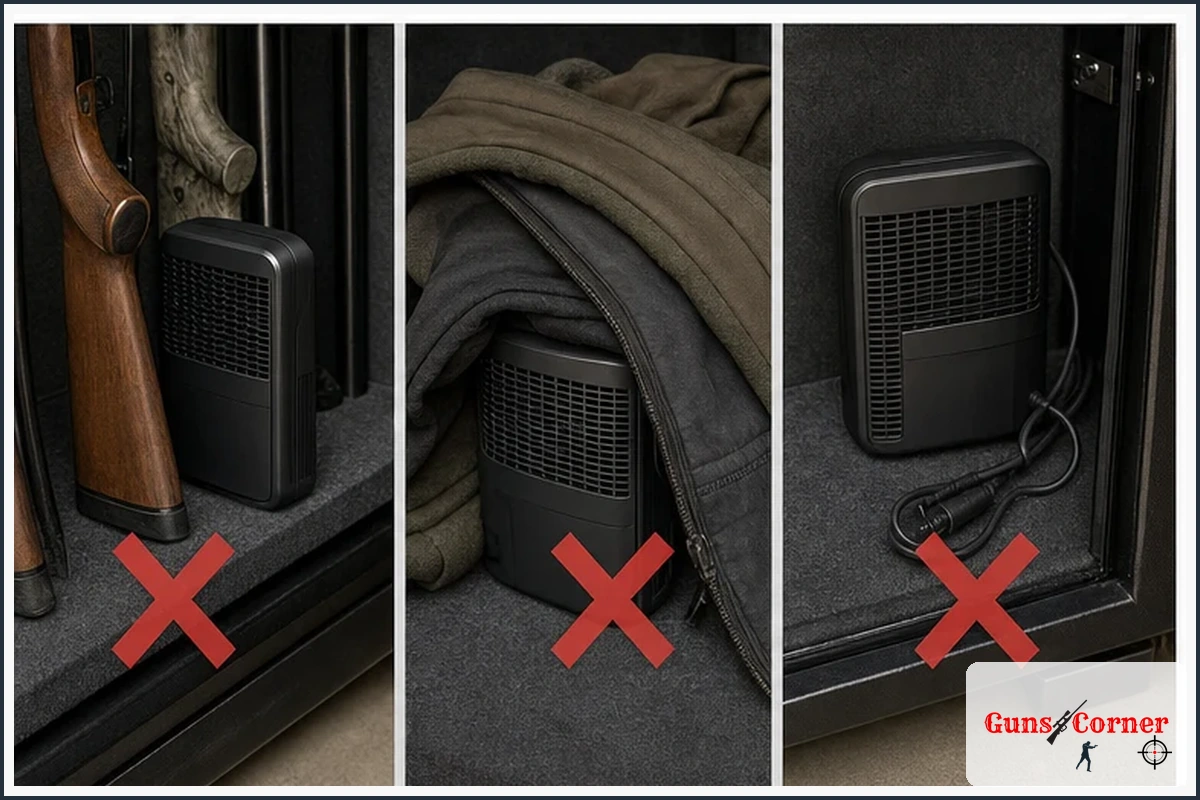
- Putting the unit directly against firearms or wooden stocks.
- Covering the device with clothing, foam, or a gun case.
- Using an electrical product inside the safe without checking its voltage and orientation requirements.
- Placing a liquid moisture absorber where it can tip over.
- Installing a cord by drilling through the safe without manufacturer approval.
- Assuming a dehumidifier will correct water leaks, flooding, or a severely damp storage room.
- Ignoring rust because the safe feels dry during a single inspection.
Firearm Storage Safety
A dehumidifier does not replace secure firearm storage. Keep the safe locked, prevent unauthorized access, and follow applicable storage laws. Treat every firearm as loaded, keep muzzles pointed in a safe direction, keep fingers outside the trigger guard until ready to shoot, and be certain of the target and what is beyond it.
Keep ammunition stored in a manner recommended by the firearm and ammunition manufacturers and required by local law. Never use a dehumidifier as a reason to leave the safe open or unattended.
When to Replace or Reposition the Dehumidifier
Reconsider the setup if you continue to see rust, condensation, musty odors, damp shelves, or rising humidity. First check the device’s power, recharge status, airflow, placement, and condition. Then inspect the room for leaks, temperature swings, poor ventilation, or excessive humidity.
If a powered unit becomes unusually hot, shows damaged wiring, trips a circuit, smells burnt, or operates contrary to its instructions, unplug it safely and stop using it until the manufacturer or a qualified professional provides guidance.
FAQs
1. Can I put a dehumidifier directly on top of my guns?
No. Keep it separated from firearms and stored equipment. Direct contact can restrict airflow, transfer heat, or allow moisture and residue to affect the firearm.
2. Should a gun safe dehumidifier be mounted vertically?
Only if the manufacturer allows vertical installation. Many rod-style units are designed for horizontal placement, so check the product manual before changing orientation.
3. Is a rechargeable desiccant dehumidifier safe inside a gun safe?
It can be suitable when used according to its instructions. Keep it stable, unobstructed, and away from firearms, and recharge it outside the safe if the manufacturer requires that procedure.
4. Do I need a dehumidifier in every gun safe?
Not necessarily. The need depends on room humidity, temperature changes, safe construction, location, and the condition of stored equipment. A hygrometer can help you determine whether additional moisture control is needed.
5. Can I use a household dehumidifier inside a gun safe?
Do not use a large room dehumidifier inside the safe unless it is specifically designed and approved for that purpose. Use a product made for enclosed storage and follow its electrical and clearance requirements.
6. Where should I put a hygrometer in the safe?
Place it where it can measure the general storage area without being blocked by firearms or cases. A central shelf or open interior location is often more useful than placing it directly beside the dehumidifier.
7. What should I do if I still find rust?
Unload and secure the firearm, identify the source of moisture, inspect the safe and storage room, and follow the firearm manufacturer’s cleaning guidance. For significant corrosion or damage, consult a qualified gunsmith.
Final Answer: Where to Place a Dehumidifier in a Gun Safe
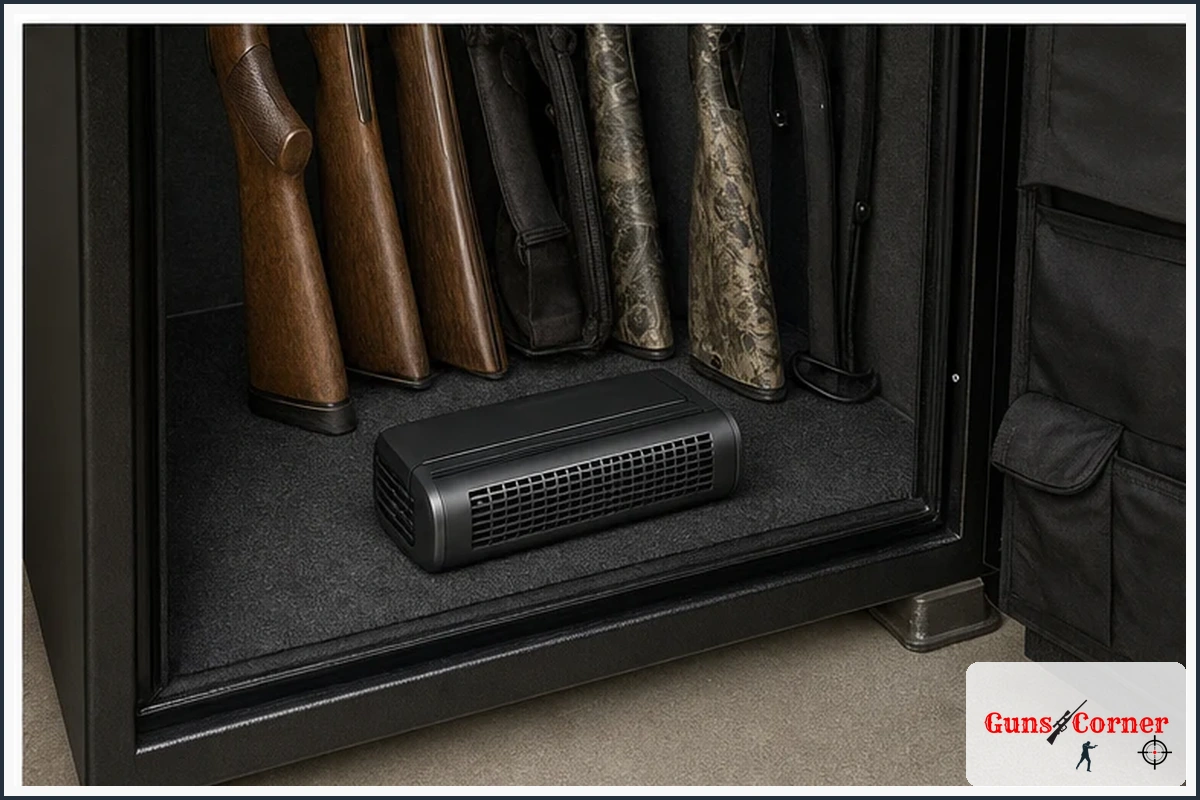
The best general location is low inside the safe, usually on the floor or mounted horizontally near the bottom, with clear space around it and no contact with firearms or stored materials. Use the safe’s approved cord path, follow the dehumidifier manufacturer’s instructions, monitor humidity with a hygrometer, and address room moisture or leaks that the device cannot solve.
Always prioritize locked storage, manufacturer guidance, electrical safety, and current local firearm-storage requirements over general online advice.