

Fireproof gun safe reviews should be judged by verified fire ratings, burglary protection, locking quality, usable capacity, and responsible storage features—not marketing language alone. A good safe protects firearms from unauthorized access while offering realistic fire resistance, but no residential safe is completely fireproof. This guide explains how to compare models safely and what specifications deserve the closest attention.
What Fireproof Gun Safe Reviews Should Tell You
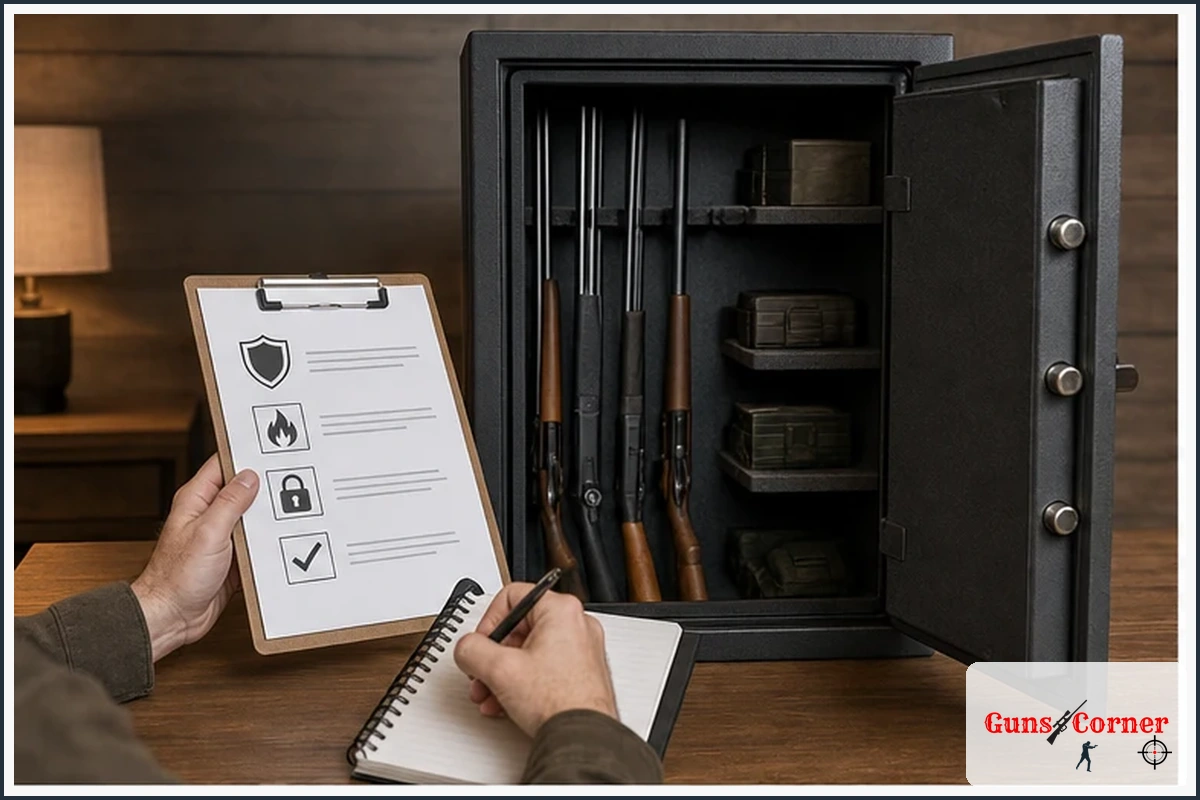
The most useful review should explain how a safe was evaluated, identify the manufacturer’s tested claims, and distinguish fire resistance from security. Reviewers should also explain whether the safe fits the intended firearms, can be anchored correctly, and complies with local storage requirements.
| Review factor | What to verify | Why it matters |
|---|---|---|
| Fire rating | Test duration, temperature claim, testing standard, and documentation | Shows how the manufacturer supports its fire-resistance claim |
| Security construction | Steel thickness, door design, locking bolts, hinges, and pry resistance | Fire protection does not automatically mean strong burglary protection |
| Lock | Mechanical or electronic design, override method, and maintenance requirements | The lock affects reliability, access control, and long-term upkeep |
| Interior capacity | Usable dimensions, shelving, firearm layout, and padding | Advertised capacity may exceed practical storage capacity |
| Installation | Weight, floor requirements, anchor points, and delivery limitations | A heavy safe still needs secure installation and suitable structural support |
| Documentation | Manual, warranty, fire-test information, and installation instructions | Clear documentation makes claims and safe operation easier to verify |
Fire-Resistant Is Not the Same as Fireproof
The word “fireproof” is commonly used in product marketing, but a gun safe can be damaged by heat, smoke, water, and falling structures even when it has a stated fire rating. A fire rating normally describes performance under a defined test, for a defined period, under specified conditions.
Look for a documented rating that identifies the test duration and the claimed interior temperature protection. Avoid treating an unsupported “fireproof” label as proof of performance. If the manufacturer does not explain how the claim was established, the claim is difficult to compare with competing products.
Questions to ask about a fire rating
- How long was the safe tested?
- What temperature limit was claimed for the interior?
- Was the entire safe tested, or only a material component?
- Is the testing standard identified?
- Does the warranty explain exclusions for fire, water, or smoke damage?
- Are replacement parts and service available after a fire?
Fire-resistant insulation may also release steam or moisture during a fire. After any fire, do not open a hot safe or handle damaged firearms until firefighters and qualified professionals say it is safe.
How to Evaluate Security in Fireproof Gun Safe Reviews
Steel and door construction
Thicker steel, a well-fitted door, strong locking bolts, and protected hinges can contribute to better resistance against forced entry. However, a single advertised steel thickness does not fully describe security. Door overlap, weld quality, bolt engagement, frame design, and anchoring also matter.
Do not assume that a heavy safe cannot be moved. A burglar may attack the safe at its location or remove it if it is not anchored according to the manufacturer’s instructions.
Locking systems
Electronic locks can offer convenient access, while mechanical combination locks do not depend on batteries. Either type can be appropriate when it is properly maintained and used according to its manual.
For an electronic lock, check battery location, low-battery warnings, emergency power procedures, lockout behavior, and the availability of a documented recovery process. For a mechanical lock, consider dialing practice, combination management, and professional service requirements.
Never leave keys, combinations, override tools, or access codes where unauthorized people can find them. A mechanical lock or electronic keypad is not a substitute for responsible access control.
Fireproof Gun Safe Reviews: Capacity and Fit
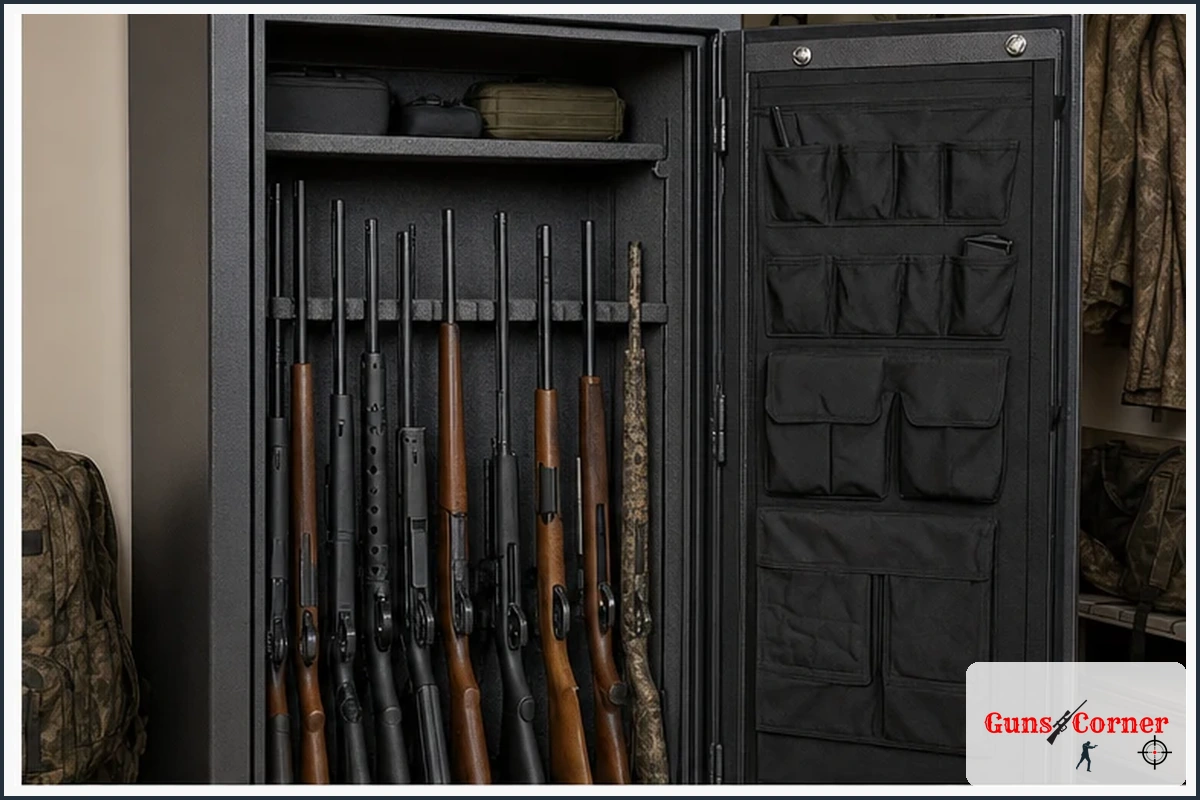
Manufacturers often describe capacity by the number of long guns a safe can hold without optics, slings, cases, or accessories. A safe advertised for a certain number of firearms may hold substantially fewer in practical use.
Before choosing a model, measure the longest firearm, the widest stock, mounted optics, magazine configurations, and any accessories that must remain attached. Also check door clearance and interior shelf placement.
Practical capacity checklist
- Measure firearms with scopes or other permanently mounted accessories.
- Allow space to remove each firearm without striking neighboring equipment.
- Check whether shelves are adjustable or removable.
- Confirm that the interior padding will not interfere with actions or optics.
- Reserve space for documents and essential maintenance supplies without overcrowding firearms.
- Plan for future storage needs rather than filling the safe immediately.
Important Safety and Legal Considerations
Firearm-storage laws vary by state, locality, household circumstance, and firearm type. Some jurisdictions may specify storage methods or requirements, while others may focus on preventing unauthorized access. Verify current rules with the appropriate state or local authority before purchasing or installing a safe.
Store firearms unloaded unless a specific lawful and professionally advised storage arrangement says otherwise. Keep ammunition secured according to applicable law and manufacturer guidance. Children and unauthorized users should not have access to firearms, keys, combinations, or override devices.
Always follow the four basic firearm-safety rules:
- Treat every firearm as if it is loaded.
- Keep the muzzle pointed in a safe direction.
- Keep your finger outside the trigger guard until ready to shoot.
- Be certain of the target and what is beyond it.
A safe is only one part of responsible firearm storage. Complete hunter education or recognized firearm-safety training, read the firearm and safe manuals, and inspect storage arrangements regularly.
Installation Matters as Much as the Safe
Follow the manufacturer’s instructions for anchoring, floor type, ventilation, clearance, and weight limits. Use suitable fasteners and confirm that the installation surface can support the safe. If the safe is difficult to move or install, use qualified delivery or installation assistance.
Do not drill through the safe, insulation, wiring, or locking mechanism unless the manufacturer specifically permits the procedure. Improper drilling can damage fire protection, compromise security, or void the warranty.
Installation checklist
- Choose a location that limits unauthorized visibility and access.
- Confirm door swing and delivery clearance before purchase.
- Check the floor’s load-bearing capacity.
- Anchor the safe using the manufacturer’s approved points.
- Keep the safe level so the door and locking mechanism operate correctly.
- Record the model, serial number, combination instructions, and warranty information securely.
- Test access and locking operation after installation without leaving the door unsecured.
Common Problems With Fireproof Gun Safe Reviews
Overreliance on a fire rating
A fire rating does not prove superior burglary protection, water resistance, lock reliability, or installation quality. Reviews should treat fire protection as one category in a broader evaluation.
Using advertised capacity as real capacity
Long guns with optics and accessories require more room than bare firearms. Compare interior dimensions and layout rather than relying only on the capacity number.
Ignoring the lock and service support
A safe may have strong construction but still be inconvenient if replacement batteries, parts, technical support, or lock service are unavailable. Check the current manual and warranty before buying.
Failing to anchor the safe
Weight alone does not guarantee secure placement. Follow the installation instructions and consider professional help when the safe is large, heavy, or difficult to position safely.
Storing incompatible materials carelessly
Do not store damp gear, wet clothing, solvents, or improperly maintained equipment in a confined safe. Moisture can contribute to corrosion. Use manufacturer-approved storage practices and inspect firearms periodically.
What to Avoid When Choosing a Gun Safe
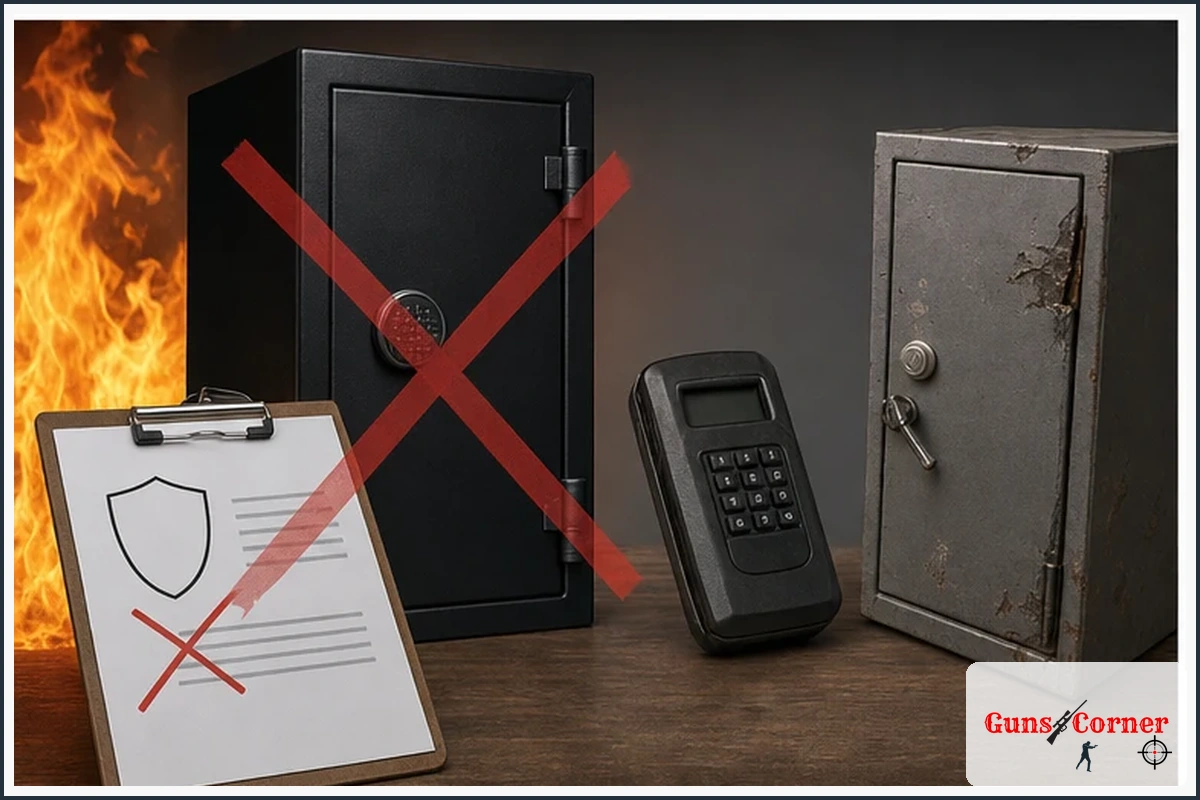
- Do not select a safe solely because its advertisement uses the word “fireproof.”
- Do not accept a fire claim without a stated test basis or meaningful documentation.
- Do not assume a large external size means large usable capacity.
- Do not store keys, combinations, or override tools where unauthorized users can access them.
- Do not modify the safe without checking the manual and warranty.
- Do not install a heavy safe on an unsuitable floor or use improvised anchors.
- Do not assume a safe automatically satisfies local storage law.
- Do not place loaded firearms in storage contrary to applicable law, manufacturer guidance, or responsible safety practice.
Are More Expensive Fireproof Gun Safes Better?
Price can reflect stronger construction, better locks, more usable space, improved documentation, or professional service support, but cost alone does not prove performance. Compare verified specifications and choose a safe that matches the firearms, household risks, location, and legal requirements.
For many owners, a smaller well-installed safe with controlled access is more practical than a larger model that cannot be anchored properly or maintained. Consider the total cost of delivery, installation, flooring, accessories, and future service.
How to Read a Review Before Buying
- Identify whether the review is research-based or based on documented hands-on testing.
- Separate manufacturer claims from independently verified information.
- Check the exact model and lock version being reviewed.
- Compare usable interior dimensions, not just firearm capacity.
- Review the fire-test description and warranty limitations.
- Confirm anchoring instructions and installation requirements.
- Check local storage rules before purchase.
- Read the current owner’s manual before installation.
FAQs
Are fireproof gun safes completely fireproof?
No. Most residential models are better described as fire-resistant for a stated period and under defined test conditions. Heat, smoke, water, and structural collapse can still damage the safe or its contents.
What is the most important specification in fireproof gun safe reviews?
There is no single specification. Look at documented fire performance, security construction, locking reliability, usable capacity, anchoring instructions, warranty terms, and compliance with local storage requirements.
Does a heavier gun safe provide better protection?
Weight can make removal more difficult, but it does not guarantee security. Construction quality and proper anchoring are also important.
Is an electronic or mechanical lock better?
Neither is universally best. Electronic locks offer convenience but require battery and service planning. Mechanical locks avoid battery dependence but require correct operation and may need specialized service.
Can I drill into a fireproof gun safe to anchor it?
Only if the manufacturer’s instructions specifically allow it and identify safe anchor locations. Improper drilling can damage insulation, wiring, or the locking system.
How much space should I leave in a gun safe?
Leave enough room to remove firearms without striking adjacent equipment and to accommodate optics, slings, and future additions. Advertised capacity is often based on a more restrictive setup than normal ownership.
Does a gun safe protect ammunition during a house fire?
Protection depends on the safe’s design, the ammunition, heat exposure, and fire conditions. Follow ammunition manufacturer guidance and do not assume a residential safe guarantees ammunition safety.
Where can I verify firearm-storage requirements?
Check your state or local government’s current firearm-storage information and consult a qualified legal professional when the rule is unclear. Official requirements override general online guidance.
Final Answer: Fireproof Gun Safe Reviews
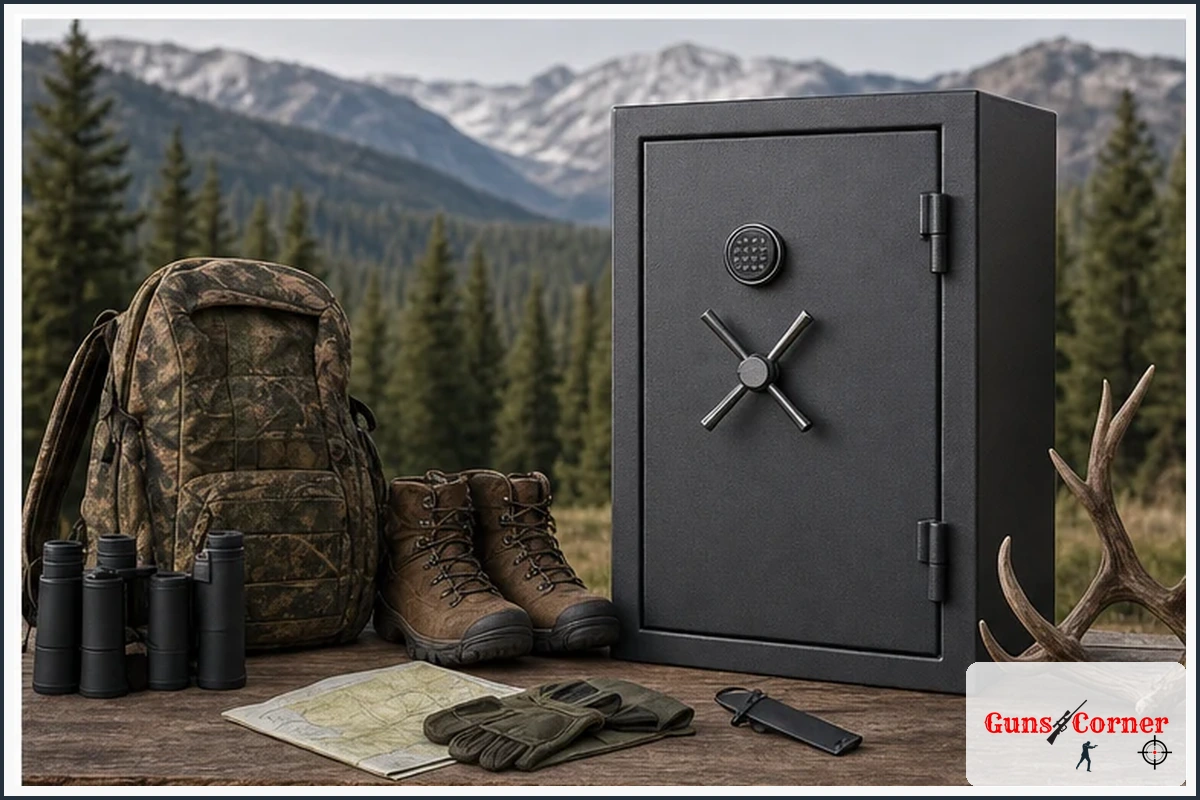
The best fireproof gun safe reviews explain verified fire resistance, real security features, lock reliability, practical capacity, installation requirements, and local storage considerations. Choose a model supported by clear documentation, anchor it correctly, control access to every key or code, and follow the safe and firearm manuals. No safe replaces responsible handling, training, or compliance with current law.