
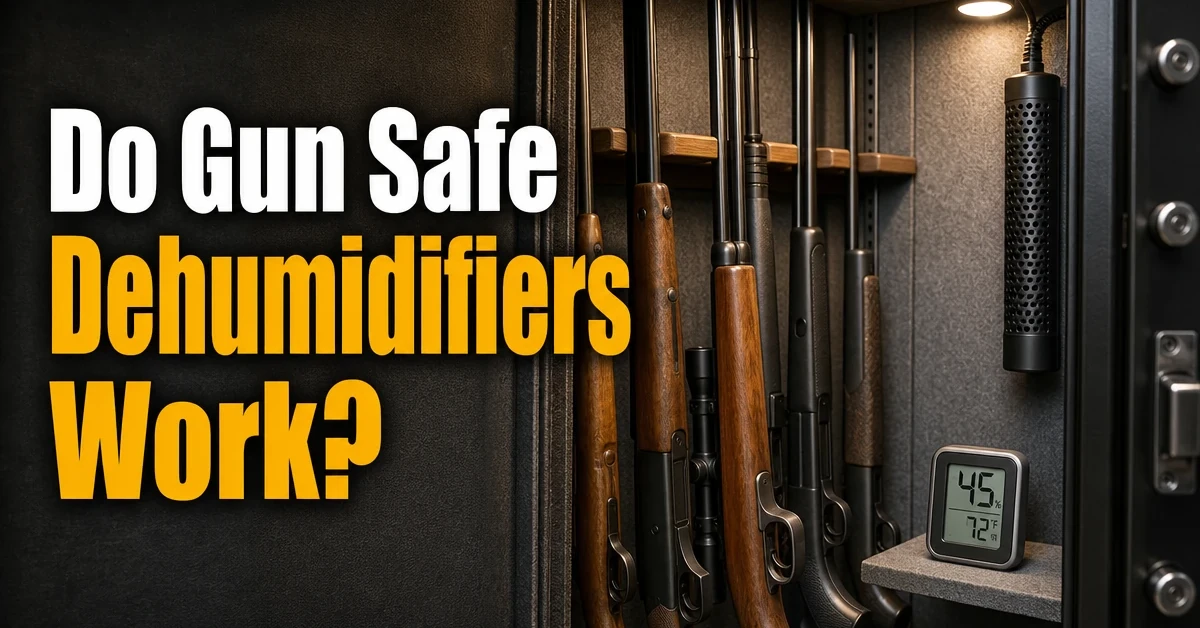

Do gun safe dehumidifiers work? Yes—when correctly sized and installed, they can reduce moisture buildup and help prevent firearm rust inside an enclosed safe. They are not a substitute for a dry storage location, a properly sealed safe, regular inspections, or protecting firearms with a light coat of suitable rust-preventive product.
How Gun Safe Dehumidifiers Work
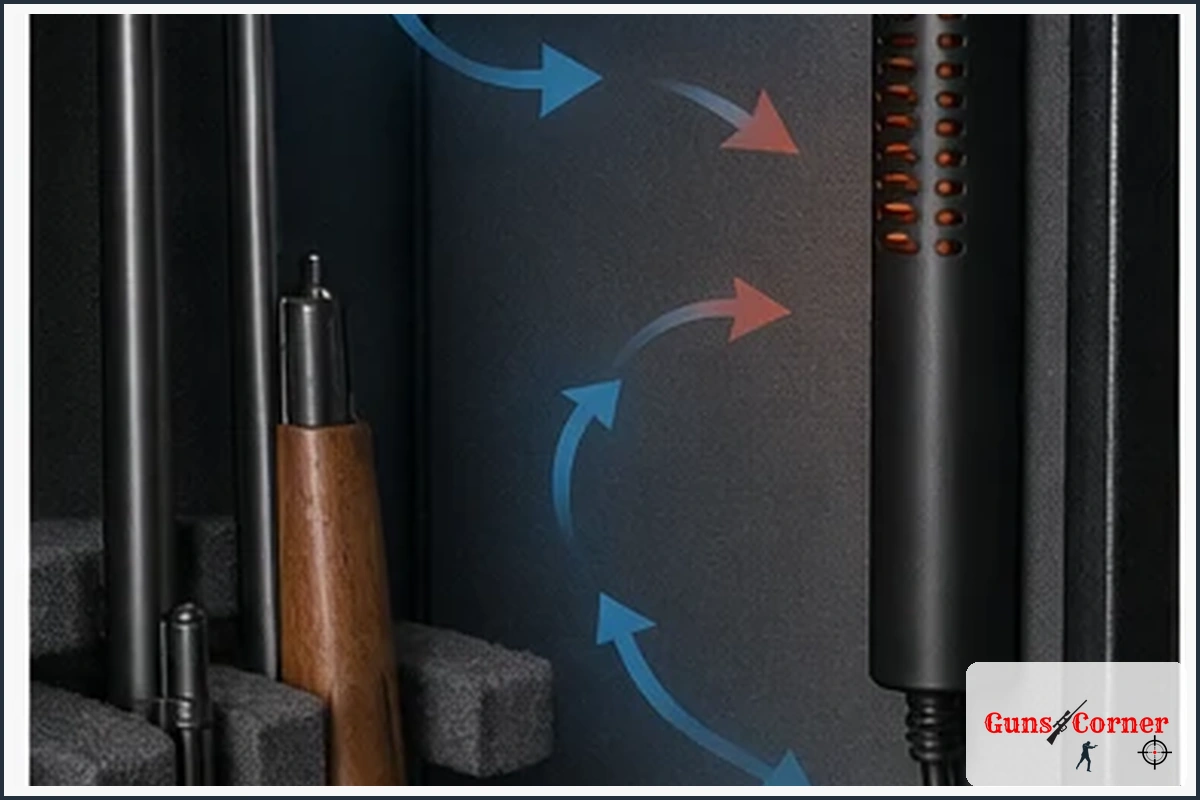
Gun safe dehumidifiers use one of two common approaches:
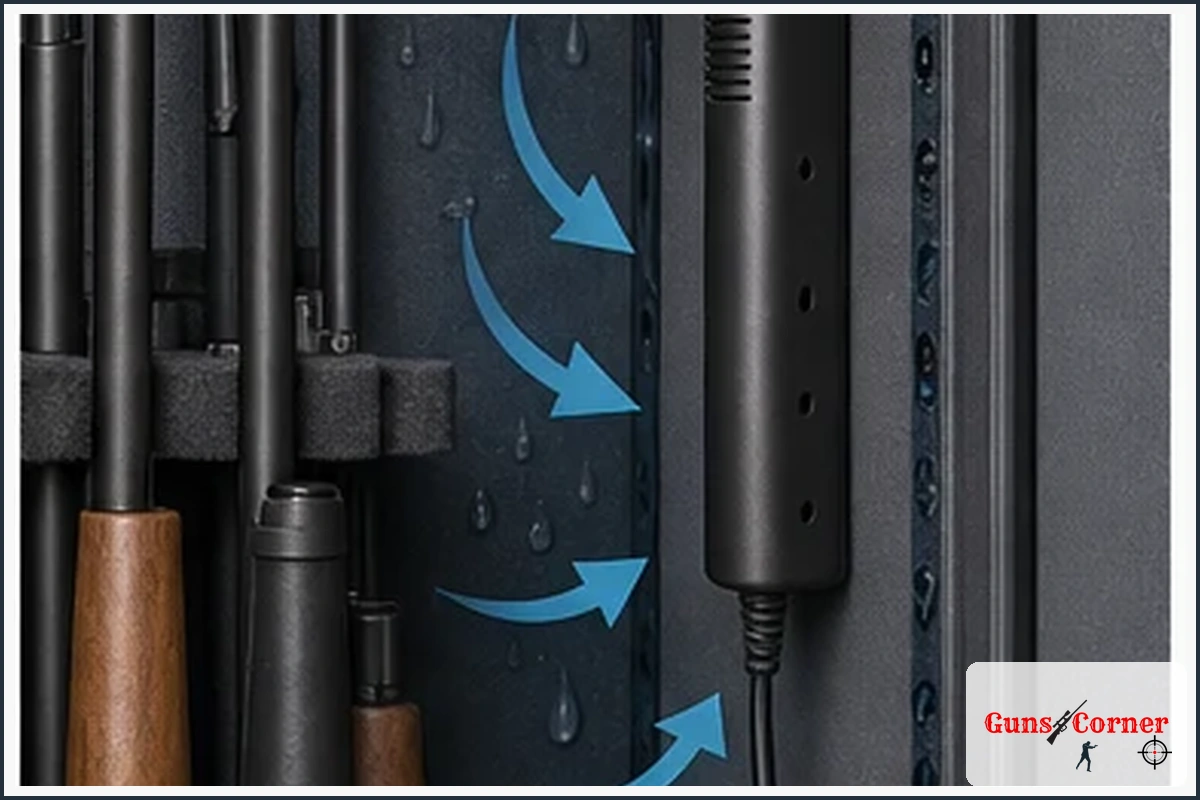
- Heated rods: A low-temperature heating element gently warms the air. The warmer air circulates through convection, reducing condensation on cool metal surfaces.
- Desiccant products: Moisture-absorbing crystals or cartridges capture water from the air. They must be replaced, recharged, or emptied according to the manufacturer’s instructions.
A heated rod does not remove large amounts of water from a room. Instead, it helps control condensation inside a relatively enclosed space. Desiccants actively absorb moisture but have limited capacity once saturated.
When a Gun Safe Dehumidifier Works Well
A dehumidifier is most useful when the safe is indoors, reasonably sealed, and located in a climate or room with meaningful humidity changes. It may be especially helpful in basements, garages, coastal areas, and other damp environments.
Safe size matters. A device designed for a small enclosure may not adequately protect a large safe. Follow the product’s stated coverage, power, placement, and operating instructions rather than assuming that a larger device is automatically better.
| Storage condition | Likely benefit | What to check |
|---|---|---|
| Small, enclosed safe | Heated rods or desiccants may help control moisture | Coverage, ventilation, and safe placement |
| Large safe with many firearms | May require more than one properly rated solution | Manufacturer guidance and humidity readings |
| Very damp basement or garage | Safe protection alone may be insufficient | Room-level humidity control and water intrusion |
| Safe with visible condensation or rust | Dehumidifier may help prevent additional moisture | Immediate inspection, cleaning, and moisture source |
Why a Dehumidifier May Not Solve the Problem
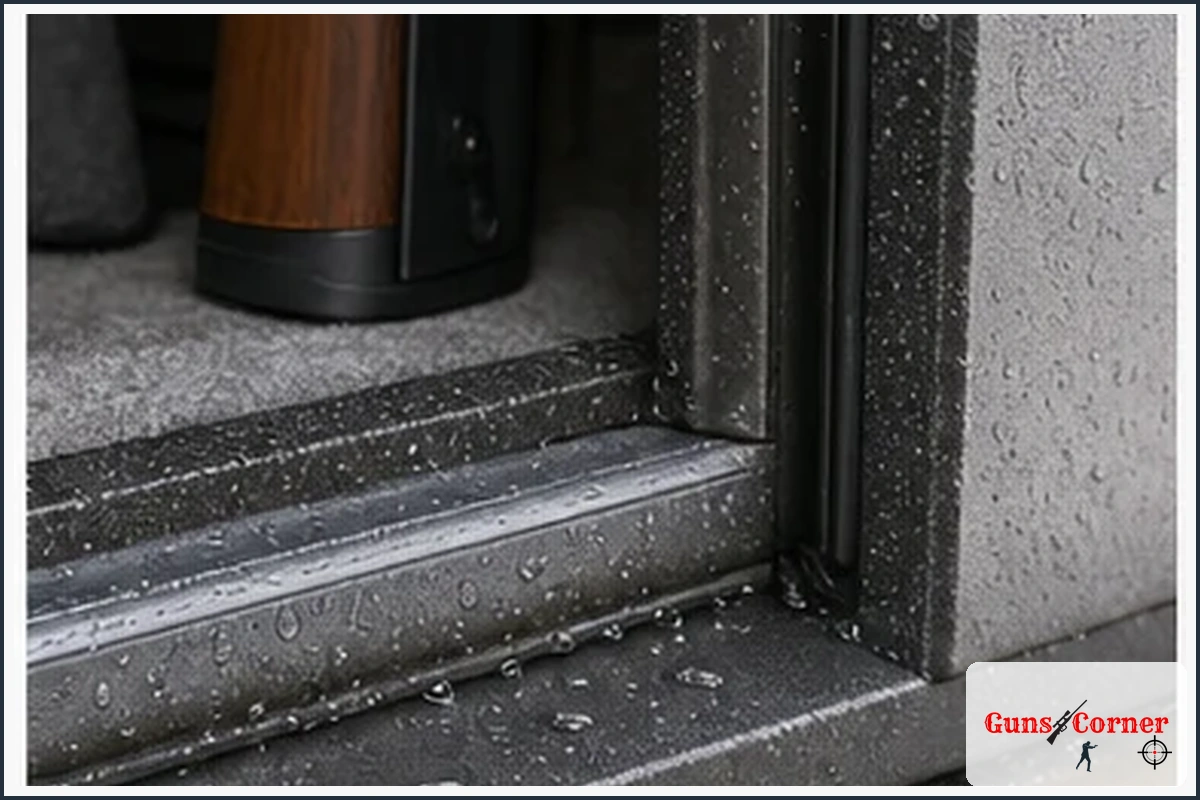
A safe dehumidifier cannot correct every moisture problem. Water may enter through a damaged seal, a damp floor, condensation from temperature changes, wet gear stored inside, or a persistently humid room.
Fire-resistant safes can also retain moisture because their insulation may contain materials that hold water. This makes monitoring important, particularly after moving a safe, during seasonal weather changes, or after a flood or leak.
If the room itself is damp, consider improving ventilation or using a properly sized room dehumidifier. Fix leaks and keep wet clothing, boots, cases, and cleaning materials outside the safe until completely dry.
Use a Hygrometer Instead of Guessing
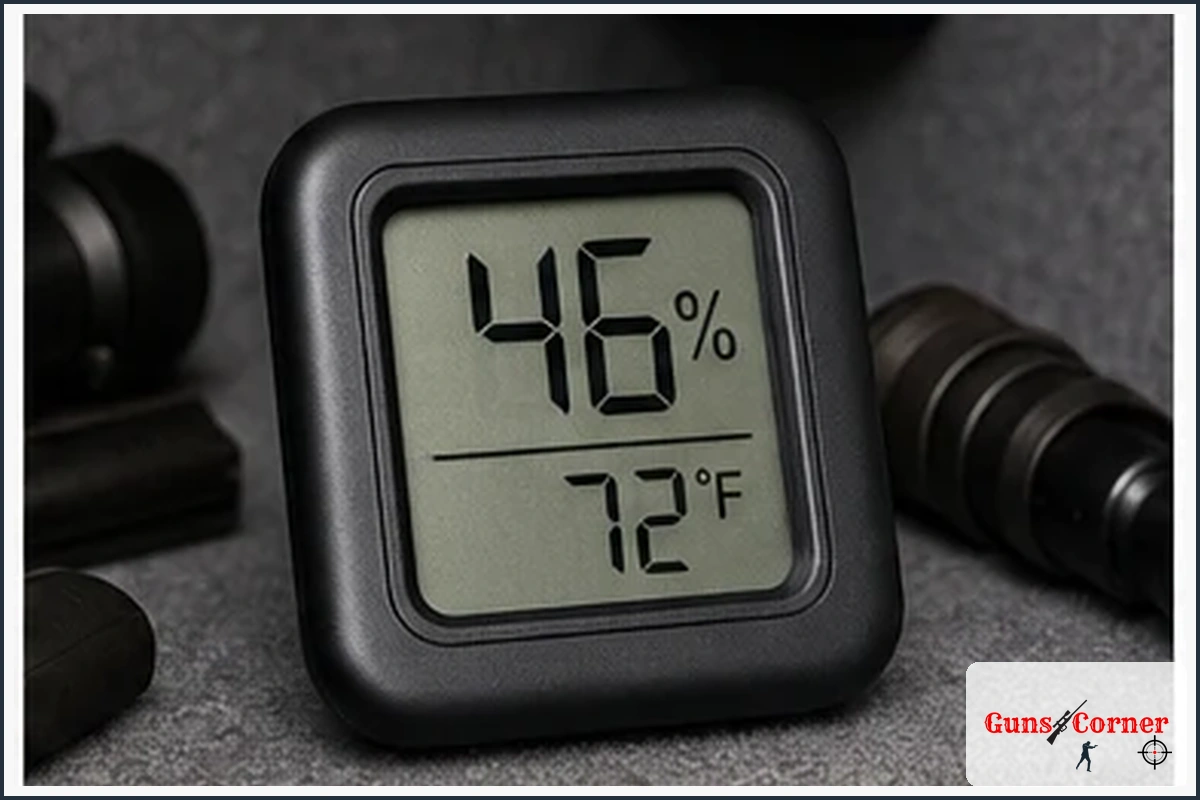
A small digital hygrometer can show the relative humidity inside the safe. It helps confirm whether the chosen moisture-control method is working in the actual storage environment.
- Place the hygrometer where it can be read without disturbing stored firearms.
- Check readings periodically and record unusual changes.
- Compare readings during humid and dry seasons.
- Investigate condensation, surface rust, or rising humidity instead of relying only on the device’s indicator light.
There is no single setting that fits every safe, room, climate, and firearm-storage system. Use the hygrometer manufacturer’s instructions and follow guidance from reputable storage professionals. The practical goal is stable, dry conditions without exposing firearms to unnecessary heat or extreme dryness.
Heated Rods vs. Desiccant Dehumidifiers
| Feature | Heated rod | Desiccant |
|---|---|---|
| Power | Usually requires continuous electrical power | Often operates without electricity |
| Maintenance | Usually limited to inspection and cleaning | Must be recharged, replaced, or emptied |
| Best suited to | Continuous moisture management in an enclosed safe | Small spaces or locations without a convenient outlet |
| Main limitation | Does not remove a major water source | Stops absorbing moisture when saturated |
Neither type is universally best. A heated rod may be convenient for a safe with a safe, manufacturer-approved power route. A desiccant may be more practical where electricity is unavailable, provided it is checked regularly.
Safe Installation and Electrical Precautions
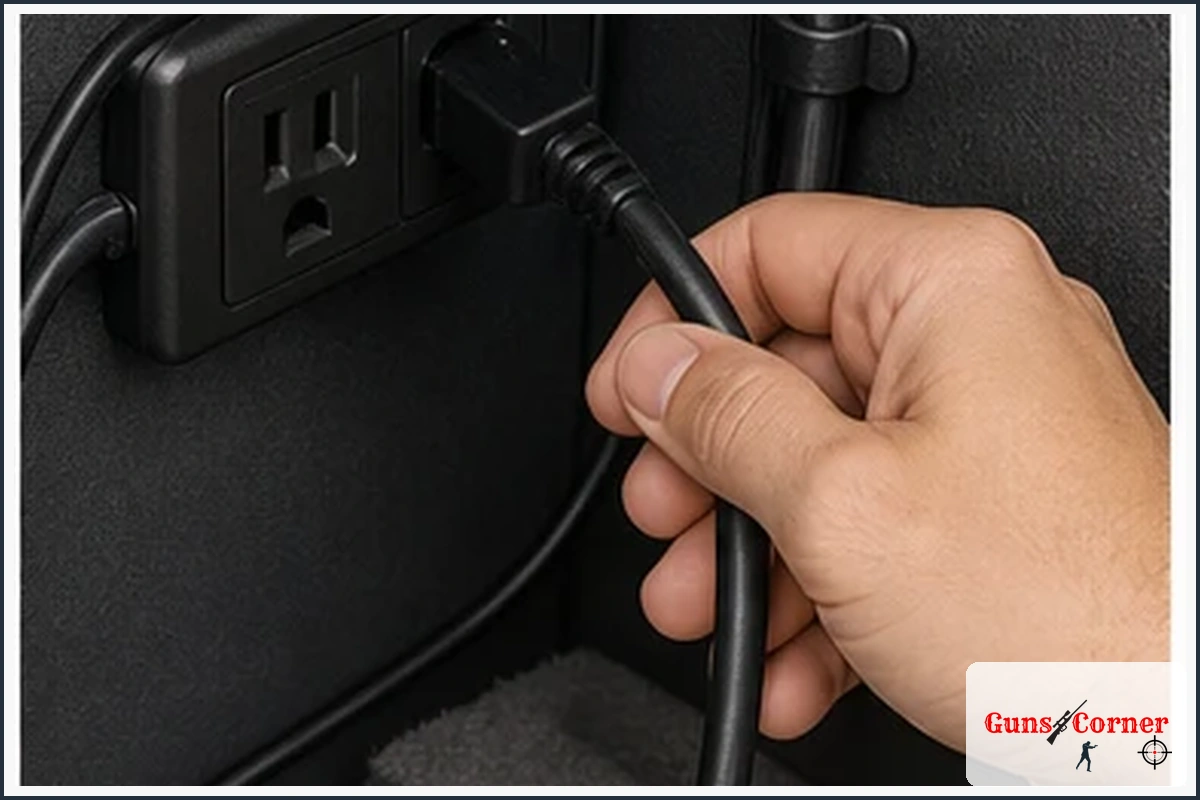
- Use only the voltage and power source specified by the manufacturer.
- Keep electrical cords away from sharp metal edges and pinch points.
- Do not overload outlets or use damaged cords.
- Do not modify a safe, cord, plug, or heating device without qualified professional guidance.
- Keep desiccant containers upright and follow their replacement instructions.
- Do not place a heating element directly against firearms, ammunition, documents, or combustible material.
- Inspect the device periodically for damage, unusual heat, or signs of malfunction.
Always follow the safe and dehumidifier manufacturer’s instructions. A moisture-control device should never interfere with the safe’s locking mechanism, fire protection, firearm storage, or electrical safety.
Additional Steps That Help Prevent Firearm Rust
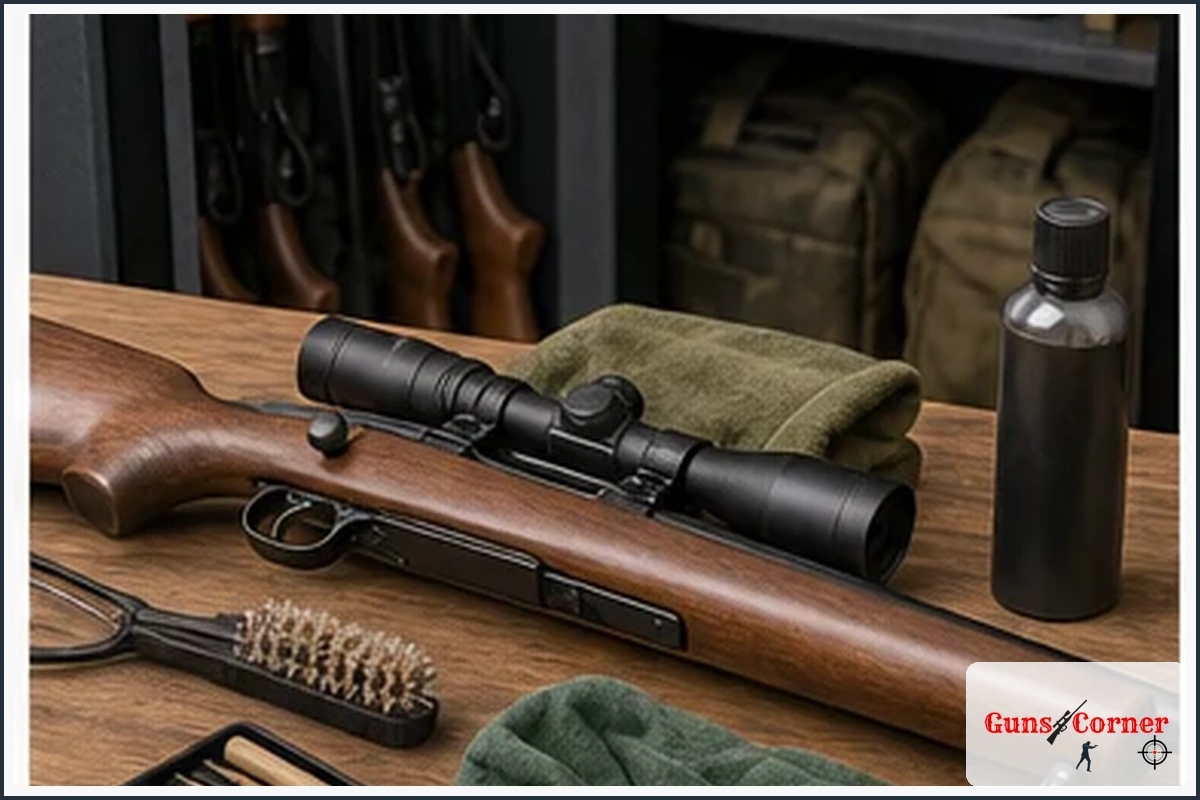
Moisture control works best as part of a complete storage routine:
- Store firearms unloaded and secured against unauthorized access.
- Clean and dry firearms according to the manufacturer’s instructions.
- Apply an appropriate protective film or rust-preventive product where recommended.
- Do not store firearms while wet from rain, snow, condensation, or cleaning.
- Allow a firearm brought in from a cold environment to reach room temperature before sealing it away, while preventing condensation during the transition.
- Inspect metal surfaces, bore areas, optics, and accessories regularly.
- Keep ammunition stored according to its manufacturer’s guidance and away from unnecessary heat or moisture.
Do not use excessive oil. Too much lubricant can migrate into stocks, optics, ammunition, or firearm mechanisms. Use products and quantities appropriate for the firearm and follow the owner’s manual.
Common Mistakes to Avoid
- Assuming the device is maintenance-free: Desiccants can become saturated, and electrical products still require inspection.
- Ignoring the room: A leaking basement or damp garage can overwhelm a small safe-control product.
- Skipping humidity measurements: A light or warm surface does not prove that conditions are adequately controlled.
- Overfilling the safe: Crowded storage restricts air movement and makes inspections difficult.
- Storing wet gear inside: Damp cases, clothing, and boots add moisture to the enclosure.
- Relying on a dehumidifier for security: Moisture control does not replace locked storage, child-access prevention, or compliance with applicable storage laws.
Do Gun Safe Dehumidifiers Work Without Electricity?
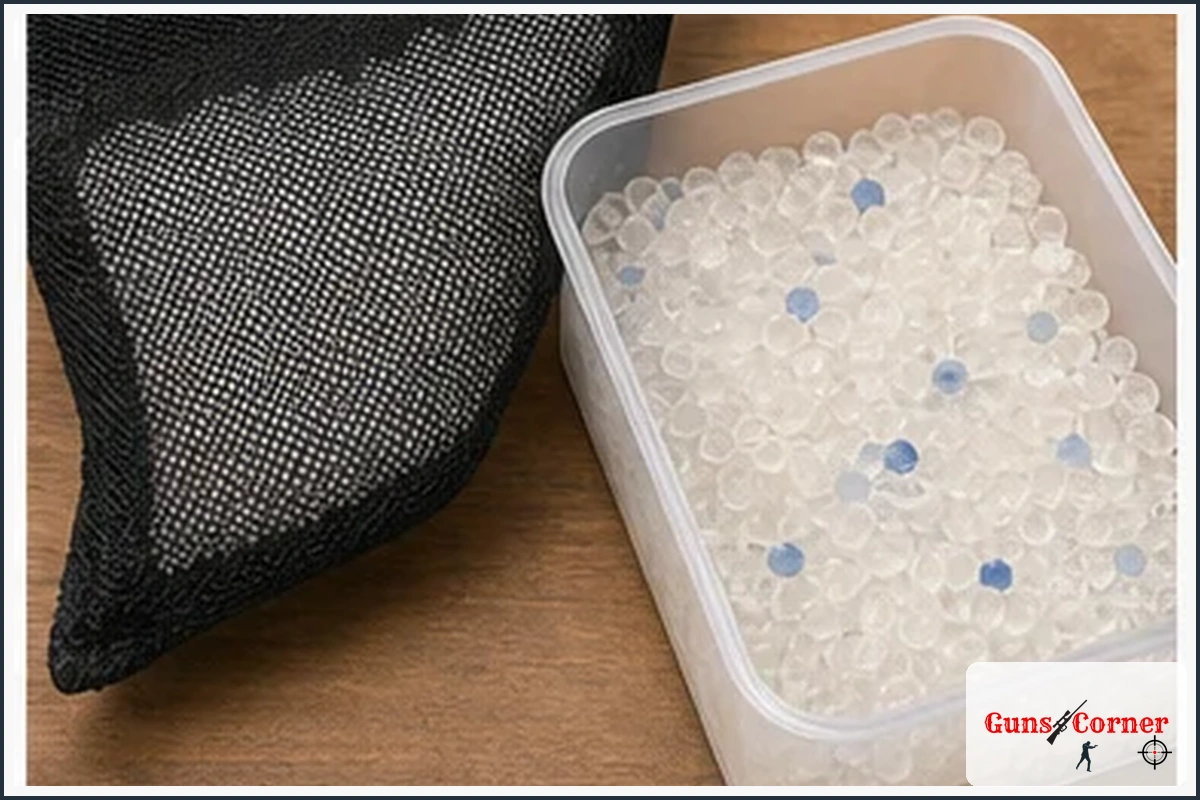
Yes. Rechargeable or replaceable desiccant products can work without electricity, but their capacity is limited. They must be checked and renewed according to the manufacturer’s instructions. A non-powered product that has become saturated may provide little or no further protection.
Do You Need a Gun Safe Dehumidifier?
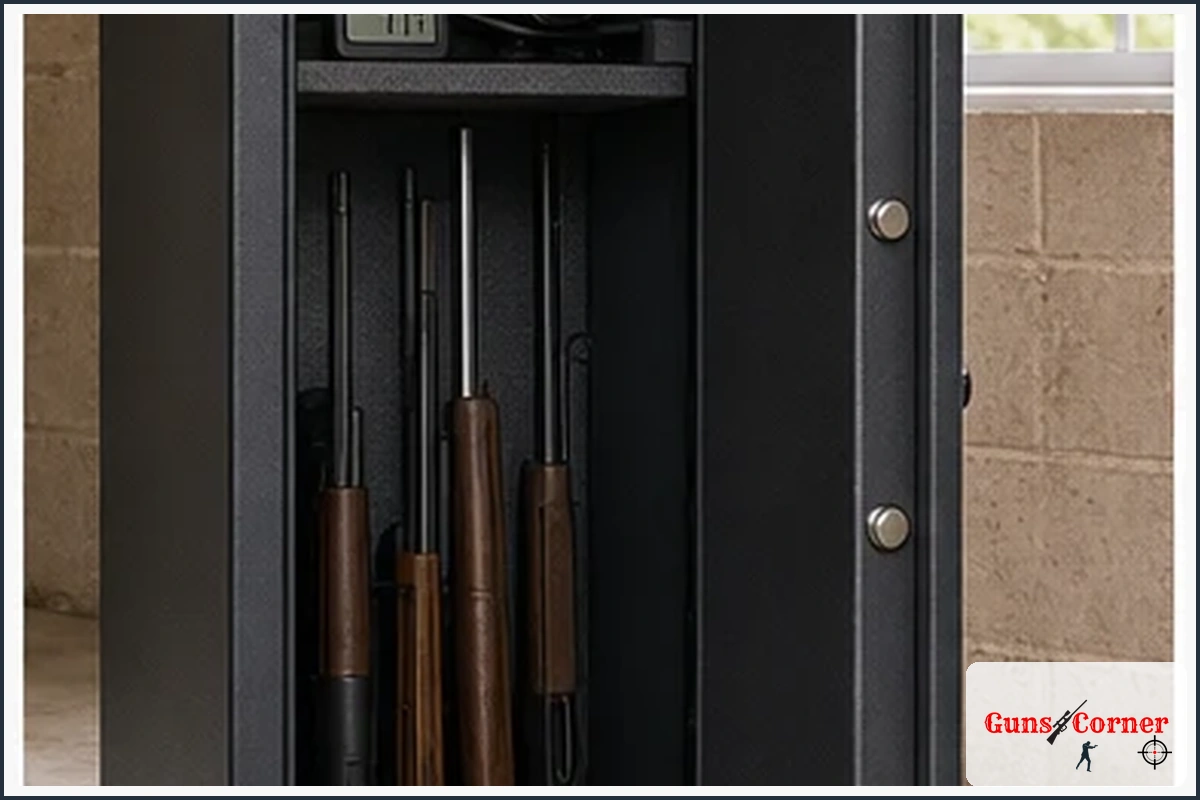
Not every safe requires one. A dry, climate-controlled room may present less moisture risk than a damp basement or garage. However, a hygrometer can reveal conditions that are not obvious from the room’s feel.
If humidity is elevated, conditions fluctuate significantly, or the safe contains valuable firearms, a properly selected moisture-control device is a reasonable preventive measure. It should supplement—not replace—regular firearm maintenance and inspection.
What to Do If You Find Rust
Do not aggressively scrape or polish a valuable firearm. First, unload it, keep it pointed in a safe direction during handling, and consult the owner’s manual or a qualified gunsmith. Surface rust may require careful professional cleaning, while deeper corrosion can affect safety and function.
Do not fire a firearm with significant corrosion, a damaged bore, questionable mechanical function, or an obstruction. Have it inspected by a qualified gunsmith before use.
FAQs
1. Can a gun safe dehumidifier prevent rust completely?
No. It can reduce moisture-related risk, but rust prevention also depends on the storage room, firearm condition, protective maintenance, safe seals, and regular inspection.
2. Is a heated rod better than a desiccant?
Neither is always better. Heated rods are convenient for continuous operation where electrical installation is safe. Desiccants work without power but require monitoring and recharging or replacement.
3. Should I put a dehumidifier inside every gun safe?
Not necessarily. Use the safe’s environment and hygrometer readings to guide the decision. A damp or temperature-variable location is more likely to benefit than a consistently dry, climate-controlled room.
4. Can I store wet hunting gear in a gun safe?
No. Dry clothing, boots, cases, and other equipment before storage. Wet gear can raise humidity inside the safe even when a dehumidifier is operating.
5. Can a gun safe dehumidifier damage firearms?
Normally used according to its instructions, it should not. Problems can arise from improper electrical installation, excessive heat, damaged equipment, or placing the device against stored items.
6. How do I know whether my safe is too humid?
Use a digital hygrometer and watch for persistent high readings, condensation, musty odors, or surface rust. If conditions worsen, inspect the room and safe for leaks or other moisture sources.
7. Is a small room dehumidifier enough for a gun safe?
A room dehumidifier may help control the surrounding environment, but it is not automatically a substitute for a device designed for the safe. Use equipment within its rated capacity and monitor the safe directly.
Final Answer
Do gun safe dehumidifiers work? Yes, they can help reduce condensation and moisture-related firearm rust when properly sized, installed, and maintained. The best results come from combining a suitable heated rod or desiccant with a hygrometer, dry storage conditions, regular firearm inspection, and manufacturer-approved maintenance.
Always store firearms unloaded and secured against unauthorized access, follow the owner’s manual, and check current local firearm-storage requirements. General online guidance does not replace applicable law or professional gunsmith advice.