
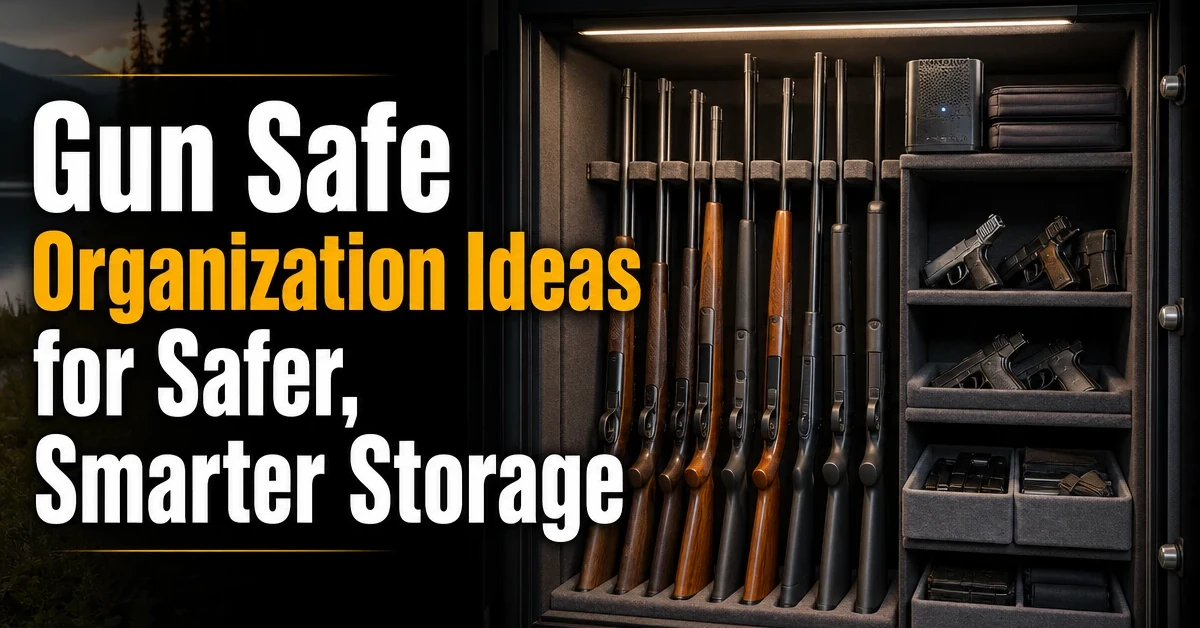

Effective gun safe organization ideas make firearms easier to identify, protect them from damage, and reduce unsafe handling. The best setup separates long guns, handguns, ammunition, documents, and accessories while leaving enough room to remove one item without disturbing others. Always follow the firearm manufacturer’s instructions, local storage laws, and the four basic safety rules.
Why Gun Safe Organization Matters
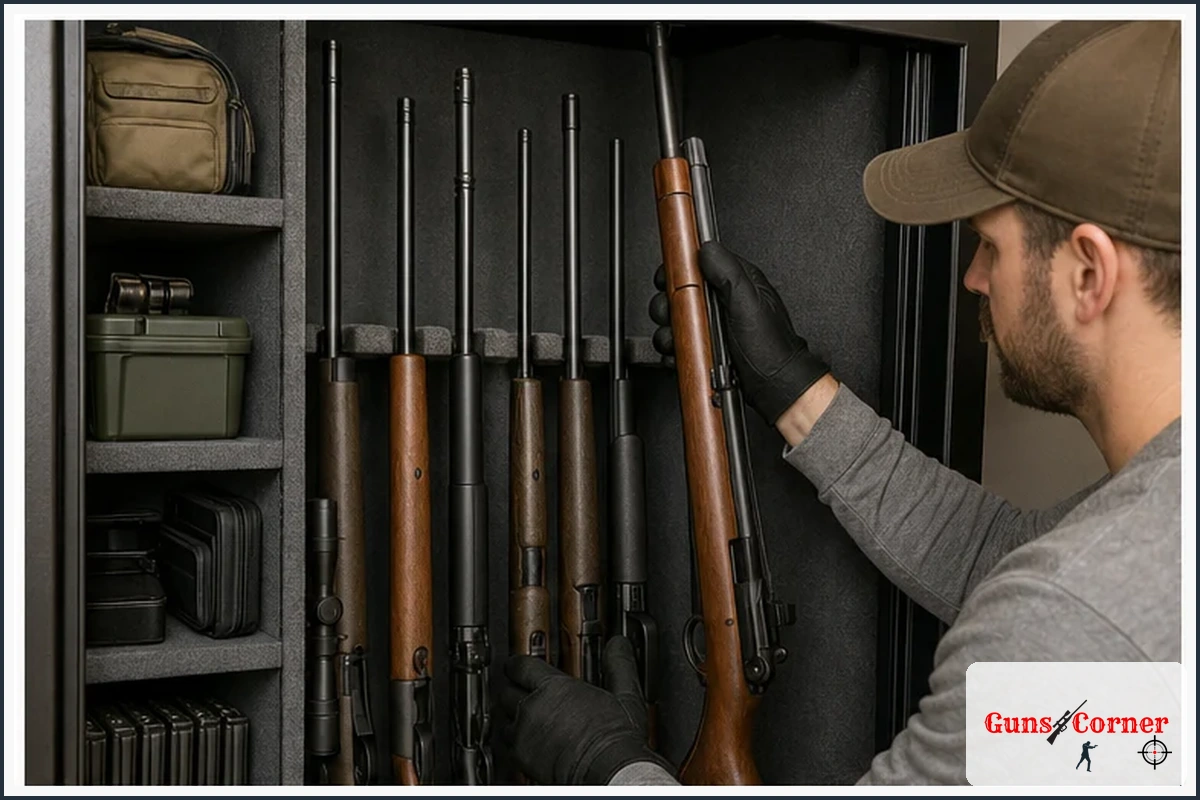
An organized safe is easier to inspect, clean, and maintain. It can also help prevent scratched finishes, blocked access, misplaced magazines, and unnecessary handling.
Organization does not replace secure locking. Keep the safe locked whenever it is unattended, control access to keys or codes, and consider the needs of children, visitors, and anyone who should not access firearms.
Best Gun Safe Organization Ideas
| Storage area | Useful solution | Important consideration |
|---|---|---|
| Long guns | Vertical rifle racks or adjustable dividers | Prevent stocks and barrels from rubbing together |
| Handguns | Padded shelves, pistol racks, or manufacturer-approved hangers | Confirm that the accessory fits securely and does not damage the firearm |
| Door panel | Holsters, magazine pockets, and document pouches | Do not overload the door or interfere with the locking mechanism |
| Ammunition | Separate, labeled containers on a stable shelf | Store ammunition according to manufacturer guidance and local requirements |
| Small accessories | Clearly labeled bins or drawers | Keep incompatible ammunition and loose parts separated |
Use the Door for Small, Lightweight Items
A properly fitted door organizer can hold magazines, cleaning supplies, ear protection, spare batteries, and firearm documents. Use only accessories designed for the safe and stay within the door panel’s weight limits.
Do not store heavy items on the door if they could strain the hinges, prevent full closure, or interfere with the locking bars.
Install Adjustable Shelves
Adjustable shelves help divide the safe into practical zones. A tall section can hold scoped rifles, while shorter shelves can store handguns, cases, optics, or paperwork.
Leave clearance around firearms with large scopes, bipods, suppressor covers, or other accessories. A crowded shelf often causes more handling and increases the chance of cosmetic damage.
Separate Firearms by Type and Frequency of Use
Group rifles, shotguns, muzzleloaders, and handguns in separate areas. Within each group, place frequently used firearms where they can be removed without moving other guns.
Store firearms unloaded unless a specific lawful storage arrangement and manufacturer guidance say otherwise. Before placing any firearm in the safe, confirm its condition in a safe direction and follow the four safety rules.
Use Padded Racks or Dividers
Padded racks and dividers help prevent firearms from leaning against one another. Choose materials that will not trap moisture or react with the firearm’s finish, and inspect the padding periodically for wear.
Avoid improvised hooks, magnets, or hardware that could scratch a firearm, obstruct its operation, or place pressure on delicate components.
Label Storage Zones
Simple labels such as “rifles,” “shotguns,” “handguns,” and “cleaning supplies” make inventory checks faster. For privacy and security, avoid placing sensitive firearm details on labels visible to unauthorized people.
A separate inventory kept securely outside the safe can record make, model, serial number, photographs, and purchase documentation. Follow applicable privacy and insurance requirements when keeping these records.
How to Organize a Gun Safe Step by Step
- Read the safe manual. Confirm shelf capacities, accessory compatibility, and any moisture-control instructions.
- Unload and inspect firearms safely. Keep muzzles pointed in a safe direction and keep fingers outside trigger guards.
- Remove unnecessary clutter. Take out duplicate packaging, damaged accessories, and items that do not belong in the safe.
- Measure the interior. Account for shelves, door hardware, scopes, stocks, and the safe’s locking mechanism.
- Create storage zones. Separate firearms, ammunition, documents, maintenance supplies, and emergency equipment.
- Install compatible organizers. Secure racks, bins, and shelves according to the manufacturer’s instructions.
- Load heavier items low. This can help maintain stability, but never exceed the safe or shelf weight limits.
- Check clearance. Confirm that the door closes completely and that no item contacts the locking bars.
- Lock and test the safe. Verify that the lock engages correctly without forcing the handle or door.
- Review the layout periodically. Recheck moisture, padding, access control, and local storage requirements.
Organizing Ammunition and Accessories
Keep ammunition separate from cleaning chemicals, oils, batteries, and other items that could leak or create contamination. Use clearly identified containers and retain original labeling when practical.
Do not combine different cartridges or shells in an unmarked container. Confirm that ammunition matches the firearm’s markings and the manufacturer’s instructions before use.
Cleaning supplies should be sealed and stored upright. Keep optics, electronic devices, and batteries in suitable protective cases if the safe’s humidity or temperature conditions could affect them.
Moisture and Rust Prevention
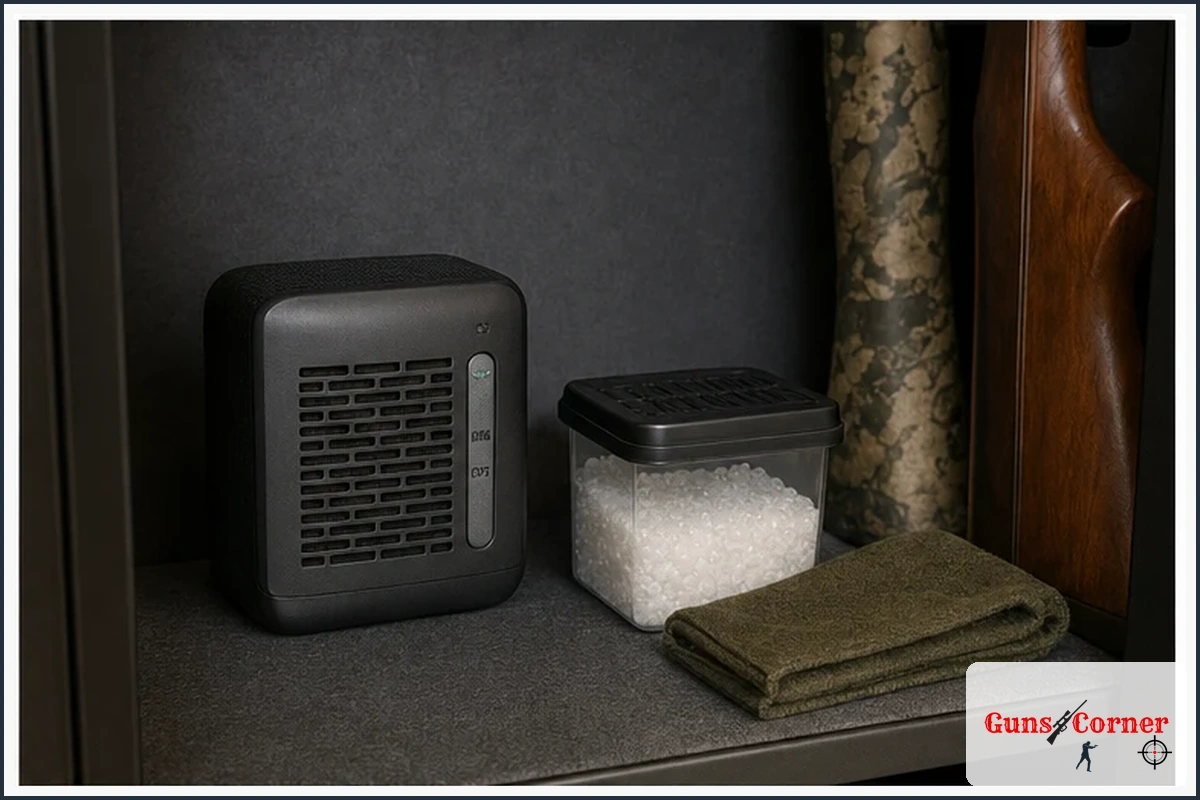
A well-organized safe still requires humidity control. Use a moisture-control method suitable for the safe and follow its instructions. Avoid placing wet clothing, damp cases, or recently exposed equipment inside the safe.
Inspect metal surfaces periodically for rust, discoloration, or condensation. Apply only maintenance products recommended for the firearm’s finish, and never allow oil or solvents to contact ammunition.
Organization helps airflow and inspection, but no storage arrangement guarantees rust prevention in every climate. Local humidity, basement conditions, temperature changes, and safe construction all matter.
Safety and Legal Considerations
Firearm storage laws vary by jurisdiction and may depend on household members, children, access-control devices, transport, and firearm type. Check current laws through your state or provincial authority and local government before relying on a particular storage method.
- Treat every firearm as if it is loaded.
- Keep the muzzle pointed in a safe direction.
- Keep your finger outside the trigger guard until ready to shoot.
- Be certain of the target and what is beyond it.
- Keep the safe locked when it is unattended.
- Protect keys, combinations, and electronic access credentials.
- Never rely on a mechanical safety as a substitute for safe handling.
- Follow the firearm and safe manufacturer’s instructions.
Common Organization Mistakes
Overcrowding the Safe
Filling every available space makes it harder to remove one firearm safely and can cause finishes to rub together. Leave enough clearance for a controlled grip and removal.
Ignoring Accessories and Optics
Scopes, extended magazines, bipods, and cases can change the space a firearm requires. Arrange storage around the firearm as configured, not around its bare dimensions.
Using Unverified Organizers
Before installing a rack, hanger, magnet, or door panel, confirm that it is compatible with the safe and firearm. Unsupported accessories may damage finishes or interfere with the locking system.
Storing Damp Equipment
Wet slings, rain gear, cases, and firearms can introduce moisture. Dry equipment before storage and inspect the safe regularly.
Putting Ammunition in Unmarked Containers
Mixed or poorly labeled ammunition can create a dangerous identification problem. Keep cartridges and shotshells in their labeled packaging or clearly marked containers.
What Not to Do
- Do not overload shelves or the safe door.
- Do not force the door closed against a firearm or accessory.
- Do not use household magnets or improvised hardware without confirming compatibility.
- Do not store ammunition with solvents, oils, or other chemicals.
- Do not leave keys or access codes where unauthorized people can find them.
- Do not climb, move, or modify a heavy safe without appropriate assistance and planning.
- Do not assume a safe meets local legal requirements without checking current official rules.
FAQs
What is the best way to organize rifles in a gun safe?
Use padded vertical racks or adjustable dividers, group rifles by size or use, and leave clearance around scopes and other accessories. Avoid allowing firearms to rub against one another.
Should ammunition be stored inside a gun safe?
That depends on local law, household circumstances, and your storage plan. If ammunition is stored in the safe, keep it clearly labeled, dry, and away from cleaning chemicals.
Are gun safe door organizers worth using?
They can be useful for lightweight items such as magazines, documents, and hearing protection. Check the door’s weight limit and confirm that the organizer does not interfere with closing or locking.
How can I prevent rust in a gun safe?
Control moisture, keep firearms dry, inspect them regularly, and use manufacturer-recommended maintenance products. Do not rely on organization alone to solve a high-humidity problem.
Can I use a gun safe as a general storage cabinet?
Only if the stored items do not interfere with firearm safety, moisture control, access control, or the locking mechanism. Avoid clutter and keep incompatible chemicals away from firearms and ammunition.
How often should a gun safe be reorganized?
Review it whenever you add or remove equipment, change firearm configurations, notice moisture, or find that items must be moved to access another firearm. A periodic inspection is also useful.
Final Answer: Gun Safe Organization Ideas
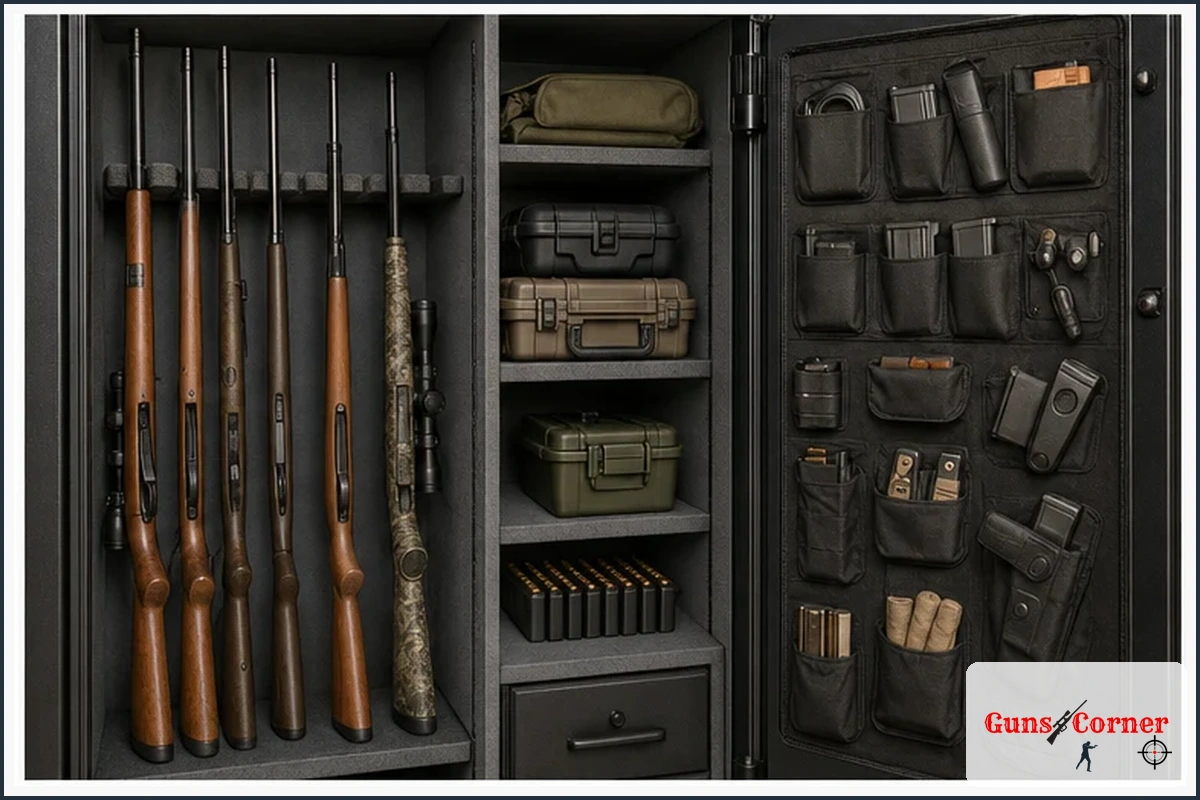
The most practical gun safe organization ideas are to create separate zones, use padded racks and compatible shelves, place lightweight accessories on the door, label storage areas, control moisture, and avoid overcrowding. Keep the safe locked, protect access credentials, follow manufacturer instructions, and verify current storage laws with the appropriate authority. Good organization supports safe handling, but it never replaces training, responsible access control, or the four basic firearm safety rules.