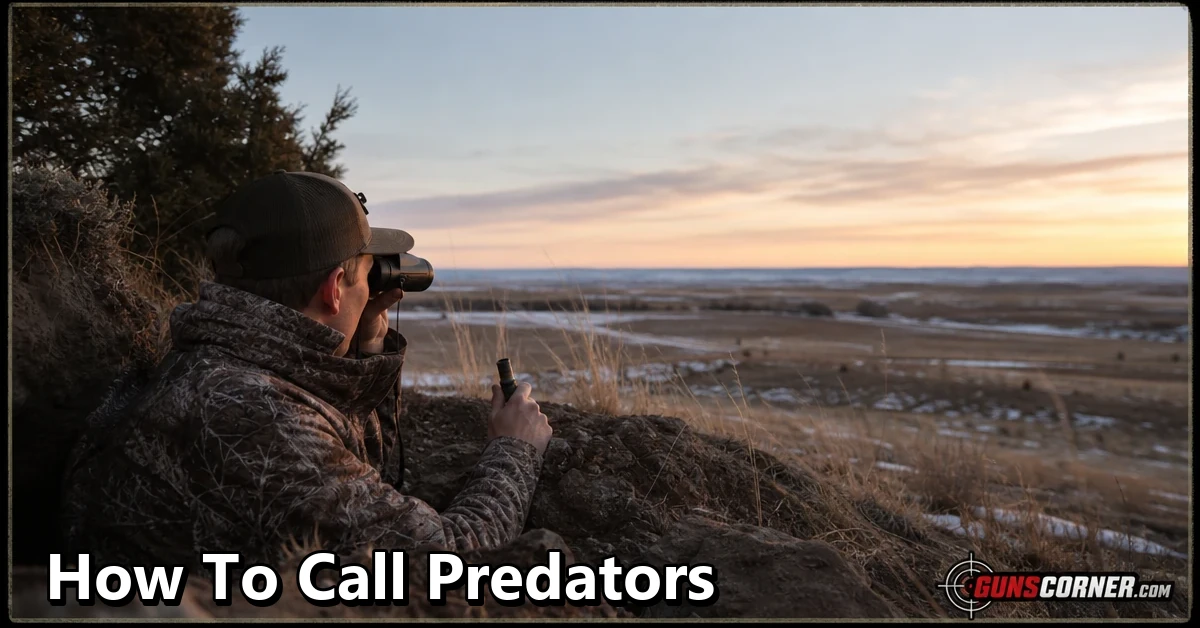

Learning how to call predators requires more than buying a call and making noise. Beginners need to understand predator behavior, choose legal hunting areas, plan around wind and terrain, identify animals correctly, and make only safe, ethical decisions. This guide focuses mainly on coyotes while also explaining how calling may apply to foxes, bobcats, and other legally huntable predators.
To call predators, first verify your local license, season, land-access, equipment, and shooting-hour rules. Scout for predator sign, choose a stand with favorable wind, safe visibility, and a secure backstop, then use measured distress or social sounds at controlled volume. Stay still, scan carefully, and never shoot unless you have positively identified a legal target and know what lies beyond it. Calling can improve your opportunities, but it cannot guarantee an animal will respond.
Important Legal and Safety Notice Before You Hunt
Predator-hunting regulations vary by country, state, province, county, species, land type, season, and weapon. Check your official wildlife agency’s current regulations before every hunt.
- Confirm your hunting license, permits, species authorization, and harvest reporting requirements.
- Check seasons, legal shooting hours, bag limits, ammunition rules, and lawful weapons.
- Verify whether electronic calls, bait, night hunting, suppressors, thermal optics, or artificial lights are permitted.
- Obtain written permission before hunting private land and confirm public-land boundaries and restrictions.
- Learn the legal status of wolves, mountain lions, bobcats, foxes, and other protected or restricted species in your area.
- Identify your target beyond doubt and know what lies behind and beside it.
- Never shoot toward roads, homes, livestock, pets, people, vehicles, or unclear movement.
- Use safe firearm or bow handling, navigation, weather planning, communication, and first-aid practices.
What “Calling Predators” Means—and Which Species You Can Hunt
How predator calling works: curiosity, prey distress, and social sounds
Predator calling uses sounds that may cause an animal to investigate, search for prey, communicate, or defend territory. Common categories include prey-distress sounds, such as rabbit or bird distress, and social sounds, such as howls or other species-specific vocalizations.
A call is only one part of a hunting setup. Wind, cover, terrain, food availability, hunting pressure, weather, and the animal’s current behavior all influence whether it responds.
Coyote, fox, bobcat, and other predator differences
Coyotes are the most common focus of beginner predator calling, but legal opportunities for foxes, bobcats, raccoons, or other predators vary widely. These animals differ in habitat use, movement, vocal behavior, legal status, and tolerance of human activity.
Do not assume that a sound or tactic suitable for coyotes is appropriate for another species. Learn to identify the animals in your hunting area and review current regulations before using a call.
Why a call may attract, hold, or fail to move an animal
An animal may hear a call but remain hidden, approach from downwind, investigate briefly, or leave without being seen. It may also be outside the sound’s effective range, focused on natural prey, wary because of hunting pressure, or unable to reach the calling location safely.
A silent stand does not prove that no predator was nearby. Calling should be treated as an opportunity-building method, not a guaranteed attractant.
Before You Hunt: Laws, Land Access, and Ethical Limits
Check species seasons, licenses, legal shooting hours, and method restrictions
Start with the current regulations from the wildlife agency responsible for the land where you will hunt. Confirm the exact species, season dates, legal hours, weapon type, ammunition, tagging, reporting, and possession requirements.
Regulations may differ between private property, state or provincial lands, national forests, wildlife refuges, and parks. Never rely on an old regulation booklet, forum post, or advice from another state.
Confirm whether electronic calls, bait, night hunting, suppressors, or thermal optics are legal
Electronic callers and night equipment are not universally legal. Some jurisdictions regulate electronic sounds, artificial light, infrared equipment, thermal optics, suppressors, bait, or nighttime pursuit separately from ordinary daytime hunting.
Confirm every item and method before entering the field. If the regulation is unclear, contact the wildlife agency directly.
Get written permission on private land and follow public-land rules
Private-land hunting requires landowner permission. Written permission helps clarify boundaries, dates, access routes, gates, livestock areas, and whether other hunters may be present.
On public land, study an official map, verify ownership boundaries, use legal parking areas, and respect closures, other hunters, hikers, livestock operations, and seasonal restrictions. Never cross private property without permission.
Know protected species and avoid calling where identification is uncertain
Predator calls can attract species other than the one you intended to hunt. If you cannot confidently distinguish a legal target from a protected species, do not take the shot.
Use binoculars or another suitable optic to identify animals from a safe distance. If you are unfamiliar with local species, seek instruction from an official hunter education course or experienced mentor.
Choose a Predator Call
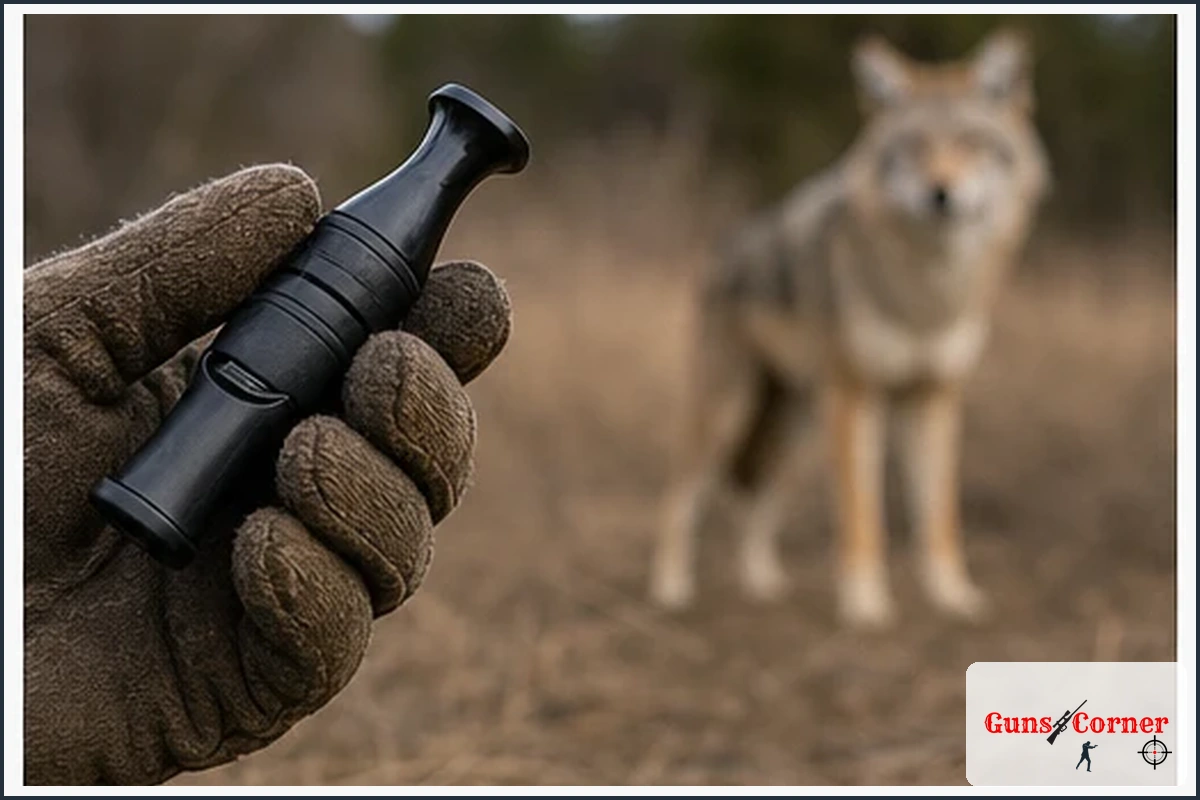
Hand calls: rabbit distress, bird distress, rodent distress, and howling calls
Hand calls are compact and do not require batteries. Common types produce prey-distress or social sounds, but realistic results depend on practice, breath control, timing, and volume.
Begin with one or two simple calls rather than carrying a large collection. Practice before the season so you can produce controlled sounds without excessive movement.
Electronic callers: remote placement, sound libraries, and volume control
Electronic callers can place the sound away from the hunter and may offer multiple sound types. Their usefulness depends on lawful operation, reliable controls, battery condition, weather protection, and the hunter’s ability to position the unit safely.
Sound libraries and specifications differ by manufacturer and model. Verify current details from the manufacturer rather than relying on generalized reviews or marketing claims.
Evaluation criteria: realistic sound, control in gloves, battery life, weather resistance, portability, and warranty
When comparing calls, consider:
- Whether the sound is controllable and natural at low volume.
- Whether buttons or mouthpieces can be used while wearing gloves.
- Battery access, cold-weather performance, and the availability of spares.
- Portability and whether the unit suits your terrain.
- Resistance to normal moisture and field handling.
- Manufacturer support and warranty terms.
These are evaluation factors, not guarantees of performance.
Hand call versus electronic caller: suitability, limitations, and cost considerations
| Option | Strengths | Limitations |
|---|---|---|
| Hand call | Lightweight, simple, quiet to carry, and does not depend on batteries | Requires practice and may reveal movement if handled carelessly |
| Electronic caller | Offers remote placement and multiple sound choices where legal | Requires batteries, can be more expensive, and may be restricted by local law |
Do not choose a call solely from marketing claims or affiliate reviews
Affiliate articles and product pages may be useful for discovering options, but they are not substitutes for current regulations, manufacturer specifications, or your own needs. Choose equipment based on legality, terrain, weather, control, reliability, and budget.
How to Set Up a Predator-Calling Stand
Read tracks, scat, prey activity, cover, water, and likely travel routes
Scout before hunting for tracks, scat, hair, prey remains, game trails, water, thick cover, open feeding areas, and routes connecting cover to food. Sign is more useful when several indicators occur together.
Use maps and recent observations to identify places where a predator can travel while remaining concealed. Avoid assuming that one track or call response proves regular activity.
Use wind and thermals to reduce the chance of being detected
Predators often use their nose while investigating. Set up so the prevailing wind carries your scent away from likely approach routes whenever possible. Terrain and temperature can also affect thermals, so observe local conditions rather than relying on a fixed rule.
Check the wind before calling and during the stand. A changing or swirling wind may make a location unsuitable.
Choose a safe backstop and a shooting position with a clear field of view
Before settling in, identify safe shooting lanes and a dependable backstop. Avoid positions that direct shots toward roads, buildings, livestock, trails, campsites, or neighboring properties.
Choose a stable position that allows you to observe without excessive movement. A natural rise, earth bank, or other suitable backstop may improve safety, but never assume vegetation will stop a projectile.
Place an electronic caller where it can be heard without creating an unsafe shot angle
If electronic callers are legal, place them where the sound can carry while keeping likely approaches within safe, visible lanes. Do not place the caller across a road, near livestock, beyond a property boundary, or in a position that encourages an unsafe shot.
Plan entry and exit routes before making the first sound
Plan how you will reach and leave the stand without crossing likely approach routes or exposing yourself to animals watching the area. Keep equipment quiet, follow legal access routes, and account for darkness, steep terrain, ice, water, and changing weather.
A Beginner’s Predator-Calling Sequence
Settle quietly and scan before calling
After reaching the stand, allow the area to become quiet. Scan open ground, brush edges, ridges, draws, and likely approach routes before starting a sequence. An animal may already be nearby.
Begin with low volume and allow time for distant animals to approach
Start at a controlled volume appropriate for the terrain. Excessive volume can sound unnatural and may draw attention from people, livestock, or animals outside your intended area.
Allow time between sounds. There is no universal waiting period that works everywhere; terrain, wind, visibility, species, and hunting pressure all matter.
Use distress sounds in measured series rather than constant noise
Use short, deliberate series followed by quiet observation. Constant calling can reduce your ability to hear movement and may make the setup seem unnatural.
Keep the call sequence simple at first. Changing sounds repeatedly is less useful than first checking your wind, concealment, access route, and sign.
Change sound type or location only after considering wind, terrain, and animal behavior
If a stand produces no response, do not immediately assume the sound was wrong. Consider whether the wind exposed you, whether the animal could approach safely, whether the terrain blocked the sound, or whether predators are present at all.
When moving, leave quietly and avoid crossing likely travel routes. A new sound or location should be based on a reasoned adjustment, not impatience.
How to stop calling and leave without spooking unseen animals
Before standing, scan again and wait quietly. Move slowly, keep the firearm or bow controlled, and follow the planned exit route. If visibility is poor, unload and secure the firearm according to manufacturer instructions and local transport rules before leaving.
Using Coyote Vocalizations
When howls may locate or communicate with coyotes
Howls and other coyote vocalizations may help locate animals or imitate social communication. Their value depends on local behavior, season, social structure, weather, and hunting pressure.
Use vocalizations only when you can identify the sound and understand the legal limits of your method.
How social context, breeding season, pups, and territorial behavior affect response
Coyote responses may change with social conditions, territorial behavior, young animals, food availability, and seasonal activity. These factors vary by region and year, so avoid treating a single calling sequence as universally effective.
Why vocal responses do not guarantee an approach
A coyote may answer without approaching, approach from an unexpected direction, or remain hidden. A vocal response is information, not permission to shoot and not proof that the animal can be safely reached.
When not to imitate a sound you cannot confidently identify
Do not imitate unfamiliar sounds if doing so could attract a protected species or cause confusion during identification. Beginners should learn local species and vocalizations from reputable wildlife education resources before using complex sequences.
Shot Safety and Predator Identification
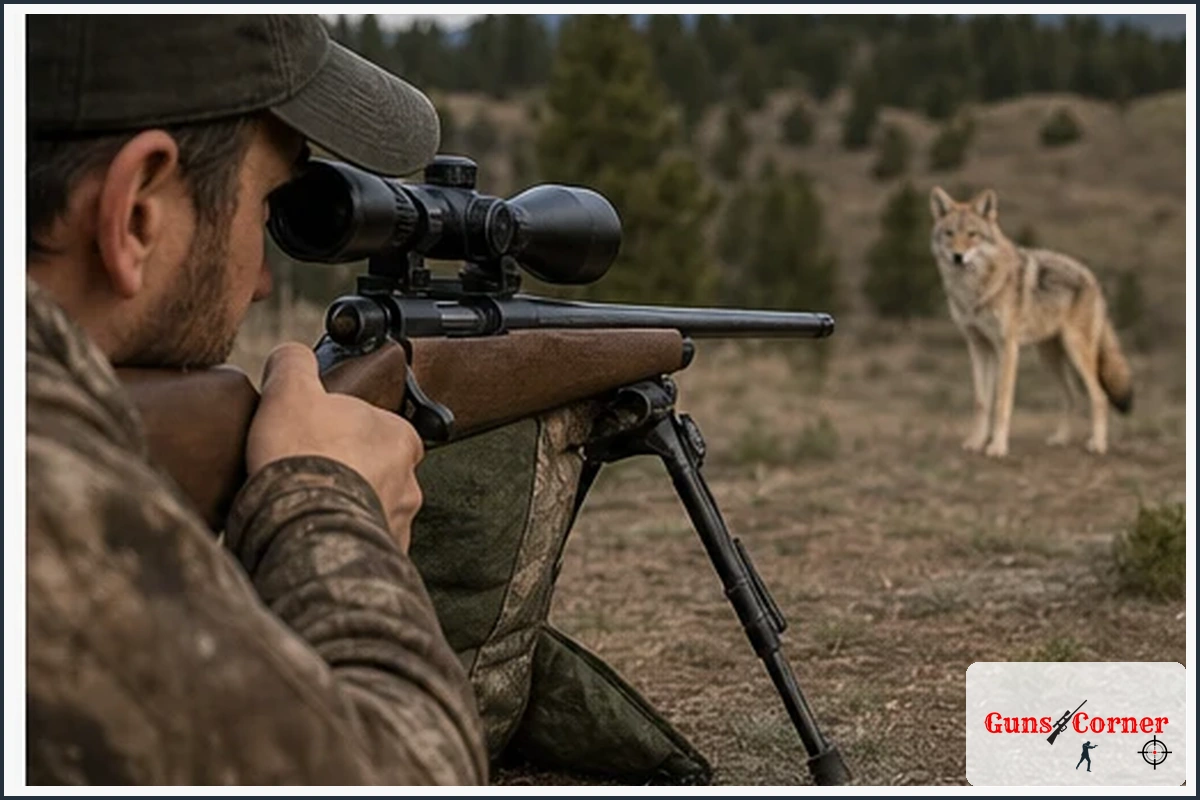
Identify the animal beyond doubt before preparing to shoot
Do not shoot at movement, a silhouette, or an uncertain shape. Confirm species, legality, and a safe shot opportunity through appropriate optics before touching the trigger.
Know what lies beyond, beside, and behind the target
A safe shot requires more than seeing the animal. Check the full area behind and around it for roads, homes, livestock, pets, people, vehicles, rocks, water, and other hazards.
Keep the muzzle controlled and maintain trigger discipline
Keep the muzzle pointed in a safe direction, keep your finger outside the trigger guard until ready to fire, and unload or secure the firearm whenever required by the situation. Follow your firearm manufacturer’s instructions and official hunter education guidance.
Account for livestock, pets, roads, buildings, and other hunters
Predator calling often occurs near working lands and open terrain. Never assume a distant sound or movement is an animal. Confirm that other hunters, land users, livestock, and pets cannot enter the shooting lane.
Use binoculars or optics to identify animals without closing distance
Optics help you identify animals while preserving distance and reducing unnecessary movement. They do not replace positive identification or a safe backstop.
What to do if a wounded animal cannot be recovered
Follow local tracking, reporting, tagging, and recovery requirements. Do not pursue an animal into unsafe terrain, private property, roads, or restricted areas. If you are uncertain, contact a local wildlife officer or experienced mentor for lawful guidance.
Common Reasons Predator Calling Fails
Wrong wind, exposed movement, noise, or poor concealment
Predators may detect scent, movement, or sound before becoming visible. Improve your stand by checking wind direction, reducing unnecessary movement, selecting better cover, and planning a quieter approach.
Calling areas with little predator activity
A good call cannot compensate for an area with little food, cover, water, or predator sign. Scout more broadly and compare multiple legal locations.
Using excessive volume or changing sounds too quickly
Very loud or continuous calling can reduce your ability to listen and may appear unnatural. Begin modestly, stay patient, and change sounds only for a specific reason.
Ignoring nearby hunters, livestock, pets, or human activity
Human activity can make a stand unsafe or unsuitable. Check access, neighboring properties, livestock areas, roads, trails, and other hunters before calling.
Expecting every response to produce a visible animal
Predators may investigate from cover, circle downwind, or leave without showing themselves. Judge a stand by the quality of your preparation and safety decisions, not only by whether an animal appears.
Responsible Wildlife and Livestock Considerations
Do not feed wildlife or create food-conditioning problems
Do not feed predators or leave food behind to create repeat visits. The U.S. Fish and Wildlife Service advises people not to feed wild animals because it can attract predators and change natural behavior: wildlife safety guidance.
Keep distance from predators and avoid pursuing or cornering them
Calling should never become a reason to approach, chase, corner, or handle a predator. Give animals room and keep your actions within legal and ethical hunting limits.
Calling is not a substitute for livestock-loss investigation or nonlethal conflict prevention
Predator calling is a hunting method, not a complete livestock-management plan. USDA APHIS describes science-based approaches that may include husbandry changes, habitat modification, population management, and research-based solutions. Livestock owners should consult their state Wildlife Services office for local options: USDA APHIS predator-management guidance.
Report unusual behavior, attacks, or suspected protected-species incidents to the appropriate agency
Follow local reporting procedures for attacks, unusual behavior, suspected protected species, or accidental incidents. In an immediate public-safety emergency, contact emergency services.
Simple Predator-Calling Gear Checklist
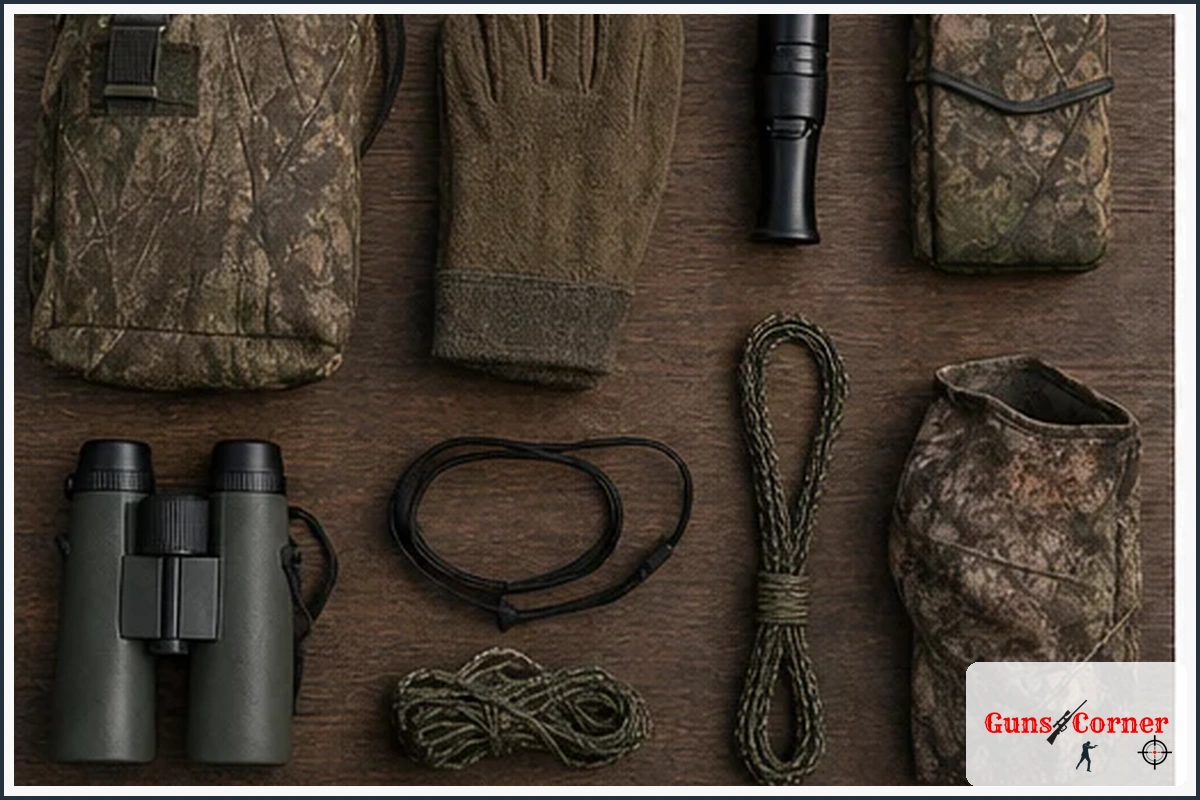
Required: legal call, camouflage appropriate to the terrain, optics, firearm or other lawful method, and hearing protection
- Legal hand call or electronic caller, if permitted.
- Terrain-appropriate clothing and any required visibility clothing.
- Binoculars or suitable optics for identification.
- Lawful firearm, bow, or other permitted method.
- Hearing protection when appropriate.
- License, permits, tags, and written land permission where required.
Useful: seat, rangefinder, weatherproof layers, navigation, phone, first-aid kit, and game bags
- Compact seat or pad.
- Weatherproof layers, gloves, and footwear.
- Rangefinder where legal and useful.
- Map, compass, GPS, or dependable navigation app.
- Charged phone and backup communication plan.
- First-aid kit, water, food, and emergency supplies.
- Game bags and meat-care supplies when relevant.
Pre-hunt checks for batteries, unloaded transport, permissions, weather, and communications
Test caller controls, inspect batteries, confirm the forecast, review boundaries, tell someone where you will be, and verify firearm transport requirements. Keep firearms unloaded during transport unless local law and the specific situation clearly allow otherwise.
Helpful Tips for Better Results
- Scout for multiple signs of predator activity instead of relying on one track.
- Plan the wind before selecting the stand.
- Keep your setup comfortable enough to remain still.
- Use binoculars before moving or preparing for a shot.
- Start with simple sounds and controlled volume.
- Practice hand calls at home before hunting.
- Carry spare batteries when electronic callers are legal.
- Mark property boundaries before entering the field.
- Keep a hunting log with weather, wind, sign, sounds, and results.
- Leave any stand that becomes unsafe because of changing wind, visibility, people, livestock, or weather.
Common Mistakes to Avoid
- Failing to check current species and equipment regulations.
- Hunting private land without permission.
- Ignoring wind direction and thermals.
- Moving too much while calling.
- Using excessive volume or constant sound.
- Taking an uncertain shot at a silhouette or partial view.
- Forgetting roads, homes, livestock, pets, or other hunters beyond the target.
- Assuming a call response guarantees an approach.
- Entering unfamiliar terrain without navigation and communication planning.
- Failing to plan tagging, reporting, recovery, and meat care before the hunt.
Troubleshooting Common Problems
| Problem | Possible Cause | What to Do |
|---|---|---|
| No predators appear | Little local activity, poor timing, wind exposure, or limited scouting | Review sign, wind, access, and habitat before changing the sound. |
| You hear a response but see nothing | The animal may be hidden, circling, or unable to approach safely | Stay still, scan slowly, and do not assume the response identifies a legal target. |
| Animals detect you quickly | Noise, movement, scent, or an exposed entry route | Improve concealment, reduce movement, and plan an approach that works with the wind. |
| The wind keeps changing | Thermals, terrain, fronts, or variable weather | Leave or relocate if the wind makes the stand unsafe or consistently exposes your scent. |
| A predator approaches an unsafe area | Road, home, livestock, pet, person, or poor backstop nearby | Do not shoot. Keep the firearm controlled and allow the animal to leave. |
| You are unsure what species you see | Poor light, distance, brush, or unfamiliar local wildlife | Do not shoot. Use optics and seek guidance from the wildlife agency if needed. |
| Electronic caller fails | Weak batteries, moisture, cold, or control problems | Carry spares, protect equipment, and confirm operation before entering the field. |
Ethical Hunting and Conservation
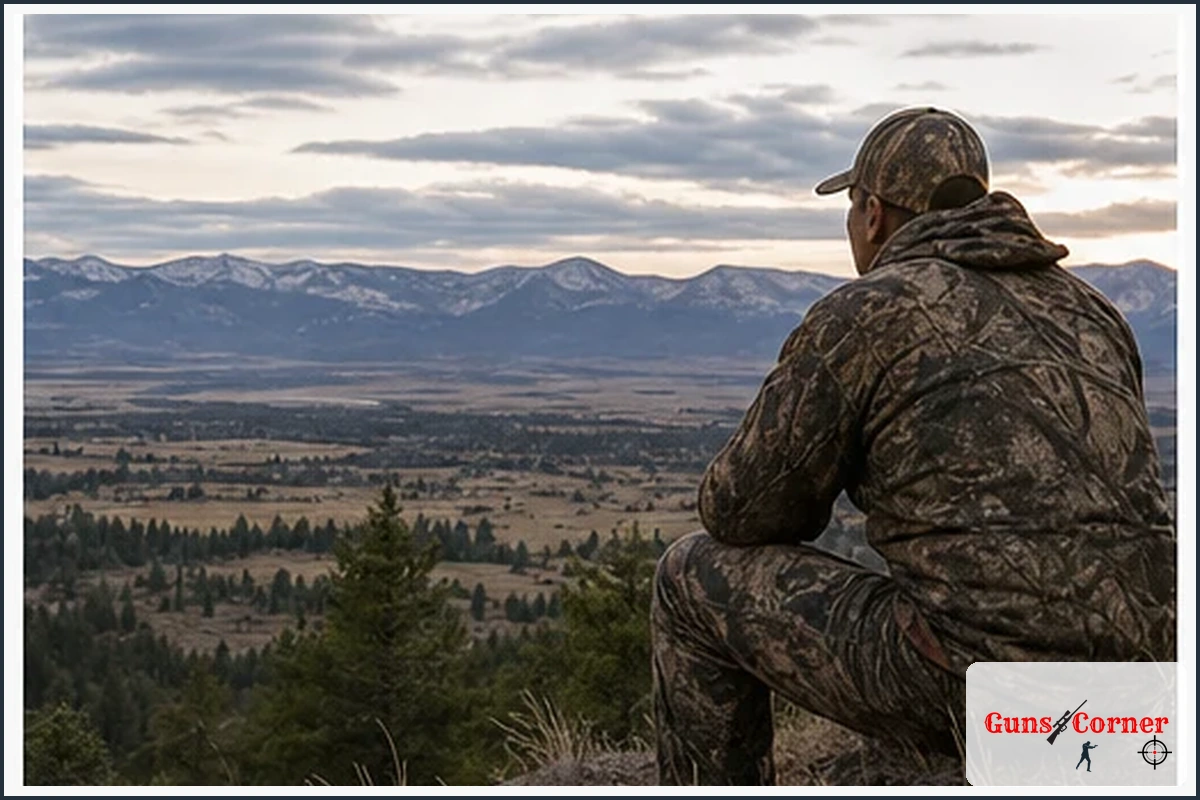
Ethical predator hunting means obeying regulations, respecting wildlife, and making conservative decisions. Pass on any shot that is unsafe, uncertain, beyond your practiced ability, or likely to create an avoidable recovery problem.
Respect landowners, other hunters, hikers, livestock operators, and public-land users. Follow seasons and limits, avoid waste, remove your equipment and litter, and support conservation through lawful participation and responsible license purchases.
Predators play important ecological roles. USDA APHIS notes that coyotes, wolves, foxes, mountain lions, grizzlies, and eagles contribute to ecosystems while sometimes creating challenges for ranching operations. Responsible hunting should be based on current management rules rather than assumptions about every predator or location.
When to Get More Training or Professional Guidance
Seek additional instruction before hunting if you have never handled a firearm or bow, have not completed hunter education, are uncertain about local laws, or cannot confidently identify local species.
Official hunter education courses, certified instructors, wildlife agencies, conservation organizations, and experienced ethical mentors can help with firearm safety, land boundaries, calling practice, tracking, recovery, and meat care.
After the Hunt: Follow-Up, Gear Care, and Learning
- Unload, secure, clean, and store firearms or bows according to manufacturer instructions.
- Dry and inspect calls, clothing, optics, batteries, and navigation equipment.
- Complete required tagging and harvest reporting promptly.
- Handle any harvested game according to local transport, cooling, and possession rules.
- Record wind, weather, sign, sounds, animal responses, and safety observations.
- Review what worked without assuming one result applies to every location.
- Leave private and public land clean and close gates as required.
Recommended Hunting Gear and Tools to Consider
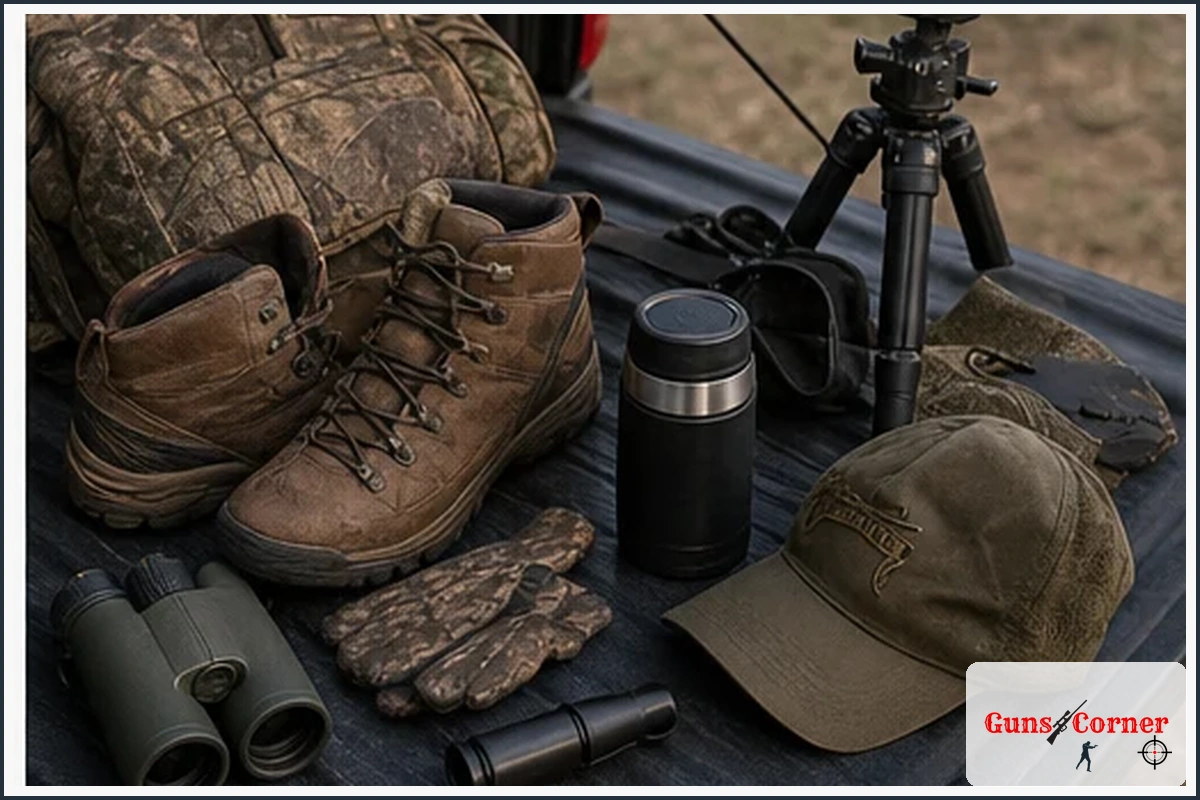
You do not need expensive equipment to call predators responsibly. Choose gear based on local regulations, species, terrain, weather, safety needs, skill level, and budget.
- Legal hand call or electronic caller.
- Binoculars and, where appropriate, a lawful riflescope or other optic.
- Stable seat or shooting support.
- Weather-appropriate clothing and required visibility gear.
- Map, compass, GPS, or hunting app.
- First-aid kit, water, food, and emergency communication.
- Spare batteries for permitted electronic equipment.
- Gloves, game bags, and cooling supplies when applicable.
Final Thoughts
Learning how to call predators begins with legal preparation, careful scouting, favorable wind, quiet movement, and patience. Start with simple sounds, use a safe stand, identify every animal beyond doubt, and never shoot when the background or species is uncertain.
Calling may improve your opportunities, but ethical hunting depends on judgment rather than equipment or guaranteed responses. Hunt within your skill level, respect wildlife and other land users, and use current official regulations to guide every decision.
Frequently Asked Questions
What is the easiest predator call for a beginner?
A simple hand call that produces a common prey-distress sound is often a practical starting point because it is compact and does not require batteries. Practice controlled volume and timing before hunting.
Should I start with a hand call or an electronic caller?
Choose based on local legality, budget, portability, and comfort. Hand calls require practice but are simple to carry; electronic callers may offer remote placement and multiple sounds but require batteries and may be restricted.
How long should I remain on a calling stand?
There is no universal stand length. Consider local terrain, wind, predator activity, hunting pressure, visibility, and legal shooting hours. Remain only while the setup is safe and your conditions are useful.
Can predator calls attract animals other than the intended species?
Yes. Calls may attract different predators or other wildlife. Know local species, identify the animal positively, and do not shoot if you are uncertain about its identity or legal status.
Is predator calling legal at night where I hunt?
Not necessarily. Night hunting, artificial lights, thermal optics, infrared equipment, electronic calls, and suppressors may have separate restrictions. Check current regulations for the exact location and species.
What should I do if a predator approaches livestock, a road, or another unsafe area?
Do not shoot. Keep your firearm controlled, wait for a safe opportunity that complies with local law, or allow the animal to leave. For livestock losses, contact the appropriate state Wildlife Services office or wildlife agency.