
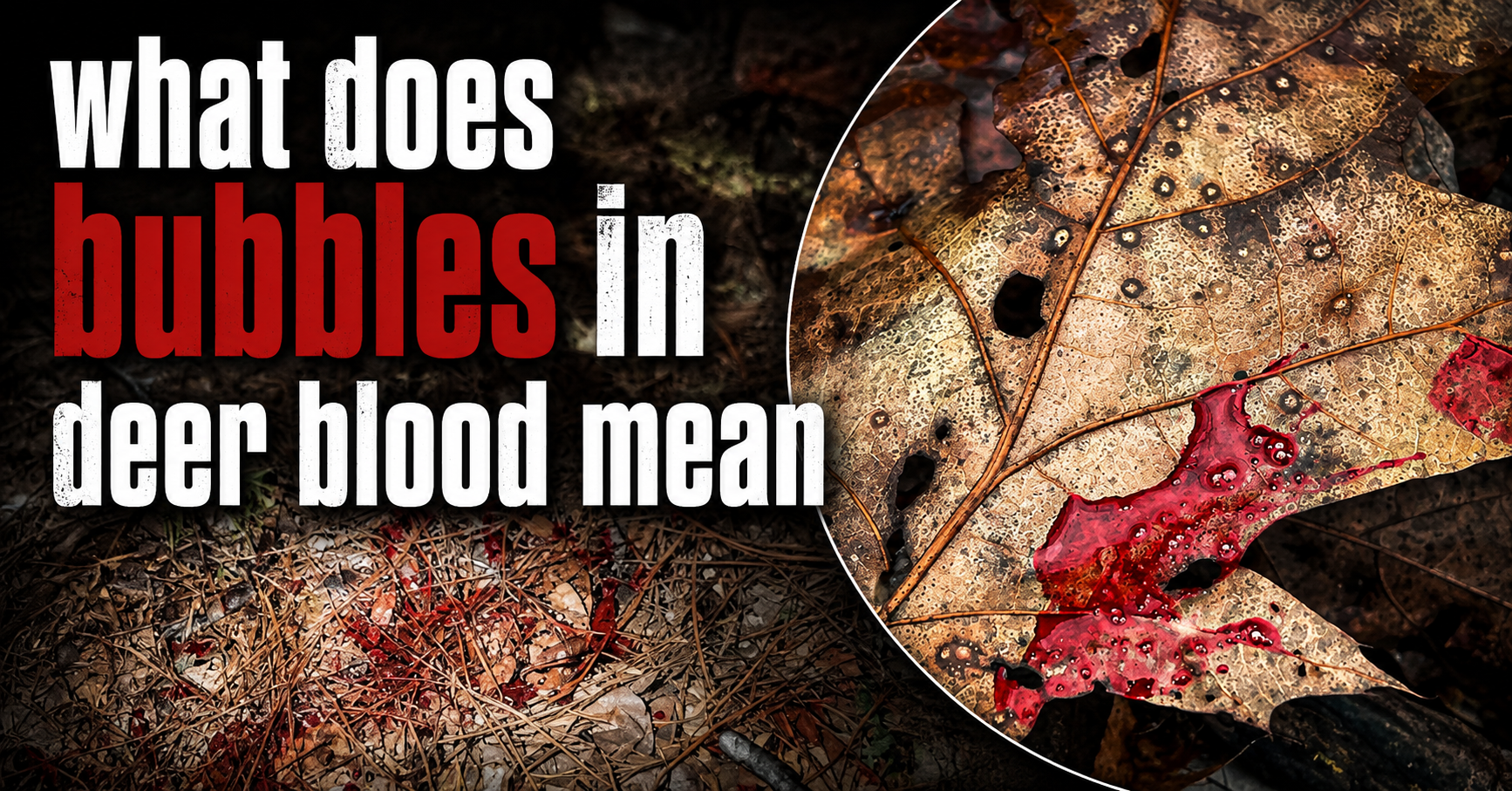

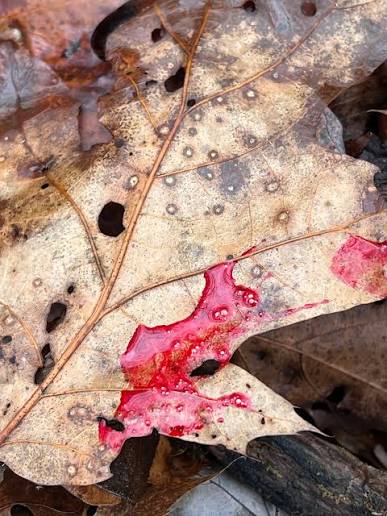
Finding bubbles in a deer’s blood trail usually suggests that blood mixed with air from the lungs or respiratory tract. Bright red or pink, frothy blood is therefore a common sign of a possible lung hit.
However, bubbles alone cannot prove that both lungs were hit or that the deer is already dead. A one-lung wound, an angled projectile path, blood expelled through the mouth or nose, and even surface agitation can produce misleading evidence. Responsible recovery requires evaluating the entire trail, shot angle, point of impact, hair, tracks, animal reaction, and changes in the blood—not relying on one drop.
Quick Answer: What Does Bubbles in Deer Blood Mean?
Bubbles in deer blood most often mean that air has mixed with the blood, which may indicate a lung or respiratory-tract wound. Repeated patches of bright red or pink frothy blood strengthen that possibility, especially after a broadside shot through the chest. It does not confirm a double-lung hit, and a wounded deer can travel farther than expected if only one lung or the edge of a lung was affected. Mark the trail, avoid rushing the recovery, and back out for additional time if any sign conflicts with the suspected hit.
Blood-Trail Signs at a Glance
| Observed Sign | Possible Meaning | Important Limitation | Responsible Next Step |
|---|---|---|---|
| Bright red or pink blood with repeated bubbles or foam | Possible lung or respiratory-tract wound | Cannot distinguish a one-lung hit from a double-lung hit | Mark the sign, wait before tracking, and compare it with the shot angle and other evidence |
| Bright red blood without froth | Possible arterial, heart, lung, or muscle bleeding | Color alone does not identify the organ | Evaluate quantity, pattern, hair, tracks, and where the projectile likely entered |
| Dark red or maroon blood | Possible venous, liver, or muscle wound | Wet leaves, low light, and age can alter perceived color | Treat the hit as uncertain and allow more time before following |
| Green or brown material with a foul odor | Possible stomach or intestinal wound | The material may be absent even after an abdominal hit | Back out, allow substantial time, and contact an experienced tracker |
| Blood that becomes sparse or disappears | High wound, plugged exit, clotting, changing terrain, or superficial injury | No visible blood does not prove a miss | Return to the last confirmed sign and search methodically |
| No blood at the point of impact | Possible miss, delayed external bleeding, or wound without an immediate exit trail | Blood may not appear for several yards | Inspect the full impact area and the route where the deer was last seen |
Why Does Lung Blood Look Bubbly or Frothy?
The lungs contain millions of small air spaces. When a projectile damages lung tissue or another part of the respiratory tract, moving air can mix with blood and create small bubbles or foam. The deer may also expel blood through its mouth or nose while running.
The common explanation that bubbles simply mean “oxygenated blood” is incomplete. Oxygenation helps explain why some blood appears bright red, but the frothy appearance comes from gas mixing with liquid. That distinction matters because bright blood can also come from arteries or muscle, while bubbles can sometimes form after blood strikes wet vegetation or is disturbed on the ground.
The North Carolina Wildlife Resources Commission identifies bright, bubbly or frothy blood as a general sign of lung blood. It also cautions hunters to consider combinations of sign rather than relying on one clue.
Do Bubbles Guarantee a Double-Lung Hit?
No. A bubbly blood trail cannot reliably tell you whether the projectile passed through both lungs, clipped one lung, or entered another part of the respiratory system.
Shot angle changes the entire wound path. A quartering shot may enter the chest, damage one lung, and continue into the liver or abdomen. A steep shot from an elevated stand can also produce a different path than the entrance location suggests. The first blood may look promising while later evidence becomes dark, sparse, or contaminated with digestive material.
A deer with serious damage to both lungs often leaves a comparatively short trail, but there is no dependable distance rule. A marginal or single-lung wound may allow the animal to travel much farther, especially when pursued prematurely.
How to Interpret Frothy Blood More Accurately
1. Consider the shot angle
Reconstruct where the deer stood, its body angle, and the hunter’s elevation. Do not judge the internal path only by where the projectile appeared to enter. A steep or quartering angle can involve several organs.
2. Recall the exact aiming point
Separate where you intended to hit from where the projectile probably landed. Branches, deer movement, shooting form, range estimation, and equipment setup can all change the actual point of impact.
3. Observe the deer’s reaction without treating it as proof
A deer may sprint, kick, hunch, stumble, or show almost no obvious reaction after being hit. These behaviors provide context but are not diagnostic. A “mule kick,” for example, is commonly associated with a chest hit but can occur with other impacts.
4. Look for a repeated pattern
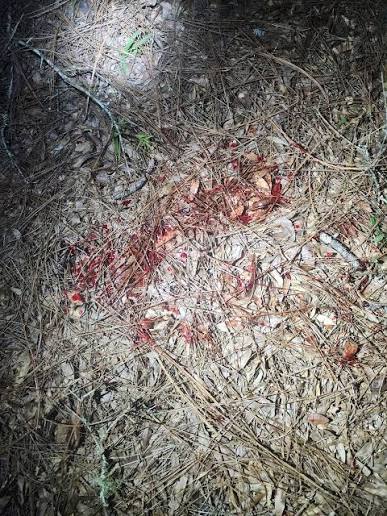
A single bubbly spot is weaker evidence than frothy blood appearing repeatedly on the ground and vegetation. Note whether the trail increases, decreases, changes color, or begins to include other material.
5. Examine hair and tissue
Hair length, color, and texture may help estimate the entrance area. Light, spongy tissue may suggest lung damage, while green or brown matter and a digestive odor suggest an abdominal hit. Wear disposable gloves and avoid unnecessary contact with blood or tissue.
6. Check the arrow or bolt when applicable
A recovered arrow or bolt can reveal blood, fat, hair, odor, and other material. Handle broadheads carefully and do not wipe away evidence before examining it. Remember that a projectile may cross more than one body region.
7. Follow the trail’s direction
Tracks, kicked leaves, broken stems, displaced snow, and blood transferred to low vegetation may show the travel route when drops are difficult to see.
What Should You Do After Finding Bubbly Deer Blood?
- Stay at the shooting position briefly. Watch the deer’s route, identify where it was standing, mark the last place it was visible, and listen for movement.
- Record the locations. Use a map application, GPS waypoint, photograph, or clearly visible landmark to preserve the shooting position, impact point, and last sighting.
- Do not immediately charge down the trail. Premature pursuit can cause a wounded deer to leave its first bed and travel much farther.
- Approach the impact area carefully. Avoid walking directly through the suspected trail or disturbing tracks, hair, and blood.
- Mark each confirmed sign. Biodegradable tissue can help reveal the line of travel. Remove any non-biodegradable flagging afterward.
- Evaluate all available evidence. Compare blood appearance with the shot angle, reaction, hair, projectile evidence, and trail pattern.
- Track from beside the trail. This preserves sign if you need to return to the last confirmed drop.
- Keep looking ahead. Scan for the deer, antler tips, a horizontal back line, white belly hair, or movement instead of focusing only on the ground.
- Back out if the evidence becomes questionable. A change to dark blood, sparse droplets, digestive material, or a fresh empty bed means the original interpretation may have been wrong.
- Get qualified help early. An experienced recovery team or trained tracking dog may be more effective before the trail has been contaminated by a large search party.
How Long Should You Wait Before Tracking?
There is no waiting period that fits every wounded deer. The appropriate decision depends on the suspected wound, weapon, shot angle, observed reaction, weather, terrain, legal shooting hours, predators, and whether the animal fell within sight.
The North Carolina Wildlife Resources Commission advises waiting at least 15–30 minutes or longer unless the animal falls within sight. The Nebraska Game and Parks Commission recommends approximately 30 minutes after an apparently good hit, while its general guidance allows substantially more time for suspected liver or abdominal wounds.
| Situation | General Approach | Reason |
|---|---|---|
| Deer falls and remains visible | Observe from a safe position before approaching | A motionless animal may still be alive |
| Consistent bright, frothy trail after a confident chest hit | Allow at least a cautious initial wait; many hunter-education sources use about 30 minutes | Even a strong lung-hit indication is not absolute proof |
| Possible one-lung or angled hit | Back out and seek experienced guidance before continuing | A prematurely pushed deer may travel a considerable distance |
| Dark blood or suspected liver hit | Allow considerably more time than for a confident chest hit | The deer may bed nearby if left undisturbed |
| Digestive material, odor, or suspected gut hit | Back out for an extended period and contact a tracker | Immediate pursuit commonly reduces the chance of recovery |
| Evidence conflicts or the hit is unknown | Use the most cautious plausible interpretation | False confidence can turn a recoverable deer into a much harder track |
These are general recovery principles, not universal legal instructions. Weather, meat-care concerns, local rules, and tracking-dog availability may affect the plan. When uncertain, contact the local wildlife agency or an experienced legal tracking service.
What If the Bubbly Blood Trail Stops?
A disappearing trail does not necessarily mean the deer recovered or that the original sign was wrong. External bleeding can decrease when a wound is high on the body, the exit is plugged by fat or tissue, the deer crosses absorbent ground, or blood remains inside the chest cavity.
- Stop at the last confirmed blood rather than wandering ahead.
- Mark that location precisely.
- Check vegetation from ground level to approximately deer-body height.
- Study tracks and disturbed leaves before creating additional footprints.
- Search likely lines of travel with small, controlled arcs.
- Have one person remain at the last confirmed sign when possible.
- Back out if you find a fresh bed, hear movement, or suspect the deer is still alive.
- Contact a trained tracking-dog team before numerous people contaminate the route.
North Carolina’s recovery guidance notes that it may take several yards before a mortally wounded deer begins leaving visible blood. Hunters should therefore inspect both the impact point and the route beyond the last place the animal was seen.
Can Blood Color Identify the Exact Hit?
Blood color is useful evidence, but it cannot diagnose the wound by itself. Lighting, leaf color, water, time, dirt, and the device used to illuminate the trail can change its appearance.
- Pink or bright frothy blood: commonly associated with lung or respiratory damage.
- Bright crimson blood: may come from an artery, heart, lung, or heavily bleeding muscle.
- Dark red or maroon blood: may indicate venous, liver, or muscle bleeding.
- Watery blood: can result from rain, body fluids, a sparse trail, or contamination and is not diagnostic.
- Green or brown material with odor: suggests digestive involvement.
A trail may also contain mixed signs because a bullet, broadhead, or bolt can pass through multiple tissues. Treat every blood-trail chart as a field reference rather than a guarantee.
Firearm and Archery Differences
The biological meaning of frothy blood is similar regardless of hunting method, but the available evidence can differ.
After a firearm shot
A bullet may create an entrance wound without a low exit wound, resulting in limited external blood even after serious internal damage. Maintain safe muzzle control while observing and tracking. Never use a scope as a substitute for binoculars when identifying objects on the trail.
After an archery or crossbow shot
The recovered arrow or bolt can provide additional evidence. Broadheads remain dangerously sharp, so use gloves and handle the shaft carefully. Never attempt to reuse damaged archery equipment without a complete inspection according to the manufacturer’s instructions.
Safety and Legal Considerations During Recovery
Blood tracking is part of the hunt, and hunting laws may continue to apply during recovery. Rules governing artificial lights, legal shooting hours, possession of a weapon, tracking dogs, tagging, public-land access, and dispatching a wounded animal vary by jurisdiction.
- Do not cross a property boundary without the permission or legal authority required in that jurisdiction.
- Do not assume a wounded deer gives you an automatic right to enter private property.
- Verify whether tracking dogs are permitted, whether they must be leashed, and whether a permit or notification is required.
- Confirm rules for nighttime recovery and artificial lights.
- Wear legally required visibility clothing and make yourself visible to other hunters.
- Carry navigation, communication, and emergency equipment appropriate for the terrain.
- Do not enter unsafe water, steep terrain, thin ice, or severe weather merely to stay on a trail.
- Follow all tagging and reporting requirements immediately after recovery.
For example, current rules in jurisdictions such as New York and Michigan impose specific requirements on tracking-dog use. These examples should not be treated as nationwide rules. Check the official regulations for the state, province, wildlife unit, land type, species, season, and weapon involved.
Legal guidance reviewed August 22, 2026. Regulations can change, and the current official regulation booklet or wildlife agency instructions always override general online guidance.
Firearm Safety While Tracking
A recovery effort does not suspend the fundamental rules of firearm safety. Follow the four principles recognized in International Hunter Education Association–USA standards:
- Treat every firearm as if it is loaded.
- Keep the muzzle pointed in a safe direction.
- Keep your finger outside the trigger guard until ready to shoot.
- Be certain of the target and what lies beyond it.
Move carefully through brush, maintain control of the muzzle, and avoid carrying a firearm in a way that points it at a companion. A mechanical safety does not replace safe handling. Any legal follow-up shot requires positive identification, a safe backstop, and compliance with season and shooting-hour rules.
How to Approach a Downed Deer Safely
Approach from behind when terrain permits, watch for breathing or movement, and avoid standing directly in front of the animal’s legs or antlers. Use binoculars to inspect from a safe distance. Do not touch the eye with your hand or place your face close to the animal.
If the deer is alive, do not attempt to restrain it. Move to a safe position and follow local law and hunter-education guidance regarding a humane follow-up. Once death is confirmed, unload or safely secure the firearm before tagging, field dressing, or handling equipment.
Common Blood-Tracking Mistakes
- Assuming bubbles prove a double-lung hit: They indicate a possibility, not certainty.
- Tracking immediately: This may push a deer that would otherwise bed nearby.
- Following the intended shot instead of the evidence: Reconstruct the actual projectile path.
- Walking directly on the trail: Foot traffic can destroy blood, tracks, and scent needed by a dog.
- Bringing too many searchers: A large group can contaminate sign and create confusing tracks.
- Looking only at the ground: Blood frequently appears on grass, stems, saplings, and the underside of leaves.
- Failing to mark the last blood: Unmarked sign is difficult to relocate after an unsuccessful search.
- Assuming no blood means a clean miss: High wounds and delayed external bleeding can leave little initial evidence.
- Ignoring property boundaries: Recovery does not automatically authorize trespass.
- Waiting too long to contact a tracker: A trained dog has a better chance before the scent trail is heavily disturbed.
- Following a trail into unsafe conditions: Recovery is important, but hunters should not compound the event with an injury or emergency.
Useful Deer-Recovery Gear
You do not need the most expensive equipment to hunt responsibly. Choose gear based on the species, terrain, weather, local regulations, fit, safety, reliability, maintenance requirements, and your actual experience.
- Binoculars for observing the deer without pointing a firearm
- Phone or GPS device with offline maps
- Headlamp and backup light where artificial-light use is legal
- Spare batteries
- Biodegradable tissue or removable trail markers
- Disposable gloves
- Required hunter-orange or other visibility clothing
- Compass and basic survival supplies
- Communication device appropriate for local coverage
- First-aid kit
- Weather protection and drinking water
- Contact details for the landowner, wildlife agency, and legal tracking-dog teams
Ethical Recovery Principles
Ethical hunting requires making every reasonable, safe, and legal effort to recover wounded game. That begins before the shot through practice, proper equipment setup, realistic distance limits, positive target identification, and choosing high-percentage opportunities.
After the shot, patience and disciplined observation are often more valuable than speed. Preserve the evidence, ask for help when necessary, respect property boundaries, and do not abandon the search merely because the first section of the trail contains little blood.
If recovery remains unsuccessful after a thorough effort, document the trail and consider contacting the wildlife agency or a qualified tracker. Reflect on the shot conditions before hunting again and correct any equipment, accuracy, range-selection, or decision-making issue that contributed to the outcome.
Final Answer: What Does Bubbles in Deer Blood Mean?
Bubbles in deer blood usually mean that air has mixed with blood from a lung or another part of the respiratory tract. Repeated bright red or pink froth is a strong clue of a possible lung hit, but it cannot confirm a double-lung wound or guarantee a short recovery.
Use the bubbly blood as one piece of evidence. Mark the impact point and last sighting, allow an appropriate waiting period, preserve the trail, watch for changing signs, and back out if the wound appears uncertain. Follow current local rules for land access, nighttime tracking, tracking dogs, weapons, tagging, and humane recovery.
FAQs
1. Does bubbly deer blood always mean a lung shot?
No. It commonly suggests lung or respiratory-tract involvement, but bubbles alone are not conclusive. Confirm the pattern with the shot angle, hair, tracks, animal reaction, and later blood.
2. What does bright red bubbly deer blood mean?
Bright red, frothy blood is a common indicator of a possible lung wound. Bright color may also be associated with arterial bleeding, so the full trail still matters.
3. What does pink frothy blood mean after shooting a deer?
Pink frothy blood often points to blood mixed with air from damaged lung tissue or the respiratory tract. It is encouraging evidence of a chest hit, not proof of the exact wound path.
4. Can bubbly blood come from a one-lung hit?
Yes. One-lung and double-lung wounds may produce similar-looking blood. A deer with only one lung seriously affected may remain mobile much longer than expected.
5. Can you tell a one-lung hit from a double-lung hit by blood?
Not reliably. Shot angle, penetration, entrance and exit locations, and changes along the trail provide better context, but field evidence may still remain uncertain.
6. Why are there only a few bubbles in the blood?
A small number of bubbles could come from limited respiratory involvement, blood expelled through the airway, or simple disturbance after the blood landed. Look for a repeated frothy pattern.
7. Can blood bubble when it hits the ground?
Yes. Impact with wet leaves, rain, vegetation, or disturbed soil may introduce air. One bubbly drop is therefore weaker evidence than consistent foam along the trail.
8. Does lots of bubbly blood guarantee the deer is nearby?
No. Heavy frothy blood supports the possibility of a serious lung wound, but distance varies with wound path, deer movement, terrain, and whether the animal was pushed.
9. How long should I wait after seeing bubbly blood?
Many hunter-education sources recommend an initial wait of roughly 30 minutes after a confident vital hit. Wait longer and seek experienced guidance when the angle, trail, or animal reaction creates doubt.
10. Should I track a lung-hit deer immediately?
Generally, no. Unless the deer fell and remains visible, a cautious wait reduces the chance of pushing a wounded animal from its first bed.
11. How far can a deer travel after a lung hit?
There is no dependable maximum distance. A severe double-lung wound may produce a short trail, while a marginal or one-lung wound can allow much farther travel.
12. What if the frothy blood suddenly turns dark?
The projectile may have crossed multiple tissues, or lighting and aging may be changing the blood’s appearance. Treat the hit as uncertain and consider backing out rather than continuing aggressively.
13. What if bubbly blood appears only near the start of the trail?
It may have come from the initial wound, the mouth or nose, or surface agitation. Continue evaluating tracks and later sign without assuming the first interpretation was correct.
14. What if a bubbly blood trail completely stops?
Mark the last confirmed blood and search for tracks, displaced vegetation, and transfer on brush. Avoid wandering ahead, and contact a trained tracking-dog team if legal and available.
15. Can a lung-hit deer leave very little blood?
Yes. A high entrance and exit, internal bleeding, fat or tissue plugging the wound, and dense vegetation can all reduce visible blood.
16. Does no blood mean I missed the deer?
No. Thoroughly inspect the impact point and travel route before deciding it was a miss. Visible blood may begin several yards from where the deer was standing.
17. What does dark red deer blood mean?
Dark red or maroon blood may come from veins, the liver, or muscle. Color alone cannot determine which tissue was hit.
18. What does green or brown material in a deer blood trail mean?
Green or brown material, especially with a digestive odor, suggests possible stomach or intestinal involvement. Back out and allow substantially more time before recovery.
19. What does bright blood without bubbles mean?
It may indicate arterial, heart, lung, or muscle bleeding. Study the quantity, spray pattern, hair, tracks, and shot path rather than relying on brightness.
20. Can blood from a deer’s mouth or nose contain bubbles?
Yes. Blood moving through the airway can become frothy and may be expelled from the mouth or nose, sometimes several yards after the shot.
21. Does a deer’s reaction reveal where it was hit?
It can provide clues but not proof. Kicking, hunching, stumbling, or sprinting can occur with multiple types of wounds.
22. Is blood evidence different after a bow shot?
The biological signs are similar, but a recovered arrow or bolt may provide additional evidence such as blood, hair, fat, tissue, or digestive odor.
23. Should I use a tracking dog?
A trained tracking dog can be highly effective, particularly after a sparse or confusing trail. Verify licensing, leash, notification, weapon, and land-access rules before using one.
24. Can I follow a wounded deer onto private land?
Do not assume that you can. Property-entry rules differ, and landowner permission may be required even during recovery. Contact the landowner or appropriate authority before crossing the boundary.
25. Is it legal to track a deer at night?
That depends on local regulations governing hunting hours, artificial lights, weapon possession, and wounded-game recovery. Consult the current official wildlife-agency regulations.
26. How should I mark a blood trail?
Place biodegradable tissue or removable markers beside—not on—the trail. Mark every confirmed spot, preserve the evidence, and remove non-biodegradable materials afterward.
27. What should I do after finding a fresh deer bed?
Stop and assess the evidence. If the bed is empty and the deer may still be alive, backing out usually offers a better chance of preventing further disturbance.
28. How should I approach a deer that appears dead?
Observe from a safe distance, approach carefully from behind when possible, and watch for breathing or movement. Do not touch the animal or stand near its legs until death is confirmed.
29. When should I call an experienced tracker?
Call early when the hit is uncertain, the trail stops, you find an empty bed, property boundaries complicate recovery, or a trained dog may be needed. Early contact helps preserve options.
30. What is the most important rule when blood-trail evidence conflicts?
Do not force the evidence to match the shot you hoped to make. Use the most cautious plausible interpretation, back out when appropriate, and seek qualified help.
Authoritative Sources and Further Reading
- North Carolina Wildlife Resources Commission: After the Hunt
- Nebraska Game and Parks Commission: After the Shot
- International Hunter Education Association–USA Hunter Education Standards
- New York State Department of Environmental Conservation: Leashed Tracking Dogs
Read more:
What Does Dark Blood Mean When Tracking Deer? Field Guide