
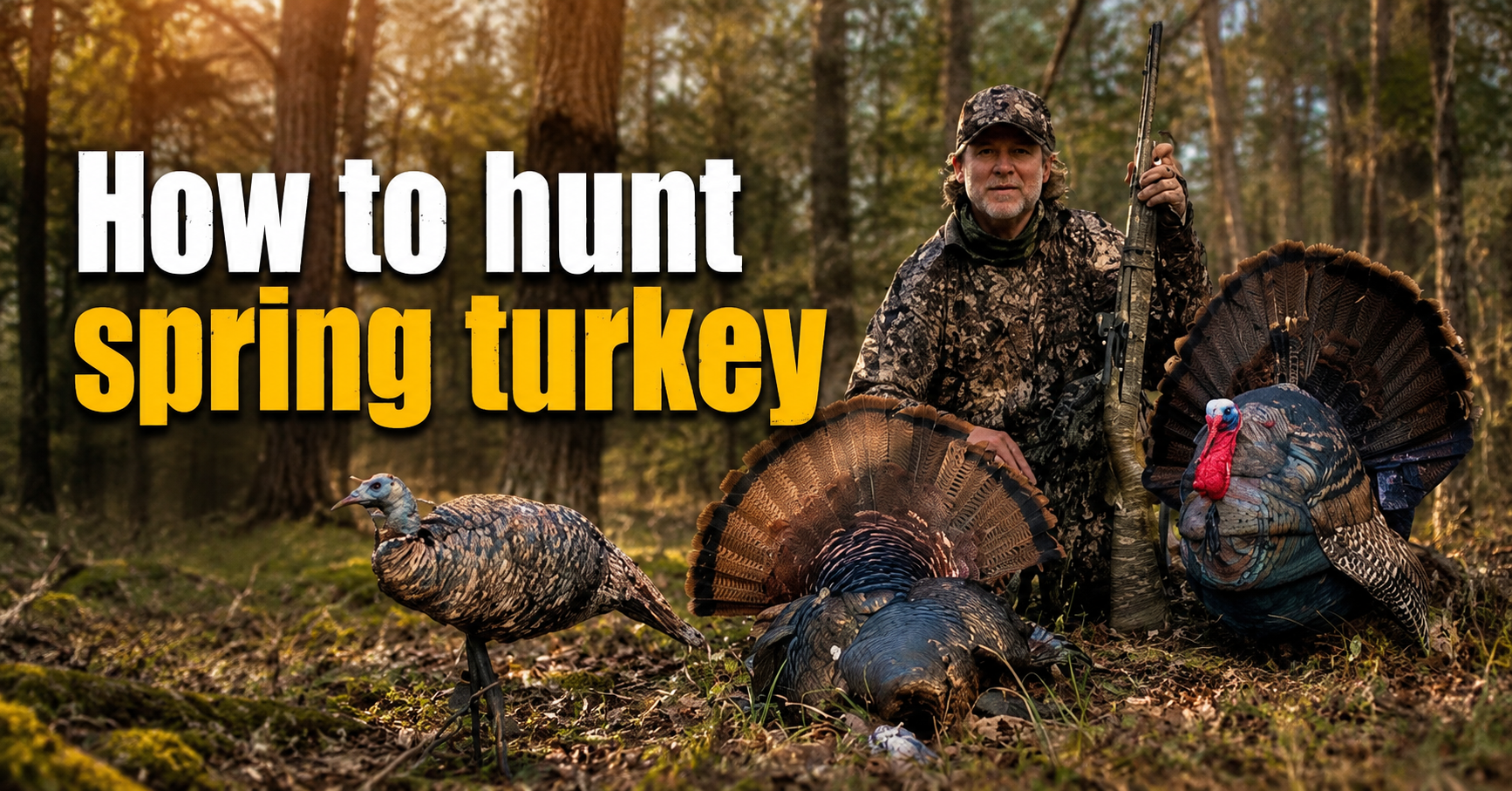

Spring turkey hunting often begins before daylight with a hunter listening for a distant gobble, but the work starts much earlier. A responsible first hunt requires current licenses and permits, a legal place to hunt, preseason scouting, practice with calls and equipment, a safe setup, and the patience to pass when a bird or background cannot be identified completely.
This guide explains how to hunt spring turkey from the planning stage through scouting, calling, setup selection, safe shot decisions, legal recovery, harvest reporting, and responsible meat care. It is written for beginners, including hunters who did not grow up in a hunting family and need a clear process rather than a collection of disconnected tips.
Spring turkey hunting does not guarantee action. Weather, hunting pressure, local habitat, breeding activity, access, calling ability, patience, and legal restrictions all affect the outcome. A well-prepared hunter can still finish the day without seeing a legal bird, and choosing not to take an uncertain opportunity is a successful safety decision.
Quick Answer
To hunt spring turkey, first complete any required hunter education and verify the current license, permit, season, legal-bird, weapon, ammunition, land-access, hunting-hour, tagging, and reporting rules for the exact place you will hunt. Scout for roosting areas, tracks, scratching, droppings, feeding locations, field edges, and strut zones, then select a safe setup with a solid background and an unobstructed view. Use simple hen calls sparingly, remain still, and take an opportunity only after positively identifying a legal turkey and confirming a safe background. Expect spring turkey hunting to require repeated scouting, calling practice, equipment testing, patience, and restraint.
Important Legal and Safety Notice Before You Hunt
Turkey regulations vary by country, state, province, wildlife-management unit, season, land type, age, weapon, and hunting method. Some areas issue permits over the counter, others use applications or quotas, and public properties may have additional access or equipment rules. Check the official wildlife agency and the managing authority for the exact property immediately before hunting.
Verify all of the following:
- Required hunting license, turkey permit, tag, stamp, or application.
- Hunter-education and mentoring requirements.
- Exact spring-season dates and legal hunting hours.
- Which sex, age class, beard status, or other legal-bird definition applies.
- Daily and seasonal limits.
- Legal shotguns, bows, crossbows, muzzleloaders, or other permitted methods.
- Legal ammunition, shot material, shot size, magazine capacity, and archery equipment.
- Decoy, electronic-call, baiting, and ground-blind restrictions.
- Public-land permits, parking areas, closures, and boundary rules.
- Written or documented permission for private land.
- Hunter-orange or other visibility requirements.
- Tagging, evidence-of-sex, transportation, and harvest-reporting requirements.
Hunter education covers firearm and archery safety, ethics, wildlife management, game laws, survival, and first aid. Most beginners benefit from completing an approved course even when an exemption may exist, and a mentored first season can prevent avoidable mistakes.
Four Basic Firearm-Safety Rules
- Treat every firearm as if it is loaded.
- Keep the muzzle pointed in a safe direction.
- Keep your finger outside the trigger guard until ready to shoot.
- Be certain of the target and what lies in front of and beyond it.
These principles apply during transport, loading, setup, movement, calling, recovery, and unloading—not only at the moment of firing.
Why Spring Turkey Hunting Is Different
Spring seasons generally overlap the wild turkey breeding period. Male turkeys gobble to advertise their presence, compete with other males, and attract hens. Displaying males may strut in clearings with their body feathers expanded and tail fanned, while turkeys commonly spend the night roosting in trees and travel primarily on the ground during daylight.
The basic calling challenge is unusual: in natural courtship, a hen often moves toward the gobbling male. A hunter using a hen call is trying to persuade the gobbler to reverse that normal pattern and walk toward the sound. That is one reason a bird may answer repeatedly without approaching.
Spring behavior also changes through the season and through each day. A gobbler surrounded by hens after leaving the roost may show little interest in a distant call. Later, as hens separate to feed or visit nest sites, that same gobbler may become more responsive. Local timing varies, so observations from the actual property are more useful than a fixed nationwide timetable.
Understanding Spring Turkey Habitat and Sign
Wild turkeys commonly use landscapes that combine mature forest with openings, field edges, logging roads, pastures, clearings, or other open ground. Mature hardwoods can provide roost sites and food, while open areas support feeding, travel, and spring courtship displays. Habitat differs by region, so hunters should learn what turkeys use locally rather than searching only for one textbook forest type.
Roosting Areas
Turkeys fly into trees near sundown and normally leave after daylight. Large trees on sheltered slopes, near creek bottoms, along ridge sides, or close to feeding areas may be used, but a single tree is not automatically an active roost. Confirm current use through observation, tracks, droppings, feathers, wing marks, and repeated gobbling rather than relying on an old location.
Feeding Areas
Turkeys forage by walking and scratching through leaf litter for plant foods and small animals. Spring food may include leftover mast, seeds, new vegetation, grain, and insects. Forest openings, recently disturbed soil, grassy edges, agricultural fields, woodland roads, and sunny slopes can concentrate feeding activity.
Travel Routes
Look for easy walking routes between roosts, feeding ground, nesting cover, water, and display areas. Logging roads, benches, saddles, creek crossings, fence gaps, open ridges, and field corners can funnel movement. A safe setup along a confirmed route can work even when birds remain quiet.
Strut Zones
A strut zone is an opening, ridge, field edge, pasture corner, logging landing, or other visible area where a gobbler repeatedly displays. Tracks, wing-drag marks, droppings, dusting areas, and repeated sightings can indicate regular use. NWTF scouting guidance recommends watching for tracks, droppings, scratching, roosts, drag marks, dusting bowls, and watering areas.
Turkey Tracks
Turkey tracks show three long forward-pointing toes, with a shorter rear toe sometimes visible. Size alone should not be used to determine whether a bird is legal. Tracks are most useful for confirming recent travel direction and activity around roads, creek crossings, field entrances, and muddy ground.
Scratching
Feeding turkeys move leaves backward with their feet, leaving disturbed patches of forest floor. Fresh scratching may expose moist, darker leaves and soil. Old scratching becomes dry, flattened, or covered by new debris.
Droppings and Feathers
Droppings beneath a possible roost, on travel routes, or near feeding areas can confirm use, but hunters should avoid relying on shape or size as a perfect sex-identification method. Feathers may also occur at feeding, dusting, preening, or roosting areas.
What You Need Before the Hunt
Spring turkey hunting does not require every specialized product sold for the season. Beginners need legal equipment, reliable navigation, basic safety supplies, a practiced hunting method, and clothing that supports stillness and weather protection.
- Current license, permit, tag, and regulation information.
- Legal shotgun, bow, crossbow, or other approved hunting method.
- Legal ammunition or archery equipment matched to the hunting method.
- Eye and hearing protection for patterning or practice.
- Weather-appropriate boots, base layers, insulation, and rain protection.
- Required hunter orange or other visibility clothing.
- Neutral or camouflage clothing that does not display turkey-head colors.
- One beginner-friendly turkey call.
- Map, compass, GPS, or mapping application with offline access.
- Headlamp or flashlight.
- Water, food, first aid, emergency insulation, and communication device.
- Seat cushion or safely positioned ground blind when legal.
- Binoculars for observation without aiming a weapon at an unidentified object.
- Insect protection appropriate to the region.
- Gloves, clean game-handling tools, bags, and cooling supplies.
NWTF beginner guidance recommends starting with one call rather than carrying several calls that the hunter cannot use confidently. Box calls are commonly easier for beginners to operate consistently, while pot-and-striker and diaphragm calls require different levels of practice.
Choose and Practice a Legal Hunting Method
Shotgun Preparation
Use only a shotgun, shell length, choke, ammunition, shot material, and shot size approved by the firearm manufacturer and legal in the hunting area. Pattern the exact shotgun, choke, sight, and hunting load on a safe range before the season. A dense pattern that strikes away from the point of aim is not an ethical setup.
Pattern at several realistic distances, including a close distance. Modern turkey loads and tight chokes may produce a very small close-range pattern, leaving little margin for aiming error. Pattern testing shows the hunter where the load strikes and where pattern quality becomes inadequate; advertising does not establish the hunter’s personal effective range.
Bow or Crossbow Preparation
Confirm current legal draw-weight, broadhead, crossbow, sight, and equipment rules. Practice from seated, kneeling, and blind positions while wearing hunting clothing. Broadheads should remain covered during transport, and the hunter should know a personal effective range based on repeated accurate practice—not the maximum distance printed in marketing material.
A bowhunter usually needs a closer, calmer opportunity and may benefit from a ground blind where legal. Ensure the blind provides enough clearance for the bow and does not direct an arrow toward a road, trail, building, livestock area, or another likely access route.
Learn a Few Basic Turkey Sounds
Plain Yelp
The plain hen yelp is a short series of notes used in ordinary turkey communication. Beginners can practice producing several evenly spaced notes rather than trying to imitate complex calling sequences.
Cluck
A cluck is a short, isolated note. Soft clucks can suggest a nearby, relaxed bird. Avoid repeating sharp alarm-like notes without understanding the difference.
Purr
A purr is a quiet sound associated with close-range flock communication. It is useful when a gobbler is nearby, but beginners do not need to master it before their first hunt.
Cutting
Cutting is a faster, more excited series of notes. It can create a response, but aggressive calling is not always the best choice on pressured birds or when the hunter cannot see approaching terrain.
Gobbling and Locator Sounds
Some hunters use owl, crow, or other locator calls to encourage a turkey to reveal its location without imitating a hen. Check local rules before using any call. Avoid repeatedly disturbing birds at the roost during scouting.
The gobble is a principal male spring vocalization, while yelps, clucks, purrs, and cutting are commonly used by hunters to imitate hens. A beginner should prioritize realistic rhythm, moderate volume, and patience over calling frequently.
How to Hunt Spring Turkey: Step-by-Step Guide
Step 1: Read the Current Regulations
Download or collect the current official regulation document for the jurisdiction and property. Highlight season dates, legal hours, required permits, legal bird definition, weapon and ammunition rules, decoy and call rules, public-land restrictions, tagging deadlines, and reporting instructions.
Do not rely on a previous season’s rules, a social-media post, or advice from another state. Ask the wildlife agency or property manager when wording is unclear.
Step 2: Complete Training and Practice
Complete required hunter education and seek an ethical mentor when possible. Practice safe loading and unloading with dummy training aids or under qualified supervision, learn the firearm or bow manufacturer’s instructions, and rehearse how the equipment will be carried, positioned, and unloaded in the field.
Step 3: Find a Legal Place to Hunt
For public land, confirm that turkey hunting is allowed, identify legal access points, download property maps, check closures, and understand parking and camping rules. Private land may be interspersed with public land, making boundary confirmation essential.
For private land, obtain clear permission, discuss where vehicles may be parked, close gates, avoid livestock, respect crops, follow property-specific instructions, and confirm whether anyone else will be hunting.
Step 4: Scout From a Distance
Begin with maps and aerial imagery to identify forest-opening combinations, ridges, creek bottoms, pastures, fields, logging roads, and likely access. Then verify those areas on foot during legal scouting periods.
Listen near dawn or dusk from a safe location, glass fields from public roads only where stopping and observation are lawful, and look for tracks, scratching, droppings, feathers, dusting bowls, and travel routes. Avoid walking beneath a suspected roost or using repeated hen calls that may alter the birds’ behavior before opening day.
Step 5: Identify a Primary and Backup Setup
A good setup offers a safe background, a clear view, room to operate the legal hunting equipment, and terrain that allows a turkey to approach without seeing the hunter move. Select at least one backup location in case another hunter is parked nearby, the wind changes, birds move differently, or access becomes unsafe.
Step 6: Plan the Entry Route
Approach quietly without walking through the feeding area, strut zone, or travel route you intend to hunt. Use a flashlight where appropriate and legal in darkness. Avoid silhouetting yourself on ridges, slamming doors, crossing fences noisily, or walking directly under roosted birds.
Arriving early does not justify unsafe movement. Slow down around creeks, rocks, fallen timber, steep slopes, fences, and unfamiliar ground.
Step 7: Build a Safe Ground Setup
Sit with your back against a tree, rock, or other barrier that is wider than your shoulders and taller than your head. Clear only enough leaves and sticks to reposition quietly without unnecessarily disturbing habitat. Maintain visibility rather than hiding so completely that another hunter can approach unnoticed.
Choose a predetermined safe zone of fire. Do not position yourself where the intended direction points toward a road, trail, parking area, house, campsite, blind, livestock area, property boundary, or likely approach used by another hunter.
Step 8: Place Decoys Carefully—or Hunt Without Them
Decoys are optional. A well-scouted travel route or field corner can be hunted without them. When decoys are legal and appropriate, position them where you can see both the decoy area and the likely approach without directing an opportunity toward a trail or public access point.
Never carry a turkey decoy, fan, or harvested bird exposed where another hunter could mistake it for a live bird. Use a bag or fully covered transport method. Modern safety guidance also recommends extra caution with realistic decoys near roads, field edges, and public access.
Avoid crawling behind a turkey fan or realistic gobbler decoy, especially on public land. The visual profile can be mistaken for a live bird, and a hunter cannot control who may be watching from another direction.
Step 9: Call Conservatively
Begin with a few soft yelps or clucks and wait. A bird may answer immediately, answer later, or approach silently. Calling continuously can reveal the hunter’s exact position, make the setup sound unnatural, and prevent the hunter from hearing footsteps, drumming, wingbeats, or another person approaching.
When a gobbler answers every call but does not move, reduce calling instead of automatically increasing volume. The bird may expect the “hen” to walk toward him, may be with live hens, may be blocked by a fence or creek, or may be approaching along an unseen route.
Step 10: Remain Still and Observe
Turkeys have keen vision and can detect sudden movement. Keep unnecessary gear within easy reach before calling. Scan slowly with your eyes, listen carefully, and avoid using a weapon-mounted optic to identify an uncertain object.
Movement should be delayed until the target and surroundings are understood. A silent bird can appear from the side or rear, and another hunter may be following the same calling sound.
Step 11: Positively Identify a Legal Turkey
Never fire at a gobble, rustling leaves, movement, a dark shape, a fan, or a partial silhouette. The bird must be fully and plainly visible, legal under the current rules, and located within the predetermined safe zone.
Turkey-hunting safety guidance specifically warns hunters never to stalk turkey sounds because the caller may be another person. If another hunter approaches, remain still and clearly call out in a human voice rather than waving or making turkey sounds.
Step 12: Take Only a Practiced, Ethical Opportunity
Act only when the bird is within the range at which the exact equipment has demonstrated consistent, ethical performance. Confirm that no person, vehicle, building, road, trail, livestock, decoy carrier, or uncertain object lies within or beyond the shooting direction.
If the bird is moving rapidly, partially hidden, mixed with nonlegal birds, beyond the tested range, or near an unsafe background, let it go. The bird may provide another opportunity; an unsafe decision cannot be reversed.
Step 13: Make the Firearm or Bow Safe
After the opportunity, remain aware that another hunter may be nearby. Engage the safety where applicable, control the muzzle or bow, and unload before crossing obstacles or beginning a difficult recovery route. Do not rush through steep terrain, fences, streams, or brush.
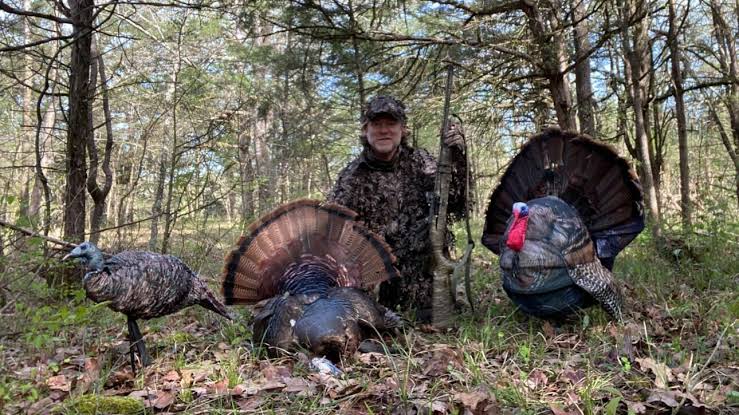
Step 14: Follow Recovery, Tagging, and Reporting Rules
Make a reasonable recovery effort without trespassing or entering a closed area. Follow the jurisdiction’s tagging and reporting sequence exactly; some rules require immediate tagging or validation before moving the bird, while others use electronic reporting within a defined period.
If recovery would require entering private land, obtain permission. A duty to recover game does not automatically authorize trespass.
Step 15: Transport the Bird Safely
Completely conceal a harvested turkey in a game bag or cover it with required high-visibility material when leaving the hunting area. Do not carry it over your shoulder in the open where another hunter could see a wing, tail, or head and mistake it for a live bird.
Step 16: Handle the Harvest Responsibly
Use gloves and dedicated clean tools, avoid handling birds that appeared sick or were found dead, prevent cross-contamination, cool edible meat promptly, and follow local evidence-of-sex and transport requirements. Clean and disinfect tools and work surfaces afterward. The CDC advises cooking game-bird meat to an internal temperature of 165°F.
Spring Turkey Hunting Strategies
Roost-Area Setup
This approach uses evening or early-morning scouting to identify a likely roost, followed by a setup along a safe route the birds may use after flying down. Do not sit directly beneath the roost or force a risky approach through darkness. A bumped bird may leave the area or alter its pattern.
Field-Edge Setup
Field edges can provide visibility and may contain feeding or strutting areas. Set up before birds arrive, stay away from roads and property lines, and avoid a position where another hunter could approach the decoy from behind the target direction.
Travel-Corridor Setup
A logging road, bench, creek crossing, saddle, pasture corner, or narrow strip between cover types may concentrate movement. This method can work when birds are quiet because success depends more on scouting than vocal response.
Blind Hunting
A ground blind helps conceal movement and can be useful for bowhunters, youth, or anyone who cannot sit motionless comfortably. Place it only where legal, stake it securely, maintain a safe direction, and ensure the blind does not hide you from hunters using a nearby trail.
Mobile Listening
On large properties, hunters sometimes move between legal listening points and call sparingly. This requires accurate boundaries, safe equipment transport, careful route planning, and restraint. Never move toward turkey sounds without first considering that another hunter may be making them.
Patient Midmorning Setup
Many hunters leave after early gobbling decreases. A known feeding route, strut zone, dusting area, or field corner can remain productive later because gobblers may separate from hens and continue searching. Local legal hours control whether afternoon hunting is permitted.
Best Time, Place, and Conditions for Spring Turkey Hunting
Early Morning
Gobbling near the roost can help locate birds, and morning movement can be predictable when scouting has identified where birds feed after fly-down. The difficulty is that gobblers may be accompanied by hens and less willing to leave them.
Midmorning
As hens separate from gobblers, a previously unresponsive male may investigate careful calling. Midmorning also brings more people onto trails and public access routes, so situational awareness remains essential.
Afternoon
Where legal, afternoon hunting can offer quieter access, feeding movement, dusting activity, and gobblers searching before the evening roost. Calling is often softer and less frequent, but local conditions matter more than a universal rule.
Clear, Calm Weather
Gobbling may carry farther in calm conditions, making birds easier to locate. Quiet woods also make careless movement more noticeable.
Wind
Wind can reduce a hunter’s ability to hear gobbling and can make birds favor protected slopes, timber, hollows, or open areas where they can rely more on vision. Wind also moves branches and clothing, complicating target identification.
Rain
During light or intermittent rain, turkeys may use fields, logging roads, pastures, and openings where they can see. Heavy rain, lightning, flooding, and falling-limb hazards are reasons to delay or end a hunt. A lightweight shell does not replace a weather plan.
Cold Fronts
Cold or unstable spring weather can change feeding, gobbling, and movement without stopping breeding behavior entirely. Rely on recent scouting and safe field observation rather than assuming birds have left the property.
Hunting Pressure
Pressured turkeys may gobble less, use different access routes, avoid obvious fields, or approach silently. NWTF guidance on pressured birds emphasizes patience, observation, and avoiding the assumption that a quiet property contains no turkeys.
Public-Land Spring Turkey Hunting
Public land can provide good opportunity, but it requires extra attention to boundaries, other recreationists, parking, decoy safety, and escape routes.
- Verify the property and unit are open to spring turkey hunting.
- Download official maps and offline navigation before leaving service.
- Confirm whether private parcels are mixed within the public boundary.
- Use legal parking areas without blocking gates or roads.
- Have multiple setup locations rather than crowding another vehicle.
- Do not assume an area is empty because no vehicle is visible.
- Avoid stalking gobbles or turkey calls.
- Be cautious with realistic decoys and never display them during transport.
- Use a human voice to identify yourself when another hunter approaches.
- Respect hikers, birdwatchers, land managers, and other lawful users.
National-forest guidance repeatedly warns that private land can be interspersed with public ownership and that hunters should use reliable maps to avoid accidental trespass.
Private-Land Spring Turkey Hunting
Permission should be clear before scouting or hunting. Written permission is useful where required or when ownership, guest limits, vehicle use, and dates need documentation.
- Ask where to park and which roads or gates may be used.
- Confirm whether family members, farm workers, guests, or other hunters will be present.
- Identify houses, barns, livestock, trails, equipment, and no-hunt zones.
- Close gates exactly as instructed.
- Avoid damaging crops, roads, fences, and wet fields.
- Remove blinds, litter, shells, flagging, and other equipment.
- Report property damage or unsafe activity promptly.
- Share the harvest only when appropriate and permitted.
- Send a respectful thank-you after the season.
Never assume private land is free of other hunters. Current turkey-safety guidance warns that incidents can occur on private property and may involve people from the same hunting party.
Critical Turkey-Hunting Safety Practices
Do Not Wear Gobbler Head Colors
Avoid visible red, white, blue, and black clothing around the head and upper body because those colors can resemble parts of a male turkey. Use neutral colors and carry required high-visibility clothing for travel or as regulations direct.
Never Stalk a Turkey Sound
A gobble, yelp, cluck, or scratching sound may come from another hunter. Move only when the area and source are understood, and never creep toward calling through cover.
Use Your Voice When Another Hunter Approaches
Remain still and call out clearly with words such as “Hunter here.” Do not wave, stand suddenly, or answer with a turkey call. Movement could be misidentified.
Do Not Aim Optics at Unidentified Objects
Use binoculars for identification. A weapon-mounted sight should never be used to investigate movement, a sound, or a person in camouflage.
Control the Shooting Direction Before Calling
Calling can attract both turkeys and hunters. Establish a safe zone of fire and avoid a setup that directs the shot toward an access trail, road, field entrance, campsite, house, or parking area.
Unload Before Obstacles
Unload firearms and make bows safe before crossing fences, creeks, steep banks, logs, or other difficult obstacles. Follow hunter-education procedures and manufacturer instructions.
Use a Full-Body Harness in Elevated Stands
Most spring turkey hunters sit on the ground, but anyone using an elevated stand must use a properly fitted full-body fall-arrest system, inspect the stand and lifeline, remain connected during ascent and descent, and raise or lower unloaded equipment with a haul line.
Helpful Tips for Better Results
- Scout several locations so one parked vehicle does not end the hunt.
- Practice one call until the rhythm sounds natural instead of buying many calls.
- Pattern the exact hunting load rather than a cheaper shell with different performance.
- Mark safe setup trees during daylight when legal.
- Use terrain to hide the approach without walking too close to the roost.
- Call less after a bird begins approaching.
- Wait before leaving; a turkey may approach silently.
- Keep binoculars, call, water, and required tag accessible before sitting down.
- Check behind and beside the setup regularly without sudden movement.
- Use a seat cushion to reduce unnecessary shifting.
- Avoid placing decoys where the intended shooting direction crosses a trail.
- Record weather, gobbling, sightings, and sign after every trip.
- Change location only when the route is safe and boundaries are clear.
- Leave when lightning, flooding, high wind, heat, or cold creates unsafe conditions.
Common Beginner Mistakes to Avoid
Hunting Before Reading the Current Rules
Season dates, legal birds, ammunition, permit systems, and reporting procedures can change. Read the complete official rules rather than a summary from the previous season.
Calling Too Much
Repeated loud calling may make a pressured gobbler cautious and prevents the hunter from hearing subtle movement. Call, listen, and allow time for the bird to respond.
Setting Up Too Far From a Safe Barrier
A solid tree, rock, or bank protects the hunter’s back and creates a stable seated position. Do not sit exposed in open cover simply to obtain a wider view.
Choosing a Setup That Points Toward Access
A field entrance or logging road may attract turkeys, but it may also carry hunters and recreationists. Reposition so the safe zone of fire faces away from likely human travel.
Moving When the Bird Is Looking
Arrange equipment before calling. Sudden movement can alert the bird and can also create a dangerous situation if another hunter is nearby.
Assuming a Silent Bird Has Left
Turkeys may stop gobbling and continue approaching. Remain alert and wait a reasonable period before making the equipment safe and leaving.
Trying to Follow Every Gobble
Moving toward turkey sounds can lead a hunter toward another caller. A safer approach relies on scouting, legal terrain knowledge, and setups along known movement routes.
Using an Untested Shotgun or Bow
A new sight, load, choke, broadhead, or clothing system can change accuracy and handling. Test the complete hunting setup before opening day.
Placing a Decoy Too Close to a Road or Trail
A realistic decoy near public access may be seen by another hunter before the person controlling it is visible. Choose a safer location or hunt without the decoy.
Ignoring Property Boundaries
Calling does not authorize a hunter to cross a boundary to follow a bird. Keep a map accessible and obtain permission before entering private property.
Leaving Without a Recovery and Cooling Plan
Know how tagging, reporting, transport, game handling, refrigeration, and processing will be handled before the hunt.
Troubleshooting Common Problems
| Problem | Possible Cause | What to Do |
|---|---|---|
| You hear no gobbling | Weather, pressure, breeding stage, poor listening location, or silent birds | Check confirmed sign, glass openings, wait near a travel route, and scout another legal location. |
| A gobbler answers but will not approach | Live hens, terrain barrier, fence, creek, pressure, or excessive calling | Reduce calling, remain patient, and later inspect the terrain without crossing boundaries. |
| The bird stops gobbling | It may be approaching, feeding, following hens, or leaving | Remain still, watch side approaches, and wait before relocating. |
| Turkeys detect you before entering range | Movement, silhouette, reflective gear, poor background, or noisy clothing | Improve the setup, organize equipment first, and practice remaining still. |
| Another hunter approaches your calling | They may believe a live turkey is present | Remain still, announce yourself clearly with a human voice, and do not wave or make turkey sounds. |
| Another vehicle is at the access point | The area may already be occupied | Use a planned backup location rather than crowding an unknown hunter. |
| Your decoy is not visible to the bird | Terrain, grass, brush, or poor angle | Reposition only when safe and legal, or rely on calling without a decoy. |
| The decoy is visible from a public trail | Unsafe setup selection | Remove it safely and choose a position away from likely human travel. |
| Your shotgun pattern is inconsistent | Load, choke, sight, mounting, or equipment problem | Stop hunting with the setup and consult the manufacturer, gunsmith, or qualified instructor. |
| The bow setup feels awkward while seated | Insufficient practice, blind clearance, or clothing interference | Practice safely from the real position and adjust the legal setup before hunting. |
| The map and physical boundary do not agree | Map error, outdated data, missing markers, or uncertain ownership | Do not cross. Contact the land manager or owner for clarification. |
| Wind makes calling difficult to hear | Sound is being dispersed or masked | Use protected terrain, call conservatively, and rely more on known travel patterns. |
| Rain begins soaking clothing | Insufficient weather protection | Add a proper rain layer or end the hunt before cold stress develops. |
| You are uncertain whether a bird is legal | Poor view or incomplete regulation knowledge | Do not act. Review the official rules and seek agency clarification. |
| You cannot recover without trespassing | The bird crossed a property boundary | Make the equipment safe and contact the landowner or appropriate authority. |
Ethical Hunting and Conservation
Ethical spring turkey hunting begins before the season. It includes obtaining legal access, practicing enough to understand the equipment, avoiding disturbance of nesting hens, respecting other hunters, and declining any opportunity that cannot be completed safely and responsibly.
- Obey seasons, limits, legal-bird definitions, and reporting rules.
- Practice with the exact hunting system.
- Pass on distant, obstructed, moving, or uncertain opportunities.
- Make a prompt and lawful recovery effort without trespassing.
- Avoid wasting edible meat.
- Do not disturb known nests or handle eggs.
- Respect roost sites and avoid unnecessary preseason harassment.
- Share public land and avoid interfering with another lawful hunt.
- Remove litter, shells, blind material, and flagging.
- Support wildlife management through legal participation and conservation work.
Wild turkey populations recovered in many areas after major historical declines associated with habitat loss and unregulated harvest. Modern wildlife management, habitat work, regulation, hunter education, and conservation funding remain important to sustaining that recovery.
When to Get More Training or Professional Guidance
Seek additional instruction when:
- You have never handled the intended firearm, bow, or crossbow.
- You have not completed hunter education.
- You cannot explain the four basic firearm-safety rules.
- You are uncertain how to load, unload, transport, or store equipment safely.
- You have not patterned the shotgun or confirmed bow accuracy.
- You cannot interpret the legal-bird definition or equipment regulations.
- You are unfamiliar with public-land maps or property boundaries.
- You plan to hunt remote, steep, flooded, or unfamiliar terrain.
- You need help fitting a shotgun, bow, release, optic, or protective equipment.
- You do not have a safe recovery, meat-care, or transport plan.
Useful resources include official hunter-education courses, wildlife-agency workshops, certified firearm or archery instructors, ethical mentors, mentored hunts, conservation organizations, land managers, and qualified meat processors.
After the Hunt: Follow-Up, Gear Care, and Learning
Complete Legal Requirements
Finish any tag validation, reporting, biological check, evidence-of-sex, or transport requirement within the prescribed period. Save confirmation numbers and records as required.
Clean and Store Equipment
Unload firearms, follow manufacturer cleaning instructions, inspect equipment for moisture or damage, dry calls and clothing, wash game-handling tools separately, and store firearms and ammunition securely against unauthorized access.
Review the Hunt
Record:
- Date and legal hunting period.
- Weather and wind.
- Gobbling time and direction.
- Tracks, scratching, droppings, and sightings.
- Access route and setup location.
- Calling sequence and response.
- Other hunters or recreation pressure.
- What worked and what should change.
Care for the Meat
Keep meat clean, prevent cross-contamination, cool it promptly, and follow public-health and wildlife-agency guidance. Do not handle birds that were visibly sick or found dead. Wear suitable protective equipment during cleaning, disinfect tools and surfaces, and cook game-bird meat thoroughly.
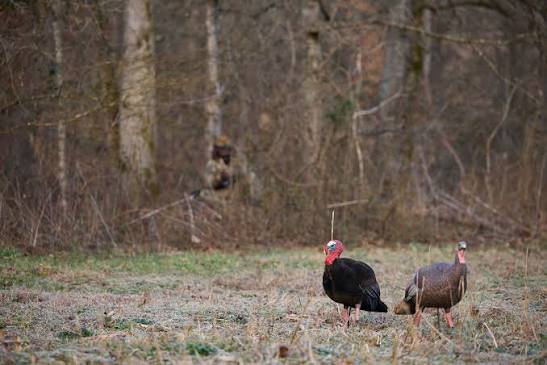
Recommended Hunting Gear and Tools to Consider
You do not need expensive equipment to begin spring turkey hunting responsibly. Select gear according to the law, weather, terrain, hunting method, distance from assistance, and your demonstrated ability.
- Legal and correctly fitted firearm, bow, or crossbow.
- Legal ammunition or archery equipment.
- One box call or pot call for beginners.
- Binoculars for safe observation.
- Current regulation document and required license or tag.
- Official property map and offline navigation.
- Compass as a backup navigation tool.
- Headlamp or flashlight with spare power.
- Weather-appropriate boots and layered clothing.
- Dedicated rain layer and emergency insulation.
- Required hunter-orange clothing.
- First aid, water, food, and communication device.
- Seat cushion or legal ground blind.
- Covered decoy bag when decoys are used.
- Gloves, dedicated game tools, bags, and cooler.
Final Thoughts
Learning how to hunt spring turkey is less about mastering one perfect call and more about building a complete, responsible process. Check the current rules, complete hunter education, find legal access, scout current sign, practice the exact equipment, choose a setup with a safe background, call conservatively, and remain patient.
The most important decision is often the one not taken. Never stalk a turkey sound, fire at movement, display a decoy during transport, cross an uncertain boundary, or accept an opportunity outside your practiced ability. Safe target identification, respect for other people, ethical recovery, accurate reporting, and careful use of the harvest matter more than filling a tag.
Frequently Asked Questions
1. Is spring turkey hunting difficult for beginners?
It can be challenging because turkeys may respond unpredictably, detect movement easily, and change behavior with weather, breeding activity, and hunting pressure. A beginner can improve by scouting, practicing one call, testing equipment, and hunting with an ethical mentor.
2. What licenses do I need to hunt spring turkey?
Requirements vary. You may need a general hunting license, turkey permit, species tag, application, public-land permit, or hunter-education certificate. Check the official wildlife agency and property manager.
3. When is spring turkey season?
Dates vary by jurisdiction, unit, age group, weapon, and property. Use the current official regulation rather than relying on a general national date.
4. What turkey is legal during spring season?
Definitions differ. A jurisdiction may identify legal birds by sex, beard status, age class, or another characteristic. Confirm the exact wording before hunting.
5. What time should I arrive for a morning turkey hunt?
Arrive early enough to park legally, walk slowly, and settle before expected activity without rushing through darkness. The exact timing depends on legal hours, distance, terrain, and whether birds are roosted nearby.
6. Do turkeys roost in the same tree every night?
They may reuse an area, but weather, disturbance, food, predators, and seasonal movement can change the exact tree or roost. Confirm recent activity rather than assuming an old roost remains active.
7. How do I find a turkey roost?
Listen from a distance near dawn or dusk, look for droppings and feathers under suitable trees, and observe safe travel between trees and feeding areas. Avoid walking directly beneath roosted birds.
8. What habitat should I scout?
Look for mature woods mixed with fields, clearings, logging roads, pastures, creek bottoms, ridges, and feeding cover. Regional habitat differs, so confirm use through fresh sign.
9. What turkey sign should beginners learn?
Learn tracks, scratching, droppings, feathers, dusting bowls, wing-drag marks, feeding areas, travel routes, and roost evidence.
10. What is a turkey strut zone?
It is an opening or travel area where a male repeatedly displays. Field corners, logging landings, ridges, roads, pastures, and open timber can serve as strut zones.
11. What is the easiest turkey call for a beginner?
A box call is commonly easier to operate consistently. Start with plain yelps and clucks and practice before hunting.
12. Do I need a mouth call?
No. Mouth calls allow hands-free operation but require practice. A box or pot call is enough for many beginners.
13. How often should I call?
There is no fixed schedule. Begin conservatively, listen, and allow time. Calling constantly can sound unnatural and prevent you from hearing an approaching bird or person.
14. Why does a gobbler answer but stay away?
It may be with hens, separated by terrain or a fence, pressured by hunters, or waiting for the calling “hen” to approach. Reduce calling and remain patient.
15. Why did the turkey stop gobbling?
It may be approaching silently, feeding, following hens, changing direction, or leaving. Do not assume silence means the bird is gone.
16. Can I stalk a gobbling turkey?
Do not stalk turkey sounds. The sound may be another hunter using a call. Use scouting and safe setup locations instead.
17. Are turkey decoys necessary?
No. They can help in visible terrain but also create safety concerns, especially on public land. A well-scouted travel route can be hunted without a decoy.
18. How should I carry a turkey decoy?
Keep it completely covered in a bag or vest so no head, fan, wing, or body part is visible to other hunters.
19. Is using a turkey fan safe?
Moving behind a realistic fan can make a hunter resemble a live gobbler. It is especially hazardous on public land or near roads, fields, and access points and may also be restricted by local rules.
20. Where should I sit when calling?
Use a solid background wider than your shoulders and taller than your head, maintain visibility, and establish a safe zone of fire away from roads, trails, buildings, and likely hunter access.
21. Can I hunt spring turkey from a ground blind?
Yes where legal. Position it so the shooting direction is safe, stake it securely, and avoid placing decoys or the blind near a public trail.
22. Do I need camouflage?
Camouflage can help reduce contrast, but stillness and a good background are more important. Required hunter orange must remain visible when regulations require it.
23. What colors should turkey hunters avoid?
Avoid visible red, white, blue, and black around the upper body because those colors resemble parts of a gobbler.
24. Should I wear hunter orange while turkey hunting?
Follow the local requirement. Even where it is not required throughout the hunt, high-visibility material can be useful while entering, leaving, or transporting a concealed bird.
25. Can I hunt turkey with a shotgun?
Yes where legal. Use only an approved shotgun, choke, shell length, load, and shot size, and pattern the exact combination before hunting.
26. What does patterning a turkey shotgun mean?
It means firing the exact hunting setup at paper targets from safe, realistic distances to confirm point of impact, pellet distribution, and personal effective range.
27. Is the tightest choke always best?
No. A choke can produce a pattern that is too small at close range or uneven farther away. Follow manufacturer guidance and test the actual combination.
28. Can I hunt spring turkey with a bow?
Yes where legal. Practice from realistic positions, handle broadheads safely, confirm local equipment rules, and remain within your demonstrated effective range.
29. What is the best range for a turkey opportunity?
The appropriate range is the distance at which your exact legal equipment produces repeatable ethical results under field conditions. It is not a universal number.
30. What if a turkey is beyond my practiced range?
Do not act. Let the bird leave or attempt another legal setup later.
31. What if the turkey is partly hidden?
Wait until it is fully and plainly visible and the bird’s legal status and background are certain. Do not fire through brush.
32. What should I do if another hunter approaches?
Remain still and announce yourself clearly with a human voice. Do not wave, stand suddenly, or answer with turkey sounds.
33. Is public-land turkey hunting safe?
It can be when hunters use maps, avoid crowding, never stalk calls, transport decoys covered, establish safe shooting zones, and remain aware of other users.
34. How do I avoid trespassing on public land?
Use official ownership maps, offline navigation, visible boundary markers, and property-manager information. Stop when the boundary is uncertain.
35. Can I cross private land to reach public land?
Only with legal access or permission. Public ownership beyond a private parcel does not automatically create a right to cross it.
36. How do I ask for private-land permission?
Contact the owner well before the season, explain who will hunt and when, ask about parking and livestock, and accept a refusal politely.
37. What weather is best for spring turkey hunting?
Calm mornings can make gobbling easier to hear, but turkeys remain active in varied conditions. Severe wind, lightning, flooding, heat, or cold may make hunting unsafe.
38. Where do turkeys go when it rains?
They may use open fields, logging roads, pastures, or other places where visibility is better. Local habitat and rain intensity influence movement.
39. Can I hunt during strong wind?
Only when conditions remain safe. Wind reduces hearing, moves branches, increases falling-limb hazards, and can make target identification more difficult.
40. Is midmorning good for spring turkey hunting?
It can be. Gobblers may become more responsive after hens separate, and many hunters leave after the early period.
41. Is afternoon spring turkey hunting legal?
It depends on the jurisdiction and season. Check current legal hunting hours before planning an afternoon setup.
42. How long should I stay at a setup?
Stay long enough for a silent bird to approach, considering fresh sign, terrain, weather, and other hunter activity. There is no universal waiting period.
43. What if I see no turkeys all morning?
Review current sign, change to a legal backup location, glass openings, or wait near a feeding or travel route. Avoid wandering toward every distant sound.
44. How much gear do I need?
Carry legal equipment, navigation, first aid, water, weather protection, communication, one practiced call, and recovery supplies. Specialized vests and multiple decoys are optional.
45. Should I use scent-control products?
Turkeys rely heavily on vision and hearing, so movement, noise, and setup matter more. Basic clean clothing is sufficient for most beginners.
46. How do I transport a harvested turkey safely?
Conceal it completely in a game bag or cover it with required high-visibility material. Follow tagging, evidence-of-sex, and transportation regulations.
47. What should I do immediately after a harvest?
Make the weapon safe, remain alert for other hunters, complete required tagging or validation, and begin lawful recovery and cooling without rushing through hazardous terrain.
48. Do I have to report a turkey harvest?
Many jurisdictions require reporting, but the method and deadline vary. Follow the current official instructions and retain any confirmation number.
49. How should wild turkey meat be handled?
Use gloves and clean dedicated tools, prevent cross-contamination, cool meat promptly, clean work surfaces, and cook game-bird meat to a safe internal temperature.
50. When should a beginner hunt with a guide or mentor?
Seek help when you are unfamiliar with the equipment, laws, boundaries, terrain, calling, recovery, or game care. A qualified mentor can make the first season safer and more understandable.