
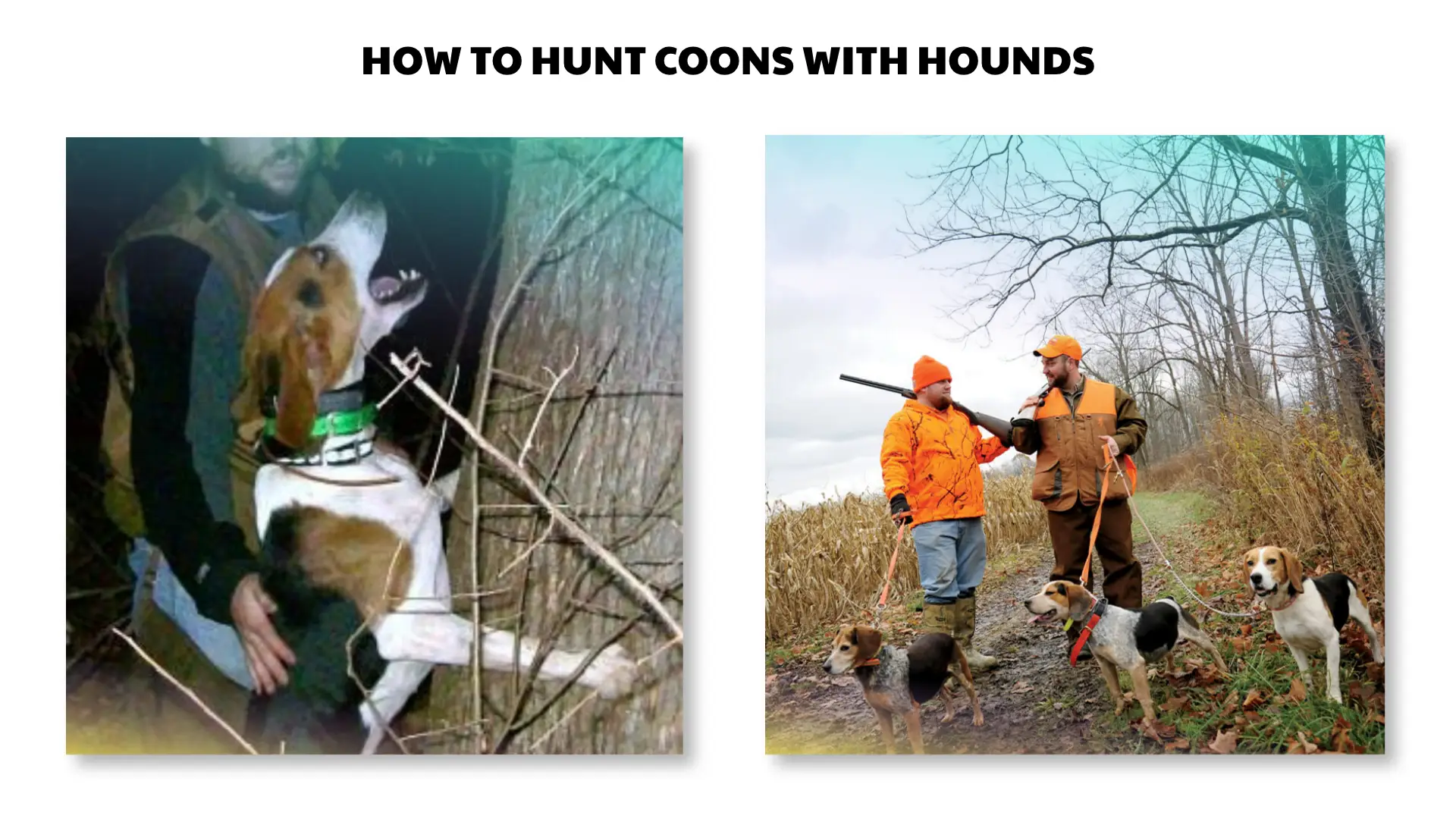

Learn how to hunt coons with hounds legally and safely, including dog control, night navigation, scouting, ethics, and field care.
Quick Answer
To hunt raccoons with hounds responsibly, first verify that the season, legal hours, dog use, land access, lights, and hunting equipment are lawful for the exact place and date. Scout a large, connected tract away from roads and occupied property, release only trained and identifiable hounds, and track their direction continuously. Approach a treed dog by a legal, safe route, secure the hounds, and act only after positively identifying a legal raccoon and confirming a safe foreground and background. It is always acceptable to leash the dogs and leave the animal unharmed.
Important Legal and Safety Notice Before You Hunt
Raccoon hunting rules vary by country, state, province, county, season, land ownership, and wildlife-management area. Regulations may separately control harvesting, pursuing or training with dogs, artificial lights, legal hours, firearms, ammunition, vehicles, electronic tracking equipment, retrieval from private land, bag limits, and reporting.
- Confirm the required hunting license, permits, tags, and hunter-education credentials.
- Check open dates, legal hours, bag or possession limits, and harvest-reporting rules.
- Verify whether running hounds is legal and whether a separate training season applies.
- Review restrictions on lights, vehicles, firearms, ammunition, and electronic collars.
- Obtain private-land permission and map every public and private boundary.
- Follow visibility-clothing requirements and use reflective identification on dogs when appropriate.
- Identify the target and what is beyond it; never shoot at eyeshine, sound, or movement.
- Carry navigation, communication, first aid, water, backup lighting, and an emergency plan.
Beginners should complete a recognized hunter-education course and learn with an experienced ethical mentor. The International Hunter Education Association offers education resources and links to programs, but the wildlife agency responsible for your hunting area is the authority for current law.
How Hunting Raccoons With Hounds Works
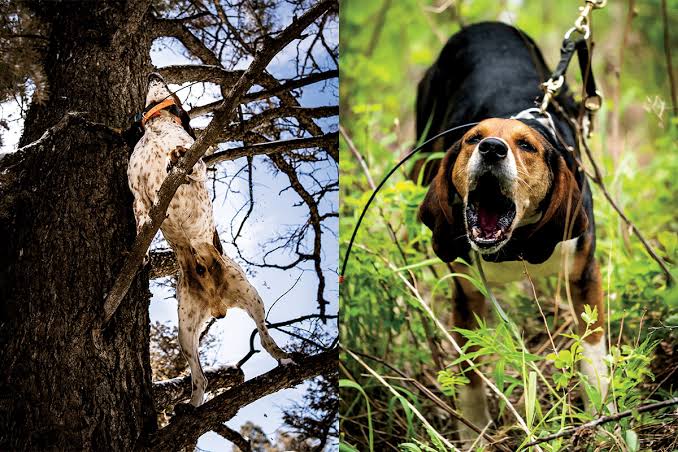
A coonhound is a scent hound. It searches for odor left by a raccoon, follows the trail, and uses a distinctive voice while tracking. If the raccoon climbs, a trained hound normally stays near the tree and changes to a repeated “tree” bark that helps the handler locate it.
The handler should not think of the dog as an automatic system. Scent can be old, mixed, or interrupted. A hound can leave the intended tract, approach a road, trail another species, or tree where no legal animal can be identified. The hunter remains responsible for the dog’s location, access decisions, and every firearm action.
Understand Raccoon Behavior and Habitat
Raccoons are adaptable and often use a mixture of cover, water, trees, and food. Productive habitat depends on the region and season, so local scouting is more reliable than a universal formula.
Habitat Features Worth Scouting
- Creek bottoms, river corridors, wetland edges, and wooded drainage systems
- Mature trees with cavities, hollow trunks, or connected canopy
- Timber bordering crop ground, orchards, or other seasonal food sources
- Brushy travel corridors connecting feeding and denning cover
- Muddy crossings, sandy banks, culverts, and trail intersections where tracks are visible
Avoid setting up near occupied homes, livestock enclosures, busy roads, railways, industrial sites, or places where the hounds are likely to enter prohibited property. Urban raccoons may be common, but abundance does not make a location legal or safe for hunting.
Signs to Learn
- Five-toed tracks that can resemble small handprints
- Repeated muddy paths along water, field edges, or crossings
- Droppings in recurring locations; avoid direct contact
- Hair, tracks, or mud on logs and narrow crossing points
- Seasonal feeding sign supported by several other clues
One track does not tell you when the animal passed or whether the site is appropriate for a hound hunt. Use multiple signs, legal mapping, and recent local observation.
Make Sure the Hound Is Ready
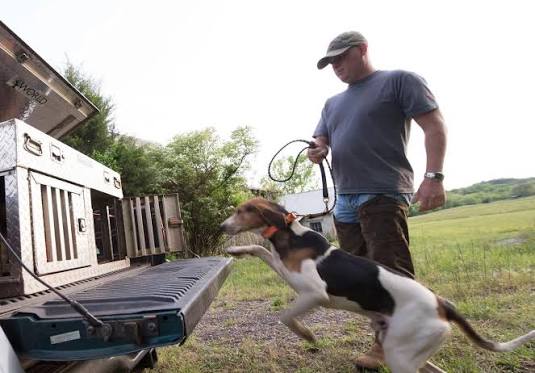
A dog should not learn basic control for the first time in dark timber. Before an off-leash hunt, the hound should be healthy, conditioned, identifiable, accustomed to field equipment, and responsive enough to be retrieved around real distractions.
- Recall: The dog returns or stops reliably under increasing distraction.
- Handling: The hound loads, leashes, and waits without creating unnecessary risk.
- Conditioning: Fitness is built gradually for terrain, temperature, and duration.
- Health: Vaccination, parasite prevention, paw condition, and emergency veterinary plans are current.
- Identification: Contact information is readable and reflective visibility is considered.
- Tracking: GPS or radio equipment is charged, fitted, tested, and legal where used.
Use humane, reward-based foundation training and get help from a qualified trainer when control problems persist. Electronic training devices are regulated or restricted in some places and do not replace careful training.
What You Need Before You Start
- Current licenses, permits, regulation summary, and written land permission
- A trained, healthy hound with identification and a properly fitted collar
- Tracking equipment where legal, plus charged spare power
- A legal hunting method and secure transport case where required
- Hands-free headlamp, backup light, and spare batteries
- Map, compass or GPS, phone or satellite communication, and property maps
- Weather-appropriate clothing, reflective or required visibility gear, and sturdy boots
- Human and canine first-aid supplies, water, leashes, and an emergency contact plan
- Clean gloves, game-care supplies, and a cooler if a legal harvest is planned
- A written or shared trip plan with the parking location and return time
How to Hunt Coons With Hounds: Step-by-Step Guide
1Check Every Current Rule
Read the regulations for the exact property and date. Confirm whether you may pursue, train, or harvest raccoons with dogs; when the legal hours begin and end; what lights and equipment are permitted; and how retrieval from private land is handled. Save the agency contact number for questions.
2Choose a Large, Legal, Low-Risk Tract
Map boundaries, roads, homes, livestock, water, cliffs, fences, and neighboring parcels. Select a release point that gives the hounds room to work without immediately pushing them toward hazards. Private-land permission should be specific, current, and clear about access and dog retrieval.
3Scout in Daylight
Walk legal access routes before the hunt. Look for tracks, travel corridors, den trees, water crossings, seasonal food, and safe ways to reach likely treeing areas. Daylight scouting also reveals wire, wells, steep banks, flooded crossings, and other hazards that are hard to see at night.
4Prepare the Hound and Equipment
Check paws, nails, ears, hydration, collar fit, identification, tracker connection, and battery level. Test recall in a controlled setting and carry a leash for every dog. Do not release a dog that is sick, lame, overheated, poorly controlled, or unfamiliar with its equipment.
5Brief the Hunting Party
Name one person to coordinate the group. Review property lines, no-go areas, communication channels, firearm status, vehicle locations, and the response to a road-bound dog, lost signal, injury, or property crossing. Agree that anyone can stop the hunt for safety.
6Release the Hounds Deliberately
Start only in a lawful area and keep firearms controlled while dogs and handlers are close together. Release a manageable number of dogs, note the time and direction, and watch the tracker rather than waiting until the hounds are far away.
7Listen and Monitor the Track
Learn the individual hound’s search, trail, and tree voices with help from an experienced handler. Voice and GPS direction can help interpret the chase, but neither confirms the species. Watch for movement toward roads, houses, posted land, livestock, deep water, or steep terrain.
8Move Carefully Toward a Treed Hound
Use a legal route and a hands-free light. Walk rather than run, keep partners together, cross fences only where permitted, and check the map before entering unfamiliar ground. A quick arrival is never worth a fall, trespass, or unsafe road crossing.
9Secure the Hounds and Make the Scene Safe
At the tree, control the dogs before anyone handles a firearm or searches above. Confirm the location is legal, the group is accounted for, and no house, road, vehicle, livestock area, trail, or unseen partner lies in a possible direction of fire.
10Identify the Animal—Never Just the Eyeshine
Use lawful lighting only for careful identification. A hound treeing, a dark shape, sound, or pair of reflective eyes is not enough. Confirm that the animal is a raccoon, that it is legal to take, and that the entire situation is safe. When identification is uncertain, leash the hounds and leave.
11Take Only a Safe, Legal, Ethical Opportunity
No shot is required. Consider an opportunity only when the animal is positively identified, all dogs and people are controlled and out of danger, the foreground and background are safe, the equipment and hour are legal, and the decision is within the hunter’s practiced ability. Do not shoot toward roads, homes, livestock, vehicles, trails, branches that obscure the target, or unclear movement.
12Follow Recovery, Reporting, and Game-Care Rules
After a legal harvest, secure the hounds, make firearms safe, follow tagging or reporting requirements, use gloves and clean tools, and cool usable meat promptly. Avoid unnecessary contact with wildlife tissue and follow local guidance for transport and disposal.
Night Hunting Safety That Deserves Extra Attention
Do
- Scout access routes during daylight.
- Carry two independent light sources.
- Keep maps and boundaries available offline.
- Use a buddy system and scheduled check-ins.
- Stop when weather, fatigue, or navigation becomes uncertain.
Do Not
- Run through unfamiliar timber with a loaded firearm.
- Drive off-road or shine wildlife unless expressly legal.
- Shoot at sound, eyeshine, silhouettes, or moving brush.
- Cross posted property because a tracker shows the dog there.
- Separate from the group without communicating a route.
Best Time, Place, and Conditions
The legal season and legal hours control when a hunt can occur. Within those limits, recent sign, moderate weather, safe footing, manageable water levels, and a large tract away from roads are generally more important than a particular moon phase or internet formula.
Dry wind, frozen ground, heavy rain, floodwater, and abrupt temperature changes can affect scenting and dog safety. Local hunting pressure also matters. A responsible handler chooses conditions that allow the hound to work without creating unreasonable heat, ice, water, traffic, or navigation risk.
Helpful Tips for Better Results
- Begin with one experienced hound and one experienced mentor rather than a large pack.
- Scout roads and property lines as carefully as you scout wildlife sign.
- Keep a paper or offline map in case the phone loses service.
- Charge every tracker, headlamp, phone, and backup battery before leaving home.
- Learn the normal voice and movement pattern of each hound.
- Move quietly around the last known scent area instead of crowding the dogs.
- Leash early when the track trends toward a road or boundary.
- Practice loading, recall, and collar handling between hunting trips.
- End the hunt while the dogs and handlers still have a safety margin.
- Measure a good hunt by control, learning, and responsible decisions—not only by harvest.
Common Beginner Mistakes to Avoid
- Assuming dog-running rules match harvest rules: Training, pursuit, and harvest may be regulated separately.
- Releasing too close to a road or posted boundary: Hounds can cover ground quickly after striking a track.
- Trusting GPS as a substitute for recall: Signals fail and maps may not show every hazard or legal detail.
- Running after the dogs in the dark: Falls, water, fences, and poor firearm handling become more likely.
- Using eyeshine as identification: Reflective eyes do not establish species, legality, or a safe background.
- Handling a firearm before securing the hounds: Excited dogs and moving handlers make the scene unpredictable.
- Ignoring dog fitness and hydration: Cool air does not eliminate exertion, heat, or dehydration risk.
- Entering private land without permission: Dog retrieval does not automatically authorize trespass.
- Continuing after communication or navigation fails: Stop, regroup, and solve the problem before resuming.
- Judging the hunt only by a kill: Passing an uncertain opportunity is a mark of good judgment.
Troubleshooting Common Problems
| Problem | Possible Cause | What to Do |
|---|---|---|
| The hound does not open on a track | Little recent sign, difficult scenting, fatigue, or an inexperienced dog | Confirm recent sign, shorten the hunt, change legal cover, and avoid forcing the dog beyond conditioning. |
| The trail ends repeatedly | Old or mixed scent, water, roads, dry ground, wind, or animal behavior | Give the hound room around the last reliable area and avoid trampling it. Recall and relocate if the check cannot be worked safely. |
| The dog trends toward a road | Poor release location or a moving track | Call and intercept early from a safe place. Leash the dog and move to a tract with more separation. |
| The tracker loses signal | Terrain, distance, battery, antenna, or equipment failure | Return to the last location, listen, check the equipment, and coordinate a lawful search. Do not enter dangerous or unauthorized land. |
| The hound crosses a boundary | Inadequate buffer or an unpredictable track | Follow local retrieval law, contact the landowner when appropriate, and avoid escalating the situation. Choose a safer release site next time. |
| The hound trees but no raccoon is visible | Dense canopy, a den tree, scent ending nearby, or an error | Do not shoot or damage the tree. Leash the dog and move on after a careful, lawful check. |
| The hound follows another species | Training gap or mixed scent | Recall the dog, end the unwanted chase, and return to controlled training with an experienced humane trainer. |
| A dog appears overheated or exhausted | Condition, humidity, pace, dehydration, or illness | Stop immediately, move to a safe cool area, offer water appropriately, and seek veterinary help for serious or persistent signs. |
| The group becomes separated | Poor communication or hurried movement | Stop firearm activity, use the prearranged check-in plan, and regroup at a known location before continuing. |
| The legal rule is unclear | Outdated summary, conflicting sources, or special-area regulation | Do not hunt until the responsible wildlife agency or conservation officer clarifies the rule. |
Hound Welfare and Field First Aid
Dog welfare is part of ethical hunting. Condition hounds gradually, keep preventive veterinary care current, inspect equipment fit, and carry the contact information for an emergency veterinary clinic that is open during your hunting hours.
- Offer clean water and rest based on temperature, humidity, terrain, and workload.
- Inspect paws, nails, eyes, ears, mouth, skin, and collar areas after every hunt.
- Stop for lameness, disorientation, breathing distress, collapse, persistent vomiting, severe bleeding, or an eye injury.
- Avoid direct contact between hounds and raccoons or other wildlife.
- Use gloves around wildlife tissue and wash hands, tools, and contaminated gear.
- Contact a veterinarian promptly after a bite, scratch, puncture, or unusual disease exposure.
Ethical Hunting and Conservation
Ethical hound hunting requires restraint. Follow seasons and limits, respect den sites and habitat, obtain permission, prevent conflicts with landowners and other outdoor users, and avoid unnecessary pursuit when conditions threaten the dogs or wildlife.
- Pass every uncertain, unsafe, or illegal opportunity.
- Do not cut, damage, or destroy a den tree to reach an animal.
- Keep hounds from harassing livestock, pets, protected wildlife, or animals outside the legal objective.
- Use legal harvests responsibly and avoid waste.
- Report violations and serious wildlife-health concerns through the proper local channel.
- Close gates, protect crops, pack out trash, and leave access points cleaner than you found them.
When to Get More Training or Professional Guidance
Seek direct help before hunting alone when you have not completed hunter education, have limited nighttime navigation experience, cannot reliably recall the hound, are unfamiliar with the firearm, do not understand property boundaries, or are uncertain about the law.
- Use an official hunter-education program for safety, ethics, identification, and legal foundations.
- Work with a qualified firearm instructor for handling, fit, transport, and storage.
- Learn from an experienced houndsman who values control, permission, wildlife identification, and dog welfare.
- Ask a veterinarian about conditioning, vaccination, parasite control, first aid, and regional hazards.
- Contact the wildlife agency or conservation officer for legal-hours, dog-running, light, equipment, or retrieval questions.
- Use emergency services for serious human injuries and an emergency veterinarian for serious dog injuries.
After the Hunt: Follow-Up, Gear Care, and Learning
- Account for every person, hound, firearm, tracker, and light before leaving.
- Unload, transport, and store firearms according to law and manufacturer instructions.
- Offer water, let hounds cool gradually, and complete a nose-to-tail inspection.
- Clean and dry collars, trackers, leashes, boots, lights, and first-aid equipment.
- Recharge electronics and replace used medical supplies.
- Complete required tagging, harvest reporting, and legal records.
- Record sign, weather, track direction, dog performance, boundary issues, and safety lessons.
- Change the next plan based on what you learned rather than repeating avoidable risks.
Recommended Hunting Gear and Tools to Consider
You do not need the most expensive equipment, but every item should fit the law, terrain, dog, weather, and safety plan.
- Legal hunting equipment matched to qualified training and local rules
- Reliable headlamp, backup flashlight, and spare power
- Dog GPS or radio tracker where legal, plus a physical identification tag
- Leash for every hound and a secure vehicle crate or restraint
- Offline property map, compass, GPS, and emergency communication
- Reflective or required visibility clothing for handlers and suitable visibility equipment for dogs
- Weather-resistant boots, layered clothing, water, and first-aid supplies
- Clean gloves, cooler, and legal game-care materials when a harvest is planned
Frequently Asked Questions
1. Is hunting raccoons with hounds legal everywhere?
No. Rules can differ by country, state, province, county, season, land type, and wildlife-management area. Check the current official regulations for licenses, dog use, legal hours, artificial lights, equipment, bag limits, reporting, and access before every hunt.
2. Do I need a hunting license to hunt coons with hounds?
A license is commonly required, but the exact license, permit, hunter-education, and residency rules vary. Some places also regulate training or running hounds outside an open harvest season.
3. Can a beginner hunt raccoons with hounds?
Yes, but a first hunt should be with an experienced, ethical houndsman who knows local laws, property boundaries, dog handling, nighttime navigation, and firearm safety. Complete hunter education before participating as a hunter.
4. Why are hounds used for raccoon hunting?
Coonhounds are scent hounds developed to follow ground scent and remain at a tree after the trail ends there. Their voice helps a handler monitor the chase, but the handler still needs reliable recall, tracking, and boundary control.
5. Which hound breeds are commonly used for coon hunting?
Recognized coonhound breeds include the Treeing Walker, Bluetick, Redbone, Black and Tan, American English, and Plott Hound. Individual training, health, temperament, control, and suitability for local terrain matter more than choosing a breed by reputation alone.
6. How many hounds should a beginner hunt with?
One steady, controllable hound or a small, compatible pair is easier to supervise than a large pack. More dogs can create more noise, wider movement, and greater road or boundary risk.
7. Can I use an untrained pet hound?
Releasing an untrained dog at night is unsafe. The dog should have dependable recall, loading and leash manners, identification, conditioning, and supervised experience before being worked off leash in a legal area.
8. What commands should a coonhound know?
Useful skills include recall, stop or stay, kennel or load-up, leash handling, and leaving unwanted game. Command words matter less than consistent response around wildlife, roads, livestock, and other dogs.
9. What does it mean when a hound strikes a track?
Handlers use this phrase when a hound appears to locate and begin following a scent trail. A change in voice or movement may suggest a workable track, but beginners should learn each dog’s normal behavior from an experienced handler.
10. What does treed mean in coon hunting?
It means the hound has ended the trail at a tree and is staying near it while giving a repeated tree bark. A tree should never be treated as proof that a legal raccoon is present; the hunter must verify the animal and the situation.
11. Do raccoon hunts usually happen at night?
Many take place after dark because raccoons are commonly active at night, but legal hours vary. Night hunting, dog running, lights, vehicles, and particular equipment may be restricted, so check the current rules.
12. What habitat should I scout for raccoons?
Look for legal areas with connected timber, creek or river corridors, wooded edges, wetland margins, den trees, and seasonal food sources. Avoid assumptions based on one sign; confirm several indicators and legal access.
13. What raccoon sign should a beginner learn?
Tracks, droppings, muddy travel routes, feeding sign, hair on crossings, and repeated paths near water or timber can be useful. Learn to distinguish raccoon sign from opossum, dog, cat, and other wildlife sign.
14. How do I choose a safe place to release hounds?
Choose a legal tract with confirmed boundaries, enough room for the expected chase, and generous separation from roads, houses, livestock, railways, cliffs, posted land, and other hazards. Identify retrieval routes before release.
15. Can hounds cross onto private property?
A dog can cross a boundary even when the handler did not intend it. Know local retrieval laws, obtain permission wherever possible, carry landowner contact information, and never use a dog as an excuse to trespass.
16. Are GPS dog collars necessary?
They are valuable for locating and monitoring hounds, but they do not replace recall, identification, maps, charged lights, legal access, or judgment. Confirm radio, GPS, and training-device rules where you hunt.
17. What if the GPS collar loses signal?
Stop advancing blindly, return to the last reliable position, listen, check terrain and battery status, and coordinate with partners. Do not cross property lines or enter roads, water, or dangerous terrain without a lawful, safe plan.
18. Should a coonhound wear reflective identification?
Bright or reflective identification can improve visibility at night. Use a properly fitted collar with current contact details and inspect it for wear, rubbing, or snag hazards before each outing.
19. What lights should I carry?
Carry a dependable hands-free headlamp, a backup light, and spare power. Use lights for footing, navigation, dog handling, and identification only as permitted by local law; never treat eyeshine alone as positive target identification.
20. What other safety gear is useful at night?
A map, compass or GPS, charged phone or satellite communicator, first-aid supplies, water, weather layers, whistle, spare batteries, reflective clothing, and an emergency plan are practical basics.
21. How should a group organize before releasing dogs?
Name one hunt leader, review boundaries and hazards, agree on communication, assign safe firearm-carry expectations, confirm who is handling each dog, and establish a stop signal. Everyone should know that no shot is required.
22. How do I stay safe around roads during a hunt?
Start well away from roads, track the dogs continuously, leash them before changing cover, and stop the hunt if the chase trends toward traffic. Never shoot across or along a road, from a vehicle, or toward headlights.
23. Should I follow the hounds immediately?
Do not run blindly through dark terrain. Monitor direction, move deliberately by a legal route, and maintain communication. Speed is less important than avoiding falls, water, fences, roads, property violations, and separation from partners.
24. Can I shoot at movement or eyeshine in a tree?
No. Identify the exact animal and verify that it is legal before considering any shot. The foreground, tree, background, dogs, partners, nearby buildings, roads, and unseen surroundings must all be safe.
25. What if I cannot clearly identify the animal?
Do not shoot. A dark shape, sound, eyeshine, or treed hound is not enough. Leave the animal unharmed and move on when species, legality, or the background is uncertain.
26. What if more than one hound is at the tree?
Secure and control the dogs before anyone handles a firearm or moves close to the tree. Keep muzzles in a safe direction and do not allow excitement to override communication or target identification.
27. What should I do if a hound trails off-game?
Use trained recall and end the chase safely. Do not shoot toward the dog or the other animal. Return to controlled training with an experienced, humane trainer and verify local rules for dog training.
28. How can I protect hounds from wildlife conflicts?
Keep dogs vaccinated and conditioned, monitor them closely, avoid known high-risk areas, and recall them when the chase becomes unsafe. Do not encourage close contact with raccoons or other wildlife.
29. What health risks should I consider around raccoons?
Raccoons and their waste can carry diseases and parasites. Avoid direct contact, keep dogs from handling carcass material, wear gloves for legal game handling, wash tools and hands, and consult veterinary or public-health guidance after a bite, scratch, or unusual exposure.
30. How much water should a hound have during a hunt?
Needs vary with temperature, humidity, terrain, pace, and the individual dog. Carry clean water, offer it during breaks, and end the hunt for weakness, confusion, repeated vomiting, breathing distress, or other signs of illness.
31. Can coonhounds hunt in hot weather?
Heat and humidity can make nighttime work dangerous even after sunset. Shorten the outing, choose cooler legal conditions, provide water, and stop early rather than pushing a tired or overheated dog.
32. What should I do if my hound is injured?
Secure the dog and assess the scene before approaching. Use basic first aid only within your training, control bleeding with clean pressure, avoid unnecessary movement with serious injuries, and contact an emergency veterinarian.
33. What if a hound will not leave the tree?
Use the trained recall or leash routine calmly. Avoid punishment driven by frustration. If the dog repeatedly ignores recall, return to controlled training before another off-leash hunt.
34. Can I run hounds outside the raccoon harvest season?
Training and dog-running rules vary widely and may have separate dates, permits, land restrictions, or equipment rules. Verify the exact regulation rather than assuming that no harvest makes the activity legal.
35. What should I do after a legal harvest?
Control and leash the hounds, make every firearm safe, follow tagging and reporting rules, use gloves and clean tools, cool usable meat promptly, and comply with transport and disposal requirements.
36. How do I improve after an unsuccessful hunt?
Record weather, sign, dog behavior, tracks, boundaries, equipment issues, and safety concerns. Improve one factor at a time and judge progress by dog control and sound decisions, not only by harvest.
Read more: How to Hunt Elk on Public Land: A Beginner-Friendly Guide