
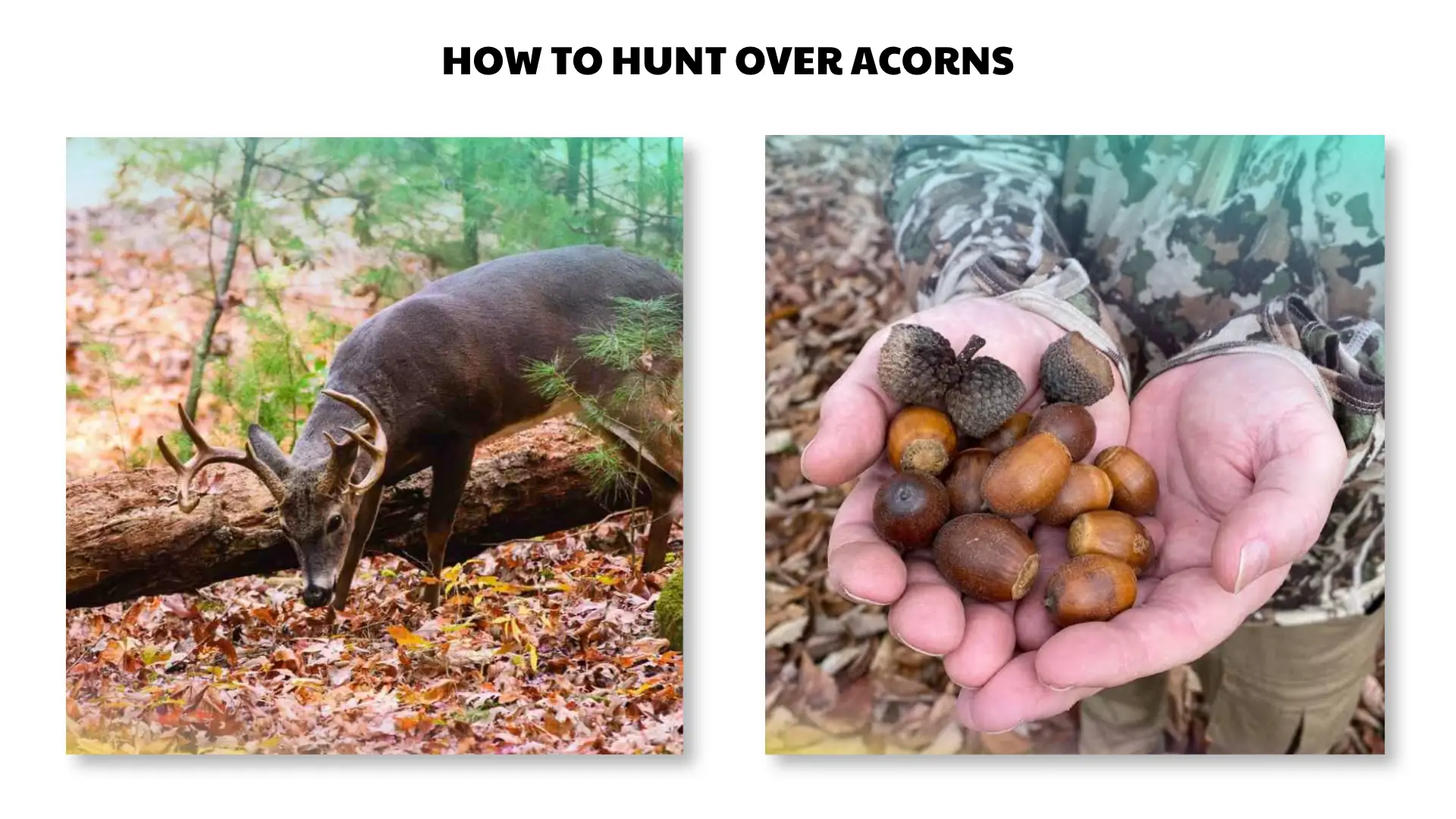

This beginner-friendly guide is written primarily for lawful deer hunting in oak country. It explains how to evaluate the crop, verify fresh sign, choose a safe stand or ground setup, manage wind and access, and respond when deer shift to another food source. It does not replace hunter education, hands-on equipment training, landowner permission, or the current regulations for your location.
Quick Answer
To hunt over acorns responsibly, first verify that the deer season, land access, hunting method, hours, and harvest rules are legal for the exact property. Scout multiple oak trees and prioritize fresh, sound acorns combined with recent tracks, droppings, disturbed leaves, and secure travel cover. Set up downwind with a quiet entry that avoids the feeding area and bedding cover. Take only a positively identified, legal animal with a safe background and within your practiced ability; pass whenever the wind, visibility, range, or target is uncertain.
Important Legal and Safety Notice Before You Hunt
Hunting rules vary by country, state, province, county, management unit, land type, season, species, and weapon. Check the official wildlife agency and the property-specific rules before every hunt. Natural mast is not permission to ignore rules about baiting, moving feed, tree stands, trail cameras, access, disease zones, or harvest reporting.
- Confirm licenses, permits, tags, hunter-education requirements, and legal species.
- Check season dates, legal hours, bag limits, antler rules, and reporting duties.
- Verify legal weapons, ammunition or archery equipment, and area restrictions.
- Obtain private-land permission or verify public boundaries, parking, and access.
- Follow required visibility-clothing rules and consider high visibility around other users.
- Identify the target and what is in front of and beyond it; never shoot at sound or movement.
- Use a full-body fall-arrest harness for elevated hunting and follow equipment instructions.
- Carry navigation, water, first aid, communication, weather protection, and a trip plan.
Beginners should complete recognized hunter education and learn with an experienced ethical mentor. The U.S. Fish and Wildlife Service hunting resources offer general conservation information, while your state or provincial wildlife agency is the authority for current local regulations.
Why Acorns Can Concentrate Deer
Acorns are hard mast: nuts produced by oak trees and used by many wildlife species. When a productive tree drops edible nuts near cover, deer may shorten their travel and feed within the timber instead of exposing themselves in an open field. This is why a previously reliable field edge can appear quiet after the mast begins to fall.
The pattern is not stable every year. Mast production can be heavy, light, or uneven, and one tree may produce while another nearby tree does not. During a heavy crop, food can be so widespread that deer disperse. During a light crop, a few productive trees may become comparatively important. The practical lesson is simple: scout individual trees and current deer sign rather than assuming every oak flat is equally useful.
How to Read an Oak Woodland
Start With the Ground, Not the Map Label
Maps can identify hardwood ridges, benches, creek bottoms, and likely oak stands, but they cannot tell you which tree is dropping useful acorns today. Walk the ground where legal. Look beneath separate crowns, not only along the easiest trail.
Look for Fresh, Usable Mast
- Fresh acorns or caps beneath the canopy rather than only old shells from a previous season
- Solid nuts without obvious rot, heavy insect damage, or long-term weathering
- Recent fall concentrated under one tree or a small cluster
- Multiple sizes or oak types, which can extend feeding options as the season changes
Verify Deer Use
Acorns alone do not make a hunting location. Combine the crop with fresh tracks, droppings, leaf disturbance, opened shells, short trails, rubs or scrapes where seasonally relevant, and legal trail-camera information. Give the greatest weight to sign that appears recent and repeated.
Connect Food to Security Cover
The strongest setups usually include a safe route between feeding and cover. Study thick edges, benches, points, creek crossings, saddles, inside corners, and changes in vegetation. Avoid walking through suspected bedding cover simply to confirm what a map already suggests.
What You Need Before You Start
- Current license, tags, permits, and downloaded or printed regulations
- Legal hunting equipment that you can handle safely and accurately
- Required visibility clothing and weather-appropriate quiet layers
- Map, compass, GPS or hunting app, plus a backup navigation method
- Wind indicator that is legal and safe to use
- Binoculars for identification without pointing a weapon
- Full-body harness and approved climbing system for elevated hunting
- First aid, water, headlamp, communication, spare power, and emergency plan
- Clean gloves, game-care supplies, and a cooling and transport plan
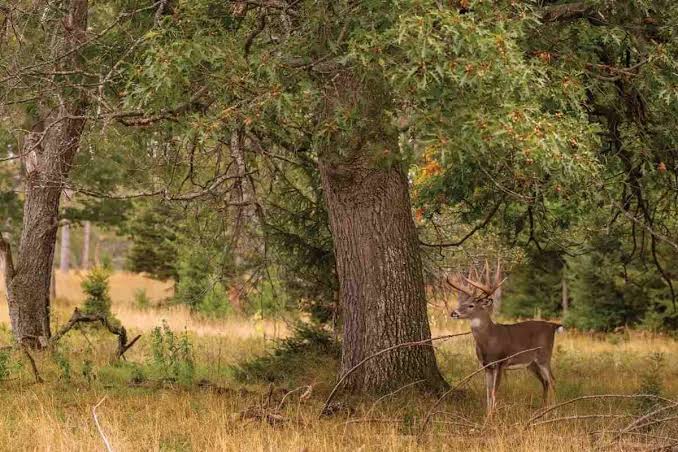
How to Hunt Over Acorns: Step-by-Step Guide
1 Check the Current Rules
Confirm the exact deer season, legal hours, license and tag requirements, weapon rules, bag or antler restrictions, reporting, disease-zone requirements, land access, and rules for stands and cameras. Ask the official agency when a baiting or mast-handling rule is unclear.
2 Map Oak Habitat and Safe Access
Use aerial and topographic maps to locate hardwood ridges, benches, creek bottoms, points, saddles, and transitions near cover. Mark roads, houses, trails, livestock, boundaries, cliffs, water, and every direction that must remain a no-shoot zone.
3 Scout Individual Trees
Inspect several oaks because production can vary sharply over a short distance. Look under the full crown, compare the amount and condition of mast, and use binoculars where safe to examine branches without disturbing the area.
4 Rank the Freshest Deer Sign
Prioritize a tree or small cluster only when the acorns are paired with recent tracks, droppings, feeding disturbance, or repeated movement. Note where trails enter and leave instead of assuming deer will stand directly beneath the trunk.
5 Identify Likely Bedding and Travel Cover
Study the nearest thick, quiet, or terrain-protected cover without barging into it. The goal is to understand the likely connection between security and food, then hunt a low-impact edge or route rather than contaminating the whole area.
6 Choose a Wind and Thermal Plan
Select a setup where the expected wind carries your scent away from feeding and approach routes. In rolling terrain, observe local air movement because thermals and swirling winds may differ from the forecast. Keep a second location for another wind.
7 Design a Quiet Entry and Exit
Approach from the side least likely to cross feeding or bedding movement. Favor existing access routes, control loose gear, and avoid touching vegetation unnecessarily. Plan an exit that does not force you through deer still feeding after legal hours.
8 Select a Safe Stand or Ground Position
Choose a location within your practiced effective range, with clear target identification and a safe background. Keep roads, homes, trails, property boundaries, livestock, and other hunters outside every possible shot direction. Never sacrifice safety to sit closer to a tree.
9 Minimize Disturbance
Avoid repeated scouting, excessive camera checks, unnecessary trimming, and walking under the hottest trees. Let the food source remain natural. Make only legal, landowner-approved preparations and inspect safety equipment before the hunt.
10 Observe Before Acting
Use binoculars to identify the animal, confirm legality, and watch the entire background. Deer may approach from an unexpected direction when mast is scattered. Remain ready to pass if another animal, person, building, road, or uncertain terrain affects the shot.
11 Take Only an Ethical Opportunity
Act only when the deer is positively identified, legal, within your proven ability, unobstructed, and backed by a safe area. Never shoot through brush, over a rise, toward sound, across a road or trail, or in any direction where the full path is unknown.
12 Follow Recovery, Reporting, and Meat-Care Rules
After a legal harvest, follow the appropriate recovery process, tag and report as required, use clean tools and gloves, and cool the meat promptly. Comply with transport and disease-control rules, and ask an experienced mentor or processor for help when needed.
Three Practical Setup Options
| Setup | When It Fits | Main Advantage | Main Risk to Manage |
|---|---|---|---|
| Directly near the producing oak | Concentrated fresh sign, stable wind, safe access, and clear visibility | Close observation of the primary food source | Entering or exiting through deer and overpressuring a small spot |
| Downwind travel route | Several producing trees or scattered mast with a defined approach trail | Intercepts movement without standing inside the feed | Assuming all deer use one trail or letting scent cross alternate routes |
| Terrain or cover pinch | Heavy mast spreads deer, but ridges, saddles, creek crossings, or edges narrow movement | Remains useful when deer switch among nearby oaks | Unsafe elevation, poor background, or access that crosses bedding cover |
Best Time, Place, and Conditions
The legally open season determines when you may hunt. Within it, acorn use changes as trees begin dropping, mast is consumed or spoiled, leaves accumulate, weather changes, and hunting pressure builds. Early and late legal periods often connect bedding and feeding movement, but a low-impact entry is more important than following a universal clock.
Productive locations may include oak benches below bedding cover, ridge points, creek-bottom oaks, isolated trees near thick edges, and travel pinches between multiple mast sources. Public land requires extra boundary and user awareness. Private land requires clear permission and respect for the owner’s instructions.
Light moisture can quiet leaves, while hard wind, storms, ice, heat, or poor visibility can create unacceptable risk. Do not use bad conditions to justify an unreliable tree stand, uncertain shot, or difficult recovery.
How to Hunt a Heavy Mast Year
When acorns are abundant, deer can feed almost anywhere. A single “best tree” may be less important than security, terrain, and access. Compare multiple areas and look for the intersection of fresh sign, thick cover, a favorable wind, and a route you can enter without crossing the feed.
- Scout transitions and travel cover rather than only the largest acorn carpet.
- Use fresh droppings, tracks, and repeated camera timing to separate active trees from available trees.
- Consider a pinch between oak clusters so the setup remains useful when deer switch trees.
- Reduce scouting visits because abundant food gives deer many alternatives after disturbance.
How to Hunt a Light or Uneven Crop
A poor regional crop can make a few productive trees valuable, but it can also increase competition from other wildlife and accelerate depletion. Inspect isolated trees, protected slopes, creek bottoms, and different oak types. Recheck the actual crop rather than relying on last season’s stand.
When a hot tree is close to bedding cover, favor the least intrusive legal setup. Hunting the outer approach may preserve the location longer than walking under the crown. Leave immediately if the wind carries scent into the security cover.
Tree Stand, Firearm, and Bow Safety
Always
- Use a full-body fall-arrest harness and remain connected as instructed.
- Inspect stands, straps, steps, trees, and haul lines before use.
- Keep firearms unloaded while climbing and haul equipment separately.
- Keep broadheads covered during transport and climbing.
- Identify the target and the entire background before acting.
- Tell someone your location and return plan.
Never
- Climb with a loaded firearm or exposed broadhead.
- Use a damaged stand, dead tree, or improvised attachment.
- Shoot at movement, sound, or a partly hidden animal.
- Shoot toward roads, homes, trails, vehicles, livestock, or a skyline.
- Cross a fence, ditch, or obstacle with equipment handled unsafely.
- Remain elevated during lightning, dangerous wind, or unsafe ice.
Helpful Tips for Better Results
- Carry a small notebook or map layer and rank each tree by mast, sign, access, wind, and safety.
- Scout after wind or rain only when conditions are safe; newly fallen mast may become easier to distinguish.
- Use binoculars to inspect branches and deer rather than moving closer unnecessarily.
- Prepare at least two setups for different winds before the area becomes sensitive.
- Approach the travel edge, not the center of the feeding area, when deer may already be present.
- Stop hunting a setup when wind begins carrying scent into likely deer travel.
- Track when mast is depleted so you can shift before the location goes quiet.
- Judge the hunt by legal, safe decisions and what you learned, not only by harvest.
Common Mistakes to Avoid
- Hunting the tree instead of the sign: abundant acorns do not prove current deer use.
- Assuming all oaks produce equally: inspect individual trees and clusters.
- Walking through the feed: plan entry and exit outside the hottest ground.
- Ignoring alternate approaches: scattered mast may bring deer from several directions.
- Overchecking cameras: each visit adds scent and disturbance.
- Forcing a bad wind: leave or use another setup when air movement becomes unreliable.
- Trimming without permission: land alteration and stand rules vary.
- Using elevation without fall protection: a good food source never justifies unsafe climbing.
- Shooting through brush: wait for complete identification and a safe, unobstructed path.
- Failing to plan recovery and meat care: prepare before the hunt, not after success.
Troubleshooting Common Problems
| Problem | Possible Cause | What to Do |
|---|---|---|
| Many acorns but little deer sign | The nuts are old, damaged, recently dropped, or less attractive than another source | Inspect condition, compare nearby trees, and search for fresh tracks and droppings before hunting. |
| Deer appear only after legal hours | Entry disturbance, pressure, nearby bedding, or safer alternative feeding | Back off to a travel route, improve access, reduce visits, or rest the area. |
| Wind swirls in the setup | Terrain, thermals, canopy, or shifting weather | Leave and use a setup with more predictable air movement; do not hope the problem disappears. |
| Deer approach from the wrong side | Scattered mast creates multiple routes | Move to a pinch or safer observation point only on a later hunt with a suitable wind. |
| The hot oak suddenly goes quiet | Mast depleted, spoiled, covered, disturbed, or replaced by another food source | Scout nearby producers and connecting routes rather than repeatedly hunting the dead spot. |
| Dry leaves make entry loud | Weather and route choice | Use legal roads or damp terrain, move slowly, hunt closer to access, or wait for safer, quieter conditions. |
| Too many other hunters or users | Popular public access or concentrated mast | Communicate respectfully, avoid conflict, maintain safe separation, and relocate if the area is crowded. |
| Property line is uncertain | Outdated map, poor signal, or unclear permission | Do not enter or shoot across the uncertain area. Confirm ownership and access before returning. |
| No safe background exists | Rolling ground, trail, road, house, livestock, or dense brush | Do not shoot. Reposition for a future hunt or abandon the location. |
| Recovery conditions are poor | Weather, darkness, terrain, or limited experience | Follow local rules, mark the location, seek experienced legal assistance, and prioritize safety. |
Ethical Hunting and Conservation
Hunting over a natural food source should remain a disciplined wildlife-management activity, not an excuse to force an opportunity. Obey seasons and limits, practice with legal equipment, pass on uncertain situations, use the harvest responsibly, and respect nonhunters, landowners, and other hunters.
Oak woods support many species, so minimize unnecessary disturbance and habitat damage. Do not cut trees, move natural food, create unauthorized trails, or leave stands and litter contrary to property rules. License participation and habitat stewardship can support conservation, but the daily standard is leaving the land as good as or better than you found it.
When to Get More Training or Professional Guidance
Seek qualified help if you have not completed hunter education, are unfamiliar with firearms or bows, cannot use a tree stand with continuous fall protection, do not understand land boundaries, or lack experience with recovery and meat care. Useful sources include official wildlife agencies, certified instructors, experienced ethical mentors, conservation organizations, and reputable processors.
Contact the wildlife agency or conservation officer before hunting when you are unsure about natural mast versus bait, moving feed, cameras, stands, disease zones, transport, tags, or reporting. Legal uncertainty should be resolved before entering the field.
After the Hunt: Follow-Up, Gear Care, and Learning
- Complete required tagging and harvest reporting accurately and on time.
- Clean and dry equipment according to manufacturer instructions.
- Inspect harnesses, stands, straps, optics, footwear, and navigation gear before storage.
- Record the producing trees, mast condition, wind, weather, sign, access, and observations.
- Remove temporary equipment when required and leave no litter or unauthorized alterations.
- Review which decisions protected the area and which caused avoidable disturbance.
- Update the plan as the acorn crop is consumed and deer change food sources.
Recommended Hunting Gear and Tools to Consider
You do not need the most expensive equipment to hunt responsibly. Choose legal, reliable gear based on terrain, weather, hunting method, skill, safety needs, and local rules.
- Legal hunting weapon or bow that has been inspected and practiced with
- Binoculars for safe identification
- Map, compass, GPS or hunting app, and backup power
- Wind indicator and weather information
- Quiet footwear and weather-appropriate clothing
- Required visibility clothing
- Full-body harness and approved climbing equipment for elevated hunting
- First aid, water, headlamp, communication, and emergency supplies
- Clean gloves, game bags or other legal meat-care supplies, and a cooler plan
Final Thoughts
The best way to learn how to hunt over acorns is to treat the oak crop as a changing clue rather than a guaranteed destination. Confirm the law, inspect individual trees, verify fresh deer use, connect the food to secure travel, and choose a setup that protects wind, access, visibility, and background. Adapt when the mast is depleted or spread across the woods.
Patient scouting and restraint are more valuable than forcing a hunt at the wrong tree. Follow hunter-education principles, use fall protection, handle legal equipment safely, respect boundaries, care for the harvest, and pass whenever the situation is unclear.
Frequently Asked Questions
1. What does hunting over acorns mean?
It means setting up near naturally fallen acorns or the travel routes deer use to reach productive oak trees. The goal is to intercept legal deer using a current food source without damaging the area or ignoring wind, access, and safety.
2. Are acorns a good food source for deer?
Acorns are an important seasonal hard-mast food where oaks grow. Their value to a hunter depends on whether the trees are producing, whether edible nuts are reaching the ground, and whether fresh deer sign shows active use.
3. What game species is this guide mainly about?
This guide is mainly about lawful deer hunting, especially white-tailed deer in oak habitat. Other legal game may use acorns, but seasons, methods, identification, and safety rules must be checked separately.
4. Do I need a hunting license to hunt over acorns?
Usually a valid license and any required permits or tags are needed, but exact requirements vary. Verify the current rules for the species, unit, season, weapon, land type, and hunter before entering the field.
5. Is hunting over natural acorns considered baiting?
Naturally fallen acorns are generally different from placing feed, but legal definitions vary. Moving, piling, adding, or distributing acorns could be treated differently, so ask the official wildlife agency if the rule is unclear.
6. How do I find oak trees that are producing acorns?
Look beneath individual crowns for fresh, solid acorns and caps, then inspect nearby branches with binoculars where safe. Check several trees because production can differ greatly within the same stand.
7. How can I tell whether deer are actively eating under an oak?
Look for fresh tracks, droppings, disturbed leaves, opened or crushed acorns, short connecting trails, and recent trail-camera activity where cameras are legal. One old track is weaker evidence than several recent signs together.
8. Should I hunt every oak tree that has acorns?
No. Favor trees that combine current mast with fresh deer sign, safe access, a reliable wind, legal shooting lanes, and a background that allows positive target identification.
9. Are white oak acorns always better than red oak acorns?
Avoid treating one oak group as a universal answer. Local deer preferences, crop timing, competition, weather, and availability vary. Scout what deer are using now rather than relying only on tree labels.
10. What is a mast year?
A mast year is a season when many trees produce a heavy nut crop. Abundant food can spread deer across the woods, making it more important to identify the most active trees, edges, and travel routes.
11. Can too many acorns make deer harder to hunt?
Yes. When food is everywhere, deer may not need to visit one predictable tree or field. Narrow the search by comparing sign, security cover, bedding access, terrain, and the freshest trail-camera information.
12. What is the best time of day to hunt over acorns?
Legal early and late periods can be productive because deer often move between cover and food then, but pressure and local behavior matter. Choose timing that lets you enter and leave without crossing active feeding or bedding routes.
13. Should I hunt directly under the oak or on the approach trail?
A direct setup may work when visibility, wind, and access are excellent. Often an approach trail, terrain pinch, or downwind edge is less intrusive and reduces the chance of contaminating the feeding area.
14. How close should a stand be to an active oak?
There is no universal distance. Choose a location that is within your practiced effective range while preserving a safe background, wind advantage, quiet entry, and clear separation from roads, homes, trails, and property boundaries.
15. How important is wind direction around an acorn setup?
Wind is critical because deer may approach from several directions in timber. Use a wind that carries scent away from the likely feeding and travel area, and leave if shifting or swirling wind makes the setup unreliable.
16. Do thermals matter when hunting acorn ridges and hollows?
Yes. Air movement can change with slope, sun, and temperature. Observe conditions at the site rather than trusting only a regional forecast, and avoid a setup when air repeatedly carries scent into expected deer travel.

17. How do I enter an acorn setup quietly?
Use a mapped route that avoids bedding cover and the most active feeding ground. Move slowly, control loose gear, avoid brushing vegetation, and allow enough time that you do not rush before legal hunting hours.
18. What should I do if leaves are dry and noisy?
Slow down, use existing roads or damp low spots where legal, and consider a setup requiring less travel through crunchy cover. Wind or light rain can mask some sound, but never depend on weather to excuse careless movement.
19. Can I use a ground blind near acorns?
A ground blind can work if it is legal, placed with landowner approval, and positioned for safe visibility and background. Allow deer time to accept a new blind when possible, and never let fabric hide an unsafe shooting direction.
20. Is a tree stand safer or better than a ground setup?
Neither is automatically better. A tree stand adds fall risk and requires a full-body harness and safe climbing system, while a ground setup requires strict muzzle or broadhead control and an unobstructed background. Choose the method you can use safely and legally.
21. What safety equipment is essential in a tree stand?
Use a properly fitted full-body fall-arrest harness and stay connected according to the stand and harness instructions while climbing, hunting, and descending. Inspect the stand, straps, steps, and tree before every use, and haul unloaded equipment separately.
22. Can I hunt over acorns on public land?
Yes where the property, season, species, and method allow it. Confirm boundaries, parking, stand and camera rules, other-user activity, and any area-specific restrictions before scouting or hunting.
23. How should I handle private land access?
Obtain clear permission, learn boundaries and no-go areas, respect livestock and crops, close gates as directed, avoid blocking roads, and remove all litter and temporary equipment when required.
24. Should I use a trail camera over acorns?
A camera can help confirm timing and direction where legal, but it should not replace physical sign and safe planning. Place and check it with minimal disturbance, follow public-land rules, and protect other people’s privacy.
25. How often should I check an acorn area?
Check only as often as needed to make a decision. Repeated walking, camera visits, and scent around a small feeding area can reduce its value, especially near secure cover.
26. What if deer stop using the oak I scouted?
Recheck whether the acorns are depleted, spoiled, covered, or simply less attractive than a new source. Scout nearby producing trees, connecting cover, browse, fields, and changes caused by weather or hunting pressure.
27. Does rain affect hunting over acorns?
Rain can soften leaves and influence scent and visibility, but heavy weather can create hazards, obscure sign, or complicate recovery. Use weather-appropriate clothing and stop when conditions make navigation, tree stands, or shooting unsafe.
28. Does a cold front improve an acorn hunt?
A weather change may affect movement, but it does not guarantee activity at a particular tree. Use the forecast as one input and give more weight to current sign, wind, access, pressure, and legal hunting hours.
29. Should I rake leaves or clear shooting lanes around an oak?
Do not alter public or private land without permission. Minimal legal preparation should never damage habitat or create an unsafe opening; confirm land rules and trim only what is permitted well before the hunt.
30. What firearm safety rules matter most in timber?
Treat every firearm as loaded, keep the muzzle in a safe direction, keep your finger outside the trigger guard until ready, and identify the target and what is beyond it. Never shoot at sound, movement, or an animal obscured by brush.
31. What bowhunting safety rules matter near acorns?
Practice from the position and angle you will use, transport broadheads safely, use a haul line for equipment, and take only a clear opportunity within your proven ability. Do not shoot through brush or toward uncertain ground beyond the animal.
32. How do I avoid disturbing bedding areas near an acorn flat?
Map likely secure cover and approach from a route that does not cross it. Hunt the outer edge or travel connection first, use favorable wind, and avoid forcing an entry when deer may already be feeding.
33. What are the most common mistakes when hunting over acorns?
Common mistakes include hunting a tree without fresh sign, ignoring wind, walking through the feeding area, overchecking cameras, choosing an unsafe background, and staying after conditions make the setup unreliable.
34. What should I do after a legal harvest?
Follow tagging and reporting rules immediately, use clean tools and gloves, cool the meat promptly, and comply with transport and disease-control requirements. Keep the process respectful and avoid waste.
35. When should I ask a mentor or professional for help?
Get help when you are new to firearms, archery, tree stands, tracking, meat care, land navigation, or local law. Hunter education, certified instructors, wildlife agencies, and experienced ethical mentors can prevent avoidable mistakes.
36. Does hunting over acorns guarantee deer activity?
No. Acorns are only one changing part of the habitat. Weather, mast abundance, alternative foods, pressure, rut behavior, access, skill, and chance all influence what happens.