
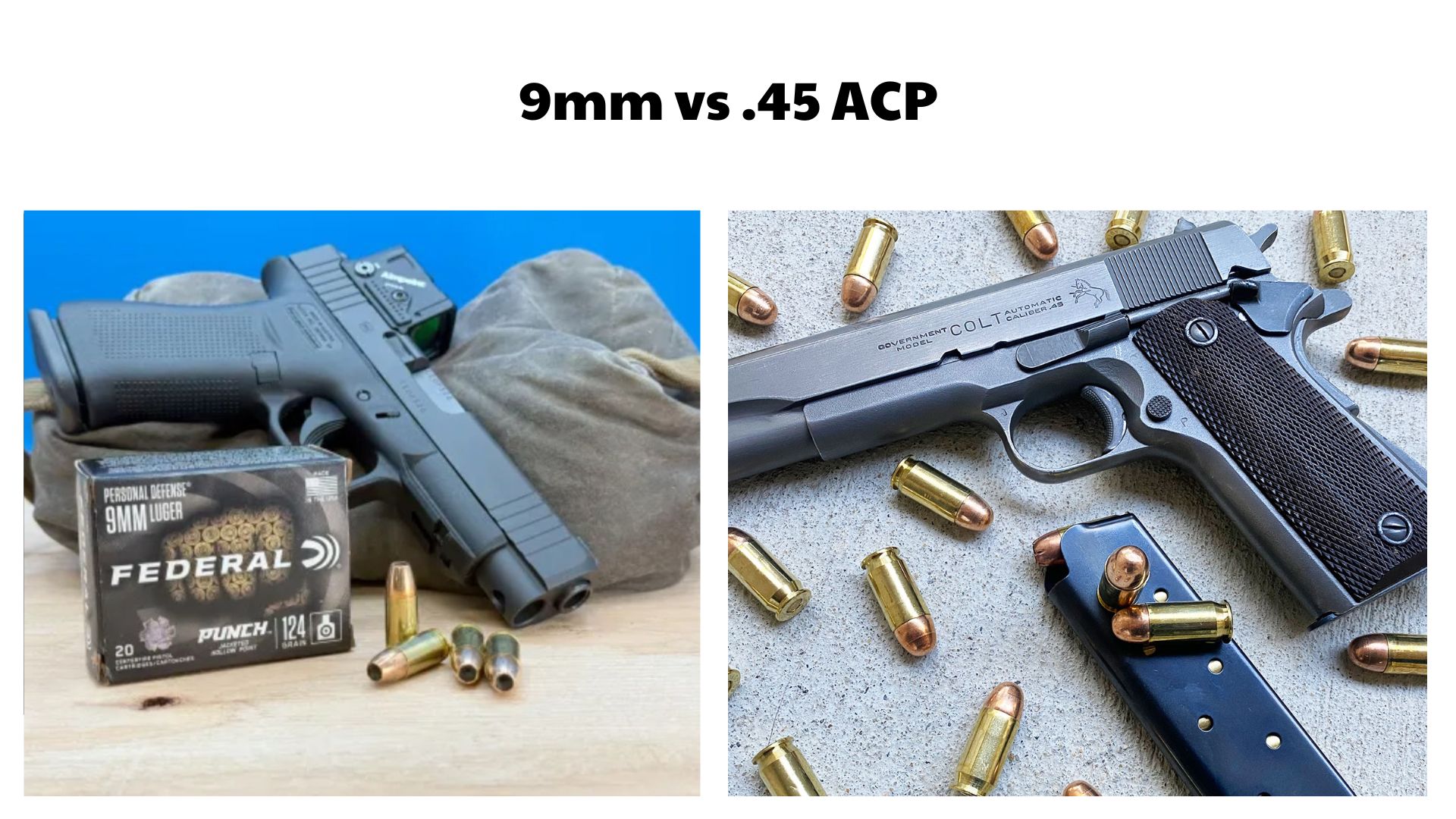

The debate between 9mm vs .45 ACP for self-defense is one of the most discussed topics among handgun owners, concealed carriers, and home defense users. Both cartridges have long histories in law enforcement, military service, and civilian defensive use, and each continues to maintain a strong following today. While 9mm is known for its higher capacity, reduced recoil, and modern ballistic efficiency, .45 ACP is often praised for its larger bullet diameter and strong close-range impact.
This comparison matters because choosing the right defensive caliber can directly affect shooting comfort, accuracy under stress, and overall confidence in real-world scenarios. However, much of the debate is influenced by outdated assumptions and “stopping power” myths rather than modern ballistic science.
In this guide, we will break down the real differences between 9mm and .45 ACP, including ballistics, recoil, magazine capacity, accuracy, cost, and practical defensive performance. The goal is to help you understand how each cartridge actually performs so you can make a more informed and realistic choice for self-defense or home protection.
What Is the 9mm Cartridge?
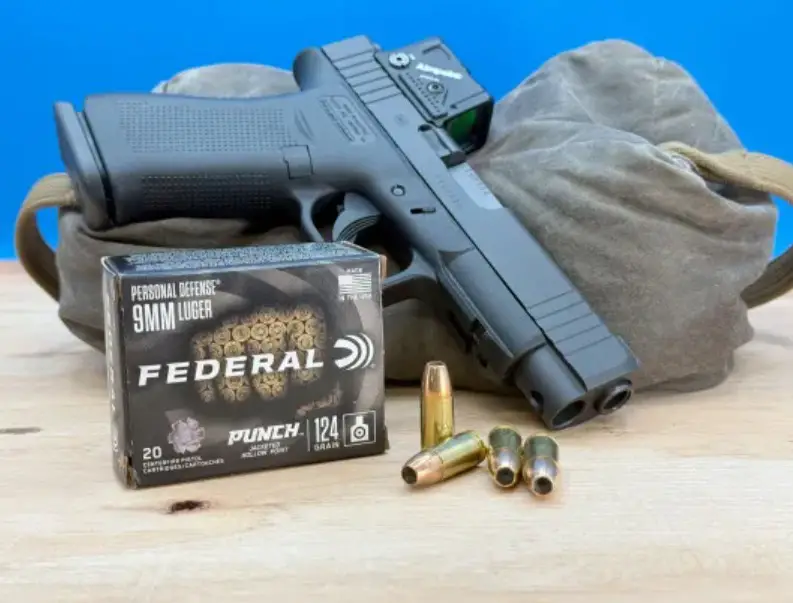
The 9mm cartridge, officially known as 9x19mm Parabellum, is one of the most widely used handgun rounds in the world. It has become a standard choice for military forces, law enforcement agencies, and civilian shooters due to its balance of performance, controllability, and cost efficiency. In modern self-defense discussions, the 9mm is often considered the “default” handgun caliber because of how well it performs across a wide range of situations.
H3: Origin and Development
- Developed in 1901 as the 9x19mm Parabellum cartridge
- Became the most widely used handgun round globally across military and civilian markets
- Adopted by law enforcement agencies due to its manageable recoil and effective terminal performance
Originally designed by Georg Luger, the 9mm cartridge was intended to provide a balance between power and controllability. Over time, it evolved into the most standardized handgun caliber worldwide. Its widespread adoption is not accidental—it reflects decades of refinement in both firearm design and ammunition technology.
H3: Key Characteristics
- Lighter bullet weight (typically 115–147 grains), allowing faster cycling and reduced recoil impulse
- Higher velocity compared to .45 ACP, improving trajectory and energy transfer efficiency
- Low recoil and easy shootability, making it accessible for beginners and experienced shooters alike
One of the main advantages of the 9mm is its controllability. The lighter recoil allows shooters to maintain better accuracy during rapid fire situations, which is critical in defensive encounters where multiple shots may be required. Modern 9mm ammunition, especially hollow-point defensive loads, has significantly improved terminal performance compared to earlier generations.
H3: Why 9mm Is Popular Today
- High magazine capacity in most handguns, often ranging from 15 to 18+ rounds
- Lower ammunition cost compared to larger calibers, making training more affordable
- Improved modern bullet technology significantly increased effectiveness in self-defense scenarios
Today, the 9mm dominates the defensive handgun market for a simple reason: it performs consistently well without excessive recoil or cost. This allows shooters to train more frequently, improve accuracy, and carry more ammunition in a single magazine. Combined with modern ballistic advancements, the 9mm has closed much of the performance gap that once existed between it and larger calibers like the .45 ACP.
What Is the .45 ACP Cartridge?
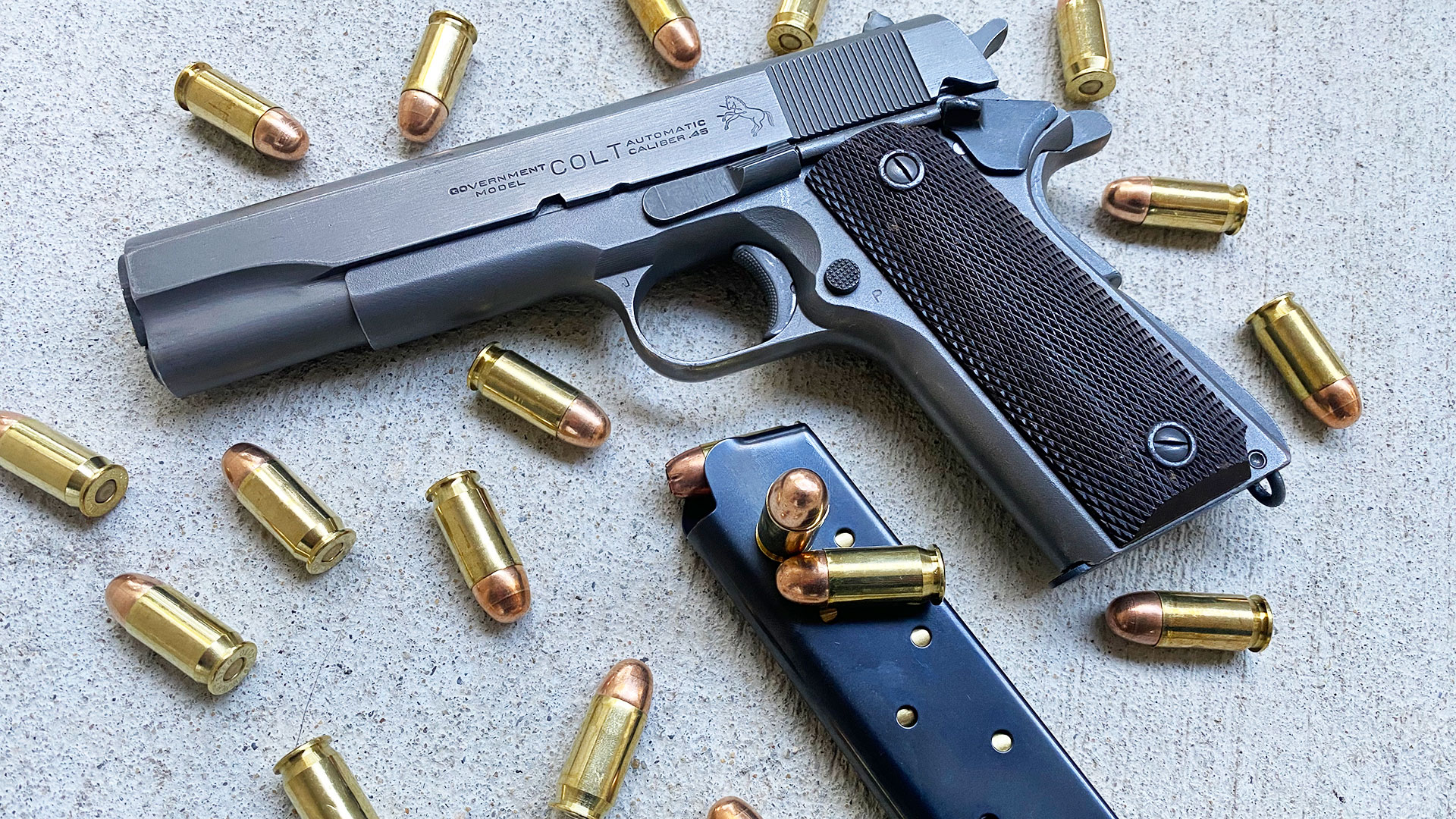
The .45 ACP (Automatic Colt Pistol) is a classic handgun cartridge designed in the early 20th century and remains one of the most respected defensive rounds today. Known for its large bullet diameter and heavy projectile weight, the .45 ACP has built a long-standing reputation for close-range stopping capability and reliability in combat and defensive applications.
H3: Origin and Development
- Designed by John Browning in 1904 for military handgun use
- Famously chambered in the M1911 pistol, one of the most iconic handguns in history
- Widely used by military forces and law enforcement agencies throughout the 20th century
The .45 ACP was developed during a time when handgun doctrine emphasized immediate stopping power at close range. Its adoption by the U.S. military cemented its reputation as a powerful and dependable combat cartridge. Even today, it remains closely associated with the legendary 1911 platform and continues to be used by civilian shooters who prefer larger caliber handguns.
H3: Key Characteristics
- Heavier bullet weight (typically 185–230+ grains), contributing to strong momentum and impact
- Larger diameter than 9mm, producing a wider physical wound channel
- Lower velocity compared to 9mm but higher mass, resulting in a different style of energy transfer
The .45 ACP is often described as a “slow and heavy” cartridge. Instead of relying on speed, it delivers force through mass. This creates a strong, consistent impact at typical self-defense distances. However, its lower velocity also results in more pronounced bullet drop and reduced effective range compared to smaller, faster cartridges like the 9mm.
H3: Why Shooters Still Choose .45 ACP
- Strong perceived stopping power, especially in close-range encounters
- Wide wound channel due to larger bullet diameter
- Reliable performance in home defense and short-distance defensive scenarios
Despite the rise of the 9mm in modern defensive use, the .45 ACP continues to maintain a loyal following. Many shooters appreciate its recoil “feel,” traditional legacy, and psychological confidence associated with its larger bullet size. In close-range defensive situations, it remains a capable and effective option when paired with modern hollow-point ammunition.
9mm vs .45 ACP: Ballistics Comparison
When comparing 9mm and .45 ACP, ballistics is one of the most important factors to understand. While both cartridges are widely used for self-defense, they achieve effectiveness through different physical principles: 9mm relies more on velocity, while .45 ACP relies more on mass and diameter. In real-world defensive scenarios, both can be effective when paired with modern ammunition.
H3: Velocity and Energy
- 9mm travels faster (around 1,100–1,300 fps), giving it a flatter trajectory and quicker energy delivery
- .45 ACP is slower (around 800–1,100 fps), but compensates with heavier bullet mass
- Both deliver comparable energy in modern defensive loads depending on ammunition design and barrel length
In practical terms, 9mm tends to feel more “snappy” in terms of speed, while .45 ACP feels more “forceful” due to its heavier projectile. However, modern defensive ammunition has narrowed the real-world performance gap significantly. Energy numbers alone do not fully determine stopping effectiveness, especially at typical self-defense distances.
H3: Bullet Size and Impact
- .45 ACP has a larger diameter, which can create a wider initial wound channel
- 9mm relies on velocity and controlled expansion from hollow-point bullets for terminal performance
- Modern hollow-point ammunition significantly reduces historical performance differences between the two calibers
Bullet design plays a major role in how each cartridge performs. Modern jacketed hollow-point rounds allow 9mm bullets to expand reliably, increasing their effective diameter on impact. As a result, the difference in wound channel size between 9mm and .45 ACP is often smaller than many people expect when using high-quality defensive ammunition.
H3: Penetration and Real-World Performance
- Both calibers typically meet FBI penetration standards (12–18 inches in ballistic gel testing)
- Performance differences are often minimal when using quality, modern ammunition
- Shot placement remains more important than caliber selection alone in defensive situations
From a practical self-defense perspective, both cartridges are capable of adequate penetration when using proper defensive loads. Real-world studies and ballistic testing consistently show that accuracy and shot placement are far more critical factors than minor differences in caliber performance.
Recoil and Shootability
H3: 9mm Recoil Advantage
- Lower recoil makes it easier to control during rapid fire
- Faster follow-up shots improve defensive response time
- More beginner-friendly and suitable for compact handguns
The reduced recoil of 9mm is one of its biggest advantages in self-defense use. It allows shooters to stay on target more easily, especially under stress. This can be crucial in defensive situations where multiple shots may be required in a short time frame.
H3: .45 ACP Recoil Characteristics
- Heavier recoil impulse due to larger bullet mass and energy transfer
- Often described as a slower, more “pushing” recoil rather than sharp snap
- Can reduce shooting speed for some users, especially in smaller handguns
While .45 ACP recoil is not necessarily harsh, it is more noticeable compared to 9mm. This can affect shooting speed and comfort, particularly for newer shooters or those using lightweight pistols. However, experienced shooters often adapt to it without difficulty.
Magazine Capacity and Tactical Considerations
Magazine capacity is one of the most practical differences between 9mm and .45 ACP in defensive use. While both cartridges are effective, the amount of ammunition a firearm can carry before reloading can influence real-world defensive scenarios, especially under stress.
H3: 9mm Capacity Advantage
- Higher magazine capacity in most pistols (often 15–18+ rounds depending on platform)
- More rounds available before needing to reload, increasing sustained defensive capability
- Preferred by many law enforcement agencies and modern defensive handgun users
The 9mm’s smaller cartridge size allows manufacturers to design magazines that hold more rounds without significantly increasing grip size. This advantage is especially important in defensive situations where multiple threats or missed shots may require additional follow-up fire. Higher capacity also reduces the urgency of reloads under pressure.
H3: .45 ACP Capacity Trade-Off
- Lower magazine capacity (typically 7–10 rounds in many traditional handgun designs)
- Larger cartridge dimensions naturally reduce total round count in a magazine
- Emphasis shifts from volume of fire to individual shot effectiveness
The .45 ACP’s larger size limits how many rounds can fit into a standard magazine. While modern double-stack .45 ACP pistols have improved capacity compared to older designs, they still generally carry fewer rounds than comparable 9mm platforms. This trade-off reflects a different defensive philosophy: fewer shots, but with heavier projectile impact per round.
Stopping Power: Myth vs Reality
H3: What “Stopping Power” Really Means
- Refers to the ability of a firearm round to stop a threat quickly and effectively
- Not a scientifically precise measurement or guaranteed outcome
- Highly dependent on shot placement, ammunition quality, and target factors
The concept of “stopping power” is often misunderstood in firearm discussions. While it is commonly used in marketing and casual debate, there is no universal formula that guarantees immediate incapacitation based solely on caliber. Real-world outcomes depend heavily on where the bullet hits and how the body responds to trauma.
H3: Modern Ballistics Perspective
- Modern studies show minimal real-world performance difference between 9mm and .45 ACP when using quality defensive ammunition
- Both calibers rely on penetration and controlled expansion rather than raw impact force or “knockdown power”
- Human incapacitation is primarily caused by disruption of vital organs or the central nervous system, not bullet size alone
Advancements in bullet design have significantly narrowed the gap between 9mm and .45 ACP performance. Modern hollow-point ammunition allows both calibers to expand reliably and penetrate to effective depths. As a result, real-world defensive effectiveness is often more similar than many traditional beliefs suggest.
Accuracy and Effective Range
Accuracy and effective range are important considerations when comparing 9mm and .45 ACP, especially for defensive use. While both cartridges are designed primarily for short-range encounters, differences in recoil, velocity, and trajectory can influence practical shooting performance.
H3: 9mm Performance
- Flatter trajectory and easier long-range accuracy due to higher velocity
- Lower recoil improves practical shooting precision and shot recovery speed
- Often preferred for defensive training, competition shooting, and high-volume practice
The 9mm cartridge benefits from reduced recoil and higher velocity, which makes it easier to shoot accurately, especially during rapid fire. This allows shooters to maintain better control of follow-up shots, which is a key factor in defensive situations. While handgun engagements typically occur at short distances, the 9mm’s consistency makes it easier to perform well even as distance increases.
H3: .45 ACP Performance
- Highly accurate at typical self-defense distances (close-range encounters)
- Trajectory drops faster beyond short range due to lower velocity
- Best suited for close-range defensive use such as home protection scenarios
The .45 ACP performs very well within standard defensive distances, where most real-world encounters occur. However, its heavier bullet and lower velocity result in a more pronounced bullet drop at longer ranges. While still accurate in skilled hands, it is generally optimized for short-range stopping scenarios rather than extended-distance precision shooting.
Cost and Availability
H3: 9mm Advantage
- Generally cheaper ammunition, making training more affordable
- Widely available in nearly all firearm markets worldwide
- More cost-effective for frequent practice and skill development
One of the biggest advantages of the 9mm is its affordability and accessibility. Because it is the most popular handgun cartridge globally, manufacturers produce it in massive quantities. This results in lower per-round costs and easier availability, which encourages more consistent training and proficiency.
H3: .45 ACP Considerations
- Typically more expensive per round compared to 9mm
- Less common in some international and budget-focused markets
- Higher long-term cost for frequent shooters due to ammunition pricing
The .45 ACP tends to be more expensive due to lower production volume and larger material requirements. While it remains widely available, the cost difference becomes significant for shooters who train regularly. Over time, this can influence the overall choice between calibers, especially for budget-conscious firearm owners.
Home Defense and Concealed Carry Use
H3: 9mm for Defense
- Popular for concealed carry due to high capacity and manageable recoil
- Easier to control under stress, especially in rapid defensive situations
- Widely recommended for both beginners and experienced defensive shooters
The 9mm is often considered the most practical choice for concealed carry due to its balance of capacity, recoil control, and effectiveness. In high-stress defensive situations, its lower recoil allows shooters to stay on target more easily and respond faster if multiple shots are needed.
H3: .45 ACP for Defense
- Preferred by some shooters for close-range home defense scenarios
- Strong impact and larger bullet diameter provide psychological and physical confidence
- Often used in full-size or larger-framed handguns for better recoil management
The .45 ACP remains a respected choice for home defense due to its heavy bullet and strong close-range performance. Many users appreciate its straightforward ballistic profile and historical reputation. However, its larger size and stronger recoil often make it better suited for full-size handguns rather than compact carry pistols.
Pros and Cons Summary
H3: 9mm Pros & Cons
- Pros: low recoil makes it easy to control, especially in rapid-fire situations
- Pros: high magazine capacity in most modern handguns
- Pros: lower ammunition cost supports frequent training and practice
- Pros: widely available worldwide in nearly all firearm markets
- Cons: smaller bullet diameter compared to .45 ACP
- Cons: perceived “light” recoil can feel less authoritative to some shooters
Overall, the 9mm is designed around efficiency and control. It allows shooters to fire more rounds with less fatigue and greater speed, making it highly practical for both beginners and experienced defensive users. Its main drawback is often psychological rather than mechanical, as some shooters prefer the feel of a larger caliber.
H3: .45 ACP Pros & Cons
- Pros: larger bullet diameter creates a wider physical impact profile
- Pros: strong performance in close-range defensive scenarios
- Pros: long historical track record in military and civilian use
- Pros: often praised for its “heavy hitting” feel
- Cons: higher recoil compared to 9mm, especially in compact firearms
- Cons: lower magazine capacity in most handgun platforms
- Cons: higher ammunition cost reduces training volume for many shooters
The .45 ACP focuses on delivering heavy, forceful impacts at short distances. It has a strong reputation built over more than a century of use, but its trade-offs include reduced capacity and increased recoil, which can affect speed and efficiency in defensive shooting.
Which Is Better for Self-Defense?
There is no universal winner between 9mm and .45 ACP for self-defense. Both are proven defensive cartridges when paired with quality ammunition and used with proper training. The better choice depends on user preference, shooting ability, and intended use case rather than raw ballistic differences.
H3: When to Choose 9mm
- You want easier recoil control and faster follow-up shots under stress
- You prioritize higher magazine capacity and ammunition affordability
- You need a versatile everyday carry option suitable for most users
- You plan to train frequently and value lower long-term shooting costs
The 9mm is often considered the most practical all-around defensive handgun cartridge. Its combination of controllability, capacity, and cost efficiency makes it especially suitable for concealed carry and regular training. For many shooters, it offers the best balance of performance and usability.
H3: When to Choose .45 ACP
- You prefer a larger caliber with a heavier bullet profile
- You focus on close-range home defense scenarios
- You are comfortable managing stronger recoil during shooting
- You value tradition and proven historical performance
The .45 ACP is ideal for shooters who prioritize heavy bullet impact and are comfortable with reduced capacity and increased recoil. It remains a strong choice for home defense and those who appreciate its classic design and reputation for close-range effectiveness.
Conclusion
The debate between 9mm and .45 ACP continues to be one of the most discussed topics in the firearms community, but modern ballistic data shows that both cartridges are highly effective for self-defense when paired with quality ammunition and proper training.
- Both 9mm and .45 ACP are effective self-defense calibers when using modern defensive ammunition
- 9mm offers clear advantages in capacity, recoil control, affordability, and ease of training
- .45 ACP provides a larger bullet diameter and strong close-range performance characteristics
- The best choice ultimately depends on shooter comfort, experience level, and intended application such as concealed carry or home defense
Rather than focusing solely on caliber size, most experts emphasize shot placement, consistent training, and firearm familiarity as the true factors that determine defensive effectiveness. In practice, either caliber can serve well when used responsibly and skillfully.
50+ Frequently Asked Questions (FAQ): 9mm vs .45 ACP for Self-Defense
1. Is 9mm good enough for self-defense?
Yes, 9mm is widely considered more than sufficient for self-defense when using modern hollow-point ammunition. Advances in bullet design have significantly improved its expansion and penetration performance. Combined with its lower recoil and higher capacity, 9mm is currently the most commonly recommended defensive handgun caliber by many law enforcement agencies and instructors. Its effectiveness depends more on shot placement and training than raw caliber size.
2. Is .45 ACP more powerful than 9mm?
The .45 ACP fires a heavier and larger-diameter bullet, which creates a wider impact channel. However, “more powerful” is not a simple comparison. While .45 ACP has greater bullet mass, 9mm travels faster and often achieves similar energy levels with modern defensive loads. In real-world self-defense scenarios, both cartridges perform effectively, and neither guarantees superior stopping power.
3. Why do police use 9mm instead of .45 ACP?
Most law enforcement agencies have transitioned to 9mm because it offers better magazine capacity, lower recoil, and faster follow-up shots. Officers can carry more ammunition and shoot more accurately under stress. Additionally, modern 9mm ammunition performs very close to .45 ACP in ballistic testing, making it a more efficient overall choice.
4. Does .45 ACP stop threats faster than 9mm?
There is no scientific evidence that .45 ACP consistently stops threats faster than 9mm. Stopping a threat depends primarily on shot placement, penetration depth, and whether vital organs or the central nervous system are hit. Both calibers meet defensive ballistic standards when using quality ammunition.
5. Which has less recoil, 9mm or .45 ACP?
9mm has noticeably less recoil than .45 ACP, making it easier to control during rapid shooting. This allows for faster follow-up shots and improved accuracy under stress. .45 ACP produces a heavier recoil impulse, which some shooters prefer, but it generally requires more training to manage effectively.
6. Is 9mm easier to shoot than .45 ACP?
Yes, 9mm is generally easier to shoot due to its lower recoil, lighter bullet, and faster cycling. This makes it especially suitable for beginners, smaller-framed shooters, and those who train frequently. Easier controllability often translates into better practical accuracy in defensive situations.
7. Which caliber is better for beginners?
9mm is usually recommended for beginners because it is more forgiving in terms of recoil and allows for faster skill development. It is also more affordable to practice with, which encourages more frequent training. .45 ACP can still be suitable for beginners but requires more effort to master.
8. Is .45 ACP outdated?
No, .45 ACP is not outdated. While 9mm has become more popular due to modern advancements, .45 ACP remains effective and widely used. It continues to be chosen for home defense and by shooters who prefer larger caliber performance at close range.
9. What has better stopping power, 9mm or .45 ACP?
Modern ballistic research shows that both calibers have very similar real-world stopping effectiveness when using quality ammunition. “Stopping power” is influenced more by shot placement and penetration than caliber alone. Neither round guarantees immediate incapacitation.
10. Is 9mm cheaper than .45 ACP?
Yes, 9mm is generally significantly cheaper than .45 ACP. This cost difference makes 9mm more practical for regular training and high-volume shooting. Over time, the savings can be substantial for frequent shooters.
11. Which caliber is more accurate?
Both calibers are accurate, but 9mm often provides a practical advantage due to lower recoil and faster follow-up shots. This allows shooters to stay on target more easily. .45 ACP can be equally accurate in skilled hands, especially at close range.
12. What is the effective range of 9mm?
9mm is most effective within typical handgun ranges of 0–25 yards for self-defense. However, it can remain accurate and effective beyond that distance depending on firearm type and shooter skill. Its flatter trajectory makes it more forgiving at extended pistol ranges.
13. What is the effective range of .45 ACP?
.45 ACP is primarily designed for close-range engagements, typically within 0–15 yards for optimal performance. Beyond that range, bullet drop becomes more noticeable due to lower velocity. It is best suited for defensive distances rather than extended shooting.
14. Does 9mm penetrate more than .45 ACP?
Penetration depends heavily on ammunition type rather than caliber alone. In modern testing, both 9mm and .45 ACP can meet FBI penetration standards (12–18 inches in gel). Neither consistently outperforms the other in a meaningful defensive context.
15. Why is 9mm so popular?
9mm is popular because it offers an ideal balance of recoil control, capacity, cost, and effectiveness. It is widely used by military, law enforcement, and civilians. Its versatility makes it suitable for nearly all handgun applications.
16. Why do some people prefer .45 ACP?
Many shooters prefer .45 ACP due to its larger bullet size, historical reputation, and perceived impact. It also delivers a strong recoil impulse that some users associate with confidence in stopping ability. It remains a respected defensive cartridge.
17. Is 9mm enough for home defense?
Yes, 9mm is widely considered sufficient for home defense. It offers excellent controllability in close quarters, lower recoil, and high-capacity magazines. When paired with defensive ammunition, it performs reliably in home defense scenarios.
18. Is .45 ACP better for home defense?
.45 ACP can be effective for home defense, especially at close range. However, its lower capacity and higher recoil may be disadvantages in confined spaces. The best choice depends on shooter comfort and training.
19. Which caliber is better for concealed carry?
9mm is generally preferred for concealed carry due to its higher capacity, lighter recoil, and smaller firearm options. These factors make it easier to carry daily and shoot effectively under stress.
20. Does bullet size matter in self-defense?
Bullet size plays a role in wound channel size, but modern ammunition technology reduces the gap between calibers. Shot placement, penetration, and expansion are more important factors than diameter alone.
21. Does .45 ACP have better knockdown power?
No handgun round has true “knockdown power.” This is a myth. Both 9mm and .45 ACP rely on penetration and tissue damage rather than physically knocking a target down.
22. Which caliber is more reliable?
Both 9mm and .45 ACP are highly reliable when fired from quality firearms. Reliability depends more on firearm design and maintenance than caliber selection.
23. Does 9mm have more capacity than .45 ACP?
Yes, 9mm pistols typically hold more rounds due to smaller cartridge size. This allows for higher magazine capacity compared to .45 ACP in similar-sized handguns.
24. Is .45 ACP harder to control?
.45 ACP produces more recoil than 9mm, which can make it harder to control for some shooters. With training, however, many people can handle it effectively.
25. Which is better for rapid fire?
9mm is generally better for rapid fire due to lower recoil and faster recovery between shots. This improves accuracy during defensive shooting sequences.
26. Which is more forgiving under stress?
9mm is more forgiving under stress because it is easier to control and allows quicker follow-up shots. Stress can amplify recoil effects, making 9mm advantageous.
27. Is .45 ACP overkill for self-defense?
No, .45 ACP is not overkill. It is a proven defensive cartridge. However, it may be less practical for some users due to recoil and capacity limitations.
28. What is the best ammo for 9mm defense?
Modern hollow-point ammunition designed for controlled expansion and reliable penetration is best for 9mm self-defense use. These rounds are optimized for stopping effectiveness.
29. What is the best ammo for .45 ACP defense?
High-quality hollow-point .45 ACP ammunition is preferred for defensive use. It is designed to expand reliably and maximize energy transfer at close range.
30. Do professionals prefer 9mm or .45 ACP?
Most professionals today prefer 9mm due to its balance of performance, capacity, and controllability. However, some still choose .45 ACP based on personal preference or specific mission needs.
31. Which caliber is more modern?
9mm is more modern in terms of widespread adoption and ongoing development in bullet technology. However, .45 ACP is still actively used and supported.
32. Is .45 ACP better for large attackers?
Not necessarily. Effectiveness depends on shot placement and penetration rather than target size. Both calibers can be effective regardless of attacker size.
33. Can 9mm be as effective as .45 ACP?
Yes, modern 9mm ammunition can perform very similarly to .45 ACP in defensive situations. The difference is often minimal in real-world scenarios.
34. Does barrel length affect performance?
Yes, longer barrels generally increase velocity and improve ballistic performance for both calibers. Short barrels reduce velocity and energy.
35. Which caliber is better for women or small-framed shooters?
9mm is often preferred because of its lower recoil and easier control, making it more comfortable for a wider range of shooters.
36. Is .45 ACP louder than 9mm?
Both are extremely loud and require hearing protection. Differences in sound are minor compared to overall firearm noise levels.
37. Can I use both calibers for defense?
Yes, both are effective defensive calibers when paired with proper training and ammunition. Choice depends on personal preference.
38. Which caliber is more forgiving in aiming errors?
9mm is slightly more forgiving due to lower recoil and easier follow-up shot correction.
39. Does training matter more than caliber?
Yes, training, accuracy, and shot placement are far more important than caliber selection in real-world defense situations.
40. What is the biggest difference between 9mm and .45 ACP?
The biggest differences are recoil, capacity, bullet size, and cost. Performance differences in modern ammunition are relatively small.
41. Which is better for beginners learning defensive shooting?
9mm is better for beginners due to its easier handling and lower cost of practice.
42. Is .45 ACP still relevant today?
Yes, .45 ACP remains relevant and effective, especially in close-range defensive roles.
43. Does 9mm reduce training cost?
Yes, 9mm is significantly cheaper, allowing more frequent practice and skill development.
44. Can caliber choice affect confidence?
Yes, psychological confidence plays a role. Some shooters feel more confident with .45 ACP, while others prefer 9mm’s control.
45. Is there a “perfect” self-defense caliber?
No, there is no perfect caliber. Each has trade-offs, and effectiveness depends on user skill and training.
46. What matters most in a defensive handgun?
Reliability, training, accuracy, and ammunition quality matter more than caliber alone.
47. Should I switch from .45 ACP to 9mm?
It depends on your comfort and goals. Many shooters switch to 9mm for cost, capacity, and reduced recoil.
48. Can I carry .45 ACP daily?
Yes, many people carry .45 ACP daily, but it may require larger firearms and more effort to manage recoil and size.
49. Does caliber matter in a defensive encounter?
It matters, but not as much as accuracy and decision-making. Both calibers are effective when used properly.
50. Final question: 9mm or .45 ACP—which should I choose?
Choose 9mm if you want ease of use, capacity, and affordability. Choose .45 ACP if you prefer larger bullets and close-range performance. Both are proven defensive options, and the best choice is the one you can shoot accurately and confidently.
Read more: