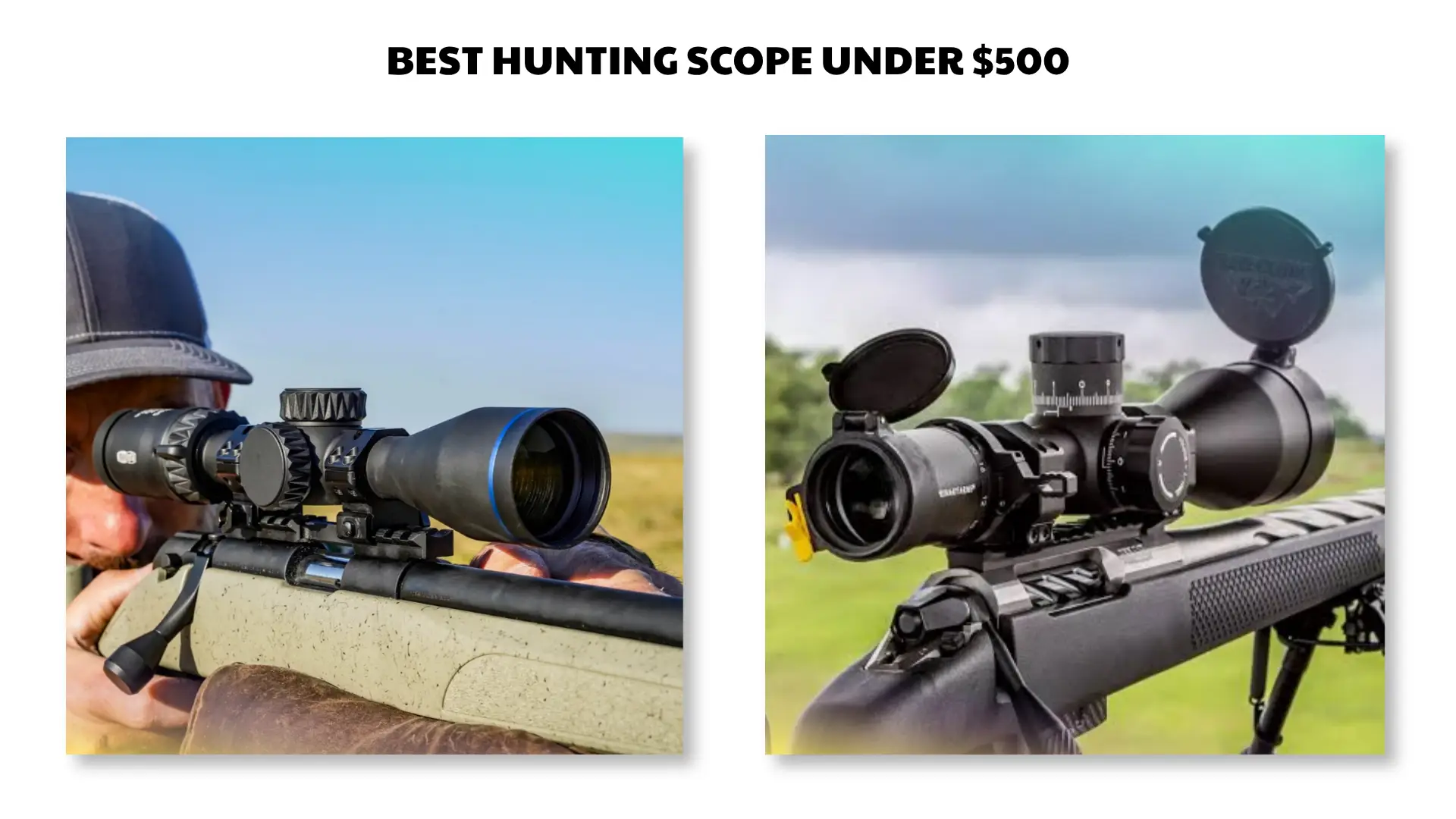

The best hunting scope under $500 should give you a clear sight picture, usable eye relief, dependable adjustments, and a magnification range that matches your terrain—without adding unnecessary weight or complexity.
Quick Picks
- Best Overall: Leupold VX-Freedom 3-9×40 Hunt-Plex
- Best for Open Country: Vortex Diamondback 4-12×40 Dead-Hold BDC
- Best Starter Kit: Vortex Triumph HD 3-9×40 Riflescope Kit
- Best Budget Option: Vortex Crossfire II 3-9×40 Dead-Hold BDC
- Best Value 4-12x: Vortex Sonora 4-12×44 Dead-Hold BDC
Product Comparison Table
| Product | Best For | Key Features | Important Notes | Check Details |
|---|---|---|---|---|
| Leupold VX-Freedom 3-9×40 Hunt-Plex | Hunters prioritizing low weight, a clean reticle, and simple controls | 3-9x magnification; 40 mm objective; 1-inch tube; Hunt-Plex reticle; approximately 12.2 oz | Lightweight and straightforward; confirm ring height and available mounting space before ordering. | Check Details |
| Vortex Diamondback 4-12×40 Dead-Hold BDC | Hunters wanting more top-end magnification without moving to a large objective | 4-12x magnification; 40 mm objective; 1-inch tube; Dead-Hold BDC reticle; approximately 14.6 oz | Useful for open terrain, but 4x is less forgiving than 3x in tight cover. | Check Details |
| Vortex Triumph HD 3-9×40 Riflescope Kit | New hunters who need a scope, compatible 1-inch rings, and a protective cover in one package | 3-9x magnification; 40 mm objective; 1-inch tube; Dead-Hold BDC reticle; approximately 16.5 oz; rings and cover included | Included low rings will not fit every rifle or provide correct clearance on every action and base. | Check Details |
| Vortex Crossfire II 3-9×40 Dead-Hold BDC | Budget-conscious hunters who want a familiar magnification range and a BDC reticle | 3-9x magnification; 40 mm objective; 1-inch tube; Dead-Hold BDC reticle; approximately 16 oz | A practical entry-level choice; inspect eye relief and image quality at maximum magnification before hunting. | Check Details |
| Vortex Sonora 4-12×44 Dead-Hold BDC | Hunters who want 12x magnification, a 44 mm objective, and long eye relief at a modest price | 4-12x magnification; 44 mm objective; 1-inch tube; Dead-Hold BDC reticle; 4-inch eye relief; approximately 15.8 oz | The 44 mm objective may require medium rings depending on the rifle and base. | Check Details |
| Vortex Copperhead 3-9×40 Dead-Hold BDC | Hunters wanting a basic 3-9×40 optic for a secondary or loaner hunting rifle | 3-9x magnification; 40 mm objective; 1-inch tube; Dead-Hold BDC reticle; capped controls | Check current seller details and the exact included accessories because listings can change. | Check Details |
Best Hunting Scope Under $500 Reviews
The rankings below favor practical hunting use, manageable weight, uncomplicated controls, mounting flexibility, and clearly stated limitations. They do not promise hunting success or replace training, field judgment, or careful identification.
1. Leupold VX-Freedom 3-9×40 Hunt-Plex
Best for: Hunters prioritizing low weight, a clean reticle, and simple controls
The Leupold VX-Freedom 3-9×40 is the most balanced choice in this guide for hunters who want a light, uncomplicated scope rather than a feature-heavy optic. Its familiar 3-9x range suits wooded deer country, mixed farmland, and many general big-game setups. The Hunt-Plex reticle stays visually clean, which can help a new hunter focus on a clear sight picture instead of managing multiple marks.
Key Features
- 3-9x magnification and a 40 mm objective lens for versatile general hunting use.
- Hunt-Plex second-focal-plane reticle with capped finger-click adjustments.
- Leupold Advanced Optical System designed for useful light transmission, glare control, and resolution.
- Aluminum construction with manufacturer-described waterproof, fogproof, and shockproof performance.
- Approximately 12.2 ounces, making it the lightest option in this comparison.
Pros
- Low weight helps preserve the balance of a lightweight hunting rifle.
- Simple reticle and controls are approachable for beginners.
- Good fit for hunters who normally keep the scope near low or middle magnification.
Cons
- No side-focus adjustment or illuminated reticle on this configuration.
- Hunters who want extensive holdover references may prefer a BDC-style reticle.
Field Notes
At 3x, the scope offers a practical field of view for timber and close-to-moderate hunting distances. At 9x, it provides enough magnification for careful identification and precise aiming within responsible, practiced limits. Its lighter weight is especially useful on mountain rifles, youth-size rifles, and setups carried for long periods. Keep the reticle focus adjusted to your eye, and do not use magnification as a substitute for positive target identification.
Safety and Legal Notes
Have the scope mounted and leveled correctly, maintain adequate eye relief, and verify that the rings fit the 1-inch tube. Unload the firearm and follow the manufacturer’s procedure before any mounting or inspection work. Confirm zero at a lawful range and recheck it after impact, travel, or major temperature changes.
Best For
Most deer hunters, beginners, weight-conscious backcountry hunters, and anyone who prefers a traditional uncluttered hunting scope.
Price, seller, configuration, and availability can change. Confirm the exact model before ordering.
2. Vortex Diamondback 4-12×40 Dead-Hold BDC
Best for: Hunters wanting more top-end magnification without moving to a large objective
The Vortex Diamondback 4-12×40 is a sensible option for western deer, pronghorn, and open-field hunting where a little more magnification can help with careful observation and aiming. The 40 mm objective keeps the profile more compact than many 50 mm scopes, while the Dead-Hold BDC reticle provides reference marks for hunters who have verified their own trajectory data at the range.
Key Features
- 4-12x magnification with a 40 mm objective lens.
- Second-focal-plane Dead-Hold BDC reticle designed for holdover reference.
- Fully multi-coated lenses and a fast-focus eyepiece.
- Metal-on-metal precision turrets that can be reset after sight-in.
- One-piece aluminum tube, argon purging, O-ring sealing, and capped adjustments.
Pros
- More top-end magnification than a standard 3-9x scope.
- Moderate weight and objective size for its magnification range.
- BDC references can be useful after careful range verification.
Cons
- The 4x low end is not as fast or spacious in close timber as a 2x or 3x scope.
- BDC marks are not universal; they require range testing with the actual rifle and load.
Field Notes
This scope makes the most sense when shots are commonly taken from stable positions in open terrain. Hunters should resist the temptation to leave it at 12x while moving through cover. Higher magnification narrows field of view and can make it harder to locate an animal quickly. Start low, increase magnification only when time and stability allow, and return it to a lower setting before moving again.
Safety and Legal Notes
Treat BDC references as starting points rather than guaranteed impact locations. Confirm every intended hold at a safe range under realistic conditions. Never take a shot beyond your ability to identify the animal, understand the background, and maintain a stable position.
Best For
Open-country deer and pronghorn hunters, field-edge hunters, and buyers who value 12x magnification in a relatively compact package.
Price, seller, configuration, and availability can change. Confirm the exact model before ordering.
3. Vortex Triumph HD 3-9×40 Riflescope Kit
Best for: New hunters who need a scope, compatible 1-inch rings, and a protective cover in one package
The Vortex Triumph HD kit reduces the number of separate parts a first-time buyer must select. It combines a 3-9×40 scope, low 1-inch Hunter Rings, and a neoprene cover. That convenience is valuable, but buyers still need to confirm that the included rings match their base system, action clearance, bolt handle, barrel contour, and preferred cheek position.
Key Features
- 3-9x magnification and a 40 mm objective lens.
- HD optical system with fully multi-coated lenses.
- Second-focal-plane Dead-Hold BDC reticle.
- Aircraft-grade aluminum body with manufacturer-described waterproof, fogproof, and shockproof construction.
- Includes 1-inch low Hunter Rings and a neoprene scope cover.
Pros
- Convenient bundle for a first hunting setup.
- Traditional 3-9×40 format works across many common hunting environments.
- Included cover helps protect exterior lenses during transport and storage.
Cons
- The included rings may be the wrong height or mounting pattern for a particular rifle.
- Heavier than the Leupold option in this guide.
Field Notes
The classic 3-9×40 format is easy to understand and offers a useful balance between field of view and detail. The bundled rings may save money only when they genuinely fit the rifle and produce a natural cheek weld. A scope mounted too high can make the position inconsistent; one mounted too low may contact the barrel or prevent bolt operation.
Safety and Legal Notes
Do not assume the included rings make installation universal. Check the base interface and follow torque specifications from the ring, base, firearm, and scope manufacturers. If instructions conflict or clearance is uncertain, use a qualified optics professional or gunsmith.
Best For
Beginners building a straightforward deer-hunting setup and buyers who value a bundled package but will still verify compatibility.
Price, seller, configuration, and availability can change. Confirm the exact model before ordering.
4. Vortex Crossfire II 3-9×40 Dead-Hold BDC
Best for: Budget-conscious hunters who want a familiar magnification range and a BDC reticle
The Vortex Crossfire II 3-9×40 is a common entry point for hunters who want a recognizable brand and a traditional hunting configuration without spending close to the $500 limit. Its fully multi-coated lenses, capped turrets, fast-focus eyepiece, and Dead-Hold BDC reticle cover the basic needs of a general-purpose deer scope.
Key Features
- 3-9x magnification and a 40 mm objective lens.
- Second-focal-plane Dead-Hold BDC reticle.
- Long-eye-relief design with a fast-focus eyepiece.
- Fully multi-coated lenses and resettable MOA turrets.
- Single-piece aluminum tube, nitrogen purging, and O-ring sealing.
Pros
- Affordable way to equip a basic hunting rifle.
- Familiar controls and magnification range.
- BDC reticle offers optional reference marks without illumination or electronics.
Cons
- Optical refinement and low-light detail are not at the level of stronger premium glass.
- At roughly one pound, it is not especially light for a 3-9×40 scope.
Field Notes
This scope is best treated as a practical tool rather than a long-range shortcut. The 3x setting is useful for moving through woods, while 6x to 9x may be helpful from a supported position. Before the season, evaluate image clarity, reticle sharpness, eye position, and point-of-impact consistency across the magnification range.
Safety and Legal Notes
Confirm the BDC marks with the exact hunting ammunition you legally intend to use. Keep the firearm pointed in a safe direction during all checks, and never look through a rifle-mounted scope at people, buildings, vehicles, or any object you are not lawfully prepared to shoot.
Best For
New deer hunters, occasional hunters, and buyers who need a functional scope while reserving budget for training, safe storage, quality mounts, and other essential gear.
Price, seller, configuration, and availability can change. Confirm the exact model before ordering.
5. Vortex Sonora 4-12×44 Dead-Hold BDC
Best for: Hunters who want 12x magnification, a 44 mm objective, and long eye relief at a modest price
The Vortex Sonora 4-12×44 offers a little more objective diameter than the Diamondback while retaining a 1-inch tube and capped controls. Its listed four-inch eye relief is attractive for hunters who want additional space behind the ocular lens, but proper stock fit and mounting position still matter more than a single specification.
Key Features
- 4-12x magnification with a 44 mm objective lens.
- Four-inch listed eye relief and a locking diopter eyepiece.
- Fully multi-coated lenses and second-focal-plane Dead-Hold BDC reticle.
- Capped turrets with 1/4-MOA adjustment and a 100-yard fixed parallax setting.
- One-piece aluminum tube with nitrogen purging and O-ring sealing.
Pros
- Useful combination of 12x magnification and a moderate purchase price.
- Long listed eye relief can help accommodate varied mounting positions.
- 44 mm objective offers a modest increase in entrance aperture without becoming oversized.
Cons
- Higher mounting may be needed compared with a 40 mm scope.
- Fixed parallax is less flexible for very close use or specialized precision work.
Field Notes
The Sonora fits hunters who spend more time overlooking cuts, fields, or open hillsides than pushing through dense cover. The 4x low end is workable, but it is not the quickest choice for close encounters. Test the rifle from standing, kneeling, sitting, and supported positions to ensure the eye box remains comfortable and the stock fit is repeatable.
Safety and Legal Notes
Maintain enough clearance between the objective bell and barrel, and enough clearance for the bolt handle, loading port, and safety controls. Do not raise the scope more than necessary; excessive height can reduce cheek contact and consistency.
Best For
Field-edge deer hunters and open-terrain hunters seeking a budget-friendly 4-12x scope with a 44 mm objective.
Price, seller, configuration, and availability can change. Confirm the exact model before ordering.
6. Vortex Copperhead 3-9×40 Dead-Hold BDC
Best for: Hunters wanting a basic 3-9×40 optic for a secondary or loaner hunting rifle
The Vortex Copperhead 3-9×40 stays close to the traditional hunting-scope formula: a 1-inch tube, 40 mm objective, capped adjustments, and a second-focal-plane BDC reticle. It is most compelling as a simple optic for a backup rifle, a loaner setup, or a hunter who does not need side focus, illumination, or exposed turrets.
Key Features
- Traditional 3-9x magnification and 40 mm objective lens.
- Second-focal-plane Dead-Hold BDC reticle.
- Capped adjustments that help protect settings during field carry.
- One-piece tube construction intended for general hunting use.
- Simple, non-illuminated design with no battery to manage.
Pros
- Straightforward controls and familiar hunting magnification.
- Suitable for a backup or occasional-use setup.
- No electronics or illumination settings to maintain.
Cons
- Fewer optical and mechanical refinements than higher-priced choices.
- Specific package contents and seller availability should be checked carefully before purchase.
Field Notes
A basic scope can be effective when it is mounted correctly, holds zero, and is paired with realistic expectations. Use the lower magnification in woods and increase power only from a stable position. Inspect the image at the edge of the field, confirm reticle focus, and verify that the adjustment caps remain secure after travel.
Safety and Legal Notes
A backup rifle deserves the same mounting inspection, range confirmation, storage, and handling discipline as a primary rifle. Never lend a firearm or optic setup without ensuring the user is legally permitted, properly trained, familiar with the equipment, and supervised when appropriate.
Best For
Secondary rifles, loaner rifles used by trained and lawful hunters, and budget buyers who want uncomplicated controls.
Price, seller, configuration, and availability can change. Confirm the exact model before ordering.
How to Choose the Best Hunting Scope Under $500
Choose the Right Magnification Range
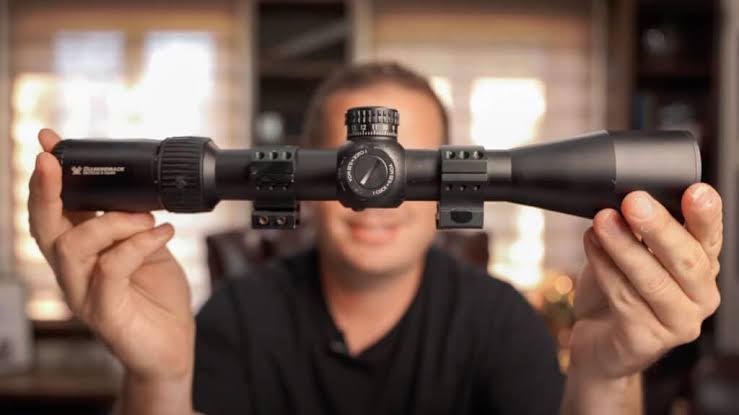
Start with the lowest magnification, not the highest. Hunters in dense hardwoods, brush, and close timber benefit from a low end around 2x or 3x because it provides a wider field of view and makes it easier to find the animal in the scope. Open-country hunters may appreciate 10x or 12x at the top end, but high power is most useful from a stable position.
A 3-9×40 remains popular because it covers many ordinary hunting situations without excessive size. A 4-12×40 or 4-12×44 is more specialized toward open terrain. Higher magnification also magnifies wobble, mirage, and small position errors, so it should not be treated as automatic extra capability.
Match the Scope to Your Hunting Style
For deer hunting from a blind or tree stand, a simple 3-9×40 with a visible reticle and capped turrets is usually enough. For elk and backcountry hunting, total weight and durability matter because the rifle may be carried for hours. For field edges and western terrain, a 4-12x scope can offer helpful detail, provided the hunter practices from realistic positions and keeps distances conservative.
Waterfowl hunting normally does not use a rifle scope, and bow hunting requires archery-specific sights rather than a riflescope. Always match the optic to lawful equipment rules for the season, species, and location.
Understand Objective Lens Size
The objective number—40 mm, 44 mm, or 50 mm—describes the front lens diameter. A larger objective can support a larger exit pupil at higher magnification, but coatings, glass quality, internal design, and legal light conditions also matter. A large objective adds weight and often requires taller rings, which can weaken cheek contact.
Prioritize Eye Relief and Eye Box
Eye relief is a safety and comfort feature. The scope must sit far enough forward that recoil cannot drive the eyepiece into the face, yet far enough back that a full image appears from normal shooting positions. Test it while wearing typical hunting layers and from standing, sitting, kneeling, prone, and supported positions.
The eye box describes how forgiving the scope is when the eye is not perfectly centered. A forgiving eye box can be more useful in the field than a small increase in magnification.
Choose a Reticle You Can Actually Use
A clean duplex-style reticle is fast and easy to understand. A BDC reticle adds holdover marks, but those marks only become meaningful after verification with the exact rifle, ammunition, zero, and environmental conditions. Complex reticles are not automatically more precise; they can slow a hunter who has not trained with them.
Second Focal Plane Versus First Focal Plane
All six products in this comparison use second-focal-plane reticles. The reticle remains the same apparent size while the target image changes. This is familiar and often easy to see in low light, but BDC subtensions usually correspond correctly at one specified magnification. Read the manual rather than assuming the marks work at every power.
Check Tube Diameter and Mount Compatibility
Every scope in this comparison uses a 1-inch main tube. That does not mean every 1-inch ring is compatible with every rifle. The ring must also match the base interface, such as a specific dovetail, Weaver-style cross slot, Picatinny rail, or proprietary receiver pattern.
Confirm ring height, objective clearance, bolt-handle clearance, ejection-port access, safety operation, and mounting space. The scope should sit as low as practical while preserving a natural cheek weld and full rifle function.
Consider Weight and Balance
A light scope can preserve the handling of a compact hunting rifle. A heavier scope may still be acceptable on a blind rifle or a rifle fired mostly from support. Compare the complete system rather than the scope alone: base, rings, lens caps, sunshade, and accessories all add weight.
Look at Optical Quality Without Chasing Hype
Useful optical quality means a sharp reticle, adequate resolution, controlled glare, usable color, and a clear image across the field during legal hunting hours. No ethical manufacturer can guarantee perfect visibility in every condition. Fog, rain, snow, branches, heat shimmer, and low contrast can defeat even expensive glass.
Think About Weather Protection
Sealed and gas-purged scopes are designed to resist internal fogging and normal field moisture. They still require care. Keep caps on during transport, dry the exterior after rain, inspect mount screws for corrosion, and avoid opening the optic body. Internal fogging or water entry should be handled by the manufacturer.
Understand the Product’s Limits
A scope does not determine a safe distance. Ethical limits depend on target identification, the background, stability, weather, the hunter’s skill, the rifle and ammunition, local law, and the ability to make a clean shot. When any part of the situation is uncertain, do not shoot.
Important Hunting, Outdoor, and Firearm Safety Tips Before You Buy
- Treat every firearm as if it is loaded, keep the muzzle pointed in a safe direction, keep your finger outside the trigger guard until ready to fire, and be certain of the target and what is beyond it.
- Use binoculars—not a rifle-mounted scope—to scan, identify movement, or observe people, roads, buildings, and vehicles.
- Follow local hunting laws, season dates, licenses, tags, legal-equipment rules, public-land rules, private-land permission requirements, transport rules, and secure-storage laws.
- Confirm scope, base, and ring compatibility before purchase. Follow all torque values and installation instructions.
- Maintain safe eye relief and verify it from realistic positions while wearing hunting clothing.
- Confirm zero at a lawful range before hunting and after impact, travel, ammunition changes, or mounting work.
- Carry navigation, first aid, water, weather protection, communication tools, a light source, and a trip plan. Optics do not replace outdoor preparation.
- Store firearms unloaded and secured from children and unauthorized users according to applicable law and manufacturer instructions.
- Get qualified firearm training and professional mounting help when needed.
Common Mistakes to Avoid
- Buying only by maximum magnification: A wide field of view and forgiving eye box can matter more than 12x at the top end.
- Ignoring the mount budget: Weak, incorrect, or poorly installed rings can make a good scope unreliable.
- Choosing rings by guesswork: Verify tube diameter, base interface, height, and clearance.
- Assuming BDC marks are universal: Range-test every reference with the actual setup.
- Mounting the scope too high: This can reduce cheek contact and consistency.
- Overtightening screws: Excess torque can damage the scope tube, rings, base, or receiver.
- Using the rifle scope as binoculars: This violates basic muzzle-safety principles.
- Waiting until the hunt to test the setup: Practice from field positions well before the season.
- Assuming “waterproof” means indestructible: Seals and coatings still have limits.
- Ignoring legal details: Illumination, night use, equipment types, and shooting hours vary by jurisdiction.
Troubleshooting Common Problems
| Problem | Possible Cause | What to Do |
|---|---|---|
| Blurry reticle | Diopter is not focused for the user’s eye | Point at a plain safe background, glance briefly, and adjust the eyepiece according to the manual until the reticle is crisp. |
| Blurry target | Parallax, excessive magnification, heat shimmer, dirty lens, or poor eye position | Lower magnification, center the eye, clean exterior lenses correctly, and use side focus if the model provides it. |
| Black crescent around the image | Eye is outside the eye box or at the wrong distance | Recheck mounting position and natural cheek weld. Maintain safe eye relief. |
| Point of impact moves | Loose base or rings, incorrect torque, damaged hardware, inconsistent ammunition, or internal defect | Stop hunting with the setup. Unload safely, inspect according to instructions, and contact a professional or manufacturer if uncertain. |
| Turret will not move smoothly | Cap interference, damage, debris, or internal problem | Do not force it. Review the manual and contact the manufacturer. |
| Scope contacts barrel or bolt | Ring height or mounting position is incorrect | Use correctly sized rings or reposition within safe mounting space. Seek professional installation. |
| Internal fogging | Seal failure or internal moisture | Do not disassemble the scope. Contact the manufacturer for service. |
| Exterior condensation | Rapid temperature change | Let the optic acclimate gradually, keep caps available, and wipe only with lens-safe materials. |
| BDC marks do not match impact | Different ammunition, velocity, zero, altitude, or magnification | Record actual impacts at a safe range and use only verified references. |
| Uncomfortable head position | Scope too high, wrong fore-aft position, or stock fit problem | Adjust the mount or stock setup with qualified help. Do not compromise safe eye relief. |
When to Get Professional Help
Contact a qualified gunsmith or optics professional when you cannot confirm ring and base compatibility, safe eye relief, correct torque, level installation, objective clearance, or bolt operation. Get help immediately if the scope shifts, the rifle will not hold zero, controls bind, the tube is dented, or internal fogging appears.
Contact a qualified firearms instructor when you need help with safe handling, range procedures, shooting positions, recoil management, zero confirmation, or understanding your practical limits. Contact the optic manufacturer for defects, warranty questions, reticle documentation, or model-specific maintenance.
Contact the local wildlife agency, land manager, licensed dealer, or relevant authority when regulations are unclear. This includes questions about legal hunting equipment, illuminated reticles, shooting hours, season dates, tags, transport, storage, public-land access, and local restrictions.
Maintenance and Care Tips
- Keep exterior lenses capped during transport and when moving through brush.
- Remove loose grit with an optical blower or clean lens brush before wiping.
- Use lens-safe fluid and a clean microfiber cloth; never use abrasive paper or household cleaner.
- Dry the scope, rings, base, and firearm exterior after rain or snow before secure storage.
- Inspect screws visually and check torque only according to manufacturer guidance; repeated unnecessary tightening can cause damage.
- Reconfirm zero before the season and after impact, air travel, hard vehicle travel, or ammunition changes.
- Inspect lens caps, turret caps, and rubber parts for loss, cracking, or trapped moisture.
- Do not open, purge, lubricate, or modify the scope body.
- Store the unloaded firearm securely, legally, and away from unauthorized users.
- Keep manuals, serial information, receipts, and warranty details with your gear records.
Final Verdict
The Leupold VX-Freedom 3-9×40 is the best hunting scope under $500 for most hunters in this comparison because it combines a traditional magnification range with low weight and simple controls. The Vortex Diamondback 4-12×40 is a stronger fit for open terrain, while the Vortex Triumph HD kit is convenient for a first setup when the included rings are compatible.
The Vortex Crossfire II 3-9×40 remains the practical budget choice. The Vortex Sonora 4-12×44 offers value for field-edge hunters, and the Vortex Copperhead 3-9×40 is best treated as a simple backup or occasional-use optic.
Choose by terrain, field of view, eye relief, mount compatibility, weight, reticle simplicity, and the distances you can handle responsibly—not by maximum magnification alone. Proper installation, qualified training, safe storage, legal compliance, range verification, and ethical judgment matter more than any feature list.
Frequently Asked Questions
1. What is the best hunting scope under $500 for most hunters?
For most hunters, a lightweight 3-9×40 scope with a simple reticle is the safest all-around choice. In this guide, the Leupold VX-Freedom 3-9×40 stands out for its low weight, clean controls, and broad usefulness. The best choice still depends on terrain, legal hunting method, mounting compatibility, eyesight, and the distances at which you have practiced responsibly.
2. Is a hunting scope under $500 good enough for deer hunting?
Yes. Many scopes below $500 provide the magnification, weather sealing, adjustment range, and image quality needed for lawful deer hunting. Proper mounting, a verified zero, positive target identification, safe firearm handling, and disciplined shot selection matter more than spending the entire budget.
3. What magnification is best for deer hunting?
A 2-7x, 3-9x, or 2.5-10x scope works well for many deer hunters. Dense woods favor a lower starting magnification, while open fields may benefit from 10x or 12x at the top end. Keep the scope on a low setting while moving and increase power only when time and stability allow.
4. Is 3-9×40 enough for elk hunting?
A quality 3-9×40 can be enough for many elk hunts, especially when the hunter stays within practiced distances and uses stable field positions. Backcountry hunters may also appreciate its lower weight. Magnification does not replace range verification, wind judgment, ethical shot limits, or positive identification.
5. Is 4-12x better than 3-9x for hunting?
Neither is automatically better. A 4-12x scope offers more detail at the top end but gives up some field of view and speed at the low end. Choose 3-9x for mixed cover and general use; choose 4-12x when open terrain is common and close-range opportunities are less likely.
6. What does the 40 in 3-9×40 mean?
The 40 is the approximate diameter of the objective lens in millimeters. A larger objective can admit more light, but brightness also depends on glass quality, coatings, magnification, exit pupil, and the user’s eye. Larger objectives may require taller rings and add weight.
7. Do I need a 50 mm objective for low-light hunting?
Not necessarily. A well-made 40 mm or 44 mm scope can perform well during legal hunting hours. A 50 mm objective can help at higher magnification, but it may add bulk and require a higher mount. Always follow legal shooting hours and never use an optic to justify uncertain target identification.
8. What is eye relief and why does it matter?
Eye relief is the distance between your eye and the ocular lens where you can see the full image. Adequate eye relief helps prevent the scope from contacting the face under recoil. It also affects mounting position, stock fit, speed, and comfort. Verify eye relief from real shooting positions before firing.
9. How much eye relief should a hunting scope have?
Many hunters are comfortable with roughly 3.5 to 4 inches, but the correct amount depends on recoil, stock length, shooting position, clothing, and head placement. More is not automatically better if the eye box becomes difficult to use. Prioritize a full sight picture and safe clearance.
10. What is a second-focal-plane reticle?
In a second-focal-plane scope, the reticle appears the same size as magnification changes. Simple crosshairs remain easy to see, but BDC or ranging marks usually correspond to specific values at one designated magnification. Check the manufacturer’s manual and verify the marks at the range.
11. Is a first-focal-plane scope necessary for hunting?
No. First-focal-plane scopes keep reticle subtensions consistent through the magnification range, but they can cost more and the reticle may appear very fine at low power. Many hunters prefer the visibility and simplicity of a second-focal-plane reticle.
12. What is a BDC reticle?
BDC means bullet-drop compensating. The reticle provides additional aiming references below the main crosshair. Those references are approximations unless verified with the exact rifle, ammunition, zero distance, altitude, temperature, and magnification specified by the manufacturer.
13. Can I trust BDC marks without testing them?
No. Treat BDC marks as a framework, not a guarantee. Confirm them at a safe range with the exact setup you will use. Changes in ammunition, velocity, mounting height, environmental conditions, and magnification can shift where each mark corresponds.
14. Is an illuminated reticle necessary for hunting?
An illuminated reticle can be useful against dark backgrounds, but it is not required for most hunters. Illumination adds battery management and may be restricted in some jurisdictions or seasons. Check local regulations and keep brightness low enough that it does not obscure the target.
15. What tube size should I choose?
One-inch tubes are common, light, and supported by many ring options. Thirty-millimeter tubes can provide more internal adjustment and may support larger controls, but they are not automatically brighter. Match the rings exactly to the scope tube diameter.
16. Will a 1-inch scope fit 30 mm rings?
No. Ring diameter must match the scope tube. Using mismatched rings can damage the optic, create unreliable clamping, or allow movement. Buy the correct rings and follow the specified torque values.
17. How do I know what ring height I need?
Ring height depends on objective diameter, barrel contour, base thickness, action design, bolt clearance, lens caps, and desired cheek weld. Choose the lowest height that provides safe clearance and full operation. A qualified optics installer can help when measurements are uncertain.
18. Are rings included with hunting scopes?
Usually not, although some kits, such as the Vortex Triumph HD package in this guide, include rings. Included rings still need to match the rifle’s base system and provide correct clearance. Do not assume they are universal.
19. Should I use low, medium, or high rings?
Use the lowest rings that safely clear the barrel, action, bolt handle, and lens covers while allowing a natural cheek weld. Taller is not better. Excessive height can make head position inconsistent and reduce comfort.
20. Can I mount a scope myself?
A careful owner can mount a scope by following all firearm, base, ring, and optic instructions with the correct tools and torque values. If you lack a secure work setup, proper torque tools, or confidence in alignment and clearance, use a qualified gunsmith or optics professional.
21. Do I need to lap scope rings?
Most modern quality rings do not automatically require lapping. Unnecessary lapping can remove protective finishes or void warranties. Follow the ring manufacturer’s instructions and seek professional help if alignment appears poor.
22. What torque should I use on scope rings?
There is no universal value. Torque varies by ring design, screw size, material, and manufacturer. Use the exact specifications provided for the rings and base, and do not substitute a generic number.
23. What does parallax mean on a hunting scope?
Parallax is apparent reticle movement relative to the target when your eye moves behind the scope. Many hunting scopes are factory-set near a common distance, while others use side focus or an adjustable objective. Consistent head position helps reduce practical error.
24. Do I need side focus for deer hunting?
Not for most ordinary deer hunting. A fixed-parallax 3-9×40 is simpler and lighter. Side focus becomes more useful at higher magnification, very short or long distances, or when precise target work is a priority.
25. What is the best reticle for a beginner hunter?
A clean duplex or Hunt-Plex-style reticle is easy to learn. A simple BDC can also work if the hunter understands that the marks must be verified. Avoid choosing a complex reticle unless you will train with it enough to use it correctly.
26. What is the difference between capped and exposed turrets?
Capped turrets are protected by screw-on covers and are less likely to move during field carry. Exposed turrets are faster to adjust but require more discipline and tracking confidence. Capped turrets are generally the simpler choice for traditional hunting.
27. Should I dial elevation while hunting?
Only if the scope is designed for it, the turret tracks reliably, the distance is known, and you have practiced the exact process. Many hunters are better served by a confirmed zero and conservative distances. Never let dialing delay safe target identification or awareness of the background.
28. How important is scope weight?
Scope weight affects rifle balance and how tiring the setup is to carry. A few ounces matter more on steep backcountry hunts than in a stationary blind. Consider total system weight, including base, rings, caps, and any accessories.
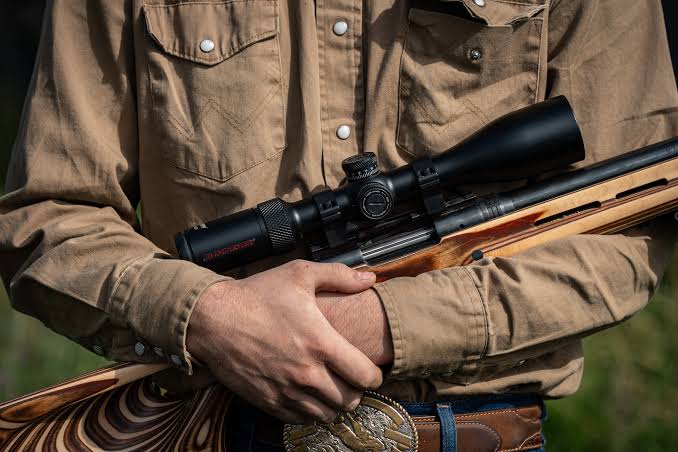
29. What scope is best for backcountry hunting?
A lightweight, durable 2-10x or 3-9x scope is often practical. The Leupold VX-Freedom in this guide is attractive because of its low listed weight. Backcountry hunters should also prioritize reliable mounts, weather protection, navigation, communication, and emergency planning.
30. What scope is best for hunting from a tree stand?
A low starting magnification, generous field of view, and simple reticle are useful. A 3-9×40 is often enough. Follow tree-stand rules, use a full-body harness, keep the firearm unloaded while climbing as required, and use a haul line according to safety guidance.
31. What scope is best for hunting in thick woods?
Choose a scope that begins around 1.5x to 3x and has a visible, uncomplicated reticle. A 4-12x scope can work, but its 4x low end may feel restrictive at close range. Keep both eyes open when acquiring the sight picture if trained to do so safely.
32. What scope is best for open fields?
A 3-9x, 4-12x, or similar scope can be useful. Extra magnification helps with detail from a stable position, but it narrows field of view and magnifies movement. Set ethical distance limits based on practice, conditions, and the ability to identify a safe background.
33. Can I use a hunting scope for target practice?
Yes. Regular range practice is essential for confirming zero, learning controls, and identifying limitations. Follow range commands, wear eye and hearing protection, keep the muzzle in a safe direction, and use only approved targets and distances.
34. How often should I check scope zero?
Check before the season, after mounting changes, after a significant impact, after long travel, when changing ammunition, and whenever point of impact seems unusual. A quick check is also wise after major temperature or altitude changes.
35. Does changing magnification change point of impact?
A properly functioning scope should maintain point of impact as magnification changes within normal tolerances. Test this at the range. If the shift is meaningful or inconsistent, inspect the mount and contact the manufacturer or a qualified professional.
36. Why is my scope image blurry?
Possible causes include an incorrectly focused eyepiece, excessive magnification for the conditions, parallax, dirty exterior lenses, heat shimmer, poor eye position, or an internal defect. Focus the reticle first, check eye relief, lower magnification, clean lenses correctly, and seek service if the problem remains.
37. Why do I see a black ring around the image?
Your eye is likely outside the scope’s ideal eye box or too close or far from the ocular lens. Adjust head position and verify the mount location from natural shooting positions. Do not crawl forward on the stock, especially on a recoiling firearm.
38. Why does my scope lose zero?
Common causes include loose base screws, incorrect ring torque, damaged mounts, a moving action screw, inconsistent ammunition, internal optic problems, or shooter-position changes. Stop using the setup until the cause is found. Follow manufacturer guidance or consult a qualified professional.
39. Can overtightening rings damage a scope?
Yes. Excessive torque can dent or crush the tube, bind internal parts, distort the optical system, or damage finishes. Use a calibrated torque tool and the ring manufacturer’s specifications.
40. How should I clean scope lenses?
Blow away loose grit first, then use a clean lens brush or optical blower. Apply lens-safe fluid to a clean microfiber cloth rather than flooding the lens. Wipe gently from the center outward. Avoid paper towels, shirt fabric, household glass cleaner, and abrasive pressure.
41. How should I store a scoped hunting rifle?
Store the unloaded firearm securely, legally, and inaccessible to children and unauthorized users. Use a dry environment, remove wet covers, protect lenses, and follow local storage laws. A soft case is for transport, not always ideal for long-term moisture control.
42. Are waterproof and fogproof claims absolute?
No. They describe design and testing within manufacturer limits, not immunity to all damage or conditions. Seals can be compromised by impact, age, or unauthorized disassembly. Avoid submersion unless specifically supported and contact the manufacturer if internal fogging appears.
43. Can cold weather affect a hunting scope?
Cold can stiffen controls, reduce battery performance in illuminated models, change lubrication behavior, and create exterior condensation when moving between temperatures. Keep lenses protected, avoid breathing directly on cold glass, and allow gradual temperature changes when practical.
44. Do scope warranties cover accidental damage?
Coverage varies. Read the exact warranty and exclusions for the current product and seller. Keep proof of purchase when required, and never assume a warranty covers loss, theft, deliberate damage, improper installation, or unauthorized modifications.
45. Is buying a used scope a good idea?
It can save money, but inspect for dents, ring marks, scratched coatings, internal fogging, tracking problems, damaged threads, and missing serial information. Confirm transferability of warranty coverage and avoid items with uncertain origin or signs of tampering.
46. How can I avoid counterfeit scopes?
Buy from the manufacturer, an authorized dealer, or a reputable retailer; compare packaging and serial information; retain receipts; and be cautious of unusually low prices. Contact the manufacturer when authenticity is uncertain.
47. Are Amazon scope prices always under $500?
No. Prices and seller availability change frequently. This guide targets models commonly positioned below $500, but readers should verify the live price, exact configuration, seller, return terms, and included accessories before ordering.
48. What should I check when an Amazon listing has multiple scope variants?
Confirm the selected magnification, objective size, reticle, tube diameter, finish, and included accessories before checkout. Variant pages can change the product without changing the main title or images.
49. Should I spend more on the scope or the mounts?
Treat the scope, base, and rings as one system. A good scope in weak or incompatible mounts can fail. Reserve enough budget for reputable hardware, correct installation, range ammunition, eye and hearing protection, safe storage, and training.
50. What should I do before hunting with a new scope?
Confirm lawful equipment rules, mount and inspect the optic, establish a safe zero, test from field positions, verify eye relief with hunting clothing, learn the reticle, check fasteners, and carry a trip plan plus basic emergency gear. Do not wait until opening morning.
51. What should I never do with a rifle-mounted scope?
Never use it to scan people, roads, houses, vehicles, or unidentified movement. Use binoculars for observation. Keep the muzzle pointed in a safe direction and place your finger outside the trigger guard until a lawful shot is intended.
52. Do I need binoculars if I have a rifle scope?
Yes. Binoculars allow safer observation without pointing a firearm. Use them to locate and identify animals, assess surroundings, and confirm the background before the rifle is brought into position.
53. When should I contact an optics professional?
Seek help when mounting compatibility is uncertain, the scope will not hold zero, controls bind, internal fogging appears, the image remains distorted, eye relief cannot be made safe, or you lack proper tools and torque specifications.
54. When should I contact a wildlife agency or local authority?
Contact the relevant agency when you are unsure about season dates, licenses, tags, legal equipment, illuminated reticles, night hunting, transport, public-land access, shooting hours, or any local restriction. Regulations can change and vary by location.
55. Can a better scope replace practice and judgment?
No. A scope can improve visibility and provide an aiming reference, but it cannot replace firearm training, safe handling, legal knowledge, target identification, range practice, wind judgment, stable positions, physical preparation, or ethical restraint.
Read more: 15 Best Hunting Clothes for Whitetail Deer