
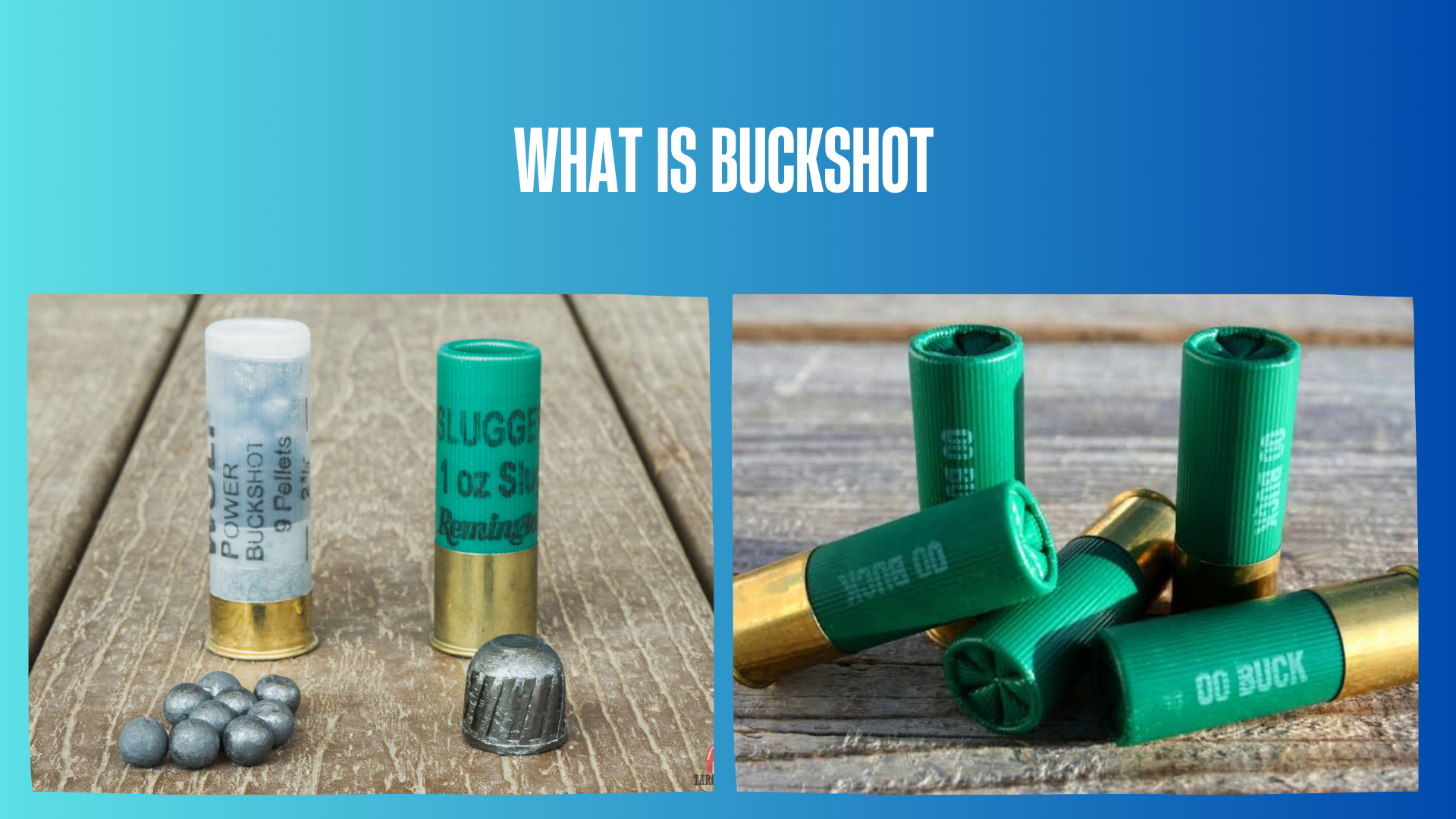

If you have seen the words 00 buck on a shotgun ammunition box, you may have wondered what is buckshot, how its numbering works, and whether it is the same thing as birdshot or a slug. Those distinctions matter to new shotgun owners and hunters because different shotshells contain different projectiles, and the type printed on the box does not tell you whether it is lawful or suitable for a particular hunt.
This guide explains buckshot in plain English. It covers what the pellets are, the meanings of common labels, the difference between the main shotshell categories, and the basic legal, safety, and ethical checks to make before using shotgun ammunition. It is an educational overview, not a substitute for a manufacturer’s manual, supervised instruction, or current hunting regulations.
Quick Answer: What Is Buckshot?
Buckshot is shotgun ammunition containing several relatively large round pellets rather than many small birdshot pellets or one solid slug. It is named for its historical association with deer-sized game. In U.S. terminology, familiar sizes include No. 4 buck, No. 1 buck, 00 buck (pronounced “double-aught”), and 000 buck (“triple-aught”). The Sporting Arms and Ammunition Manufacturers’ Institute (SAAMI) describes traditional lead buckshot as pellets roughly 0.24–0.36 inch in diameter. Because buckshot fires multiple projectiles, each projectile must be accounted for; the shot does not become harmless merely because the target is missed. SAAMI’s buckshot glossary provides the industry terminology.
What Does Buckshot Actually Mean?
The word shot refers to the individual small spherical projectiles used in many shotgun shells. Buckshot identifies the comparatively large end of that category. Several pellets are packed inside a shotshell. The ammunition is still a single round even though it contains multiple pellets.
Do not confuse the terms shotgun, shotshell, and buckshot. A shotgun is the firearm; a shotshell is the ammunition; buckshot is one kind of projectile load that may be contained within a shotshell. A shotgun can be designed to use different commercially made shotshell types, but only those specified as compatible by its manufacturer should ever be considered.
The name comes from the historic use of large shot for hunting deer, including male deer called bucks. The name is a description of ammunition type, not proof that it is legal for deer hunting in your area or suited to every species or situation.
Buckshot vs. Birdshot vs. Slug: The Essential Differences
All three terms appear on shotgun ammunition packaging, but they describe substantially different projectile types. A comparison is especially useful when a product label includes both a gauge and a shot-size number.
| Shotshell type | What’s inside | Common context | What beginners should remember |
|---|---|---|---|
| Birdshot | Numerous comparatively small pellets | Game-bird hunting and clay-target sports, with shot size and material chosen for the lawful activity | No. 4 birdshot is not the same as No. 4 buckshot. |
| Buckshot | Several relatively large pellets | Some deer and other lawful hunting uses, as well as other regulated applications | Each pellet is a separate projectile; legal use and firearm compatibility still need checking. |
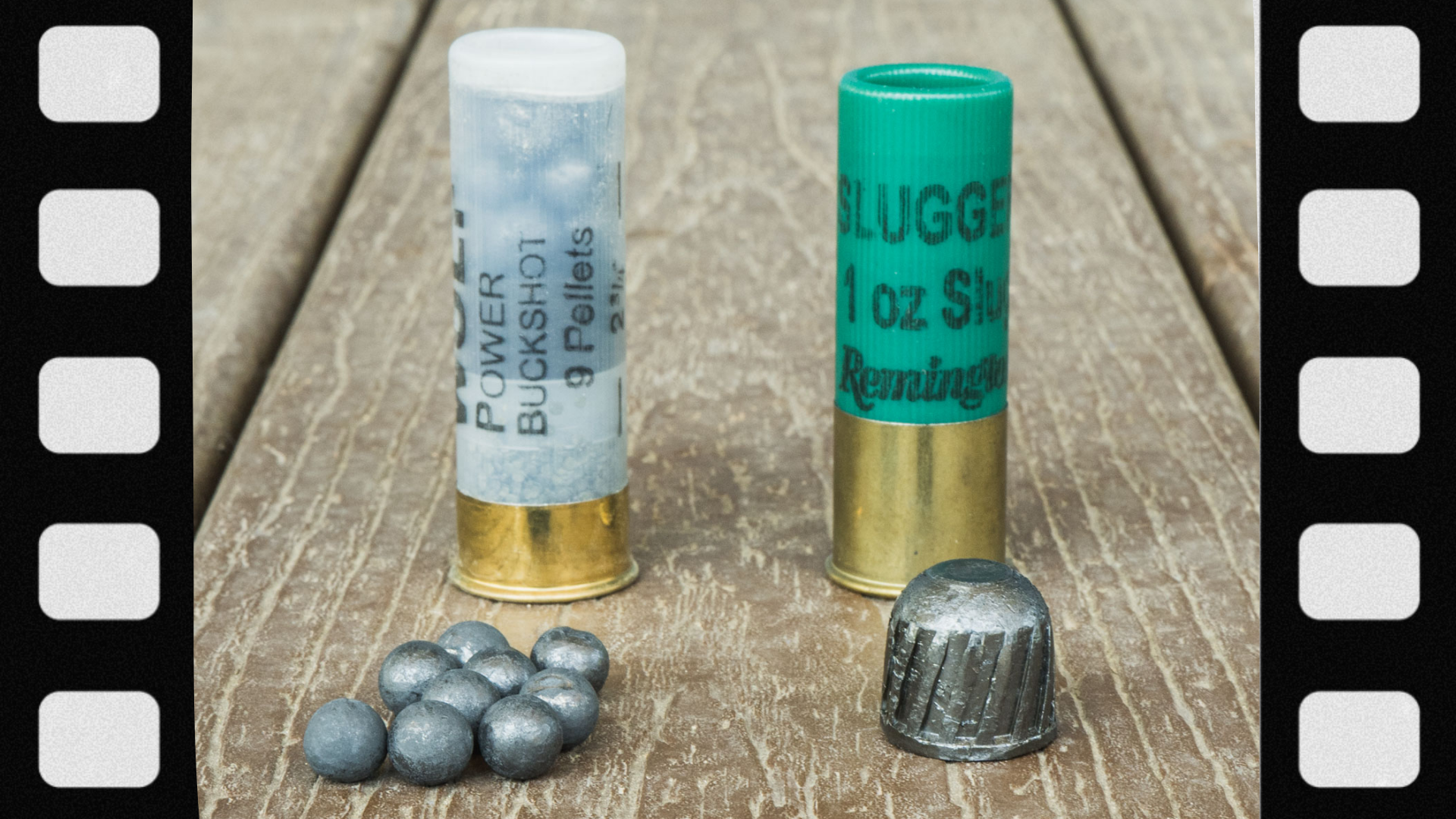
| Slug | One large solid projectile rather than a load of multiple pellets | Certain big-game hunting applications where legal and compatible | Slugs are not buckshot, and not every shotgun or barrel arrangement accepts every slug design. |
The distinction between a shell holding shot and one holding a single slug is also explained in the national hunter-education shotshell guide. The terms describe projectile categories, not a universal ranking from “good” to “bad.” Responsible selection depends on the specific lawful activity, shotgun specifications, training, and conditions.
Does Buckshot Contain One Bullet or Many?
It contains several large pellets. A slug shell, by contrast, uses a single main projectile. Although people sometimes casually call each buckshot pellet a bullet, pellet is the clearer term when explaining the ammunition.
Is Buckshot the Same as Birdshot?
No. Both are forms of shot, but birdshot pellets are generally much smaller and are commonly supplied in larger quantities per shell. Do not assume that sharing a number, such as “4,” makes two types interchangeable: No. 4 buckshot and No. 4 birdshot describe different pellet diameters.
Buckshot Sizes Explained: No. 4, No. 1, 00, and 000
Buckshot sizes use a naming system that can initially seem backward. Within the numbered buckshot sizes, a smaller number generally denotes a larger pellet; after No. 1 come the “aught” names. These refer to pellet size, not the shell’s gauge, length, or exact pellet count.
| U.S. marking | Common name | Approximate traditional lead pellet diameter | Terminology note |
|---|---|---|---|
| No. 4 buck | Number four buck | 0.24 inch (6.1 mm) | Smaller end of common buckshot sizes; not No. 4 birdshot |
| No. 3 buck | Number three buck | 0.25 inch (6.4 mm) | Less commonly discussed than 00 |
| No. 2 buck | Number two buck | 0.27 inch (6.9 mm) | Still belongs to the buckshot category |
| No. 1 buck | Number one buck | 0.30 inch (7.6 mm) | Larger than No. 4 buck |
| 0 buck | Single-aught | 0.32 inch (8.1 mm) | The numeral zero is a shot-size designation |
| 00 buck | Double-aught | 0.33 inch (8.4 mm) | Two zeros; one of the best-recognized buckshot labels |
| 000 buck | Triple-aught | 0.36 inch (9.1 mm) | Three zeros; larger pellets than 00 |
These are approximate conventional U.S. size references for traditional lead shot, not a promise about any specific manufacturer or ammunition lot. Nonlead materials and international shot-size systems may use different conventions. The industry-level SAAMI definition covers traditional lead buckshot across the overall 0.24–0.36-inch range. Check the actual manufacturer’s product information if precise dimensions or material matter.
What Does 00 Buckshot Mean?
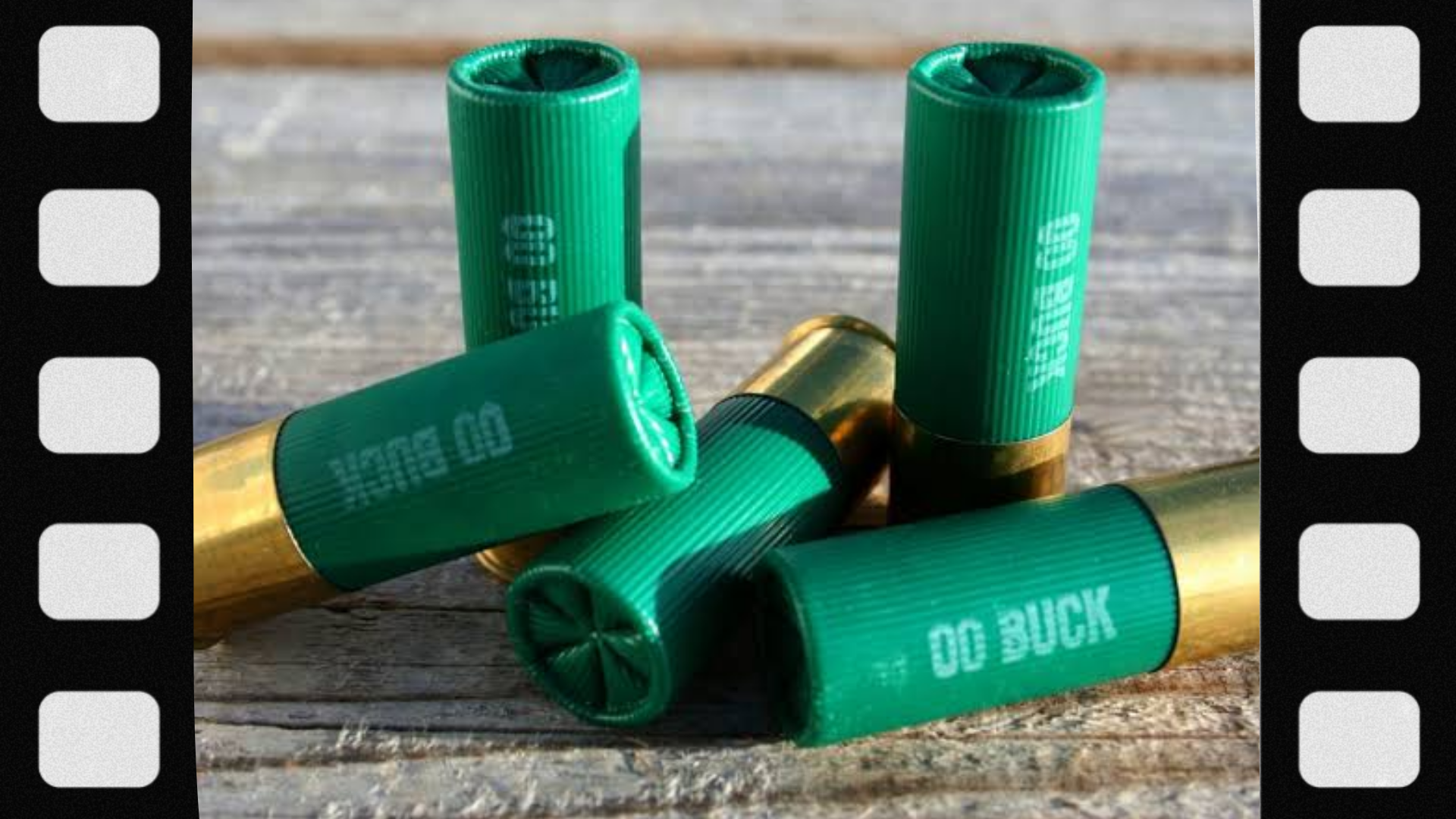
It means the pellets are in the double-aught size category. The two zeros do not mean a “zero gauge,” and they do not tell you the number of pellets in a shell. A box marked 00 buck should therefore not be treated as interchangeable with ammunition labeled No. 4 buck, 000 buck, or slug.
Is 000 Buckshot the Same as 00 Buckshot?
No. They are different nominal pellet sizes: 000 is larger in diameter than 00. Neither name, by itself, specifies how many pellets are loaded into a shell, how it behaves in a particular shotgun, or which hunting uses are permitted.
Why Do Different Brands List Different Pellet Counts?
Shell dimensions, payload design, pellet size, and the maker’s loading configuration can vary. That is why a size label alone is insufficient to determine a fixed pellet count. Read the specific packaging and manufacturer instructions rather than copying a count from another product or assuming every 12-gauge shell marked “00” is identical.
How Does Buckshot Work in a Shotgun?
A buckshot shotshell contains multiple pellets packaged with the other components of shotgun ammunition. When a shotgun is fired under controlled, lawful conditions, those pellets travel out of the barrel as separate projectiles. Their distribution changes with distance, firearm configuration, and ammunition design. The resulting grouping is often called a shot pattern.
A pattern is not a guarantee that every pellet will remain together or strike the same point. There is no universal distance at which buckshot becomes harmless, no fixed “spread” that applies to all shotguns, and no excuse to fire without a known safe backstop. A missed or stray pellet can create a serious hazard. For these reasons, shooting instruction and range supervision matter more than simplistic claims about spread or effectiveness.
Buckshot is not an area-coverage shortcut and does not remove the responsibility to identify the intended target positively, understand the surroundings, and account for every projectile. At any supervised range, obey the facility’s ammunition restrictions and guidance.
What Is Buckshot Used For?
Deer Hunting Where Local Regulations Allow It
Buckshot is historically associated with deer hunting, particularly in certain shotgun-hunting traditions. However, some jurisdictions restrict or prohibit buckshot for deer even when they allow shotguns or shotgun slugs. Others impose particular ammunition, firearm, hunting-unit, or managed-hunt conditions. The correct question is not simply “Can a shotgun be used for deer?” but “What ammunition is legal for this species, location, land type, and season?”
For example, the Pennsylvania Game Commission has published rules distinguishing buckshot from lawful single-projectile deer ammunition. That dated example illustrates why rules cannot be generalized across states; it should not be used as a substitute for the current-year digest.
Other Hunting Contexts
Depending on a state’s rules and the animal involved, buckshot may be discussed in connection with other medium-sized game or predator hunting. That does not make it universally appropriate. Hunting regulations may specify minimum or maximum shot sizes, projectile materials, authorized weapons, or outright prohibitions. Animal welfare matters too: hunters should follow certified education guidance and only undertake hunts for which they have the necessary proficiency and legal equipment.
Why Buckshot Is Not Ordinary Bird-Hunting Ammunition
The large pellets associated with buckshot are not a general-purpose replacement for the smaller shot commonly used for game birds and clay targets. Different bird species and activities have different ammunition requirements. In particular, the U.S. Fish and Wildlife Service explains nationwide nontoxic-shot requirements for hunting waterfowl and coots. Hunters should verify both the lawful shot material and any state or land-specific shot-size rules before a trip.
Other Firearm Contexts
Buckshot also appears in discussions of law enforcement and personal protection. Those are distinct topics with their own legal, storage, and training considerations. The existence of those uses is not a recommendation for any particular load or tactic. In household settings, secure storage and prevention of unauthorized access should come first.
How to Understand a Buckshot Ammunition Label
A shell or box might display several markings. Each answers a different question; none should be read in isolation.
| Label element | What it describes | Why it matters |
|---|---|---|
| Gauge (for example, 12 GA) | The shotshell/firearm bore-size category | It must match the shotgun’s designated chambering. |
| Shell length (for example, 2¾ inches) | The nominal shotshell length designation | Use only lengths permitted by the firearm maker; the chamber marking governs. |
| Shot type (for example, BUCK) | The broad projectile category | Distinguishes buckshot from birdshot or a slug. |
| Shot size (for example, 00) | The nominal size of individual pellets | Does not indicate gauge or automatically reveal pellet count. |
| Material or special designation | Manufacturer’s stated projectile composition or features | May matter for lawful hunting, firearm compatibility, and environmental restrictions. |
For illustration, 12 GA / 2¾ in / 00 BUCK would describe a 12-gauge shotshell with a 2¾-inch nominal shell length and double-aught pellets. This is only an example of interpreting a label, not a recommendation to use that configuration. For safety, the national hunter-education guidance instructs users to match both gauge and shell length to the firearm manufacturer’s specifications.
Is Buckshot Always Made of Lead?
Traditional buckshot is commonly associated with lead, and SAAMI’s concise glossary definition specifically describes lead pellets. Other shotshell products and nonlead shot materials also exist, so you should never assume the composition of a particular box from the word buckshot alone. The maker’s labeling is the appropriate place to verify the actual load.
“Nonlead,” “nontoxic,” and “legal for every hunt” are not synonyms. For U.S. waterfowl hunting, federal rules specify approved nontoxic-shot compositions, and state or area restrictions may be stricter. A material being nonlead does not establish that its size, load, or hunting use is lawful. Consult the applicable official wildlife agency before hunting.
Is Buckshot Legal for Deer Hunting?
There is no single nationwide yes-or-no answer in the United States. Lawful ammunition varies by jurisdiction, species, season, weapon type, and sometimes the particular wildlife management unit or public-land area. A state that allows shotgun hunting may permit slugs while limiting buckshot. Different land managers may have additional requirements.
Before hunting, consult the current hunting regulations from the wildlife agency with authority over that specific location. Confirm the season, species, zone or unit, firearm rules, ammunition type, shot size if specified, any nontoxic-shot requirements, required licenses and tags, and land access. Check again shortly before departure because temporary closures and emergency changes can occur.
Readers looking for a starting point can use their own state’s wildlife agency website and official hunting regulation booklet. U.S. Fish and Wildlife Service guidance is important for federal migratory bird regulations; it does not replace state big-game rules.
Buckshot Safety: What Every Beginner Should Know
Understanding ammunition labels is only one element of firearm safety. The Bureau of Alcohol, Tobacco, Firearms and Explosives (ATF) firearm-safety guidance emphasizes foundational practices:
- Treat every firearm as if it is loaded. Never rely on an assumption about chamber status.
- Keep the muzzle pointed in a safe direction. This applies during carrying, handling, and storage-related tasks.
- Keep your finger outside the trigger guard until ready to fire. A mechanical safety is not a replacement for sound handling.
- Know exactly what you are aiming at and what is beyond it. Multiple pellets create multiple potential paths of danger.
Use appropriate eye and hearing protection at a lawful shooting facility. Keep firearms secured against unauthorized access, particularly by children, and store ammunition in accordance with law and manufacturer guidance. If you do not understand an ammunition designation or firearm compatibility, stop and ask a qualified instructor or the manufacturer.
Another serious error is mixing different gauges of shotshell ammunition. The National Shooting Sports Foundation warns that a smaller-gauge shell may lodge as a dangerous bore obstruction in a larger-gauge shotgun. Never substitute one gauge for another, never use an overlength shell, and do not attempt to modify ammunition to make it fit.
Common Buckshot Misunderstandings
- “00 means twelve-gauge.” False: 00 is a pellet-size marking, not a gauge.
- “Every 00 buck shell contains the same number of pellets.” False: loading configurations vary by manufacturer and product.
- “Buckshot and shotgun slugs are interchangeable terms.” False: one is a multiple-pellet load; the other has one main projectile.
- “Buckshot only travels a short distance.” Unsafe: pellets can continue beyond the apparent target area and remain hazardous.
- “A wider pattern means there is no need to aim carefully.” False: responsible shooting requires precise target identification and a safe backstop.
- “If the shotgun is legal for deer, buckshot must be legal too.” False: states often distinguish ammunition types in their hunting rules.
- “Nonlead ammunition is automatically approved everywhere.” False: composition, area, species, and additional regulatory requirements all matter.
Beginner Checklist Before Handling or Hunting With Buckshot
- Identify what the ammunition label actually says: gauge, shell length, type of shot, size, and material.
- Read the shotgun manufacturer’s manual and confirm the ammunition is specifically compatible.
- Check the intended shooting facility’s rules and complete appropriate firearm-safety training.
- If hunting, verify current regulations for the exact species, area, hunt dates, land, and ammunition category.
- Plan for appropriate eye and hearing protection and secure transport and storage.
- Know the target and background; never treat a multi-pellet load as an excuse for a questionable shot.
- If legality, equipment condition, or safety is uncertain, do not proceed until a qualified person or official source resolves it.
Final Answer: What Is Buckshot?
What is buckshot? It is a type of shotshell load made up of several large pellets, distinct from the smaller pellets of birdshot and the single main projectile of a slug. Labels such as No. 4, 00, and 000 identify nominal buckshot pellet sizes, not the shotgun gauge or a guaranteed pellet count. The responsible way to understand buckshot is to consider three separate questions: what the ammunition contains, whether it is compatible with the firearm, and whether it is legal and ethical for the intended activity. Always consult official regulations, manufacturer instructions, and qualified hunter education before use.
FAQs
1. What is buckshot in simple terms?
Buckshot is a shotgun-shell load containing a group of large round pellets. It is different from birdshot, which has smaller pellets, and a slug, which is one primary solid projectile.
2. Why is it called buckshot?
The name comes from its historical association with hunting deer, including male deer called bucks. It does not mean that buckshot is legal for deer hunting in every state.
3. Is buckshot a bullet?
Buckshot refers to multiple individual pellets loaded together in a shotshell. Calling the entire load a single bullet obscures that multiple projectiles are present.
4. What does 00 buck mean?
The marking 00, pronounced double-aught, identifies a conventional buckshot pellet-size category. It is not a gauge, shell length, or indication that the shell contains two pellets.
5. How do you pronounce 000 buckshot?
In U.S. usage, 000 is generally called triple-aught buck. The three zeros identify a nominal pellet size larger than 00.
6. What is the difference between No. 4 buck and No. 4 birdshot?
They belong to different shot-size categories. Traditional No. 4 buck pellets are approximately 0.24 inch in diameter; No. 4 birdshot pellets are much smaller. Check the word ‘buck’ or ‘birdshot’ on the box.
7. Is No. 1 buckshot bigger than No. 4 buckshot?
Yes. In the conventional U.S. buckshot numbering system, No. 1 is a larger pellet than No. 4. The sizing convention can seem counterintuitive to someone learning it for the first time.
8. Is 000 buckshot larger than 00?
Yes. Conventional 000 buck pellets are approximately 0.36 inch across, compared with approximately 0.33 inch for 00. These are nominal traditional lead sizes, not guaranteed measurements for every product.
9. How many pellets are in a buckshot shell?
There is no universal pellet count. The number depends on the specific shell and loading configuration, including shot size and payload. Consult the manufacturer’s labeling instead of assuming a standard count.
10. Does 12-gauge mean 12 pellets?
No. Gauge is a shotgun bore-size category. It does not tell you how many pellets are in a shell. Similarly, 20-gauge does not mean a shell contains 20 pellets.
11. Can buckshot be used in a 20-gauge shotgun?
Buckshot ammunition exists in more than one gauge, but the only relevant question for an individual firearm is whether the exact ammunition is compatible with its marked chamber and manufacturer specifications. Never use a different gauge or overlength shell.
12. What is the difference between buckshot and a slug?
Buckshot includes multiple large pellets; a slug has one main projectile. They have different labels and can have different hunting rules and firearm-compatibility requirements.
13. Is buckshot the same as a shotgun shell?
No. A shotgun shell is the complete cartridge. Buckshot describes one kind of projectile load inside a shotshell. Other shells may contain birdshot or a slug.
14. Does buckshot spread when fired?
Its pellets travel as separate projectiles and may form a pattern, but how that pattern looks varies by ammunition and firearm. Never assume a fixed spread or treat it as a reason to shoot without a safe backstop.
15. Can buckshot pellets miss the intended target?
Yes. Multiple projectiles introduce multiple paths that must be accounted for. Proper target identification, safe direction, and a reliable backstop remain essential.
16. Does buckshot stop being dangerous after a short distance?
No safe universal distance can be assumed from the word ‘buckshot.’ Stray pellets remain hazardous. Shooting should occur only in a safe, authorized environment with appropriate backstops.
17. Is buckshot allowed for deer hunting everywhere?
No. Regulations differ among jurisdictions and even between areas or controlled hunts within the same state. Check the current official wildlife-agency rules for your exact hunt.
18. Can I assume buckshot is legal if slugs are legal?
No. Hunting rules often distinguish multi-pellet buckshot loads from single-projectile slugs. Confirm the authorized ammunition category rather than relying on the word ‘shotgun.’
19. Is buckshot legal on public land?
Public-land rules depend on the land manager, species, state, season, and designated hunt. Check the official public-land notices and the applicable wildlife regulations before carrying or using any ammunition for hunting.
20. Is buckshot appropriate for elk hunting?
Do not infer suitability or legality from its name or from general deer-hunting discussions. Large-game rules can limit the projectile types allowed. Consult your state agency, hunter educator, and official equipment requirements for the specific species.
21. Can you use buckshot for ducks or geese?
Do not treat buckshot as ordinary waterfowl ammunition. U.S. waterfowl hunting has federal nontoxic-shot requirements, and additional species and shot-size rules can apply. Verify all applicable regulations and approved materials.
22. Does nontoxic shot mean all types of buckshot are permitted?
No. Nontoxic-shot approval relates to the projectile material under relevant rules. Shot size, species, area, and other regulations may still prohibit a load.
23. Is all buckshot made of lead?
Traditional buckshot is commonly lead-based and SAAMI’s glossary describes lead pellet sizes. Other shot materials exist, so confirm the composition on the specific package and the manufacturer’s documentation.
24. What is buckshot usually made of?
Traditional buckshot is often described as round lead pellets. Products using other materials may be sold under different descriptions. The label, not appearance, should establish composition.
25. What are ‘aught’ and ‘double-aught’ in ammunition names?
They are spoken terms for zero-based shot-size markings: 0 is single-aught, 00 is double-aught, and 000 is triple-aught. They refer to pellet size, not the gun’s gauge.
26. Is a bigger buckshot number always a bigger pellet?
No. In the traditional numbered buckshot sequence, a lower number refers to a larger pellet, and the sequence then continues into 0, 00, and 000 sizes. Read the full printed designation.
27. Can different buckshot brands use different pellet materials?
Yes, product composition can vary. Materials and specialty designs should be checked in the manufacturer’s published specifications, especially where environmental restrictions apply.
28. Is a buckshot shell’s length the same as the pellet size?
No. Shell length is the cartridge’s chamber-length designation, while shot size refers to individual pellets. The two measurements serve different purposes and should never be confused.
29. Can I use a longer shotshell because it fits before firing?
No. Apparent physical fit is not proof of safe compatibility. Follow the shotgun manufacturer’s chamber-length marking and manual exactly; a shell exceeding the permitted length creates a serious hazard.
30. Does buckshot have more recoil than birdshot?
Recoil depends on the complete ammunition load and firearm, not solely whether the pellets are called buckshot or birdshot. Avoid universal comparisons; seek qualified instruction if recoil is a concern.
31. Do I need eye and hearing protection with buckshot?
Yes. Appropriate eye and hearing protection are standard firearm-safety precautions at a shooting range regardless of the projectile category.
32. What is the safest way to learn about buckshot?
Start with a certified hunter-education program, the firearm manufacturer’s manual, and supervised training at a lawful range. This provides context for handling, ammunition labels, and safe backstops.
33. Can buckshot be stored with a shotgun?
Follow local storage law and manufacturer guidance. Secure firearms against unauthorized access and store ammunition safely; the ATF recommends locked storage with additional precautions where children may have access.
34. Does a shotgun’s mechanical safety make buckshot handling safe?
No. A mechanical safety does not replace muzzle control, trigger discipline, correct ammunition, or knowing the target and what is beyond it.
35. How can I check buckshot hunting rules in my state?
Go to the official state wildlife agency’s current hunting regulations. Look up the species, hunting method, area or wildlife unit, dates, ammunition restrictions, licenses, and land-specific requirements.
36. Why should I read the shell box instead of relying on color?
Shotshell colors and appearance are not a reliable substitute for printed specifications. Identify the exact gauge, length, projectile type, and other designations and confirm compatibility.
37. What should I do if a shell’s markings are unclear?
Do not use it. Ask the ammunition or firearm manufacturer, a qualified firearms instructor, or a reputable range safety officer to identify it. Never guess about gauge, shell length, or load type.
Trusted Safety and Reference Resources
For primary terminology, firearm-safety guidance, and hunting rules, consult the following authoritative references rather than relying solely on retailer descriptions or informal advice.
- SAAMI: Buckshot definition — industry terminology and traditional lead-pellet size range.
- National Hunter Education: Shotshells — projectile categories and gauge/length compatibility.
- ATF: Firearm safety and security — safe handling and storage.
- NSSF: Rules of safe firearm handling — detailed precautions and common hazards.
- U.S. Fish and Wildlife Service: Nontoxic shot regulations — federal waterfowl and coot rules