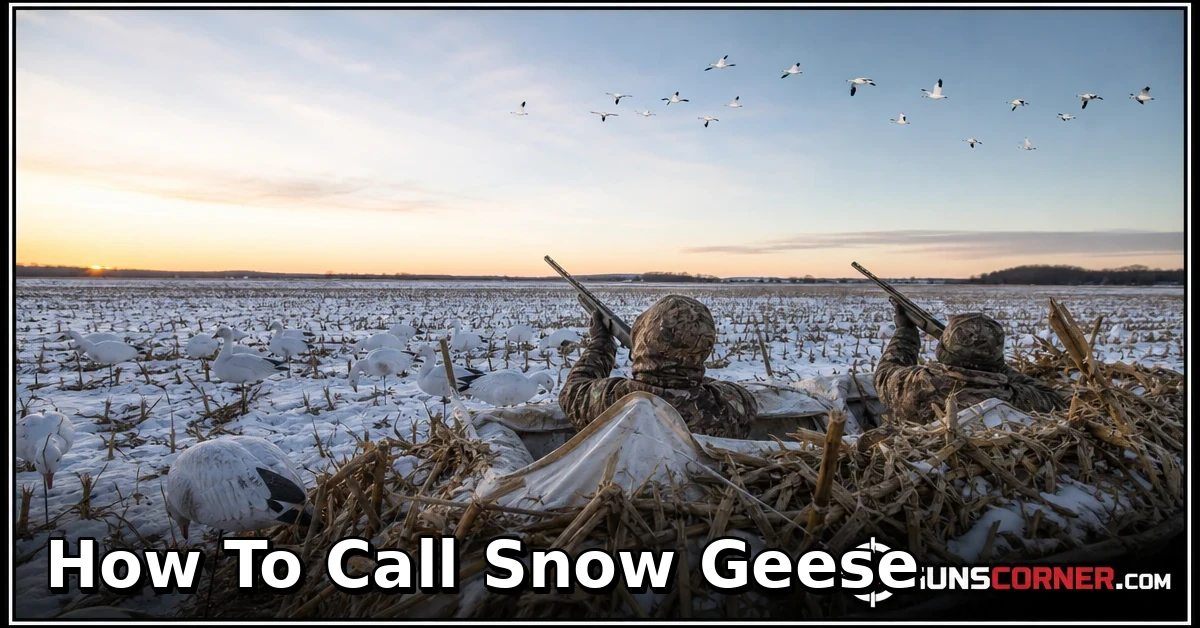

Learning how to call snow geese involves more than making noise. Effective calling works with proper scouting, a convincing decoy spread, concealment, wind awareness, and careful observation of flock behavior. This guide explains practical calling methods while emphasizing current waterfowl regulations, safe shooting, ethical decisions, and responsible recovery.
To call snow geese, begin with controlled contact and feeding-style sounds while distant birds are evaluating your spread. Increase or reduce volume according to distance, then use shorter, less aggressive calling as birds approach. Let the decoys, concealment, wind, and field location do much of the work. Always verify current regulations before hunting, especially rules governing electronic calls and conservation-order seasons.
Important Legal and Safety Notice Before You Hunt
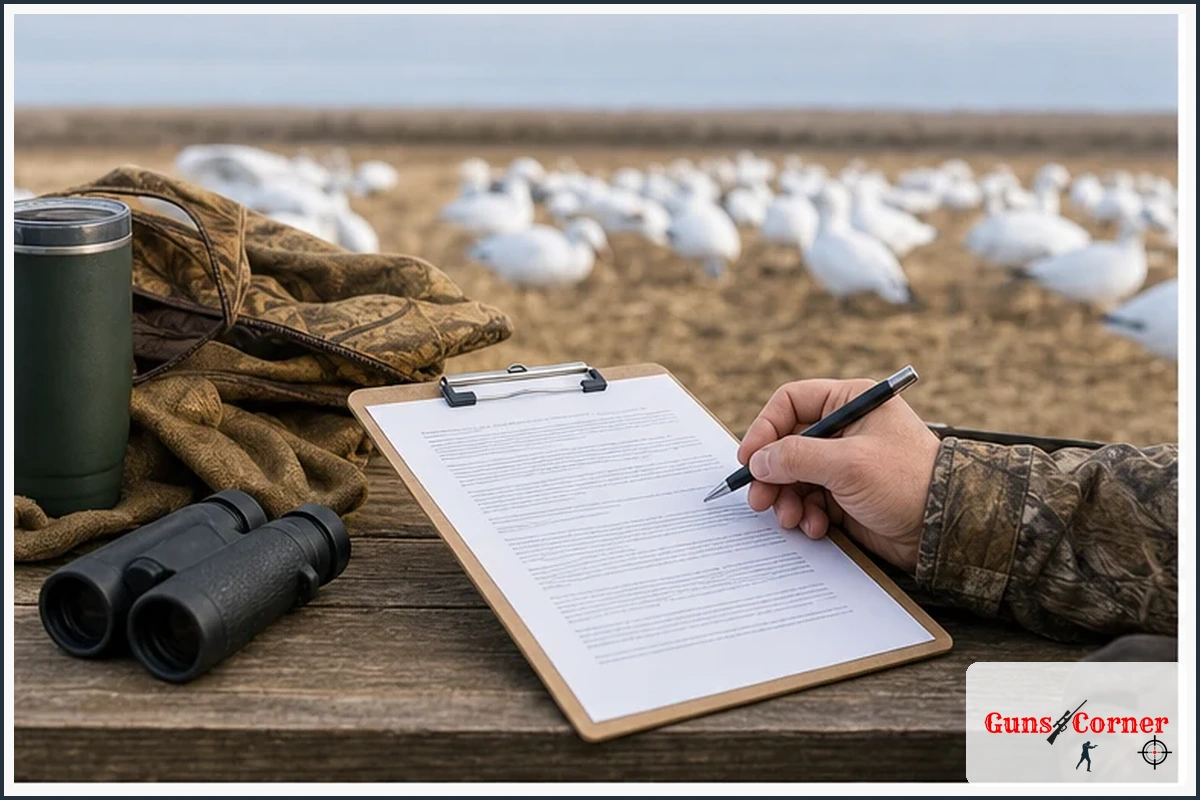
Migratory-bird regulations vary by country, state, province, season, land type, and hunting method. Before hunting, check the current rules from the U.S. Fish and Wildlife Service and your applicable state or provincial wildlife agency.
- Confirm your hunting license, migratory-bird validation, permits, and required stamps.
- Verify season dates, daily and possession limits, legal shooting hours, and reporting requirements.
- Check whether electronic callers are legal during the specific season and in your location.
- Use only legal firearms, ammunition, and non-toxic shot where required.
- Confirm public-land boundaries or obtain permission before entering private property.
- Identify geese clearly before shooting; do not assume every white goose is a legal snow goose.
- Never shoot toward roads, homes, livestock, people, vehicles, or unclear backgrounds.
- Unload firearms while traveling, crossing obstacles, or handling decoys, and follow hunter-education guidance.
What Snow Goose Calling Is Meant to Accomplish
How snow geese communicate while traveling, feeding, and regrouping
Snow goose flocks produce frequent vocalizations while traveling, regrouping, and responding to other birds. A caller’s goal is not to reproduce every sound perfectly. The practical goal is to make your setup appear active and believable enough to gain attention or support a flock that is already considering the area.
Why calling should support the spread and concealment—not replace them
Calling cannot fix a poor location, an exposed blind, an incorrect wind setup, or an unattractive feeding area. Geese often respond first to the overall scene: habitat, bird activity, decoy placement, and movement. Calls should reinforce that visual impression.
What beginners can realistically expect from calling
Calling may attract attention, redirect a flock, or encourage birds to inspect the spread, but it does not guarantee a close approach. Response varies with hunting pressure, weather, flock experience, local food sources, visibility, and the quality of the setup.
Snow Goose Calls and Equipment
Electronic callers, mouth calls, and mechanical calls
Electronic callers can produce multiple sounds and substantial volume, while mouth calls are compact and allow immediate control. Mechanical or hand-operated calls may provide another option depending on local rules and the hunter’s preference.
Electronic calls may be legal during some conservation-order opportunities but prohibited during regular migratory-bird seasons or restricted in particular jurisdictions. Never rely on a general rule; verify the exact season and location before using one.
How to evaluate a call: volume, tone, control, durability, and ease of use
- Volume: Enough to reach distant flocks without overwhelming nearby birds.
- Tone: A sound you can produce consistently is more useful than a complicated call you cannot control.
- Control: Look for easy changes in loudness, rhythm, and pause length.
- Durability: Consider cold, moisture, mud, transport, and battery or reed reliability.
- Ease of use: Beginners benefit from a simple setup they can operate without excessive movement.
Matching calling equipment to conservation-order and regular-season rules
Some jurisdictions distinguish between regular migratory-bird seasons and special conservation-order provisions. Those provisions may change allowable equipment, shooting hours, or other requirements. Confirm the current rules with official wildlife agencies before selecting a caller or planning a hunt.
Buyer suitability: simple setup for beginners versus tunable equipment for experienced hunters
Beginners generally benefit from a straightforward call that produces repeatable sounds and does not require constant adjustment. Experienced hunters may prefer more control over tone, rhythm, or sound selection. Expensive equipment is not a substitute for scouting, concealment, or safe field skills.
How to Make Basic Snow Goose Sounds
Start with airflow and rhythm before trying to imitate a flock
Practice steady airflow, short notes, pauses, and consistent rhythm before attempting complex sequences. The objective is controlled sound rather than maximum volume. Practice outside the field so you do not create unnecessary movement or distraction during a hunt.
Basic greeting, contact, excitement, and feeding-style sequences
A simple practice progression is:
- Begin with several calm contact notes.
- Add a short pause and listen for a response.
- Use a more energetic sequence when birds show interest or begin circling.
- Finish with shorter, less frequent sounds as birds approach the spread.
These labels are useful for organizing practice, not guarantees that geese interpret every sound identically.
How loud and how often to call when birds are far away
Distant birds may require more volume and longer sequences, especially in strong wind. Call in a way that attracts attention without becoming a constant wall of sound. Watch the flock after each sequence and adjust rather than repeating the same routine automatically.
Why calling cadence matters more than producing a perfect individual note
Rhythm, pauses, and changes in intensity often make a calling sequence sound more natural than one isolated note. A slightly imperfect sound with believable timing may be more useful than a technically clean note repeated without variation.
How to Call Snow Geese During an Approach
Calling distant flocks
Start with a clear, confident sequence when the flock is far enough away to need help locating the spread. Use visual observation to determine whether birds are searching, ignoring the area, or beginning to turn.
Reducing volume as birds commit
As birds turn toward the spread or begin losing altitude, reduce volume and shorten the sequences. Excessive calling at close range can make the setup appear unnatural and may encourage birds to keep circling rather than finish.
Stopping or changing calls when birds become wary
If birds turn away, increase altitude, stretch the flock, or stop responding, pause and reassess. Silence may be better than more calling. The problem may be concealment, decoy spacing, wind, glare, movement, or hunting pressure rather than the sound itself.
Using visual cues: wingbeats, circling, flock separation, and landing attempts
Watch wingbeats, body angle, altitude, and flock shape. Birds that circle tightly and lose altitude may need less calling. Birds that maintain speed and height may need a brief contact sequence—or may simply be committed to another destination.
Calling Tactics for Different Hunting Situations
Large migrating flocks
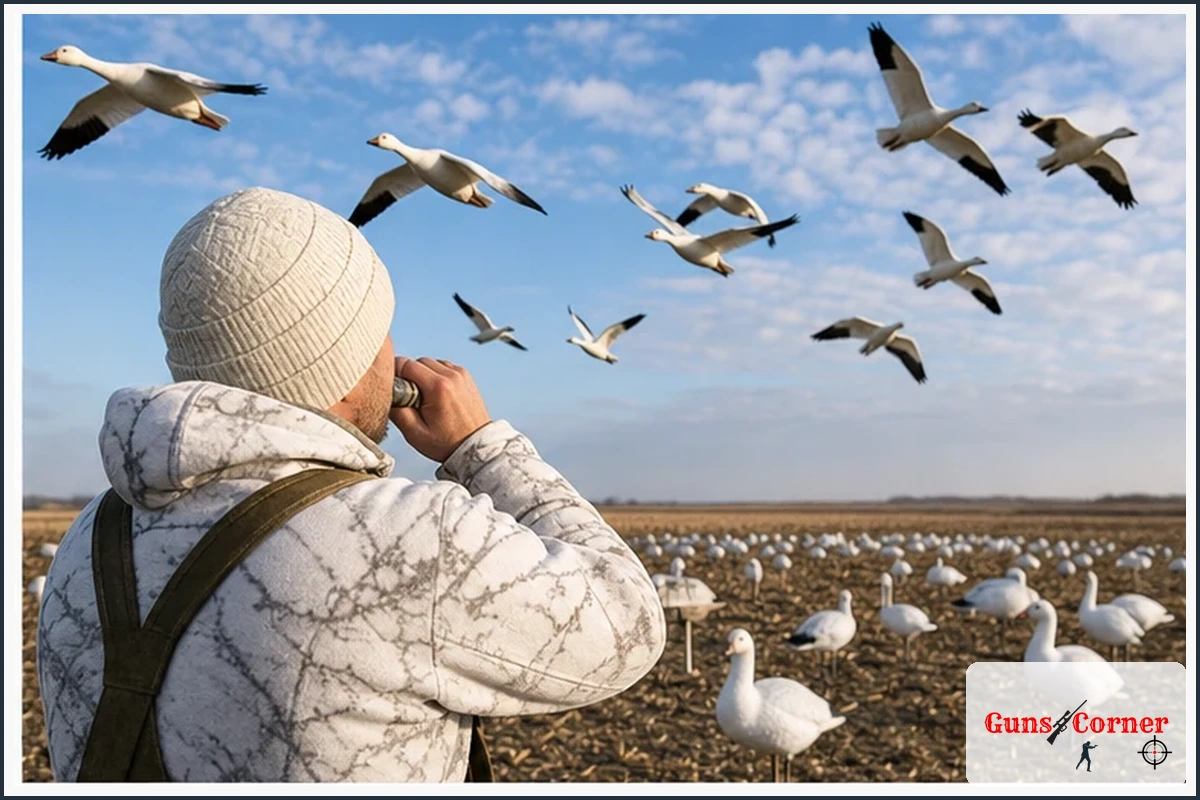
Large flocks may require strong, noticeable calling when distant. Avoid assuming that the entire flock will respond equally. Watch for a smaller group or individual birds that break formation and begin investigating.
Small groups and singles
Small groups often require restraint. Use softer, shorter sequences and allow time for the birds to respond. Calling continuously can make a small setup appear overly active.
Birds that circle without descending
Circling without landing may indicate poor concealment, an unconvinced spread, unfavorable wind, competing fields, or pressured birds. Stop calling briefly, observe their route, and determine whether the setup is visually convincing before changing sound.
Educated or heavily pressured snow geese
Heavily pressured birds may react more cautiously to loud or repetitive calling. A realistic spread, excellent concealment, limited movement, and carefully timed calling may be more useful than increasing volume.
Calling over a large decoy spread versus a smaller spread
A large spread may visually suggest substantial flock activity, while a smaller spread can be easier to conceal and manage. Calling should match the apparent activity of the spread. Neither spread size nor calling intensity guarantees success.
How Wind, Weather, and Field Conditions Change Calling
Adjusting volume in strong wind
Wind can carry or obscure sound, so distant birds may require clearer, stronger calling. Keep the adjustment controlled and watch the flock’s response. Do not assume that maximum volume is always better.
Calling in calm conditions and low visibility
Calm conditions may allow sound to carry more clearly, while fog, snow, or low visibility can reduce the value of visual confirmation. Maintain strict target-identification discipline and never shoot at sound or indistinct movement.
Cold fronts, snow, fog, and changing migration activity
Weather can change bird movement and feeding patterns, but its effects vary by region and day. Treat weather as a factor to observe, not a guaranteed migration trigger. Build extra time into travel and prepare for cold, wet conditions.
When poor concealment or an unsafe shooting angle—not calling—is the real problem
If birds repeatedly detect the blind or approach from an unsafe direction, changing calls is not the solution. Improve concealment, reposition legally if possible, or pass on the opportunity. A safe setup matters more than a close-range chance.
Common Snow Goose Calling Mistakes
Calling continuously at close birds
Nonstop calling can sound unnatural and may distract hunters from safe target identification. Use pauses and let the birds show you what they need.
Using maximum volume for every flock
Maximum volume is tiring, difficult to control, and not appropriate for every distance or wind condition. Match volume to the birds and the environment.
Overcalling birds that are already committed
When birds are turning, descending, or aligning with the spread, excessive calling may do more harm than good. Reduce sound and concentrate on remaining still.
Ignoring flock behavior and relying on a memorized routine
A memorized sequence is useful for practice, but field decisions should follow the birds’ behavior. Change timing, volume, or silence based on what you observe.
Calling while movement, glare, or poor blind placement gives away the hunters
A perfect call cannot compensate for exposed faces, moving hands, shiny equipment, or an obvious blind. Control movement and inspect the setup from a distance before hunting.
A Practical Snow Goose Calling Sequence
Before the flock is within calling range
Prepare the call, confirm safe shooting zones, and watch the flock’s direction. Use a controlled contact sequence when birds are distant and appear capable of evaluating the area.
During the first pass
Call enough to gain attention, then pause. Look for a change in direction, wingbeat, altitude, or flock shape. Avoid changing several variables at once.
When birds begin circling
Use shorter, less frequent sounds and remain still. If birds continue circling without descending, reassess concealment, wind, spread appearance, and competing food sources.
When to go quiet and prepare for a legal, ethical shot
Stop or greatly reduce calling when birds are close and the opportunity may develop. Every hunter must identify the species, confirm a safe background, remain within legal shooting conditions, and take only a practiced shot that can be made responsibly.
Post-hunt notes for improving the next setup
Record wind direction, weather, bird routes, response to calling, blind visibility, decoy placement, and reasons birds did or did not commit. These observations are more useful than assuming one call or routine caused the result.
Safety, Laws, and Ethical Hunting
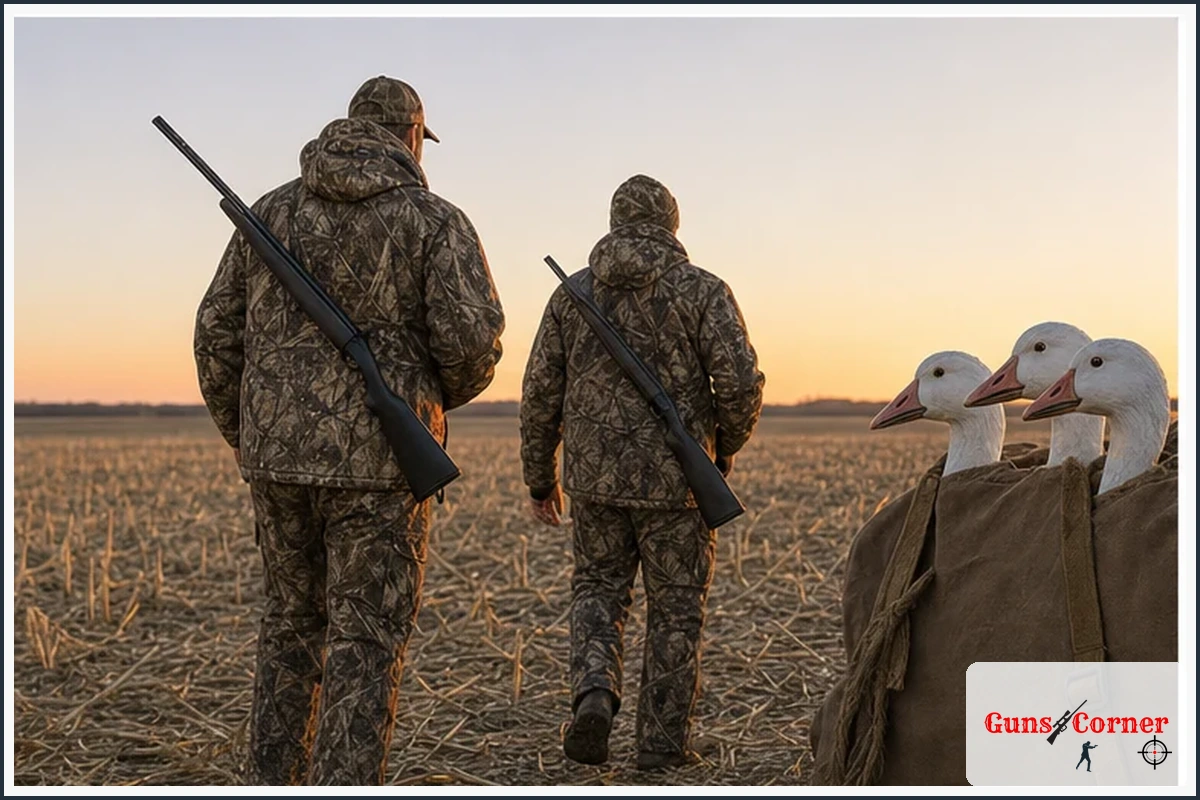
Confirming current federal, state, provincial, and local regulations
Before every season and trip, verify current rules for licenses, stamps, season dates, limits, shooting hours, approved methods, ammunition, reporting, transportation, and land access. Regulations can change between regular seasons and conservation-order opportunities.
Understanding whether electronic calls are legal in the specific season and location
Electronic calls are not universally legal for all snow-goose hunting. Check the exact current regulation for your jurisdiction, season, and conservation-order status. When uncertain, contact the appropriate wildlife agency before entering the field.
Identifying snow geese before shooting and avoiding unsafe low-angle shots
Do not shoot at unidentified white birds or sound alone. Confirm the target and what lies beyond it. Avoid low-angle shots and any firing direction that could endanger roads, buildings, livestock, other hunters, or nearby land users.
Maintaining safe spacing around roads, homes, livestock, and other hunters
Know your boundaries, communicate with hunting partners, and respect other groups in the area. Public-land hunters should verify access, parking, and boundary information before setting decoys.
Retrieval, reporting, unplugged guns, and avoiding waste
Plan retrieval before shooting, follow all tagging and reporting rules, and handle firearms safely during retrieval and transport. Make reasonable efforts to recover legally harvested birds and use the meat responsibly. If you are not confident in safe recovery, seek help from an experienced mentor.
Troubleshooting Common Problems
| Problem | Possible Cause | What to Do |
|---|---|---|
| Birds ignore the spread | Poor location, competing fields, weak visibility, or heavy pressure | Scout feeding and travel patterns, improve concealment, and consider a different legal location. |
| Birds circle but will not descend | Exposed hunters, unnatural spread, wrong wind, or excessive calling | Go quiet, remain still, inspect the setup, and adjust only when safe and legal. |
| Birds flare at close range | Movement, glare, blind visibility, or overcalling | Reduce movement and calling; improve concealment before changing equipment. |
| You cannot hear or control the call | Wind, moisture, cold, poor fit, or unfamiliar equipment | Practice beforehand, protect the call, and carry a legal backup option. |
| You are unsure whether an electronic caller is legal | Different seasonal or regional rules | Stop and verify the current regulation with the official wildlife agency. |
Ethical Hunting and Conservation
Responsible snow-goose hunting depends on lawful participation, safe shooting, respect for wildlife, and minimizing waste. Follow seasons and limits, pass on uncertain opportunities, respect landowners and other hunters, and leave fields and wetlands clean.
Licenses and properly managed hunting opportunities can support wildlife conservation, but participation carries responsibilities. Practice before hunting, use only suitable equipment, recover birds promptly, and treat every shot as a decision requiring certainty and restraint.
When to Get More Training or Professional Guidance
Seek additional instruction if you have not completed hunter education, are unfamiliar with shotgun handling, cannot identify similar goose species confidently, do not understand local regulations, or are unsure about safe shooting zones.
Official hunter-education courses, wildlife agencies, qualified instructors, conservation organizations, and experienced ethical mentors can help with calling, identification, firearm safety, public-land access, and recovery planning.
Recommended Snow Goose Hunting Gear and Tools to Consider
You do not need expensive equipment to call snow geese responsibly. Choose gear according to current regulations, terrain, weather, hunting method, safety needs, and experience.
- A legal snow-goose call or approved electronic caller where permitted
- A properly functioning shotgun and legal non-toxic ammunition
- Weather-appropriate camouflage and required visibility clothing
- A concealed, stable blind suited to the field
- Decoys appropriate for the planned spread and local conditions
- Binoculars for species identification and flock observation
- Map, compass, GPS, or a reliable navigation application
- Water, first-aid supplies, weather protection, and emergency communication
- Gloves, game bags, and a cooler or other appropriate meat-care supplies
Snow Goose Calling FAQ
Should beginners start with a mouth call or an electronic caller?
Start with the legal option you can control consistently. A mouth call is compact and teaches timing, while an electronic caller may simplify sound production where legal. Verify regulations before choosing.
Should you call snow geese when they are already turning toward the spread?
Usually reduce volume and frequency once birds are clearly responding. Watch their behavior, remain still, and avoid overcalling a flock that is already approaching.
Why do snow geese circle but refuse to land?
Possible causes include exposed hunters, an unnatural spread, poor wind alignment, competing fields, hunting pressure, or excessive calling. Treat the sound as only one part of the setup.
How can you practice without disturbing birds or violating local rules?
Practice calling away from active flocks and outside restricted hunting situations. Use controlled sessions focused on airflow, rhythm, volume changes, and pauses rather than constant loud calling.
Are electronic snow goose calls legal where I hunt?
Not necessarily. Their legality can depend on the jurisdiction, season, and whether a conservation-order provision applies. Check the current official regulations before using one.
What should I do if I cannot identify the birds clearly?
Do not shoot. Wait for a clear identification and a safe background. Similar-looking geese and changing light can create serious identification problems.
Final Thoughts
Learning how to call snow geese is a process of matching sound to distance, flock behavior, wind, concealment, and the overall spread. Begin with simple controlled sequences, observe carefully, and use silence when birds are already responding. Most importantly, confirm current regulations, identify birds carefully, follow firearm-safety principles, and pass on any unsafe or uncertain opportunity.