
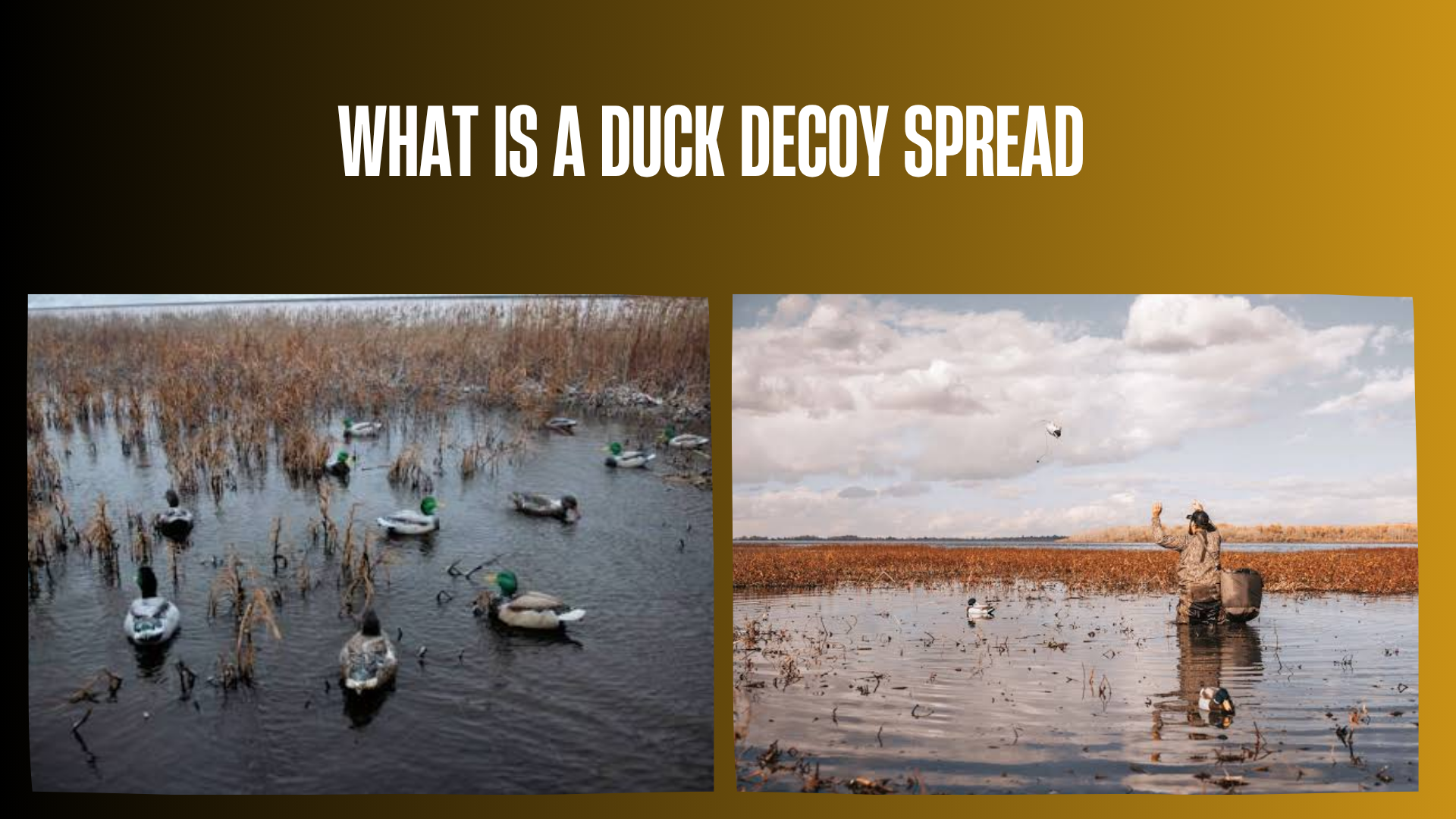

If someone tells you to “set the spread” before a waterfowl hunt, they mean more than putting plastic ducks on the water. A duck decoy spread is the complete arrangement of decoys around a hunting position. Its shape, spacing, species mix, visibility, motion, and relationship to the wind are intended to resemble resting, feeding, or social birds while leaving approaching ducks a usable place to land.
This guide explains what a duck decoy spread is, how common patterns work, why wind direction matters, and how to troubleshoot birds that circle without committing. No pattern guarantees success. Duck behavior changes with habitat, weather, migration stage, hunting pressure, available food, and the behavior of real birds. Local laws and property rules may also regulate when decoys can be placed, whether electronic motion devices are allowed, and when all equipment must be removed.
Quick Answer
A duck decoy spread is a planned group of floating, field, silhouette, full-body, or motion decoys positioned to imitate live waterfowl and guide birds toward a safe landing area. Hunters usually arrange the decoys with the wind in mind because ducks commonly prefer to approach and land into the wind. A useful spread provides visibility, natural-looking spacing, and an open landing pocket within the hunter’s proven range. Before setting one, verify current waterfowl regulations, property rules, legal shooting hours, decoy-removal requirements, and restrictions on powered or electronic decoys.
The Main Parts of a Decoy Spread
| Part | Purpose | Beginner Check |
|---|---|---|
| Decoy body | Creates the visible impression of birds using the area | Match the general species and behavior present locally |
| Anchor and line | Holds floating decoys in position and suitable depth | Avoid tangles and use enough line for conditions |
| Landing pocket | Leaves open water or ground where birds can finish | Keep it clear, visible, and within an ethical range |
| Downwind edge | Influences the path birds may follow into the setup | Confirm the actual wind at water level |
| Motion | Adds ripples, movement, or wing flash | Use only legal devices and reduce unnatural repetition |
| Blind or concealment | Hides hunters, dogs, boats, and movement | Blend with the immediate background without blocking safe vision |
Important Safety and Legal Notice
This article was reviewed on September 16, 2026, but it does not replace current regulations. Migratory-bird rules involve federal, state, provincial, tribal, refuge, and property-specific requirements. Verify licenses, stamps, seasons, shooting hours, bag limits, approved nontoxic shot, legal methods, baiting rules, blind assignments, boat rules, and equipment restrictions with the agencies governing the exact location.
Decoy rules are not universal. Some managed properties limit the time hunters may enter, specify when decoys may be placed, prohibit leaving equipment overnight, or regulate motorized devices. For example, individual National Wildlife Refuges publish their own access and decoy-removal conditions. Always read the current refuge or wildlife-area brochure in addition to statewide rules.
How a Duck Decoy Spread Works
A spread communicates several visual cues at once. The number and shape of decoys make the location visible. Their species, posture, and spacing suggest what the birds are doing. Movement can make a calm-water setup look alive. Finally, an intentional opening suggests a place where an incoming flock can join.
The spread is not a physical funnel that forces ducks into one path. It is a visual suggestion. Real ducks may approach from an unexpected direction, land outside the decoys, avoid motion, or ignore the setup entirely. Good hunters observe those reactions and adjust rather than assuming the birds are behaving incorrectly.
Concealment is part of the system. A convincing arrangement cannot compensate for visible faces, sudden movement, a reflective boat, an unnatural blind, or a retriever moving at the wrong moment. The safest shooting plan must also be established before birds arrive, especially when several people or a dog are present.
Why Wind Direction Matters
Ducks commonly approach and land into the wind because the headwind helps them slow and control their descent. That tendency makes wind a useful planning factor, but it is not an absolute rule. Terrain, vegetation, open water, nearby birds, pressure, and gusts can change an approach.
A common beginner plan is to place the blind so the intended landing pocket is generally downwind of the main decoy body and in front of, or slightly crosswind from, the shooters. Birds approaching into the wind may then face the spread as they enter the opening. A crosswind setup can offer better visibility and safer, more comfortable shooting than having a strong wind directly behind the blind.
Check the wind where the decoys actually sit. Tree lines, levees, islands, points, and marsh vegetation can create local shifts that differ from a general forecast. Recheck after sunrise because speed and direction can change during the hunt.
The Landing Pocket: The Most Useful Space in the Spread
The landing pocket is an intentionally open area among or beside the decoys. It gives approaching birds visual room to finish and gives hunters a reference point for distance. The pocket should not be cluttered with anchor lines, a dog platform, tall vegetation, or decoys packed so tightly that it appears closed.
Place the pocket where a legal shot would have a safe background and where every hunter’s zone of fire is clear. Avoid directing birds toward buildings, roads, occupied blinds, boats, livestock, or other people. If the wind would create an unsafe approach, change the spread or hunting position rather than accepting the risk.
The pocket does not need a mathematically exact size. It should fit the water, expected flock size, wind, and ethical range. Mark range before legal shooting time using known decoy distances, a lawful rangefinder where permitted, or careful pre-hunt measurement. Do not use distant decoys as an excuse for speculative shooting.
Common Duck Decoy Spread Patterns
Loose Family Groups
Several small clusters with natural gaps can imitate relaxed birds on a pothole, marsh opening, creek bend, or small pond. This flexible pattern works well when a rigid letter shape would look artificial. Leave one gap more inviting than the others and position it for the wind and safe shooting direction.
J-Hook or Fishhook
Decoys form a long line with a curved group at one end, creating a hook-shaped opening. It can help define an approach line in open water or for birds following a visible string of decoys. The blind is commonly positioned near the bend or intended landing area, but current wind and safe zones matter more than copying a diagram.
U-Shape or Horseshoe
Two arms create an open center. With the opening oriented toward the likely downwind approach, birds may see a broad landing pocket between the arms. Avoid making the arms so dense or long that the center looks blocked or places birds beyond an ethical range.
V-Shape
Two lines narrow toward the hunting position or landing area. A V can be visible in larger water and may help define an approach, but its orientation must follow the actual wind. Keep the point from crowding the blind or dog.
Two-Pod Split
Two distinct groups leave open water between them. This simple setup can work in small water, along an edge, or where birds naturally collect in separate social groups. The central gap becomes the intended landing zone.
Long-Line Spread
Multiple decoys are attached at intervals to a main line, often for open-water diver hunting. Long lines improve deployment and visibility but introduce boat, line, anchor, and entanglement hazards. They require deliberate retrieval planning, adequate anchors, and careful separation from people, dogs, propellers, and shooting lanes.
Field Spread
Full-body decoys, shells, or silhouettes are placed on dry or frozen ground to represent feeding or resting birds. Wind still helps define the likely approach. Hunters must verify land access, field-specific rules, baiting law, concealment, and a safe shooting background.
How Many Duck Decoys Do You Need?
There is no universal number. A small, realistic group can be effective where ducks already want to land, especially on tight water or during a walk-in hunt. Larger spreads can be more visible across open water or big fields, but they take more time, weight, line management, and effort to deploy safely.
Choose quantity by function rather than status:
- Small potholes and timber openings: A compact spread reduces crowding and carrying weight.
- Large lakes or broad marshes: More visibility may help, but the spread still needs a clear pocket.
- Heavy public pressure: A smaller or less conventional presentation may differ from surrounding setups, but no size is guaranteed.
- Long walk or paddle: Carry only what can be transported and retrieved without overloading the hunter or craft.
- Changing weather: Favor a manageable setup that can be moved or collected before conditions become unsafe.
Beginners often learn more from a simple, adjustable spread than from deploying a large number they cannot reposition efficiently.
Should the Decoys Match the Ducks You Expect?
A locally plausible mix can improve realism. Puddle-duck decoys suit many marsh and shallow-water situations, while diver decoys are useful where diving ducks gather in open water. Field setups may include feeding and resting postures. Size, contrast, and visibility can matter as much as exact paint detail at distance.
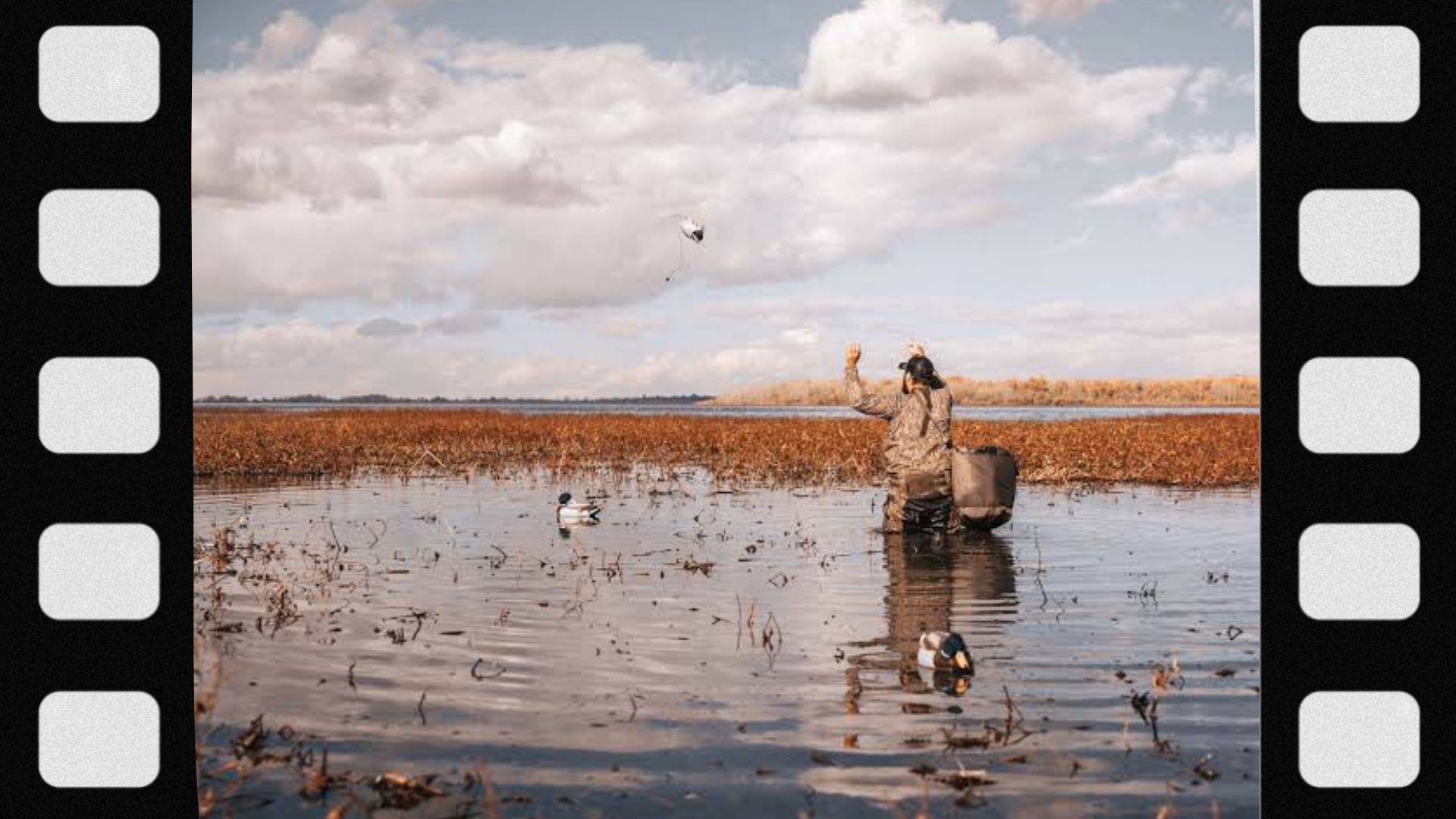
Mixed species can look natural when those birds commonly associate in the area. Avoid adding species merely because you own the decoys. Scout first, observe which birds use the habitat, and remember that identification must be based on the live bird—not the decoy arrangement—before any shot.
Motion Decoys, Jerk Rigs, and Natural Movement
Still decoys on glassy water can look lifeless. A manually operated jerk rig can move several floaters and create ripples. Wind-driven decoys, swimmers, bubblers, and spinning-wing devices create other types of motion. Their effectiveness varies with conditions and hunting pressure.
More motion is not always better. Repetitive mechanical movement, excessive flash, visible cords, or a device that continues after birds are close may appear unnatural. Some hunters reduce or stop motion when birds begin to finish. Others find subtle water movement more useful than wing flash on pressured birds.
Powered and electronic decoys may be restricted by jurisdiction, date, property, or species. Confirm legality before carrying one. Secure batteries against water exposure, follow the manufacturer’s instructions, and keep all cords and lines away from people, dogs, boats, and propellers.
How to Set a Beginner Duck Decoy Spread
- Scout the location. Learn where birds naturally approach, sit, feed, and leave. Confirm lawful access and any assigned-blind boundary.
- Check wind and weather. Use the current conditions, not only the previous evening’s forecast. Identify a safe exit if wind, fog, ice, or waves worsen.
- Choose the hunting position. Prioritize concealment, a safe background, legal distance from restricted features, and clear zones of fire.
- Define the landing pocket. Put the intended open area where incoming birds can approach into the wind and where shots remain within demonstrated ability.
- Place small groups first. Build natural-looking clusters rather than an overly rigid pattern unless the habitat calls for a line or hook.
- Add only useful motion. Start with subtle movement and verify that the device is legal.
- View the spread from the blind. Check distance, anchor-line exposure, glare, blocked lanes, and whether the pocket is obvious.
- Brief the hunting party. Establish zones of fire, who calls the shot, dog handling, boat procedures, and how cripples will be recovered legally and safely.
- Watch bird reactions. Note where flocks turn, flare, or attempt to land. Make one thoughtful adjustment at a time.
- Remove every item. Collect decoys, weights, lines, batteries, shells, and trash within the property’s required time.
Troubleshooting: What Duck Behavior May Be Telling You
| Observed Reaction | Possible Causes | What to Check | Practical Adjustment |
|---|---|---|---|
| Birds circle but do not descend | Poor concealment, closed pocket, unnatural spacing, glare, or caution | Faces, blind outline, boat, dog, anchor lines, and opening | Improve concealment or enlarge the landing space |
| Birds consistently land outside the spread | The natural preferred spot or wind line differs from the plan | Repeated landing location and safe access | Move the pocket or blind if legal and safe |
| Birds flare at the same distance | Visible movement, shine, mechanical motion, pressure, or another hazard | Pattern in the exact turn point | Cover reflective surfaces and reduce motion |
| Birds approach from behind | Wind shifted or terrain is redirecting airflow | Wind at the water and new safe shooting direction | Reorient only if the new position preserves safe zones |
| Decoys bunch or drift | Insufficient anchor weight, too little line, current, waves, or tangles | Depth, bottom type, line length, knots, and anchor holding | Retrieve and rerig safely; do not wade beyond safe limits |
| Nearby live birds outcompete the spread | Real birds provide stronger sound, movement, and location cues | Natural destination and disturbance pattern | Scout a better location rather than simply adding equipment |
One reaction rarely proves one cause. Change a single major variable where possible, then observe. Constantly rearranging everything makes it hard to learn what helped.
Common Decoy-Spread Mistakes
- Ignoring the wind: A familiar shape placed in the wrong orientation may put the landing zone behind the blind or in an unsafe direction.
- Leaving no landing room: More decoys do not help if the intended pocket looks crowded.
- Copying a diagram exactly: Letter-shaped layouts are starting concepts, not fixed formulas for every shoreline and wind.
- Hiding poorly: Visible people, dogs, boats, shiny faces, and straight-edged blinds can undo a realistic spread.
- Overusing motion: Fast or repetitive movement can appear unnatural, particularly after birds have experienced hunting pressure.
- Setting beyond proven range: A distant landing pocket can encourage poor shot choices and difficult recovery.
- Overloading a small boat: Decoy bags add bulk and wind resistance even when their weight seems manageable.
- Leaving gear overnight: Some properties require daily removal, and abandoned lines or weights can harm wildlife and other users.
- Failing to adapt: If multiple flocks show the same reaction, inspect the setup instead of calling louder or shooting farther.
Water, Boat, Dog, and Firearm Safety
Waterfowl hunting combines firearms with darkness, cold water, mud, boats, waders, dogs, and changing weather. Wear an appropriate personal flotation device when boating and whenever cold, deep, moving, or uncertain water creates a drowning risk. Do not overload a craft with hunters, dogs, decoy bags, batteries, and anchors. Follow the capacity plate, distribute weight carefully, and plan for water entering the boat.
Never assume waders will keep you safe after a fall. Avoid unfamiliar drop-offs, strong current, unstable ice, and waves beyond the craft’s capability. Carry reliable communication, insulating layers, and a plan for hypothermia. Stop before retrieval conditions become unsafe; contact appropriate help rather than turning lost equipment into an emergency.
Unload firearms before entering or leaving boats when required by law and whenever safe handling calls for it. Treat every firearm as loaded, keep the muzzle pointed in a safe direction, keep your finger outside the trigger guard until ready to shoot, and be certain of the target and what lies beyond it. Establish zones of fire before legal shooting time. Never swing through another hunter, dog, occupied boat, road, building, or blind.
Keep retrievers under control and out of the shooting lane. Use a stable place for the dog and consider flotation and cold protection appropriate to the conditions. A dog should not be sent into ice, current, waves, or other hazards that put it or rescuers at unreasonable risk.
What You Actually Need
You do not need the most expensive equipment to hunt responsibly. Choose gear based on habitat, expected species, transport limits, weather, local regulations, safety, reliability, and your experience.
Essential or Situation-Dependent Equipment
- A manageable number of suitable decoys
- Anchors and lines matched to depth, current, wind, and bottom
- Decoy bag or sled that does not create an unsafe load
- Required licenses, stamps, permits, identification, and approved nontoxic ammunition
- Weather-appropriate clothing and reliable communication
- A properly fitted personal flotation device for boat or hazardous-water use
- Navigation lighting and other required boat safety equipment
- A safe method for retrieving downed birds
Optional Tools
- Manual jerk rig for water movement
- Legal wind-driven or powered motion decoy
- Decoy gloves, line wraps, and depth-adjustable weights
- Range markers incorporated into known decoy positions
- Species-specific decoys or high-visibility additions
Optional equipment should solve a real problem. It should not replace scouting, concealment, identification skills, safe gun handling, or realistic shot selection.
Care, Storage, and Responsible Removal
Rinse mud, salt, and vegetation from decoys and lines when practical. Let equipment dry before long-term storage to reduce odor, mildew, corrosion, and tangled lines. Inspect keels, attachment points, clips, knots, anchors, and motion-device seals. Retire damaged batteries according to local disposal guidance.
Count decoys before and after the hunt. Retrieve broken line, weights, clips, shells, and trash. Property rules may require all personal equipment to be removed daily or by a specified time. Responsible removal protects wildlife, keeps access open, and prevents hazards for boats, dogs, and other hunters.
Reliable Sources to Check Before Hunting
- U.S. Fish and Wildlife Service information for waterfowl hunters explains federal baiting concepts and lawful hunting contexts.
- Your state or provincial wildlife agency’s current migratory-game-bird regulations provide seasons, licenses, stamps, methods, and local restrictions.
- The current refuge, wildlife-management-area, or property brochure covers access times, assigned blinds, decoy placement, equipment removal, and boat rules.
- Ducks Unlimited decoy setup guidance offers habitat-based examples, while official regulations remain controlling.
- A recognized hunter-education course provides firearm, boat, identification, and ethical-hunting fundamentals.
FAQs
1. What is a duck decoy spread?
It is an intentional arrangement of duck decoys around a hunting position, designed to look like birds using the habitat while leaving an inviting and safe landing area.
2. What is the purpose of a duck decoy spread?
It helps make a location visible and suggests that other waterfowl are resting, feeding, or socializing there. It may influence an approach but cannot guarantee that birds will land.
3. Do duck decoys really work?
They can help when the location, wind, concealment, and presentation make sense. Real birds may still ignore them because of pressure, habitat preferences, weather, or other variables.
4. Do ducks always land into the wind?
No. They commonly prefer a headwind for control, but terrain, gusts, open water, other birds, and pressure can alter their approach.
5. Where should the landing pocket be?
Place it where birds can approach naturally for the wind and where any legal shot has a safe background, clear zone of fire, and ethical distance.
6. How large should a landing pocket be?
There is no fixed size. It should be clearly open for the expected flock size and habitat without pushing birds beyond the hunter’s demonstrated range.
7. How many duck decoys does a beginner need?
A small, manageable set can teach spacing, wind use, and adjustment. The useful number depends on water size, visibility, transport, current, weather, and where birds want to be.
8. Can you hunt ducks with only a few decoys?
Yes, particularly on small water or a well-scouted natural destination. A modest realistic spread can be more useful than a large poorly placed one.
9. Is a bigger decoy spread always better?
No. Larger spreads improve visibility in some settings but add workload, boat bulk, anchor problems, and removal time. They may also look unnatural on small water.
10. What is a J-hook decoy spread?
It is a curved line resembling a J or fishhook. The shape helps create a defined opening near the bend and can be useful in open-water or crosswind situations.
11. What is a U-shaped duck decoy spread?
It uses two arms with an open center. The center serves as a landing pocket when the spread is correctly oriented to wind and safe shooting direction.
12. What is a V-shaped decoy spread?
Two lines form a V that helps outline an approach or opening. The exact direction should follow current conditions rather than a fixed compass orientation.
13. What is a two-pod spread?
It consists of two separate decoy groups with open space between them. The gap can serve as an obvious landing zone.
14. What is a long-line decoy spread?
Several decoys attach to a main line, commonly in open-water diver hunting. It can be efficient but requires careful anchor, boat, propeller, dog, and entanglement management.
15. Should decoys face into the wind?
Some variation is natural, although many live birds orient partly into stronger wind. Avoid making every decoy point at an identical angle unless conditions make that realistic.
16. How far should decoys be from the blind?
Distances should create a useful pocket inside your proven range and respect legal or property-specific spacing. Measure known decoy positions instead of guessing.
17. Should decoys be close together or spread apart?
Spacing should reflect behavior and conditions. Relaxed birds may look loosely grouped, while severe weather or concentrated food can produce tighter groups. Preserve a clear landing opening.
18. Can I mix different duck species in one spread?
Yes, when those species commonly share the habitat. A locally plausible mix is more important than owning every possible type.
19. Do drake and hen decoy ratios matter?
They can affect color and visibility, but there is no universal ideal ratio. Match seasonal appearance and use enough contrast for the setting without sacrificing realism.
20. Do I need feeder or sleeper decoys?
No, but varied postures can reinforce a feeding or resting scene. Use them when they fit observed local behavior rather than as mandatory equipment.
21. What is a confidence decoy?
It is a decoy of another species placed to suggest a relaxed mixed-bird setting or add visibility. Its value is situational, and it must not create an identification shortcut.
22. What does a jerk rig do?
A manual cord moves connected decoys to create ripples and uneven motion. Keep the control line managed so it does not endanger hunters, dogs, or boats.
23. Are spinning-wing decoys legal?
Rules vary by jurisdiction, dates, species, and property. Check the current regulations before carrying or activating any powered or electronic motion decoy.
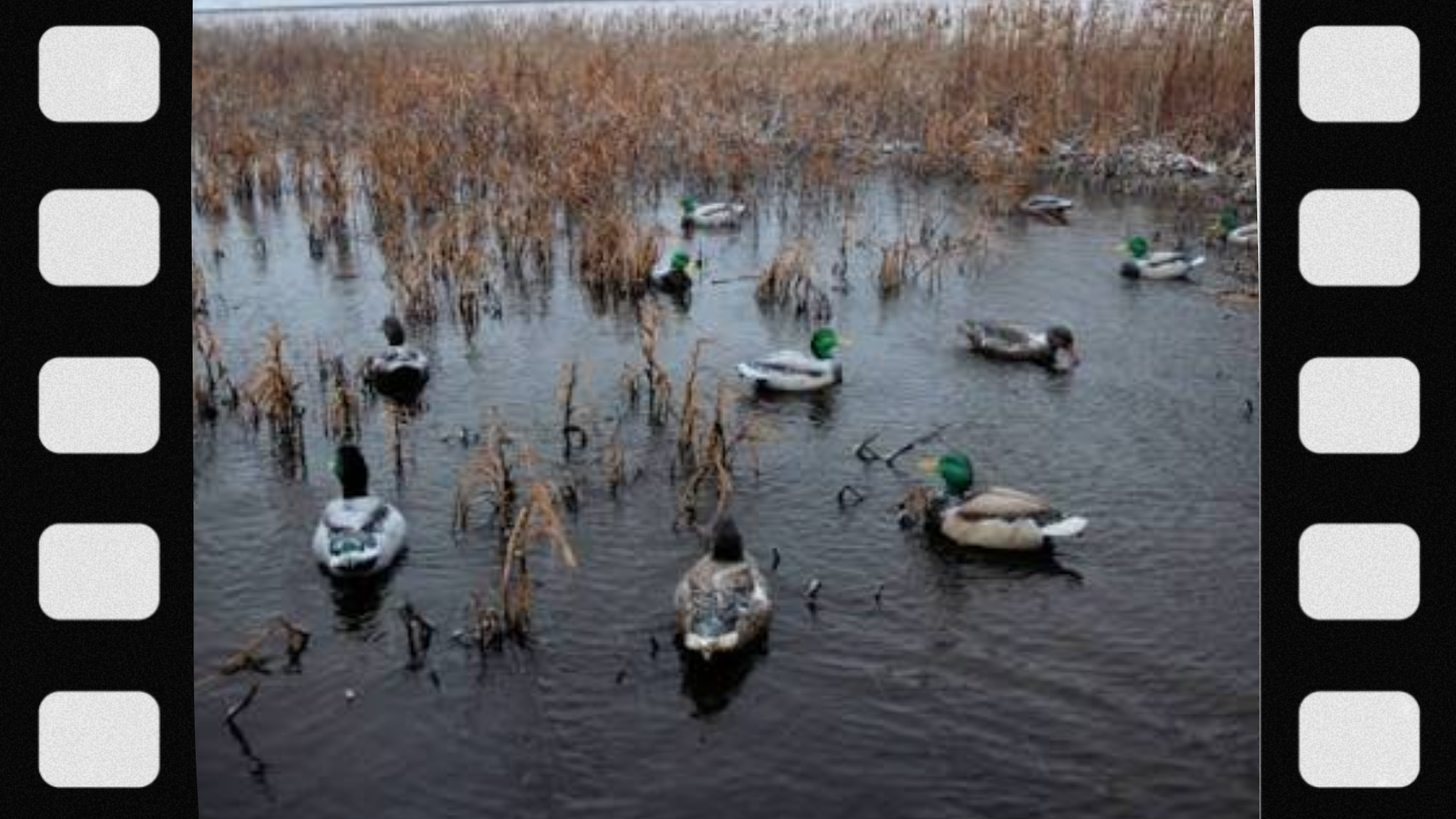
24. Can too much decoy motion scare ducks?
Possibly. Repetitive flash, noise, or unnatural movement can contribute to flaring, especially where birds have experienced pressure. Try reducing one motion source and observe.
25. Do decoys need motion on windy days?
Natural wind and waves may already move them. Additional devices can be unnecessary or make lines tangle in stronger conditions.
26. Why do ducks circle a decoy spread?
They may be evaluating the landing space, wind, concealment, motion, calling, habitat, or danger. Circling alone does not identify one specific problem.
27. Why do ducks flare from decoys?
Possible causes include hunter movement, glare, blind outline, a dog, visible anchor lines, unnatural motion, crowding, calling, or pressure. Look for a repeated turn point.
28. Why do ducks land outside my spread?
The preferred natural landing spot or true wind line may be elsewhere. Watch repeated behavior and move the pocket or blind only when legal and safe.
29. Should I move decoys during the hunt?
Yes, when repeated bird behavior or a wind shift reveals a clear problem. Unload and secure firearms, communicate with partners, and avoid unsafe water while adjusting.
30. How often should I change the spread?
Change it when conditions or consistent reactions justify an adjustment. Avoid rearranging everything after one flock because the cause may be unrelated to the layout.
31. Does calling replace a good decoy spread?
No. Calling is another cue, not a substitute for location, concealment, safe setup, or realistic decoys. Excessive calling can also be counterproductive.
32. Can decoys be left out overnight?
That depends on property and jurisdiction rules. Many managed areas or refuges require daily removal, and abandoned equipment can create navigation and wildlife hazards.
33. How early can I place duck decoys?
Access and placement times vary. Check statewide rules and the property brochure; some managed areas specify entry windows or limits relative to legal shooting time.
34. Are duck decoys considered bait?
Ordinary artificial decoys are generally distinct from bait, but grain or feed used to attract waterfowl raises separate federal and local baiting issues. Never assume an area is lawful because decoys are present.
35. Is it legal to hunt over agricultural fields?
It can be under qualifying normal agricultural operations, but manipulated or added grain may make an area baited. Review current official baiting guidance for the exact circumstances.
36. What anchor weight should I use?
Use an anchor appropriate to decoy size, bottom, depth, current, wind, waves, and line angle. No single weight works safely in every setting.
37. How much decoy line is needed?
Enough to reach the bottom and allow the anchor to hold under expected conditions, without creating excessive loose line. Depth-adjustable systems can reduce tangles.
38. How do I prevent tangled decoy lines?
Use line wraps or organized rigs, inspect clips and knots, separate motion cords, and deploy one unit at a time. Avoid loose line around feet, dogs, and propellers.
39. Can I set decoys from a kayak?
Only where lawful and within the craft’s design and capacity. Wear a suitable PFD, minimize load, account for cold water and wind, and do not reach or stand in ways that destabilize the kayak.
40. What is the greatest boat hazard with decoy spreads?
There is no single hazard, but overloading, cold-water immersion, entanglement, poor visibility, wind, waves, and propeller contact are serious concerns. Plan the whole system, not only the decoys.
41. Should a retriever sit beside the blind?
The dog needs a stable, controlled position outside the muzzle and shooting lanes. The safest placement depends on the blind, boat, water, party, and retrieval direction.
42. Can I shoot when birds land among the decoys?
Only if the shot is lawful, the bird is positively identified, and the direction is safe for people, dogs, boats, property, and equipment. Never rush a shot through an unsafe zone.
43. Do damaged or faded decoys still work?
Minor wear may not matter, but strong glare, leaks, unnatural posture, or severely inaccurate contrast can reduce usefulness. Repair or retire unsafe and unserviceable gear.
44. How should duck decoys be stored?
Clean and dry them, organize lines and weights, inspect attachment points, and store batteries separately according to manufacturer guidance. Avoid trapping moisture for long periods.
45. Can I copy another hunter’s spread?
You can learn from common concepts, but do not crowd another party or assume their pattern fits your wind and habitat. Respect required spacing and access etiquette.
46. What is the best duck decoy spread?
There is no universal best pattern. The strongest setup is a safe, legal, visible, natural-looking arrangement adapted to current wind, habitat, bird behavior, and concealment.
47. What should a beginner change first when ducks will not finish?
Check concealment and the landing pocket before adding more calling or equipment. Then verify wind, glare, motion, and the birds’ repeated approach line.
48. Where can I learn to set decoys safely?
Complete hunter education, read official waterfowl rules, and learn alongside a responsible experienced hunter. Practice deployment in daylight and mild conditions before a cold, dark hunt.
Final Answer
So, what is a duck decoy spread? It is the complete arrangement of artificial waterfowl used to create a believable scene and an obvious landing area near a safely concealed hunting position. Start with a simple setup, orient it to the actual wind, keep the pocket within proven range, and let repeated bird behavior guide adjustments. No J, U, V, or large spread can replace scouting, concealment, positive identification, safe firearm handling, cold-water planning, and current regulation checks. Remove every decoy and piece of line when required, and treat the wetland and other hunters with respect.
Read more: