
What size gun safe do I need? Bigger than the sticker suggests. Count every long gun you own, add what you’ll realistically buy in the next five years, then shop for a safe advertised at close to double that number.
That buffer covers scopes, handguns, ammo, and paperwork. The reason is simple: advertised capacity is measured with bare rifles packed shoulder to shoulder, and nobody stores guns that way. Below you’ll find the five-step math, a conversion table, the dimensions that limit you first, and the floor and doorway checks most buyers skip until delivery day.
What Size Gun Safe Do I Need? 5 Steps to the Right Number
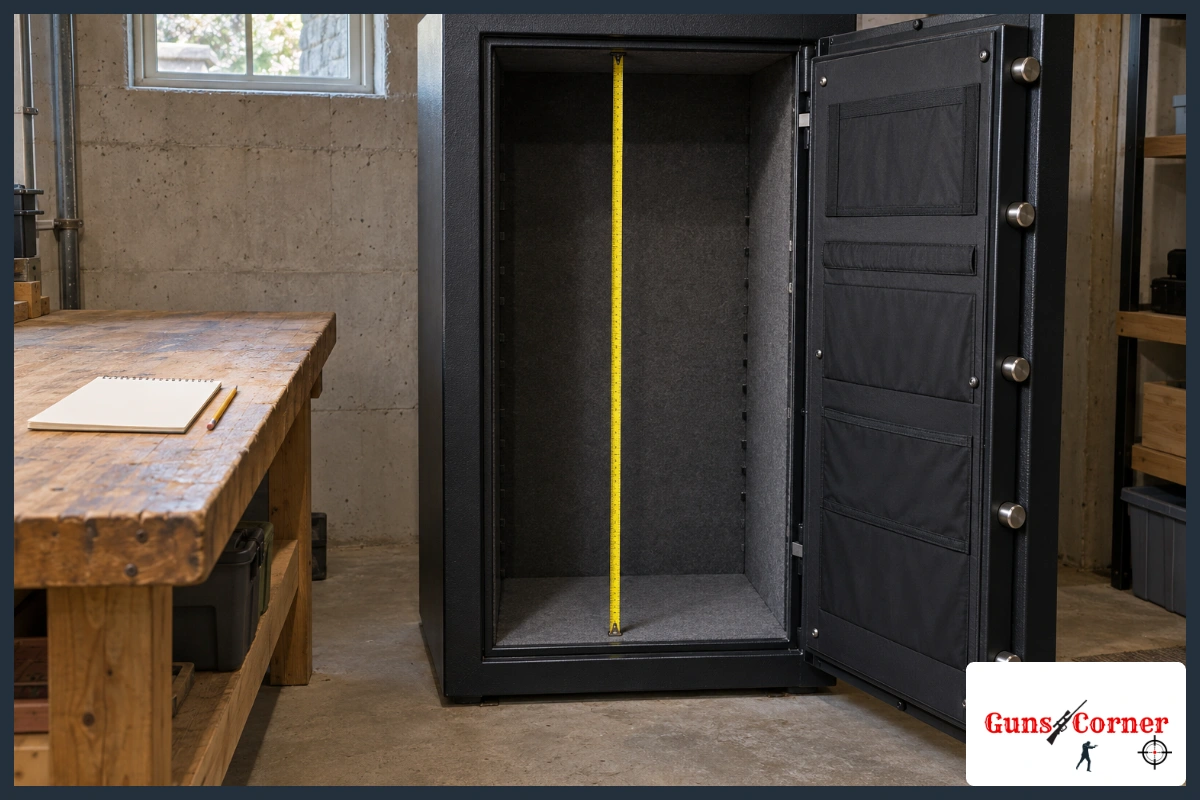
Here’s the method we’d use for any first safe. It takes about 15 minutes with a notepad and a tape measure.
- Count your long guns today. Note which ones wear a scope, bipod, light, or sling. A scoped rifle takes far more room than a bare 12-gauge.
- Add five years of purchases. Be honest. A new turkey gun, a youth rifle for your kid, an inherited shotgun. Most gun owners end up with more guns, not fewer.
- Convert to advertised capacity. Divide your total by 0.5 if most of your rifles wear glass, or by about 0.65 if the collection is mostly bare shotguns and iron-sight rifles.
- Add everything that isn’t a gun. Ammo, passports, deeds, a rangefinder, binoculars, knives. Plan at least one full shelf for it.
- Measure your longest gun. The interior height has to clear your longest barrel with the optic mounted, standing upright.
That 0.5 to 0.65 range isn’t a fudge factor we invented. Rhino Metals calls “cut it roughly in half” the industry rule of thumb and notes that some guides use 0.55 to 0.65 instead. The GunsAmerica gun safe buying guide lands in the same place, at roughly half to two-thirds of the advertised long gun count.
Advertised Capacity Conversion Table
Use this as a starting point, then adjust for shelves and handguns.
| Long guns to store (today + 5 years) | Advertised capacity to shop, mostly scoped rifles | Advertised capacity to shop, lean collection |
|---|---|---|
| 6 | 12 | 10 |
| 10 | 20 | 16 |
| 15 | 30 | 24 |
| 20 | 40 | 31 |
| 30 | 60 | 47 |
Say you hunt deer with two scoped bolt-action rifles, run a semi-auto 12-gauge for ducks, and keep a .22 and a 20-gauge for squirrels and doves. That’s five today. Add a turkey shotgun and a youth rifle over the next five years and you’re at seven, mostly with optics.
Shop in the 14- to 16-gun advertised range. If two models are close in price, take the bigger one.
Why a “24-Gun” Safe Holds About 12 Rifles
The number on the box isn’t a lie. It’s measured in a way your collection will never match.
Manufacturers count capacity with thin, bare long guns packed tight, often with the shelves removed. The Safe Keeper, a Las Vegas safe dealer, explains that a safe sold for 24 long guns assumes no scopes and the side shelves pulled out. If you own 20 long guns, that safe is probably too small.
You’ll often see capacity written like 12-19-31 +2. Rhino Metals breaks the format down this way: the first two numbers are the left and right sides of the interior, the third is the total, and the “+2” is door-panel storage. Every one of those numbers assumes bare guns.
Then real life shows up. Rhino estimates that adding a scope roughly doubles the space a rifle takes. Put a bipod on one rifle, add a pistol-grip turkey gun and a few ammo cans, and that “31-gun” safe starts to feel like a 15-gun safe.
The takeaway: shop by the guns you own, not by the guns in the brochure photo.
Gun Safe Size Classes and Typical Dimensions
There’s no industry-standard size, but most full-size gun safes fall into a few families. Liberty Safe, a major US maker of residential gun safes, publishes the exterior dimensions of its lineup, and they make a useful yardstick.
| Size class | Advertised capacity (GunsAmerica’s classes) | Example exterior size, H x W x D (Liberty) | Best for |
|---|---|---|---|
| Small | Under about 24 | 59.5 x 18.25 x 16 in. to 59.5 x 24.25 x 20 in. (Centurion) | Apartments, closets, a few long guns |
| Medium | About 24 to 36 | 60.5 x 30 x 22 in. to 60.5 x 36 x 22 in. (Freedom) | A growing collection plus documents |
| Large | About 40 and up | 72.5 x 42 x 27.5 in. to 72.5 x 50 x 27.5 in. (USA 50, Classic Extreme 60) | Many scoped rifles or lots of valuables |
The pairing of size class and model in this table is our approximation, so check each model’s listed capacity before you buy. GunsAmerica calls the medium class the most common choice and a good default. For most hunting households, we agree. It holds a real collection without the delivery headaches of a 6-foot, 50-inch-wide box.
Below full-size safes, Liberty notes that cheaper safes run down to about 55 x 10 x 10 inches, and sheet-metal gun cabinets go as small as 43 x 8 x 6 inches. Those cabinets often won’t take longer rifles or shotguns, and they offer little protection from fire or a real break-in. They keep curious kids out. They won’t stop a determined thief.
Exterior vs. interior: the exterior size tells you whether the safe fits the room. The interior size tells you what fits inside it. Walls, fireboard, and door hardware all eat into the space, so read the interior numbers before you compare prices.
Height, Depth or Width: Which Dimension Limits You First?
For most hunters, height is the first wall you hit. A long-barreled waterfowl gun or a scoped rifle needs vertical clearance to stand upright. Rhino Metals recommends a safe at least 55 to 60 inches tall for long guns with any length to them.
Depth is the sneaky one. Scope turrets, bolt handles, and slings stick out, and a shallow safe forces you to stagger guns at odd angles. If you own several scoped rifles, we’d treat a 22-inch exterior depth as a practical minimum.
Width sets your total count and decides whether a shelf side fits next to the rifle side. Wider safes also need wider doorways, which brings us to the room itself.
Here’s the catch most buyers miss. The listed depth is the box, not the box plus hardware. Liberty tells buyers to add about 1/4 inch for the outlet kit, 1.5 inches for a plug, and 1.75 to 3 inches for the handle, depending on the model. In a tight closet, that’s the difference between the closet door shutting and not.
The best test costs nothing. Take your longest scoped rifle, unloaded and cased, to the store and test-fit it in the floor model. GunsAmerica’s guide gives the same tip.
Sizing a Gun Safe for Hunting Gear, Not Just Guns
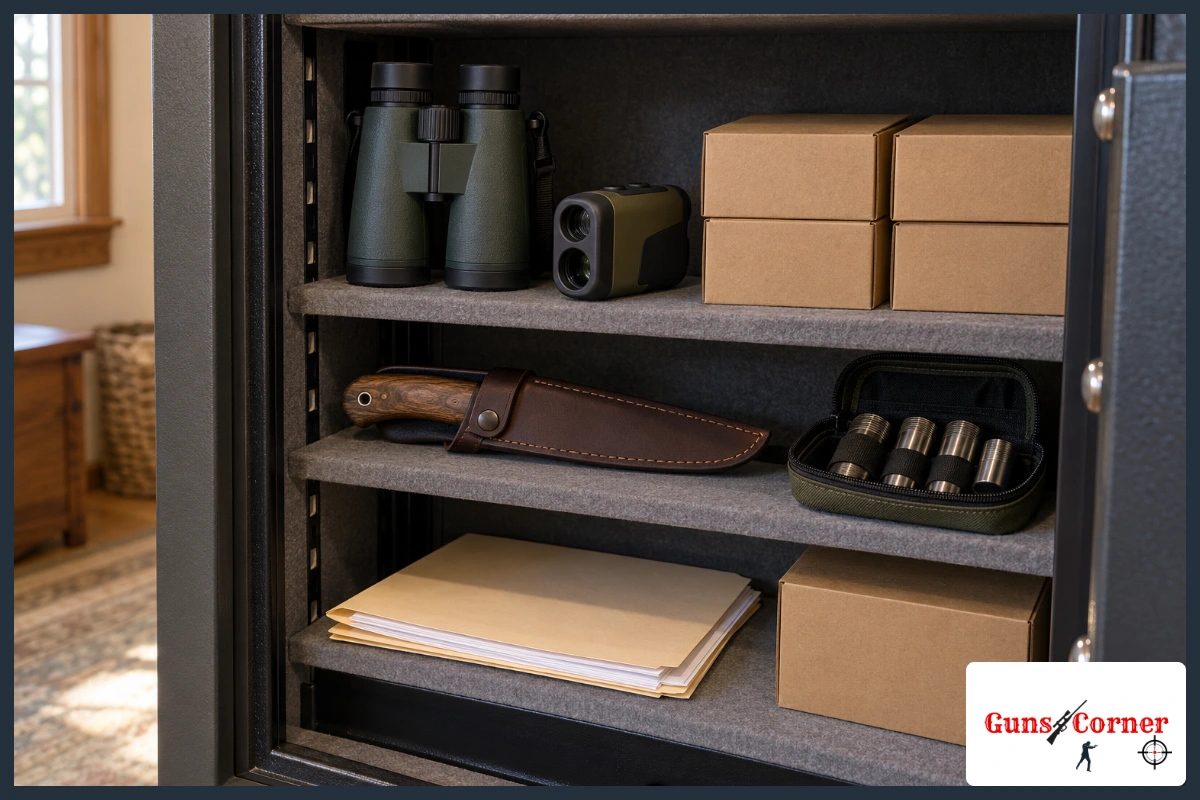
Hunters fill a safe faster than most owners. The guns come with a pile of expensive gear that thieves love because it’s small and easy to sell.
Before you lock in a size, list what else should live behind steel:
- Optics: binoculars, rangefinders, spotting scopes, spare scopes, and red dots
- Ammo for several calibers and gauges, plus choke tubes and a choke wrench
- Knives, a bone saw, and field-dressing kits
- Paper you can’t easily replace: hunter education cards, landowner permission letters, deeds, passports
- Electronics: GPS units, thermal monoculars, and trail camera SD cards
The Safe Keeper’s advice is to think past the gun count. Its customers often buy for a set number of guns, then realize they also want jewelry, photo albums, and family documents inside.
A shelf side and a door panel handle most small items. Ammo is the space hog. If you stock up before season, a separate locked cabinet for bulk ammo keeps it from crowding your rifles.
Bows and crossbows are a different problem. Limbs and cams make them wide, so measure your bow against the interior width and depth before assuming it fits, or keep it in a locking bow case.
Will It Fit Your Home? Doorways, Stairs and Floor Load
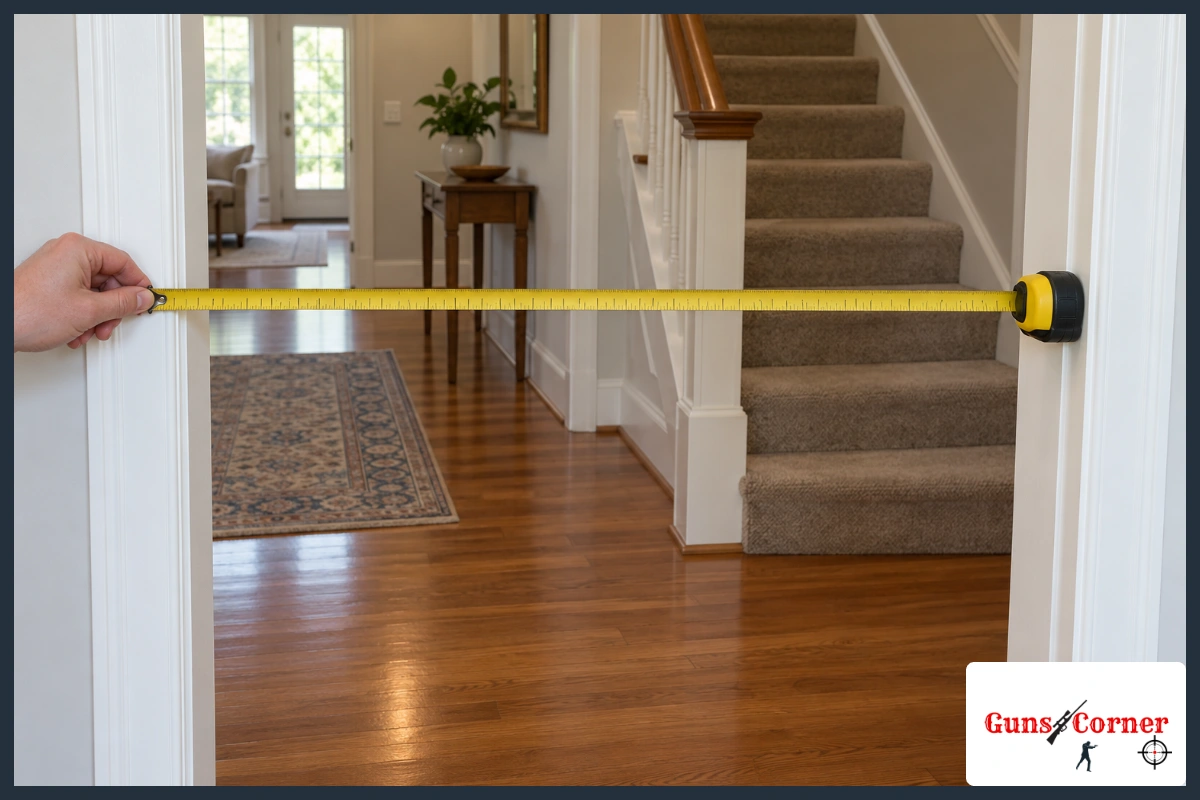
A bigger safe only helps if you can get it inside and keep it there. Measure the whole route, not just the final spot: front door, hallways, stair turns, and the room door. Leave space for the safe door to swing fully open, too.
Liberty lists the minimum doorway width for each model on its sizing tab. Check that number for any safe you’re considering and compare it with the narrowest door on your route.
How Much Weight Can a Home Floor Hold?
US residential building codes set a minimum design live load for floors. Under the International Residential Code table adopted in Washington State’s building rules (WAC 51-51-0301, Table R301.5), the minimum is 40 pounds per square foot for living areas and 30 psf for sleeping areas. Your state’s version can differ, but those two numbers are the common baseline.
Now run the math on a safe. A medium safe with a 30 x 22-inch footprint covers about 4.6 square feet. At 40 psf, the design load for that patch of floor works out to roughly 183 pounds, and GunsAmerica’s guide notes that large safes can weigh many hundreds of pounds or more.
That doesn’t mean your floor will fail. Joists and subfloor spread a concentrated load across a wider area, and the code number is a design minimum, not a breaking point. It does mean a heavy safe on an upper floor or in an older home deserves a contractor’s look, a question both Liberty and GunsAmerica tell buyers to answer before delivery.
The best spots for heavy safes are a concrete slab in a basement or garage, or a ground floor close to a load-bearing wall. Then anchor it. An anchored safe is much harder to tip, pry, or haul away to work on somewhere else.
One Big Safe or a Big Safe Plus a Quick-Access Box?
Size isn’t only about total volume. It’s also about what you need to reach fast.
The Illinois Department of Public Health describes a lock box as a small locked safe designed to store a handgun, opened by push-button, keypad, key, or biometrics. Full-size safes, in the same agency’s description, hold long guns, handguns, and other valuables. The department also notes that combining storage methods raises the level of security.
For many households, that points to a two-safe setup: a full-size safe sized for long guns and valuables, plus a small quick-access box for a home-defense handgun. GunsAmerica’s guide makes the same pairing. It also keeps you from oversizing the big safe just to make one handgun easy to reach.
Who should skip it: if every firearm you own is a hunting gun that stays locked up between seasons, one well-sized safe is enough.
Whichever setup you choose, keep keys and combinations where kids and unauthorized people can’t get to them. The Illinois health department gives the same advice for gun lock keys.
6 Gun Safe Sizing Mistakes and How to Avoid Them
Most safe regret comes from a handful of predictable errors. Each one has a simple fix.
- Buying by the sticker number. Convert advertised capacity with the 0.5 to 0.65 rule before you compare models.
- Measuring the spot but not the route. A safe that fits the closet but not the stair turn is a very heavy hallway decoration.
- Forgetting handle and plug depth. Add up to 3 inches for the handle and 1.5 inches for a plug, per Liberty’s guidance.
- Ignoring the door swing. If the door can only open to 90 degrees against a wall, reaching guns on the hinge side gets awkward fast.
- Planning for today’s collection. Size for the guns you’ll own in five years, not the ones in the closet now.
- Treating shelves as free space. Advertised counts often assume shelves are removed, so every shelf you install costs long-gun slots.
The Safe Keeper says roughly half of its customers come back within a couple of years to trade in for a bigger safe. That’s one dealer’s experience, not a national statistic. Still, it matches the first piece of advice every safe maker we reviewed gives: go bigger than you think.
Can Better Organization Make a Smaller Safe Work?
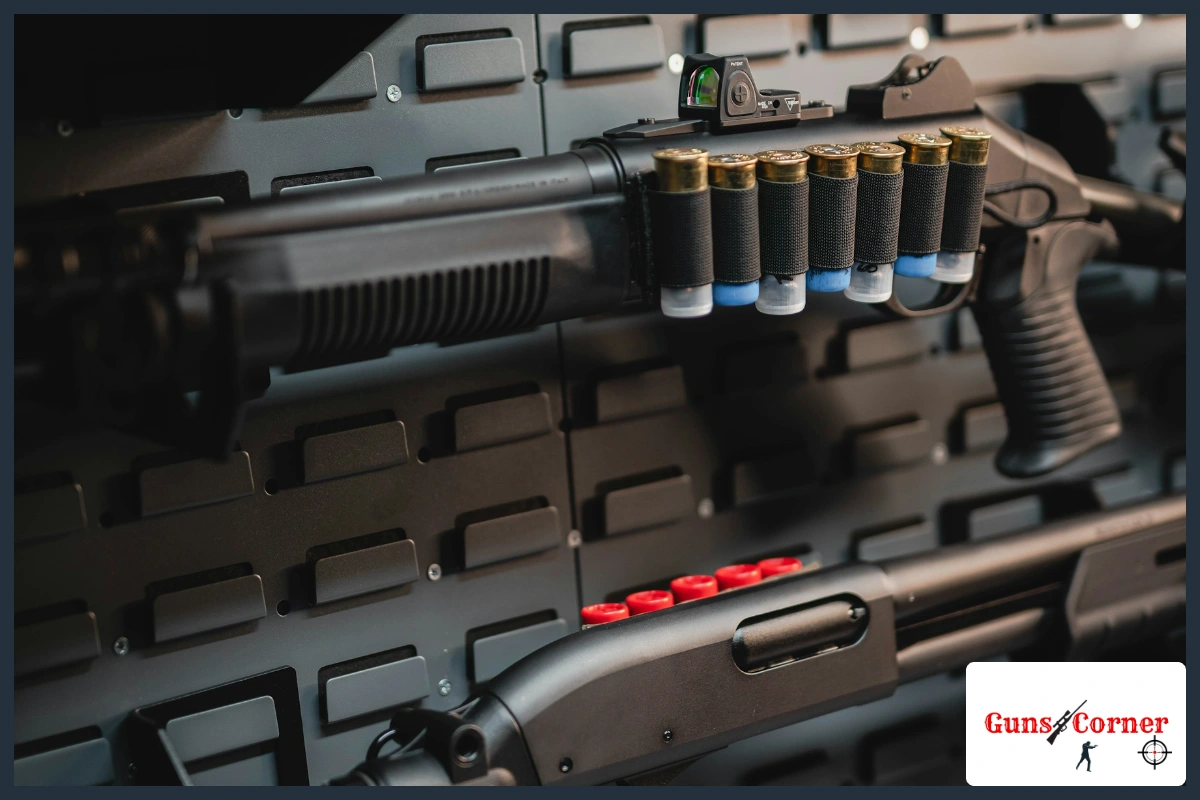
Sometimes. Organization buys room at the margins, but it won’t rescue a safe that’s two sizes too small.
The biggest win comes from moving handguns off the long-gun side. Door-panel organizers and shelf-mounted pistol racks free up rifle slots. Rifle rods keep each long gun standing in its own spot, and GunsAmerica’s series says they can add up to 50 percent more gun capacity.
Swing-out racks, like the ones Rhino sells, let you reach a rifle in the back without pulling three others out first. That saves stocks and scopes from dings every time the door opens.
Bottom line: buy the right size first, then organize. Racks and rods are for squeezing a few more years out of a safe you already own.
So, What Size Gun Safe Should You Buy?
For most hunting households, a medium safe in the 24- to 36-gun advertised range is the right starting point. If you own a lot of scoped rifles or plan to store valuables too, look higher. If you’re still asking what size gun safe do I need, run the five steps above with your real numbers and let the math decide, not the showroom.
Do this today: lay your longest scoped rifle on the floor and measure it, then walk the route from your front door to the safe’s spot with a tape measure. Write down the narrowest door, the tightest stair turn, and your five-year gun count. Those three numbers will narrow the field fast.
Frequently Asked Questions About Gun Safe Size
How tall should a gun safe be?
Tall enough for your longest long gun to stand upright with its optic mounted. Rhino Metals puts that at 55 to 60 inches or more for long guns of any length. Liberty’s full-size lines start at about 59.5 inches tall on the outside, and its 72.5-inch models leave room for a shelf above the rifles, which is handy for ammo and optics.
Will my floor hold a 1,000 lb safe?
Don’t guess. A 1,000-pound safe concentrates far more weight on its footprint than the 40 psf minimum that residential codes use for living areas. A concrete slab is the safest bet. On a wood-framed upper floor or in an older house, have a contractor or structural engineer check the joists, their span, and their direction before delivery.
How many people does it take to move a 400 lb safe?
Skip the headcount and hire it out. Professional safe movers use stair-climbing dollies, straps, and floor protection, and they know how to handle a top-heavy load on steps. Ask about delivery and placement when you buy, because many dealers offer it. A tipped safe can crush a foot or a hand in a second, and one person slipping on a stair puts everyone below at risk.
Do handguns count toward a safe’s gun capacity?
Usually not in the main number. Advertised counts are long-gun slots, and the “+2” style figure often refers to door-panel storage, according to Rhino Metals. Handguns typically go on shelves, in pistol racks, or on a door organizer. Keep in mind that each shelf you add for handguns reduces the number of rifles the other side can hold.
Is a 24-gun safe big enough for 10 guns?
Probably, with little room to grow. Using the half-capacity rule, a 24-gun safe holds about 12 scoped long guns in real life. Ten rifles plus ammo and documents will fill it. If you expect to add even two or three guns in the next few years, step up to a safe advertised around 30 guns.
Where should I put a gun safe?
Somewhere out of sight, on solid flooring, and away from moisture. GunsAmerica’s buying guide makes a point worth repeating: limit how many people know you have a safe at all. Basements and garages handle the weight well but can run damp, so plan on a dehumidifier there. Anchor the safe to the floor wherever it goes.
Can a bow fit in a gun safe?
Sometimes, in a wide safe with an open shelf side. Measure the bow’s axle-to-axle length and its width at the limbs and cams, then compare those numbers with the safe’s interior height, width, and depth. Crossbows are wider still and rarely fit a standard rack. A locking hard case is often the simpler answer for archery gear.