
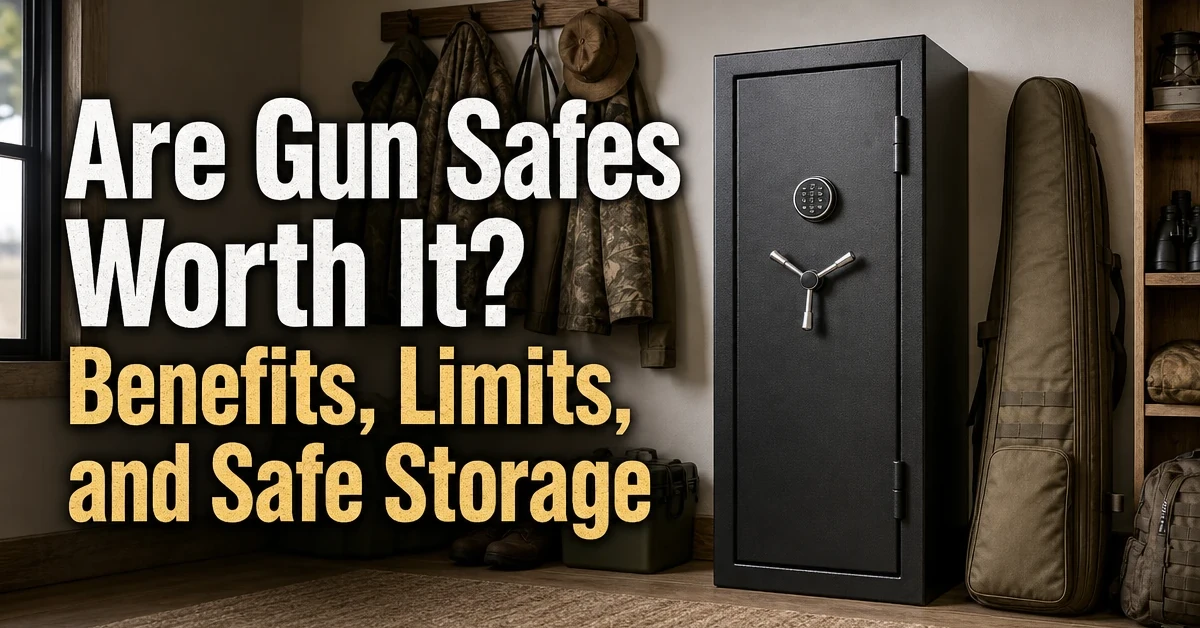

Are gun safes worth it? For most firearm owners, yes. A properly selected and anchored safe can reduce unauthorized access, help deter theft, protect firearms from damage, and support responsible storage. The right choice depends on your household, firearm types, local laws, budget, and how quickly authorized users may need access.
Why Gun Safes Are Usually Worth It
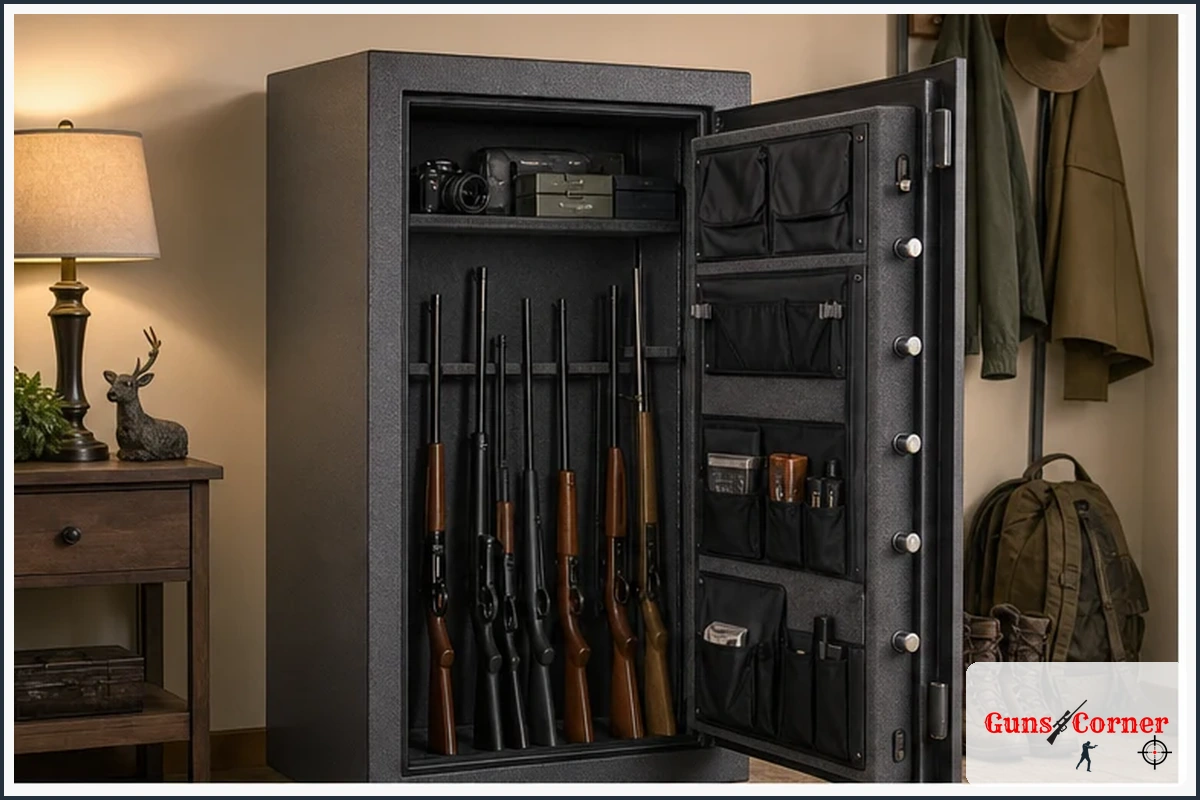
A firearm safe is more than a metal cabinet. It is a storage system designed to control access to firearms while protecting them from common household risks. A quality safe may provide several important benefits:
- Unauthorized-access prevention: It helps keep firearms away from children, visitors, thieves, and unauthorized household members.
- Theft deterrence: A heavy, locked, and properly anchored safe is harder to remove quickly than an unsecured firearm.
- Organization: Shelves, racks, and compartments keep firearms, optics, ammunition, and documents arranged safely.
- Environmental protection: Some models provide resistance to fire, moisture, and corrosion, although no safe is invulnerable.
- Legal compliance: Some jurisdictions require specific storage methods or approved safety devices.
A safe does not eliminate every risk. Poor installation, an accessible combination, a weak lock, or careless handling can undermine its purpose.
What a Gun Safe Can and Cannot Do
| What a safe can help with | What it cannot guarantee |
|---|---|
| Restrict casual or unauthorized access | Prevent all determined burglary or fire damage |
| Make firearm theft more difficult | Replace responsible firearm handling |
| Protect firearms from ordinary household damage | Guarantee protection from humidity or flooding |
| Keep firearms organized and secured | Make an unsafe firearm safe to handle |
Firearm safety rules still apply whenever a gun is removed from storage: treat every firearm as loaded, keep the muzzle pointed in a safe direction, keep your finger outside the trigger guard until ready to shoot, and identify the target and what lies beyond it.
When a Gun Safe Is Especially Valuable
Homes with children or frequent visitors
Children may not understand firearm danger, and visitors may not know how firearms are stored. Locked storage creates an additional barrier that cannot be provided by a closet, drawer, or hiding place.
Homes with multiple firearms
A dedicated safe makes it easier to inventory firearms, separate accessories, and maintain consistent storage habits. Long guns also require vertical space that many household safes cannot provide.
Homes in areas with burglary risk
A large, anchored safe can make unauthorized removal more difficult. It should be installed according to the manufacturer’s instructions, preferably where its weight and location provide additional resistance to being carried away.
Firearms stored for hunting
Hunters often store rifles, shotguns, muzzleloaders, optics, and cases together. A suitable safe protects equipment between seasons and helps prevent unauthorized handling before a hunt.
Gun Safe Types and Their Tradeoffs
| Storage option | Best suited for | Main advantage | Main limitation |
|---|---|---|---|
| Full-size gun safe | Multiple long guns and accessories | Strong capacity and organized storage | Heavy, expensive, and less convenient for rapid access |
| Compact handgun safe | One or more handguns | Smaller footprint and quicker authorized access | Limited capacity and little protection for long guns |
| Locking gun cabinet | Basic access control on a limited budget | Usually lighter and less expensive | Often offers less burglary and fire resistance |
| Portable lockbox | Transport and temporary storage | Convenient and easy to move | Not a substitute for anchored home storage |
Marketing labels such as “fireproof” or “security safe” do not establish a universal level of protection. Compare the manufacturer’s documented specifications, lock type, construction, mounting provisions, warranty, and applicable certification or regulatory requirements.
How to Choose a Gun Safe
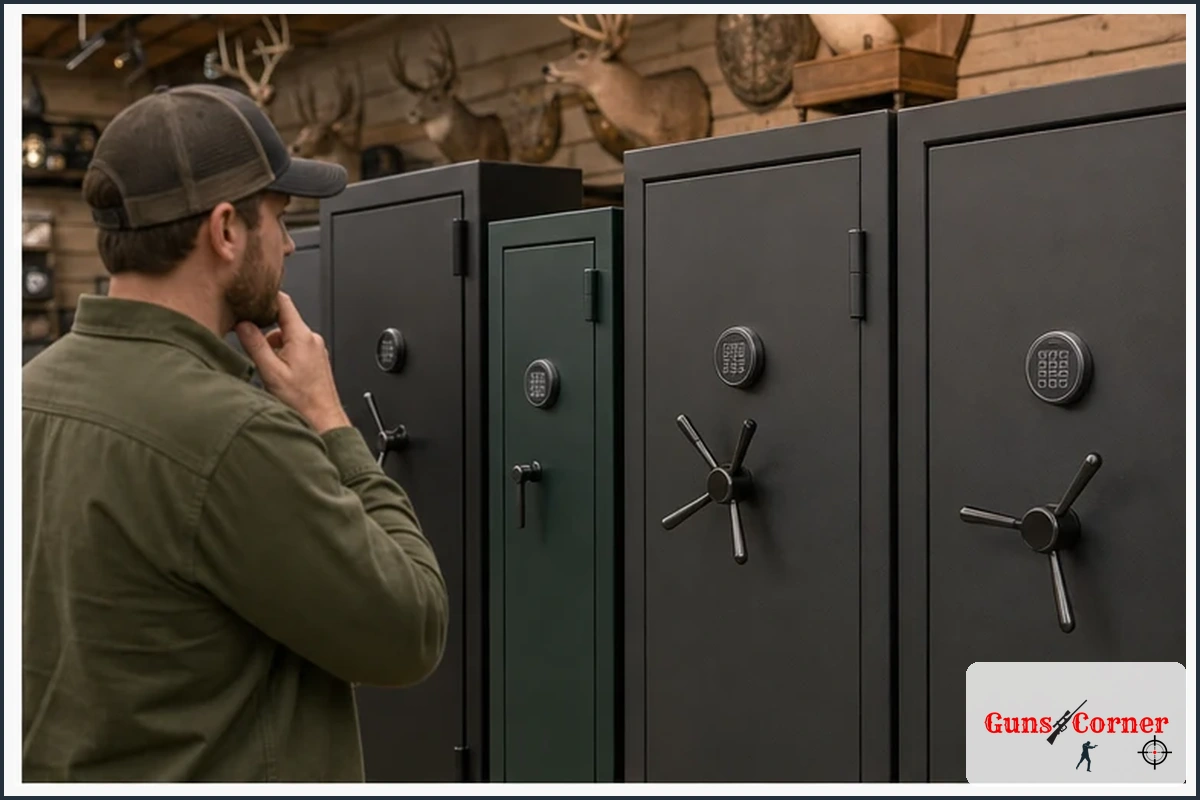
Start with the firearms you actually own
List the number and types of firearms requiring storage. Measure firearms with scopes, suppressors where lawful, extended magazines, or other permanently attached equipment. Advertised capacity may not reflect comfortable real-world storage when rifles have optics or accessories.
Consider access control
Common locking systems include mechanical combination locks, electronic locks, and biometric locks. Each has tradeoffs involving battery maintenance, user memory, reliability, and access speed. Follow the manufacturer’s instructions and maintain a backup access plan that remains secure.
Check installation requirements
A safe that can be carried away is less useful than one properly secured to a suitable structural surface. Use only the mounting method approved by the manufacturer. Do not drill into electrical wiring, plumbing, or structural components without knowing what lies behind the mounting location.
Account for moisture
Safes can trap humid air. In areas with high humidity, use appropriate corrosion-control methods, inspect firearms regularly, and follow manufacturer guidance for dehumidifiers or desiccants. Do not assume a sealed safe is automatically moisture-proof.
Review local requirements
Storage laws vary by country, state, and locality. Some rules may address locking devices, ammunition storage, unauthorized access, transportation, or approved safe standards. Check the current official law before purchasing or installing a safe.
Gun Safe vs. Home Safe
A home safe is generally designed around documents, jewelry, cash, and other valuables. A gun safe is usually arranged for long guns, handgun compartments, and firearm accessories.
Neither category is automatically superior. Choose based on what must be stored. A home safe may be suitable for documents and small valuables but lack the height for rifles or shotguns. A gun safe may hold valuables effectively but provide less specialized organization for papers and jewelry.
Common Mistakes to Avoid
- Buying based only on the advertised firearm capacity.
- Leaving a lightweight safe unsecured.
- Keeping the key, code, or override method accessible to unauthorized people.
- Ignoring batteries, hinges, seals, or lock maintenance.
- Storing damp firearms without inspection or corrosion protection.
- Assuming a fire rating protects contents indefinitely.
- Placing a safe where children or visitors can observe the access code.
- Using a safe as a substitute for unloaded, safe firearm handling.
Responsible Storage Checklist
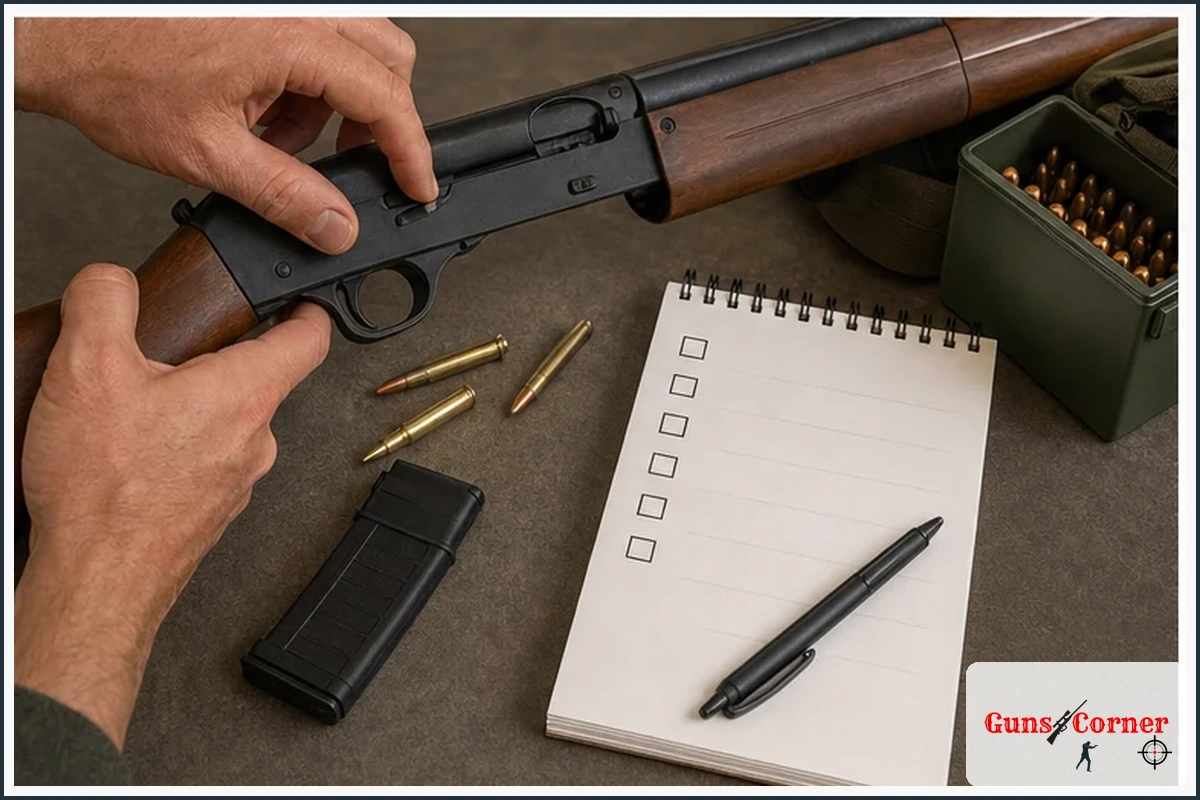
- Unload firearms before placing them into storage unless a specific lawful and professionally trained storage practice says otherwise.
- Keep ammunition secured according to local law and manufacturer guidance.
- Use a safe or locking container appropriate for the firearm type.
- Anchor the safe when the manufacturer provides an approved method.
- Limit access codes and keys to authorized adults.
- Inspect stored firearms periodically for moisture, corrosion, and damage.
- Keep children away from keys, codes, and override devices.
- Verify current storage laws through the relevant official authority.
Are Cheap Gun Safes Worth It?
A lower-cost locking cabinet or lockbox may be worthwhile if it meaningfully improves access control and fits your needs. However, price alone does not prove security. Compare construction, mounting options, lock reliability, capacity, warranty, and compliance with applicable rules.
A basic lockbox may be appropriate for temporary transport or limited handgun storage, while a household with several scoped rifles may need a larger, more secure system. The safest purchase is the one that will be used consistently and installed correctly.
Are Biometric Gun Safes Worth It?
Biometric safes can offer convenient access for authorized users, but fingerprints and electronic systems may be affected by batteries, dirt, moisture, user enrollment, or mechanical failure. A biometric lock should not be treated as automatically more reliable than every mechanical or electronic alternative.
Choose a system you can operate safely, maintain properly, and secure from unauthorized access. Test it according to the manufacturer’s instructions without leaving a firearm accessible during testing.
What to Do Before Buying
- Identify the firearms and accessories that require storage.
- Measure the available installation space.
- Check current local storage requirements.
- Compare the safe’s actual interior dimensions and lock features.
- Plan anchoring and moisture control before installation.
- Decide who may legally and safely access the safe.
- Read the manufacturer’s installation and maintenance instructions.
FAQs
Are gun safes worth it for one firearm?
Usually, yes. A compact locking container can provide meaningful protection against unauthorized access and theft, especially in a home with children, visitors, or shared living spaces.
Is hiding a gun as effective as using a gun safe?
No. Hiding does not provide consistent access control and may fail if someone finds the firearm. Locked storage is a more responsible approach.
Should ammunition be stored in a gun safe?
Follow current local law, manufacturer guidance, and responsible-storage practices. Ammunition should be kept away from unauthorized users and stored in a cool, dry environment.
Does a gun safe prevent theft?
No safe guarantees that. A properly installed and anchored safe can make unauthorized access and removal more difficult, but determined criminals may still defeat or damage storage equipment.
Do I need a fireproof gun safe?
That depends on your risks and priorities. Fire ratings vary, and no rating guarantees protection in every fire. Compare documented specifications rather than relying only on marketing terms.
Can a gun safe replace firearm training?
No. Secure storage and firearm training address different risks. Every owner should learn safe handling, unloading, transport, storage, and local legal requirements through a qualified instructor or recognized hunter education program.
Final Answer: Are Gun Safes Worth It?
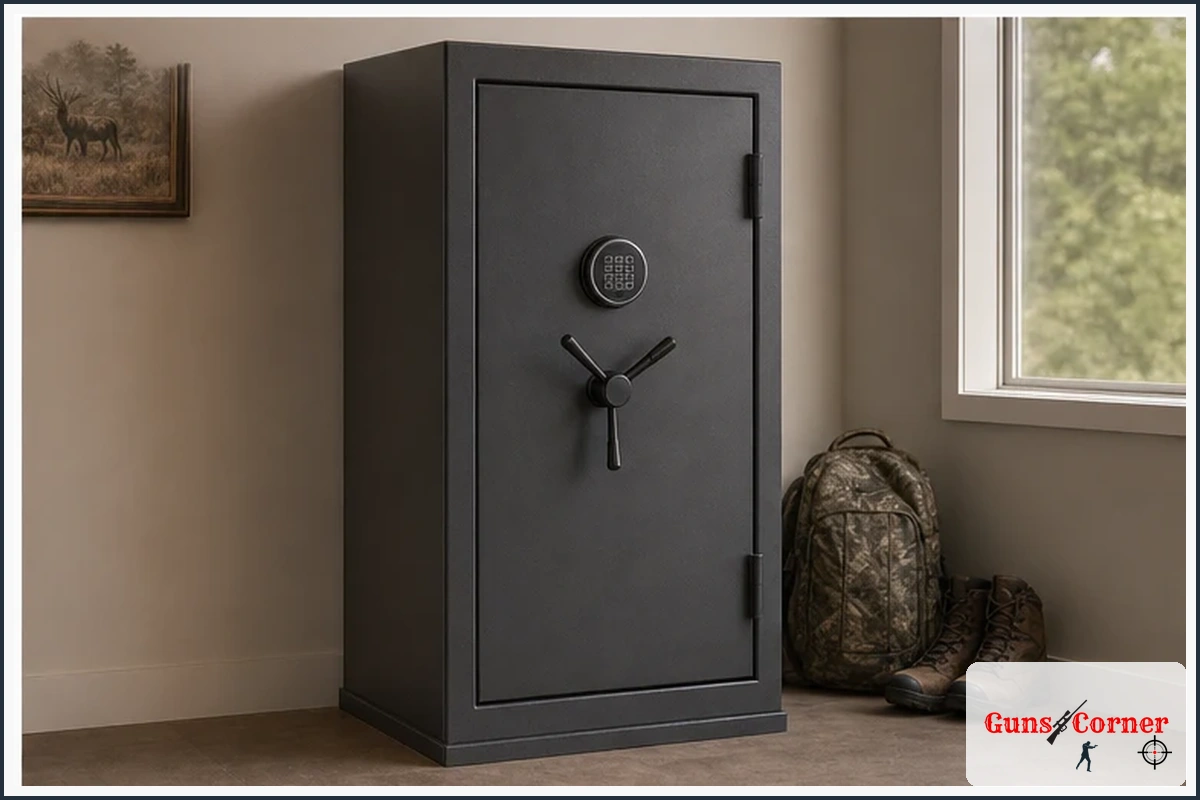
Are gun safes worth it? For most firearm owners, a properly selected and installed safe is a worthwhile investment in access control, theft resistance, organization, and responsible firearm ownership. Choose storage based on your firearms, household, climate, access needs, and local law—not simply the lowest price or largest advertised capacity.
Before storing firearms, follow the four rules of firearm safety, read the manufacturer’s instructions, and verify current requirements with the appropriate official authority. General online guidance never overrides applicable law.