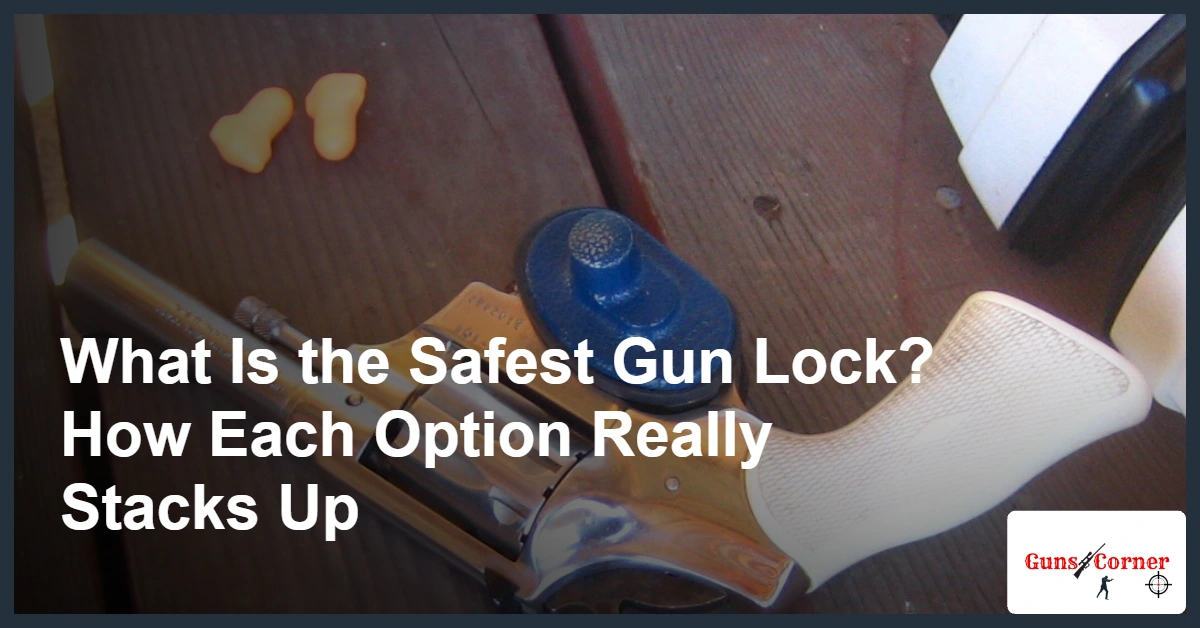

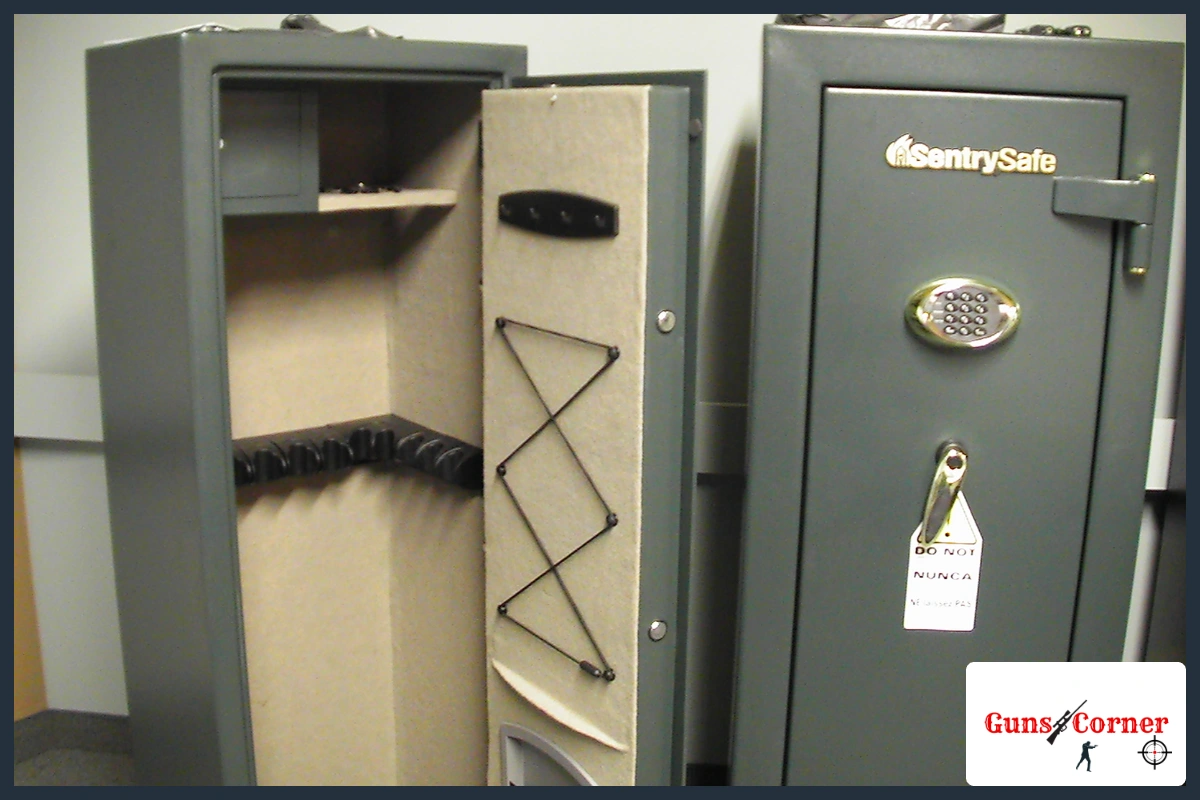
The safest gun lock isn’t really a lock you clip onto the gun. It’s a locked steel container: a quick-access lockbox for a handgun, or a bolted-down safe for long guns, with the firearm unloaded inside. If you need a device that attaches to the gun itself, a steel cable lock run through the open action beats a trigger lock, because it keeps the gun from being loaded. Trigger locks sit at the bottom of the list, and one should never go on a loaded gun.
That ranking comes from public health researchers and government safe-storage programs, not from packaging claims. Below you’ll see what each device actually stops, where it fails, roughly what it costs, and how to match one to your home, your truck, and your hunting camp.
The Safest Gun Lock Options, Ranked From Most to Least Secure
Think of storage as a ladder. In a 2023 interview published by the Johns Hopkins Bloomberg School of Public Health, Cassandra Crifasi, co-director of the Johns Hopkins Center for Gun Violence Solutions and a gun owner herself, described firearm storage as a spectrum. A loaded, unsecured handgun sits at one end. An unloaded gun locked in a safe or lockbox, with the ammunition stored somewhere else, sits at the other. Every rung below the top adds risk.
| Rank | Device | Stops the gun from firing? | Stops it from being loaded? | Slows down a thief? | Typical price range* |
|---|---|---|---|---|---|
| 1 | Gun safe or vault, bolted down | Yes, the gun is inside | Yes | Yes, best of the group | $150 to thousands |
| 2 | Handgun lockbox, mounted or cabled down | Yes | Yes | Yes, if it’s mounted | $25 to over $200 |
| 3 | Cable lock through the action | Yes | Usually, when threaded through the action | No | Free to about $20 |
| 4 | Trigger lock | It blocks the trigger | No | No | About $5 to $30 |
*Price ranges come from the King County (Washington) Public Health guide to firearm locking devices. Store prices move, so treat them as ballpark numbers.
Look at the last column before anything else. None of the devices that attach to the gun does much against theft. A burglar doesn’t need to defeat a trigger lock in your bedroom. He takes the gun, lock and all, and deals with it later. King County’s guide says as much about trigger locks: some can be removed afterward, some break easily, and some won’t keep out older children or teens.
Why a Locked Container Beats Any Lock on the Gun
A container handles three jobs at once. The gun can’t be fired, it can’t be loaded, and if the box is bolted to the floor, a wall, or a bed frame, it can’t easily leave the house. King County lists that last point as a main advantage of lockboxes: they’re hard to steal once they’re permanently mounted.
Cost used to be the excuse. It isn’t much of one now. Crifasi points out that a good quick-access safe can cost as little as $50, and some are about the size of an encyclopedia, small enough for a nightstand or closet shelf.
Home defense is the other common objection. Quick-access lockboxes with push-button, keypad, or fingerprint locks exist for exactly that reason. Crifasi’s guidance for owners who keep a handgun for defense is specific: keep it in a quick-access safe, ideally unloaded. If ammunition has to be in there, a loaded magazine can sit beside the gun, but there shouldn’t be a round in the chamber.
Gun owners seem to lean this direction already. A 2023 systematic review in the journal Injury Epidemiology screened 797 sources and included 38 that looked at locking device preferences among U.S. firearm owners. The studies it found suggest owners may prefer larger devices such as lockboxes and gun safes. The authors were careful to add that research on preferences is still thin, so take it as a pattern, not a settled finding.
Cable Locks: The Safest Lock That Attaches to the Gun
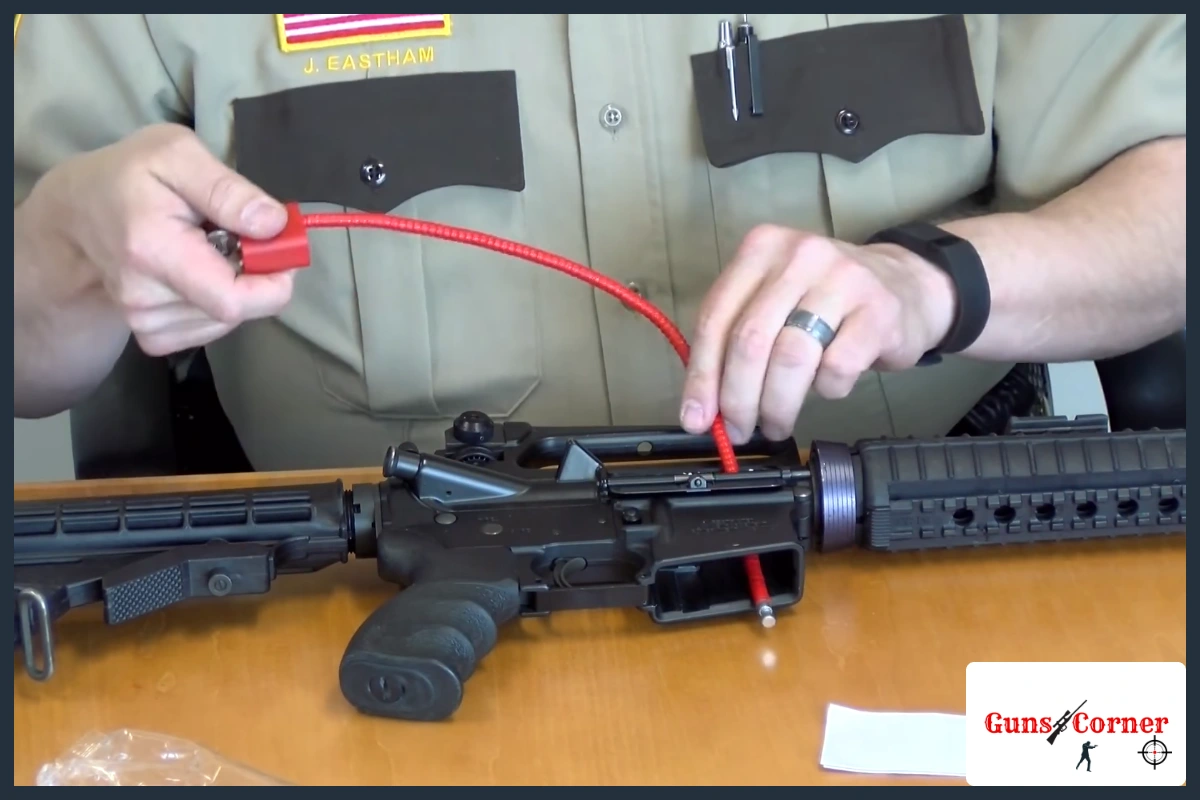
A cable lock is a flexible steel cable, usually coated in plastic, with a padlock on one end. The U.S. Department of Veterans Affairs, which hands out free cable locks to veterans, explains how it works: the cable is threaded through the action, often through the ejection port or the chamber, so a cartridge can’t be loaded and the gun can’t be fired until the cable comes off. King County adds that some designs run through the magazine well, or down the barrel and through the chamber.
That’s the real advantage over a trigger lock. A cable through an open action keeps the gun empty. Johns Hopkins makes the same distinction: cable locks typically prevent a gun from being loaded while they’re on.
Where cable locks fall short
The cable is the weak spot. King County warns that thin cables can be cut, and Crifasi puts it more bluntly: everyday tools will do it. So a cable lock is a speed bump against a curious child or an impulsive grab in a bad moment. It is not theft protection, and it doesn’t hide the gun.
Say you’ve got a deer rifle in a bedroom closet, a cable through the action, and a teenager who knows where the bolt cutters live in the garage. That cable buys you time. It doesn’t buy you security. Pair it with a locked closet, a locked cabinet, or better yet a safe.
How to install a cable lock the right way
The VA’s instructions for its free cable locks come down to four steps. Here they are in plain terms:
- Unload the firearm and check it yourself: chamber, magazine well, and magazine. Don’t trust memory.
- Run the cable through the action, typically in through the ejection port or open chamber and out through the magazine well.
- With the key turned all the way clockwise, push the loose end of the cable into the padlock.
- Turn the key, pull it out, and tug on the cable to make sure it’s locked.
The VA lists semi-automatic pistols, revolvers, modern sporting rifles, semi-auto and pump-action shotguns, and bolt-action rifles as firearm types its cable lock works on. Lever actions, break-actions, and muzzleloaders aren’t on that list. For those, and for any gun you’re unsure about, the VA’s advice is to check the owner’s manual or call the manufacturer for locking instructions.
Trigger Locks: Better Than Nothing, With One Serious Hazard
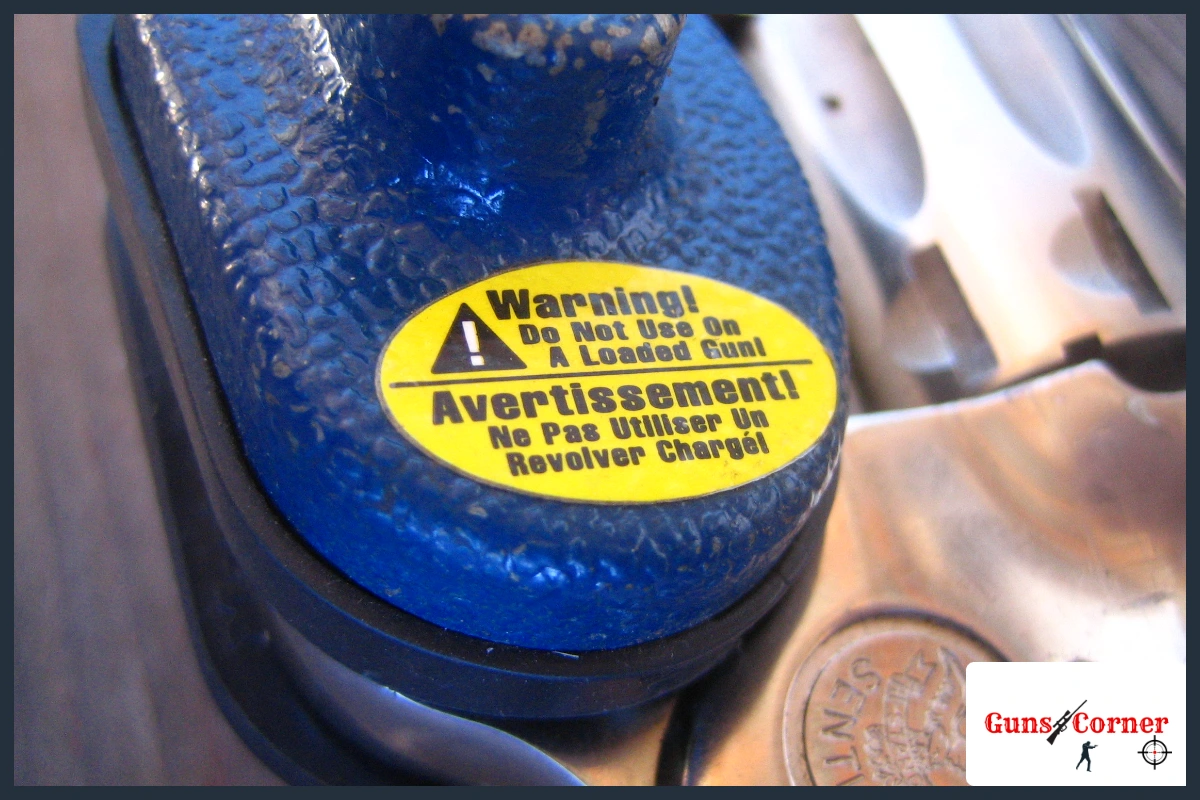
A trigger lock is a two-piece device that closes around the trigger guard so a rigid post sits behind the trigger. It’s cheap and easy to find, and plenty of hunters have one rattling around in a drawer because it came in the box with a new gun.
Here’s the hazard. Johns Hopkins reports that applying a trigger lock to an already loaded gun has caused people to discharge the firearm unintentionally. Pressing two hard halves together around the trigger of a loaded gun is how that happens. Unload first. Confirm it’s empty. Then put the lock on.
The second problem is quieter. A trigger lock doesn’t keep ammunition out of the gun, so someone can still load it. Crifasi notes that trigger locks and cable locks generally fall short of best-practice storage and can create a false sense of security. Her follow-up matters too: something is better than nothing.
Keyed, combination, or biometric?
Every trigger lock and cable lock still needs a way to open it, and each method trades off differently.
- Keyed: simple and reliable, but the key has to live somewhere a child or teen won’t find it. Master Lock, for one, sells keyed trigger locks in “keyed alike” versions, where one key opens several locks. That’s handy with a few guns, but losing that one key unlocks all of them.
- Combination: no key to hide, but many inexpensive models use a three-digit code. That’s only 1,000 possible combinations, and a bored teenager has plenty of afternoons.
- Biometric: fast and keyless, but it depends on batteries and on the sensor reading your finger every time. Look for a mechanical backup, and test it on a schedule.
What Makes a Gun Safe Lock Secure
Once you’ve decided on a safe, the lock on the door is the next question. Safe locks come in two broad families: mechanical dial locks and electronic locks, with biometric readers usually built on top of an electronic keypad.
Jeff Snope, a master safe technician at Northwest Safe with close to 20 years of service work behind him, writes that there’s no single “best” safe lock, only better and worse ones. A few points from his guidance are worth carrying into the store:
- UL listing matters. Snope notes that UL-listed electronic safe locks have to meet a high-security rating, and that a safe’s own UL rating (such as TL-15 or TL-30) may require a specific lock to keep that rating.
- Key overrides can weaken an electronic lock. According to Snope, backup key bypasses appear only on non-UL-listed locks, and he doesn’t recommend them because they add a way in.
- Look for a lockout feature. Some keypad locks shut down for a penalty period after repeated wrong codes. Northwest Safe lists a five-minute lockout after four wrong entries on the Securam ProLogic L01, for example.
- Mechanical dials trade speed for longevity. They don’t need batteries and have a long service record, but they’re slower to open in a hurry.
The lock is only one part of the box. A strong lock on a thin, unanchored cabinet still loses to a pry bar or a burglar with a hand truck. Bolt it down, and if a safe will hold long guns, buy one with room for the rifles you’ll own in five years, not just today.
Matching the Safest Lock to Your Situation
There isn’t one right answer for every household. The safest gun lock for a single hunter in an apartment isn’t the same as the right setup for a farmhouse with kids. This table lines up common situations with the option that fits best.
| Your situation | Safest practical setup | Why |
|---|---|---|
| Young children at home, handgun kept for defense | Mounted quick-access lockbox, gun unloaded or chamber empty | Fast access for you, no access for small hands, and the box can’t be carried off |
| Teenagers in the house | Gun safe or lockbox with a code they don’t know; avoid trigger locks | King County warns some trigger locks won’t stop older kids or teens |
| Hunting rifles and shotguns between seasons | Bolted-down gun safe, ammo stored separately | Long guns spend months untouched; that’s when theft and curiosity happen |
| Gun in the truck at deer camp or a trailhead | Vehicle lockbox secured to the frame, gun unloaded | Johns Hopkins flags guns left in cars without a car-compatible safe as a theft risk |
| New gun, no safe yet | Cable lock through the action today, container as soon as you can | The cable keeps it unloaded while you shop |
| Someone in the home is in crisis | Temporary off-site storage, plus a lock on anything that stays | Time and distance between a person in crisis and a gun can save a life |
On that last row: Johns Hopkins notes that gun shops, ranges, armories, and law enforcement agencies in some states offer voluntary temporary storage, and the owner can take the gun back later. If you or a veteran you know is struggling, the Veterans Crisis Line is reachable by dialing 988 and pressing 1.
Common Mistakes That Make Any Lock Less Safe
Most failures aren’t about the hardware. They’re about how it’s used.
Locking a loaded gun. Covered above, but it’s the one that hurts people. Unload, verify, then lock.
Trusting a hiding spot. Crifasi lists putting a gun up high, or assuming kids don’t know where it is, as a common mistake. She says most children know exactly where a gun is kept and how to get to it within minutes. The same goes for the key on top of the dresser.
Leaving the box loose. An unmounted lockbox is a carry-out package. Use the mounting holes or the security cable.
Weak codes. A birthday, 1-2-3-4, or the factory default is not a combination. Change it, and change it again if someone who shouldn’t know it might.
Forgetting the truck. A rifle behind the seat during a long scouting day is out of your sight for hours. Lock it to the vehicle or take it with you.
Ignoring batteries. Electronic and biometric locks need fresh batteries. Put a reminder on your calendar at the start of every season.
Free Gun Locks and Approved Device Lists
You may not have to buy a cable lock at all. The VA says every veteran can pick up a free cable-style gun lock at a local VA medical center or clinic, with no paperwork. The VA’s safe-storage pages also point readers to the National Shooting Sports Foundation, whose Project ChildSafe program has handed out free gun locks for years. Ask your local police department, sheriff’s office, or county health department whether they have locks on hand. A phone call costs nothing.
Before you buy any device, King County Public Health recommends checking that it meets the California Department of Justice standards, which publishes a roster of approved firearm safety devices. That holds even if you don’t live in California. The roster is simply one of the few public lists of devices checked against a state standard. Approval sets a floor, not a ceiling, so a listed cable lock still isn’t a safe.
Frequently Asked Questions
Can I use a cable lock on a gun that’s already inside a safe?
Yes, and some owners do it with a gun that stays in a shared safe, such as one other family members can open. It adds a second step for anyone who isn’t supposed to handle that particular firearm.
How do I lock a muzzleloader?
The VA’s cable-lock compatibility list doesn’t include muzzleloaders, so don’t assume a cable will fit. Store it unloaded in a safe or locked cabinet, keep powder and primers locked up separately, and check the manufacturer’s manual for any locking guidance specific to your model.
Is a fingerprint lockbox reliable enough for a home-defense handgun?
It depends on the sensor and on you. Enroll more than one finger, including on your weak hand, practice opening it in the dark, and confirm the backup method works. If it fails you more than once in practice, don’t rely on it in an emergency.
Are gun locks required by law?
Some states and cities have safe-storage or child-access laws, and the details vary a lot. Check your state attorney general’s office or state police website for the rules where you live, and remember that rules can differ when you travel with a firearm.
What should I do with the lock that came with my new gun?
Use it. If it’s a cable lock, run it through the action today. If it’s a trigger lock, keep it as a backup layer on an unloaded gun, and plan on a lockbox or safe as your main storage.
Bottom Line on the Safest Gun Lock
If you only remember one thing, make it this: the safest gun lock is a locked, anchored container with an unloaded gun inside. When a container isn’t possible yet, a cable lock through the action comes next, and a trigger lock goes on last, and only on a gun you’ve just checked is empty. Pick the setup that fits who lives in your house and where your guns travel, then use it every single time.