
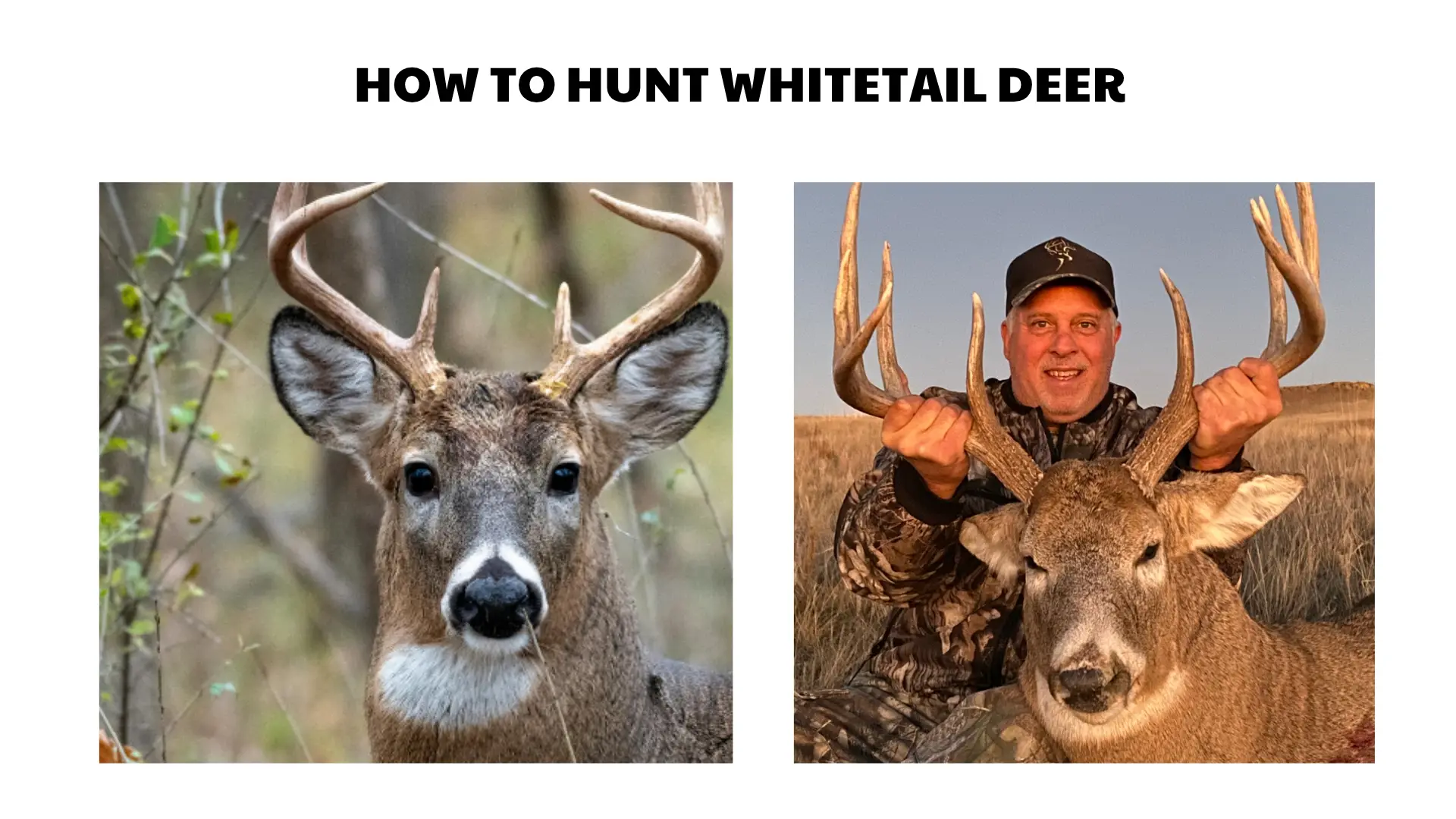

Learning how to hunt whitetail deer begins with legal preparation, safe equipment handling, careful scouting, and realistic expectations. Whitetails are adaptable animals with strong hearing, vision, and scent awareness, so beginners benefit from understanding habitat edges, bedding cover, seasonal food, travel corridors, wind direction, and hunting pressure before choosing a setup.
This guide explains the complete process for a new hunter, from checking licenses and tags to practicing, finding lawful access, reading whitetail sign, selecting a safe stand or blind location, making an ethical decision, and following recovery, reporting, transport, and meat-care rules. No tactic guarantees a harvest; responsible whitetail hunting depends on patience, preparation, local conditions, and sound judgment.
Quick Answer
To learn how to hunt whitetail deer, first complete any required hunter education and verify your current license, tag, season, weapon, bag-limit, land-access, reporting, and transport rules with the official wildlife agency. Scout for connected bedding cover, seasonal food, water, fresh tracks, trails, rubs, and scrapes, then choose a legal setup with a favorable wind and safe background. Practice with your legal hunting method and take only a clearly identified, legal opportunity within your proven ability. Continue below for a complete beginner-friendly process covering preparation, field strategy, recovery, and responsible meat care.
- Hunting license and permits: Confirm hunter education, age, residency, license, endorsement, lottery, and special-permit requirements.
- Tags and harvest reporting: Know which tag applies, when it must be validated or attached, and how a harvest must be reported.
- Legal season and hours: Check the exact dates and daily hunting hours for the unit, deer category, and weapon.
- Legal weapons and ammunition: Verify firearm, muzzleloader, archery, crossbow, ammunition, magazine, and equipment restrictions.
- Land access: Confirm public-land openings, closures, parking, boundaries, and written private-land permission where required.
- Visibility clothing: Wear blaze orange or other required visibility clothing exactly as local law specifies.
- Safe handling: Treat every firearm as loaded, control the muzzle, keep your finger outside the trigger guard until ready, and identify the target plus everything beyond it. Follow equivalent bow-safety principles and keep broadheads covered during transport.
- Emergency planning: Check weather, carry navigation and communication tools, share a trip plan, bring first aid and water, and establish a return time.
Hunter education commonly covers firearm and archery safety, wildlife management, conservation, ethics, game laws, outdoor survival, and first aid. Start with your local agency and consult an official resource such as the U.S. Fish and Wildlife Service Hunter Education program when applicable.
Understanding Whitetail Deer and Their Habitat
White-tailed deer, Odocoileus virginianus, are widespread across much of North America and can adapt to forests, brush, wetlands, river corridors, agricultural edges, and suburban cover. Their exact behavior varies by region, habitat quality, season, hunting pressure, weather, sex, and individual animal.
Identification and senses
Whitetails are named for the bright underside of the tail, which may be raised when the animal is alarmed. Bucks grow antlers, while does generally do not, but legal identification may depend on more than visible antlers. Whitetails use scent, hearing, and vision to detect danger, making wind control and limited movement important.
Bedding cover
Bedding areas provide security and shelter. Depending on the region, whitetails may bed in thick young forest, brush, tall grass, wetland edges, evergreen cover, benches, leeward slopes, or small low-disturbance pockets. Repeatedly walking through bedding cover can change movement patterns.
Food and water
Whitetails are herbivores that use locally available browse, leaves, grasses, forbs, mast, fruit, crops, and woody vegetation. The most attractive food source can change quickly as plants mature, crops are harvested, mast becomes available, or weather changes. Water may influence travel most strongly in dry conditions.
Movement and travel corridors
Whitetails commonly travel between secure cover, food, water, and seasonal habitat. Trails may converge at creek crossings, fence gaps, field corners, saddles, benches, narrow timber strips, and other terrain funnels. A heavily used trail is not automatically a safe hunting location; always evaluate property boundaries and the complete background.
Daily and seasonal patterns
Whitetails are often most active near dawn and dusk, but hunting pressure, temperature, food, breeding activity, and disturbance can shift movement into midday or nighttime. The breeding period, often called the rut, can increase travel, but timing differs by latitude and local herd conditions. Use local observations rather than assuming one calendar date applies everywhere.
Whitetail sign beginners should recognize
- Tracks: Cloven-hoof impressions that reveal direction and repeated travel.
- Droppings: Evidence of use; freshness depends on moisture, temperature, and exposure.
- Trails: Repeated routes through vegetation, sometimes shared with other animals.
- Beds: Flattened resting places in secure or weather-protected cover.
- Rubs: Bark disturbed by antlered deer, often along travel routes.
- Scrapes: Disturbed ground, commonly beneath an overhanging branch, used for communication during part of the year.
- Browse: Freshly clipped plants that can help identify active feeding areas.
For an official species overview, see the National Park Service white-tailed deer page.
What You Need Before You Start
- Valid hunting license, permits, whitetail tag, and current regulation knowledge
- Completed hunter education or a lawful mentored-hunt authorization
- A legal firearm, muzzleloader, bow, crossbow, or other allowed method
- Qualified instruction and repeated practice with the exact equipment
- Blaze orange or other required visibility clothing
- Quiet, weather-appropriate layers and suitable boots
- Paper map, compass, GPS, or hunting app with offline access
- First aid kit, water, food, emergency shelter, and communication
- Binoculars for observation and positive identification
- Headlamp or flashlight with spare power
- Full-body harness, lifeline, and haul line for an elevated stand
- Protective broadhead storage for archery equipment
- Gloves, clean tools, game bags, cooler, and a meat-care plan
- Tagging and harvest-reporting materials required by law
- Written private-land permission when required or appropriate
- A recovery and transport plan suitable for the terrain
Expensive gear is not a substitute for training, lawful access, wind planning, safe weapon handling, navigation, and judgment. Prioritize safety-critical equipment and borrow only gear that fits, functions properly, and can be used according to the manufacturer’s instructions.
How to Hunt Whitetail Deer: Step-by-Step Guide
Step 1: Check Local Hunting Laws First
Use the current official regulations for the exact hunting unit. Confirm license and tag requirements, application deadlines, season dates, legal hours, bag limits, antler or sex restrictions, lawful weapons, required visibility clothing, baiting rules, reporting, transport, and disease-management restrictions.
Save the official regulations offline or carry a paper copy. Contact the wildlife agency when a rule is unclear rather than guessing.
Step 2: Learn Whitetail Patterns
Study how whitetails connect bedding cover, seasonal food, water, and secure travel. Look for several related clues rather than one isolated track. Movement often changes as food sources, weather, breeding behavior, and hunting pressure change.
Build a simple map showing likely bedding cover, feeding areas, funnels, crossings, and low-impact access routes. Treat every pattern as a working theory that must be confirmed by fresh sign.
Step 3: Choose a Legal Hunting Area
For public land, confirm that the parcel is open to whitetail hunting during your season and verify parking, check-in, closures, weapon restrictions, motorized access, and boundaries. For private land, obtain permission and discuss parking, gates, livestock, guests, stands, recovery access, and property lines.
Digital property maps can be wrong or outdated. Stop and verify when a boundary is uncertain.
Step 4: Scout Before the Hunt
Begin with aerial imagery and topographic maps, then confirm conditions on the ground. Search for fresh tracks, droppings, trails, beds, browse, rubs, scrapes, crossings, and active food. Clusters of recent sign that connect cover and food are more useful than one dramatic-looking clue.
Mark setups for different wind directions and identify safe backgrounds, entry routes, exit routes, and recovery paths. Check whether trail cameras, minerals, feed, attractants, or off-trail travel are restricted.
Step 5: Prepare Your Gear Safely
Practice with the exact legal equipment, clothing, sight system, ammunition, arrows, and field positions you expect to use. Know your personal effective range from repeated practice, not from advertising or another hunter’s ability.
Inspect equipment before every outing. Never disable safety features or make unsafe firearm, ammunition, bow, trigger, or broadhead modifications.
Step 6: Plan for Wind, Weather, and Entry Route
Choose an entry that keeps your scent away from expected whitetail movement and avoids crossing active trails, feeding areas, or bedding cover. Consider terrain-driven thermals and wind that may swirl around ridges, creek bottoms, timber edges, and openings.
Check temperature, precipitation, wind, lightning, heat, cold, flooding, wildfire, and road conditions. Share your route and return time with a responsible person.
Step 7: Set Up Carefully
Select a legal location with fresh sign, concealment, a favorable wind, and a safe field of fire. Identify roads, homes, trails, people, vehicles, livestock, and neighboring property before preparing to hunt.
A ground blind removes fall risk but still requires safe visibility and shooting lanes. For a tree stand, inspect the equipment, use a full-body harness, remain connected from the ground up, and raise unloaded equipment with a haul line.
Step 8: Stay Patient and Observe
Settle into a stable position and minimize movement. Scan slowly with binoculars rather than using a firearm scope to identify unknown objects. Pay attention to small details such as horizontal back lines, ear movement, legs, or an antler tip behind cover.
Patience includes leaving when wind, weather, fatigue, another person, or poor visibility makes the situation unsafe.
Step 9: Take Only a Safe, Legal, and Ethical Shot Opportunity
Positively identify the whitetail and confirm that it is legal for your tag, season, unit, sex, and antler rules. Make sure the background is safe, the distance is within your proven ability, and the animal is presented in a way that supports a clean outcome and realistic recovery.
Never shoot toward roads, homes, vehicles, livestock, people, trails, skylines, or unclear movement. Pass whenever brush, angle, motion, distance, visibility, or your condition creates doubt.
Step 10: Follow Legal Recovery and Reporting Rules
After a shot, maintain safe weapon control, observe the whitetail’s direction of travel, and mark clear landmarks. Follow your hunter education guidance for recovery timing and search procedures. Do not enter dangerous terrain or cross a boundary without permission.
When recovered, complete tagging, validation, proof-of-sex, check-station, reporting, and transport steps in the exact legal order.
Step 11: Handle the Game Responsibly
Use clean gloves and tools, protect meat from dirt and contamination, and begin cooling it promptly. Use breathable game bags, suitable coolers, or professional processing based on weather, distance, and local law.
Arrange hands-on field-care instruction before the season if you have never handled a whitetail. Do not wait until after a harvest to find out whether you have enough help, cooling capacity, or legal transport documentation.
Best Time, Place, and Conditions for Whitetail Hunting
Time of day
Whitetails are commonly active near the transition between darkness and daylight, but pressure, weather, food, and breeding activity can create midday movement. Hunt only during legal hours and allow enough time to enter and leave without rushing.
Early season
Early-season patterns may center on predictable food, water, shade, and low-disturbance bedding cover. Warm weather increases the importance of hydration, heat safety, and rapid meat cooling.
Breeding season
During the rut, bucks may travel more and use funnels, scrape lines, downwind cover, and doe-use areas. Rut timing differs by region, so use local observations and official biological information instead of assuming one nationwide date.
Late season
After heavy pressure or severe weather, whitetails may prioritize secure cover and efficient access to high-value food. Entry and exit routes become especially important because repeated disturbance can shift movement.
Wind and weather
A steady wind that carries your scent away from expected movement is easier to hunt than calm, variable air. Rain and snow can reveal tracks but may reduce visibility and create cold, slip, travel, or recovery hazards. Safety takes priority over any favorable hunting theory.
Public and private land
Public land often requires more attention to access pressure, parking, boundaries, and other users. Private land may offer controlled access but only under the owner’s conditions. Habitat, current sign, pressure, and lawful entry matter more than ownership type alone.
Helpful Tips for Better Results
- Scout connections, not isolated sign: Look for routes linking secure bedding cover with current food and water.
- Prepare more than one wind option: A backup setup prevents you from forcing a poor wind.
- Protect your access route: Avoid crossing the trail or field edge you expect whitetails to use.
- Use binoculars for identification: Never sweep unknown objects with a firearm scope.
- Practice from realistic positions: Learn supported sitting, kneeling, blind, or stand positions under safe supervision.
- Reduce unnecessary movement: Arrange essential gear within easy reach before peak movement periods.
- Keep a field journal: Record wind, temperature, food, sign, pressure, sightings, and entry routes.
Common Mistakes to Avoid
Many whitetail hunting mistakes begin before the hunter reaches the setup. A missing tag, uncertain boundary, untested weapon, poor wind, or absent recovery plan can turn a promising outing into an unsafe or unlawful one.
- Using outdated season dates or misunderstanding the exact tag
- Hunting without the correct license, permit, tag, or land permission
- Ignoring weapon, visibility, baiting, reporting, or disease rules
- Practicing too little with the exact equipment used in the field
- Walking through bedding cover or across active trails during entry
- Hunting a setup when the wind carries scent toward expected movement
- Moving constantly or using noisy clothing and equipment
- Choosing a stand or blind without checking the complete background
- Using a tree stand without a full-body harness and continuous connection
- Taking an uncertain opportunity because of excitement or competition
- Failing to plan recovery, tagging, reporting, transport, and cooling
- Crossing unclear property lines or entering private land without permission
- Ignoring weather, navigation, fatigue, and communication risks
Troubleshooting Common Problems
| Problem | Possible Cause | What to Do |
|---|---|---|
| You are not seeing whitetails | Old sign, poor timing, heavy pressure, unfavorable wind, noisy access, or limited scouting | Recheck sign freshness, scout alternate legal locations, improve access, and prepare setups for different winds. |
| Whitetails detect you before entering view | Wind or thermals carry scent toward them; movement or noise reveals your position | Change wind setup, improve concealment, reduce movement, and approach from a less disruptive route. |
| Other hunters crowd the area | Easy public access, popular sign, limited parking, or opening-day pressure | Maintain safe separation, communicate courteously, use another legal access point, or hunt a different time or location. |
| Property boundaries are unclear | Outdated app data, missing signs, uncertain parcel lines, or incomplete permission | Stop hunting that area and verify ownership with the landowner, official records, or the managing agency. |
| Weather becomes unsafe | Storms, heat, cold, flooding, wildfire, poor road conditions, or sudden visibility loss | Unload or secure equipment, leave by the safest planned route, and return only when conditions are appropriate. |
| Equipment fails | Skipped inspection, weak battery, loose hardware, damaged string, wet ammunition, or poor maintenance | Do not improvise unsafe repairs in the field. End the hunt, follow manufacturer guidance, and use qualified service when needed. |
| Visibility is poor | Fog, rain, brush, low light, glare, or an obstructed lane | Do not shoot. Wait for positive identification and a safe background or leave the setup. |
| You are unsure about a rule | Complex unit rules, recent changes, conflicting advice, or an unclear regulation summary | Do not proceed. Consult the current official guide or contact a conservation officer or wildlife agency. |
| You feel nervous when a whitetails appears | Limited field experience, rushing, unstable position, or pressure to act | Control breathing, keep the weapon safe, verify every requirement, and pass if you cannot make a calm decision. |
| You have recovery concerns | Uncertain observation, fading light, boundary issues, weather, or difficult terrain | Mark the last known location, follow legal recovery procedures, obtain permission, and seek qualified assistance. |
Ethical Whitetail Hunting and Conservation
Ethical hunting goes beyond minimum legal compliance. A legal action may still be irresponsible if it creates avoidable risk, wastes meat, damages habitat, disrespects a landowner, or pressures someone into an unsafe situation.
- Respect whitetails by learning identification, behavior, and habitat before hunting.
- Obey seasons, limits, tag rules, access requirements, and disease restrictions.
- Practice enough to know your limits and pass uncertain opportunities.
- Make recovery and responsible meat use part of the plan.
- Report accurately so wildlife managers receive useful harvest information.
- Respect landowners, other hunters, hikers, residents, livestock, and road users.
- Pack out litter and leave gates, roads, and property as directed.
- Support habitat, hunter education, and science-based wildlife management.
License and permit revenue can support wildlife management, habitat, access, education, research, and enforcement in many regulated systems. Those benefits depend on lawful participation, honest reporting, fair conduct, and responsible use of the harvest.
When to Get More Training or Professional Guidance
Seek additional instruction before whitetail hunting when you have never safely handled the chosen firearm or bow, have not completed hunter education, cannot explain the local regulations, do not understand the property boundaries, or cannot demonstrate consistent control in realistic field positions.
Help is also valuable for tree stand systems, unfamiliar terrain, navigation, legal recovery, tracking assistance, meat care, processing, transport, and disease-management rules.
Reliable learning sources include:
- Official hunter education courses
- State, provincial, territorial, or national wildlife agencies
- Certified firearm, muzzleloader, bow, or crossbow instructors
- Experienced ethical whitetail mentors
- Local conservation organizations
- Reputable hunting clubs with supervised programs
- Properly licensed guides or outfitters where applicable
After the Hunt: Follow-Up, Gear Care, and Learning
Unload, inspect, clean, and store firearms according to law and manufacturer instructions. Cover broadheads, inspect strings and arrows, dry clothing, clean boots, recharge electronics, and examine stands, straps, ladders, harnesses, and lifelines for damage.
Complete all required harvest reports and preserve confirmation records. Follow tagging, proof-of-sex, transport, processing, and disease-management rules. Cool meat promptly and use professional processing when you cannot maintain sanitary conditions or temperature control.
Record the following after each outing:
- Date, management unit, and legal hunting window
- Weather, temperature, wind direction, and wind changes
- Entry route, noise, and other hunting pressure
- Fresh tracks, rubs, scrapes, beds, browse, and sightings
- Whitetail travel direction and time of movement
- Equipment that worked, failed, or was unnecessary
- Skills, rules, or logistics to improve before the next hunt
Recommended Whitetail Hunting Gear and Tools to Consider
You do not need the most expensive equipment to hunt responsibly. Choose gear based on current law, hunting method, terrain, weather, physical ability, safety needs, skill level, and budget.
- A legal hunting weapon or method that fits the user and has been practiced with safely
- Quiet, weather-appropriate clothing and required visibility gear
- Supportive boots suited to the terrain and temperature
- Binoculars for observation and positive identification
- Paper map, compass, GPS, or hunting app with offline maps
- Wind indicator where legal
- Headlamp, spare power, first aid, water, food, and emergency communication
- Full-body harness, lifeline, and haul line for elevated stands
- Seat, cushion, shooting support, or blind equipment suited to the setup
- Gloves, clean tools, breathable game bags, and adequate cooling capacity
- A lawful drag aid, cart, pack system, or planned assistance for recovery
Inspect borrowed or used equipment before relying on it. No scent product, trail camera, optic, call, stand, app, or accessory guarantees success.
Final Thoughts
Learning how to hunt whitetail deer means building a repeatable, responsible process: verify the law, complete hunter education, practice with a legal method, secure access, understand whitetail habitat, scout connected sign, plan for wind and weather, enter quietly, select a safe setup, and pass any opportunity that is not clearly legal and ethical.
Prepare recovery, tagging, reporting, transport, cooling, and meat care before entering the field. Match your methods and gear to local regulations, terrain, physical ability, demonstrated skill, and conservation responsibilities. Patience, restraint, and careful notes will improve your field judgment more reliably than chasing a guaranteed tactic.
Frequently Asked Questions About How to Hunt Whitetail Deer
1. How long does it take to learn how to hunt whitetail deer?
You can learn the basic legal and safety requirements through a hunter education course, range practice, and guided field preparation before your first season. Becoming consistently competent usually takes multiple outings because scouting, reading wind, recognizing whitetail deer sign, and making calm decisions improve through experience. Focus on safe progress rather than rushing toward a harvest.
2. What should a beginner do first before hunting whitetail deer?
Start by visiting the official wildlife agency website for the place where you intend to hunt. Confirm hunter education requirements, license and tag rules, season dates, legal weapons, hunting hours, bag limits, reporting rules, and land access requirements. Then complete training and find an experienced, ethical mentor when possible.
3. Do I need a hunting license and tag for whitetail deer?
In most regulated hunting systems, a valid hunting license is required, and whitetail deer may also require a species tag, permit, endorsement, or special drawing. Requirements vary by country, state, province, season, age, residency, weapon type, and hunting area. Verify the current rules directly with the responsible wildlife agency before entering the field.
4. Do I need hunter education before buying a whitetail deer hunting license?
Many jurisdictions require first-time hunters or hunters born after a specified date to complete an approved hunter education course. Other locations may offer supervised apprentice or mentored licenses. Do not assume an exemption applies; check the official rules where you will hunt.
5. Can I start whitetail deer hunting without knowing another hunter?
Yes, but professional instruction and mentorship can make the process safer and easier. Look for official learn-to-hunt programs, conservation organizations, certified instructors, reputable hunting clubs, supervised range programs, or agency-sponsored mentorship events. Avoid relying only on social media advice for legal or safety decisions.
6. What age can someone start whitetail deer hunting?
Minimum ages and youth hunting rules vary widely. Some places have youth licenses, supervised hunts, minimum ages, special seasons, or firearm possession restrictions. A parent or guardian should verify every requirement with the local wildlife and firearms authorities before planning a youth hunt.
7. How much does it cost to start whitetail deer hunting?
Costs depend on licenses, tags, training, travel, legal equipment, clothing, range practice, land access, processing, and whether you borrow or buy gear. A beginner can control expenses by taking a course, borrowing suitable equipment from a trusted source, using public land where legal, and buying only safety-critical items first. Never substitute cheap or damaged equipment for safe, reliable equipment.
8. What gear does a beginner need to hunt whitetail deer?
At minimum, plan for required licenses and tags, a legal hunting method, required visibility clothing, weather-appropriate layers, sturdy boots, navigation tools, water, food, first aid, emergency communication, a light, binoculars, gloves, tagging materials, and a lawful game-care plan. Add a full-body harness for any elevated stand.
9. Do I need expensive camouflage to hunt whitetail deer?
No. Camouflage can help break up your outline, but quiet clothing, wind awareness, slow movement, safe positioning, and remaining still are usually more important. Wear any legally required blaze orange or other visibility clothing even if it reduces camouflage.
10. Should a beginner use a firearm or a bow?
Use only a legal method that you can handle safely and accurately after proper instruction. Firearms and bows require different training, equipment, season rules, effective ranges, and recovery planning. A beginner should choose based on local law, access to qualified instruction, physical ability, and demonstrated practice rather than image or convenience.
11. What firearm safety rules matter most while whitetail deer hunting?
Treat every firearm as loaded, keep the muzzle pointed in a safe direction, keep your finger outside the trigger guard until you are ready to shoot, and identify the target plus everything in front of and beyond it. Keep the firearm unloaded when crossing obstacles, entering vehicles, or climbing into a stand, and follow the manufacturer and hunter education instructions.
12. What bowhunting safety rules should a beginner know?
Use properly matched equipment, inspect the bow and arrows, transport broadheads in a protective container, and practice until you know your personal effective range. Never draw toward a person, road, building, vehicle, livestock, or unclear movement. Use a haul line for equipment in a tree stand and keep broadheads covered until needed.
13. How much practice is needed before whitetail deer season?
Practice until you can repeatedly operate your equipment safely, use stable field positions, understand your sights, and keep shots within your personally proven effective range. Practice in realistic but controlled conditions, including the clothing and positions you expect to use. Accuracy at a range does not remove the need to pass uncertain field shots.
14. What distance should a beginner shoot at a whitetail deer?
There is no universal distance. Your maximum ethical distance is the shorter of your proven practice range, the equipment’s appropriate range, the legal limit if one exists, and the distance at which you can clearly identify the whitetail deer and ensure a safe background. Beginners should be conservative and pass shots that create doubt.
15. How do I know whether a whitetail deer is legal to harvest?
You must know the current species, sex, age-class, antler, tag, unit, season, and weapon rules that apply to your exact location. Study official diagrams and definitions before hunting, carry the regulations, and do not act if identification is uncertain. Rules can differ between neighboring management units.
16. When is whitetail deer hunting season?
Season dates vary by location, whitetail deer species, management unit, weapon, license type, and sometimes private versus public land. Never rely on last year’s dates or a general internet article. Use the current official regulation guide and check for emergency changes before every hunt.
17. What is the best time of day to hunt whitetail deer?
whitetail deer are often active around transitions between darkness and daylight, but legal hunting hours may not match all natural movement. Weather, hunting pressure, food availability, the breeding season, and local disturbance can shift activity. Hunt only during legal hours and choose access routes that do not disturb the area.
18. What weather is best for whitetail deer hunting?
Comfortable conditions with a steady, predictable wind can make planning easier, but whitetail deer may move in many weather patterns. Sudden temperature changes, rain, snow, heat, and storms affect whitetail deer and hunter safety differently. Prioritize safe travel, visibility, clothing, and an exit plan over any forecast-based theory.
19. Why is wind direction important when hunting whitetail deer?
whitetail deer rely heavily on scent. Plan so the prevailing wind carries your scent away from the area where you expect whitetail deer to approach, while also maintaining a safe field of fire and legal access. Wind can swirl around ridges, valleys, timber edges, and changing temperatures, so monitor it throughout the hunt.
20. Does scent-control spray guarantee whitetail deer will not smell me?
No product can guarantee that a whitetail deer will not detect a hunter. Clean clothing and careful scent management may help, but wind direction, thermals, access route, time spent in the area, and human disturbance matter more. Treat scent products as optional support, not a replacement for good positioning.
21. Where do whitetail deer usually live?
whitetail deer commonly use a mix of secure cover, food, water, and travel routes, but exact habitat depends on the species and region. Look for edges between cover types, thick bedding cover, seasonal food, creek crossings, funnels, and low-disturbance areas. Confirm that all observation and access are legal.
22. What whitetail deer sign should a beginner learn first?
Learn to identify tracks, droppings, trails, beds, browsed vegetation, rubs, scrapes, crossings, and feeding sign. A single sign may be old or incidental, so look for clusters of fresh evidence that connect bedding, food, water, and secure travel.
23. How can I tell whether whitetail deer tracks are fresh?
Freshness depends on soil, rain, wind, sun, snow, and traffic. Fresh tracks may have sharp edges, disturbed moisture, displaced leaves, or a clean impression, but conditions can mislead you. Compare the track with known recent marks in the same substrate instead of using one feature alone.
24. What is a whitetail deer bedding area?
A bedding area is a place where whitetail deer rest, often in cover that offers security, visibility, wind advantage, or protection from weather. Avoid repeatedly walking through suspected bedding cover because pressure can change whitetail deer movement and reduce your chances of observing natural patterns.
25. What is a whitetail deer travel corridor?
A travel corridor is a route whitetail deer use between resources such as bedding cover, food, water, and seasonal habitat. Trails, narrow cover strips, creek crossings, saddles, fence gaps, and terrain funnels may concentrate movement. Confirm safe shooting directions before selecting a nearby setup.
26. How do I scout for whitetail deer before the season?
Use legal maps, aerial imagery, property boundaries, and field visits to locate access points, food, cover, water, trails, crossings, and safe setup areas. Record wind options and exit routes. Minimize disturbance close to the season and obey any restrictions on cameras, bait, vehicles, or off-trail access.
27. Can I use trail cameras for whitetail deer scouting?
Trail-camera rules vary by jurisdiction and land manager. Some places restrict camera timing, transmission, placement, bait association, or use during hunting seasons. Check current rules, label cameras if required, secure permission on private land, and never place a camera where it invades another person’s privacy.
28. Is baiting whitetail deer legal?
Baiting laws vary greatly and may change because of disease-management or fair-chase concerns. It can be prohibited statewide, restricted to certain areas, or regulated by quantity and timing. Do not place feed, minerals, attractants, or bait until an official source confirms that the exact activity is legal.
29. How do I find public land open to whitetail deer hunting?
Start with the official wildlife agency, public land manager, or government mapping portal. Verify the parcel, open season, access points, weapon restrictions, parking, closures, special permits, and boundaries. A map showing public ownership does not automatically mean every part is open to hunting.
30. Is public land harder than private land for a beginner?
Public land may involve more hunting pressure, longer walks, complicated boundaries, and competition near easy access. Private land may offer controlled access but requires clear permission and respect for landowner conditions. Either can be suitable when you scout carefully and follow the applicable rules.
31. How do I ask permission to hunt private land?
Contact the landowner respectfully well before the season, introduce yourself, explain what you are requesting, and accept refusal without argument. Discuss dates, parking, boundaries, gates, livestock, guests, equipment, harvest expectations, and cleanup. Written permission may be legally required and is a good practice even when it is not.
32. What should I do when property boundaries are unclear?
Do not hunt the uncertain area. Check official parcel information, land-manager maps, posted signs, survey markers, and written permission. Mapping apps can contain errors, so use them as planning tools rather than final legal proof. Contact the landowner or managing agency before returning.
33. Should a beginner use a tree stand or a ground blind?
A ground blind can simplify access and eliminate fall risk, but it still requires safe visibility and a secure shooting direction. A tree stand can improve visibility but adds serious climbing hazards. Anyone using an elevated stand should receive instruction, inspect the stand, use a full-body harness, stay connected from the ground up, and use a haul line.
34. How high should a tree stand be?
There is no universally safe or effective height. Use the lowest practical height that provides a safe view and follows the stand manufacturer’s instructions and local rules. Height does not replace wind planning, concealment, a secure background, or continuous connection to a rated fall-arrest system.
35. Can I carry a loaded firearm while climbing into a tree stand?
No. Unload the firearm, verify its condition, and use a haul line after you are securely attached in the stand. Follow official hunter education guidance and the equipment manufacturer’s instructions. The same principle applies to bows with uncovered broadheads.
36. How early should I arrive at my whitetail deer hunting setup?
Arrive early enough to park legally, navigate safely, settle quietly, and avoid rushing, while respecting legal access times and hunting hours. The exact timing depends on distance, terrain, weather, other users, and whether your route crosses likely whitetail deer movement.
37. How long should I sit in one place while whitetail deer hunting?
It depends on sign, wind, weather, pressure, season, and your physical comfort. Some setups are best for a short movement window, while others may justify a longer sit. Leave when conditions become unsafe, the wind becomes unfavorable, or your exit would create unnecessary risk.
38. What should I do if I am not seeing whitetail deer?
Recheck whether your sign is fresh, whether the wind is carrying scent into the area, whether access is noisy, and whether hunting pressure has shifted movement. Scout alternate legal locations and adjust cautiously. Avoid moving repeatedly through bedding cover simply because one sit was unproductive.
39. Why do whitetail deer keep detecting me?
Common causes include an unfavorable or swirling wind, noisy clothing, visible movement, poor concealment, a disturbed access route, or spending too much time in one small area. Change only one or two factors at a time so you can learn which adjustment helps.
40. What should I do if other hunters are nearby?
Make your presence visible without disturbing wildlife unnecessarily, maintain safe separation, and never compete for a shot. Know each person’s likely location, avoid overlapping fields of fire, and move to another legal setup if safety or conflict is uncertain. Be courteous at parking and access points.
41. Can I shoot at movement in thick cover?
No. Never shoot at sound, color, shape, or movement alone. Positively identify the complete target, confirm it is legal, and know exactly what is in front of and beyond it. If vegetation, darkness, distance, or motion prevents certainty, do not shoot.
42. What makes a whitetail deer hunting shot ethical?
An ethical opportunity requires a clearly identified legal whitetail deer, a safe background, a stable position, suitable equipment, a distance within your proven ability, and a presentation that gives a high probability of a clean outcome. It also requires a realistic recovery plan. When any part is uncertain, pass.
43. What should I do immediately after taking a shot?
Keep the firearm or bow pointed safely, stay aware of other people, observe the whitetail deer’s direction of travel, note landmarks, and control your emotions. Follow your hunter education guidance for waiting, approaching, and recovery. Do not rush into unsafe terrain or cross property boundaries without permission.
44. How long should I wait before tracking a whitetail deer?
There is no single waiting time that fits every situation. The correct response depends on what you observed, the equipment used, weather, visibility, terrain, legal hours, property boundaries, and local recovery rules. Use your training, consult an experienced mentor when available, and contact the wildlife agency if the legal procedure is unclear.
45. Can I cross onto private land to recover a whitetail deer?
Do not enter private land without permission unless the law in your jurisdiction explicitly provides a different process. Contact the landowner and, where appropriate, a conservation officer or wildlife agency. Recovery ethics do not cancel trespass laws.
46. What if I cannot find the whitetail deer?
Return to the last confirmed location, mark the trail, search methodically without trampling all sign, and use legal assistance such as an experienced tracker or approved tracking dog where allowed. Check rules for nighttime recovery, weapons, lights, vehicles, and crossing boundaries. Report the harvest if the law requires reporting based on the shot or recovery status.
47. When should I tag a harvested whitetail deer?
Tagging requirements vary. Some jurisdictions require immediate tagging before moving the whitetail deer, while others use electronic validation or a different sequence. Read the current instructions before the hunt and carry everything needed to comply in the field.
48. Do I have to report a whitetail deer harvest?
Many wildlife agencies require harvest reporting, sometimes within a specific number of hours or days. Reporting methods may include an app, website, telephone system, check station, or physical inspection. Verify the current deadline and retain any confirmation number or record.
49. How should a whitetail deer be handled after a successful hunt?
Use clean tools and gloves, follow legal tagging and transport rules, and begin cooling the meat promptly while protecting it from dirt, insects, and excessive heat. The exact field-dressing and processing approach depends on weather, distance, equipment, and local regulations. Seek hands-on instruction before your first harvest.
50. Do I need a cooler for whitetail deer hunting?
A cooler, ice, breathable game bags, or access to rapid refrigeration may be important depending on temperature and transport time. Plan capacity before the hunt and keep meat clean and cool without allowing it to sit in dirty water. Follow local rules for proof of sex, tagging, and transport.
51. Can I take a harvested whitetail deer across a state or provincial border?
Transport restrictions may apply, especially in areas managing wildlife diseases. Rules can control which carcass parts may cross boundaries and how tags or proof of sex must remain attached. Check both the origin and destination regulations before traveling.
52. What should I do with my equipment after the hunt?
Unload and secure firearms, cover and store broadheads, dry wet clothing, clean mud from boots, inspect stands and harnesses, maintain optics and navigation equipment, and recharge communication devices. Store weapons according to law and manufacturer guidance, separate from unauthorized access.
53. How can I improve after my first whitetail deer season?
Keep a field journal with dates, legal hunting hours, weather, wind, access route, sign, sightings, pressure, and decisions you made. Review what affected safety and whitetail deer movement. Continue range practice, take advanced education, scout responsibly, and ask an ethical mentor to review your plan.
54. How does regulated whitetail deer hunting support conservation?
In many regulated systems, license and permit revenue supports wildlife management, habitat work, access, research, education, and enforcement. Regulated harvest can also be used as one management tool. Conservation benefits depend on following science-based regulations, reporting accurately, avoiding waste, and respecting habitat.
55. When should a beginner hire a guide or seek professional help?
Seek qualified help when you lack safe weapon-handling experience, do not understand regulations or boundaries, are entering unfamiliar terrain, need instruction in recovery or meat care, or cannot confidently plan an ethical hunt. Verify that any guide, instructor, or outfitter is properly licensed and reputable.
Read more: How to Start Deer Hunting: A Complete Beginner-Friendly Guide