
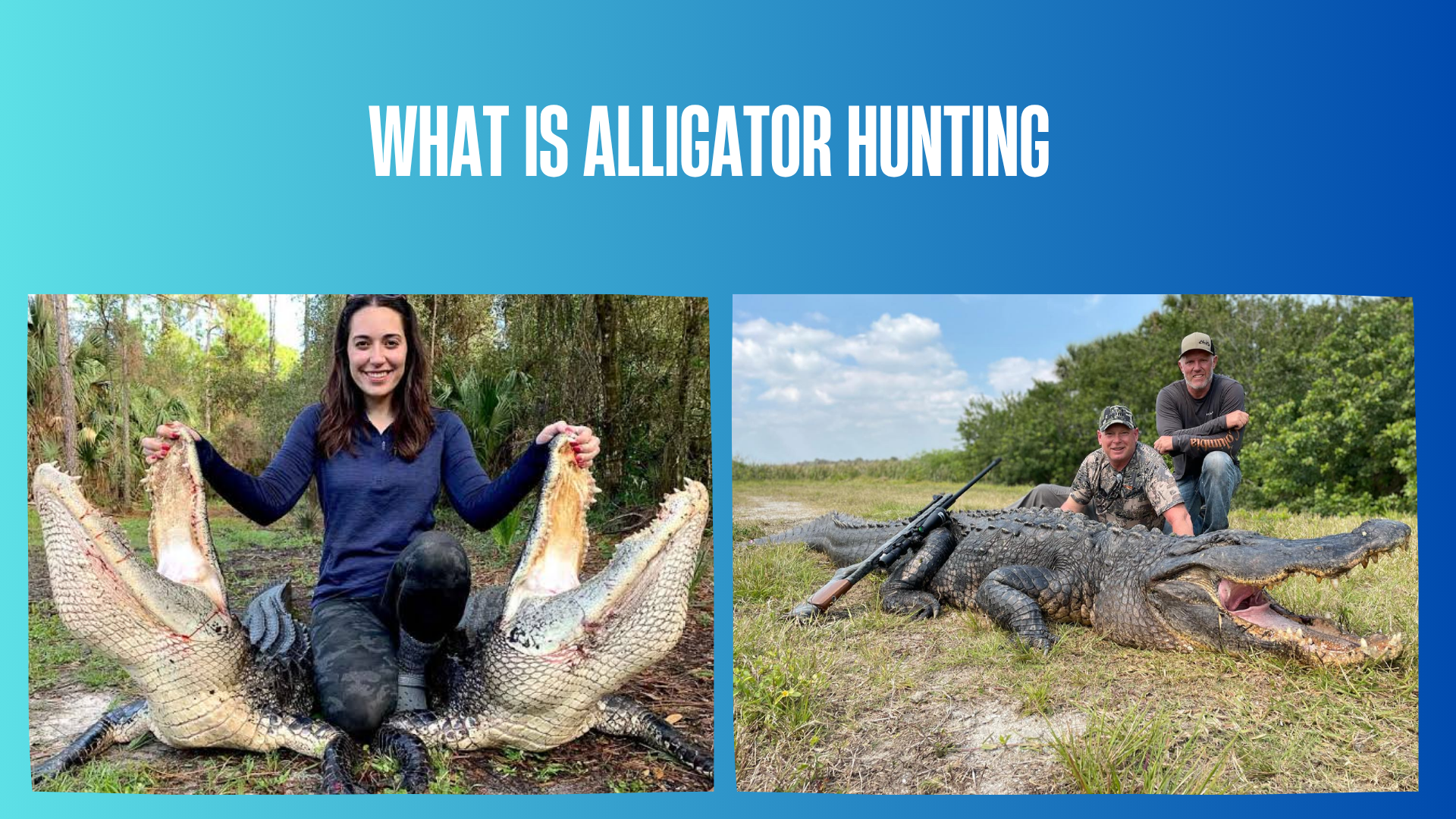

Alligator hunting is the legal, regulated harvest of wild American alligators under rules established by state wildlife agencies and, where applicable, federal wildlife-trade requirements. Unlike many ordinary game hunts, alligator hunting often involves limited-entry permits, harvest tags, designated management areas, specialized capture equipment, strict reporting requirements, and rules governing what may be done with the hide and meat after harvest.
The exact process differs substantially by state. Florida uses quota-based harvest units and countywide permits, Georgia operates a zone-based quota hunt, and Louisiana uses property-specific tags, public-land lotteries, and other controlled access systems. Because alligator hunting regulations are unusually specific, beginners should treat the official wildlife agency’s current regulations as the controlling source rather than relying on a general hunting article.
Alligator hunting is also a higher-risk form of hunting. It commonly takes place around boats, wetlands, darkness, powerful animals, specialized restraining equipment, and sometimes regulated dispatch equipment. Proper training, conservative decision-making, boating safety, and strict compliance with the permit are essential.
Quick Answer
If you are asking what is alligator hunting, it is a tightly regulated wildlife-management activity in which permitted hunters harvest American alligators during designated seasons and under specific state rules. Hunters may need a quota permit, alligator license, CITES tag, property authorization, or harvest record, depending on the jurisdiction. Legal methods also vary: some states authorize restraining lines, snatch hooks, harpoons, bows, or other specialized equipment, while firearm rules can be very different from one state to another. A beginner should first complete hunter education or an alligator-specific orientation course where available and study the current regulations for the exact state and hunt area.
Why Is Alligator Hunting So Heavily Regulated?
The American alligator is one of the best-known wildlife recovery stories in the United States. The species suffered major declines from habitat loss and unregulated market hunting, received federal protection, and later recovered strongly enough to support carefully managed harvest programs. The U.S. Fish and Wildlife Service reports that American alligators now number in the millions across the Southeast and that regulated trade is managed through CITES so that skins entering international commerce are legal, traceable, and biologically sustainable.
Modern state programs use harvest quotas, tags, population surveys, management zones, and reporting requirements to keep harvest within biological limits. Florida describes its statewide recreational harvest as part of a broader population-management strategy, while Louisiana uses habitat data, nest surveys, harvest history, and property-specific tag allocations to determine allowable take.
How Does a Regulated Alligator Hunt Work?
The details vary, but most regulated alligator hunts follow a general administrative process rather than a simple open-season model.
- Confirm that an alligator season exists where you want to hunt.
- Determine whether access is quota-based, lottery-based, property-based, or otherwise limited.
- Obtain the required license, permit, harvest tag, or other authorization.
- Study the legal methods for the exact state and hunting area.
- Scout only where access is lawful and follow property-specific restrictions.
- Use only methods authorized by the permit and wildlife regulations.
- Follow the state’s tagging and harvest-reporting requirements immediately after a legal harvest.
- Handle the meat, hide, and carcass according to applicable wildlife and food-safety rules.
This high-level sequence is consistent with the regulatory systems used by Florida, Georgia, and Louisiana, although the individual requirements differ substantially.
Alligator Hunting Rules Vary Dramatically by State
One of the biggest beginner mistakes is assuming that a legal method seen in another state is automatically legal locally. Current rules demonstrate why that assumption is unsafe.
| State Example | Access Structure | Season Structure | Examples of Legal-Method Differences |
|---|---|---|---|
| Florida | Limited-entry statewide harvest permits, countywide units, specific management units, and other programs | Statewide recreational harvest generally runs from August 15 through November 1, with assigned early harvest periods followed by an open period | Uses specialized capture and restraining methods; ordinary rifles and handguns are not lawful recreational take methods in the statewide program |
| Georgia | Quota hunt by designated alligator zone | 2026 season runs from sunset August 14 through sunrise October 5 | Authorizes specified restraining methods and regulated dispatch methods under state rules |
| Louisiana | Private-land tags, public-land lotteries, sport-hunter arrangements, and property-specific authorization | East and west zones have different opening dates; the state describes the season as extending through December 31 | Allows several methods on eligible lands, but public-area rules can be more restrictive |
These examples were checked on September 28, 2026. Florida’s current statewide program allows hunting 24 hours per day on many units but imposes different hours on certain managed areas. Georgia’s 2026 quota season specifies a one-alligator limit for selected hunters and zone-specific size rules. Louisiana divides the state into east and west alligator zones and requires harvest tags tied to authorized property or public-land opportunities.
What Methods Are Used for Alligator Hunting?
Alligator hunting is different from simply walking through the woods with a conventional hunting rifle. In many regulated programs, hunters first capture or restrain an alligator using an authorized method, after which the animal is handled according to the state’s humane-harvest and tagging requirements.
Depending on the jurisdiction, legal equipment may include some combination of:
- Hand-held restraining lines.
- Snatch hooks.
- Catch poles or snares.
- Harpoons or gigs.
- Bows or crossbows with approved restraining-line systems.
- Specialized bait or lure systems where expressly authorized.
- Other state-approved devices.
Florida’s recreational statewide program, for example, lists hand-held restraining devices, snatch hooks, catch poles, harpoons, gigs, bows, crossbows, airbows, and other specific equipment, while sharply restricting firearm use. Georgia and Louisiana publish different legal-method lists.
Because these regulations differ so much, hunters should not improvise equipment or copy a method from a video without first confirming that the method is authorized for the exact state, property, public area, and permit.
Does Alligator Hunting Always Involve a Firearm?
No. In fact, firearm rules are one of the areas where jurisdictions differ most.
Florida’s statewide recreational alligator program states that conventional rifles and handguns may not be used as ordinary take methods; a bang stick is the only firearm-type device permitted for taking an alligator in that program, and it may be used only under the conditions specified by FWC. Georgia and Louisiana have different rules governing lawful dispatch and firearm use.
The practical lesson is simple: do not bring or use a firearm merely because it appears in an alligator-hunting video. Read the current method-of-take rule for the permit you actually hold.
Is Alligator Hunting Dangerous?
It can be. The risk comes from more than the animal itself. Hunters may be operating boats in darkness, navigating submerged obstacles, using lines and specialized equipment, working close to water, and dealing with a restrained animal whose movements can be unpredictable.
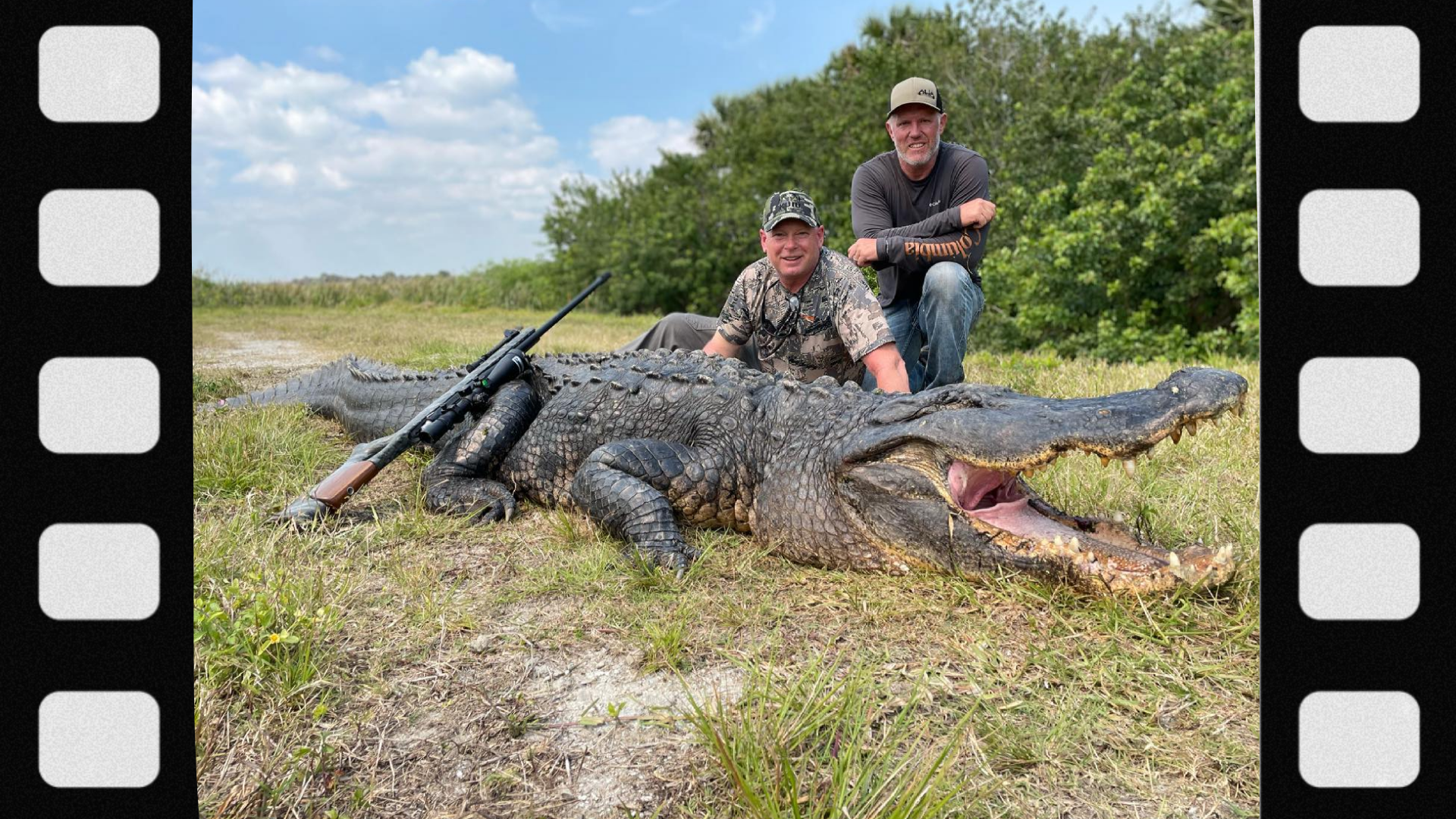
Florida FWC explicitly states that alligator hunting can be dangerous. Its safety guidance recommends properly fitted life jackets for everyone in a boat because nighttime obstructions are harder to see and restrained alligators can behave unpredictably. FWC also warns hunters to seek immediate medical attention for even relatively minor alligator bites or scratches because infection can be serious.
Important Safety Priorities
- Wear an appropriate personal flotation device when boating.
- Follow navigation-light and boating regulations.
- Avoid overloading the boat with people, equipment, or harvested animals.
- Keep hands and feet away from a restrained alligator unless following approved handling procedures.
- Use only equipment you have been trained to use.
- Maintain clear communication among everyone in the boat or hunting party.
- Keep the deck free of unnecessary loose line and clutter.
- Stop the hunt if weather, visibility, fatigue, or boat conditions become unsafe.
- Seek prompt medical treatment for any bite or significant scratch.
Firearm Safety Still Matters When Firearms Are Legal
Where the applicable alligator-hunting regulations authorize firearm-type equipment, the same fundamental weapon-safety principles remain essential:
- Treat every firearm as if it is loaded.
- Keep the muzzle pointed in a safe direction.
- Keep your finger outside the trigger guard until ready to shoot.
- Be certain of the target and what is beyond it.
The source brief specifically prioritizes these four safety principles for firearm-related hunting content.
Water, boat surfaces, nearby hunters, and confined working space can increase the consequences of unsafe handling. Florida specifically warns hunters using bang sticks to maintain safe muzzle direction and keep them unloaded when not in use.
Do You Need a Permit to Hunt Alligators?
In regulated recreational programs, generally yes, but the required documents vary.
Florida’s Statewide Alligator Harvest Program requires an alligator trapping license, a statewide alligator harvest permit, and CITES tags. The permit authorizes harvest in the specified unit or county according to its conditions.
Georgia uses a quota application system. Selected hunters receive authorization for a designated hunt zone and must hold the licenses, permit, and harvest record required by Georgia DNR.
Louisiana’s system depends on residency and access. Resident private-land hunters need an Alligator Hunter License and property-specific harvest tags, while public-land opportunities may use lottery or bidding systems. Sport-hunter arrangements have separate requirements.
What Is a CITES Tag?
CITES stands for the Convention on International Trade in Endangered Species of Wild Fauna and Flora. The American alligator is managed under CITES Appendix II for international trade, and legally harvested skins are tracked through a tagging system.
The U.S. Fish and Wildlife Service explains that crocodilian skins entering regulated international commerce use tamper-resistant tags that help demonstrate legal origin and traceability. This system is part of the management framework that allows commercial use while maintaining biologically sustainable populations.
State hunting rules specify when and where the tag must be attached. Florida, for example, requires the CITES tag to be attached after the animal is dead and requires harvest reporting within 24 hours and before transfer of the carcass.
Is Alligator Hunting Part of Wildlife Conservation?
When carried out under scientifically managed quotas, regulated alligator harvest can be part of a broader conservation program.
The American alligator’s recovery followed decades of legal protection, habitat conservation, research, enforcement, and tightly controlled harvest management. The U.S. Fish and Wildlife Service describes modern American alligator trade as legal, traceable, and biologically sustainable under CITES.
Louisiana states that its program uses population and habitat information to allocate harvest tags and that revenue associated with managed alligator use can provide incentives for wetland conservation. Florida likewise describes its statewide harvest as one component of maintaining populations at management targets.
That does not mean any unregulated take is conservation. The conservation argument depends on quotas, legal harvest, biological monitoring, traceability, and compliance.
What Should a First-Time Alligator Hunter Do?
Alligator hunting is not an ideal activity for improvisation. A first-time hunter is better served by approaching it as a specialized hunt that requires preparation well before the season.
- Identify the state and exact harvest program you intend to enter.
- Read the current official regulations from beginning to end.
- Confirm application deadlines, license requirements, eligibility, tags, and fees.
- Study the rules for the exact management unit or property.
- Take an alligator-hunting orientation or training course when one is available.
- Complete hunter education even when it is not legally mandatory.
- Learn boating and nighttime-navigation safety if the hunt involves a boat.
- Practice with legal hunting equipment before entering the field.
- Hunt with an experienced, properly licensed person or guide when possible.
- Prepare a legal tagging, reporting, transport, cooling, and processing plan before the hunt.
Florida provides a free online Statewide Alligator Harvest Training and Orientation course covering rules, equipment, safety, processing, and other fundamentals. The agency states that the course is not mandatory for its statewide hunt but recommends hunter-safety education and preparation.
Boat Safety Matters as Much as Hunting Technique
Many alligator hunts take place from boats in lakes, rivers, marshes, or other wetlands. Nighttime hunting can add risks from poor visibility, submerged timber, shallow water, changing weather, other vessels, and fatigue.
- Use required navigation lights.
- Carry the legally required personal flotation devices.
- Consider wearing the PFD rather than merely keeping it onboard.
- Know the boat’s capacity and do not overload it.
- Carry communication equipment appropriate for the area.
- Tell someone where you are going and when you expect to return.
- Watch changing weather conditions.
- Keep lines, hooks, poles, and other equipment organized.
- Avoid alcohol and other impairment while operating a boat or handling hunting equipment.
Florida’s alligator-hunt safety guidance particularly emphasizes PFD use because nighttime hazards are harder to detect and a restrained alligator can move unpredictably.
How Is an Alligator Handled After a Legal Harvest?
State requirements usually address tagging, reporting, transport, carcass handling, hide documentation, and in some cases commercial sale or transfer.
Florida requires a harvested alligator to be tagged according to its CITES procedure and reported through the state’s harvest-reporting system. Louisiana also requires harvested alligators to be tagged and keeps property-specific records tied to its management program.
Hunters planning to keep the meat should also prepare for rapid cooling. Florida FWC warns that alligator meat can spoil quickly in warm conditions and recommends getting the carcass below 45°F within four hours of harvest before processing or refrigeration. That is Florida-specific agency guidance rather than a substitute for local health requirements or processor instructions.
Common Beginner Mistakes in Alligator Hunting
Assuming All Southern States Use the Same Rules
They do not. Florida, Georgia, Louisiana, and Texas all operate materially different alligator-management systems.
Applying for a Permit Before Understanding the Hunt Area
Some permits are tied to specific counties, lakes, rivers, zones, or properties. Florida specifically recommends knowing where you can legally hunt before applying for a countywide permit.
Learning Specialized Equipment During the Hunt
Use practice sessions and approved training resources to become familiar with lawful equipment before entering the field.
Treating the Hunt Like Conventional Rifle Hunting
Many alligator programs rely on capture and restraining methods with separate rules for humane dispatch. A conventional rifle-centered approach may be unlawful.
Ignoring Boat and Nighttime Risks
A large portion of the danger may come from water, navigation, fatigue, weather, and cluttered boat decks rather than from the alligator alone.
Forgetting the Tagging and Reporting Process
A legal harvest can create violations if the hunter fails to complete required tags, reports, or documentation correctly.
Confusing American Alligators With Protected Crocodiles
Species identification matters. Florida warns hunters in coastal South Florida that American crocodiles can occur in the same broader region and that killing or harassing crocodiles is illegal.
What Not to Do When Alligator Hunting
- Do not hunt without the required permit, license, tags, or property authorization.
- Do not assume a method is legal because another state permits it.
- Do not take an animal outside the authorized management area.
- Do not exceed the harvest quota or permit limit.
- Do not trespass to hunt or recover an alligator.
- Do not improvise with prohibited capture equipment.
- Do not use unauthorized firearm methods.
- Do not handle an alligator casually because it appears exhausted or restrained.
- Do not overload a boat with people, gear, or a harvested animal.
- Do not hunt when weather, visibility, fatigue, or water conditions become unsafe.
- Do not skip required tagging or reporting.
- Do not discard carcass remains in a way prohibited by law.
- Do not confuse protected crocodiles with legal alligator quarry.
FAQs
1. What is alligator hunting?
Alligator hunting is the regulated harvest of wild American alligators under state wildlife-management rules. It commonly requires special permits, tags, legal equipment, and harvest reporting.
2. Is alligator hunting legal in the United States?
Yes, regulated alligator hunting is legal in several states within the species’ range, but eligibility, seasons, permits, quotas, and legal methods vary by jurisdiction.
3. What states allow alligator hunting?
Several southeastern states operate regulated alligator harvest opportunities, including Florida, Georgia, Louisiana, and others. Check the current fish and wildlife agency for the state in question because programs and eligibility change.
4. Do you need a special license to hunt alligators?
Usually some form of special authorization is required. Depending on the state, that may include an alligator license, harvest permit, quota selection, property-specific tags, or other documents.
5. Do you need a normal hunting license in Florida for the statewide alligator hunt?
Florida states that a conventional Florida hunting license is not required for participation in its Statewide Alligator Harvest Program, but an alligator trapping license, harvest permit, and CITES tags are required unless a specific exemption applies.
6. How many alligators can a Florida statewide permit holder take?
Florida’s statewide program currently authorizes up to two alligators per harvest permit, subject to the permit and unit rules.
7. When is alligator season in Florida?
Florida’s statewide recreational season generally runs from August 15 through November 1, with permit holders assigned one of the early harvest periods before the broader open period. Individual managed areas can have additional restrictions.
8. When is Georgia alligator season in 2026?
Georgia’s official 2026 alligator season runs from sunset on August 14 through sunrise on October 5. Hunters must be selected for the applicable quota hunt and follow zone rules.
9. When is Louisiana alligator season?
Louisiana divides the state into east and west alligator zones. The east zone opens on the last Wednesday of August and the west zone on the first Wednesday of September, with the season extending through December 31 under current LDWF rules.
10. Can nonresidents hunt alligators?
Opportunities vary by state. Florida’s statewide program includes nonresident participation, while Louisiana has specific nonresident sport-hunter and landowner arrangements. Always review residency rules before applying.
11. Is alligator hunting a lottery?
It can be. Georgia uses quota selection, Louisiana offers lottery hunts on certain public areas, and Florida uses limited-entry permit phases and other allocation systems.
12. Can you hunt an alligator anywhere once you have a permit?
No. Permits are commonly tied to specific zones, counties, management units, public areas, or properties. The permit does not create unrestricted statewide access.
13. Can you hunt alligators on private property?
Possibly, but landowner permission and state alligator-program requirements still apply. Some states operate separate private-land management systems.
14. Can you hunt alligators on public land?
Only where the managing wildlife agency or land-management authority specifically allows it. Public-land opportunities may require separate lotteries, area permits, or additional rules.
15. Can you hunt alligators at night?
It depends on the state. Florida allows hunting 24 hours per day on many statewide harvest areas, although certain units have different hours. Louisiana currently restricts alligator harvest to official sunrise through sunset.
16. What equipment is used to hunt alligators?
Legal equipment may include restraining lines, snatch hooks, catch poles, harpoons, gigs, bows, crossbows, or other state-approved devices. The authorized list differs by jurisdiction and hunt program.
17. Can you use a regular rifle to hunt an alligator?
Do not assume so. Florida’s recreational statewide hunt does not allow conventional rifles or handguns as ordinary methods of take, while Louisiana has a different firearm rule. Check the exact state regulation.
18. Can you use a shotgun for alligator hunting?
Rules vary, and in Louisiana possession of shotguns is prohibited while hunting or taking wild alligators under the state’s current alligator regulations. Never generalize that rule to another jurisdiction without checking.
19. What is a restraining line in alligator hunting?
It is a line incorporated into certain legal capture methods to maintain controlled contact with a captured alligator. Specific material, equipment, and attachment rules are defined by the applicable state’s regulations.
20. What is a CITES alligator tag?
It is part of a traceability system for legally harvested crocodilian skins. The tag helps document legal origin and supports regulated international trade.
21. Why do alligator hides need tags?
Tags help wildlife authorities track lawful harvest and maintain traceability for regulated trade. They are a major component of the American alligator CITES management system.
22. Is alligator hunting dangerous?
Yes. Risks include powerful animals, boats, nighttime navigation, water hazards, specialized equipment, fatigue, weather, and firearms or other legal dispatch equipment where authorized.
23. Should you wear a life jacket while alligator hunting?
When hunting from a boat, a properly fitted PFD is a strong safety measure. Florida specifically recommends everyone wear one because nighttime hazards can be difficult to see and a restrained alligator’s behavior is unpredictable.
24. Can alligators still be dangerous after they are restrained?
Yes. Restraint does not make a large wild animal harmless. Follow the training and handling procedures prescribed by the wildlife agency and do not become casual around a restrained animal.
25. Is alligator hunting good for conservation?
Regulated harvest can be one component of a scientifically managed conservation program when quotas are based on population data and harvest is legal and traceable. The American alligator recovery and CITES management system are prominent examples.
26. Was the American alligator once endangered?
Yes. The species received federal protection after major population declines. Strong recovery eventually allowed controlled harvest and trade under modern wildlife-management systems.
27. Is the American alligator still protected?
Yes, it remains subject to federal and state wildlife protections and CITES trade controls even though populations have recovered strongly. Legal harvest is possible only through authorized programs.
28. Is alligator hunting the same as nuisance-alligator removal?
No. Recreational or commercial harvest programs and nuisance-control programs have different purposes, licensing structures, and authorization. Nuisance alligator removal is generally handled through designated state programs or licensed nuisance trappers.
29. Is alligator hunting the same in Florida and Louisiana?
No. Florida’s statewide recreational program and Louisiana’s land- and tag-based system differ substantially in access, seasons, hours, legal methods, and licensing.
30. Can a beginner hunt alligators alone?
Even where legally possible, a first-time hunter should strongly consider experienced instruction, an approved orientation course, or a properly licensed guide because of the specialized equipment, boating hazards, and animal-handling risks.
31. Does Florida require alligator-hunting training?
Florida currently offers a free online alligator harvest training and orientation course. FWC states that it is not legally mandatory for the statewide hunt, but it is a useful preparation resource.
32. Do alligator hunters need hunter education?
Requirements depend on the program and state. Even when hunter education is not mandatory for a particular alligator permit, completing an approved course is a sensible safety step.
33. What happens after an alligator is harvested?
The hunter must follow the applicable tagging, reporting, transport, carcass-care, and hide documentation rules. Requirements vary by state and program.
34. Can you eat alligator meat from a legal harvest?
Yes, legally harvested alligator meat is commonly used as food, but it must be handled hygienically and cooled promptly. Follow the applicable wildlife agency, health authority, processor, and food-safety guidance.
35. How quickly should harvested alligator meat be cooled?
Florida FWC recommends getting a harvested alligator below 45°F within four hours because the meat can spoil quickly in warm conditions. Hunters elsewhere should verify local guidance rather than treating one state’s recommendation as a universal regulation.
36. Can you sell an alligator hide?
Potentially, but the hide must remain legally tagged and sale or transfer may be restricted to licensed buyers, dealers, processors, or other authorized channels. Check the state’s current commercial rules.
37. Can you keep an alligator hide for yourself?
Rules generally allow certain personal uses after a lawful harvest, but tagging requirements can continue through tanning, taxidermy, or processing. Verify the state-specific requirements.
38. How large does an alligator have to be to hunt legally?
There is no universal size rule. Florida’s statewide permit has its own minimum requirements, Georgia currently has zone-specific length requirements, and Louisiana reports no general wild-alligator size restriction during its open season.
39. Can you accidentally hunt a crocodile instead of an alligator?
Species identification matters in areas where American crocodiles occur. Florida specifically warns hunters near South Florida coastal waters that crocodiles may be present and that killing or harassing them is illegal.
40. What official source should I check before alligator hunting?
Use the fish and wildlife agency for the state where the hunt will take place and then review the rules for the exact management area, county, property, or public land. Official regulations override general online guidance.
Final Answer
What is alligator hunting? It is a specialized, legally controlled harvest of wild American alligators conducted under state wildlife-management programs. Participation often involves quota permits or property-specific tags, designated hunting areas, specialized capture methods, strict safety precautions, immediate tagging, harvest reporting, and regulated handling of hides and meat.
The most important thing for a beginner to understand is that there is no single nationwide method or season. Florida, Georgia, and Louisiana currently use very different permit systems, legal methods, hours, and harvest structures. The correct procedure is therefore the one published by the wildlife agency for the exact place and permit you are hunting under.
Regulated alligator harvest can also play a role in conservation when quotas are based on biological monitoring and legal skins remain traceable through CITES. For a first hunt, prioritize official training, boating safety, experienced supervision, humane legal practices, proper documentation, and a willingness to stop whenever conditions become unsafe.
Read more:
- What Is an Elk Tag? A Beginner’s Guide to Elk Hunting Tags
- How Far Can You Shoot a Deer With a Crossbow?