
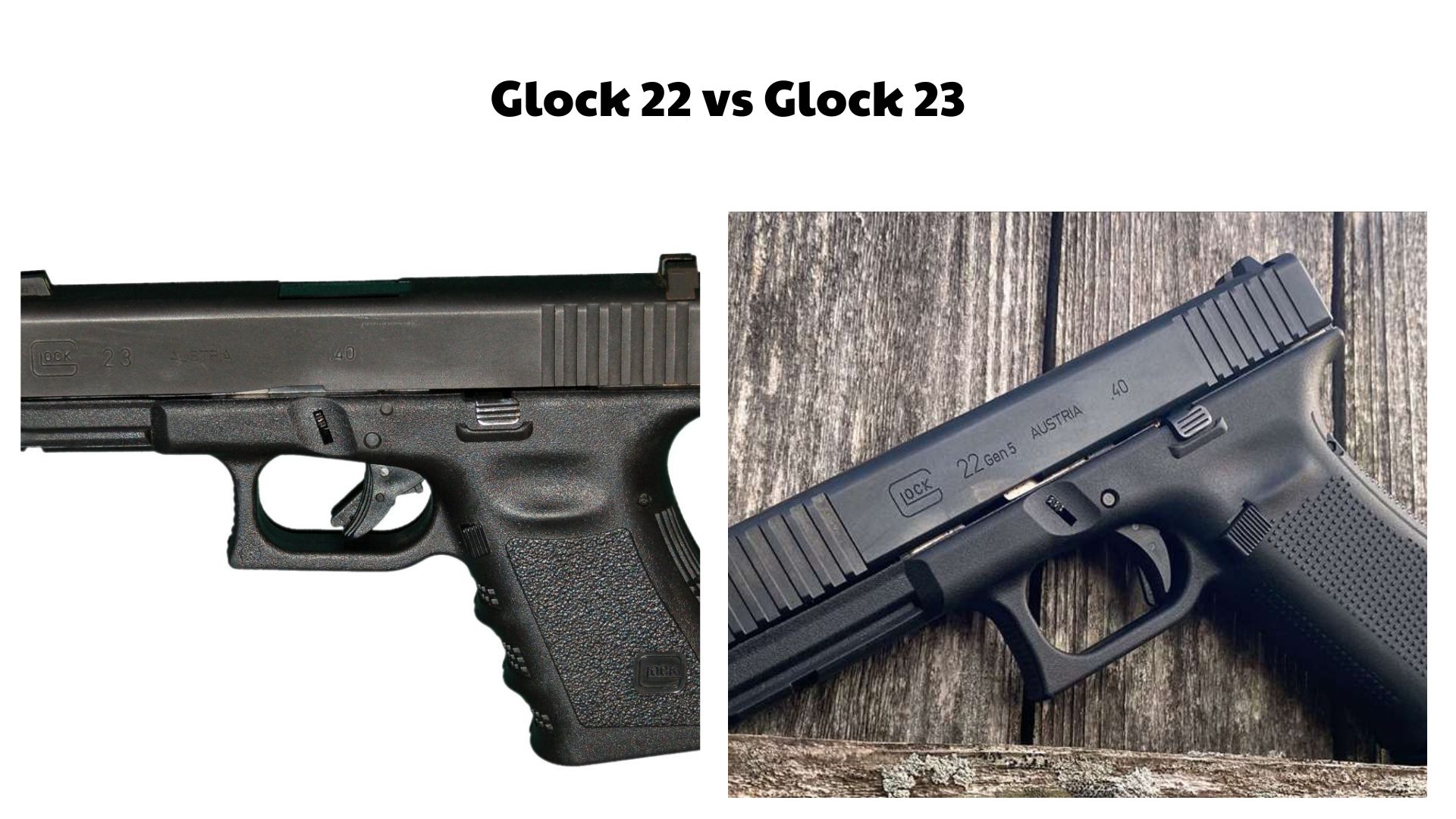

Glock is widely recognized as one of the most dominant brands in the modern handgun market, known for producing reliable, simple, and widely adopted polymer-framed pistols used by civilians, law enforcement, and military personnel worldwide.
Among its .40 S&W offerings, the Glock 22 and Glock 23 are two of the most frequently compared models. This comparison is common because both pistols share the same caliber and internal operating system, yet differ significantly in size and intended use.
Both the Glock 22 and Glock 23 are chambered in .40 S&W, a cartridge designed to deliver higher energy than 9mm while maintaining manageable magazine capacity. Despite sharing the same caliber, they serve different roles within the Glock lineup.
The key distinction is their intended purpose: the Glock 22 is a full-size duty pistol designed for stability, accuracy, and higher capacity, while the Glock 23 is a compact model optimized for concealed carry and everyday portability.
This comparison is important because it highlights how the same caliber performs differently depending on platform size. While both pistols deliver similar ballistic performance, their handling, recoil behavior, and practical usability vary significantly.
When choosing between them, several key factors must be considered, including recoil control, concealability, magazine capacity, accuracy, and whether the firearm will be used primarily for duty roles or concealed carry.
This article will provide a complete breakdown of specifications, performance differences, ergonomics, recoil characteristics, real-world use cases, advantages and disadvantages, as well as insights from experts and the firearm community.
Glock 22 vs Glock 23 – Core Specifications Comparison
Platform Similarities
The Glock 22 and Glock 23 share the same foundational design, built on Glock’s Safe Action System. This striker-fired mechanism is known for its simplicity, reliability, and consistent trigger operation across different conditions.
Both models utilize a durable polymer frame reinforced with internal steel components, allowing for a balance of lightweight handling and long-term durability. This construction has been proven through extensive use in law enforcement and defensive applications.
Since both pistols are chambered in .40 S&W, they share similar ballistic characteristics, meaning differences in performance are primarily influenced by size rather than caliber.
They also feature similar grip angles and control layouts, making the transition between the two models relatively seamless for experienced Glock users. In many generations, components and accessories may also be cross-compatible depending on the exact model version.
Size Differences
The most noticeable distinction between the Glock 22 and Glock 23 is their size class. The Glock 22 is a full-size duty pistol designed for maximum control, while the Glock 23 is a more compact version intended for concealed carry.
The Glock 22 features a longer barrel of approximately 4.49 inches, which contributes to improved velocity consistency, better sight radius, and increased stability during firing.
In contrast, the Glock 23 uses a shorter barrel of approximately 4.02 inches. This reduction in length makes the firearm more compact and easier to conceal but slightly reduces sight radius and overall shooting stability.
The Glock 22 also has a larger grip frame, which can improve control and recoil distribution for users with larger hands or those prioritizing duty use.
Meanwhile, the Glock 23’s reduced height and overall footprint make it significantly easier to conceal under clothing, making it a popular choice for everyday carry users.
Capacity & Weight
Magazine capacity is another key difference between the two models. The Glock 22 typically holds around 15+1 rounds of .40 S&W, giving it an advantage in sustained shooting scenarios.
The Glock 23, being more compact, generally holds around 13+1 rounds. While this difference may seem small, it reflects the physical constraints of fitting larger cartridges into a smaller frame.
In terms of weight, both pistols are relatively close due to shared materials and construction. However, the Glock 22 is slightly heavier, which can help absorb recoil and improve stability during rapid fire.
The Glock 23 is lighter and more comfortable for all-day carry, especially in concealed carry setups where weight and size reduction are important factors.
Caliber Performance – .40 S&W Overview
Both the Glock 22 and Glock 23 are chambered in .40 S&W, a cartridge developed to bridge the gap between 9mm and .45 ACP. It was designed to deliver higher energy than 9mm while still maintaining a reasonable magazine capacity for defensive and law enforcement use.
The .40 S&W cartridge is known for several key ballistic characteristics. It typically produces snappier recoil compared to 9mm, but also delivers strong terminal performance in terms of bullet expansion and energy transfer. This makes it a popular choice for users who prioritize impact power in defensive situations.
In terms of penetration, .40 S&W generally offers moderate depth with good expansion potential when using modern hollow-point ammunition. However, it requires more recoil management compared to lighter-recoiling calibers, especially in compact firearms.
Recoil & Shooting Experience
Glock 22 Recoil Behavior
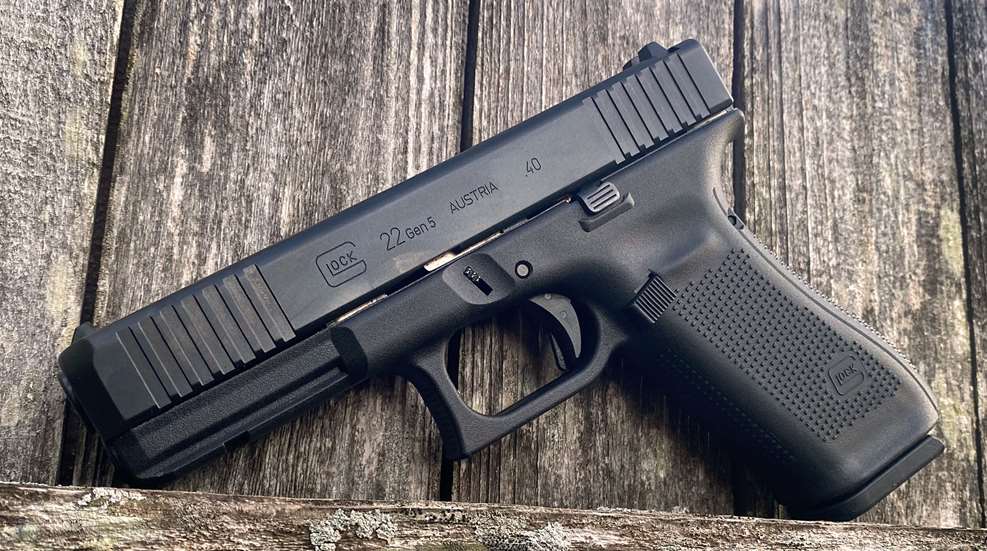
The Glock 22 tends to produce a softer and more manageable recoil impulse compared to its compact counterpart. This is largely due to its heavier slide, full-size frame, and longer barrel, all of which help absorb and distribute recoil energy more effectively.
Because of this design, the Glock 22 remains more stable during rapid fire sequences, allowing shooters to maintain better control and faster recovery between shots. Most users find it easier to manage, especially during extended shooting sessions.
Glock 23 Recoil Behavior
The Glock 23, being a more compact platform, produces a sharper recoil impulse. The shorter barrel and reduced frame size contribute to increased muzzle flip and a more noticeable “snap” during firing.
This requires stronger grip control and better shooting fundamentals to maintain accuracy, especially during rapid fire. Over long training sessions, shooters may experience faster fatigue compared to full-size platforms.
Real-World Shooter Feedback
In real-world discussions among firearm users, the Glock 22 is often described as a “smoother shooting .40,” thanks to its improved recoil absorption and larger frame design.
The Glock 23, on the other hand, is frequently described as “snappier but still controllable,” especially in the hands of experienced shooters who are accustomed to .40 S&W recoil characteristics.
Overall, shooters tend to adapt quickly to both platforms, with preference often depending on whether the priority is duty use (Glock 22) or concealed carry (Glock 23).
Accuracy & Practical Performance
Glock 22 Accuracy
The Glock 22 benefits from a longer sight radius, which improves aiming precision and overall shot consistency. This makes it particularly effective for medium-range shooting and controlled environments.
It is also more forgiving under stress, as the larger frame and reduced recoil impact allow shooters to maintain better control during rapid or defensive shooting scenarios.
As a result, the Glock 22 is often favored for duty use and structured training environments where consistency and stability are critical.
Glock 23 Accuracy
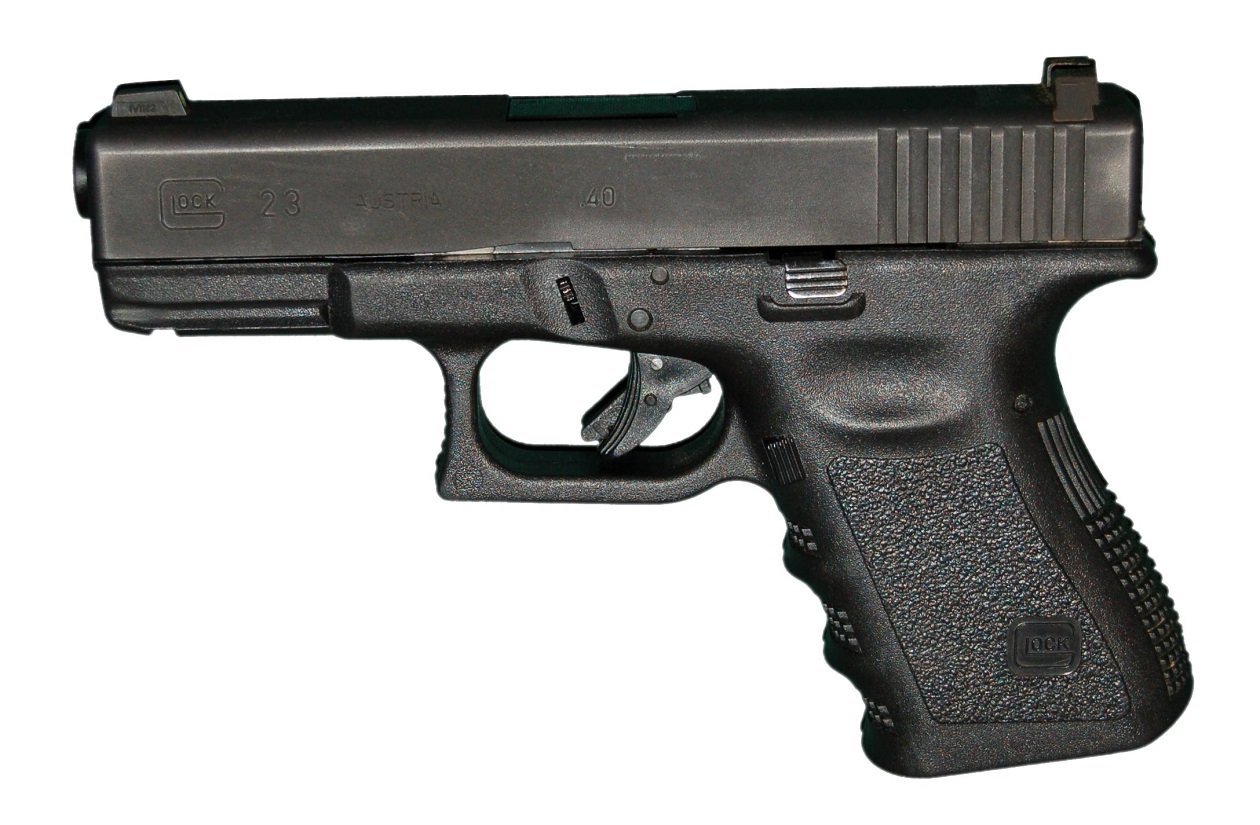
The Glock 23 features a slightly shorter sight radius, which can make precise aiming more sensitive to shooter input. Recoil management plays a larger role in maintaining tight shot groupings.
Despite this, it remains highly accurate within typical defensive engagement distances, generally considered to be within 0–15 yards.
Its performance is heavily influenced by shooter skill, grip technique, and familiarity with recoil characteristics, making training an important factor in achieving optimal accuracy.
Capacity, Efficiency & Ammo Cost
Glock 22 Advantages
The Glock 22 offers a higher magazine capacity, typically around 15+ rounds, which provides an advantage in sustained shooting situations where reloads may be a concern.
Its larger frame also contributes to better recoil control, allowing for more stable and efficient follow-up shots during extended firing sessions.
Overall, it provides a more stable shooting platform, especially in duty or range-focused applications.
Glock 23 Trade-offs
The Glock 23 typically holds fewer rounds, around 13+ per magazine, due to its more compact design. While this difference is not extreme, it does impact overall capacity in defensive or extended shooting scenarios.
In addition, the cost per training session is generally higher due to .40 S&W ammunition being more expensive than 9mm. This can make frequent training more costly over time.
As a result, the Glock 23 is less efficient for high-volume shooting compared to the Glock 22 or modern 9mm alternatives.
Size, Ergonomics & Concealed Carry
Glock 22 (Duty Focus)
The Glock 22 is designed with a full-size frame that naturally fills the hand better, providing a more secure and stable grip for many shooters. This larger grip surface allows for improved recoil distribution, which helps reduce muzzle rise and enhances control during rapid fire.
Because of its size and weight, the Glock 22 is generally better suited for open carry, duty holsters, and structured professional use. It is less focused on concealment and more on consistent shooting performance under demanding conditions.
Glock 23 (Concealed Carry Focus)
The Glock 23 features a more compact footprint, making it significantly easier to conceal under clothing. This reduced size makes it a popular choice for everyday carry (EDC) users who prioritize discretion and portability.
It is also more comfortable for all-day carry due to its lighter weight and smaller dimensions. However, the reduced grip surface can slightly impact recoil control, especially during rapid fire or extended shooting sessions.
Reliability & Durability
Both the Glock 22 and Glock 23 are built on Glock’s proven platform, known for extreme reliability and simplicity. They utilize the same Safe Action System and have been widely tested in law enforcement and defensive applications worldwide.
The Glock 22, being a larger and heavier firearm, generally handles high round counts more comfortably over time. Its full-size frame helps distribute mechanical stress more effectively during extended use.
The Glock 23, while still highly durable, may experience slightly more wear under sustained high-pressure shooting due to its more compact design and lighter structure. However, it remains fully capable of duty-grade performance.
Overall, both models are considered extremely durable and reliable firearms suitable for professional and defensive use.
Real-World Use Cases
Glock 22 Best Use Cases
The Glock 22 is widely used as a law enforcement duty weapon due to its balance of capacity, stability, and recoil control. Its full-size design makes it ideal for professional duty roles where concealment is not a priority.
It is also well-suited for home defense, where ease of shooting and control under stress are important factors. In addition, it performs well in range training environments due to its stability and comfort during extended sessions.
For users who prefer open carry setups, the Glock 22 provides a strong combination of performance and control.
Glock 23 Best Use Cases
The Glock 23 is primarily designed for concealed carry (EDC), where its smaller size and lighter weight provide a significant advantage in everyday portability.
It is also commonly used as a backup duty weapon by law enforcement personnel who already carry a full-size primary firearm. This makes it a versatile secondary option.
Additionally, it appeals to users who specifically prefer the .40 S&W caliber in a more compact platform for defensive carry situations.
Pros and Cons of Glock 22
Pros
The Glock 22 offers superior recoil control due to its larger frame and weight, making it easier to manage during rapid fire. This contributes to higher overall accuracy potential for many shooters.
It also features a larger magazine capacity, typically around 15+ rounds, providing an advantage in sustained shooting scenarios. Its reputation as a strong duty weapon further reinforces its reliability in professional environments.
Cons
The primary drawback of the Glock 22 is its size, which makes it more difficult to conceal effectively for everyday carry.
It is also heavier than compact models, which can make it less comfortable for all-day carry or prolonged off-duty use.
Pros and Cons of Glock 23
Pros
The Glock 23 is significantly easier to conceal due to its smaller size and reduced overall footprint. This makes it ideal for everyday concealed carry users.
It is also lighter and more compact, improving comfort during extended daily wear. Despite its size reduction, it still delivers the same .40 S&W ballistic performance as the Glock 22.
This makes it a versatile option for users who want a balance between concealability and stopping power.
Cons
The Glock 23 produces more noticeable recoil due to its smaller frame, which can make it harder to control during rapid fire.
It also has a lower magazine capacity compared to the Glock 22 and a shorter sight radius, which can affect precision shooting at longer distances.
Overall stability during rapid fire is reduced compared to the full-size Glock 22 platform.
Expert & Community Opinions
In firearm communities and expert discussions, the Glock 22 is widely praised for its controllability and strong performance in duty and range environments. It is often viewed as the more stable shooting platform in .40 S&W.
The Glock 23, on the other hand, is favored for its practicality in concealed carry scenarios, where size and portability are more important than maximum shooting stability.
The general consensus among users is that the Glock 22 is best described as a “range and duty shooter,” while the Glock 23 is a “carry-optimized .40 S&W” platform.
Many experienced shooters also note that the performance difference between the two models is driven more by size and weight than by caliber, since both fire the same .40 S&W cartridge.
Common Mistakes When Choosing Between Glock 22 and 23
One of the most frequent mistakes shooters make is choosing the Glock 23 while expecting it to deliver the same shooting stability as the Glock 22. Although both pistols share the same caliber, the compact size of the Glock 23 results in noticeably sharper recoil and reduced control.
Another common issue is underestimating the recoil characteristics of .40 S&W in a smaller frame. While manageable, the compact Glock 23 amplifies recoil more than most users expect, especially during rapid firing or extended training sessions.
Many buyers also overlook concealment requirements. Choosing the Glock 22 without considering daily carry needs can lead to discomfort and reduced practicality for concealed carry users.
Some users place too much emphasis on caliber differences rather than actual shootability. In practice, platform size and recoil control often have a greater impact on real-world performance than minor ballistic differences.
Finally, failing to consider training volume and ammunition cost is a common oversight. The .40 S&W cartridge is more expensive to shoot than 9mm alternatives, which can significantly affect long-term training consistency and skill development.
Glock 22 vs Glock 23 – Which One Should You Choose?
The Glock 22 is generally the better option for users who prioritize duty use, range performance, and maximum control. Its full-size frame provides superior stability, making it easier to shoot accurately under stress or during extended sessions.
The Glock 23, on the other hand, is best suited for concealed carry and portability. Its compact design makes it easier to carry daily while still delivering the same .40 S&W ballistic performance.
When deciding between the two, several key factors should be considered, including carry style, recoil tolerance, training frequency, and hand size or ergonomic comfort. These factors often have a greater impact on satisfaction than caliber choice alone.
Conclusion – Final Verdict on Glock 22 vs Glock 23
Both the Glock 22 and Glock 23 are highly reliable pistols built on Glock’s proven .40 S&W platform. They share the same caliber and internal operating system, making them equally dependable in terms of mechanical performance.
The primary difference between them is not caliber, but size and shootability. The Glock 22 offers a more stable and controlled shooting experience, making it ideal for duty use, range training, and accuracy-focused applications.
The Glock 23, in contrast, is more compact, easier to conceal, and slightly snappier in recoil. It is designed with portability in mind, making it better suited for everyday carry and discreet defensive use.
In the final analysis, the choice comes down to intended use. The Glock 22 is the better option for performance and control, while the Glock 23 is the better choice for concealment and daily carry efficiency.
FAQ – Glock 22 vs Glock 23 (50+ Detailed Questions & Answers)
1. What is the main difference between Glock 22 and Glock 23?
The main difference is size and intended use. Both pistols are chambered in .40 S&W, but the Glock 22 is a full-size duty handgun while the Glock 23 is a compact concealed carry model. This affects recoil control, capacity, and concealability more than caliber itself.
2. Are Glock 22 and Glock 23 the same caliber?
Yes, both use the .40 S&W cartridge. This means they share similar ballistic performance, but the shooting experience differs due to frame size and weight.
3. Which Glock has more recoil?
The Glock 23 has more perceived recoil because it is lighter and more compact. The Glock 22 absorbs recoil better due to its larger frame and heavier slide.
4. Is .40 S&W powerful enough for self-defense?
Yes, .40 S&W is widely considered an effective defensive caliber. It offers strong energy transfer and expansion potential, though modern 9mm ammunition has narrowed the performance gap significantly.
5. Why is Glock 22 easier to shoot?
The Glock 22 is easier to shoot because its full-size frame reduces recoil and muzzle flip. The longer sight radius also improves aiming consistency.
6. Is Glock 23 good for beginners?
It can be used by beginners, but it is not ideal. The snappier recoil and smaller grip make it less forgiving than the Glock 22.
7. Which Glock is better for concealed carry?
The Glock 23 is better for concealed carry due to its smaller size and lighter weight, making it easier to conceal under clothing.
8. Is Glock 22 too big for carry?
For many users, yes. While it can be carried, the Glock 22 is more commonly used as a duty or open carry firearm rather than concealed carry.
9. Which Glock has better accuracy?
Both are mechanically accurate, but the Glock 22 is easier to shoot accurately due to reduced recoil and longer sight radius.
10. Does Glock 23 sacrifice performance for size?
It sacrifices shootability rather than ballistic performance. Both fire the same .40 S&W round, but the compact frame makes recoil harder to manage.
11. Which Glock is more popular?
The Glock 23 is popular for concealed carry, while the Glock 22 is widely used in duty roles. Overall, compact models tend to be more common among civilians.
12. Is Glock 22 still used by police?
Yes, although many agencies have transitioned to 9mm, the Glock 22 is still used in some law enforcement departments.
13. Why do agencies move away from .40 S&W?
Many agencies shifted to 9mm due to lower recoil, higher capacity, lower cost, and improved bullet technology that increased 9mm effectiveness.
14. Which Glock is better for home defense?
The Glock 22 is often preferred for home defense due to its higher capacity and easier recoil control.
15. Which Glock is better for range shooting?
The Glock 22 is better for range shooting because it is more comfortable to shoot for long sessions.
16. Is Glock 23 harder to control?
Yes, its compact size results in more muzzle rise and sharper recoil, making it harder to control than the Glock 22.
17. Does barrel length affect performance?
Yes, the Glock 22’s longer barrel improves velocity consistency and sight radius, which helps accuracy.
18. Which Glock is lighter?
The Glock 23 is lighter, making it more suitable for everyday carry.
19. Does Glock 22 have more capacity?
Yes, typically around 15+1 rounds compared to the Glock 23’s 13+1 rounds.
20. Is .40 S&W expensive?
Yes, it is generally more expensive than 9mm, which increases training costs over time.
21. Which Glock is more comfortable to shoot?
The Glock 22 is more comfortable due to reduced recoil and better weight distribution.
22. Can Glock 23 be used for duty?
Yes, but it is less common as a primary duty weapon compared to full-size pistols like the Glock 22.
23. Which Glock is better for small hands?
The Glock 23 may feel slightly more manageable due to its smaller grip size.
24. Which Glock is more forgiving?
The Glock 22 is more forgiving due to its stability and recoil control.
25. Does Glock 23 wear faster?
It may experience slightly more stress under heavy use due to compact design, but both are highly durable.
26. Is recoil difference very noticeable?
Yes, most shooters immediately notice the Glock 23 has sharper recoil compared to the Glock 22.
27. Which Glock is better for rapid fire?
The Glock 22 performs better in rapid fire due to improved stability.
28. Can both use same ammo?
Yes, both use .40 S&W ammunition.
29. Which Glock is more versatile?
The Glock 22 is more versatile for duty and training, while the Glock 23 is more versatile for concealed carry.
30. Is Glock 23 outdated?
No, it is still a viable concealed carry firearm, but it is less popular than modern 9mm options.
31–50. Additional FAQs (Concise Expert Answers)
31. Which Glock is better for new shooters?
Glock 22 due to easier recoil control.
32. Which Glock is better for experienced shooters?
Both, depending on purpose.
33. Is Glock 22 more accurate at distance?
Yes, due to sight radius and stability.
34. Does Glock 23 lose power?
No, same caliber, same energy.
35. Which Glock is more balanced?
Glock 22.
36. Which Glock is easier to conceal?
Glock 23.
37. Is Glock 22 too heavy?
Not for duty use, but noticeable for carry.
38. Does Glock 23 kick hard?
Yes, more than Glock 22.
39. Which Glock is more beginner-friendly?
Glock 22.
40. Which Glock is more tactical?
Glock 22.
41. Which Glock is more practical daily?
Glock 23.
42. Does size affect accuracy?
Yes, mainly through stability.
43. Which Glock is better value?
Depends on use case.
44. Which Glock is more popular today?
Glock 23 for civilians, Glock 22 for duty.
45. Is .40 S&W still relevant?
Yes, but less dominant than 9mm.
46. Which Glock is better for defense?
Both are effective with proper training.
47. Can recoil be trained away?
Yes, with practice and grip technique.
48. Which Glock is more controllable?
Glock 22.
49. Which Glock is more compact?
Glock 23.
50. Final expert recommendation?
Glock 22 for control and duty use, Glock 23 for concealment and portability.
Read more: