
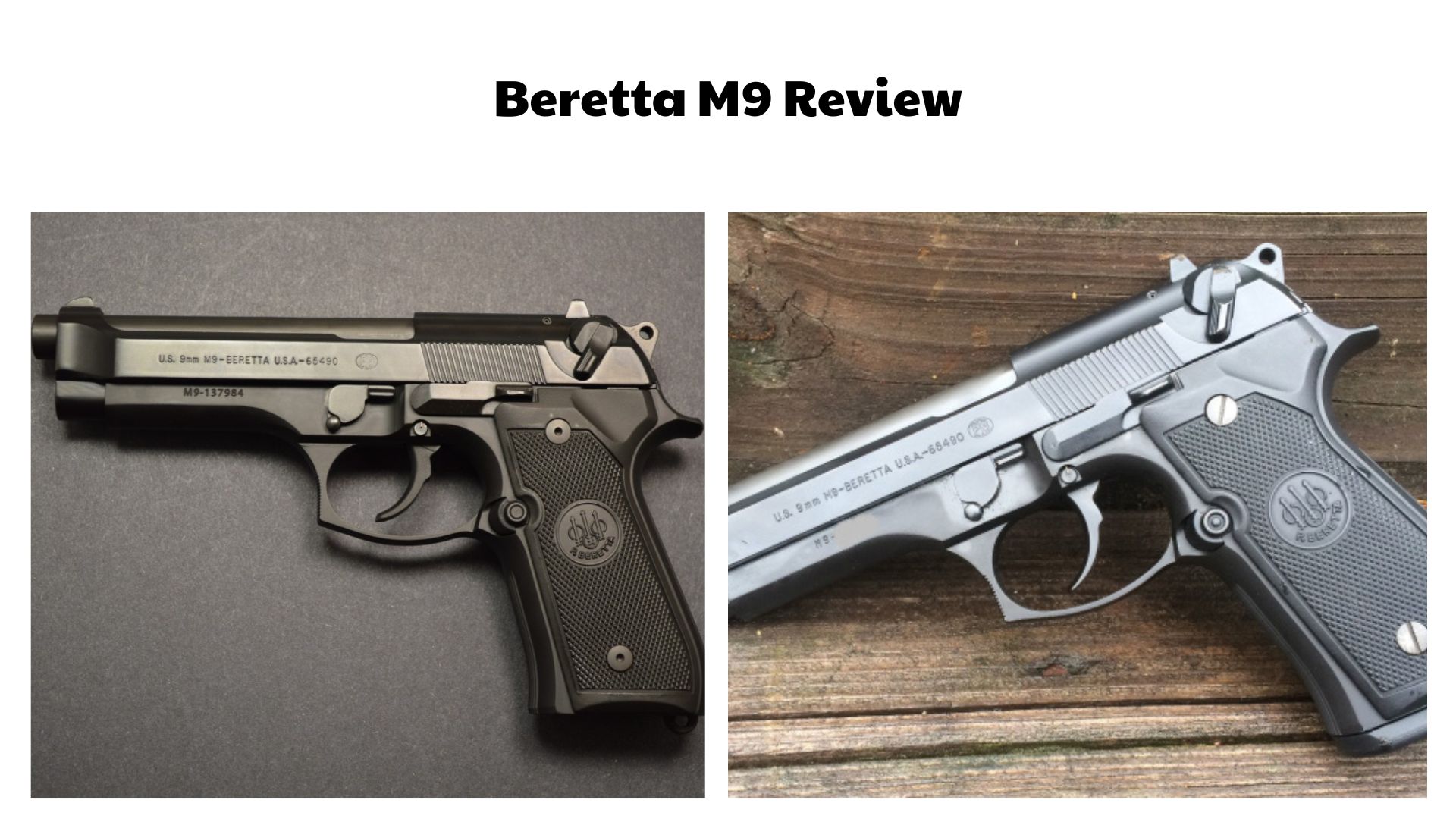

The Beretta M9 is one of the most iconic modern military 9mm pistols ever adopted, earning its place in firearms history as the standard sidearm of the United States Armed Forces for over three decades. Introduced in 1985, it replaced the legendary M1911 after nearly 70 years of service, marking a major transition from .45 ACP single-action pistols to a modern high-capacity 9mm platform.
Built around a double-action/single-action (DA/SA) operating system and chambered in 9mm Parabellum, the M9 is known for its smooth shooting behavior, controllability, and Italian engineering precision. Its high-capacity magazine and refined mechanical design made it a significant upgrade in firepower and usability compared to earlier service pistols.
Over the years, the Beretta M9 has developed a reputation as a battle-proven service pistol with extensive use across military and law enforcement agencies worldwide. It has seen action in numerous global conflicts and remains one of the most widely recognized duty pistols in modern history.
Despite its strong legacy, the M9 also carries mixed user opinions. Many shooters praise its soft recoil, accuracy, and reliability, while others criticize its ergonomics, size, and sensitivity to maintenance in harsh conditions. These contrasting views have shaped its long-standing debate among firearm enthusiasts and professionals.
In response to evolving requirements, Beretta introduced modernized variants such as the M9A1, M9A3, and M9A4, adding improvements like accessory rails, enhanced grips, threaded barrels, and optics-ready capabilities.
In this article, you will learn everything about the Beretta M9, including its design, specifications, performance, reliability, variants, pros and cons, real-world applications, and how it compares to other modern service pistols.
Beretta M9 Overview and Background
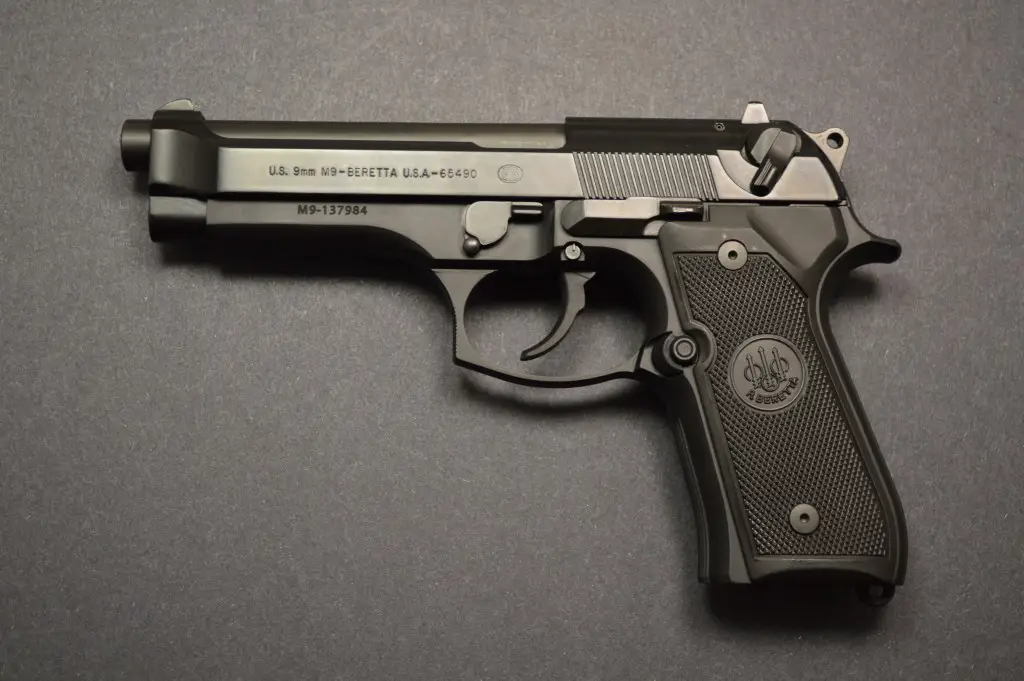
What Is the Beretta M9?
The Beretta M9 is a full-size semi-automatic 9mm pistol based on the renowned Beretta 92 series. It operates using a double-action/single-action (DA/SA) system with an external hammer, allowing the first shot to be fired in double-action mode and subsequent shots in single-action for improved precision.
It served as the standard U.S. military sidearm from 1985 until 2017, making it one of the longest-serving duty pistols in American military history. Designed for military, law enforcement, and defensive applications, the M9 was built to deliver high-capacity firepower and consistent performance under demanding conditions.
Compared to older service pistols like the M1911, the M9 introduced a significant increase in magazine capacity, offering 15+1 rounds in its standard configuration. This improvement provided soldiers with greater sustained fire capability in combat environments.
History and Military Adoption
The Beretta M9 was adopted as a replacement for the Colt M1911 after extensive U.S. military trials in the 1980s. The goal was to modernize the standard service pistol by transitioning to a 9mm platform that offered higher capacity, improved magazine interchangeability, and NATO standardization.
Following its selection, the M9 was widely adopted across all branches of the U.S. military, including the Army, Navy, Air Force, and Marine Corps. It quickly became a global service pistol, deployed in numerous combat zones and peacekeeping operations around the world.
Despite its long service life, the M9 received mixed feedback from military personnel. While many praised its accuracy and controllability, some reported concerns related to maintenance sensitivity, environmental performance, and magazine durability under harsh field conditions.
Design Philosophy of the M9
The Beretta M9 was designed with a strong focus on reliability, safety, and increased firepower. One of its most distinctive features is the open-slide design, which helps reduce the likelihood of stove-pipe malfunctions and improves cycling reliability, especially in adverse conditions.
The pistol uses an aluminum alloy frame to reduce weight compared to traditional all-steel designs, making it more manageable for extended carry and use. This lightweight construction, combined with its full-size steel slide, provides a balance between durability and shootability.
Overall, the design emphasizes controllability under stress, ease of operation, and consistent performance in military and defensive roles, making it a practical evolution of earlier service pistols.
Beretta M9 Specifications and Features
Key Specifications
- Caliber: 9mm Parabellum
- Barrel length: ~4.9 inches
- Capacity: 15+1 standard (varies by magazine type)
- Weight: ~33–35 oz (unloaded)
- Frame: Aluminum alloy
- Slide: Steel
Standard Features
- DA/SA trigger system with decocker/safety
- Open-slide design for improved reliability
- Fixed 3-dot combat sights
- Ambidextrous safety/decocker (varies by model)
- Checkered grip panels (varies by generation)
- Accessory rail on later variants such as M9A1 and newer
Materials and Construction
The Beretta M9 is built using aircraft-grade aluminum alloy for the frame, providing a strong yet lightweight foundation. The slide is constructed from carbon steel and treated with corrosion-resistant finishes to improve durability in harsh environments.
Internally, the pistol uses durable military-grade components designed for long service life under high round counts and operational stress. The overall construction reflects a balance between longevity, reliability, and manufacturability.
This combination of materials allows the M9 to withstand extensive military use while maintaining consistent performance, even under challenging environmental conditions.
Ergonomics and Design
Grip and Handling Characteristics
The Beretta M9 features a relatively large grip frame that is best suited for shooters with medium to large hands. Its full-size double-stack design allows for high-capacity magazines, but this also contributes to a wider grip profile compared to more modern compact or polymer-framed pistols.
The grip surface itself is smooth with moderate texturing depending on the generation and grip panel style. While not as aggressively textured as modern tactical pistols, it still provides adequate control under normal shooting conditions.
One of the M9’s strengths is its weight distribution, which helps improve control during rapid fire. The heavier steel slide and balanced frame reduce felt movement, allowing shooters to maintain a more stable sight picture during follow-up shots.
However, a common criticism is that the grip size can feel too wide or bulky for shooters with smaller hands, which may affect comfort and control consistency during extended use.
Controls and Operation
The Beretta M9 uses a slide-mounted safety and decocker system, which allows the user to safely decock the hammer while also providing manual safety engagement. This design is characteristic of traditional DA/SA service pistols and is widely associated with military and law enforcement training doctrines.
The pistol operates with a double-action first shot followed by single-action subsequent shots. This transition requires some familiarity but offers a balance between safety and shooting precision.
Overall, the manual of arms is considered intuitive for users trained in military-style pistols, although it may take time for shooters accustomed to striker-fired systems.
Field stripping and maintenance are relatively straightforward, contributing to the M9’s reputation as a serviceable and maintainable duty weapon.
Weight and Balance
The M9’s heavier construction plays a major role in its recoil management. The alloy frame combined with a steel slide helps significantly reduce felt recoil, making it a soft-shooting platform in the 9mm category.
Despite its full-size dimensions, the pistol delivers a smooth and controlled shooting experience that is particularly noticeable during extended range sessions.
However, this added weight creates a tradeoff in terms of carry comfort, making it less ideal for concealed carry compared to modern lightweight polymer pistols.
In return, the M9 offers excellent stability, making it a strong choice for duty use and range shooting where control and accuracy are prioritized.
Shooting Performance
Recoil and Control
The Beretta M9 is widely regarded as a mild-recoiling 9mm pistol due to its steel slide and alloy frame combination. This weight helps absorb recoil energy and results in smooth cycling with predictable muzzle rise.
During rapid-fire strings, the pistol remains highly controllable, allowing shooters to maintain sight alignment more easily than with lighter polymer-framed alternatives.
This contributes to its reputation as one of the softer-shooting service pistols in its class, making it comfortable for both training and duty use.
Accuracy Performance
The M9 delivers consistent mechanical accuracy thanks to its locked-breech barrel system and well-engineered slide-to-frame fit. It performs effectively at typical defensive distances ranging from 7 to 25 yards.
The longer sight radius compared to compact pistols enhances precision, making it easier for shooters to align shots accurately.
With quality ammunition, the M9 is capable of producing strong and consistent groupings, especially in controlled firing conditions.
Range Experience
On the range, the Beretta M9 is known for its smooth recoil impulse and comfortable shooting behavior. This makes it well-suited for extended practice sessions with minimal shooter fatigue.
It performs reliably under high round counts and is often used as a training platform for developing fundamental marksmanship skills.
Overall, it offers a stable and enjoyable shooting experience, particularly for users who appreciate traditional metal-frame service pistols.
Reliability and Durability
Real-World Reliability
The Beretta M9 has a generally strong reliability record, although it is somewhat dependent on proper maintenance and ammunition quality. In military service, it has demonstrated both reliable performance and occasional issues depending on conditions and usage.
Field reports indicate that magazine quality plays a significant role in overall reliability, with some malfunctions historically linked to worn or substandard magazines.
Other reported issues are often associated with heavy use, dirt accumulation, or aging internal components rather than fundamental design flaws.
Ammunition Compatibility
The M9 functions reliably with standard 9mm NATO and commercial FMJ ammunition. It is also compatible with most modern defensive hollow point loads when using quality magazines.
However, the platform may show sensitivity to weak or underpowered ammunition, which can occasionally affect cycling consistency.
Performance is generally improved when using high-quality ammunition, proper lubrication, and well-maintained magazines.
Long-Term Durability
The aluminum alloy frame provides strong resistance to corrosion and wear while maintaining a manageable weight. The steel slide is designed to withstand high round counts and prolonged service use.
Over time, some components such as recoil springs, locking blocks, and internal wear parts may require maintenance or replacement, especially in high-usage environments.
Despite these maintenance needs, the Beretta M9 has proven its durability over decades of military service worldwide, establishing itself as a long-lasting duty pistol platform.
Beretta M9 Variants (M9, M9A1, M9A3, M9A4)
Standard M9
The standard Beretta M9 represents the original military configuration adopted by the U.S. Armed Forces in 1985. It features the classic Beretta 92-based design with a full-size steel slide and aluminum alloy frame.
Early production models do not include an accessory rail, reflecting the original service pistol requirements of the time. Its design focuses on simplicity, durability, and high-capacity 9mm firepower.
As the foundational version of the platform, the standard M9 remains one of the most recognizable military pistols in modern firearms history.
M9A1 Improvements
The M9A1 introduced key tactical enhancements over the original M9, most notably the addition of a Picatinny accessory rail. This allows users to mount lights, lasers, and other tactical attachments.
It also features improved durability upgrades, a refined finish, and enhanced magazine well design for faster and more consistent reloads.
These updates make the M9A1 more suitable for modern duty and defensive applications while retaining the core M9 operating system.
M9A3 Enhancements
The M9A3 represents a more modern evolution of the platform, incorporating a slimmer Vertec-style grip that improves ergonomics and handling for a wider range of shooters.
It also includes a threaded barrel, allowing for suppressor compatibility, which expands its tactical versatility.
Additional refinements include improved sights, better grip texture, and updated controls, making the M9A3 a more modernized version of the classic service pistol.
M9A4 Modern Features
The M9A4 is the most advanced evolution of the M9 platform, designed to meet modern tactical and civilian expectations.
It features an optics-ready slide system, allowing direct mounting of red dot sights for faster target acquisition and improved shooting performance.
Additional improvements include upgraded trigger components, enhanced grip texture for better control, and refined ergonomics that modernize the handling experience.
Overall, the M9A4 represents the culmination of decades of Beretta design evolution, blending classic reliability with modern defensive and tactical features.
Beretta M9 Pros and Cons
Advantages
- Proven military service history spanning decades of global use
- Soft recoil and smooth shooting characteristics
- High magazine capacity compared to older service pistols
- Strong durability and long operational lifespan
- Good accuracy for a duty-grade handgun platform
Disadvantages
- Large grip size may not suit all hand sizes
- Heavier than modern polymer-framed pistols
- Can be sensitive to maintenance in harsh environments
- Slide-mounted safety system is disliked by some shooters
Beretta M9 vs Competitors
M9 vs Glock 17
The Glock 17 is lighter, simpler in design, and benefits from a massive aftermarket ecosystem, making it highly popular in modern law enforcement and civilian markets.
In contrast, the Beretta M9 offers a softer shooting experience due to its metal frame and heavier construction, providing better recoil absorption and stability during firing.
M9 vs SIG Sauer P320
The SIG Sauer P320 features a modern striker-fired system with a modular fire control unit, allowing users to change grip sizes and configurations easily.
The Beretta M9, however, retains a traditional DA/SA system with an external hammer, offering a more classic manual of arms and long-standing military heritage.
M9 vs Beretta M9A4
The M9A4 is a modernized evolution of the original M9, featuring optics-ready capability, improved ergonomics, and enhanced trigger components.
The standard M9 remains a simpler, classic configuration focused on traditional service pistol design without modern modular upgrades.
Real-World Use Cases
Military and Duty Use
The Beretta M9 has a long history as a military and law enforcement service pistol, being widely adopted across multiple branches of the U.S. Armed Forces and allied nations.
It is designed for harsh operational environments, offering durability, high capacity, and reliable performance in duty roles worldwide.
Home Defense
The M9 is a reliable option for home defense due to its proven design, simple manual safety system, and strong 9mm defensive capability.
When paired with quality +P defensive ammunition, it provides effective stopping power and controllability for defensive scenarios.
Range and Training Use
The Beretta M9 is highly regarded as a training platform due to its smooth recoil and predictable shooting characteristics.
It is excellent for marksmanship development and extended range sessions, making it popular among enthusiasts of classic metal-frame service pistols.
Community and User Feedback
Positive Feedback
Among firearm enthusiasts and long-term users, the Beretta M9 is often praised for its smooth shooting characteristics and consistent accuracy. Many shooters describe it as a “soft shooting” 9mm pistol, largely due to its heavy steel slide and alloy frame that help reduce felt recoil.
Another major point of appreciation is its highly durable, battle-proven design. With decades of military service worldwide, the M9 has earned a reputation for surviving harsh operational environments and high round counts when properly maintained.
The pistol also carries strong nostalgic and historical appeal, especially among military veterans and collectors. For many, it represents an iconic era of U.S. service pistols and Cold War–era firearm design.
Additionally, users frequently highlight its excellent recoil control, which makes it comfortable to shoot during extended range sessions and training exercises.
Negative Feedback
Despite its strengths, the Beretta M9 receives criticism for its relatively large grip size, which can be uncomfortable for shooters with smaller hands and may affect handling efficiency.
Its reliability reputation is also mixed when viewed through military service history, with some users reporting issues tied to maintenance conditions, magazines, and environmental exposure.
Compared to modern polymer pistols, the M9 is heavier, which can make it less appealing for everyday carry or long-duration use outside duty or range environments.
There are also concerns regarding maintenance sensitivity, particularly in dusty or harsh environments, as well as dependence on high-quality magazines for optimal reliability.
Overall Reputation
Overall, the Beretta M9 is widely regarded as a legendary military sidearm with one of the longest service histories in modern handgun development. Its role in global military and law enforcement use has cemented its place in firearms history.
However, it remains a debated platform among modern shooters. While respected for its legacy, durability, and shooting comfort, it is often viewed as a classic design rather than a cutting-edge modern service pistol.
Final Verdict on the Beretta M9
Is the Beretta M9 Worth It?
The Beretta M9 remains a reliable and historically proven 9mm pistol that continues to perform well in both defensive and recreational roles. Its long service record demonstrates consistent real-world usability.
It is best suited for shooters who appreciate the experience of a traditional metal-frame DA/SA pistol, offering smooth recoil and a classic shooting feel.
However, in terms of modern ergonomics, weight, and modularity, it is generally outclassed by newer polymer-framed handgun designs.
Who Should Buy It
- Collectors of military and historical firearms
- Shooters who prefer DA/SA metal-frame pistols
- Enthusiasts of the Beretta 92/M9 platform lineage
Final Thoughts
The Beretta M9 remains one of the most iconic service pistols ever produced, with a legacy deeply tied to modern military history.
It successfully bridges Cold War-era firearm design with modern handgun evolution, representing a transitional stage in service pistol development.
Even today, it stands as a historically significant handgun that continues to perform reliably, earning respect from both collectors and practical shooters alike.
Beretta M9 FAQ (50+ Questions with Detailed Answers)
1. What is the Beretta M9?
The Beretta M9 is a full-size, semi-automatic 9mm pistol based on the Beretta 92 platform. It was adopted as the standard sidearm of the U.S. military in 1985 and served for decades across all branches. It uses a DA/SA (double-action/single-action) trigger system and is known for its high-capacity magazine, reliability, and smooth shooting characteristics.
2. Why did the U.S. military choose the Beretta M9?
The M9 was selected after military trials in the 1980s due to its high magazine capacity, improved safety features, and modern 9mm chambering. It offered better firepower compared to the older M1911 while also being easier to train with for large-scale military use.
3. What caliber does the Beretta M9 use?
The Beretta M9 is chambered in 9×19mm Parabellum, one of the most widely used handgun cartridges in the world. This caliber is known for its balance of recoil control, capacity, and effectiveness in defensive and military applications.
4. Is the Beretta M9 still used by the military?
The M9 has largely been replaced by newer pistols like the SIG Sauer M17/M18 in U.S. military service. However, it is still used in some training roles, reserve units, and remains in service in various international military and police forces.
5. What is DA/SA in the Beretta M9?
DA/SA stands for Double-Action/Single-Action. The first trigger pull is long and heavier (double-action), while subsequent shots are shorter and lighter (single-action). This system provides both safety and shooting precision once the slide cycles.
6. Is the Beretta M9 good for beginners?
The M9 can be suitable for beginners who are willing to learn DA/SA operation. However, its size and manual safety system may be more complex than modern striker-fired pistols, which are often recommended for absolute beginners.
7. How reliable is the Beretta M9?
The M9 is generally reliable when properly maintained and used with quality magazines and ammunition. However, military feedback has shown that environmental conditions and magazine quality can significantly affect performance.
8. What are common issues with the Beretta M9?
Common issues include magazine-related malfunctions, sensitivity to dirt or poor maintenance, and wear on components like the locking block over time. These issues are often manageable with proper care.
9. How accurate is the Beretta M9?
The M9 is considered very accurate for a service pistol due to its long barrel and sight radius. It performs well at typical defensive distances (7–25 yards) and can deliver consistent grouping with quality ammunition.
10. Is the Beretta M9 a good concealed carry gun?
While it is possible to carry the M9 concealed, it is not ideal due to its full-size frame and weight. Modern compact pistols are generally preferred for concealed carry applications.
11. What is the magazine capacity of the Beretta M9?
Standard M9 magazines typically hold 15 rounds of 9mm ammunition, plus one in the chamber for a total of 15+1 capacity. Some extended magazines may offer higher capacity depending on jurisdiction.
12. What is the difference between Beretta M9 and 92FS?
The M9 is essentially a military-designated version of the Beretta 92FS with slight specification differences, including markings, finish, and contract requirements. Functionally, they are very similar.
13. Is the Beretta M9 a good home defense gun?
Yes, the M9 is a strong home defense option due to its reliability, high capacity, and ease of use under stress. However, its size may make storage and handling less convenient compared to compact pistols.
14. How heavy is the Beretta M9?
The M9 weighs approximately 33–35 ounces unloaded. This weight contributes to its reduced recoil and smooth shooting experience but makes it less ideal for all-day carry.
15. What makes the Beretta M9 shoot softly?
Its steel slide, aluminum frame, and overall mass help absorb recoil energy. Combined with its 9mm chambering, this makes the M9 one of the softer-shooting service pistols.
16. Does the Beretta M9 have a safety?
Yes, the M9 has a slide-mounted safety that also functions as a decocker. This allows the user to safely lower the hammer while also engaging manual safety if needed.
17. What is the lifespan of a Beretta M9?
With proper maintenance, the M9 can last tens of thousands of rounds. Military use has demonstrated long-term durability, although parts like springs and locking blocks may require replacement over time.
18. Is the Beretta M9 better than Glock 17?
It depends on preference. The Glock 17 is lighter and simpler, while the M9 offers a smoother shooting experience and DA/SA trigger system. Both are reliable service pistols with different philosophies.
19. What is the Beretta M9A1?
The M9A1 is an upgraded version of the M9 that adds a Picatinny rail for accessories, improved grip texture, and enhanced durability features for tactical use.
20. What is the Beretta M9A3?
The M9A3 includes a Vertec-style grip, threaded barrel for suppressors, improved ergonomics, and modern enhancements for tactical and civilian use.
21. What is the Beretta M9A4?
The M9A4 is the most modern evolution of the platform, featuring optics-ready capability, improved trigger components, and enhanced grip texture for better control.
22. Is the Beretta M9 good for law enforcement?
The M9 was widely used in law enforcement and military roles for decades. While many agencies have transitioned to newer pistols, it remains a proven duty weapon.
23. What ammunition works best in the M9?
High-quality 9mm FMJ and modern defensive hollow point ammunition generally perform best. The pistol functions more reliably with full-power loads and quality magazines.
24. Is the Beretta M9 expensive?
The M9 is moderately priced compared to modern polymer pistols. However, its value depends on condition, variant, and whether it is a standard or upgraded model.
25. Does the Beretta M9 require a break-in period?
Some users report improved smoothness after a break-in period of several hundred rounds, though this varies depending on the specific pistol and maintenance condition.
26. Is the Beretta M9 still worth buying today?
Yes, for users who appreciate metal-frame DA/SA pistols and military history. However, modern polymer pistols may offer better ergonomics and modularity.
27. What are the main disadvantages of the M9?
Main disadvantages include weight, large grip size, maintenance sensitivity, and an older design compared to modern striker-fired pistols.
28. Can the Beretta M9 handle +P ammunition?
Yes, the M9 can handle +P 9mm ammunition, but prolonged use may increase wear on internal components compared to standard-pressure loads.
29. How does the M9 compare to SIG Sauer P320?
The P320 is modular and striker-fired, while the M9 is a traditional DA/SA pistol. The P320 is more modern, while the M9 offers a classic shooting experience.
30. Why is the Beretta M9 called a “battle-proven” pistol?
Because it has been used extensively in real military conflicts and global deployments for decades, proving its durability and effectiveness in combat environments.
31. Is the Beretta M9 good for training?
Yes, its smooth recoil and consistent operation make it excellent for marksmanship training and developing handgun fundamentals.
32. What is the main criticism of the M9 grip?
The grip is often considered too wide for shooters with smaller hands, which can affect comfort and control.
33. Is the Beretta M9 still in production?
Yes, various versions of the Beretta 92/M9 platform are still produced, including modernized variants like the M9A4.
34. How does the M9 perform in combat conditions?
It performs reliably when properly maintained, though it requires attention to cleanliness and magazine condition in harsh environments.
35. Is the Beretta M9 good for competition shooting?
It can be used in competition, but it is not optimized for modern competitive shooting compared to dedicated race guns or striker-fired pistols.
36. What is the locking system of the M9?
The M9 uses a short-recoil, locked-breech system with a falling locking block design for barrel and slide operation.
37. Does the M9 have good aftermarket support?
Yes, but not as extensive as Glock. There are upgrades available, but the ecosystem is more limited compared to striker-fired platforms.
38. What makes the M9 historically important?
It served as the primary U.S. military sidearm for over 30 years, marking a major shift from .45 ACP 1911 pistols to 9mm NATO standardization.
39. Is the Beretta M9 easy to maintain?
Yes, basic field stripping is simple, but proper maintenance is important for long-term reliability.
40. What is the recoil like on the M9?
Recoil is mild and smooth due to the pistol’s weight and design, making it comfortable to shoot even during long sessions.
41. Can the M9 be used for competitive shooting leagues?
Yes, but it is more commonly used in recreational shooting rather than high-level competitive divisions today.
42. What is the barrel length of the Beretta M9?
The standard barrel length is approximately 4.9 inches, contributing to its accuracy and sight radius.
43. Is the M9 good for left-handed shooters?
It is partially ambidextrous depending on model, but the slide-mounted safety can be less convenient for some left-handed users.
44. Why do some users dislike the M9 safety?
Because it is mounted on the slide, which some shooters find less intuitive compared to frame-mounted safeties or striker-fired designs.
45. How does the M9 compare to modern polymer pistols?
It is heavier and more traditional but offers a smoother shooting experience. Polymer pistols are lighter and more modular.
46. Is the Beretta M9 reliable with hollow points?
Yes, most modern hollow point ammunition functions reliably, especially when using quality magazines and proper lubrication.
47. What is the best use case for the M9 today?
It is best suited for collectors, enthusiasts, home defense, and range training rather than concealed carry or duty use.
48. Does the M9 have good recoil management?
Yes, it is known for excellent recoil management due to its weight and slide design.
49. What replaced the Beretta M9 in the U.S. military?
The SIG Sauer M17 and M18 pistols replaced the M9 as the standard service handgun for most branches.
50. Why is the Beretta M9 still popular today?
Because of its historical significance, smooth shooting characteristics, and reputation as a reliable military-grade handgun platform.
51. Is the M9 a good investment for collectors?
Yes, especially for military surplus or early production models, as they hold historical and collector value.
52. What defines the M9’s legacy?
Its long service life, global military use, and role in transitioning modern armed forces to 9mm standardization define its legacy.
53. Is the Beretta M9 beginner-friendly?
It can be beginner-friendly for those willing to learn DA/SA mechanics, but simpler striker-fired pistols may be easier for absolute beginners.
54. What is the main strength of the M9?
Its combination of durability, smooth recoil, and proven military service history makes it highly respected.
55. What is the final takeaway about the Beretta M9?
The Beretta M9 remains a legendary service pistol that balances history, reliability, and traditional shooting experience, even as newer designs surpass it in modern features.
Read more: