
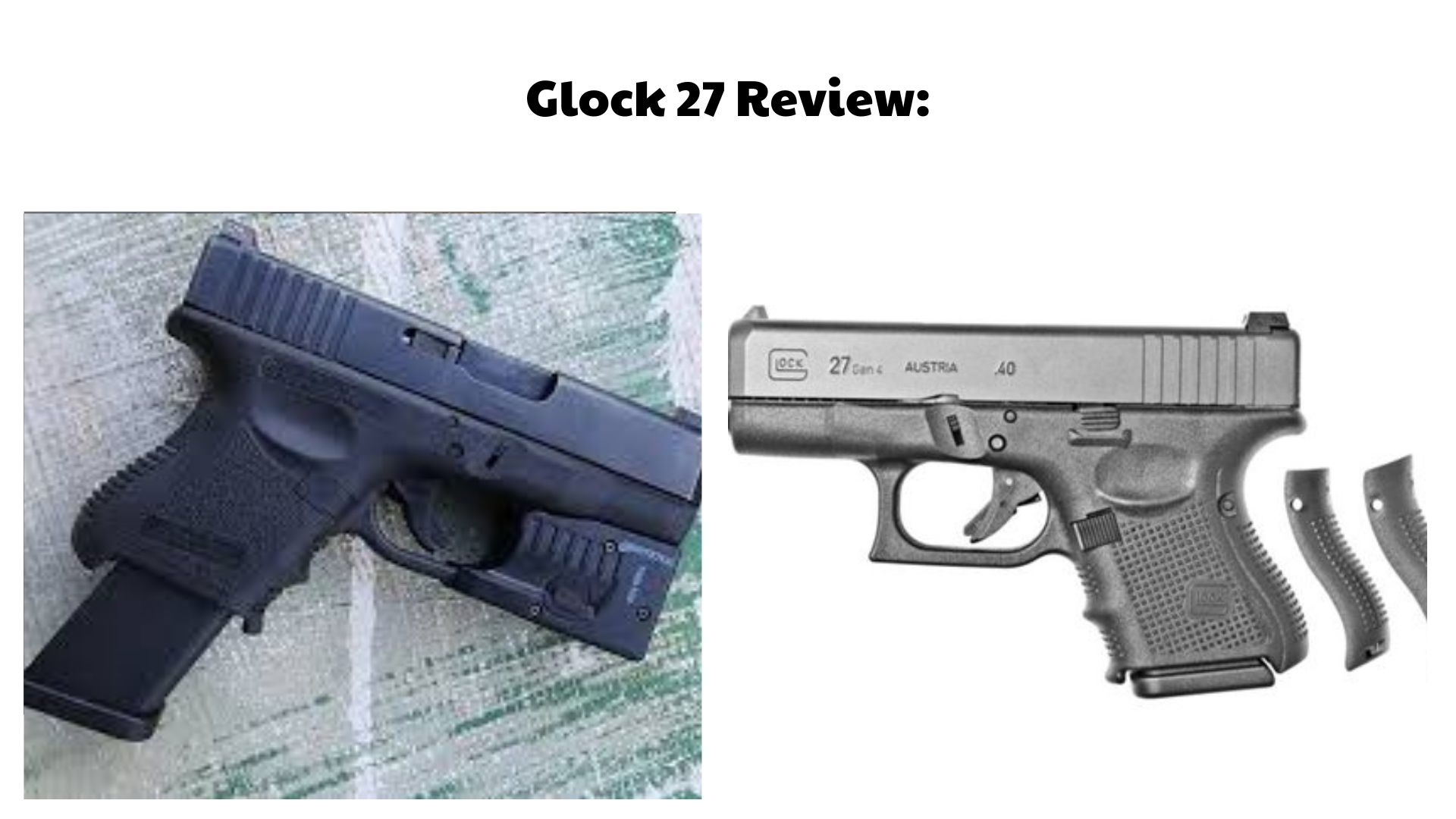

The Glock 27 is a subcompact .40 S&W pistol that has long been recognized as a powerful concealed carry option. Designed to deliver strong ballistic performance in a compact package, it appeals to shooters who prioritize stopping power without moving to a full-size handgun. Despite the rise of modern micro 9mm pistols, the Glock 27 continues to maintain a loyal following.
Often described as an “underrated” firearm in today’s concealed carry market, the Glock 27 offers a unique combination of compact size and higher-caliber performance. While many shooters have shifted toward 9mm for capacity and recoil control, the .40 S&W cartridge still holds appeal for those seeking increased energy in defensive scenarios.
In terms of competition, the Glock 27 sits alongside models like the Glock 26, as well as newer micro-compact 9mm pistols. However, its defining advantage remains its ability to deliver more power in a similarly sized platform, making it an attractive option for experienced shooters.
The core appeal of the Glock 27 lies in three main factors: power, reliability, and compactness. It retains the simplicity and durability that Glock pistols are known for while offering a more potent caliber than many modern concealed carry alternatives.
This leads to an important question for today’s shooters: is the Glock 27 still relevant in an era dominated by high-capacity, low-recoil micro 9mm pistols? The answer depends largely on individual priorities, particularly the balance between power, capacity, and shootability.
2. Glock 27 Background & Development History
The Glock 27 was introduced as part of Glock’s subcompact lineup, offering a smaller alternative to the mid-size Glock 23. It was designed to meet the needs of concealed carry users and law enforcement officers who required a backup firearm with serious stopping power.
Originally launched during the peak popularity of the .40 S&W cartridge, the Glock 27 quickly gained traction among users who wanted a balance between size and performance. At the time, .40 S&W was widely favored for its perceived advantages in defensive applications.
Over the years, the Glock 27 has evolved through multiple generations, including Gen 3, Gen 4, and Gen 5. Each iteration introduced incremental improvements such as enhanced grip texture, interchangeable backstraps, and updated recoil spring systems designed to improve handling and durability.
Within the Glock lineup, the G27 is often viewed as the subcompact counterpart to the Glock 23. It shares many design elements while offering a smaller footprint for easier concealment.
However, shifting market trends have influenced its popularity. As 9mm ammunition improved and became more widely accepted, many shooters began favoring higher-capacity, lower-recoil pistols. This shift has reduced the mainstream appeal of .40 caliber handguns, including the Glock 27.
Despite this, the Glock 27 remains relevant as a niche option for those who still prefer the characteristics of the .40 S&W cartridge in a compact platform.
3. Key Specifications & Technical Overview
The Glock 27 is chambered in .40 S&W, a cartridge known for delivering more energy than standard 9mm loads. This makes it appealing for users who prioritize stopping power in defensive situations.
It features a barrel length of approximately 3.42 inches, placing it firmly in the subcompact category. The overall length is around 6.5 inches, making it small enough for concealed carry while still maintaining usable handling characteristics.
The unloaded weight typically falls between 21 and 22 ounces, depending on the generation. This relatively lightweight design enhances carry comfort but also contributes to the snappier recoil associated with the platform.
Standard magazine capacity is 9+1 rounds. One advantage of the Glock system is magazine compatibility, allowing the Glock 27 to accept larger magazines from models like the Glock 23 and Glock 22 for increased capacity when needed.
The pistol operates using Glock’s Safe Action striker-fired system, which provides a consistent trigger pull and a simple manual of arms. This system is widely known for its reliability and ease of use.
Construction includes a durable polymer frame paired with a steel slide, ensuring longevity and resistance to harsh conditions. The pistol is equipped with standard Glock sights, which are functional but often upgraded by users for improved performance.
Overall, the Glock 27 is designed with a clear focus: delivering compact size, dependable operation, and the power of the .40 S&W cartridge in a concealment-friendly package.
4. Design & Build Quality
The Glock 27 follows the brand’s well-known design philosophy, featuring a durable polymer frame paired with a hardened steel slide. This construction ensures long-term reliability while keeping overall weight manageable for concealed carry use.
Its compact, somewhat blocky profile is typical of Glock subcompact pistols. While not considered aesthetically refined compared to some modern designs, the focus is clearly on function over form. Every element is built with practicality and durability in mind.
Later generations, particularly Gen 4 and Gen 5, introduced meaningful improvements in grip texture and ergonomics. These updates enhance handling and provide a more secure grip under recoil, especially important for a .40 caliber pistol in a small frame.
The dual recoil spring system is another key upgrade, helping to reduce felt recoil and improve overall durability. This system also contributes to smoother cycling and extended service life under repeated use.
Overall, the Glock 27 embodies a simple, rugged, and easy-to-maintain design. It avoids unnecessary features and instead focuses on delivering consistent performance in demanding conditions.
The result is a handgun built primarily for reliability rather than aesthetics or advanced features, which is a core reason for its continued popularity among experienced users.
5. Ergonomics & Handling Experience
The Glock 27 features a short grip that is specifically designed to enhance concealability. This compact grip reduces printing under clothing, making it easier to carry discreetly in everyday situations.
However, this shorter grip can feel limited for shooters with larger hands. Without magazine extensions, some users may find it difficult to achieve a full, comfortable grip, which can affect control during firing.
To address fit issues, Gen 4 and Gen 5 models include interchangeable backstraps. These allow users to adjust the grip size to better match their hand, improving comfort and control.
Like other Glock pistols, the grip angle promotes a natural point-of-aim for many shooters. This helps with quick target acquisition, especially in defensive scenarios where speed is critical.
Compared to modern slimline 9mm pistols, the Glock 27 has a slightly thicker feel due to its double-stack design. While this adds bulk, it can also provide a more secure grip for some users.
Ultimately, the ergonomics reflect a trade-off: improved concealability at the expense of maximum shooting comfort. With proper technique and possible grip enhancements, most users can adapt effectively.
6. Trigger System & Shooting Characteristics
The Glock 27 uses the standard Glock Safe Action trigger system, which typically features a pull weight of around 5.5 pounds. This system is designed to provide a consistent trigger press from shot to shot.
One of its strengths is predictability. The trigger has a recognizable take-up, followed by a defined break and a short reset. This consistency helps shooters develop muscle memory and improve shooting performance over time.
The short reset is particularly beneficial for rapid follow-up shots, allowing users to fire quickly while maintaining control. This is important in defensive situations where multiple shots may be required.
However, the trigger is often described as functional rather than refined. It lacks the crispness and smoothness found in some premium or aftermarket systems, which may be noticeable to experienced shooters.
Despite this, the design prioritizes reliability and safety over competition-level performance. It is built to function consistently under stress and in adverse conditions.
For users already familiar with Glock pistols, the trigger feel will be immediately recognizable, contributing to ease of transition and consistent training experience across different Glock models.
7. Recoil & Shootability
The Glock 27 is known for having noticeably stronger recoil compared to similarly sized 9mm pistols. This is primarily due to the combination of the .40 S&W cartridge and the pistol’s compact, lightweight frame. As a result, shooters can expect a sharper and more pronounced recoil impulse.
When compared to models like the Glock 26 or Glock 43X, the Glock 27 feels significantly snappier. The increased muzzle rise can make rapid follow-up shots more challenging, especially for those who are not accustomed to shooting higher-caliber handguns in small platforms.
To help manage this, Glock incorporated a dual recoil spring system in later generations. This system reduces some of the felt recoil and improves overall shooting smoothness, making the pistol more controllable than earlier versions.
Even with these improvements, the Glock 27 requires a firm grip and proper shooting technique to maintain control. Shooters who apply consistent pressure and proper stance will find it manageable, particularly with regular practice.
For experienced shooters, the recoil is entirely manageable and can even be advantageous for those who prefer a more powerful cartridge. However, beginners may find it more difficult to control compared to softer-shooting 9mm alternatives.
Overall, the Glock 27 offers solid shootability within its class, but it demands more skill and training to fully master compared to modern micro 9mm pistols.
8. Accuracy & Range Performance
The Glock 27 delivers effective defensive accuracy, particularly within the 5 to 15-yard range where most real-world self-defense encounters occur. Its design is optimized for close-quarters performance rather than long-range precision shooting.
With proper training and familiarity, shooters can achieve solid groupings at distances up to 25 yards. The consistent trigger system and reliable barrel lock-up contribute to repeatable shot placement.
However, the short sight radius inherent to its compact design can limit precision potential, especially when compared to larger pistols. This makes it less suited for target shooting or competition scenarios.
The pistol is built with a clear defensive focus. It prioritizes reliability and practical accuracy over fine precision, making it effective in high-stress situations where quick target engagement is critical.
When paired with quality ammunition, the Glock 27 provides consistent point-of-impact performance. This reliability is a key factor in its continued use as a defensive firearm.
In summary, while it is not a precision shooting platform, the Glock 27 excels in delivering dependable accuracy for real-world defensive applications.
9. Concealed Carry Performance
The Glock 27 is well-suited for concealed carry due to its compact dimensions. Its size makes it ideal for inside-the-waistband (IWB) and appendix carry configurations, allowing for discreet everyday carry.
Although it is slightly thicker than single-stack or slimline pistols, this is a result of its double-stack magazine design. While this adds some bulk, it also contributes to improved grip and capacity compared to slimmer alternatives.
The shorter grip length plays a significant role in reducing printing under clothing. This makes it easier to conceal, especially in casual or lightweight clothing setups.
With a proper holster, the Glock 27 can be carried comfortably throughout the day. Its relatively light weight for a .40 caliber pistol further supports long-term wear.
Another advantage is its compatibility with larger Glock magazines. Users can carry higher-capacity magazines as backups, increasing overall defensive readiness without sacrificing concealability.
Overall, the Glock 27 offers a strong balance between power and concealability, making it a practical option for those who prioritize a compact handgun with greater stopping potential.
10. Reliability & Ammo Performance
The Glock 27 benefits from Glock’s long-standing reputation for reliability, which is one of the primary reasons it remains relevant today. Across all generations, the pistol has demonstrated consistent performance under a wide range of conditions, making it a trusted option for both civilian and professional users.
It functions reliably with a variety of ammunition types, including standard full metal jacket (FMJ) rounds for training and defensive hollow-point loads for carry. This versatility allows users to practice and carry with confidence, knowing the firearm will perform as expected.
When properly maintained, the Glock 27 experiences minimal malfunctions. Its simple internal design reduces the likelihood of mechanical issues, and routine cleaning is usually sufficient to keep it running smoothly over long periods.
Unlike some firearms, the Glock 27 does not require a significant break-in period. Most units perform reliably straight out of the box, which is an important advantage for users who depend on immediate functionality.
The pistol is also known for performing well in adverse conditions, including exposure to dirt, moisture, and temperature extremes. This durability is a key factor in its use as a defensive firearm.
Overall, the Glock 27 remains a dependable choice for self-defense and law enforcement backup roles, thanks to its proven reliability and consistent ammunition performance.
11. Glock 27 Variants & Generational Differences
The Glock 27 has evolved through several generations, each introducing incremental improvements to ergonomics, handling, and overall user experience.
The Gen 3 version represents the original design, featuring basic ergonomics and a straightforward configuration. While functional and reliable, it lacks many of the refinements seen in later models.
The Gen 4 variant introduced significant upgrades, including improved grip texture and interchangeable backstraps. These changes allow users to customize the grip size for better comfort and control. The dual recoil spring system was also enhanced in this generation, improving recoil management and durability.
The Gen 5 version further refines the platform with improved ergonomics, a smoother trigger feel, and the removal of finger grooves for a more universal grip. Additional updates include improved internal components and enhanced overall handling characteristics.
Across all generations, the Glock 27 maintains compatibility with larger magazines from the Glock 23 and Glock 22. This flexibility allows users to increase capacity when needed, which is a notable advantage of the Glock ecosystem.
The evolution of the Glock 27 has focused on improving comfort, shootability, and adaptability, while preserving the reliability that defines the platform.
12. Glock 27 vs Competitors
When compared to the Glock 26, the Glock 27 offers a similar size and form factor but uses the more powerful .40 S&W cartridge. However, the Glock 26 benefits from softer recoil and higher capacity with 9mm ammunition, making it more accessible for a wider range of shooters.
Against modern micro 9mm pistols, the Glock 27 is slightly larger and heavier, but it delivers greater energy per shot. In contrast, micro 9mm platforms typically provide higher capacity, reduced recoil, and improved concealability, which has contributed to their growing popularity.
Compared to other compact .40 caliber pistols, the Glock 27 stands out for its concealability. Its smaller size makes it easier to carry discreetly, although this comes at the cost of increased recoil and reduced grip surface for control.
The primary strengths of the Glock 27 lie in its power and reliability. It offers a level of performance that appeals to users who prioritize stopping power in a compact package.
On the other hand, its main weaknesses include stronger recoil and lower capacity compared to modern 9mm alternatives. These factors have limited its appeal among newer shooters and those seeking maximum efficiency in concealed carry setups.
In today’s market, the Glock 27 occupies a niche role as a .40 S&W concealed carry option. While no longer dominant, it continues to serve users who value its specific advantages.
13. Advantages of the Glock 27
One of the most significant advantages of the Glock 27 is its ability to chamber the powerful .40 S&W cartridge in a compact, easily concealable handgun. This provides users with increased stopping power compared to standard 9mm pistols, which remains a key consideration for many defensive shooters.
Like other Glock models, the Glock 27 benefits from a long-standing reputation for reliability and durability. Its simple internal design and rugged construction allow it to function consistently even under demanding conditions, making it a dependable option for self-defense.
Another major advantage is magazine compatibility. The Glock 27 can accept larger magazines from models such as the Glock 23 and Glock 22, allowing users to increase capacity when needed without sacrificing the compact size of the firearm itself.
The pistol also features a simple manual of arms, which makes it easy to operate and maintain. This simplicity reduces the learning curve and ensures consistent handling across the Glock platform.
In addition, the Glock 27 benefits from strong aftermarket support. Users can customize sights, triggers, and other components to better suit their preferences, enhancing overall performance and usability.
Overall, the Glock 27 delivers effective defensive performance by combining compact size, reliability, and the ballistic strength of the .40 S&W cartridge.
14. Disadvantages & Limitations
Despite its strengths, the Glock 27 does have several limitations. One of the most commonly noted drawbacks is its snappy recoil, which can be challenging to manage, particularly for less experienced shooters. The combination of a powerful cartridge and a small frame contributes to this characteristic.
Another limitation is its relatively low magazine capacity compared to modern 9mm pistols. With a standard capacity of 9 rounds, it falls behind many current concealed carry options that offer higher round counts in similar or smaller packages.
The pistol’s thicker frame, due to its double-stack design, can also make it less comfortable to conceal compared to slimline or single-stack alternatives. This may be noticeable when carrying for extended periods or wearing lighter clothing.
The declining popularity of the .40 S&W cartridge has further reduced the Glock 27’s appeal in the broader market. Many shooters now favor 9mm for its balance of capacity, recoil control, and ammunition cost.
Additionally, the factory trigger is often described as basic when compared to competitors. While functional and reliable, it lacks the refinement and crispness found in some newer designs.
Finally, the Glock 27 may not be as comfortable for extended shooting sessions due to its compact size and recoil characteristics, making it less ideal for long range practice compared to larger pistols.
15. Ideal Users for the Glock 27
The Glock 27 is best suited for experienced shooters who are comfortable managing the recoil of the .40 S&W cartridge. These users are more likely to appreciate the balance of power and compactness that the pistol offers.
It is also a strong option for concealed carriers who prioritize stopping power over magazine capacity. For individuals who value the performance characteristics of the .40 caliber round, the Glock 27 provides a viable everyday carry solution.
Law enforcement personnel may find the Glock 27 particularly useful as a backup firearm. Its compatibility with larger duty magazines adds flexibility while maintaining a compact form factor.
Glock platform loyalists will also appreciate the familiarity and consistency of the design. Those who already own other Glock pistols can easily integrate the Glock 27 into their existing setup.
Additionally, users who already utilize .40 caliber systems may prefer to stay within the same caliber for logistical simplicity, including ammunition and magazine compatibility.
Ultimately, the Glock 27 is ideal for individuals who prioritize power, reliability, and simplicity, and who are willing to accept trade-offs in recoil and capacity.
16. Final Verdict: Is the Glock 27 Still Worth It?
The Glock 27 remains a capable and reliable concealed carry pistol, even in today’s market dominated by high-capacity 9mm handguns. Its core strengths—durability, simplicity, and consistent performance—continue to make it a dependable choice for defensive use.
For shooters who prefer the .40 S&W cartridge, the Glock 27 offers a strong balance of power and compactness. It delivers greater energy per shot than most 9mm alternatives while maintaining a size suitable for everyday concealed carry.
However, it is less appealing for new or less experienced shooters. The increased recoil and lower capacity compared to modern 9mm pistols can make it more challenging to handle and less forgiving during training.
In the current market, the Glock 27 occupies a more specialized role. It is no longer a dominant choice, but rather a niche option for users who specifically value its caliber and compact design.
Ultimately, the Glock 27 is still worth considering for the right user. It continues to offer solid defensive performance in a compact package, particularly for those who prioritize power over capacity.
Final takeaway: the Glock 27 is a powerful, compact, and proven firearm that still holds value today, even if it has been overshadowed by newer, higher-capacity designs in the modern concealed carry landscape.
1. Is the Glock 27 a good concealed carry pistol?
Yes, the Glock 27 is a solid concealed carry option, especially for those who prefer a more powerful caliber. Its compact size makes it suitable for IWB and appendix carry, while its reliability ensures consistent performance. However, its thicker frame and stronger recoil compared to 9mm pistols may require more experience to handle effectively.
2. What caliber is the Glock 27?
The Glock 27 is chambered in .40 S&W, a cartridge known for delivering higher energy than standard 9mm rounds. This makes it appealing to shooters who prioritize stopping power in defensive situations.
3. How many rounds does the Glock 27 hold?
The standard magazine capacity is 9+1 rounds. However, it can accept larger magazines from Glock 23 and Glock 22, increasing total capacity when needed.
4. Is the Glock 27 reliable?
Yes, it is widely regarded as highly reliable. Like other Glock pistols, it is designed to function under adverse conditions and with minimal maintenance.
5. Is the Glock 27 better than the Glock 26?
It depends on preference. The Glock 27 offers more power with .40 S&W, while the Glock 26 offers lower recoil and higher capacity with 9mm. Most shooters find the Glock 26 easier to control.
6. Does the Glock 27 have a lot of recoil?
Yes, recoil is noticeably stronger compared to similar-sized 9mm pistols. The compact size combined with the .40 caliber cartridge creates a snappier shooting experience.
7. Is the Glock 27 good for beginners?
It is generally not ideal for beginners due to its recoil. New shooters often benefit more from 9mm pistols, which are easier to control and allow for faster skill development.
8. Can the Glock 27 use Glock 23 magazines?
Yes, the Glock 27 is compatible with Glock 23 and Glock 22 magazines, allowing for increased capacity and flexibility.
9. What is the barrel length of the Glock 27?
The barrel length is approximately 3.42 inches, placing it firmly in the subcompact category.
10. Is the Glock 27 good for self-defense?
Yes, it is an effective self-defense firearm. Its reliability and the power of the .40 S&W cartridge make it a strong choice for defensive situations.
11. Can I carry the Glock 27 every day?
Yes, many users carry it daily. With the right holster, it can be comfortable, although its thickness may be noticeable compared to slimline pistols.
12. Does the Glock 27 require a break-in period?
No, most Glock 27 pistols function reliably out of the box with minimal or no break-in required.
13. What type of holster is best for the Glock 27?
IWB and appendix carry holsters are the most popular choices. Kydex holsters are especially favored for their durability and retention.
14. Is the Glock 27 accurate?
Yes, it is accurate within typical defensive distances (5–15 yards) and can perform well up to 25 yards with proper training.
15. How heavy is the Glock 27?
It weighs approximately 21–22 ounces unloaded, making it relatively lightweight for a .40 caliber pistol.
16. Is the Glock 27 still relevant today?
Yes, but it is more of a niche choice. While 9mm pistols dominate the market, the Glock 27 remains relevant for those who prefer .40 S&W.
17. What are the main advantages of the Glock 27?
Its main advantages include strong stopping power, reliability, compact size, and compatibility with larger Glock magazines.
18. What are the downsides of the Glock 27?
The main downsides are its snappy recoil, lower capacity compared to modern 9mm pistols, and thicker frame.
19. Can the Glock 27 be used for home defense?
Yes, although larger pistols may offer better control and capacity, the Glock 27 can still serve effectively in a home defense role.
20. Does the Glock 27 have a safety?
It does not have a manual safety. Instead, it uses Glock’s Safe Action system with internal safeties.
21. Is the Glock 27 easy to maintain?
Yes, it is known for simple maintenance. Field stripping is quick, and regular cleaning keeps it running reliably.
22. How does the Glock 27 compare to micro 9mm pistols?
It offers more power but has more recoil and lower capacity. Micro 9mm pistols are generally easier to shoot and conceal.
23. Is the Glock 27 suitable for small hands?
It may feel bulky for some users due to its thickness, but interchangeable backstraps in newer generations can help improve fit.
24. Can I upgrade the Glock 27?
Yes, there is strong aftermarket support for sights, triggers, and other components.
25. Does the Glock 27 support weapon lights?
Some models have limited rail space. Compact lights may fit, but options are more limited than on larger pistols.
26. Is the Glock 27 good for range shooting?
It can be used at the range, but recoil may make long sessions less comfortable compared to larger or 9mm pistols.
27. What generation of Glock 27 is best?
Gen 5 is often preferred for its improved ergonomics and trigger feel, but Gen 4 also offers strong performance and customization.
28. How durable is the Glock 27?
It is highly durable and designed to withstand heavy use over thousands of rounds.
29. Can the Glock 27 be concealed easily?
Yes, its compact size helps with concealment, though its thickness may require proper holster selection.
30. Is the Glock 27 a good backup gun?
Yes, it is commonly used as a backup firearm due to its size and compatibility with larger Glock magazines.
31. Why do some people prefer .40 S&W over 9mm?
Some shooters prefer .40 S&W for its higher energy and perceived stopping power, although this comes with increased recoil.
32. Does the Glock 27 have good resale value?
Yes, Glock pistols generally retain value well due to their reputation and demand.
33. Is the Glock 27 discontinued?
No, it is still available, though less popular than it once was.
34. How does recoil compare to a Glock 23?
The Glock 27 has more noticeable recoil due to its smaller size and lighter weight.
35. Can the Glock 27 be used for duty carry?
It is more commonly used as a backup rather than a primary duty weapon due to its size and capacity.
36. What sights come with the Glock 27?
It typically comes with standard Glock sights, which many users upgrade for better visibility.
37. Is the Glock 27 suitable for winter carry?
Yes, it can be easier to conceal in colder weather with heavier clothing.
38. What makes the Glock 27 unique?
Its combination of compact size and .40 caliber power makes it stand out among concealed carry pistols.
39. Can I shoot 9mm in a Glock 27?
Not without a conversion barrel. The standard configuration is designed for .40 S&W only.
40. Is the Glock 27 comfortable to shoot?
It is comfortable for experienced shooters, but beginners may find the recoil less pleasant.
41. Does the Glock 27 jam often?
No, it is known for reliability and rarely jams when properly maintained.
42. Is it worth upgrading the trigger?
Many users upgrade the trigger for improved feel, though the factory trigger is reliable and functional.
43. How does it compare to compact .45 pistols?
It offers less recoil than many .45 pistols while still delivering strong stopping power.
44. Is the Glock 27 good for off-duty carry?
Yes, it is commonly used by law enforcement as an off-duty or backup firearm.
45. Can beginners learn on the Glock 27?
They can, but it may take more time due to recoil. Many instructors recommend starting with 9mm.
46. Does it support extended magazines?
Yes, extended magazines from larger Glock models can be used.
47. Is the Glock 27 outdated?
It is not outdated, but it is less popular due to modern 9mm advancements.
48. What is the lifespan of a Glock 27?
With proper care, it can last tens of thousands of rounds.
49. Is the Glock 27 good for personal protection?
Yes, it is a reliable and powerful option for personal defense.
50. What is the final verdict on the Glock 27?
The Glock 27 remains a capable and dependable concealed carry pistol. While it is no longer the most popular choice, it still offers strong performance for those who prefer .40 caliber handguns.
Read more: