
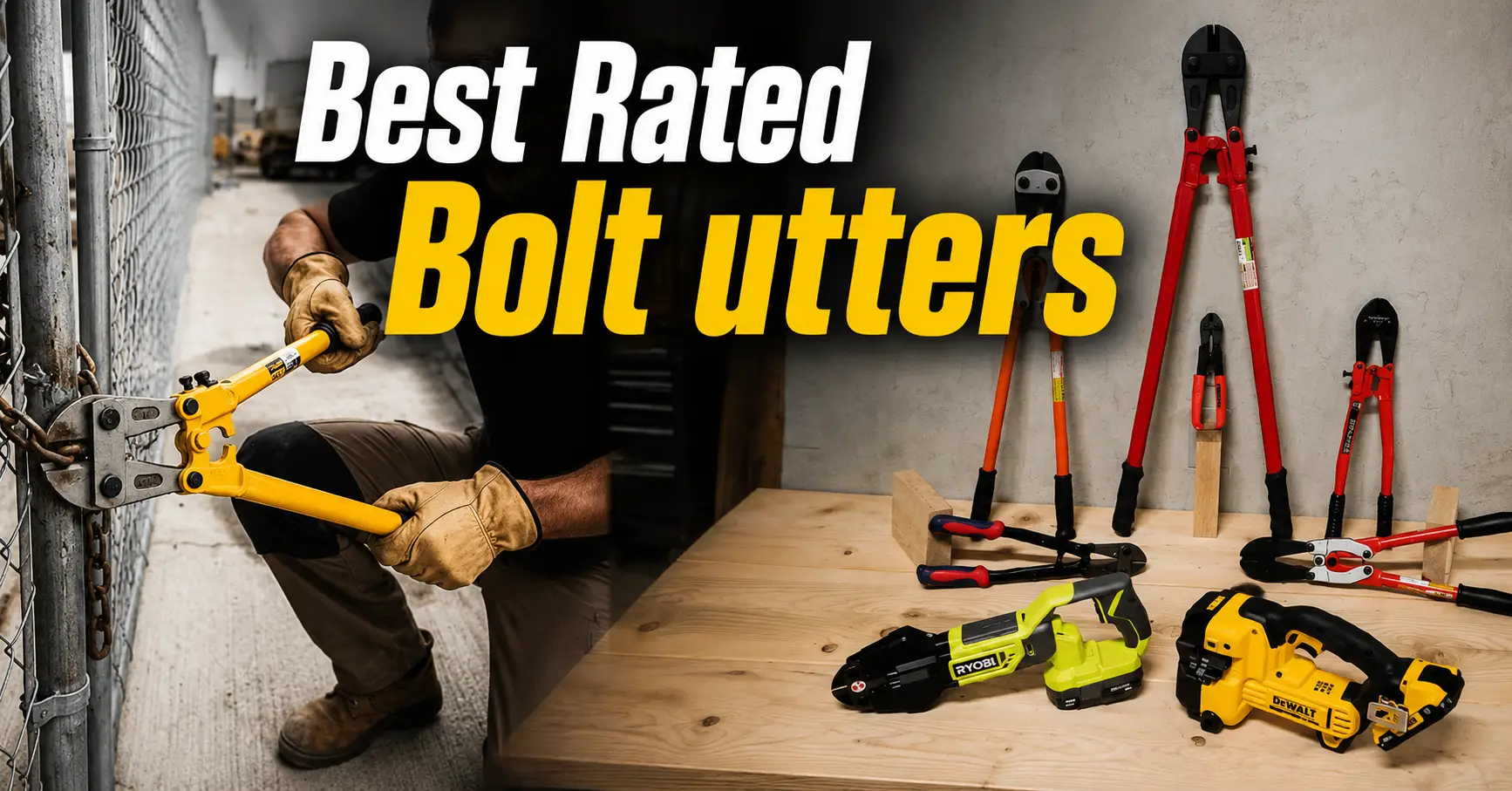
Choosing among the best rated bolt cutters is not simply a matter of buying the longest handles or the highest star rating. The right tool must match the material diameter, metal hardness, available working space, and the user’s ability to control the cut safely.
This guide compares five Amazon products supplied for review, including two WORKPRO models, a MAXPOWER cutter, a longer SPENDINS cutter, and a three-piece cutter set. You will learn how their sizes, jaw materials, listed capacities, handle designs, and intended uses differ.
Bolt cutters may support lawful maintenance, fence repair, debris removal, or authorized emergency access, but they do not replace fire prevention, clear exits, evacuation planning, or professional emergency response. Never use them to defeat security, enter property without permission, or cut an energized, pressurized, tensioned, or unidentified item.
Quick Picks
- Best Overall: WORKPRO W017006A 24-Inch Bolt Cutter on Amazon
- Best 24-Inch Alternative: MAXPOWER 24-Inch Heavy-Duty Bolt Cutter on Amazon
- Best Value 24-Inch Option: WORKPRO W017015A Chrome-Vanadium Bolt Cutter on Amazon
- Best for Extra Leverage: SPENDINS 30-Inch Heavy-Duty Bolt Cutter on Amazon
- Best Multi-Tool Set: 3-Piece Bolt Cutter Pliers Set on Amazon
Best Rated Bolt Cutters Comparison Table
| Product | Best For | Key Features | Safety Notes | Check Price |
|---|---|---|---|---|
| WORKPRO W017006A 24-Inch Bolt Cutter | Best overall and highest review volume | 24-inch leverage, drop-forged chrome-molybdenum jaws, bi-material anti-slip grips | Use only within the listed material hardness and diameter limits; verify the current Amazon variation. | Check Price |
| MAXPOWER 24-Inch Heavy-Duty Bolt Cutter | Best 24-inch alternative | Cr-Mo jaws, built-in adjustment bolt, non-slip rubber handles | Jaw opening is not the same as safe cutting capacity; match the material type and hardness to the listing. | Check Price |
| WORKPRO W017015A 24-Inch Chrome-Vanadium Bolt Cutter | Best value 24-inch option | Chrome-vanadium jaws, lever-fulcrum design, bi-material grips | Verify the selected variant and current manufacturer-listed capacity before cutting locks or hardened material. | Check Price |
| SPENDINS 30-Inch Heavy-Duty Bolt Cutter | Best for extra leverage | 30-inch handles, Cr-Mo jaws, adjustable clearance hardware, soft grips | Long handles create greater force; never exceed the manufacturer’s hardness and diameter limits. | Check Price |
| 3-Piece Bolt Cutter Pliers Set | Best multi-tool set | Full-size cutter, mini bolt cutter, compact wire/cable cutter, ergonomic handles | Confirm the exact three tools, dimensions, blade materials, and capacity of each tool on the live listing. | Check Price |
Best Bolt Cutter Reviews
1. WORKPRO W017006A 24-Inch Bolt Cutter on Amazon
The WORKPRO W017006A is the most established option in this five-product group and is a practical choice for homeowners, maintenance teams, and emergency-preparedness kits that need a full-size manual cutter. Its 24-inch format balances leverage with storage more easily than many 30-inch or 36-inch tools. The manufacturer-listed design uses drop-forged chrome-molybdenum jaws, a traditional lever-and-fulcrum action, and bi-material grips.
Key Features
- 24-inch manual bolt cutter with chrome-molybdenum steel jaws.
- Powder-coated cutting head and precisely aligned lever-style mechanism.
- Bi-material, anti-slip grips intended to improve control and comfort.
- Manufacturer-listed maximum capacity is approximately 5/16 inch for harder material and 25/64 inch for softer material; verify the current listing before use.
Pros
- Large customer-review history compared with the other products in this guide.
- Useful middle-ground size for garages, workshops, property maintenance, and authorized emergency access.
- Comfort-oriented grips and familiar non-powered design.
- Clear manufacturer-listed material and capacity guidance is available.
Cons
- A 24-inch tool may still require significant force on thick or hardened stock.
- It is not designed for every padlock, security chain, cable, or hardened alloy.
- Full-size handles need more working room than compact cutters.
Safety Notes
Wear impact-rated eye protection and appropriate work gloves, keep bystanders away, and stabilize the item being cut. Do not use this tool on energized conductors, pressurized lines, unknown cables, or material above the manufacturer’s capacity. Never add a pipe or other handle extension, because extra leverage can overload the jaws or pivot.
Best For
Most readers who want one general-purpose, full-size bolt cutter for lawful home, workshop, maintenance, or preparedness use.
2. MAXPOWER 24-Inch Heavy-Duty Bolt Cutter on Amazon
The MAXPOWER 24-inch model is another full-size option for buyers who want chrome-molybdenum jaws and an adjustment mechanism for blade alignment. The listing describes a 7/8-inch jaw opening, but that opening must not be confused with the much smaller rated cutting diameter. It is intended for authorized cutting of suitable soft metal, bolts, rivets, and chains within its limits.
Key Features
- 24-inch overall format with a manufacturer-listed 7/8-inch maximum jaw opening.
- Drop-forged, heat-treated chrome-molybdenum steel jaws.
- Built-in adjustment bolt for maintaining blade alignment.
- Manufacturer-listed capacity of up to about 3/8 inch for carbon steel and 5/16 inch for alloy steel; verify hardness and current listing.
Pros
- Good leverage for a commonly used 24-inch size.
- Adjustment hardware can be useful when alignment requires manufacturer-approved correction.
- Non-slip rubber grips are designed for better hand control.
- Product information distinguishes jaw opening from cutting capacity.
Cons
- The adjustment mechanism should not be altered casually or used to compensate for damaged jaws.
- Not suitable for cutting every lock or hardened security component.
- Heavy for a vehicle kit or small apartment toolbox.
Safety Notes
Do not assume that anything fitting between the jaws can be cut safely. Confirm the material, hardness, and diameter first. If the blades are chipped, spread, badly misaligned, or require repeated extreme force, stop and contact the manufacturer or replace the tool.
Best For
Buyers who prefer a 24-inch Cr-Mo cutter with an alignment-adjustment feature and clearly stated capacity categories.
3. WORKPRO W017015A 24-Inch Chrome-Vanadium Bolt Cutter on Amazon
The WORKPRO W017015A is a 24-inch chrome-vanadium alternative for home improvement, fence work, chain removal, and general maintenance. It uses a familiar lever-fulcrum layout with bi-material grips. The listing provides different diameter limits for softer and harder materials, so buyers should read the hardness notes rather than relying only on the tool length.
Key Features
- 24-inch cutter with drop-forged chrome-vanadium jaws.
- Powder-coated head and lever-style cutting action.
- Bi-material anti-slip grips for two-handed operation.
- Manufacturer listing states different capacities for softer and harder materials, including up to roughly 3/8 inch and 5/16 inch in the specified categories; verify before buying.
Pros
- Straightforward full-size design at a value-oriented position.
- Comfortable handle layout for occasional home and maintenance use.
- Useful for suitable padlocks, bolts, rods, rivets, soft metal, and chain within the stated limits.
- Review volume is substantial enough to compare recurring owner feedback.
Cons
- Chrome-vanadium construction does not automatically mean it can cut all hardened security steel.
- May feel stiff when new and should only be lubricated or adjusted as the manufacturer directs.
- Long handles are less convenient in confined spaces.
Safety Notes
Check the product page for the exact hardness notation because capacity changes with material hardness. Do not cut a padlock while it is supporting a load, holding a pressurized barrier, or securing property you are not authorized to access. Keep the cutting path pointed away from people and fragile surfaces.
Best For
Budget-conscious homeowners and maintenance users who want a conventional 24-inch cutter and will verify the exact material rating before each task.
4. SPENDINS 30-Inch Heavy-Duty Bolt Cutter on Amazon
The SPENDINS 30-inch model is the longest single cutter in this comparison. The additional handle length can reduce the hand force needed for an appropriate cut, but it also increases the consequences of using the wrong material or exceeding the rated capacity. The supplied Amazon link appears to offer multiple size variations, so confirm that the 30-inch option is selected before ordering.
Key Features
- 30-inch variant with drop-forged chrome-molybdenum alloy jaws.
- Long, anti-slip grips intended to increase leverage and hand comfort.
- Eccentric or adjustment hardware for manufacturer-directed jaw-clearance correction.
- Listing describes different capacities for softer and harder materials, reaching approximately 1/2 inch only in the specified softer category; verify the exact variation and limits.
Pros
- More leverage than the 24-inch models in this guide.
- Suitable for larger authorized maintenance and construction tasks when the material is within rating.
- Replaceable decision point for buyers who find 24-inch handles too demanding.
- The listing includes multiple size choices for different storage and leverage needs.
Cons
- Heavier, bulkier, and harder to control in a confined area.
- Greater leverage can encourage unsafe attempts on over-hard or oversize material.
- Not the best choice for a compact car kit, apartment drawer, or frequent overhead use.
Safety Notes
Use a stable stance with both hands and enough clearance for the handles to close without trapping fingers. Never bounce, twist, hammer, or stand on the handles. Do not cut chain, cable, or spring material that is under tension, because released energy can cause severe injury.
Best For
Authorized construction, farm, property-maintenance, and workshop tasks where extra leverage is useful and adequate operating space is available.
5. 3-Piece Bolt Cutter Pliers Set on Amazon
This three-piece set is aimed at buyers who encounter more than one type of cutting job. The live title and indexed product information indicate a full-size bolt cutter, a mini bolt cutter, and a compact wire or cable cutter. Because the listing is newer and exact dimensions may vary by seller revision, treat every size and capacity as something to verify on the current Amazon page before purchase.
Key Features
- Three-tool format intended to cover heavier bolt or chain cuts, smaller wire cuts, and cable-related tasks.
- Ergonomic handle design and leverage-focused construction described in the listing title.
- Compact tools may be easier to carry and position than one large cutter.
- Exact blade alloy, cable-cutter length, storage case, and capacity should be checked on the current listing.
Pros
- Versatile selection for mixed household, workshop, craft, fence, and maintenance tasks.
- Allows the user to choose a tool closer to the size of the material.
- Compact pieces can fit in spaces where a 24-inch or 30-inch cutter cannot.
- Potentially convenient as a starter set when the specifications meet the intended jobs.
Cons
- The newer listing has less established review history than the other products in this guide.
- A compact cutter usually provides less leverage than a full-size model.
- Wire or cable cutters are not interchangeable with bolt cutters, especially on energized or tensioned cable.
Safety Notes
Read the marking and instructions for each tool separately. Never use the cable cutter on live electrical conductors, steel cable under tension, vehicle restraint components, or unknown utility lines. If the current product page does not clearly state the capacity and intended materials, choose a listing with better documentation.
Best For
DIY users who want several cutting-tool sizes in one kit and are willing to verify each tool’s exact specifications before use.
How to Choose the Best Bolt Cutters
Choose the Right Type
Mini bolt cutters are compact and useful for small fasteners, wire, and light chain when the manufacturer lists those materials. A 14-inch cutter adds leverage while remaining portable. A 24-inch cutter is a common general-purpose choice, while 30-inch and longer models provide more leverage for appropriately rated material but require more room and control.
Cable cutters and bolt cutters are not the same. Cable cutters are shaped to shear cable with less crushing or fraying, while center-cut bolt cutters are intended for suitable bolts, rods, chain, and similar solid stock. Buy the tool designed for the material rather than forcing one tool to do every job.
Match Capacity to Diameter and Hardness
Cutting capacity should include both the maximum diameter and the hardness or material category. A cutter may be listed for a larger diameter of soft metal and a smaller diameter of hardened alloy. Never rely on handle length, jaw opening, or a product photo as proof that a cut is safe.
Understand Jaw Opening
Maximum jaw opening only describes the space between the jaws. It is not the safe cutting diameter. The MAXPOWER model, for example, lists a jaw opening larger than its rated steel-cutting diameter, which is normal for this tool category.
Compare Jaw Materials and Construction
Chrome-molybdenum and chrome-vanadium are both common tool steels. Good performance also depends on forging, heat treatment, jaw geometry, pivot quality, alignment, and correct use. Do not treat the alloy name as a guarantee that a cutter can handle hardened security components.
Consider Handle Length and Ergonomics
Long handles increase leverage but add weight and need a wider arc. Look for grips that remain secure when your hands are dry or gloved. Choose a size you can operate with a stable stance rather than buying the longest model available.
Check Safety Listings and Certifications
UL, ETL, and FM listings are important for many electrical and fire-protection products, but they generally are not the primary approval system for a basic manual bolt cutter. Instead, verify the manufacturer’s stated use, material-specific capacity, instructions, and warranty. For eye protection, choose equipment rated for the flying-particle hazard and follow workplace requirements, which may reference ANSI/ISEA Z87.1.
Consider Where You Will Use It
A 24-inch tool may fit a garage or workshop well, while a compact set may be easier to store in an apartment or vehicle. A 30-inch cutter can be useful on a farm, construction site, or large property but may be awkward in a narrow corridor, utility room, or crowded evacuation route.
Think About Maintenance
Choose a model with clear instructions for cleaning, pivot lubrication, alignment checks, adjustment, storage, and replacement. Adjustment bolts should restore the specified geometry, not increase cutting capacity. A tool with unclear service information can be a poor choice for frequent use.
Understand the Product’s Limits
No manual bolt cutter can safely cut every lock, chain, cable, or metal grade. Hardened security products may resist or damage common cutters. Bolt cutters also do not make energized, pressurized, suspended, spring-loaded, or tensioned systems safe to cut.
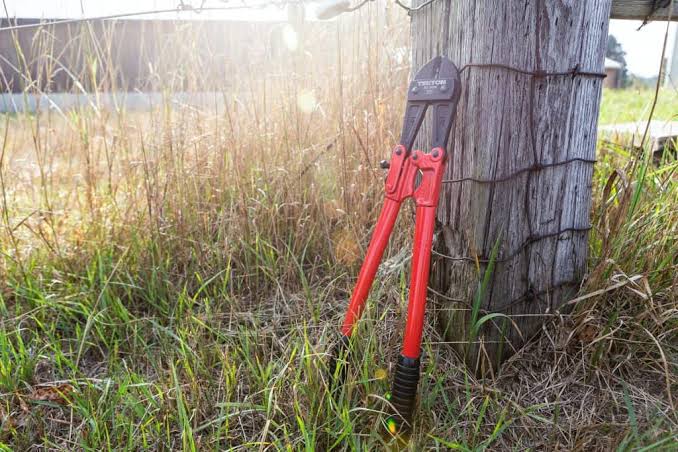
Important Fire Safety Tips Before You Buy
- Keep doors, windows, gates, and emergency exits readily usable; do not rely on bolt cutters as the normal way to escape.
- Create and practice a household fire escape plan with two ways out when possible and a meeting place outside.
- Call emergency services when anyone is trapped, smoke or fire is present, utilities are damaged, or the situation is unstable.
- Never enter a smoke-filled or burning area to retrieve a tool or attempt an improvised rescue cut.
- Keep bolt cutters away from electrical panels, gas equipment, pressurized cylinders, sprinkler piping, and unknown utility lines.
- Store eye protection and suitable gloves with the tool, and keep the tool secured from children or unauthorized users.
- Follow local fire codes, building rules, workplace procedures, and manufacturer instructions.
Common Mistakes to Avoid
The most common mistake is assuming that a long handle or large jaw opening means the cutter can sever any object that fits. Capacity depends on diameter, hardness, shape, and jaw design.
- Buying by star rating without checking whether reviews cover the same size and current product variation.
- Trying to cut hardened locks, security chain, or rebar without verifying the exact grade and capacity.
- Using a pipe extension, hammering the handles, jumping on the tool, or twisting during the cut.
- Cutting chain, springs, wire rope, or cable while it is supporting a load or under tension.
- Working without impact-rated eye protection or allowing bystanders near the cutting path.
- Holding small stock close to the jaws instead of securing it with an appropriate clamp or support.
- Cutting electrical conductors, utility seals, conduits, pipes, gas lines, or unidentified materials.
- Ignoring chipped edges, bent handles, loose grips, pivot damage, rust, or misalignment.
- Adjusting the jaws without following the manufacturer’s procedure.
- Waiting for an emergency before reading the instructions and planning safe access.
Troubleshooting Common Problems
| Problem | Possible Cause | What to Do |
|---|---|---|
| The cutter will not complete the cut | Material may be too hard, too thick, incorrectly positioned, or outside the tool’s design | Stop. Verify material and capacity. Use the correct larger or specialized tool rather than adding leverage. |
| Material slips from the jaws | Poor support, wrong jaw position, round stock rolling, or unsuitable jaw type | Secure the work and follow the manufacturer’s positioning instructions. Keep hands away from the jaws. |
| Jaws meet unevenly | Debris, worn pivot, loose hardware, incorrect adjustment, bent handles, or damaged edges | Clean and inspect. Follow the approved adjustment procedure or remove the tool from service. |
| Handles are difficult to move | Dry or contaminated pivot, corrosion, overtight adjustment, or internal damage | Clean and lubricate only as directed. Do not force the handles if damage is suspected. |
| Cut ends are crushed or frayed | Wrong tool for cable or wire rope, dull edges, or material outside rating | Use a purpose-built cable cutter and replace or service damaged jaws. |
| Jaws chip or crack | Hardened or oversize stock, twisting, impact, misuse, or defective/damaged jaws | Stop immediately, clear fragments, isolate the tool, and contact the manufacturer or replace it. |
| Grips rotate or slide | Loose, oily, worn, or damaged handle coverings | Stop using the tool until grips are cleaned, repaired, or replaced according to manufacturer guidance. |
| Cut piece springs away | The material was tensioned, unsupported, spring-loaded, or storing energy | Do not repeat the cut. Have a qualified professional make the system safe before further work. |
When to Get Professional Help
Contact a locksmith when an authorized lock removal exceeds the documented capacity or when damage to a door, gate, safe, or access-control system must be minimized. Contact a qualified electrician before cutting any conductor, cable, raceway, grounding component, or equipment near exposed electrical parts.
Use a licensed technician for garage-door springs, lifting cables, vehicle restraint systems, pressurized equipment, sprinkler systems, gas piping, and other systems that may store energy or contain hazardous material. A utility provider, building manager, code official, or local authority should handle utility seals, shared-building infrastructure, and regulated access points.
Call emergency services immediately when people are trapped, smoke or flames are present, a structural collapse is possible, hazardous materials may be involved, or an improvised cut would delay evacuation. Trained responders have protective equipment and specialized hydraulic or powered cutting tools.
Maintenance and Replacement Tips
- Inspect jaws, pivot, handles, grips, and fasteners before each use.
- Remove metal chips and dirt with the method recommended by the manufacturer.
- Keep the pivot lightly lubricated when the instructions call for it, then wipe away excess.
- Protect steel surfaces from moisture and corrosive chemicals during storage.
- Do not grind, weld, heat, bend, or reshape the jaws or handles.
- Use adjustment hardware only to restore manufacturer-specified alignment or clearance.
- Replace the tool or approved parts when jaws chip, crack, spread, or no longer align.
- Store the cutter secured, dry, and inaccessible to children or unauthorized users.
- Secure the tool during vehicle transport so it cannot shift or become a projectile.
- Keep the model number, manual, purchase record, and warranty information with your tool inventory.
Final Verdict
The WORKPRO W017006A is the best overall choice in this five-product comparison for readers seeking a broadly useful 24-inch cutter with an extensive customer-review history. The MAXPOWER model is a strong 24-inch alternative with chrome-molybdenum jaws and alignment hardware, while the WORKPRO W017015A offers a value-oriented chrome-vanadium design.
Choose the SPENDINS 30-inch model only when you need additional leverage, have enough operating room, and can confirm the selected size and material rating. Choose the three-piece set when versatility and compact tools matter more than maximum leverage, but verify every included tool and capacity because the listing is newer.
The best rated bolt cutters are ultimately the ones that match the exact material, remain in safe condition, and can be controlled without improvised force. Wear appropriate eye protection, follow the manufacturer’s instructions, respect legal access restrictions, and call a qualified professional or emergency service when the cut involves fire, electricity, gas, stored energy, or immediate danger.
Frequently Asked Questions
1. What is the best rated bolt cutter for most homeowners?
For most homeowners, a well-documented 24-inch model offers a practical balance of leverage, control, and storage. In this group, the WORKPRO W017006A is the strongest general-purpose starting point because it has a long review history and clearly stated capacity categories. Match the cutter to the exact material rather than buying by popularity alone.
2. What size bolt cutter should I buy?
An 8-inch mini cutter is useful for light wire and small fasteners, a 14-inch cutter handles moderate tasks, and a 24-inch model gives substantially more leverage for general maintenance. A 30-inch or longer cutter may reduce hand effort but needs more storage and operating space. Always compare the rated material hardness and diameter.
3. Is a 24-inch bolt cutter enough for home use?
A 24-inch cutter is enough for many lawful home-maintenance tasks involving suitable chain, bolts, rods, rivets, fencing, and soft metal. It is not automatically capable of cutting hardened locks or thick security chain. Check the manufacturer’s capacity table before every unfamiliar cut.
4. When is a 30-inch bolt cutter better?
A 30-inch cutter is useful when the material is within rating but a 24-inch tool would require too much force. The longer handles create more leverage, making control, clearance, and material identification even more important. It is usually less convenient in apartments, vehicles, and tight utility areas.
5. Can bolt cutters cut padlocks?
Some bolt cutters can cut some padlocks, but padlock shackles vary greatly in diameter, alloy, shape, and hardening. A lock fitting inside the jaws does not mean the tool is rated to cut it. Cut only a lock you own or are authorized to remove, and stop if the tool requires unsafe force.
6. Can bolt cutters cut hardened security locks?
Many hardened security locks are specifically designed to resist manual cutting. Attempting them with an undersized cutter can chip the jaws, launch fragments, or injure the operator. Use an authorized locksmith, maintenance professional, or emergency responder when a security lock exceeds the documented capacity.
7. Can bolt cutters cut chain?
They can cut certain chain links when the link diameter and hardness are within the cutter’s rating. Hardened security chain may be beyond the capacity of common 24-inch tools. Support the chain so the severed ends cannot whip, drop, or strike anyone.
8. Can bolt cutters cut rebar?
Only use a bolt cutter on rebar when the manufacturer explicitly lists the rebar diameter and grade as acceptable. Rebar can be harder or thicker than expected, and repeated attempts may damage the jaws. For construction work, a purpose-built rebar cutter may be safer and more productive.
9. Can a bolt cutter cut wire rope?
A conventional center-cut bolt cutter may crush or fray wire rope rather than make a clean cut. Use a cable or wire-rope cutter designed for the specific cable type and diameter. Never cut tensioned wire rope because stored energy can release violently.
10. Can I use bolt cutters on electrical wire?
Do not use ordinary bolt cutters on energized electrical conductors. Even an apparently dead wire should be identified, isolated, locked out where applicable, and verified de-energized by a qualified person. Use insulated tools only when the exact task and electrical safety procedure require them.
11. Are bolt cutters safe for an emergency kit?
They can be a useful supporting tool for authorized debris removal, fence access, or damaged-chain removal, but they are not a substitute for emergency services or an evacuation plan. Store them where trained adults can reach them without blocking an exit. Include eye protection and gloves with the tool.
12. Do bolt cutters belong in a fire escape plan?
A household fire escape plan should never depend on finding and operating bolt cutters during a fire. Primary and secondary exits should remain unlocked or readily openable from inside as required by local rules. Bolt cutters may be a backup maintenance tool, not the main evacuation solution.
13. Is it legal to carry bolt cutters?
Laws and policies differ by location and context, and carrying a tool while intending unauthorized entry can create serious legal problems. Keep proof of ownership or work authorization when transporting them for a legitimate job. Check local law, workplace policy, and site rules.
14. Can apartment residents keep bolt cutters?
Apartment residents can generally keep ordinary hand tools, but building rules and local laws still apply. A compact or 14-inch tool may store more easily, while a 24-inch tool offers more leverage. Never cut common-area locks, gates, utility seals, or landlord property without permission.
15. Should I store bolt cutters in a vehicle?
A vehicle kit can include bolt cutters for lawful work or rural emergency preparedness, but secure the tool so it cannot become a projectile. Protect the jaws from moisture and keep the handles from interfering with pedals, seats, airbags, or cargo access. Consider local rules about carrying forced-entry tools.
16. What bolt cutter is best for a garage?
A 24-inch model is often the most versatile garage size because it handles many maintenance jobs without the bulk of a 30-inch cutter. Choose a model with documented capacities and comfortable grips. Mount or store it so the jaws remain dry and children cannot access it.
17. What bolt cutter is best for a workplace?
The correct workplace tool depends on the material, frequency of use, ergonomics, and the employer’s hazard assessment. The employer should provide a safe, serviceable tool and required personal protective equipment. Heavy or repeated cutting may justify a specialized powered or hydraulic cutter operated by trained personnel.
18. Do I need safety glasses when using bolt cutters?
Yes. Cut metal can produce chips, scale, or fast-moving fragments, and the cut piece can spring away. Wear properly fitted impact-rated eye protection with side coverage and keep nearby people outside the hazard area.
19. Should I wear gloves with bolt cutters?
Appropriate work gloves can improve grip and protect against sharp cut ends, but they do not make an unsafe cut safe. Choose gloves that fit well and do not reduce control. Keep fingers away from the jaws, pivot, and closing handles.
20. Are bolt cutters UL listed or ETL listed?
Manual bolt cutters normally are not evaluated like electrical fire-safety devices, so UL or ETL listings may not be the relevant buying criterion. Focus on documented tool specifications, manufacturer instructions, jaw material, capacity, and safe condition. UL or ETL may matter for powered equipment or associated electrical products, not usually a basic hand cutter.
21. What safety standards matter when using bolt cutters?
For workplace use, follow applicable OSHA rules, employer procedures, and local regulations. Eye protection should be selected for the flying-particle hazard, and impact-rated eyewear commonly references ANSI/ISEA Z87.1. The cutter itself must be maintained in safe operating condition.
22. What does HRC mean on a bolt cutter listing?
HRC refers to Rockwell C hardness, a way of describing how hard a metal is. A cutter may handle a larger diameter of softer metal but a smaller diameter of harder metal. Read the hardness and diameter together; neither number is meaningful by itself.
23. Is jaw opening the same as cutting capacity?
No. Jaw opening describes how far the jaws can open, while cutting capacity states the maximum material the tool is designed to sever under specified conditions. A 7/8-inch jaw opening does not mean the cutter can safely cut a 7/8-inch steel bar.
24. How does handle length affect cutting power?
Longer handles generally provide more mechanical leverage, so the user may apply greater force at the jaws. They also require more room and can magnify mistakes. Handle length never overrides the rated material hardness or diameter.
25. Is chrome-molybdenum better than chrome-vanadium?
Both alloys can perform well when properly forged, heat-treated, aligned, and used within rating. Chrome-molybdenum is common in heavy-duty jaws, while chrome-vanadium is also widely used in hand tools. The complete design and documented capacity matter more than the alloy name alone.
26. What are center-cut bolt cutter jaws?
Center-cut jaws meet near the middle and are common on general-purpose bolt cutters. They are intended for suitable bolts, chain, rods, and similar stock. Cable cutters, angle cutters, and specialty jaws are designed for different materials and should not be treated as interchangeable.
27. Are adjustable bolt cutter jaws better?
Adjustment hardware can help maintain the manufacturer-specified jaw alignment and clearance, but it is not a way to increase rated capacity. Incorrect adjustment may cause poor contact or damage. Follow the manual or contact the manufacturer before changing factory settings.
28. How should I inspect bolt cutters before use?
Check for chipped or rolled cutting edges, bent handles, loose grips, damaged pivots, corrosion, missing fasteners, and obvious misalignment. Open and close the tool without material to confirm smooth movement. Remove it from service if anything appears unsafe.
29. How often should I lubricate bolt cutters?
Lubrication frequency depends on use and storage conditions. Apply only the lubricant and amount recommended by the manufacturer, usually at moving joints rather than on the gripping surfaces. Wipe away excess so it does not attract grit or make the handles slippery.
30. Can I sharpen bolt cutter jaws?
Do not grind or reshape the jaws unless the manufacturer explicitly provides a procedure. Removing material can alter jaw geometry, heat treatment, and alignment. Replacement or professional service is often safer than improvised sharpening.
31. When should bolt cutters be replaced?
Replace or professionally service them when the jaws are cracked, badly chipped, spread, or unable to align; when the pivot or handles are damaged; or when the manufacturer’s adjustment cannot restore safe function. Do not continue using a tool that requires unusual force on previously easy cuts.
32. How do I prevent rust on bolt cutters?
Dry the tool after use, remove metal debris, apply a light manufacturer-approved protective oil where appropriate, and store it away from moisture and corrosive chemicals. Inspect the cutting edges regularly. Surface rust should not be ignored if it affects the pivot or jaw condition.
33. How should bolt cutters be stored?
Store them closed or in the position recommended by the manufacturer, with the jaws protected and handles secured. Keep them in a dry cabinet, rack, case, or locked tool area. Do not leave them on the floor, near an exit path, or where children can reach them.
34. Should children use bolt cutters?
Bolt cutters are not children’s tools. The long handles, pinch points, sharp cut ends, and possibility of flying fragments require adult judgment and control. Store them locked away and follow age, training, and supervision requirements for any school or workplace program.
35. Can I add a pipe to the handles for more leverage?
No. A pipe extension, sometimes called a cheater bar, can overload the handles, pivot, or jaws and may cause sudden failure. Use a correctly rated larger cutter or a specialized tool instead.
36. Can two people push the handles together?
Using two people can create uneven loading, poor communication, and uncontrolled movement. Operate the tool only as the manufacturer directs. If one trained user cannot complete the cut with normal force, stop and select a more suitable tool.
37. Can I stand or jump on bolt cutter handles?
No. Standing, jumping, hammering, or bouncing on the handles can cause jaw fracture, handle bending, loss of balance, and flying debris. A difficult cut is a sign to reassess material hardness, diameter, tool size, and authorization.
38. Why does the material slip out of the jaws?
The stock may be the wrong shape, poorly supported, placed in the wrong jaw area, or beyond the tool’s design. Stop, secure the work, and consult the manufacturer’s positioning instructions. Do not use your hand near the jaws to hold small stock during a forceful cut.
39. Why do the jaws not close evenly?
Possible causes include debris, loose or incorrect adjustment, a worn pivot, bent handles, or damaged cutting edges. Clean and inspect the tool, then follow the manufacturer’s adjustment procedure. Remove it from service if alignment cannot be restored safely.
40. What should I do if a jaw chips?
Stop immediately, isolate the tool, and check the work area for fragments. Do not continue using or home-grind the damaged jaw. Contact the manufacturer about replacement parts, warranty, or approved service.
41. How can I reduce flying metal fragments?
Wear impact-rated eye protection, clear the area, support both sides of the material, and position the cut away from people and fragile surfaces. A heavy cloth or transparent guard may help contain fragments only if it does not interfere with the tool or create a new hazard. Follow the manufacturer’s guidance.
42. Should the workpiece be clamped?
Whenever practical, stabilize the workpiece with a suitable vise, clamp, or support so it cannot roll, drop, or whip. Do not clamp pressurized, energized, tensioned, or unknown material. Keep hands out of the cutting and pinch zones.
43. Can I cut chain that is under tension?
No. Tensioned chain can recoil or whip when severed. First remove the load or have a qualified professional make the system safe. Emergency responders should handle a life-safety situation involving loaded chain.
44. Can I cut springs or cables under tension?
No. Springs, garage-door components, wire rope, and restraint cables can store dangerous energy. Cutting them can cause sudden release and severe injury. Contact a qualified technician for garage doors, lifting systems, vehicle restraints, and similar assemblies.
45. Can bolt cutters cut gas, water, or utility lines?
Do not cut pipes, conduits, utility seals, or unknown lines. They may be pressurized, energized, hazardous, or legally protected. Contact the utility, building manager, licensed contractor, or emergency service as appropriate.
46. Can I use bolt cutters during a fire emergency?
Only use them if doing so does not delay evacuation, expose you to smoke or heat, or place you in a spreading fire. Call emergency services and prioritize getting people out. Forced entry and rescue cutting should normally be left to trained responders.
47. When should I call the fire department instead of using bolt cutters?
Call emergency services whenever people are trapped, fire or smoke is present, hazardous materials may be involved, utilities are damaged, or the situation is unstable. Do not attempt a rescue cut that requires entering a dangerous area. Follow dispatcher instructions and local emergency procedures.
48. Are budget bolt cutters worth buying?
A budget model can be reasonable for occasional light work when it has clear specifications, acceptable construction, and enough capacity for the job. Avoid buying only by price. Poor documentation or vague capacity claims are warning signs.
49. Do I need a premium bolt cutter?
Premium tools may offer better materials, serviceability, ergonomics, replacement parts, and consistency, which matter for frequent professional use. Occasional homeowners may be well served by a mid-priced, well-documented model. Buy for the task and frequency, not prestige.
50. How should I compare bolt cutter brands?
Compare exact model numbers, jaw material, tool length, material-specific capacity, adjustment method, replacement-part availability, warranty terms, and recurring owner feedback. Do not compare only star ratings because reviews may cover multiple sizes or variations.
51. Can Amazon review counts be trusted?
Review volume is useful for seeing how established a listing is, but it does not prove that every review covers the same size or current revision. Read recent critical and positive reviews, verify the selected variation, and check whether the review topic matches the product. Specifications and safe-use limits remain more important than popularity.
52. Should I check the warranty and return policy?
Yes. Confirm who sells the product, who provides warranty support, whether replacement jaws are available, and whether the selected variation can be returned. Save the order record and manufacturer instructions. Never keep using a defective tool just because the return window has closed.
53. What should I do when a product specification is unclear?
Do not guess. Ask the manufacturer or seller for the exact material, hardness, diameter, and tool-variation limit in writing. Choose another model when essential safety information is missing or contradictory.
54. Can bolt cutters cut fencing and metal rods?
They can cut some fence wire, bolts, and metal rods when the diameter, shape, and hardness fall within the manufacturer’s stated capacity. Do not use a general bolt cutter on tensioned fence wire or structural members without first making the system safe. A purpose-built cutter may be better for repeated fence work.
55. Which of these five bolt cutters should I choose?
Choose the WORKPRO W017006A for the most established general-purpose option, the MAXPOWER for a 24-inch Cr-Mo alternative with adjustment hardware, the WORKPRO W017015A for value, the SPENDINS 30-inch model for extra leverage, or the three-piece set for varied light-to-moderate tasks. Verify the live listing, selected size, and capacity before buying.
Read morre: What Is a Sledge Hammer Used For? Uses, Types, and Safety Guide