
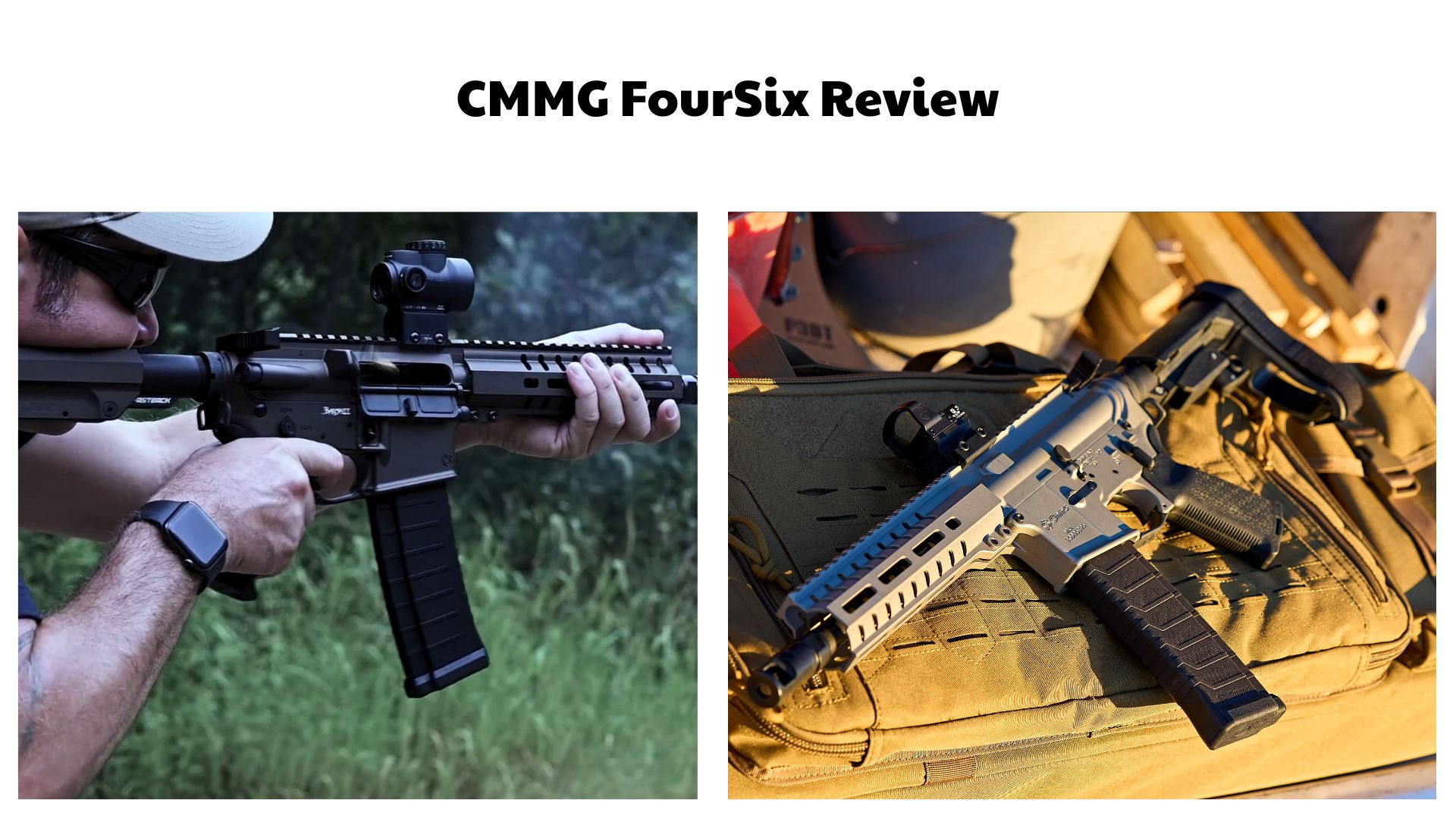

The CMMG FourSix is a modern AR-platform personal defense weapon chambered in FN 5.7x28mm, designed to combine extremely light recoil, high magazine capacity, and compact maneuverability with the familiar ergonomics and modularity of the AR family of firearms. Unlike many traditional pistol-caliber carbines that rely on simple straight-blowback operation, the FourSix is built around CMMG’s radial delayed blowback system, a more advanced operating mechanism engineered to reduce recoil impulse, improve cycling smoothness, and decrease internal operating stress during firing. This design helps the platform feel softer, faster, and more controllable than many competing compact defensive firearms while still retaining the compact dimensions associated with PDW-style weapons.
One of the most unique aspects of the FourSix is its dedicated integration of the FN 5.7×28 cartridge into an AR-pattern system, allowing shooters to take advantage of the cartridge’s lightweight ammunition profile, relatively high velocity, and reduced recoil characteristics within a familiar and highly customizable platform. The firearm has gained popularity among shooters seeking a low-recoil defensive weapon that remains easy to maneuver in confined environments such as homes, vehicles, or tight tactical spaces. Its compact dimensions also make it attractive for backpack carry, truck gun setups, preparedness roles, and recreational range shooting where portability and controllability are prioritized over full-power rifle ballistics.
The platform’s lightweight handling characteristics and minimal muzzle rise allow for exceptionally fast follow-up shots, making it appealing for users who value speed and controllability under stress. At the same time, the FourSix maintains many of the advantages associated with AR-style firearms, including familiar controls, modular accessory mounting, optics compatibility, and ergonomic flexibility. However, despite these strengths, the platform is not without criticism. Ammunition cost for the FN 5.7×28 cartridge remains noticeably higher than common handgun calibers such as 9mm, and the firearm’s proprietary magazine system introduces additional expense and ecosystem limitations compared to more universal magazine standards. Additionally, debates continue within the firearms community regarding the terminal effectiveness of the 5.7 cartridge when compared to traditional rifle calibers such as .223/5.56 NATO.
CMMG FourSix Overview
What is the CMMG FourSix?
The CMMG FourSix is a dedicated AR-pattern firearm engineered specifically around the FN 5.7x28mm cartridge and optimized for compact personal defense weapon applications. Unlike simple caliber-conversion AR platforms, the FourSix was purpose-built to maximize the strengths of the 5.7 cartridge while minimizing many of the weaknesses commonly associated with traditional blowback-operated pistol-caliber carbines.
The platform is designed to function as a compact PDW-style firearm capable of delivering rapid follow-up shots, lightweight carry characteristics, and high-capacity defensive capability in a package that remains highly maneuverable in close-quarters environments. Its compact overall dimensions and lightweight operating characteristics make it particularly well suited for defensive roles where speed, portability, and controllability are critical.
Although the FourSix shares many ergonomic traits with the AR-15 platform, including familiar controls and modular accessory compatibility, it differs substantially in internal engineering. The firearm incorporates CMMG’s radial delayed blowback system rather than the direct impingement or simple blowback systems found in many competing AR-based platforms. This gives the FourSix a noticeably smoother shooting experience while helping reduce recoil impulse and bolt velocity.
CMMG Company Background
CMMG has built a strong reputation within the firearms industry for producing innovative AR-pattern firearms that frequently push beyond conventional platform limitations. The company has become particularly well known for developing specialized operating systems, unique caliber conversions, and advanced compact firearm designs that bridge the gap between traditional rifles, pistol-caliber carbines, and PDW-style weapons.
One of CMMG’s most significant engineering contributions has been the development of the radial delayed blowback operating system, which was designed to improve the shooting characteristics of pistol-caliber and compact defensive firearms. By slowing bolt movement during firing and reducing operating stress, the system creates a smoother and softer shooting experience than many direct blowback competitors.
Within the modern PCC and PDW market, CMMG occupies a position that blends premium engineering with AR-platform familiarity. The company’s products are often viewed as higher-end alternatives to simpler blowback systems, appealing to shooters who prioritize advanced operating characteristics, improved recoil management, and refined shooting performance.
Intended Users
The CMMG FourSix is designed for a wide range of shooters who prioritize lightweight recoil, compact handling, and modern defensive capability. One of its primary target audiences includes home defense users seeking a controllable firearm that is easier to maneuver indoors than a full-length rifle while still offering superior capacity and stability compared to most handguns.
The firearm is also highly attractive for backpack carry and truck gun applications because of its compact dimensions and lightweight ammunition. The reduced weight of 5.7 ammunition allows users to carry a substantial amount of ammunition without adding excessive load, which can be advantageous for preparedness or emergency scenarios.
Recreational shooters often appreciate the platform because of its exceptionally soft recoil impulse and rapid shooting characteristics, which make extended range sessions enjoyable and easy to control. The minimal recoil also makes the firearm approachable for newer shooters or users who are sensitive to heavier recoil systems.
Additionally, tactical enthusiasts and preparedness-minded users are frequently drawn to the FourSix because it combines AR-style modularity with a compact PDW-style footprint. The platform’s accessory compatibility, suppressor readiness, and maneuverability make it adaptable for a wide variety of defensive and training roles.
Evolution of the FourSix Platform
The development of the FourSix platform was closely tied to the increasing civilian interest in the FN 5.7×28 cartridge, which had long been associated primarily with the FN P90 and Five-seveN pistol. As interest in lightweight, high-capacity defensive cartridges grew, manufacturers began exploring ways to integrate the 5.7 round into more versatile and ergonomic firearm platforms.
Rather than simply adapting a standard AR-15 lower receiver to function with the cartridge, CMMG engineered the FourSix as a dedicated platform optimized specifically for the dimensions and pressure characteristics of the 5.7x28mm round. This resulted in significant differences from conventional AR systems, particularly regarding bolt design, magazine geometry, and operating mechanics.
The expansion of 5.7 platforms within the civilian market has also contributed to the FourSix’s popularity, as more shooters have become interested in low-recoil PDW-style firearms that bridge the gap between handguns and traditional rifles. The platform now competes alongside other modern 5.7 firearms while offering the distinct advantage of AR-style familiarity and customization.
Design and Construction
AR-Style Platform Design
One of the FourSix’s strongest advantages is its use of familiar AR-style ergonomics and controls, allowing experienced AR users to transition to the platform with minimal learning curve. Controls such as the safety selector, magazine release, charging handle, and trigger placement remain largely consistent with standard AR-pattern firearms, helping preserve intuitive weapon handling under stress.
The firearm’s overall layout is heavily optimized for PDW-oriented applications, emphasizing compact dimensions and fast maneuverability without sacrificing stability during rapid fire. The shorter overall footprint allows the firearm to remain highly effective in confined spaces where larger rifles may become cumbersome.
The receiver construction also maintains a high degree of modularity, enabling shooters to configure optics, weapon lights, slings, grips, and other accessories according to their specific needs. This flexibility helps the FourSix retain much of the adaptability that has made the AR platform so dominant in modern civilian and tactical firearm markets.
Barrel and Upper Receiver Design
The CMMG FourSix is available in multiple barrel length configurations depending on whether the firearm is intended for compact PDW use, pistol classification, or longer carbine-oriented setups. Shorter barrels maximize maneuverability and compactness, while longer configurations can extract additional velocity from the 5.7 cartridge for improved ballistic performance.
Most configurations feature threaded barrels that support suppressors, flash hiders, compensators, and other muzzle devices, allowing shooters to tailor recoil characteristics and sound suppression performance to their preferences.
The lightweight free-float handguard system contributes both to reduced overall weight and improved accessory mounting flexibility. By isolating the barrel from external pressure applied through grips or mounted accessories, the free-float design can also help preserve practical accuracy during shooting.
Build Materials and Durability
The FourSix utilizes aluminum receiver construction similar to many modern AR-pattern firearms, helping provide an excellent balance between structural durability and lightweight portability. Aluminum receivers maintain rigidity while reducing unnecessary mass, contributing to the platform’s quick handling characteristics.
Internally, the firearm incorporates hardened steel operating components engineered to withstand repeated cycling stresses associated with high round counts and defensive use. The radial delayed blowback system also helps reduce operating stress compared to many simple blowback firearms, potentially contributing to improved long-term component longevity.
Overall durability expectations for the FourSix are generally strong, especially when the firearm is properly maintained and lubricated. Many users report reliable operation over extended round counts, although proprietary components and specialized operating parts may require more careful maintenance awareness than simpler firearm systems.
Weight and Handling Characteristics
One of the defining strengths of the CMMG FourSix is its lightweight overall platform design, which makes it exceptionally easy to carry, maneuver, and control during extended shooting sessions. The lightweight nature of both the firearm and its ammunition contributes significantly to its appeal for mobile defensive and preparedness applications.
The platform’s balance and maneuverability allow shooters to transition rapidly between targets while maintaining excellent weapon control during rapid fire. Minimal recoil and low muzzle rise further enhance controllability, especially during close-range defensive engagements.
In confined environments such as homes, vehicles, hallways, or tight tactical spaces, the compact dimensions of the FourSix provide meaningful advantages over full-length rifles or heavier PCC platforms. Its combination of portability, controllability, and ergonomic familiarity makes it particularly attractive for users prioritizing fast handling and defensive practicality.
Operating System and Engineering
Radial Delayed Blowback System
One of the defining features of the CMMG FourSix is its radial delayed blowback operating system, which separates the platform from many traditional pistol-caliber carbines and compact defensive firearms that rely on simple straight-blowback operation. Rather than depending entirely on bolt mass and recoil spring tension to delay opening during firing, the radial delayed system uses a specially engineered rotating bolt design that slows rearward bolt movement during the initial pressure phase of firing.
When the firearm is discharged, the bolt head begins to rotate against angled locking surfaces, forcing the bolt carrier to move rearward at a controlled rate before the action fully unlocks. This delayed unlocking process helps reduce the violent rearward motion commonly associated with simple blowback systems while also lowering felt recoil and smoothing out the cycling characteristics of the firearm.
Compared to traditional straight-blowback PCC systems, the radial delayed design offers several major advantages. Straight-blowback firearms often require heavier bolts and stronger recoil springs in order to safely manage chamber pressure, which can produce sharper recoil impulse, increased internal wear, and harsher cycling behavior. The FourSix avoids many of these drawbacks by using mechanical delay rather than relying purely on mass.
One of the most noticeable benefits of the system is recoil reduction. The firearm produces an exceptionally soft recoil impulse that feels significantly smoother than many direct-blowback PCC platforms. Reduced bolt speed and gentler cycling also help minimize muzzle movement during firing, allowing shooters to maintain faster target transitions and quicker follow-up shots.
Bolt and Cycling Mechanics
The bolt and cycling mechanics of the FourSix are heavily influenced by CMMG’s radial delayed blowback engineering, which incorporates a rotating bolt design that differs substantially from simple blowback firearms. During firing, the bolt head rotates as pressure forces the system rearward, creating a brief mechanical delay before the action fully opens and extracts the spent casing.
This locking delay is critical because it allows chamber pressure to drop to safer levels before extraction begins, reducing stress on internal components and improving overall reliability. The delayed movement also reduces the abrupt operating impulse typically found in straight-blowback firearms, contributing to smoother recoil characteristics and more controlled shooting behavior.
Because the system does not rely on excessively heavy bolts or aggressive recoil springs, the FourSix can maintain lighter operating components while still preserving safe and reliable function. This contributes to the firearm’s lightweight handling and balanced feel without sacrificing cycling consistency.
The delayed operating system also provides meaningful reliability benefits. By slowing bolt velocity and controlling extraction timing more effectively, the platform tends to experience less violent operation under rapid fire conditions. This can help reduce premature wear on internal components while improving feeding and extraction reliability across different ammunition types.
FN 5.7×28 Cartridge Compatibility
The CMMG FourSix is specifically engineered around the FN 5.7x28mm cartridge, a lightweight, high-velocity round originally developed for personal defense weapon applications. The cartridge was designed to provide low recoil, flat trajectory, and high magazine capacity while remaining easier to control than traditional rifle calibers.
One of the key characteristics of the 5.7 cartridge is its lightweight projectile combined with relatively high velocity, especially when fired from longer barrels compared to standard handguns. In the FourSix platform, the cartridge can achieve higher velocities than it typically produces in pistols, improving both trajectory consistency and terminal performance potential.
The longer barrel lengths available on the FourSix allow the cartridge to extract more energy and velocity from the powder charge, which can improve practical effectiveness at extended defensive distances compared to handgun-based 5.7 platforms.
Another major advantage of the 5.7 cartridge is the lightweight nature of the ammunition itself. Shooters can carry significantly larger quantities of ammunition with less overall weight compared to many rifle calibers or even some traditional handgun cartridges. This makes the FourSix particularly attractive for preparedness setups, extended range sessions, and mobile defensive applications where ammunition weight matters.
Controls and Ergonomics
AR-Style Manual of Arms
One of the FourSix’s strongest practical advantages is its use of the familiar AR-style manual of arms, which allows shooters already experienced with AR-pattern firearms to transition to the platform almost immediately without requiring extensive retraining. Core controls such as the safety selector, magazine release, charging handle, and trigger placement remain largely consistent with standard AR ergonomics.
The familiar safety selector placement allows shooters to manipulate the firearm instinctively during stressful situations or rapid target transitions, while the magazine release system supports fast reloads similar to traditional AR platforms.
The charging handle operation also mirrors standard AR functionality, helping maintain consistent weapon handling habits across multiple firearm systems. This familiarity can be especially valuable for defensive users, law enforcement personnel, or competitive shooters already heavily invested in the AR ecosystem.
Because the platform closely follows AR handling principles, the learning curve for experienced AR users remains minimal. Shooters can retain established muscle memory while benefiting from the FourSix’s lighter recoil and compact handling characteristics.
Ambidextrous Features
The FourSix offers strong usability for both left- and right-handed shooters thanks to its AR-style layout and optional ambidextrous features available on certain configurations. Ambidextrous safeties and control enhancements allow shooters to manipulate the firearm efficiently regardless of dominant hand preference.
For tactical or defensive applications, ambidextrous functionality can provide meaningful advantages during unconventional shooting positions, barricade use, or injury-based weapon transitions. The ability to operate critical controls from either side improves overall flexibility during dynamic shooting situations.
Left-handed shooters also benefit from the platform’s manageable recoil characteristics and familiar ergonomic layout, making the FourSix more accommodating than some proprietary compact defensive systems that heavily favor right-handed operation.
Trigger Performance
Factory trigger performance on the CMMG FourSix is generally solid for a defensive-oriented AR-pattern firearm, with a trigger pull that balances safety, reliability, and practical shooting performance. Most factory triggers provide a reasonably predictable break with moderate pull weight suitable for defensive and recreational shooting applications.
The trigger reset is typically short and easy to feel, allowing shooters to maintain rapid follow-up shot cadence during fast-paced shooting drills or close-range engagements. Combined with the platform’s minimal recoil impulse, the trigger system helps support extremely fast and controllable shooting performance.
Because the FourSix retains compatibility with many AR-pattern components, shooters also have access to a large aftermarket ecosystem of upgraded trigger options. Popular upgrades from manufacturers such as Geissele, Timney, and TriggerTech are commonly used by owners seeking lighter pull weights, crisper breaks, or competition-oriented trigger characteristics.
Stock and Brace Configurations
The FourSix is available in multiple stock and brace configurations depending on whether the firearm is configured as a pistol, short-barreled rifle, or full carbine variant. Compact pistol brace versions emphasize portability and maneuverability, while stocked rifle configurations provide greater stability for extended shooting sessions and precision control.
One of the major advantages of compact brace configurations is their ability to reduce storage footprint, making the firearm easier to transport in backpacks, vehicle compartments, or discreet carry setups. This compactness is a major reason the platform is frequently discussed as a truck gun or preparedness-oriented firearm.
Despite its lightweight design, the firearm remains highly controllable during rapid fire because of its low recoil impulse and balanced operating characteristics. Proper brace or stock configuration can further enhance stability and shooting comfort, particularly during sustained shooting or defensive training drills.
Magazine System
Proprietary FourSix Magazine Design
The CMMG FourSix utilizes a proprietary magazine system specifically engineered around the dimensions and feeding requirements of the FN 5.7×28 cartridge. Unlike some other 5.7 platforms that adapt handgun magazine systems, the FourSix uses dedicated magazines optimized for reliable feeding within the AR-style receiver architecture.
These magazines are designed to support high-capacity configurations while maintaining relatively compact external dimensions due to the narrow profile of the 5.7 cartridge. Depending on the model and local regulations, magazines are commonly available in multiple capacity options suitable for defensive, recreational, or training use.
The FourSix magazine design differs substantially from FN Five-seveN pistol magazines because the geometry and feeding angles required for an AR-style platform are significantly different from those of a handgun magazine system. As a result, direct magazine interchangeability between the platforms is generally not possible.
Magazine Reliability and Feeding
Reliable feeding is especially important in high-velocity, bottlenecked cartridges such as the FN 5.7×28, and the FourSix magazine system is specifically engineered to support proper cartridge alignment and feeding geometry during rapid cycling.
Factory magazines generally perform well when properly maintained and loaded with quality ammunition. The combination of the delayed blowback operating system and purpose-built magazine geometry contributes to relatively smooth feeding behavior compared to improvised caliber-conversion systems.
However, some users have reported occasional magazine-related concerns, particularly involving improper loading technique, weak magazine springs after extensive use, or compatibility inconsistencies with certain ammunition types. As with many specialized firearm platforms, magazine quality and maintenance can play a major role in overall reliability.
Magazine Availability and Cost
One of the more frequently discussed drawbacks of the FourSix platform is the cost and availability of its proprietary magazines. Because the platform does not use widely standardized magazine systems such as Glock-pattern or standard AR magazines, replacement magazines can be more expensive and somewhat less accessible.
Compared to the massive aftermarket ecosystem surrounding common PCC magazine systems, FourSix magazine availability remains more limited due to the specialized nature of the platform and the smaller overall market for 5.7 AR-pattern firearms.
Long-term ecosystem considerations are therefore important for potential buyers. While the platform offers strong shooting characteristics and engineering advantages, users should factor in the cost of spare magazines and long-term accessory availability when evaluating the firearm for defensive or preparedness applications.
Accuracy and Shooting Performance
Real-World Accuracy
The CMMG FourSix delivers very respectable real-world accuracy, particularly within the practical engagement distances for which the platform is intended. At distances between 25 and 100 yards, the firearm is capable of producing tight groupings that are more than sufficient for defensive use, training drills, and recreational shooting.
The lightweight recoil impulse and minimal muzzle movement contribute heavily to practical accuracy because shooters can maintain sight alignment more effectively during rapid strings of fire. Fast follow-up shots are easier to control compared to many heavier-recoiling PCC or rifle platforms.
Although the FourSix is not intended to function as a dedicated long-range precision rifle, the platform still demonstrates impressive consistency for a compact defensive firearm. When paired with quality optics and ammunition, it can achieve accuracy levels that exceed the expectations many shooters initially have for PDW-style systems.
Ballistic Performance of 5.7×28
One of the major advantages of firing the FN 5.7×28 cartridge from a carbine-length or extended-barrel platform is the substantial increase in velocity compared to standard handgun configurations. The longer barrel allows more complete powder burn and greater acceleration of the lightweight projectile, improving energy output and trajectory performance.
This increased velocity can enhance penetration capability and extend effective engagement range compared to many traditional handgun-caliber PCC platforms. The cartridge’s relatively flat trajectory also helps simplify aiming at varying distances within realistic defensive and recreational shooting ranges.
Compared to common PCC calibers such as 9mm, the 5.7 cartridge generally offers higher velocity and flatter trajectory while producing less felt recoil. However, it still falls short of full-power rifle cartridges such as .223/5.56 in overall terminal ballistic performance and energy delivery.
Recoil and Shooting Experience
The shooting experience of the FourSix is widely regarded as one of its strongest selling points because the combination of the lightweight 5.7 cartridge and radial delayed blowback system produces an exceptionally soft recoil impulse. Many shooters describe the firearm as remarkably smooth and easy to control even during rapid fire.
Minimal muzzle rise allows shooters to maintain rapid target transitions and extremely fast follow-up shots, making the platform particularly effective for close-range drills, defensive training, and recreational range use.
The reduced recoil characteristics also make the firearm approachable for newer shooters or users who may be sensitive to heavier recoil systems. Extended shooting sessions are generally less fatiguing than with many larger-caliber rifles or traditional blowback PCC platforms.
Heat and Sustained Fire
Like most lightweight compact firearms, the FourSix can experience noticeable barrel heating during extended rapid-fire sessions. The relatively lightweight barrel and compact handguard configuration allow heat to build more quickly compared to heavier precision-oriented rifle systems.
Despite this, the platform generally maintains strong reliability and practical accuracy during realistic defensive or recreational firing schedules. Most shooters are unlikely to encounter significant performance degradation during normal use conditions.
However, during prolonged rapid strings or high-volume range sessions, heat buildup may eventually affect shooter comfort and potentially contribute to gradual shifts in point of impact as barrel temperatures rise. This is a common characteristic among lightweight PDW-style firearms and not unique to the FourSix platform.
Reliability and Common Issues
Break-In Period and Initial Performance
Many CMMG FourSix owners report that the firearm benefits from a short break-in period during the first several hundred rounds of use. During this early phase, the operating system components gradually smooth out as internal surfaces mate together through repeated cycling.
Initial cycling characteristics may occasionally feel slightly stiff or overly tight when the firearm is brand new, particularly because the radial delayed blowback system uses more complex interaction surfaces than simple blowback platforms.
Proper lubrication during the break-in period is especially important because the delayed operating system relies on controlled mechanical movement between bolt components. Many users report noticeable improvements in cycling smoothness and overall reliability after consistent use and maintenance.
Feeding and Cycling Problems
Although the FourSix generally performs reliably with quality ammunition and factory magazines, some users have reported occasional feeding or cycling issues depending on ammunition type, magazine condition, or maintenance practices.
Because the 5.7 cartridge uses a bottlenecked case design, feeding geometry can be more sensitive than with straight-walled handgun cartridges such as 9mm. Ammunition variations, inconsistent cartridge overall length, or damaged magazine feed lips can sometimes contribute to malfunctions.
Extraction and ejection reliability are typically strong when the firearm is properly maintained, but carbon buildup, insufficient lubrication, or excessive fouling during suppressed use may eventually affect cycling consistency if cleaning intervals are ignored.
Long-Term Durability
The radial delayed blowback system is generally viewed as durable and capable of handling high round counts when properly maintained. By reducing bolt velocity and internal operating stress compared to direct blowback systems, the FourSix may experience less long-term component wear in certain areas.
Many shooters who use the platform extensively report strong reliability over extended firing schedules, particularly when high-quality ammunition and regular maintenance practices are used consistently.
The combination of hardened steel internal components and controlled operating dynamics helps the firearm maintain dependable function across prolonged use, making it suitable for defensive training, recreational shooting, and preparedness applications.
Quality Control and Consistency
CMMG generally maintains a strong reputation for manufacturing consistency within the premium AR-pattern firearm market, and the FourSix platform is often regarded as well assembled and professionally engineered.
As with any production firearm, however, some variability can exist between individual units or production runs. Minor differences in trigger feel, cycling smoothness, or finish quality may occasionally appear depending on manufacturing tolerances.
Community feedback surrounding the FourSix is generally positive, particularly regarding recoil characteristics, reliability, and overall shooting experience. Most criticisms tend to focus more on ammunition expense and proprietary ecosystem limitations rather than major reliability concerns with the platform itself.
Suppressor Compatibility
Suppressed Shooting Performance
The CMMG FourSix generally performs well when paired with a suppressor due to the inherently favorable characteristics of the FN 5.7×28 cartridge combined with the platform’s radial delayed blowback operating system. The 5.7 round already produces a relatively sharp but lightweight pressure curve compared to larger rifle cartridges, which allows suppressors to be used effectively for reducing both muzzle report and perceived recoil without overwhelming backpressure issues in most configurations.
When suppressed, the FourSix delivers a noticeably reduced sound signature compared to unsuppressed fire, although it is important to note that the high-velocity nature of the 5.7 cartridge means supersonic crack will still be present with most common loads. Despite this, the combination of reduced muzzle blast and softened recoil impulse makes suppressed shooting significantly more comfortable and controllable, especially during rapid fire strings.
Backpressure is a consideration in any suppressed firearm system, and while the FourSix is not immune to increased gas pressure when suppressed, its operating system helps mitigate some of the harsher effects seen in simpler blowback platforms. Shooters may still notice increased gas presence depending on suppressor type, ammunition selection, and firing schedule, but overall performance remains manageable in most defensive or recreational configurations.
Radial Delayed Blowback Advantages
One of the key reasons the FourSix suppressor experience is generally favorable is the use of CMMG’s radial delayed blowback system, which offers cleaner and more controlled operation compared to traditional straight-blowback designs. Because the bolt is mechanically delayed during the initial pressure phase of firing, the system reduces the abrupt rearward force that often contributes to excessive gas blowback in simpler PCC platforms.
This delayed unlocking process helps reduce the amount of unburned powder and gas directed back toward the shooter, resulting in a cleaner shooting experience overall. While suppressed shooting will always increase fouling to some degree, the FourSix tends to maintain more manageable levels of gas exposure compared to many direct blowback 9mm PCC systems.
Another advantage of the radial delayed system is improved compatibility with suppressors in terms of cycling behavior. Because bolt velocity is already moderated by design, the system is less prone to the harsh cycling characteristics or excessive bolt speed issues that can sometimes appear in straight blowback firearms when suppressors are added.
Best Suppressor Setup Considerations
When configuring the CMMG FourSix for suppressed use, ammunition selection becomes an important factor in achieving optimal performance. While the 5.7×28 cartridge is inherently supersonic in most factory loadings, choosing consistent, high-quality ammunition can help maintain reliable cycling and more predictable performance characteristics when suppressed.
Muzzle device compatibility is another key consideration, as the threaded barrel on most FourSix configurations allows users to attach a wide range of suppressors and muzzle accessories. Proper alignment and secure mounting are essential to ensure safe operation and consistent accuracy, especially during extended firing sessions.
Maintenance expectations should also be adjusted when running the FourSix suppressed, as increased carbon buildup is a natural consequence of suppressed fire. Regular cleaning of the bolt assembly, chamber area, and gas-related components is recommended to maintain long-term reliability and prevent fouling-related cycling issues over time.
Advantages and Disadvantages
Key Advantages
The CMMG FourSix offers several significant advantages that make it stand out in the modern PDW and PCC market, particularly for users who prioritize low recoil, compact handling, and AR-platform familiarity. One of its most notable strengths is its extremely low recoil impulse, which is a direct result of the combination of the lightweight 5.7×28 cartridge and the radial delayed blowback operating system.
This low recoil makes the platform exceptionally easy to control, allowing for fast target transitions and rapid follow-up shots with minimal disruption to sight alignment. In practical terms, this translates into a highly controllable defensive firearm that performs well under stress and during dynamic shooting scenarios.
The platform is also lightweight and compact, making it highly suitable for confined environments such as home defense situations, vehicle storage, or backpack carry applications. Its maneuverability in tight spaces is one of its most appealing attributes for users seeking a PDW-style solution.
AR-style ergonomics further enhance usability, allowing experienced AR shooters to transition to the FourSix with minimal training or adjustment. Familiar controls, modularity, and accessory compatibility make it easy to integrate into existing training systems or defensive setups.
High magazine capacity is another advantage, as the 5.7×28 cartridge allows for relatively large magazine counts while maintaining a slim and lightweight profile. Combined with the soft-shooting radial delayed system, the platform delivers an overall shooting experience that feels smooth, modern, and highly responsive.
Key Disadvantages
Despite its strengths, the CMMG FourSix also comes with several notable disadvantages that potential buyers must consider before adoption. One of the most significant drawbacks is the high cost of FN 5.7×28 ammunition, which is substantially more expensive than common PCC calibers such as 9mm or .40 S&W. This can limit training volume for many shooters.
Another limitation is the use of proprietary magazines, which are more expensive and less widely available compared to standard AR or Glock-pattern magazines. This can increase long-term ownership costs and reduce flexibility within broader firearm ecosystems.
There is also ongoing debate within the firearms community regarding the terminal effectiveness of the 5.7×28 cartridge compared to traditional rifle calibers. While it offers high velocity and flat trajectory, it does not match the energy delivery or barrier performance of .223/5.56 NATO rounds in many real-world defensive contexts.
Finally, despite its engineering sophistication, the platform is still limited compared to full-power rifle systems in terms of ballistic capability, making it more suitable as a PDW or close-to-medium range defensive tool rather than a general-purpose rifle replacement.
CMMG FourSix vs Competing Platforms
FourSix vs FN PS90
When compared to the FN PS90, the CMMG FourSix offers a more traditional AR-style shooting experience, which many users find easier to adapt to due to familiar ergonomics and controls. The PS90, while highly compact and purpose-built for the 5.7 cartridge, uses a bullpup configuration that can feel unconventional for shooters accustomed to AR platforms. The FourSix provides greater modularity and accessory compatibility, while the PS90 offers a more integrated and iconic PDW design.
FourSix vs Ruger LC Carbine 5.7
Against the Ruger LC Carbine in 5.7, the FourSix generally stands out due to its radial delayed blowback system, which delivers a softer recoil impulse and smoother cycling characteristics. The Ruger LC Carbine, while reliable and more affordable, uses a simpler operating system that does not match the FourSix in recoil refinement. However, Ruger’s platform may appeal to budget-conscious users seeking straightforward operation.
FourSix vs AR-9 PCC Platforms
Compared to AR-9 PCC platforms, the FourSix offers significantly lower recoil and flatter trajectory due to the 5.7 cartridge, while AR-9 systems benefit from cheaper ammunition and widespread magazine compatibility. AR-9 platforms are often more economical for training, but the FourSix provides a more advanced operating system and superior recoil control in many scenarios.
FourSix vs Standard AR-15 Rifles
When compared to standard AR-15 rifles chambered in 5.56 NATO, the FourSix is far lighter in recoil and easier to control during rapid fire, but it lacks the terminal ballistic performance and barrier penetration capabilities of full-power rifle cartridges. The AR-15 remains superior for general-purpose rifle applications, while the FourSix is more specialized as a compact PDW platform.
Recoil and Handling Comparison
In terms of recoil and handling, the FourSix consistently outperforms most competing PCC and PDW systems due to its combination of lightweight ammunition and radial delayed blowback operation. This results in extremely soft recoil, minimal muzzle rise, and faster follow-up shot capability compared to both 9mm PCCs and many compact rifle systems.
Ballistics and Effectiveness Comparison
From a ballistic standpoint, the 5.7×28 cartridge sits between traditional handgun calibers like 9mm and rifle calibers such as .223/5.56. While it offers higher velocity and flatter trajectory than 9mm PCCs, it does not achieve the same energy transfer or terminal effectiveness as rifle rounds. This makes it best suited for close-range defensive roles rather than extended-range engagements.
Reliability and Maintenance Comparison
In terms of reliability, the FourSix’s radial delayed blowback system offers advantages over traditional direct blowback PCCs by reducing bolt stress and improving cycling smoothness. However, it may require more attentive maintenance compared to simpler systems. AR-9 platforms are generally easier to service but may require tuning to achieve optimal reliability, whereas the FourSix emphasizes engineered consistency over user-adjusted tuning.
Best Use Cases for the CMMG FourSix
The CMMG FourSix is best understood as a specialized PDW-style firearm rather than a general-purpose rifle replacement, and its strengths are most evident in specific use cases where compactness, low recoil, and fast handling are critical factors.
For home defense applications, the FourSix provides excellent maneuverability in confined spaces while offering greater capacity and stability than most handguns. Its low recoil and fast follow-up shot capability make it particularly well suited for high-stress defensive scenarios.
In backpack and truck gun roles, the platform’s lightweight design and compact footprint make it easy to store and deploy quickly when needed. The lightweight nature of 5.7 ammunition further enhances its practicality for mobile preparedness setups.
Recreational range shooting is another strong use case, as the extremely low recoil and smooth cycling characteristics make the firearm enjoyable and easy to shoot for extended periods without fatigue.
For preparedness and compact PDW roles, the FourSix offers a balance of portability, capacity, and controllability that appeals to users seeking a modern defensive firearm system with advanced engineering features.
It is also well suited for training environments where low recoil is beneficial, allowing shooters to focus on fundamentals such as accuracy, target transitions, and speed without being hindered by heavy recoil impulse.
Final Verdict
The CMMG FourSix represents a highly innovative approach to the modern PDW and PCC market, combining AR-style ergonomics with a purpose-built 5.7×28 platform and CMMG’s radial delayed blowback system. Its greatest strengths lie in its exceptional recoil management, compact handling characteristics, and overall shooting smoothness, which make it one of the most controllable firearms in its category.
However, these advantages come with meaningful trade-offs, including high ammunition costs, proprietary magazine dependency, and inherent limitations of the 5.7 cartridge compared to full-power rifle calibers. While it excels in close-range defensive and recreational applications, it is not designed to replace traditional rifle systems for general-purpose use.
Ultimately, the FourSix is best suited for shooters who value advanced engineering, extremely low recoil, and compact PDW performance over cost efficiency or maximum ballistic power. Within the modern PDW and PCC landscape, it occupies a niche but highly capable position that rewards users who understand its design intent and operational strengths.
Frequently Asked Questions (FAQ) – CMMG FourSix Review
1. What is the CMMG FourSix designed for?
The CMMG FourSix is designed primarily as a modern personal defense weapon (PDW) built around the FN 5.7x28mm cartridge, focusing on compact size, extremely low recoil, and AR-style ergonomics. It is intended for users who want a lightweight, fast-handling firearm for home defense, vehicle storage, backpack carry, or range use. Its engineering prioritizes controllability and speed in close to medium-range scenarios rather than long-range rifle performance, making it a specialized defensive platform rather than a general-purpose rifle replacement.
2. What makes the CMMG FourSix different from a standard AR-15?
Unlike a standard AR-15 chambered in 5.56 NATO, the FourSix is purpose-built around the smaller FN 5.7×28 cartridge and uses CMMG’s radial delayed blowback system instead of direct impingement gas operation. This results in significantly reduced recoil, lighter overall weight, and a smoother shooting experience. However, it sacrifices terminal ballistic power compared to a full-size rifle, positioning it more as a PDW than a traditional combat rifle.
3. How does the radial delayed blowback system work?
The radial delayed blowback system uses a rotating bolt that delays rearward movement after firing. When a round is discharged, the bolt rotates against angled lugs, slowing its initial rearward motion and allowing chamber pressure to drop before extraction occurs. This reduces felt recoil, lowers bolt velocity, and improves cycling smoothness compared to simple straight-blowback systems commonly used in PCC platforms.
4. Is the recoil on the CMMG FourSix really low?
Yes, the recoil is widely regarded as one of the softest among AR-style platforms. The combination of the lightweight 5.7 cartridge and radial delayed blowback system produces a very smooth recoil impulse with minimal muzzle rise. Most shooters describe it as significantly easier to control than 9mm PCCs and even softer than many .223 rifles during rapid fire.
5. Is the CMMG FourSix good for home defense?
The FourSix can be an excellent home defense option due to its compact size, high magazine capacity, low recoil, and fast handling characteristics. These traits make it easier to maneuver in tight indoor spaces compared to full-length rifles. However, users should also consider ammunition cost and terminal performance debates surrounding the 5.7 cartridge when evaluating it for defensive use.
6. What is the effective range of the FourSix?
The effective range typically falls within 25 to 150 yards depending on barrel length, ammunition selection, and shooter skill. While it can reach beyond this distance, it is primarily optimized for close to mid-range defensive and tactical applications rather than long-range precision shooting.
7. How accurate is the CMMG FourSix?
The FourSix offers solid real-world accuracy, with typical grouping performance at 25–100 yards being more than adequate for defensive and recreational use. While it is not a precision rifle, its low recoil and stable platform allow shooters to maintain fast and consistent shot placement, especially when using optics.
8. What caliber does the FourSix use?
The CMMG FourSix is chambered exclusively in FN 5.7x28mm, a high-velocity, low-recoil cartridge originally designed for PDW applications. This cartridge is known for its flat trajectory, lightweight projectiles, and high magazine capacity potential compared to traditional handgun calibers.
9. Is 5.7×28 ammo expensive?
Yes, FN 5.7×28 ammunition is generally more expensive than common calibers like 9mm or .223/5.56. This higher cost is one of the main criticisms of the platform, as it can limit high-volume training unless the shooter is prepared for increased ammunition expenses.
10. Does the FourSix use AR-15 parts?
The FourSix shares many AR-style components and ergonomics, including controls, receivers, and accessory compatibility. However, its internal operating system and bolt design are specific to CMMG’s radial delayed blowback system, meaning it is not a direct AR-15 caliber conversion.
11. Can you suppress the CMMG FourSix?
Yes, the FourSix is suppressor compatible and performs well when suppressed due to its radial delayed blowback system, which helps reduce gas blowback and cycling harshness. However, supersonic 5.7 ammunition will still produce a ballistic crack, limiting full sound suppression.
12. Does suppressing the FourSix affect reliability?
In most cases, reliability remains strong when suppressed, although increased backpressure and fouling may require more frequent cleaning. Using quality suppressors and consistent ammunition helps maintain optimal performance during suppressed operation.
13. What magazines does the FourSix use?
The FourSix uses proprietary CMMG-designed magazines specifically built for the FN 5.7×28 cartridge in an AR-style platform. These magazines are not interchangeable with FN Five-seveN pistol magazines, as they are engineered for different feeding geometries.
14. Are FourSix magazines expensive?
Yes, FourSix magazines are generally more expensive than standard AR or Glock-pattern magazines due to their proprietary design and smaller production scale. This is one of the platform’s long-term cost considerations for owners.
15. How reliable is the CMMG FourSix?
Overall reliability is considered strong, especially when using quality ammunition and properly maintained magazines. The radial delayed blowback system contributes to smoother cycling and reduced stress on components, though like any firearm, it benefits from proper lubrication and maintenance.
16. Does the FourSix require a break-in period?
Many users report a short break-in period where the action may feel slightly stiff during the first few hundred rounds. After this period, the system typically smooths out as internal components wear in and lubrication becomes fully distributed.
17. Is the FourSix good for beginners?
Yes, in many ways it is beginner-friendly due to its extremely low recoil and AR-style ergonomics. However, beginners should also be aware of its higher operating costs and more specialized ammunition requirements compared to entry-level PCCs.
18. How does it compare to a 9mm PCC?
Compared to 9mm PCCs, the FourSix offers lower recoil, higher velocity, and flatter trajectory. However, 9mm PCCs are significantly cheaper to shoot and use more widely available ammunition and magazines.
19. Is the FourSix better than a 5.56 AR-15?
It depends on the use case. The FourSix is softer shooting and more compact, making it excellent for PDW roles, while the 5.56 AR-15 offers superior terminal ballistics, barrier penetration, and general-purpose rifle performance.
20. Can the FourSix be used for competition shooting?
Yes, it can be used in PCC-style competitions, especially where low recoil and fast target transitions are beneficial. However, ammunition cost and magazine ecosystem limitations may make it less common than 9mm PCC platforms in competition environments.
21. How does the FourSix handle rapid fire?
The platform handles rapid fire extremely well due to its low recoil impulse and reduced muzzle rise. Shooters can maintain fast sight picture recovery and consistent follow-up shots, making it highly controllable under speed shooting conditions.
22. Does the FourSix overheat quickly?
Like most lightweight PDW-style firearms, the barrel can heat up during sustained rapid fire. While it maintains reliability under normal use, extended high-volume shooting may lead to noticeable heat buildup affecting comfort and consistency.
23. Is the FourSix suitable for concealed carry?
No, it is not designed for concealed carry due to its size and classification. However, it is well suited for discreet storage in vehicles or backpacks where compact PDW capability is desired.
24. How does the 5.7 cartridge perform from a rifle-length barrel?
From a longer barrel like that on the FourSix, the 5.7 cartridge achieves higher velocity and more consistent ballistic performance compared to pistol platforms. This improves trajectory and potential effectiveness at medium distances.
25. Is the FourSix legal in most states?
Legality depends on local firearm laws, magazine capacity restrictions, and configuration (pistol vs rifle vs SBR). Buyers should always verify state and local regulations before purchasing or configuring the firearm.
26. Does the FourSix have good aftermarket support?
It has moderate aftermarket support, primarily through AR-compatible accessories such as optics, grips, and triggers. However, proprietary components like magazines and certain internal parts limit full ecosystem flexibility.
27. How does it compare to FN PS90?
The PS90 is more compact and purpose-built for 5.7 use, while the FourSix offers AR-style ergonomics and greater modularity. The choice depends on whether the user prefers a bullpup PDW design or a familiar AR platform layout.
28. What is the biggest drawback of the FourSix?
The most significant drawbacks are the high cost of ammunition, proprietary magazine system, and limited terminal ballistic performance compared to full-power rifle calibers.
29. Is maintenance difficult?
Maintenance is relatively straightforward for users familiar with AR platforms. However, suppressed use and the 5.7 cartridge may require more frequent cleaning due to increased fouling characteristics.
30. Why choose the FourSix over other PCCs?
Users typically choose the FourSix for its extremely low recoil, AR familiarity, and advanced operating system. It appeals to shooters who prioritize shooting comfort, compact PDW capability, and modern engineering over cost efficiency.
31. How does barrel length affect performance on the FourSix?
Barrel length directly influences the velocity and overall ballistic performance of the FN 5.7×28 cartridge in the FourSix platform. Longer barrels allow more complete powder burn, which increases projectile velocity and improves effective range and energy transfer. Shorter barrels, while more compact and maneuverable, reduce velocity slightly but still maintain the cartridge’s low-recoil advantages. In practice, most users prioritize handling and control over marginal ballistic gains.
32. Is the FourSix suitable for duty or professional use?
The FourSix can be used in professional or defensive contexts, particularly in roles that benefit from compact size and low recoil such as close-quarters security or vehicle-based operations. However, its reliance on 5.7 ammunition cost, proprietary magazines, and debated terminal performance means it is less commonly adopted than 5.56 rifles or 9mm duty carbines in institutional environments.
33. How does the FourSix perform under stress or defensive scenarios?
In defensive scenarios, the FourSix performs well due to its low recoil, fast handling, and intuitive AR-style controls. These traits allow shooters to maintain accuracy under stress and deliver rapid follow-up shots. However, like all firearms, performance depends heavily on training, ammunition reliability, and proper maintenance.
34. Does the radial delayed blowback system reduce wear?
Yes, the radial delayed blowback system reduces internal wear compared to straight-blowback designs by slowing bolt velocity and distributing operating stress more evenly. This results in smoother cycling and potentially improved long-term component durability under high round counts.
35. Can the FourSix be used for hunting?
While not traditionally designed as a hunting rifle, the FourSix may be suitable for small game or pest control in jurisdictions where legal. However, it is generally not recommended for medium or large game due to the limitations of the 5.7×28 cartridge compared to dedicated hunting calibers.
36. How does the FourSix handle cold or adverse weather conditions?
The platform generally performs reliably in a wide range of environmental conditions when properly lubricated and maintained. Like most semi-automatic firearms, extreme cold or debris can affect cycling if lubrication is not adjusted appropriately for the environment.
37. What kind of optics work best on the FourSix?
Red dot sights and low-power prism optics are most commonly used on the FourSix due to its PDW role and close-to-mid-range engagement focus. These optics allow for fast target acquisition and complement the platform’s low recoil and quick handling characteristics.
38. Is the FourSix noisy when fired unsuppressed?
Yes, like most 5.7 firearms firing supersonic ammunition, the FourSix produces a sharp crack and noticeable muzzle report when unsuppressed. However, its recoil remains mild, so noise is the primary sensory factor rather than shooting discomfort.
39. Does the FourSix require special cleaning products?
No special cleaning products are required, but high-quality carbon solvents and lubricants are recommended, especially for suppressed use. Regular cleaning of the bolt, chamber, and barrel helps maintain long-term reliability.
40. How does the FourSix compare in weight to other PDWs?
The FourSix is generally lighter than many traditional rifle platforms and comparable or slightly lighter than some PDW-style firearms. Its lightweight ammunition further reduces carried weight, making it highly suitable for mobile applications.
41. Is the FourSix good for fast target transitions?
Yes, the extremely low recoil and minimal muzzle rise make it excellent for fast target transitions. Shooters can move between multiple targets quickly while maintaining consistent sight picture recovery.
42. What are common user complaints about the FourSix?
Common complaints include high ammunition cost, proprietary magazine pricing, and limited terminal ballistic performance compared to rifle calibers. Some users also note that it is less versatile than standard AR-15 platforms.
43. How does it compare to pistol-caliber carbines?
Compared to 9mm PCCs, the FourSix offers significantly lower recoil and higher velocity, but at the cost of more expensive ammunition and less universal magazine support. It is generally more specialized and performance-oriented than budget PCC platforms.
44. Can the FourSix be used in competition shooting sports?
Yes, it can be used in PCC divisions where allowed, but it is less common due to ammunition cost and magazine ecosystem limitations. Its low recoil can provide a competitive advantage in speed-based stages.
45. How durable is the FourSix over time?
The platform is considered durable, especially due to its radial delayed blowback system reducing internal stress. With proper maintenance, it can handle high round counts without significant reliability degradation.
46. Does the FourSix require tuning or adjustments?
In most cases, the FourSix does not require user tuning. It is designed to run reliably out of the box with factory components, unlike some AR-9 platforms that require buffer or spring adjustments.
47. Is the FourSix good for new shooters?
Yes, it is beginner-friendly due to its extremely low recoil and simple AR-style controls. However, new shooters should be aware of higher ammunition costs compared to more common calibers like 9mm.
48. How does suppressor use affect cleaning frequency?
Suppressor use increases carbon buildup and fouling, which typically requires more frequent cleaning. This is especially important in the bolt assembly and chamber area to maintain smooth cycling and reliability.
49. What makes the FourSix a PDW rather than a rifle?
The FourSix is classified as a PDW-style firearm due to its compact size, lightweight design, and intended use in close-quarters defensive roles. It is optimized for maneuverability and speed rather than long-range rifle engagement capability.
50. Is the FourSix worth the price?
Value depends on user priorities. For shooters who prioritize low recoil, advanced engineering, and compact AR-style handling, it can be worth the investment. For budget-conscious shooters focused on training volume, cheaper PCC platforms may offer better value.
51. How does the FourSix perform in rapid fire drills?
The FourSix excels in rapid fire due to its minimal recoil and stable sight picture recovery. Shooters can maintain tight control over shot strings, making it highly effective for speed-based drills and close-range engagements.
52. Can the FourSix be customized like a standard AR?
Yes, it supports many AR-style accessories including optics, grips, triggers, and furniture. However, internal operating system components remain proprietary, limiting full internal customization.
53. Does ammunition type affect reliability?
Yes, ammunition quality and consistency can affect cycling reliability. Higher-quality factory ammunition tends to perform more consistently, while inconsistent or low-quality loads may increase malfunction risk.
54. How does the FourSix compare to defensive shotguns?
Compared to shotguns, the FourSix offers higher magazine capacity, lower recoil, and faster follow-up shots. However, shotguns provide significantly higher short-range stopping power and different terminal performance characteristics.
55. What is the overall role of the FourSix in modern firearms?
The FourSix occupies a niche role as a modern PDW that prioritizes low recoil, compact handling, and AR familiarity. It is best viewed as a specialized defensive and recreational platform rather than a replacement for traditional rifles or duty carbines.
Read more: